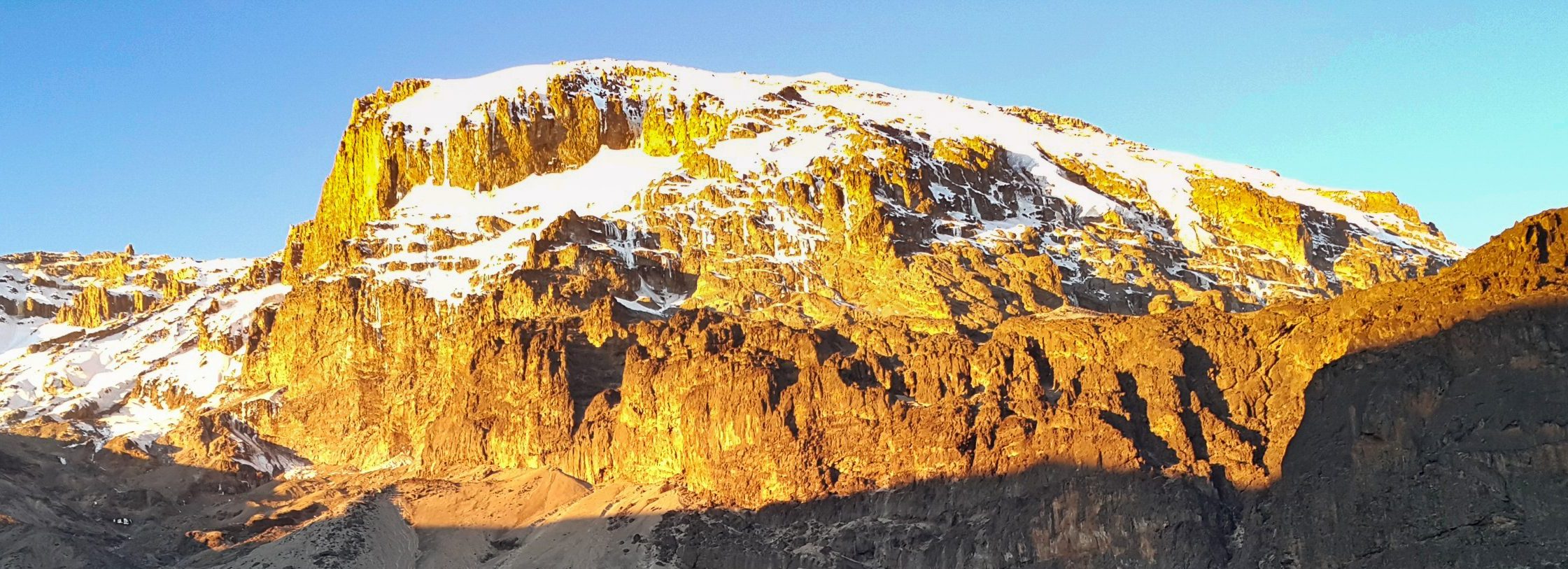
Climbing Kilimanjaro has not really been on my wish-list until about a year ago, when I heard from several friends about their experiences conquering the world’s tallest freestanding mountain. All of them spoke about it with rather mixed feelings, focusing a bit more on the negative aspects e.g. the cold nights, the physical exhaustion and discomfort related to the great altitudes (aka altitude sickness). The positive comments were always related to the successful end – the act of reaching the summit Uhuru Peak at 5895m.
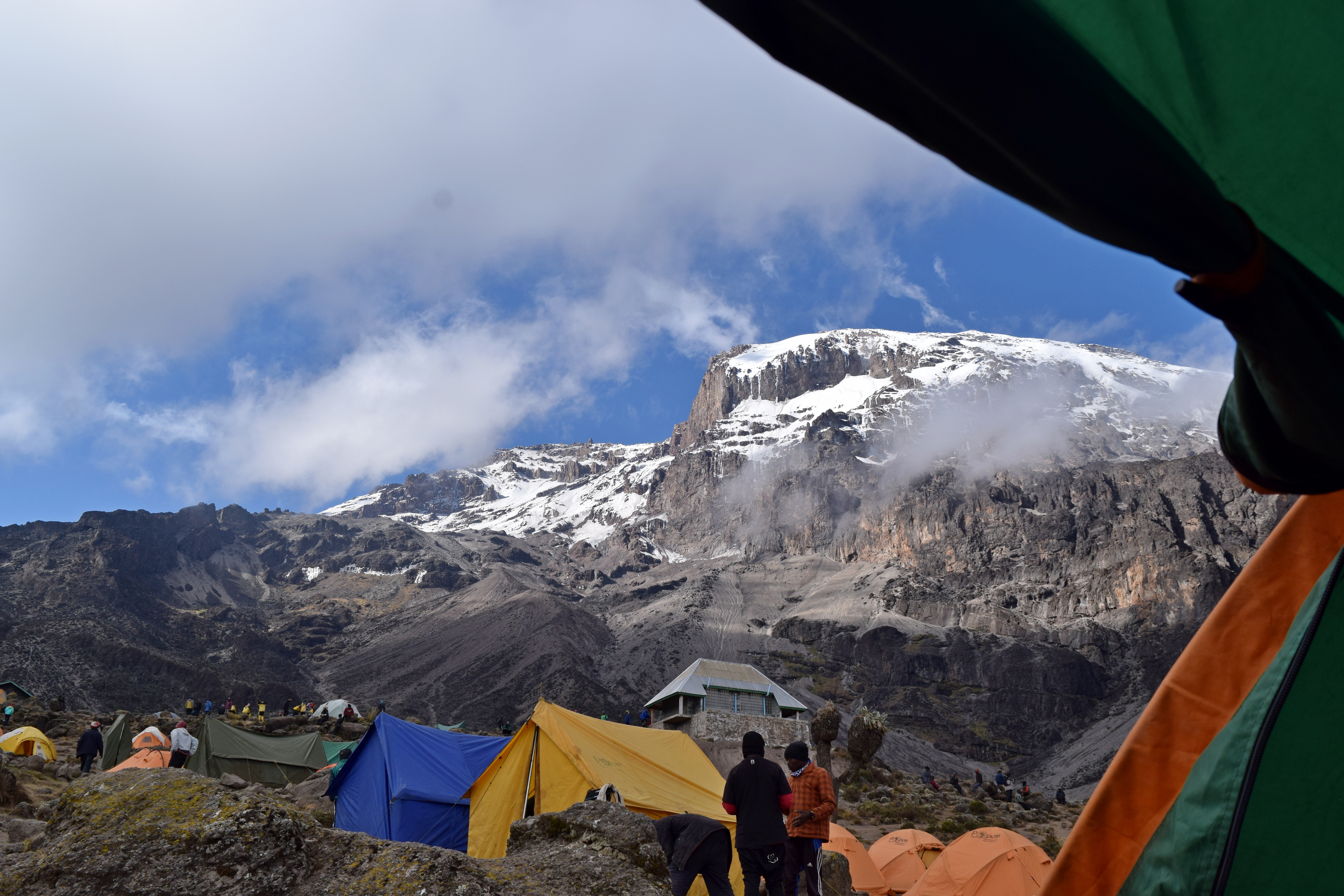
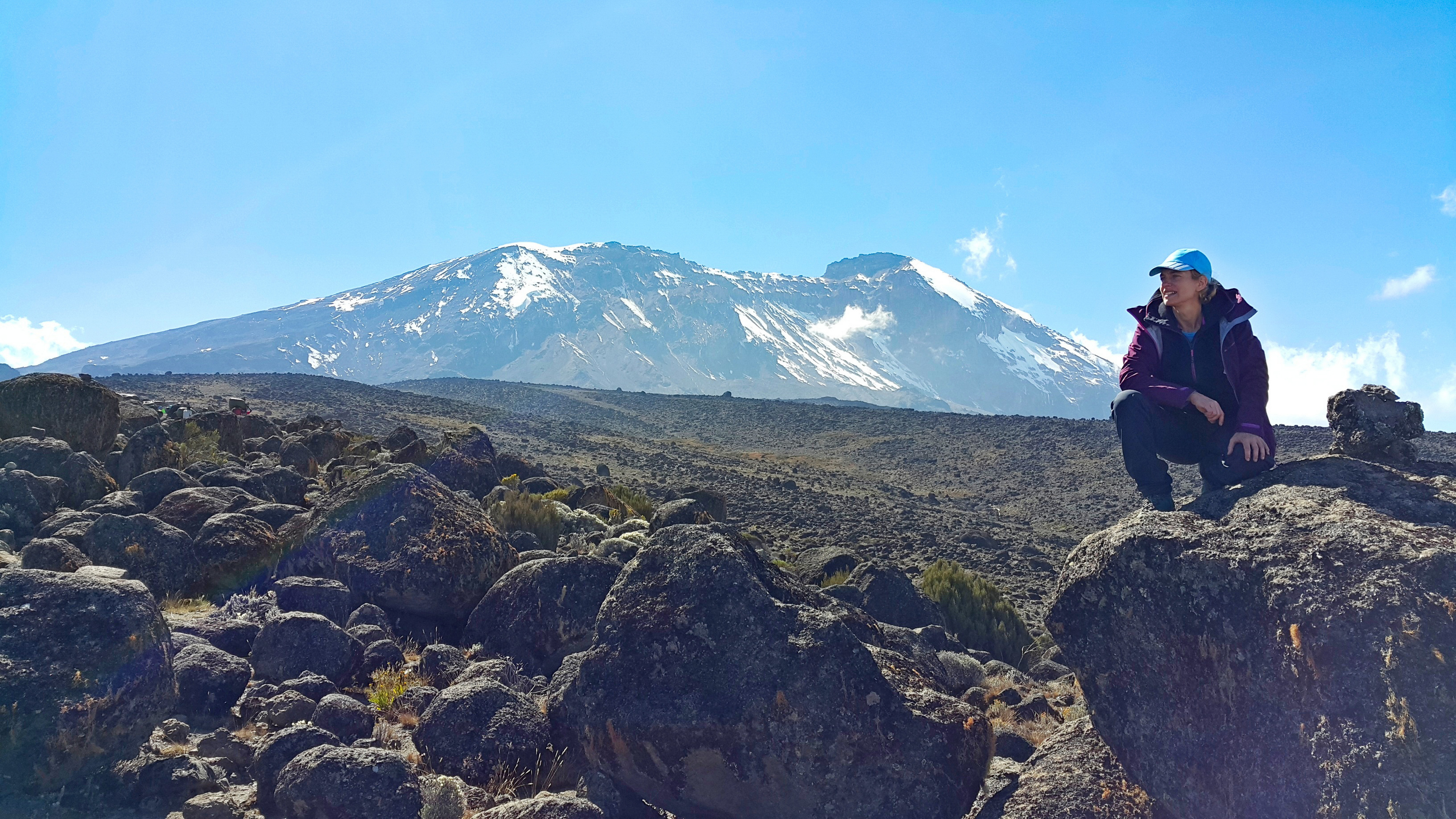
View from our tent @Barranco Camp to Kilimanjaro Glaciers
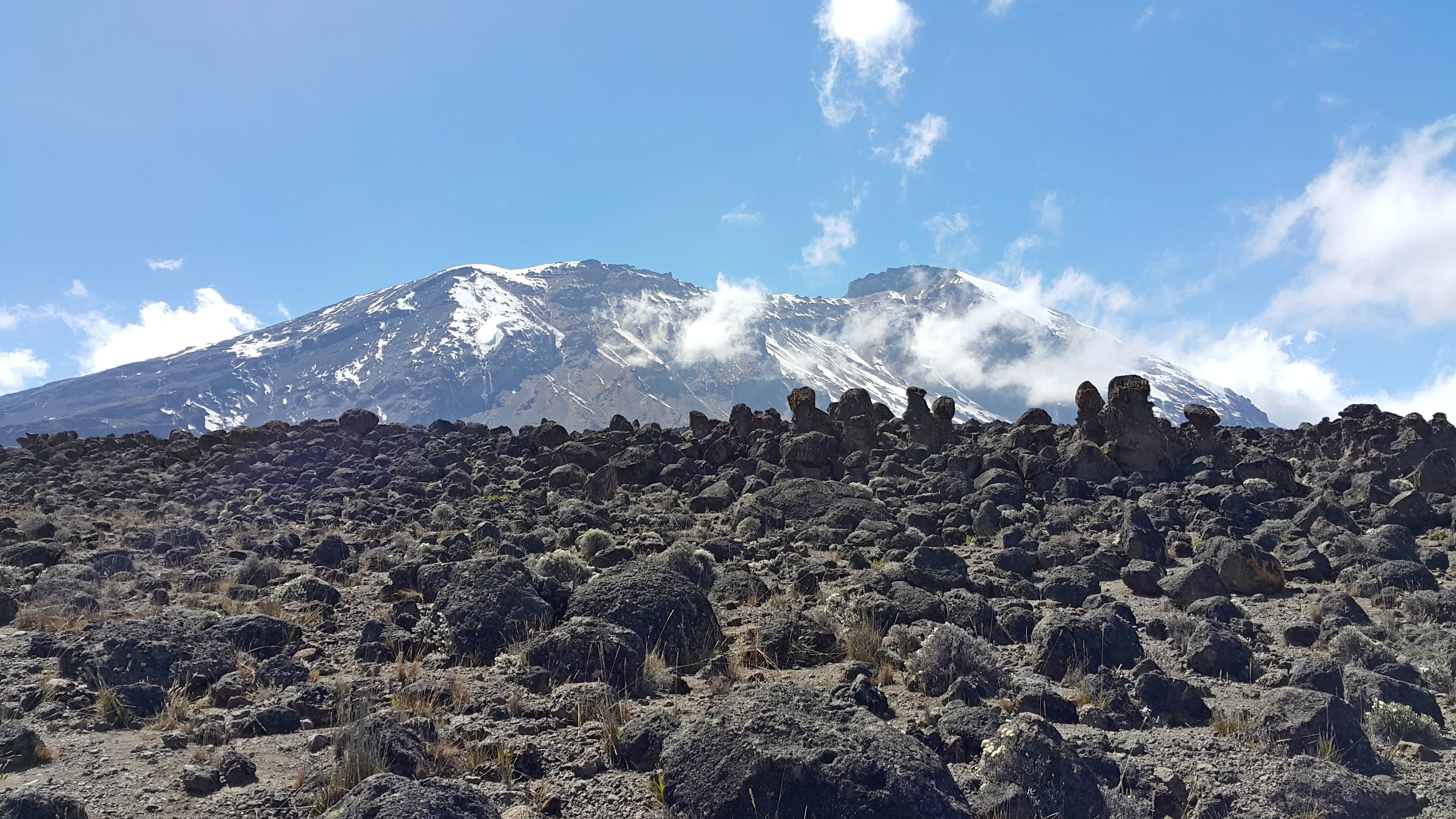
The alpine-desert zone on the mountain – black rocks, volcanic dust and chilly winds.
Now that I also count to the group of those lucky people who stood on top of Africa, and reflecting on my own experience getting there, I realize one simple thing – from the very beginning my goal was NOT to reach the summit. Instead, I was focused on every single step towards the top. Literally and figuratively speaking. Almost like in a tennis match. The big game consists of hundreds of short rallies. If you think too much about the end result, you usually lose the game.
Our guide nailed it very nicely – “Indeed, it is cold in the mountain, and it will get colder going up. And that’s normal. Don’t think about it. Don’t think about the summit. Think about the current day. Pole-pole.” The latter meaning “slowly-slowly” in the language of East Africa, Swahili. And so we religiously followed his wise advice.
Surely this kind of attitude is helpful on the mountain but there are also other factors that play a role. Believe it or not, I wouldn’t put someone’s physical preparation in the first place. Well, no exercise is definitely not great but the state of mind is at least as important. Having a relaxed, no-rush and can-do mindset certainly played in our favor.
Next comes the clothing and equipment. The good news for those of you who intend to climb Kilimanjaro, is that I put together some extra tips for your preparations at the end of this post. Agencies that organize this kind of adventure usually provide a long list of items; however, experience is the best way to learn so I hope my tips will come handy for you some day 🙂
No doubts, the proximity of Kilimanjaro to Rwanda was an advantage for us. A direct flight from Kigali took us for less than 2 hours to Kilimanjaro airport, and just an extra hour to our hotel in Moshi, where we spent the afternoon relaxing and preparing for the big day. While driving to Moshi, I was looking around to catch a glimpse of the snowy summit of Kilimanjaro but without success. The mount didn’t please me in the next few days neither. As if it was ready to reveal itself only to those who dare to climb it up to the end.
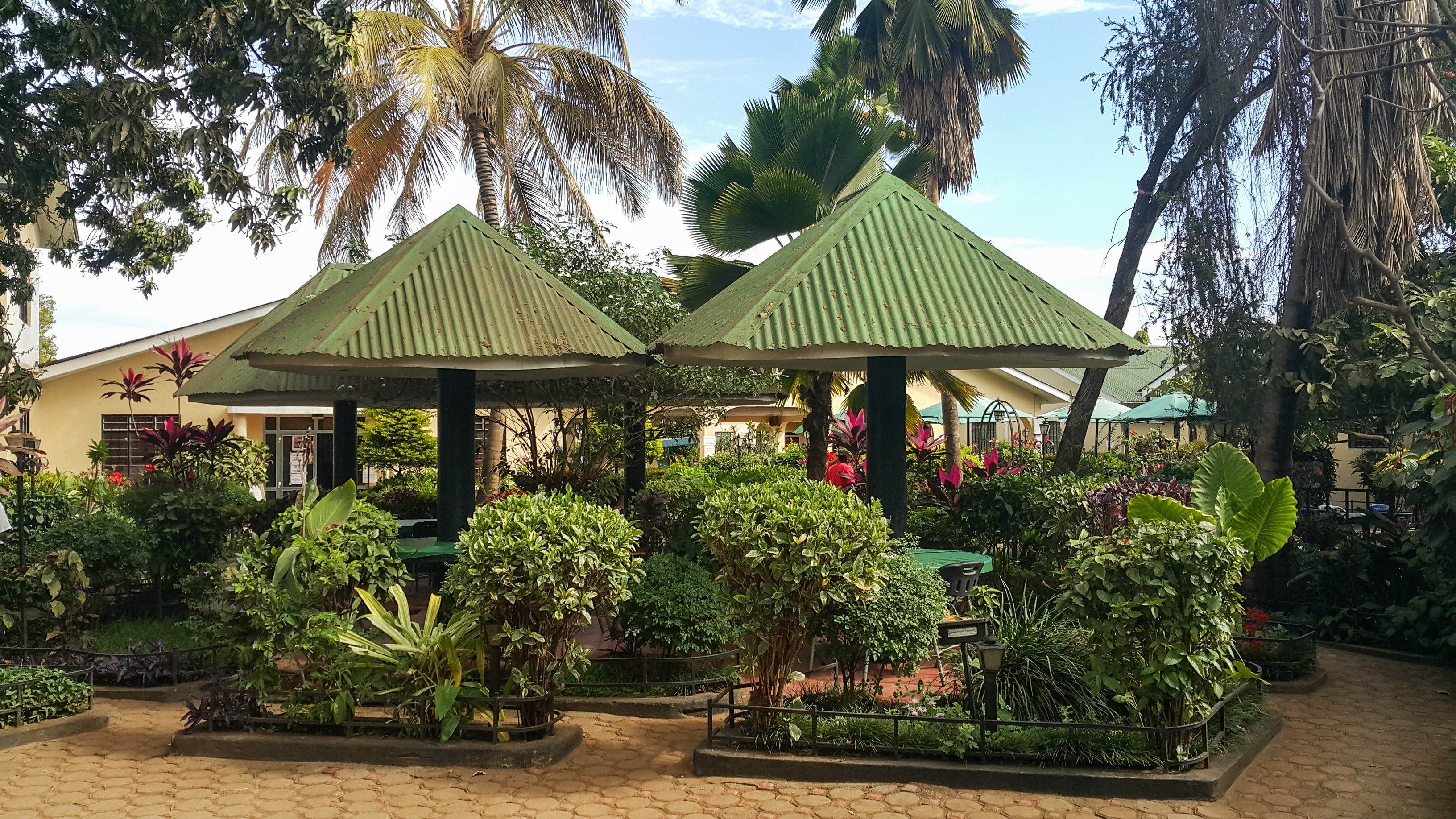
The cozy green garden of Springlands Hotel in Moshi
During the briefing at the hotel, our to-be guide Musime assured us that we will be in good hands with his team. It turned out the team includes a cook, a waiter, main and assistant guide (in case any of us has to descent prematurely), and porters who carry the tents and the rest of your stuff from camp to camp. In other words, you only have to carry your daily backpack containing your water for the day (2-3 litres), rain pants/jacket, walking sticks, snacks and some personal belongings, all in all not more than 5-6 kg. This is quite a relief, isn’t it?!
Alright. Here we go. Pole-pole. No rush.
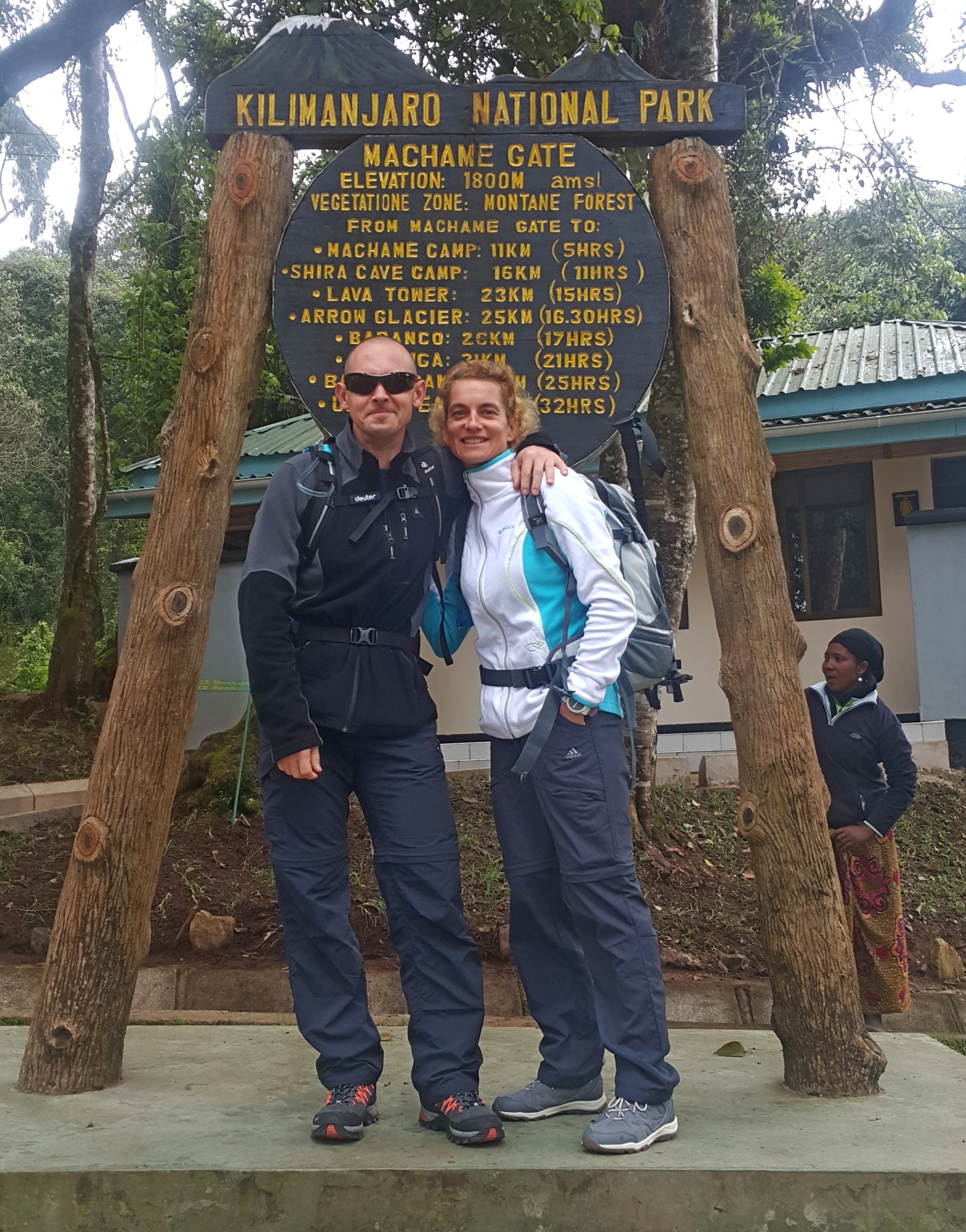
The starting point at Machame Gate
It was quite packed at the starting point. I knew that our route is one of the more popular ones due to its spectacular scenery (Machame Route) but I honestly didn’t expect to see so many climbers. Obviously, Kilimanjaro has become quite an attraction… Anyways, as soon as we started the hike, it got better. We hiked together with another couple who booked with the same agency as ours, and we got along with them quite well.
Since I mentioned routes, a small advice to those who intend to climb Kilimanjaro: go online and research all 6 climbing routes. They can vary in length, cost and scenery. Machame Route (aka “The Whisky Route”), especially if taken for 7 days, is great. Some people do it for 6 days, but I personally think that this one extra day which is added for acclimatization makes the whole experience a lot more positive and much less stressful.
Time flew swiftly by on the first day. The hiking path passed through a forest, where we had our packed lunches and enjoyed the cool temperatures and relatively dry trail. It was a grey, foggy day, with Mount Kilimanjaro remaining hidden behind the thick clouds at all times.
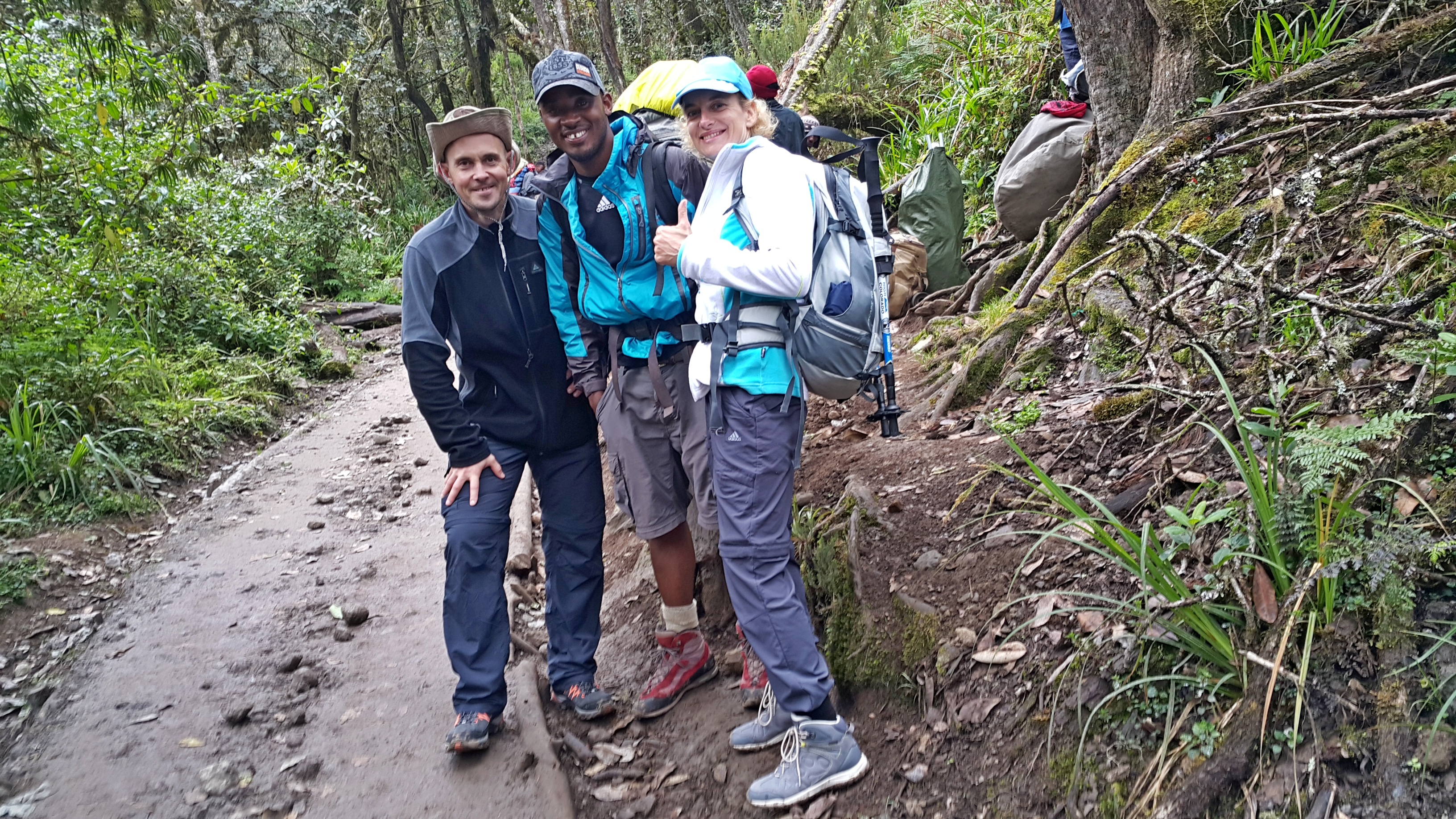
Hiking through the forest with our main guide Musime
Upon arrival at our first camp, Machame Camp at 2835m, we had our tent already set up and boiled water for washing waiting for us. Dinner was served soon after that. Peter and I had a very romantic candle-light dinner at sundown in our small cozy tent – definitely a great start of our Kilimanjaro adventure.
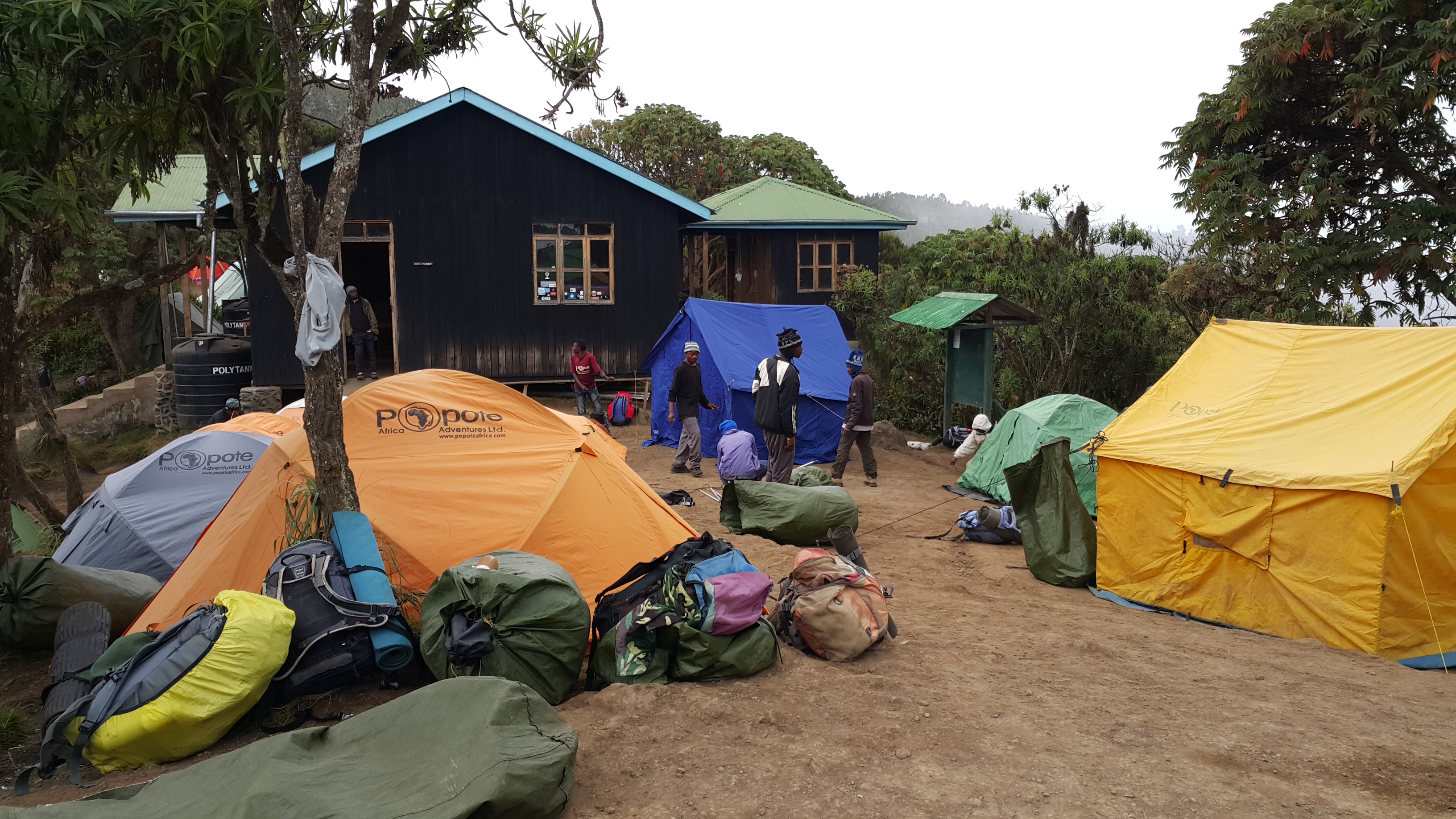
Pitching tents at Machame Camp 2835m
Food was better than what we had expected to have on the mountain but let me share another small yet super important detail of our equipment – the Toilet! 🙂
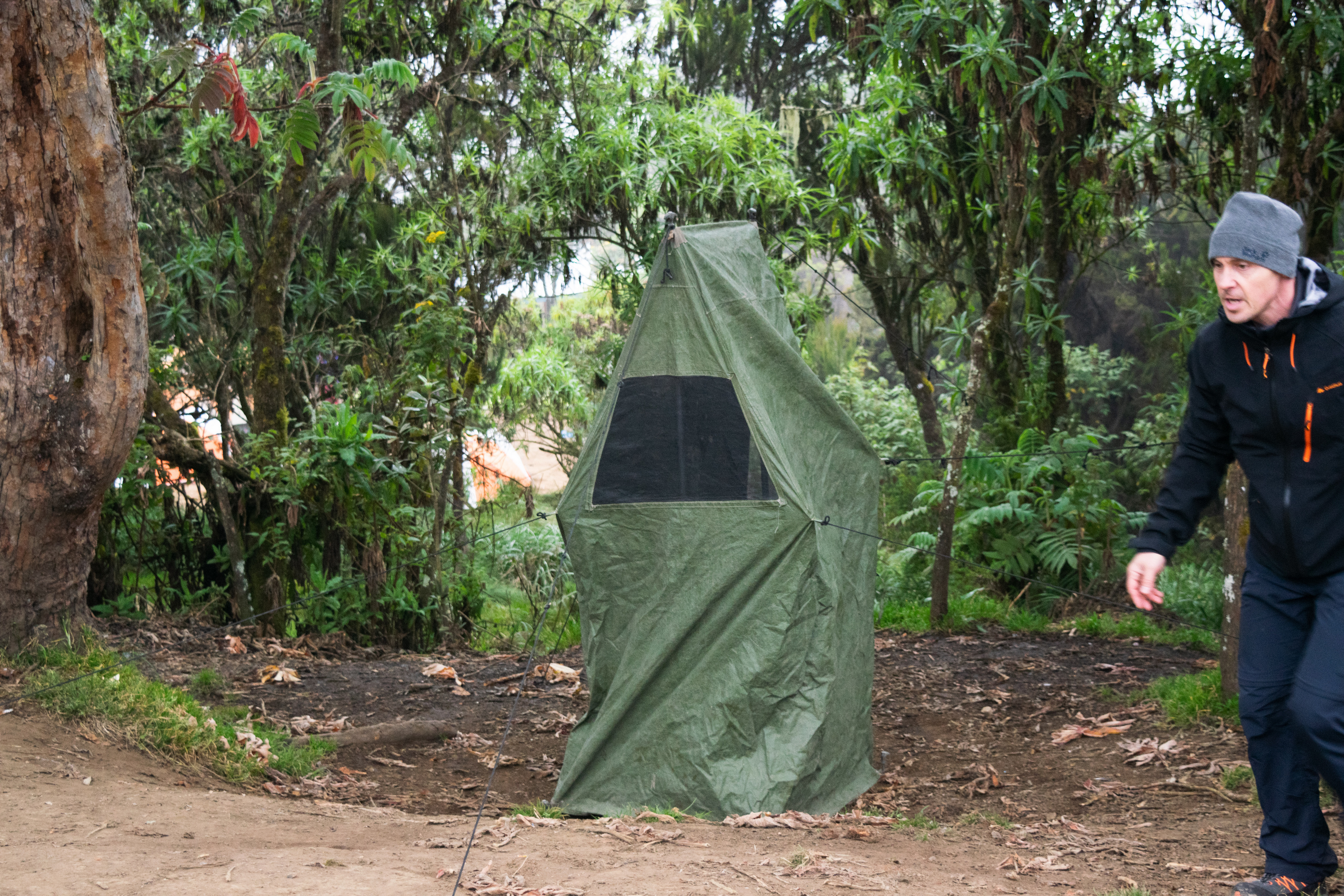
To rent a private toilet was the best decision we’ve taken at all. After the guide shared with us that it could be challenging to go to the public toilets shared by many climbers at the camps, it took us less than a second to make a decision. In more detail (sorry, if this catches you at the dining table), the private toilet we had is like a small version of the chemical toilets set up at big public events. It is covered by a tall tent. OK, I know it doesn’t look super attractive, but oh, what a precious thing it is in the middle of a freezing cold night or early morning, when you desperately need to relieve yourself without having to wait a long queue. On top of this, the toilet interior had its own micro-climate, so at the end I didn’t mind staying longer in, to warm up a bit those fingers and toes!:-)
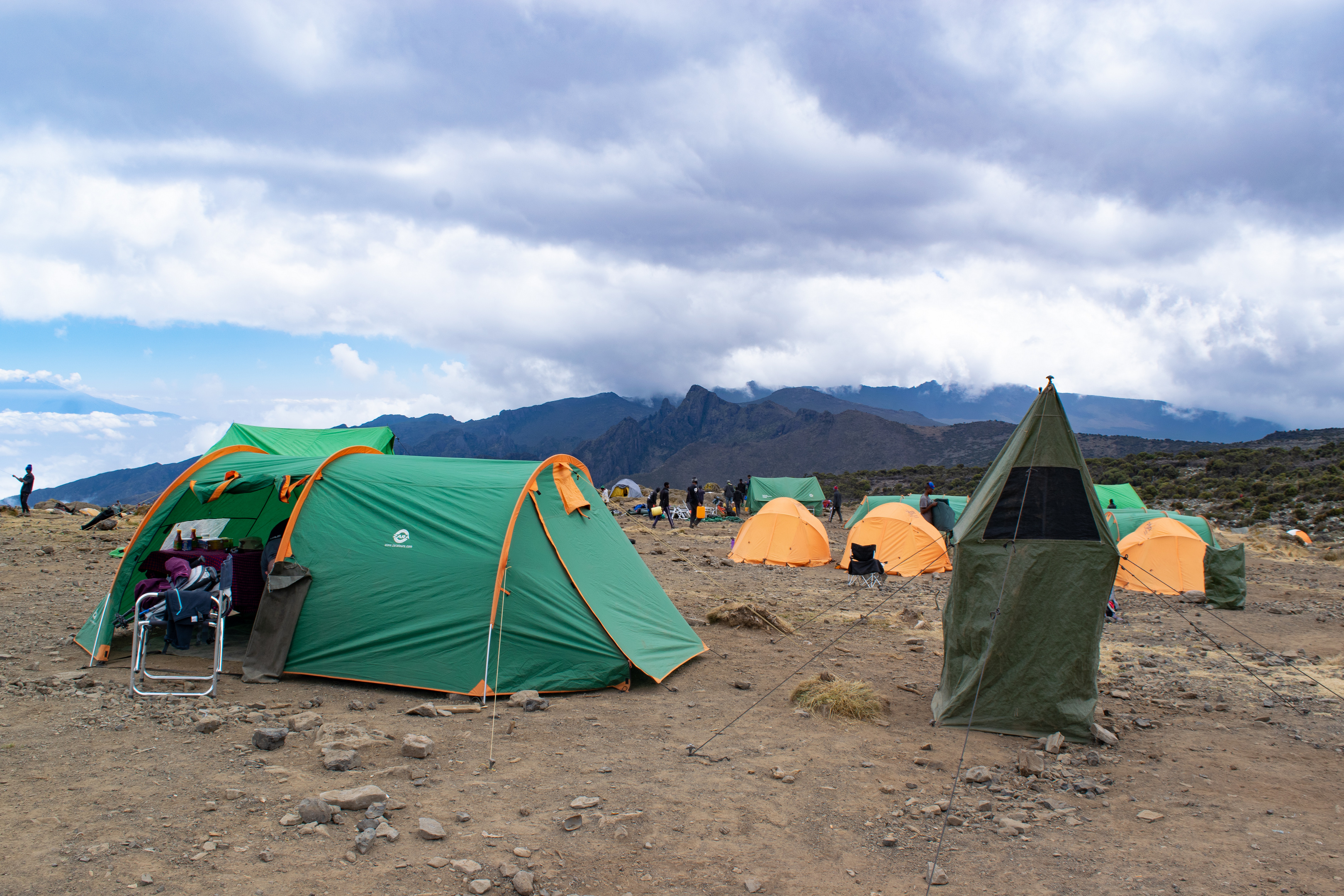
These two tents went very well together 🙂
Now you probably wonder who the heck carried this toilet up the hills. The answer is as simple as that – the Toilet man. Seriously! Don’t dare to laugh! It may sound funny but it is actually not. There is a special porter for this, in case you rent a private toilet. And his job is to take care of your toilet so that it is always set up and clean when you arrive at your next camp. And we couldn’t be more thankful to Soleil – our Toilet man – for being always so careful and responsive! Sometimes small things matter more than big ones!
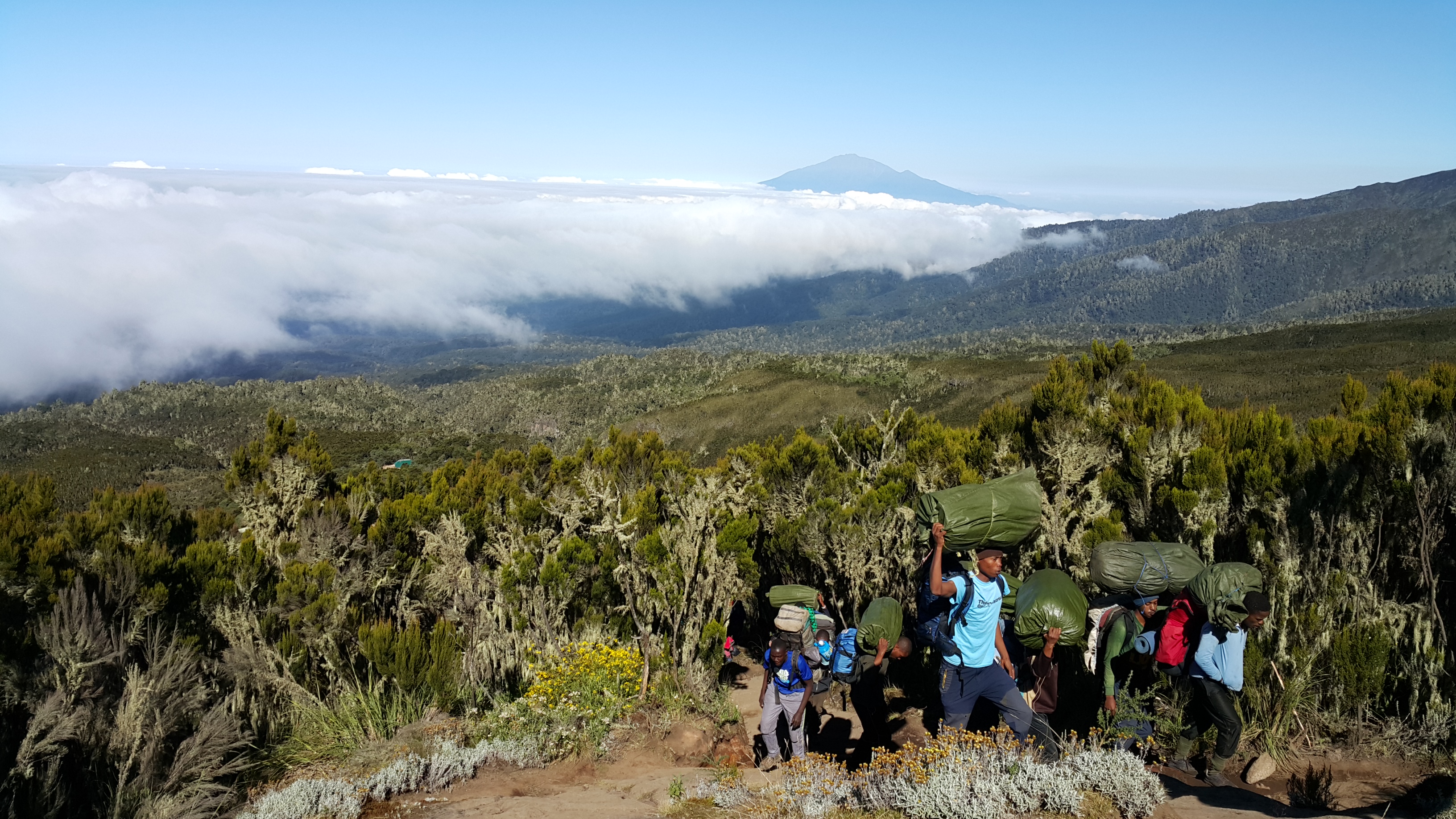
Passing from the forest to the moorland zone
Since I opened up the porter topic, let me share with you another “small” detail which actually occupied my thoughts quite often during the whole climbing adventure.
Can you guess how many porters carried our stuff, including the tent (+ their own tent), 2 camping chairs and a table, sleeping bags, our mountain rucksacks, and excluding the toilet? Four (4) porters! Now, can you guess how they technically carry all of this? The answer is on the picture above – on their heads. Usually 15-20kg per porter. Same trail up as ours but with 3 times more weight on. Yet they would catch up with us and take over on the way to the next camp. While having porters pass by, we would often hear “Mind you head” which warned climbers about an approaching porter carrying a large load on his head. Not to mention their worn out shoes (sometimes sneackers!) and casual clothes. On top of this they sing and smile. How can someone be so fresh and cheerful with such a heavy weight on their head?!
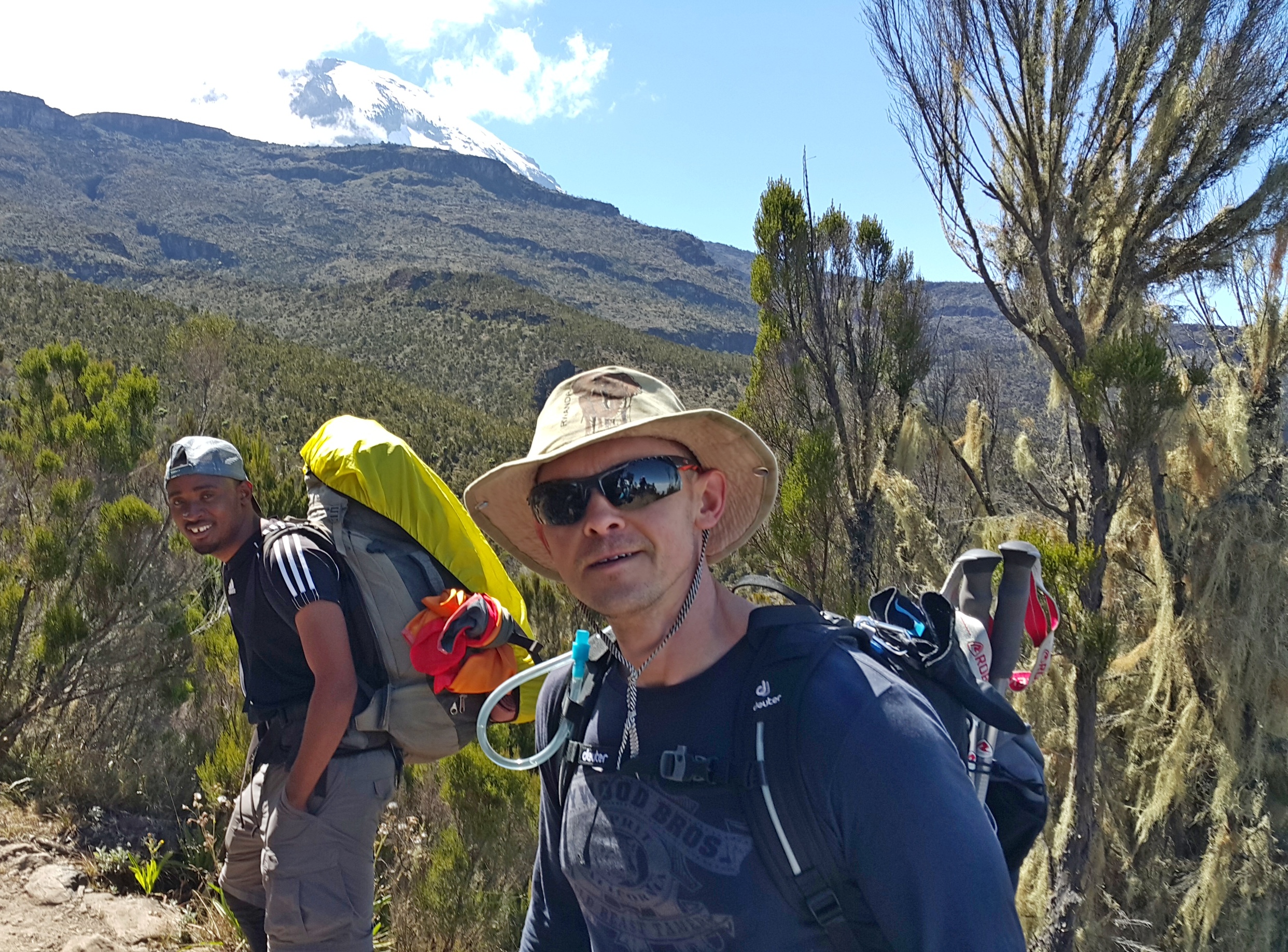
Peter and Musime hiking up the easy trail to Shira Camp
Our main guide Musime has gone a long way to his current job. Starting off his career as a porter, then a cook, later enrolling in a special study to eventually become an accredited guide of Kilimanjaro National Park. All of this took him 10 years and 75 climbs to the summit! 75! Impressive, isn’t it?! I guess that what we are now so proud of is for him like a daily walk in the park 🙂
After a cold first night with temperatures around the freezing point and two layers of thermo underwear, I was impatient to start the next day hike to warm up a bit. The 2nd day turned out clear, sunny and warmer. The surrounding vegetation also changed and after a short hike we reached the end of the forest and then climbed at a gentler gradient through the moorland zone, rising above the clouds in the kingdom of sunshine.
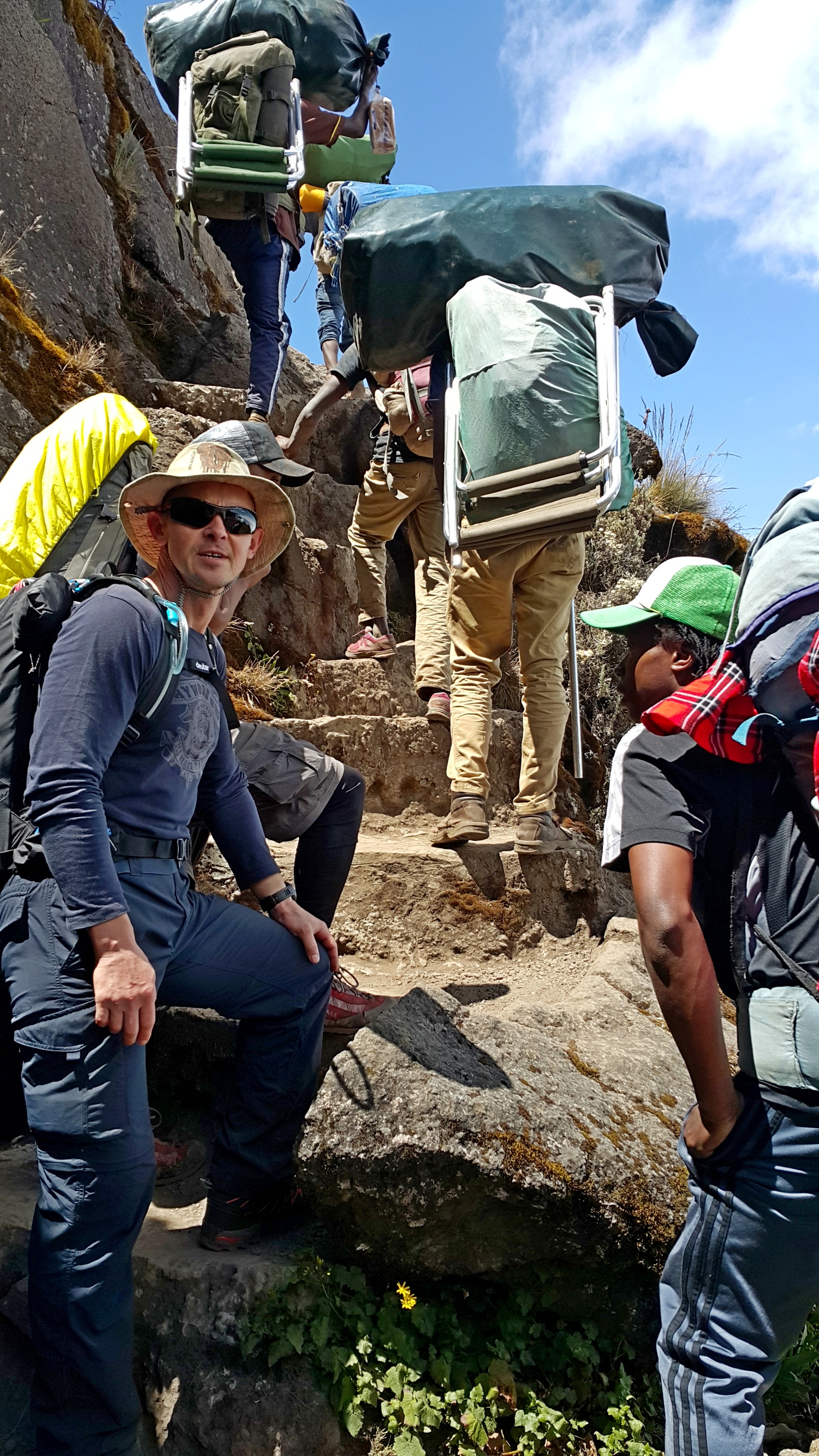
A little hike up the rocks leading to the moorland zone
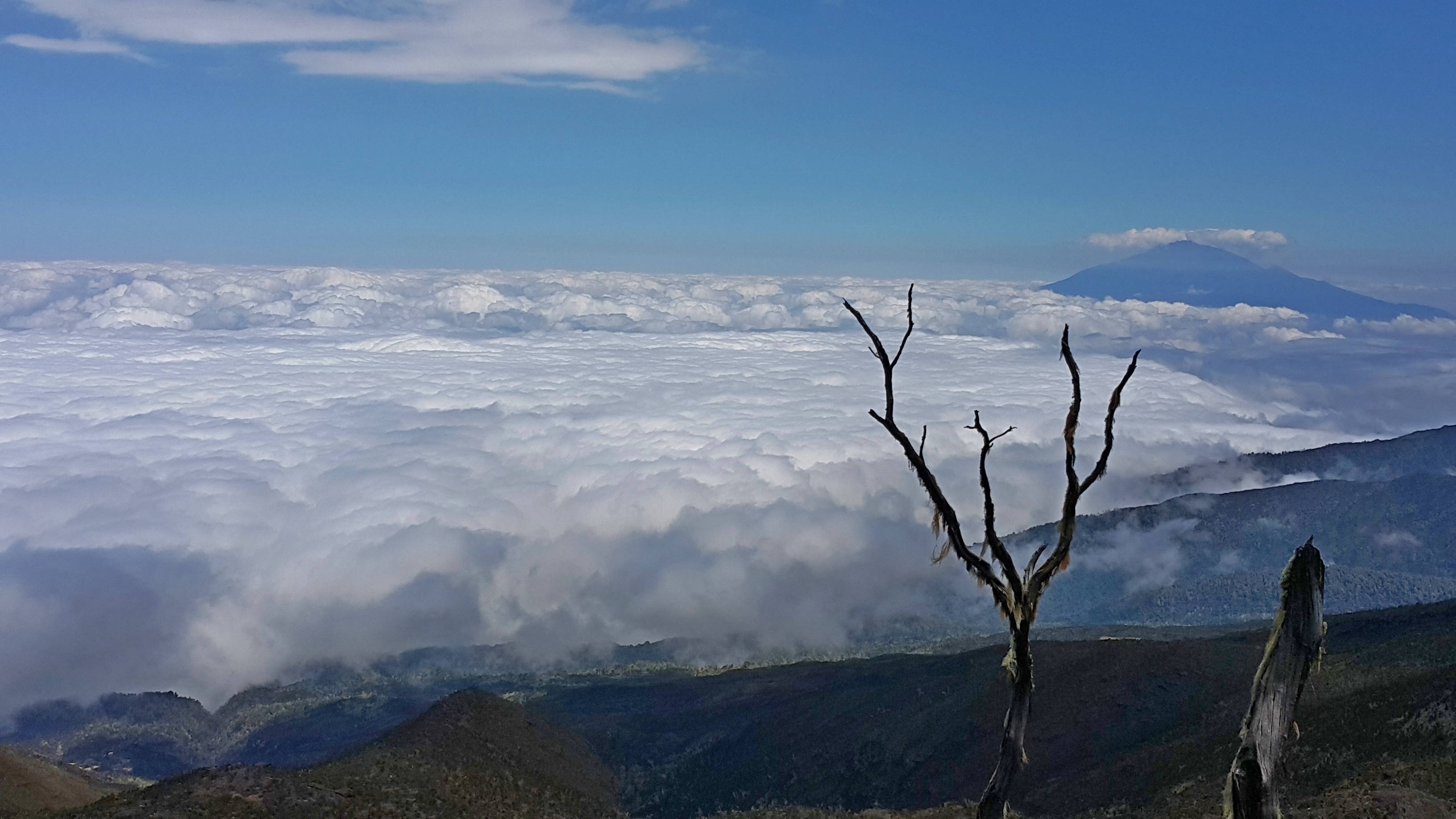
Mount Mero, the 4th highest in Africa, sticking out in the background
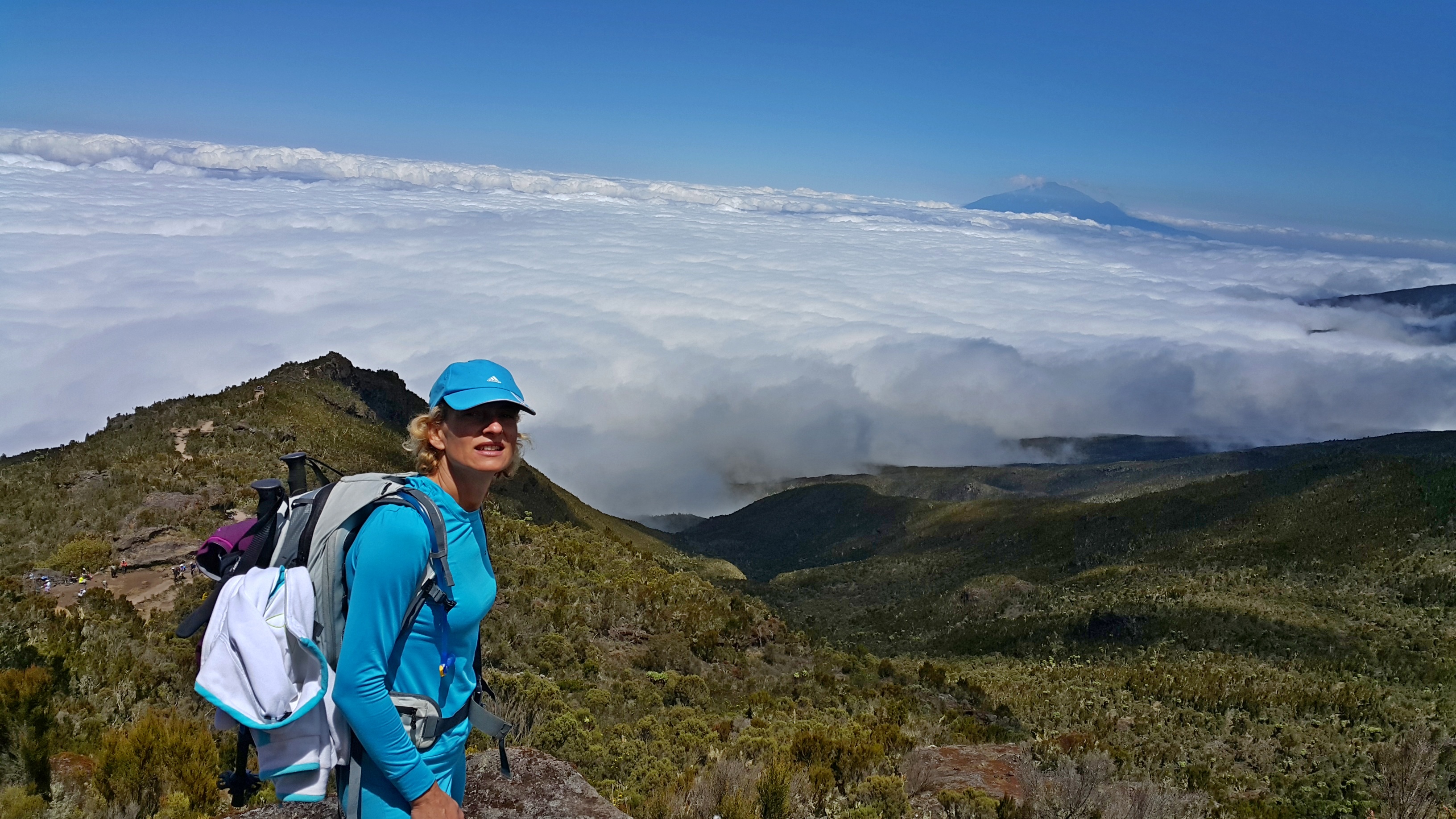
Reaching high above the clouds
Hiking together with the other couple for about 4-5 hours on a steeper and rockier trail, we were so involved in chatting that we didn’t notice when we reached the second camp – Shira Cave Camp at 3750m.
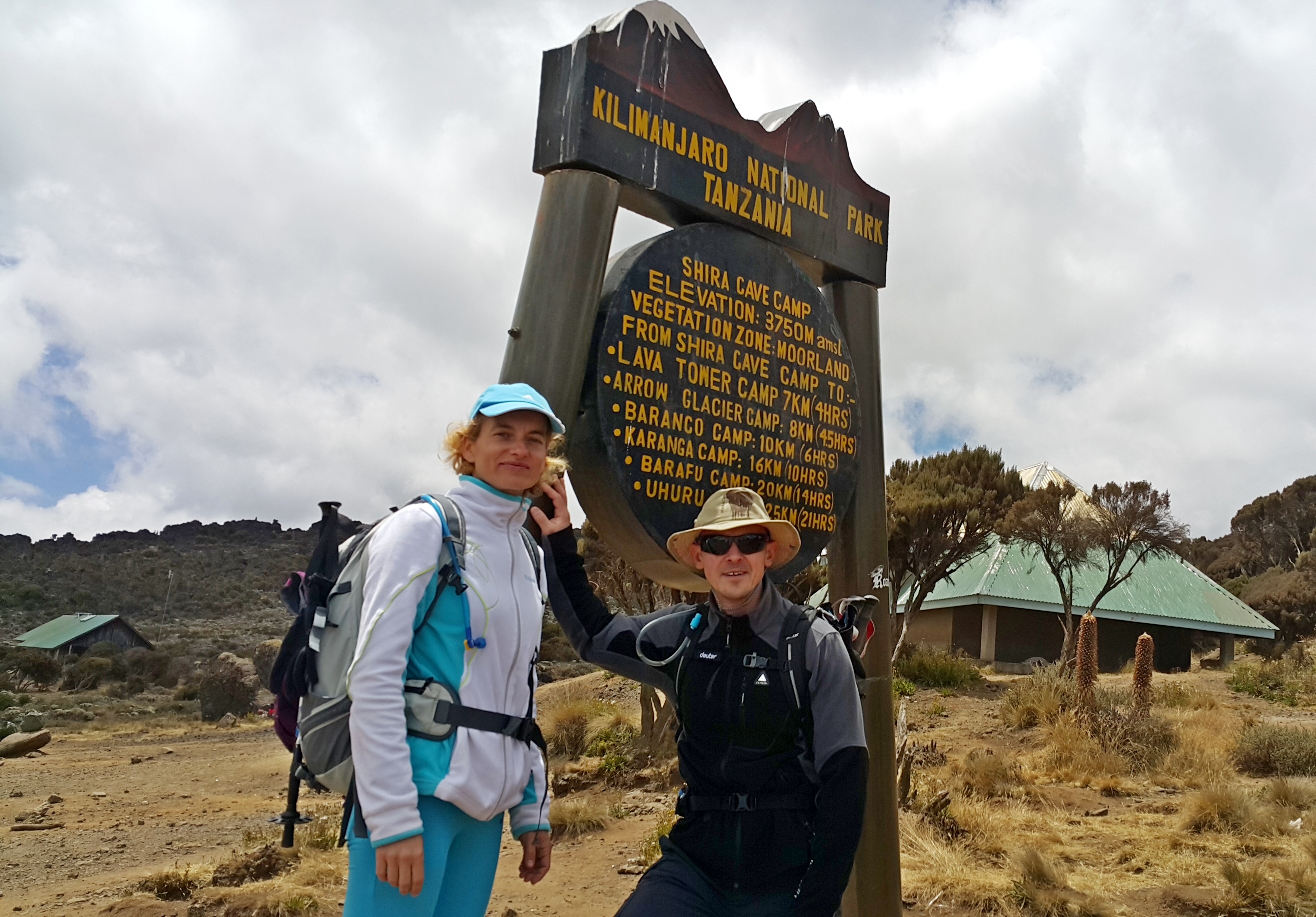
Arriving at Shira Camp for a second night over
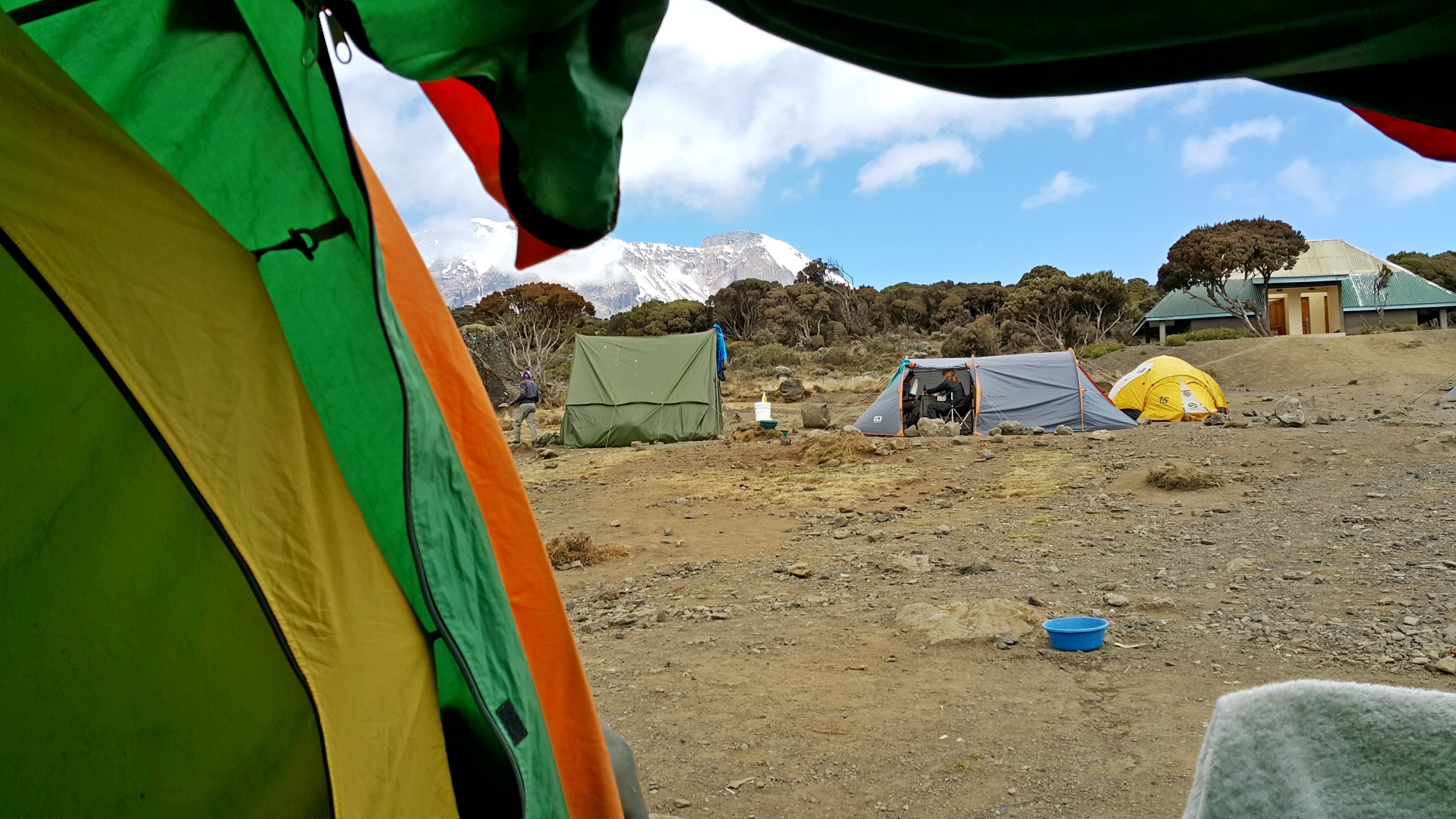
The view from our tent @Shira. Mount Kilimanjaro finally unveiled its beauty for us.
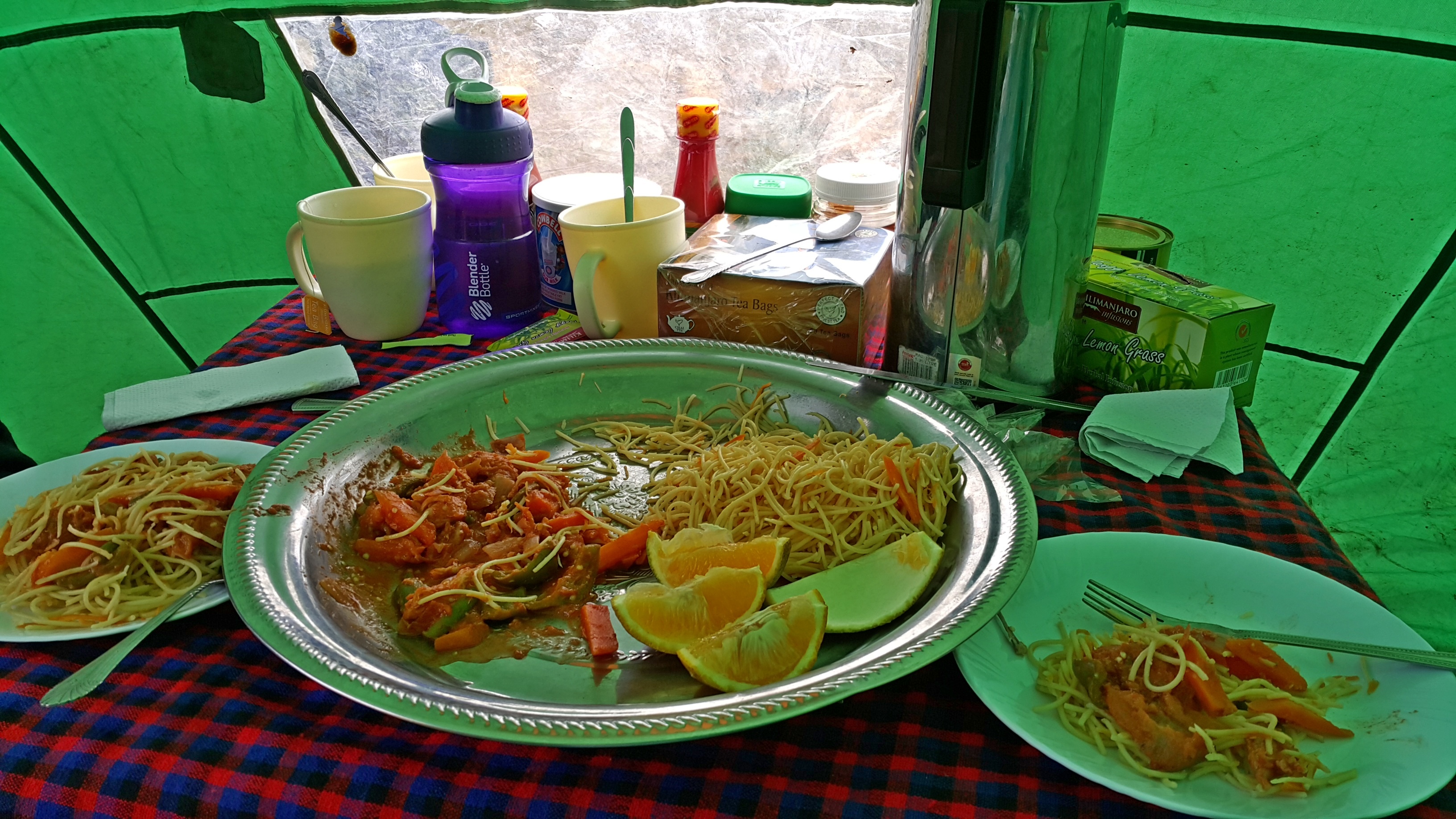
A delicious hot lunch – spaghetti with vegetable sauce. Yummy!
After lunch and a short rest, we climbed another 100m of altitude for acclimatization and returned just on time for dinner at sunset. We started kind of liking our romantic dinners in the tent 🙂
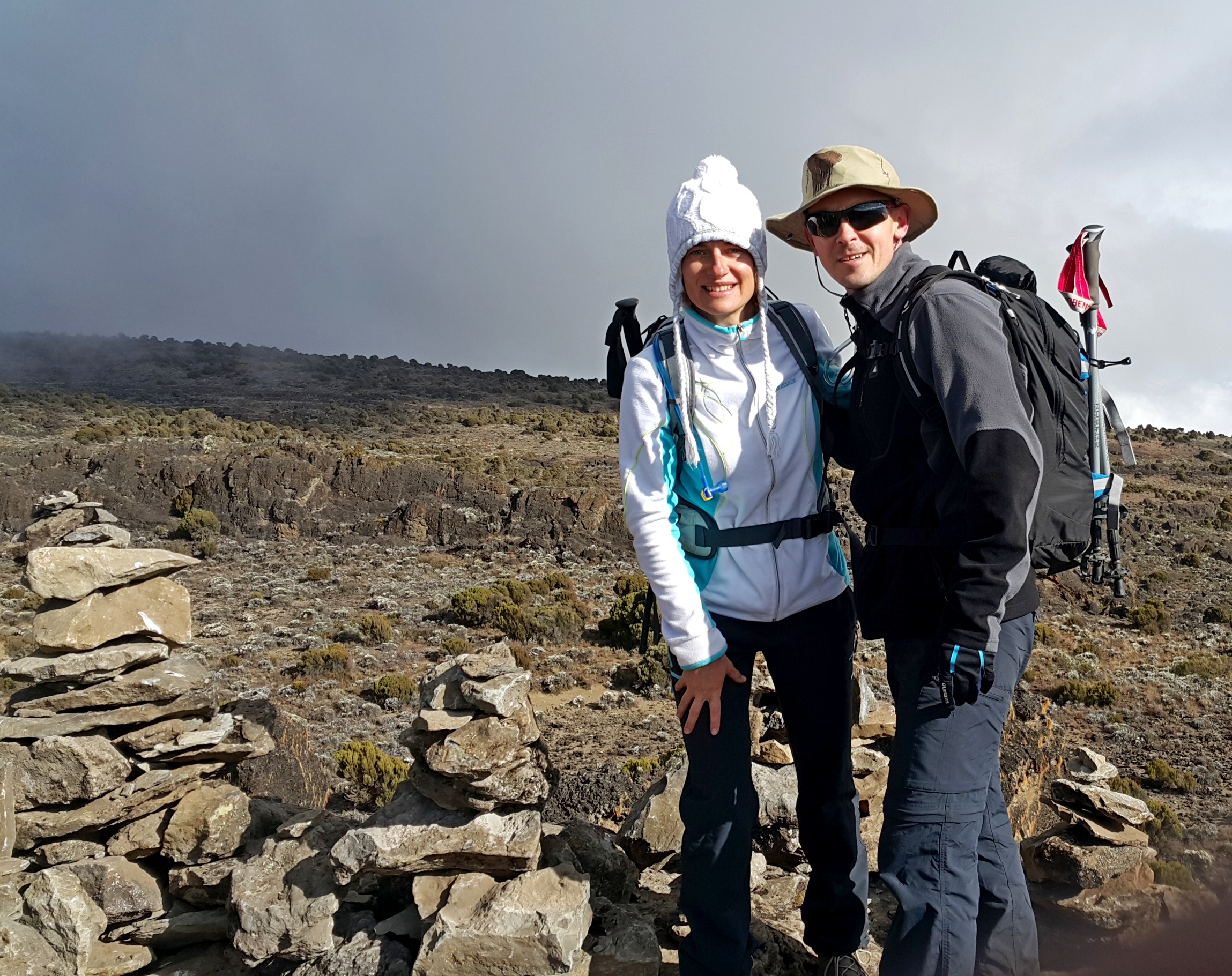
Afternoon acclimatization hike. Just before the mist swallowed us.
The weather finally stabilized and the evening was warm and windless. All climbers were hanging out around the camping area, socializing with others, enjoying the sundown. Loud encouraging songs were coming from the big climbing groups. One could feel the elevated mood, adrenaline and excitement in the air.
I got caught by the following thought: it’s amazing how people’s behavior change when facing the power of nature. Absorbed by our daily work and routines, we tend to be less tolerant, constantly dissatisfied and easily irritated by apparently unimportant things. The nature has incredible impact on our psychological well-being. After spending just a day or two in the open air, we suddenly become more balanced, more tolerant and let things go with less hesitation. We become more human and let the child in us speak up again 🙂
That evening I tried to phone our daughters in Kigali. One could easily identify the area with best connection at the camp by the crowds – attracted as bees to honey by the better signal. My attempts were not successful but I managed to get a few SMS through at least. While I was trying to make a call, I noticed a few American ladies Facetime-ing with their relatives in the US! With video! Isn’t it amazing – having a video call from Kilimanjaro with the other part of the world! But then I really found it difficult to hold my laugh when I heard one of the American ladies saying: “Oh, dear, it is so great being able to make a call with you from Africa!” I don’t know why some people tend to confuse Africa with a country. For God’s sake! Africa is not a country. It’s a whole continent. A big one. There is even a children book titled “Africa is not a country”. Obviously, adults should also be educated…
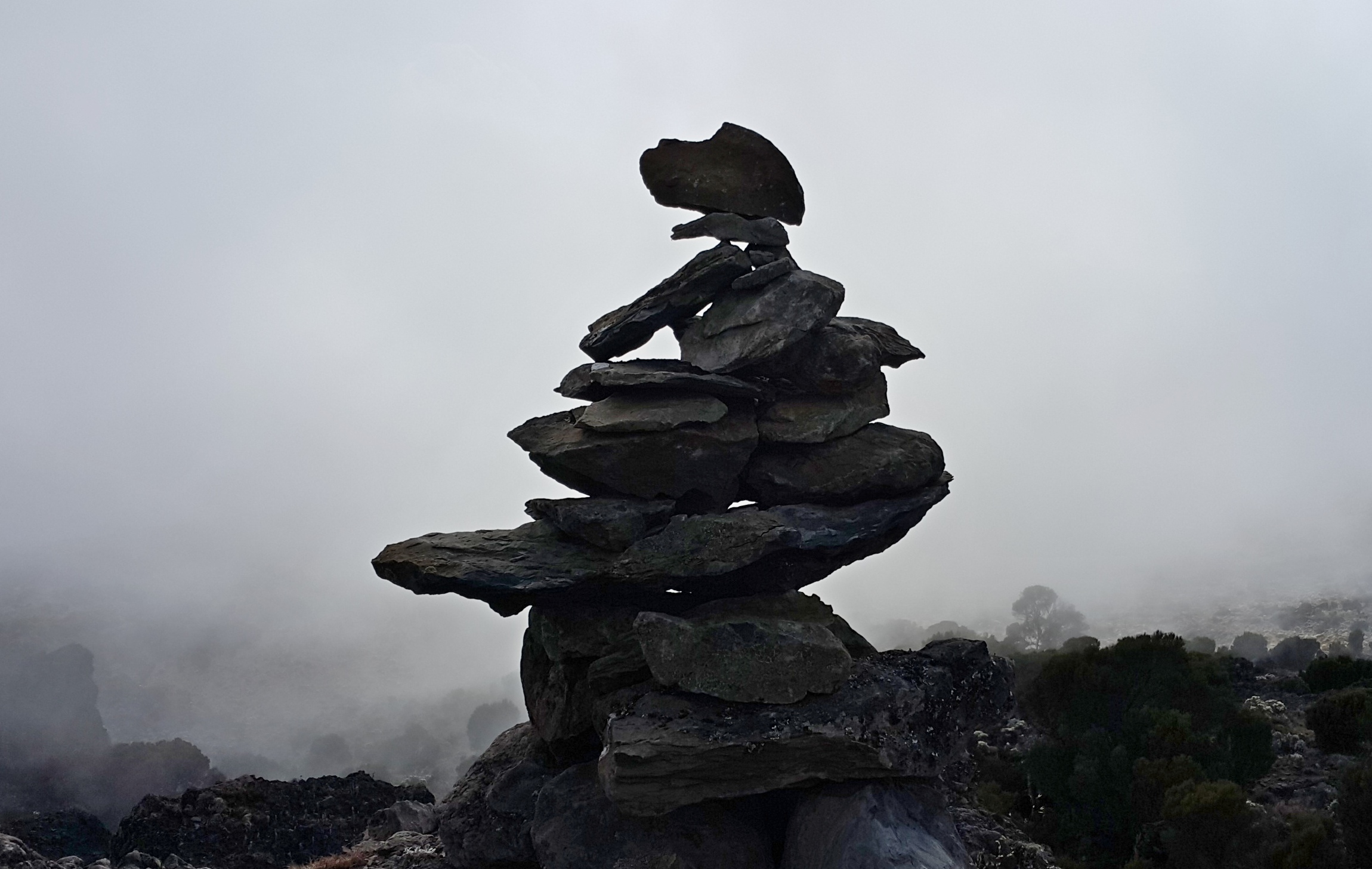
One of the many stones arranged by porters to keep up with the right track.
The night turned out colder, particularly after the winds started blowing again at this much more open camp but we found a solution for that – three layers of clothes, two pairs of socks, a warm hat and a hot water bottle in the sleeping bag (lent by our good friends). True, this sleeping gear was all too heavy and didn’t allow to move easily in the small sleeping bag (I felt like a mummy in a coffin) but at least the cold was bearable. At some point the wind became so strong that I wasn’t sure whether we will wake up with a tent above our heads… Then the tiredness took over. When I woke up later during the night to make a visit to our private toilet, it was perfectly quiet and beautiful… clear skies full of big stars, the milky way and a quarter of a moon making my short walk to the toilet a very exciting experience! 😉
According to our hiking program, the 3rd day was supposed to be the toughest so far due to the high altitudes. The vegetation turned into a semi-desert and rocky landscape surrounding the Lava Tower at 4600m, which we reached within 4 hours. I am sure we could have been much faster but our guide reminded us: “The Mountain will always be there. You won’t. So take it easy. Pole-pole”.
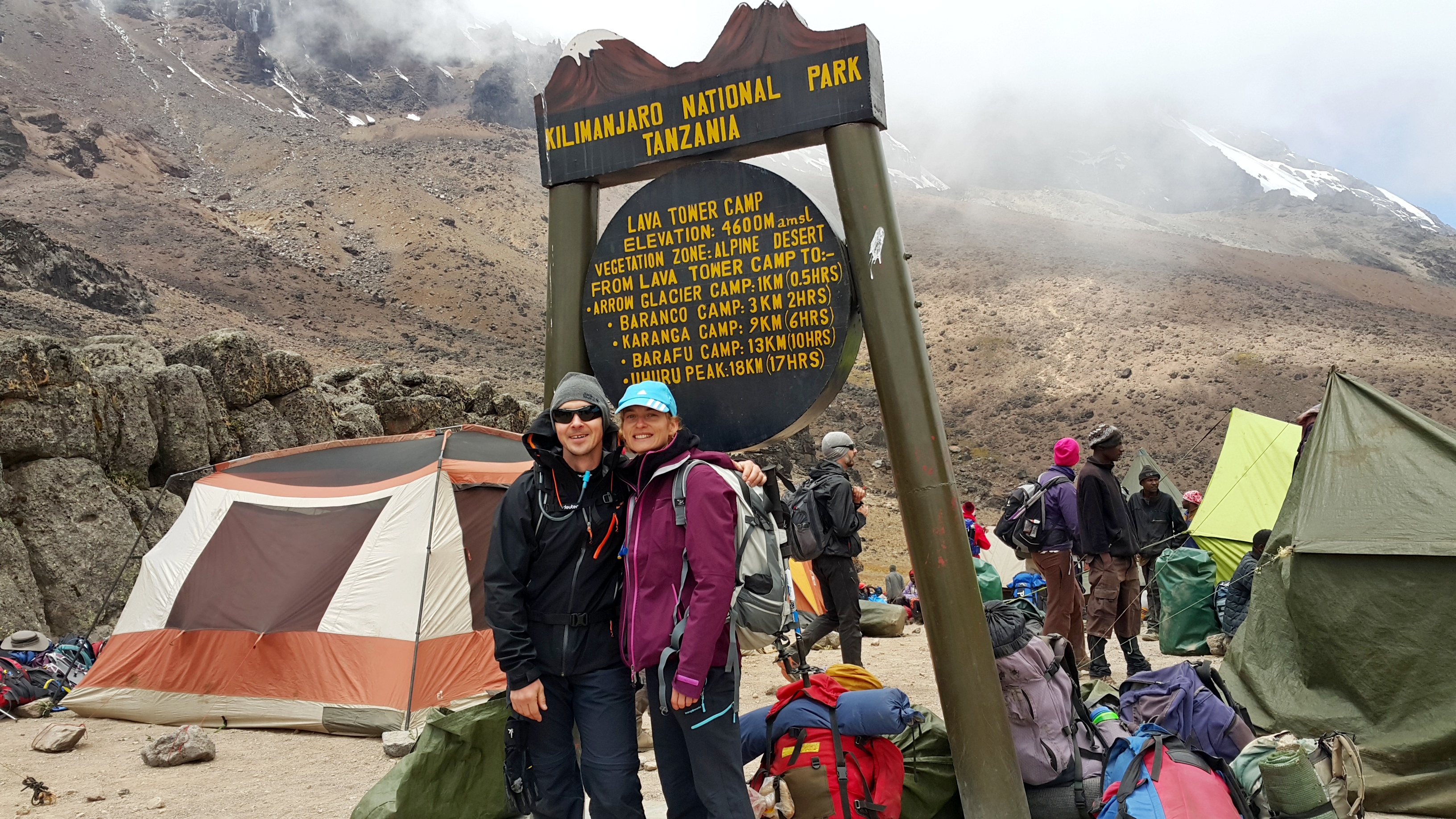
We read that this is around the point where some climbers would start feeling symptoms of altitude sickness (aka AMS – acute mountain sickness) – breathlessness, headaches and irritability. We didn’t feel any of these. No symptoms whatsoever.
This is the place to give you another tip or two. Apart from rule #1, i.e. climbing “pole-pole”, there are two other factors that could make your life significantly easier at higher altitudes. So, advice #2 is drink plenty of water! You would read about it everywhere, yet many climbers simply don’t take it seriously. Staying hydrated is crucial at altitudes. In reality, you only need about a liter or liter and a half on top of your standard daily water consumption, which means around 2,5-3 liters in total. Not a big deal. My extra advice on this point is to use a camelbak instead of water bottles as it makes the drinking effortless.
Advice #3: take acetazolamide (Diamox) to prevent AMS. We consulted a doctor and started taking the tablets a couple of days before the start of our climb. Diamox works the same way as your body does to help you acclimatize. It makes you urinate a basic chemical called bicarbonate, which makes your blood more acidic and therefore stimulates breathing hence taking more oxygen. In other words, it speeds up your natural acclimatization. So, I don’t see any reason why not taking it preventively.
With these three advices, you should be safe and sound on the way up to the summit!
After a short lunch break at the Lava Tower, we descended again by almost 700m to Barranco Camp (the whole idea behind ascending to the Lava Tower and then hiking down is to help your body acclimatize to the higher altitudes). The descent took us under 2 hours and offered magnificent views of the Western Breach, the Breach Wall and the surrounding vegetation.
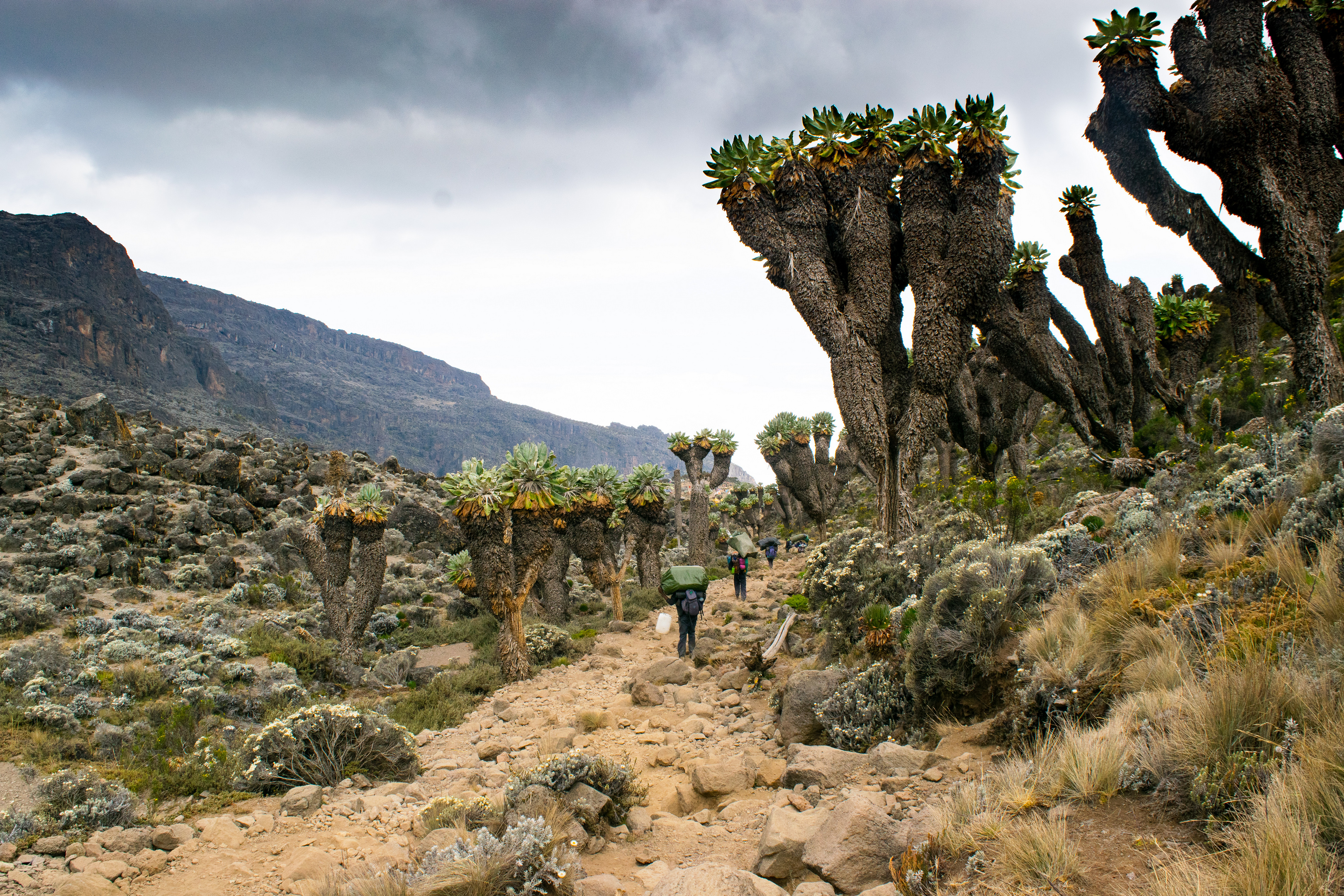
The giant groundsels can reach up to 10 meters high.
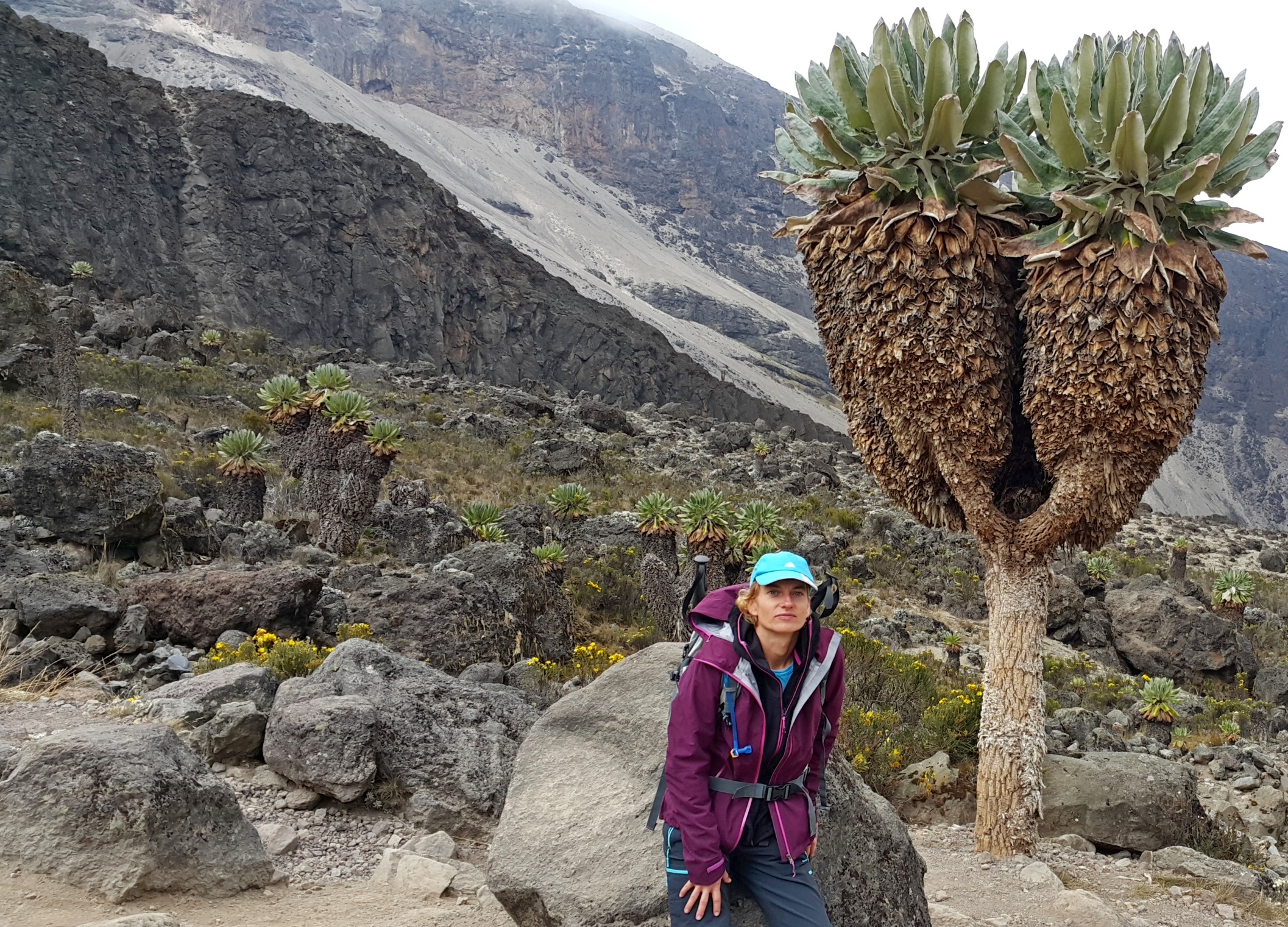
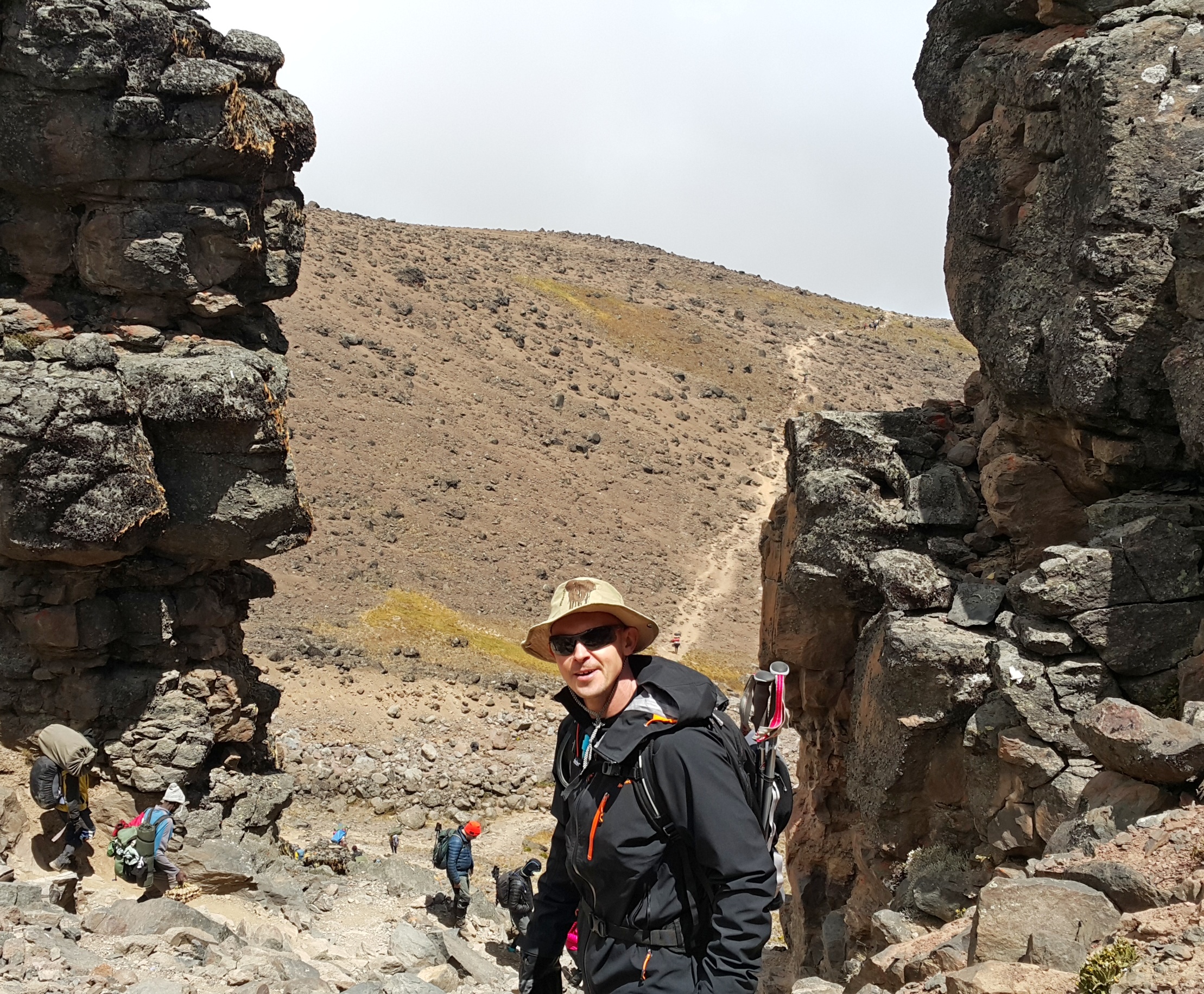
From Lava Tower at 4600m down to Barranco Camp at 3900m
The most distinctive plants in the moorland zone are the senecio or groundsel and the pineapple-like plant called Lobelia deckenii. Walking through a grove of these giant groundsels almost felt like playing in a movie shot on another planet.
The 3rd camp, Barranco Camp at 3900m, is located in a valley below the Breach and the Great Barranco Wall. We reached it just on time to enjoy a memorable orange sunset while waiting for our daily hot water for washing and dinner. This time I decided to sacrifice the hot water so I used it for an improvised spa procedure for my tired feet instead. Oh, that was the best decision for the day, indeed! I could bet I had the happiest, dry and warm feet on the whole camp.
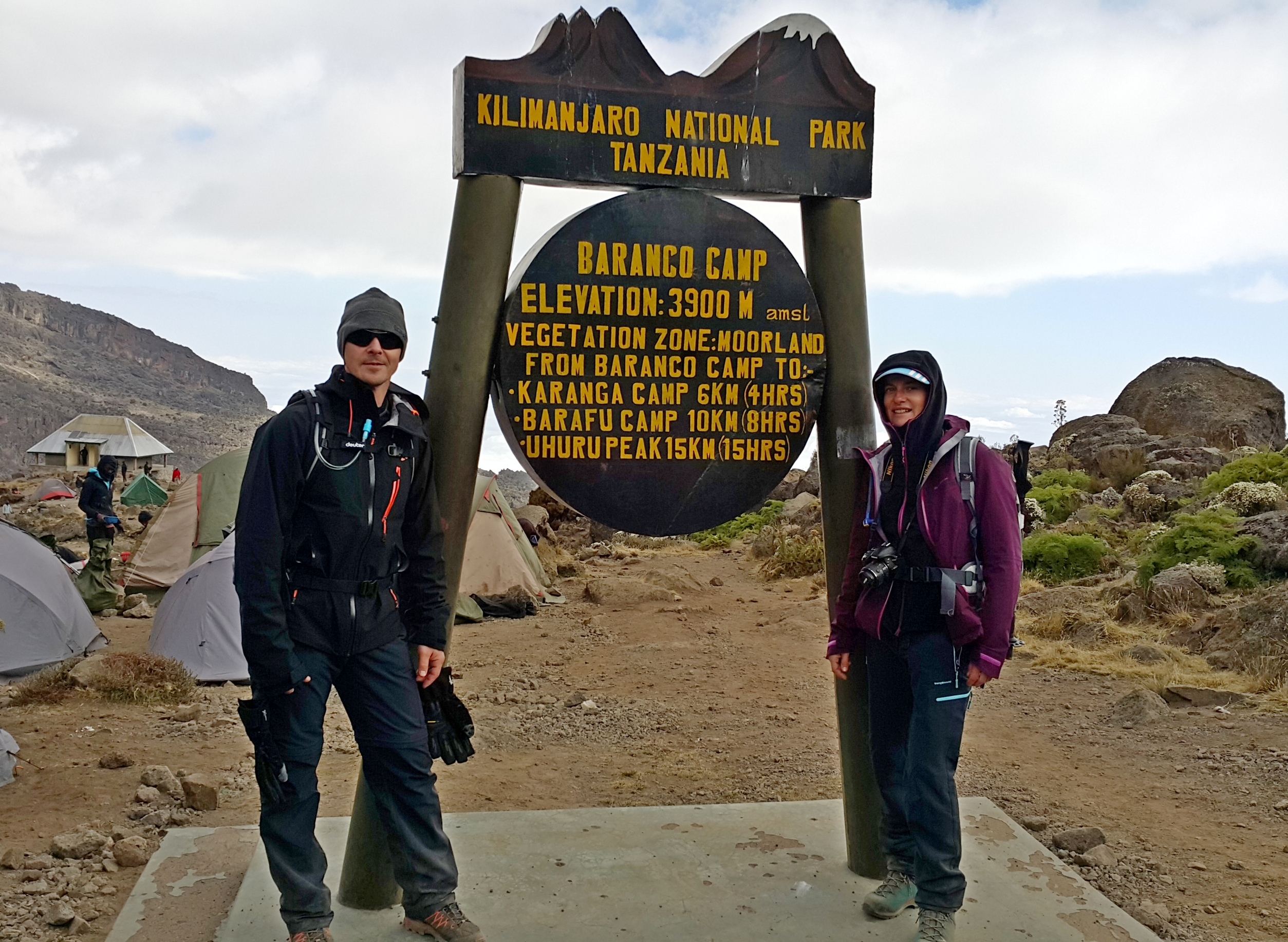
Still feeling very fresh after the apparently toughest day so far.
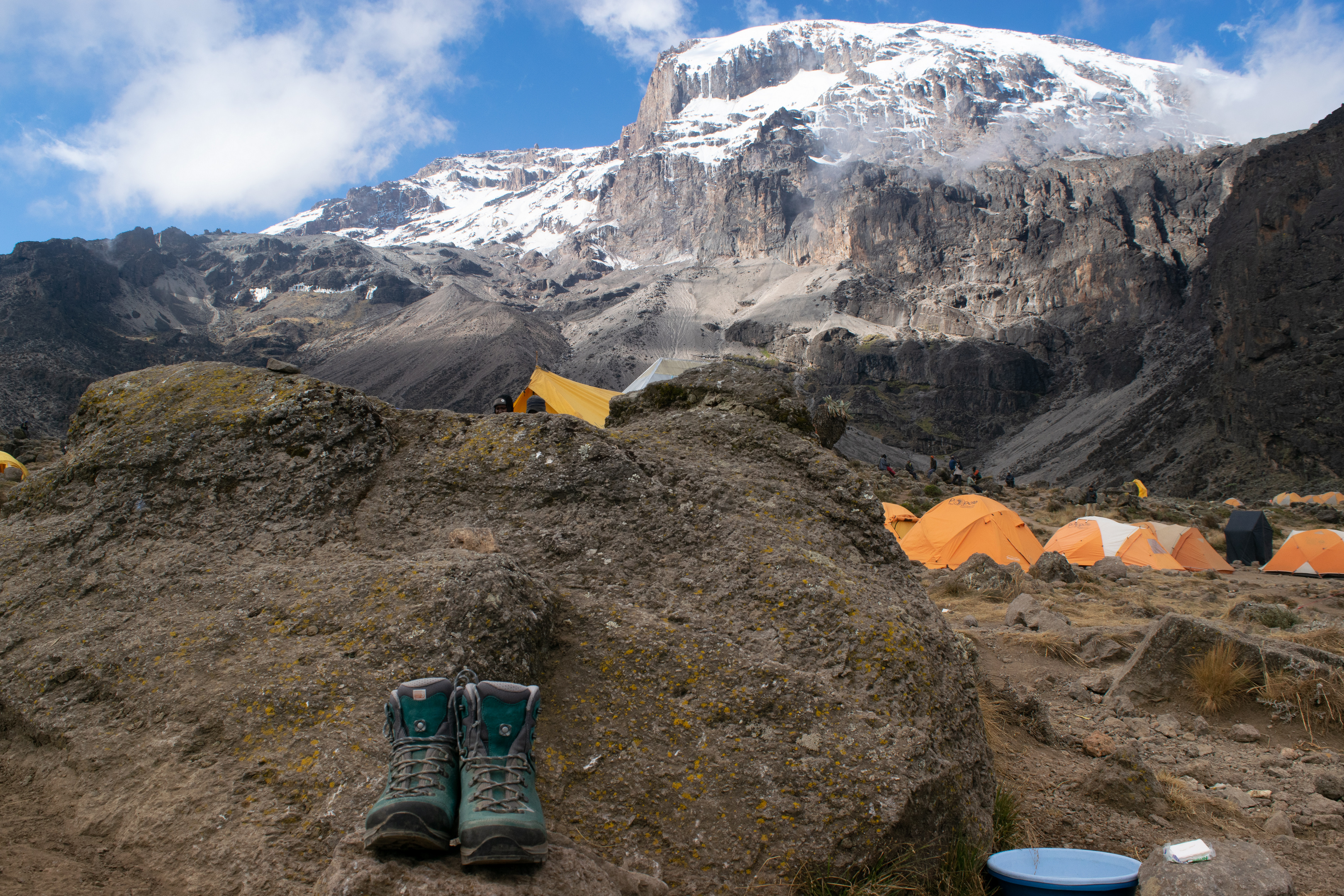
Preparing for my foot spa at Barranco Camp.
The night was very windy again but I simply didn’t care about tents being blown away anymore. I slept like a baby at temperatures well below the freezing point. I kind of started not giving a f*ck about the lack of comfort, and this I was even more proud of than my climbing achievements…
The 4th day was entirely dedicated to acclimatization. We hiked for 4-5 hours to the next camp – Karanga Camp at 3995m without really changing the altitude. Nevertheless, we still had a lot of fun “kissing” the Great Baranco Wall and then rising further above the clouds.
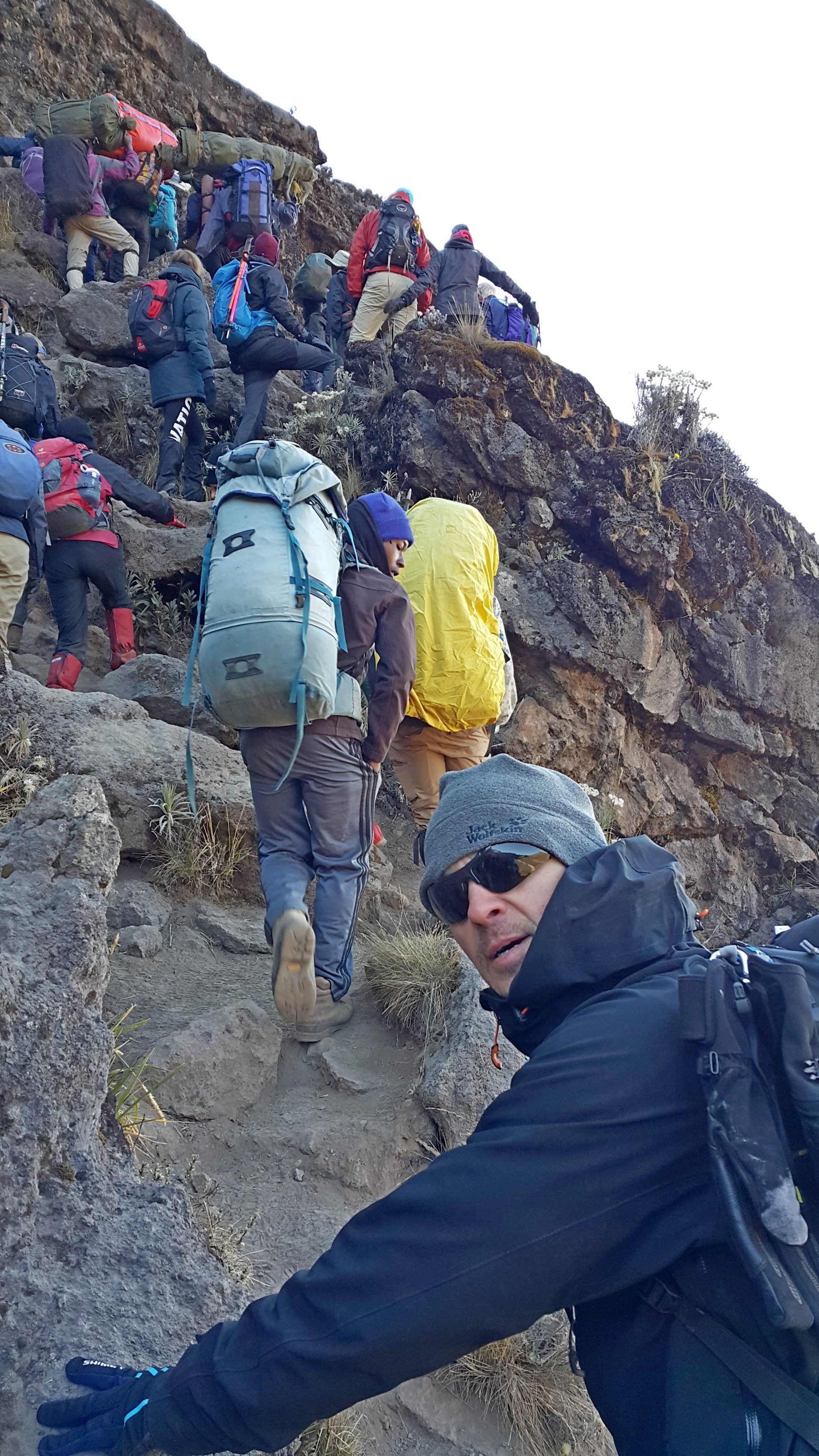
Climbing up Barranco Wall. The “kiss the wall” thing was not a joke.
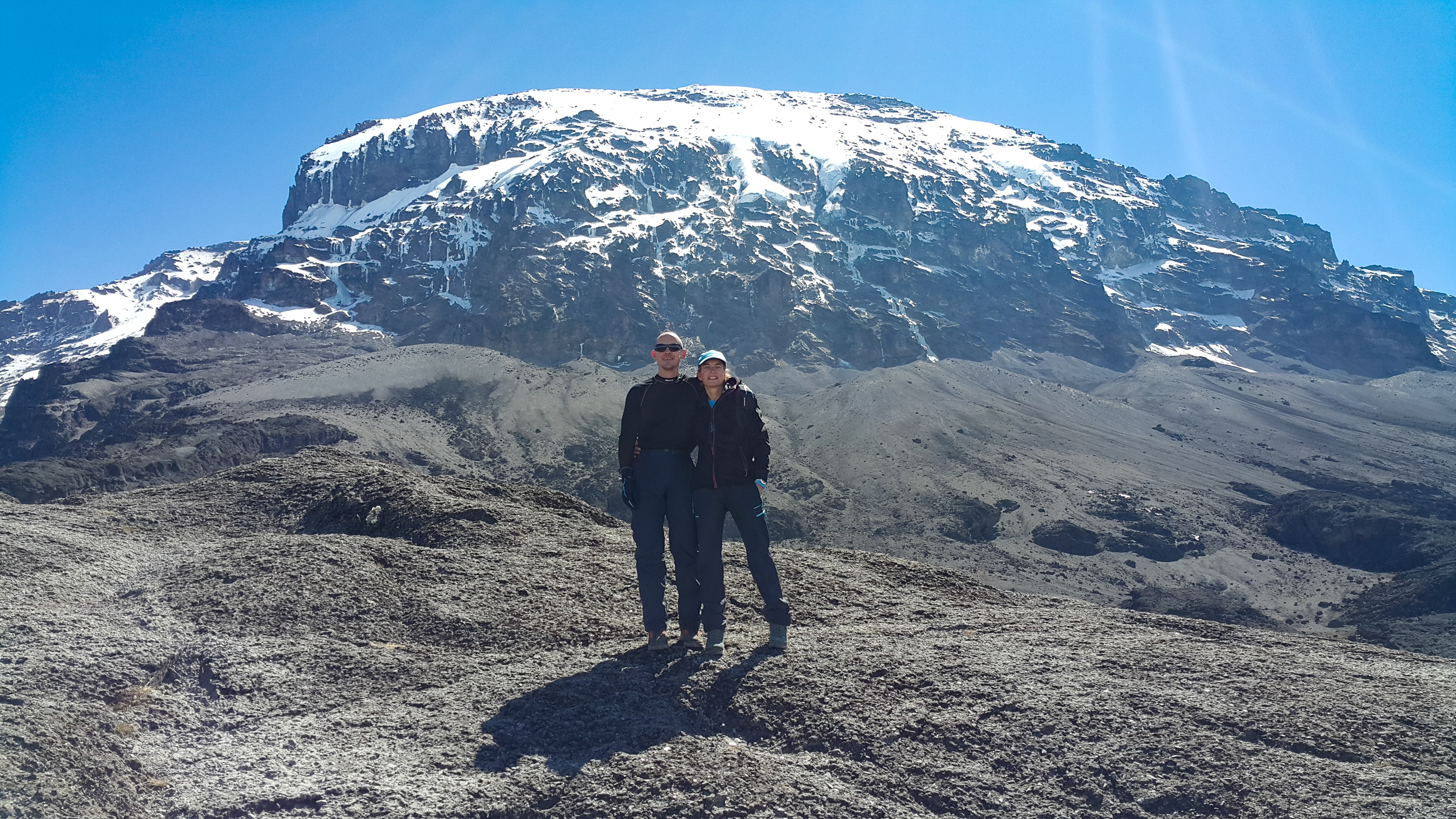
Enjoying the perfect weather after conquering Barranco Wall.
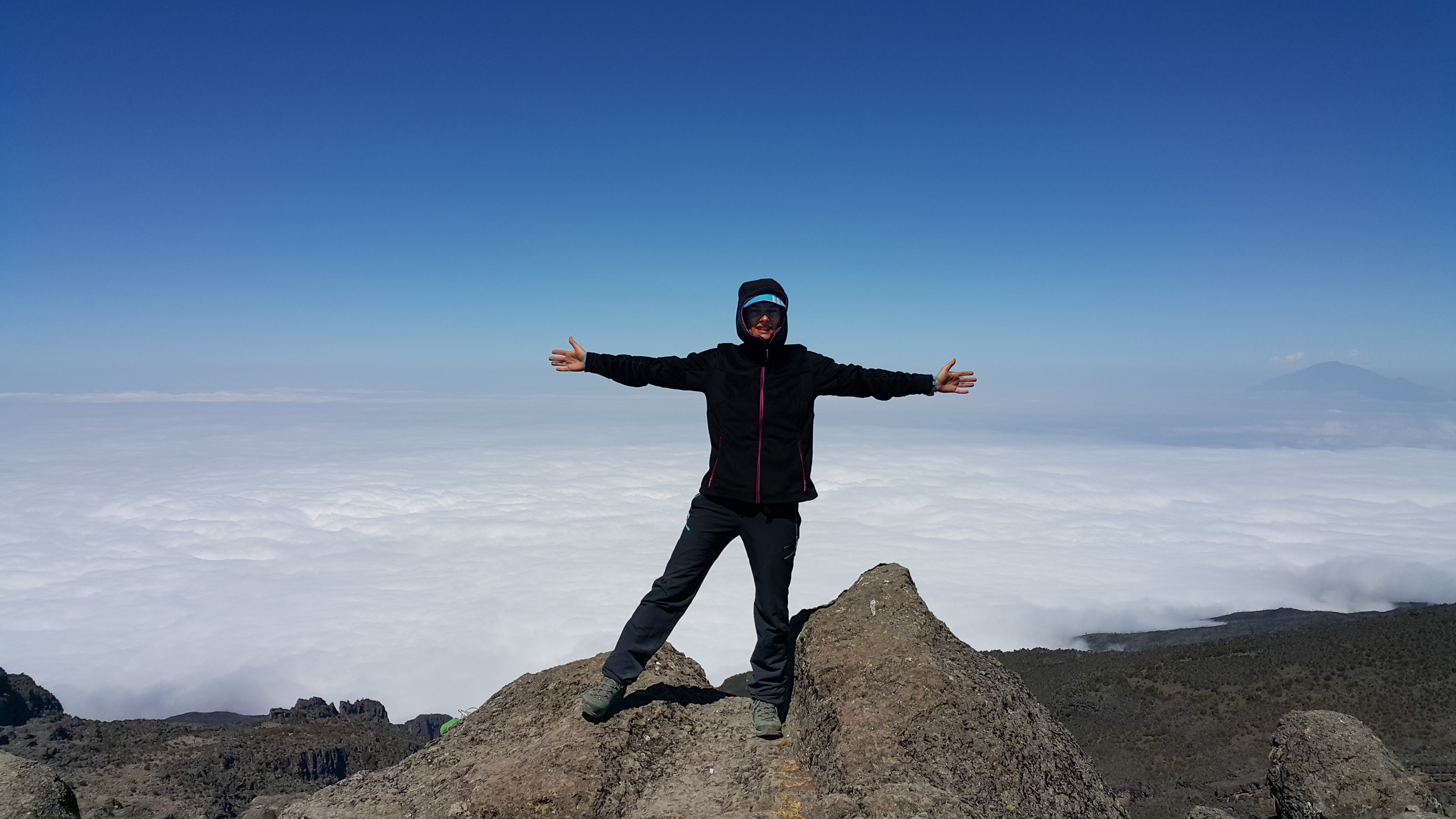
According to the hiking experts, this extra day for acclimatization has a significant impact on climbers’ success rate. By rule, those who skip this day are more susceptible to altitude sickness as they don’t give their bodies enough time to get used to the very fast ascent to significantly higher altitudes.
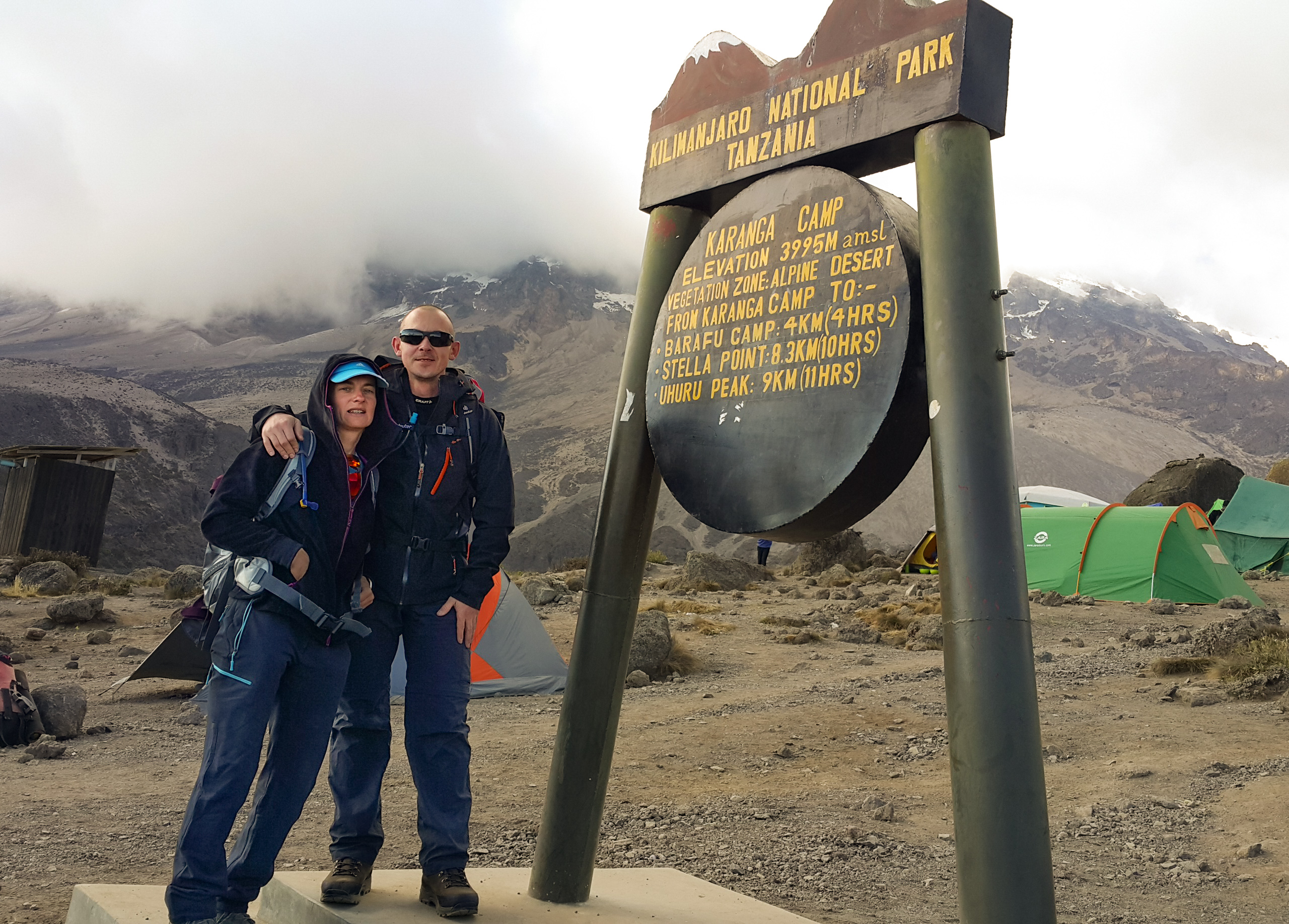
Signs of fatigue started showing up on my face at the end of the 4th day.
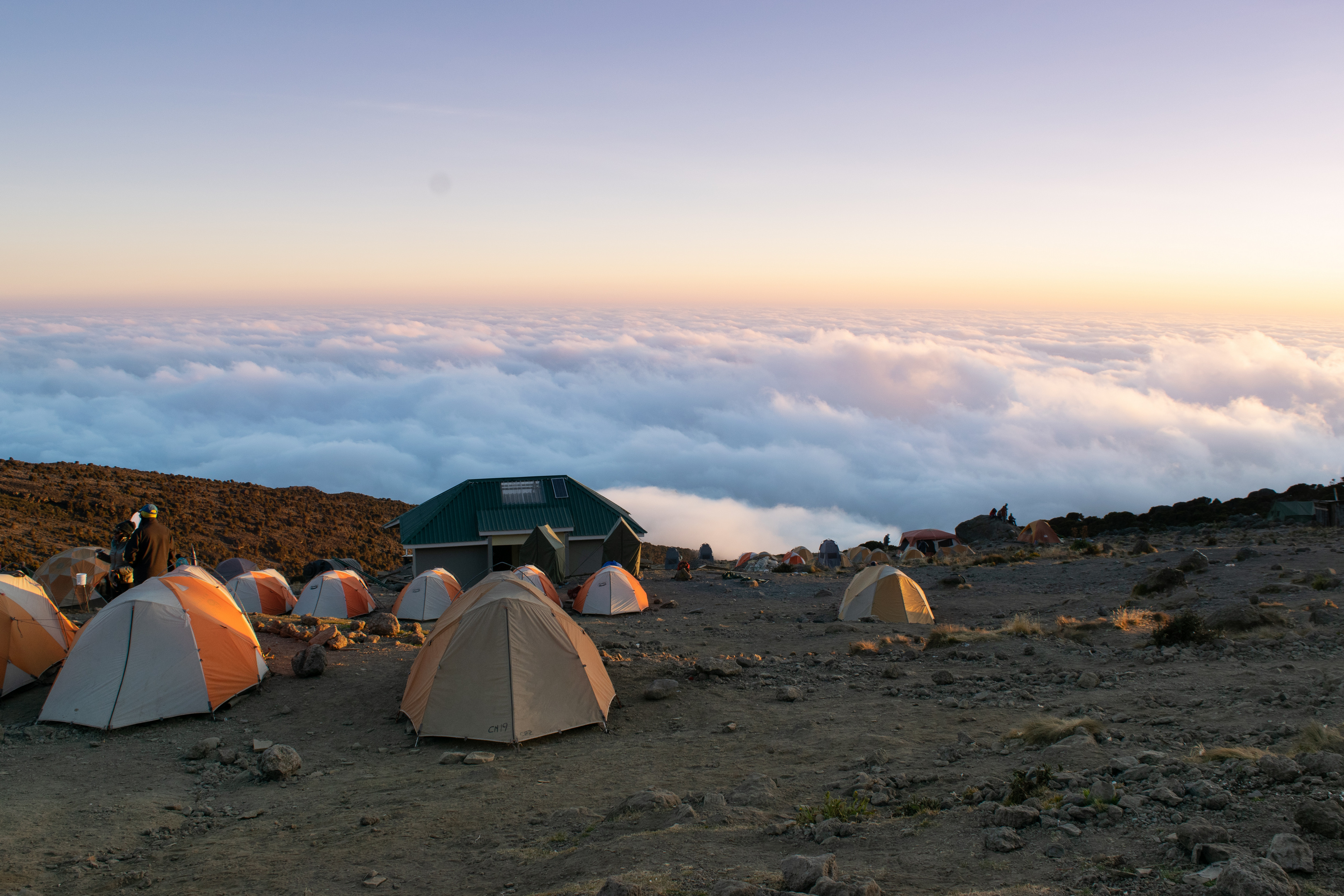
One of the many beautiful orange sunsets at camp.
Honestly, I simply don’t have clear memories from the hike next day besides the change of the vegetation zone. We entered the alpine-desert zone, where a few everlastings flowers are the only type of flora which can survive extreme cold, sun and wind on top of the lower precipitation.
We reached the last camp – Barafu camp at 4673m around lunch time. Our trekking itinerary had warned about the very narrow, stony and dangerous ridge, where the tents are usually pitched totally exposed to the ever-present windstorms.
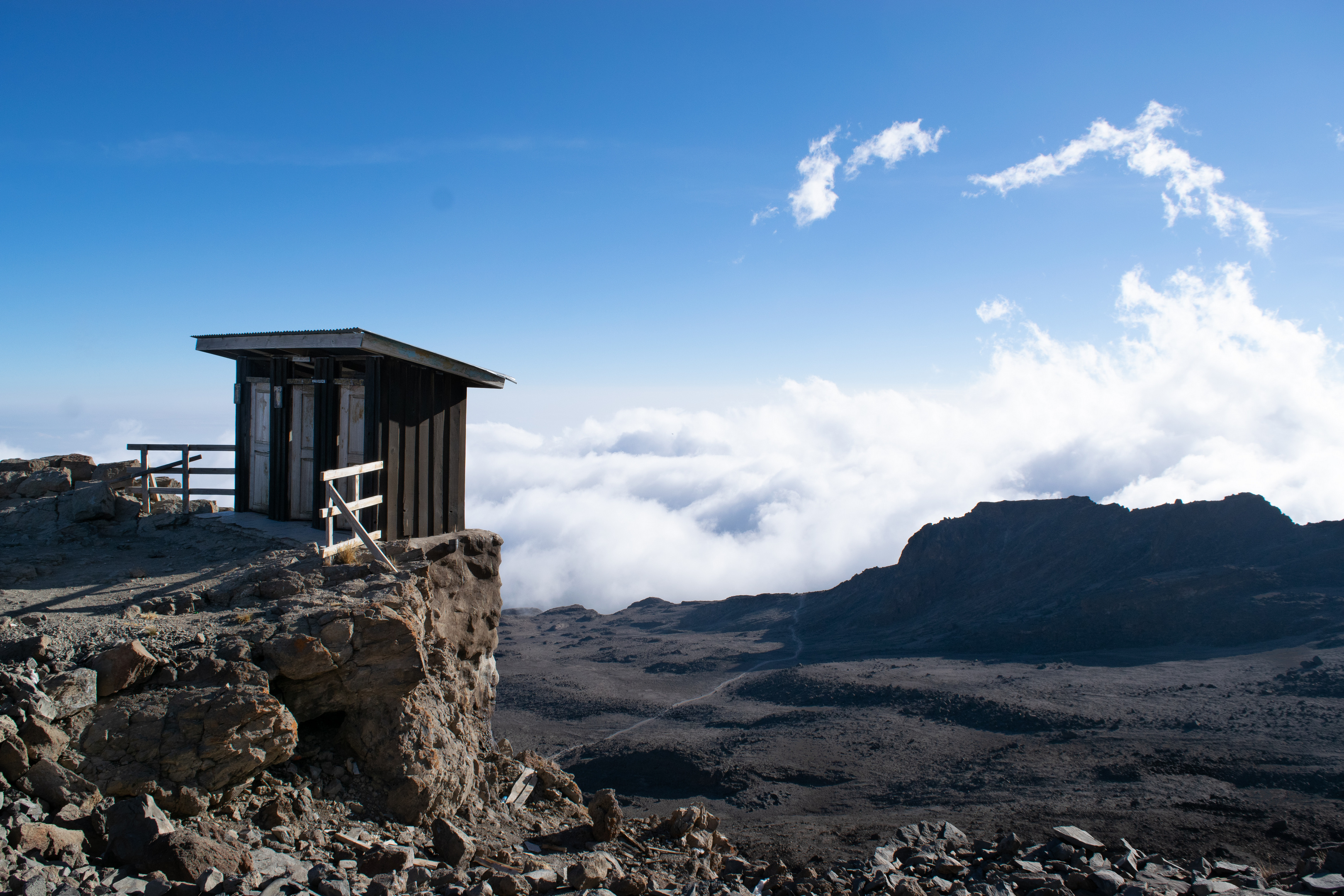
Our porters were smart enough though to put up our tent (and the toilet!) between some giant stones. From our tent we had a fantastic view to Mawenzi Peak as well as to the steep rocky slopes leading to the highest mount in Africa – Uhuru Peak.
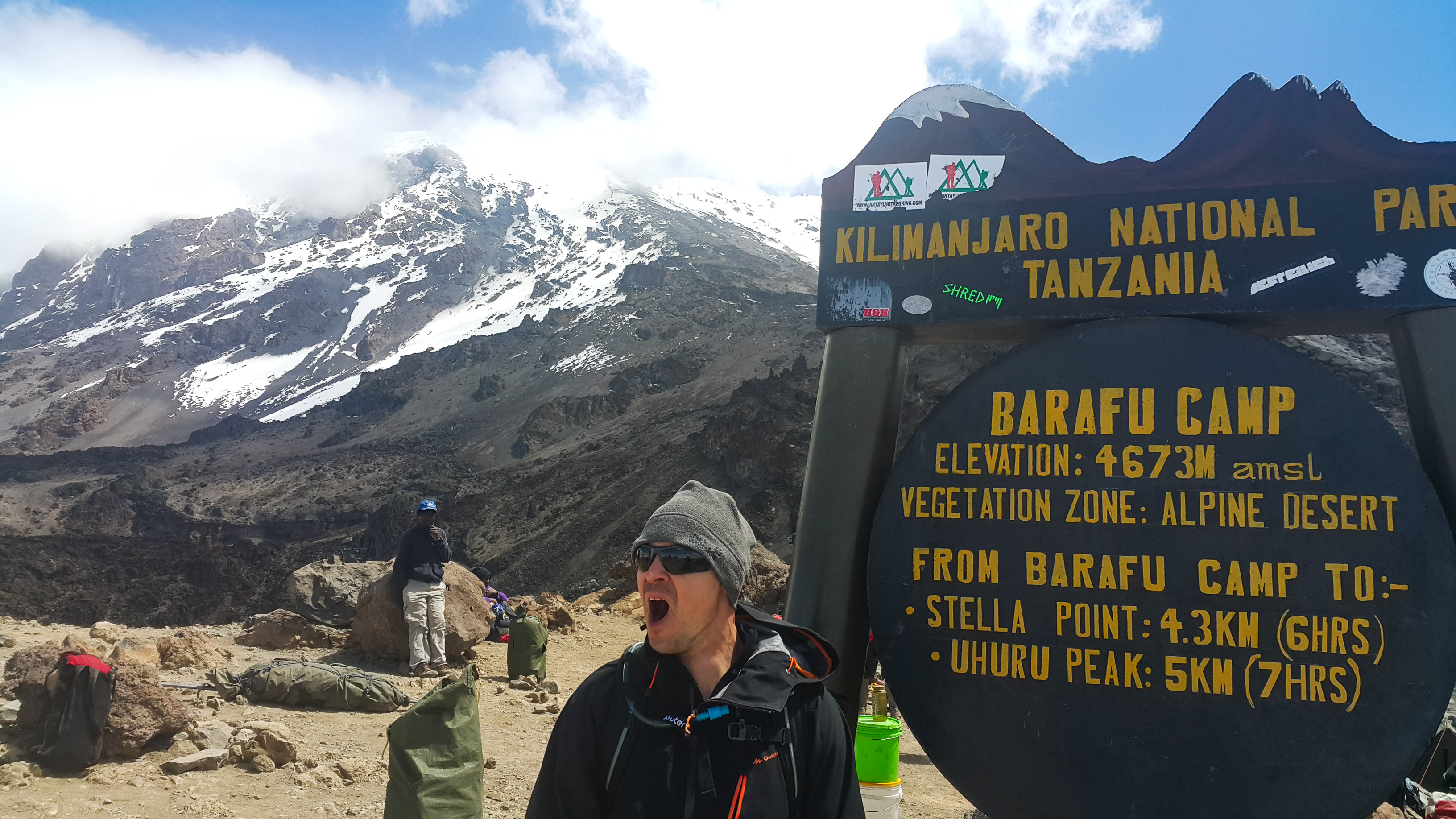
Someone needs a nap before finally conquering the summit.
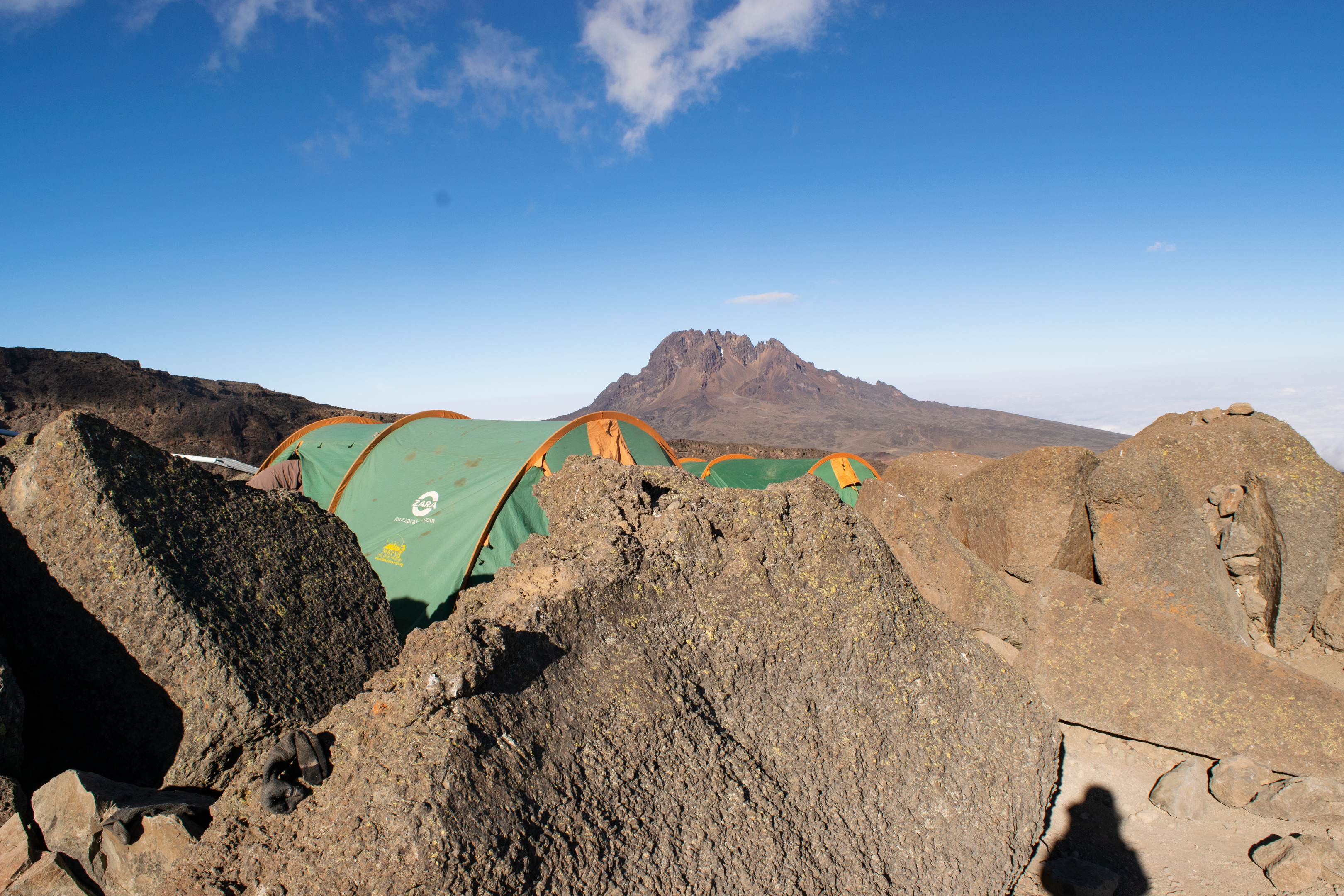
Our tent at Barafu Camp. Background: Mawenzi Peak, the 3rd highest in Africa after Kilimanjaro and Mount Kenya.
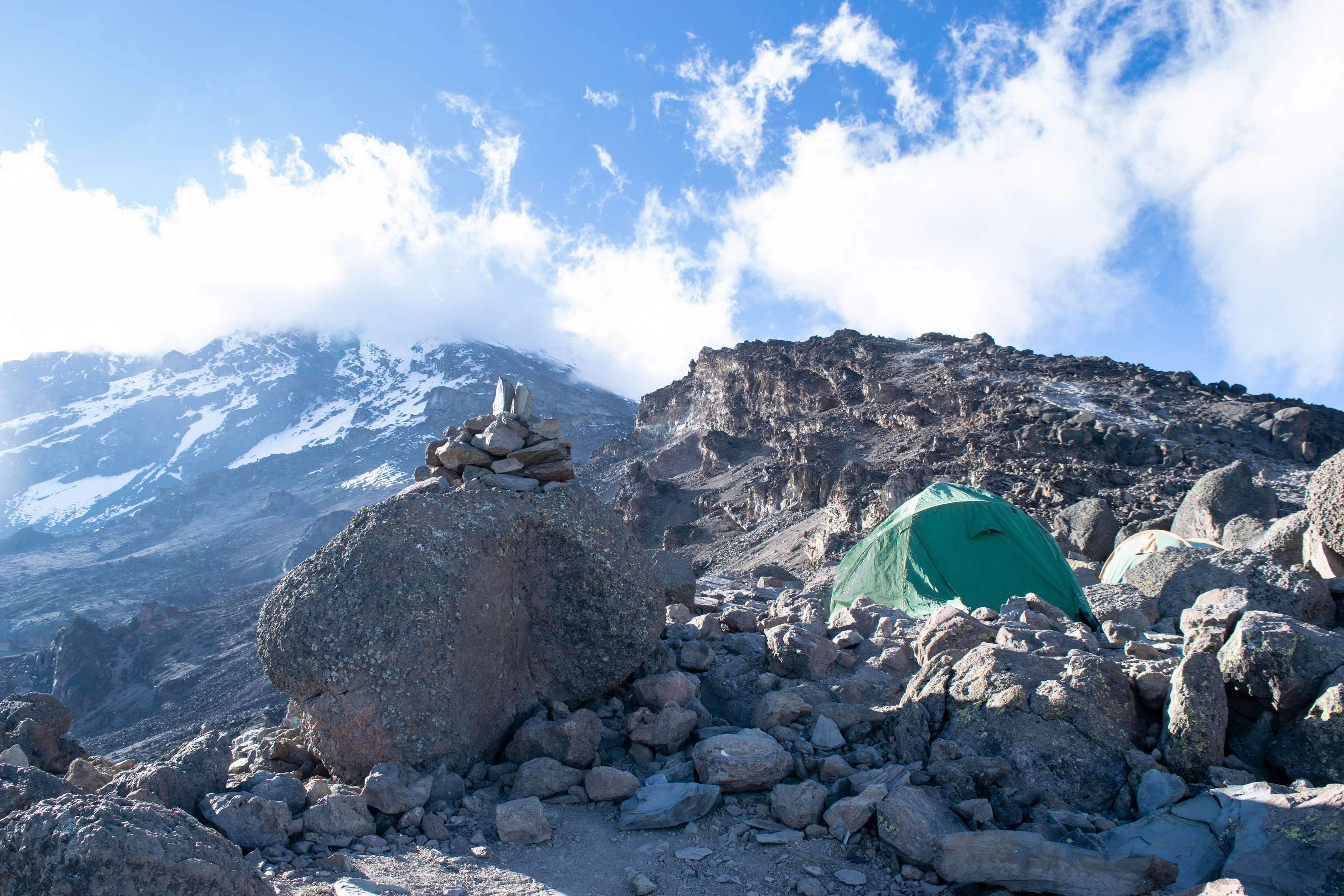
The tent of our guides looking to the cloudy summit of Kilimanjaro.
Final ascent to the top
We spent the whole afternoon relaxing, hanging around, reading books, napping, preparing mentally and technically for the final climb to the summit. Headlamp – check; spare batteries – check; water – check; energy bars – check; mittens – check, and so on… the list was pretty long. Our dear guides even prepared hot ginger tea to warm us up during the long hours of climb. Ginger tea in freezing cold nights while conquering Kilimanjaro – priceless!
Dinner was served at 5.30pm and then we had to force ourselves to sleep and rise again at 11pm. Not that I could really fall asleep…Although I didn’t feel like eating at all, we had to take a small snack and a cup of coffee, then put literally every piece of clothing we had on. With 4 layers down and 5 layers up I felt like an astronaut touching ground on the Moon. At least I didn’t feel cold…not until the wind came back again.
OK, here you probably ask yourself why the hell starting the final climb to the summit at midnight?
I found two explanations so far – one rational and one emotional.
Here is the rational one: there is simply a lot of climbers so if everyone starts in the morning, the summit will quickly become overcrowded, and the thing is that there is very little room up there. The path to the peak is quite narrow, leading to a small open spot around the summit signpost. Therefore, my guess is that the trekking agencies have their schedules aligned to avoid big crowds on the top. Another version of this explanation is that you would simply not have sufficient time to descend to your next camp if you start the hike to the summit in the morning.
The emotional explanation is not less plausible: the darkness at night helps a lot not be able to see the steep, rocky and slippery trail up. The headlamp draws your attention only to the steps in front of you. Daylight may well make you give up at the start.
Four phrases can perfectly describe our final ascent: 1) one step at a time; 2) focus on what is in front of you; 3) breathe deeply; 4) don’t think about the top.
The wind was so strong that Musime insisted I walked between him and Peter – just in case the wind blows me away. Isa – the assistant guide was following last. At some point I noticed the bare hands of Isa. Oh my God! He didn’t wear gloves! On top of this he just had his maasai shuka (red striped piece of fabric) on top of his jacket – the one he wore on the previous days. Just for comparison – I had my warmest winter jacket on. I couldn’t stop thinking about his bare hands. I felt guilty because I had exchanged my winter gloves that turned out not very appropriate for a pair of big warm mittens from Musime just the day before. A thought crossed my mind that Musime might have given Isa’s mittens to me who now had no gloves to wear. Fortunately, and that was a big surprise to me, Isa did have gloves with him but he just put them on when we reached the summit. Did you get it? Isa was hiking up for six and a half hours at minus 10-15 degrees Celsius and severe wind without gloves, and he was perfectly fine!
Soon I lost a sense of time. On purpose I didn’t take my wristwatch, nor did I bring my camera. I wanted to be all focused on the climbing experience. We walked so slowly due to the steep, rocky and slippery track that I started feeling my toes freezing. Why did I put on two pairs of socks? There was now no air in my hiking boots to isolate my feet from the cold. Damn it! “Don’t think about the cold! It’s normal in the mountain!”, I had to remind Musime’s words.
We carried on. 10 paces, then a few seconds break, 10 paces, another break… Pole-pole. The mountain will always be there. You won’t. Take it easy. Don’t rush, even if you want just to warm up a bit. Some hikers charged too quickly ahead of us and were now having stomach problems, not being capable to cope with the rapid change of altitude. Too bad. I was glad we were taking it slowly.
At some point I had the feeling we are approaching Stella Point at 5739m which is where you can claim you climbed Kilimanjaro but it is still not the top. I decided to double check with Musime but his answer was “We are almost half way to Stella”. What?! That couldn’t be possible! I was sure Musime is cheating just to keep us motivated and not give up when we reach Stella. To clarify it standardly takes 6 hours to reach Stella and then usually 1,5 hours to get to the summit. So, halfway to Stella meant 3 more hours to Stella, and then 1,5 more hours to the top. Oops! That sounds like a lot of climbing!
Yet, my guess about Musime’s cheating proved to be correct. In about 40 minutes we reached Stella Point. It was time for a small reward – a piece of energy bar and a cup of hot ginger tea! Mmm, what a luxury! The wind couldn’t be more merciless though.
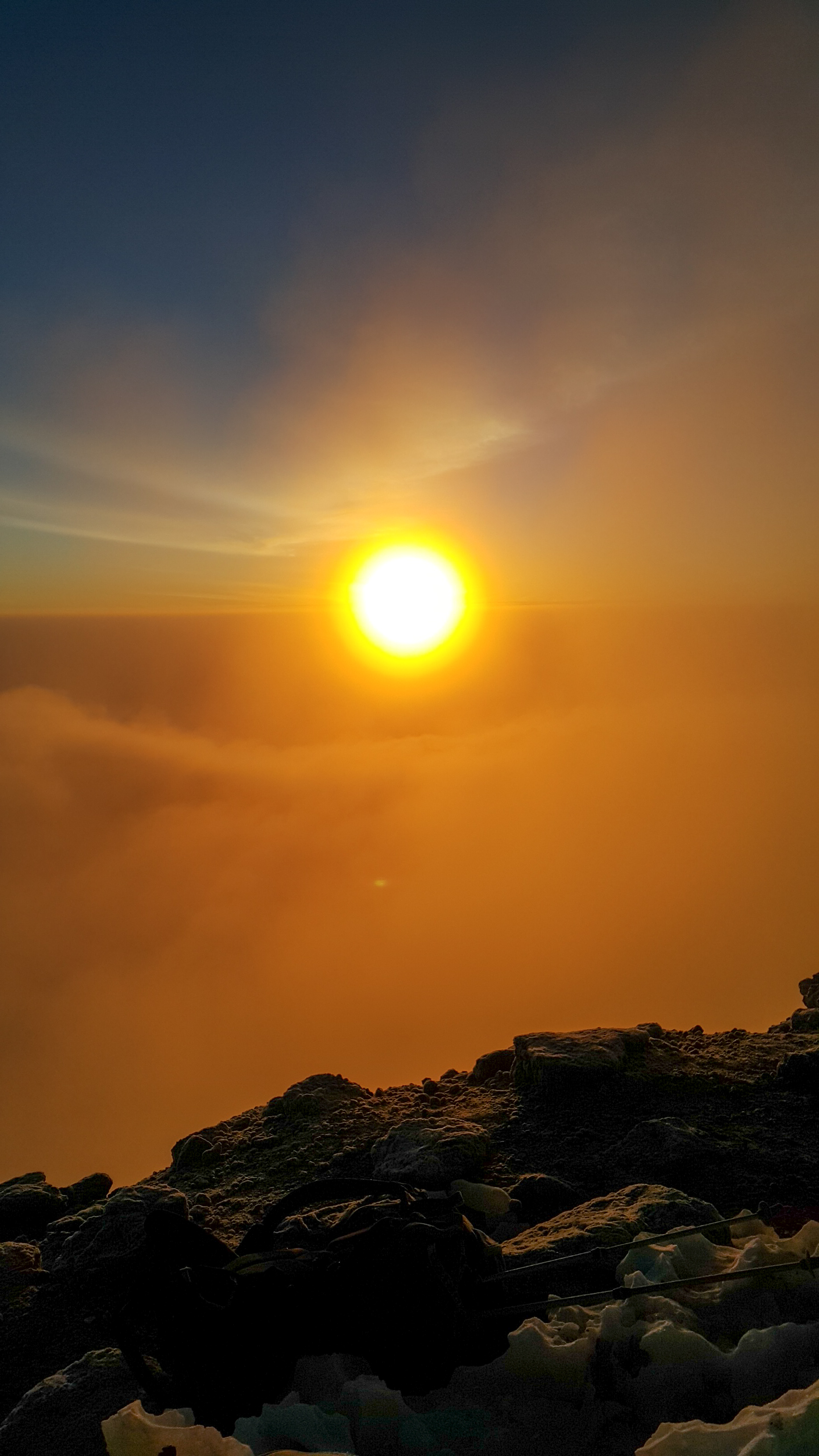
After 5-10 min we carried on. The landscape had changed. We had entered the Ice Cap zone. Opposite to my expectations, the trail became easier now that we didn’t have to walk on rocks and sand and stepped on snow and ice. At that point the sun started rising up and besides indulging myself in the magnificent pale blue-pink-yellow colors of the early sun, I immediately felt warmed-up and re-energized.
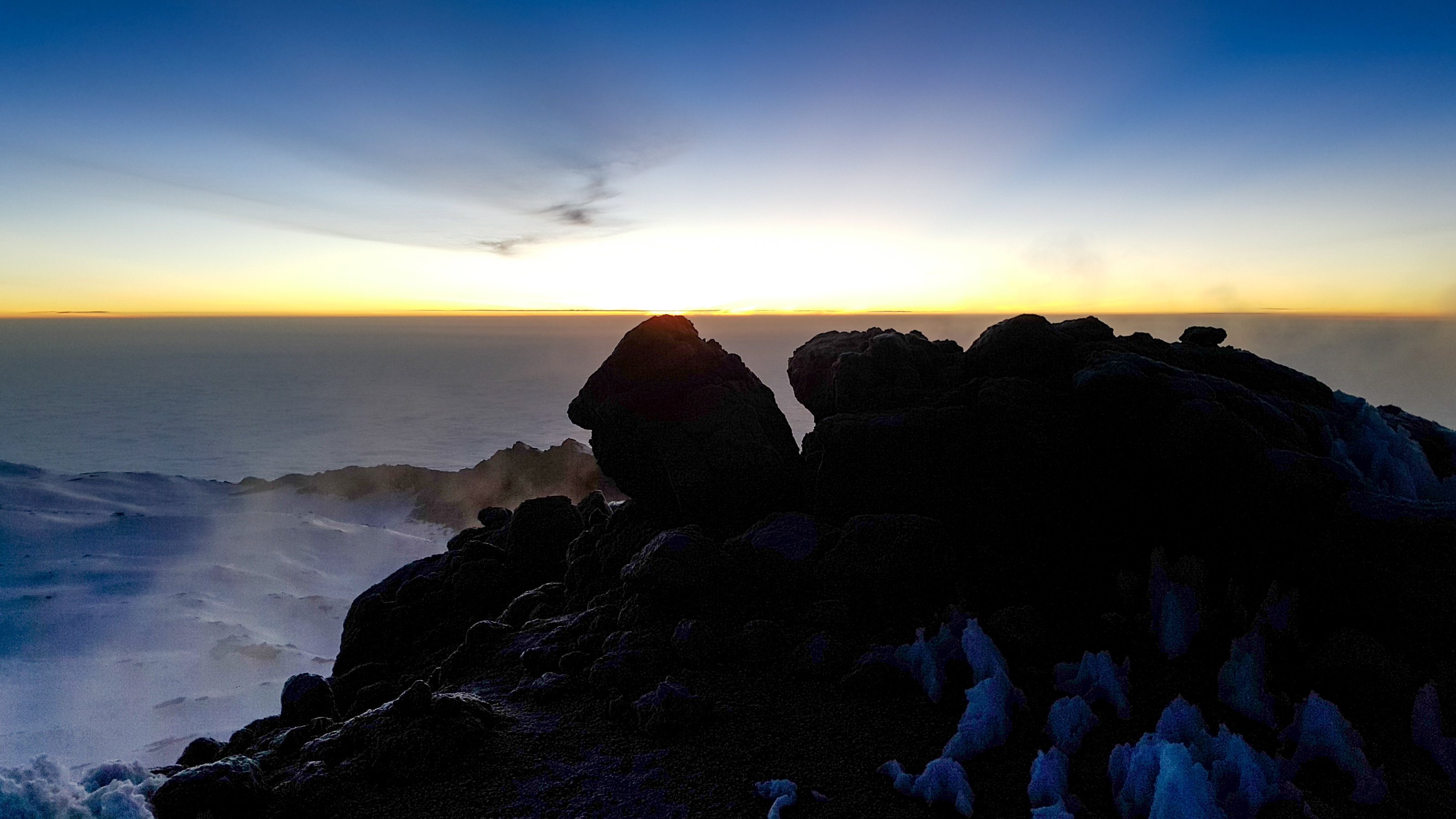
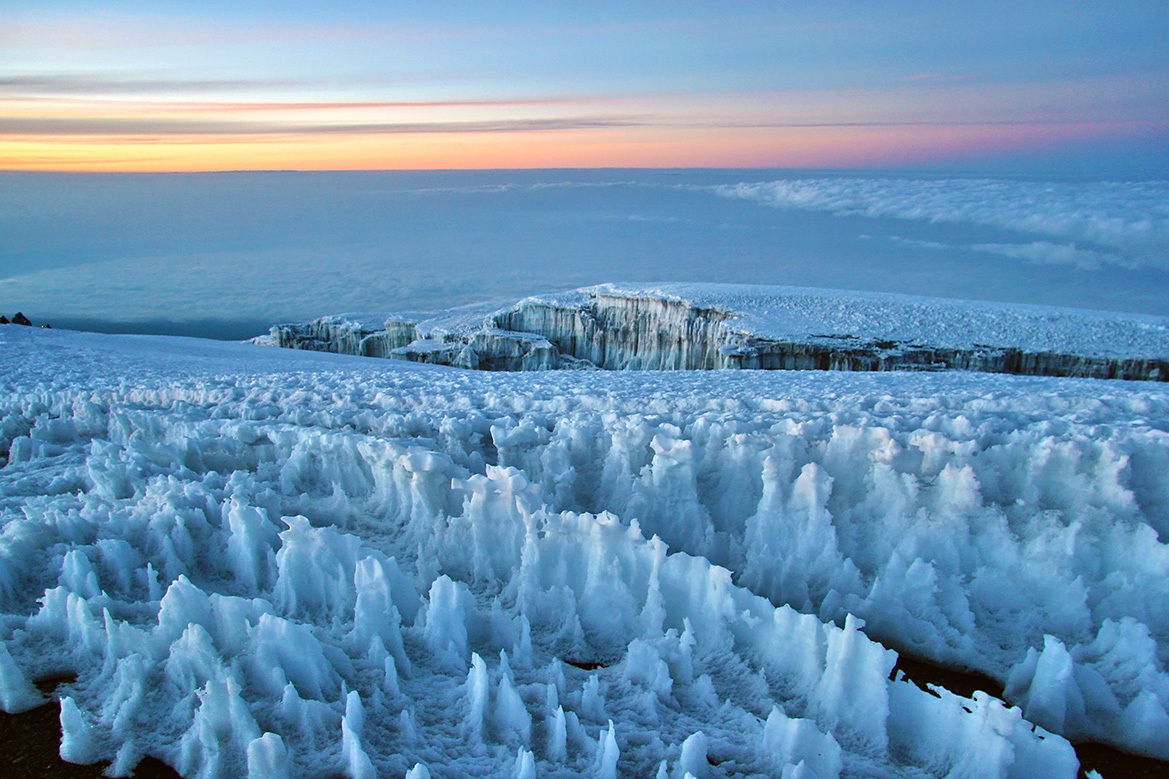
We absolutely enjoyed the remaining part of the hike which turned into a relatively flat trail. The surrounding environment became much friendlier now that we felt the sun on our faces. Giant glaciers in the shape of ships and glacier fields which looked like icicles sticking out upside down from the ground.
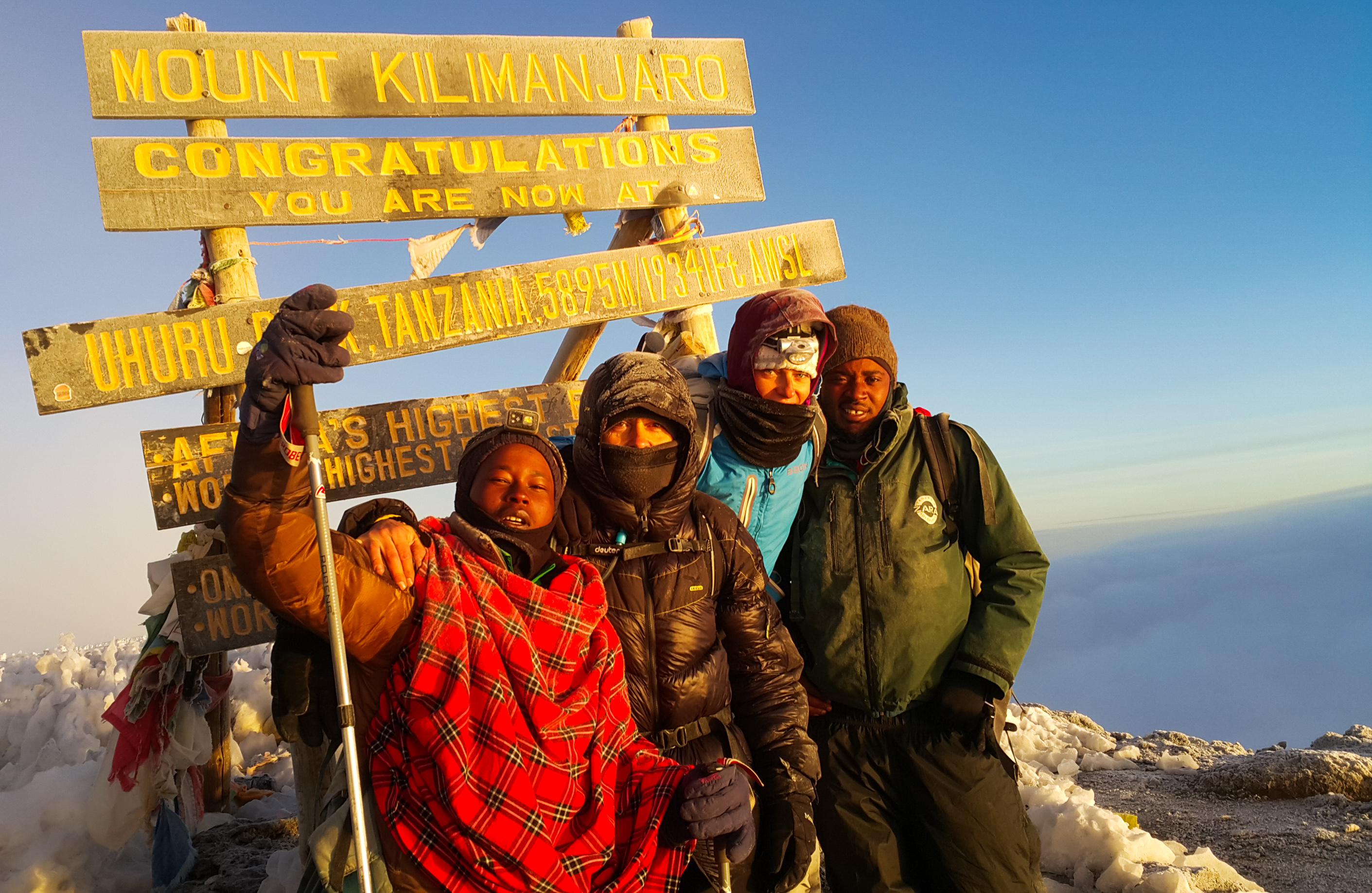
As it turned out, we actually took the last part quite quickly – in about an hour we reached the top – Uhuru Peak at 5985m! The Roof of Africa! We did it!
Honestly speaking, the summit itself doesn’t offer any spectacular views. We were lucky to arrive early enough before the summit has become crowded so we didn’t have to wait our turn for THE Kilimanjaro conquer photo. As Peter joked – no picture on Facebook equals no climbing of Kilimanjaro 😉
After our moment of fame, it was time to turn back. Guides say that it’s dangerous to stay longer at the summit due to the altitude. It’s a fact that Kilimanjaro summit’s altitude category is considered Extreme with 50% less effective oxygen as compared to sea level. According to the official altitude categorization, there is only one category beyond that is called Ultra and refers to altitudes higher than 7,700m.
So I do believe that it’s not wise to spend long time at the top but frankly, I have another explanation as to why guides start rushing you back down: there is simply not enough space for all climbers on the top so the chances are you get into a traffic jam if you don’t hurry up.
All in all, our shiny moment lasted for not more than 10min before we started our quick descent sliding through deep layers of scree like hell for about 3 hours to finally reach a well-deserved hot lunch at the camp.
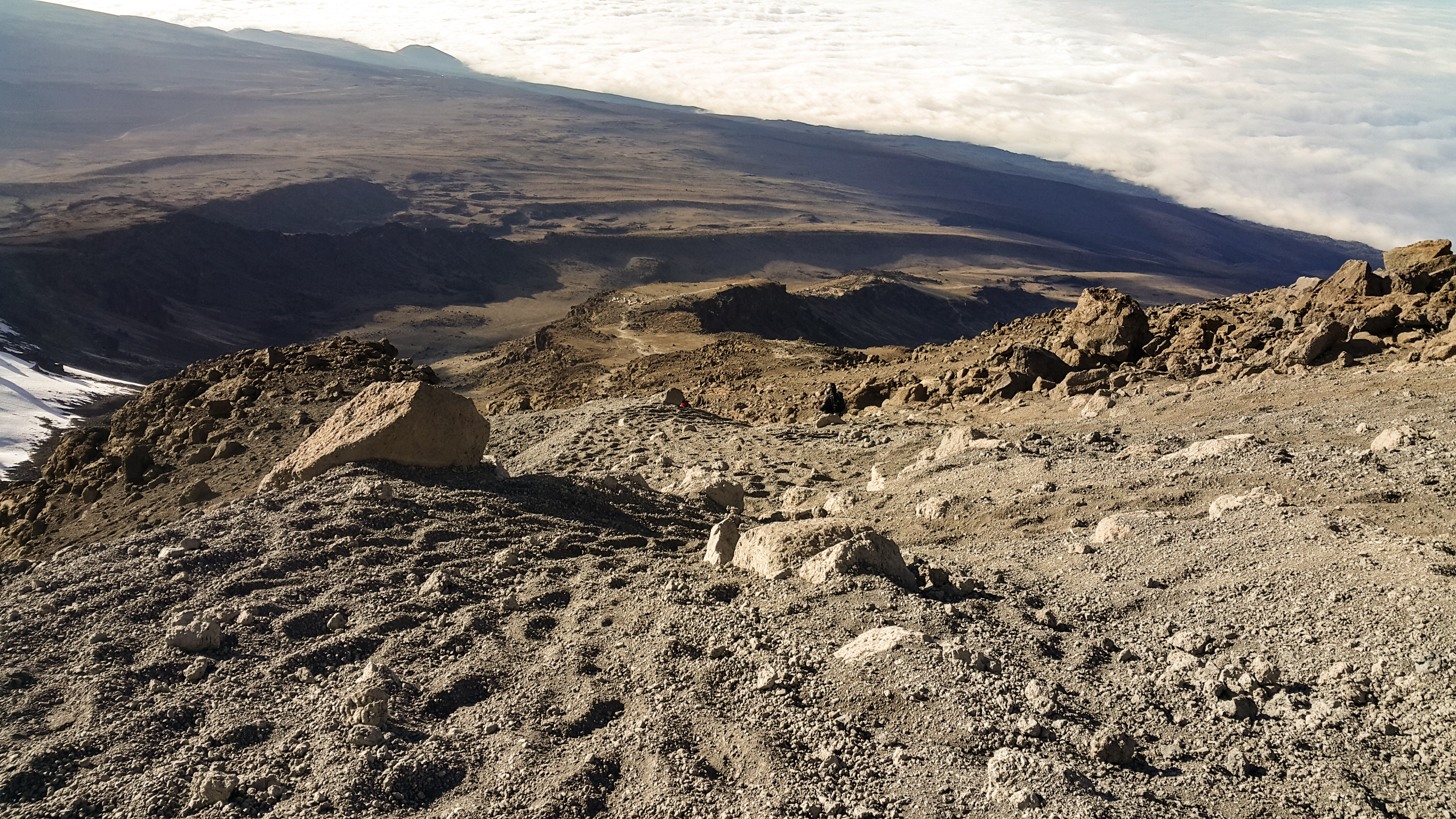
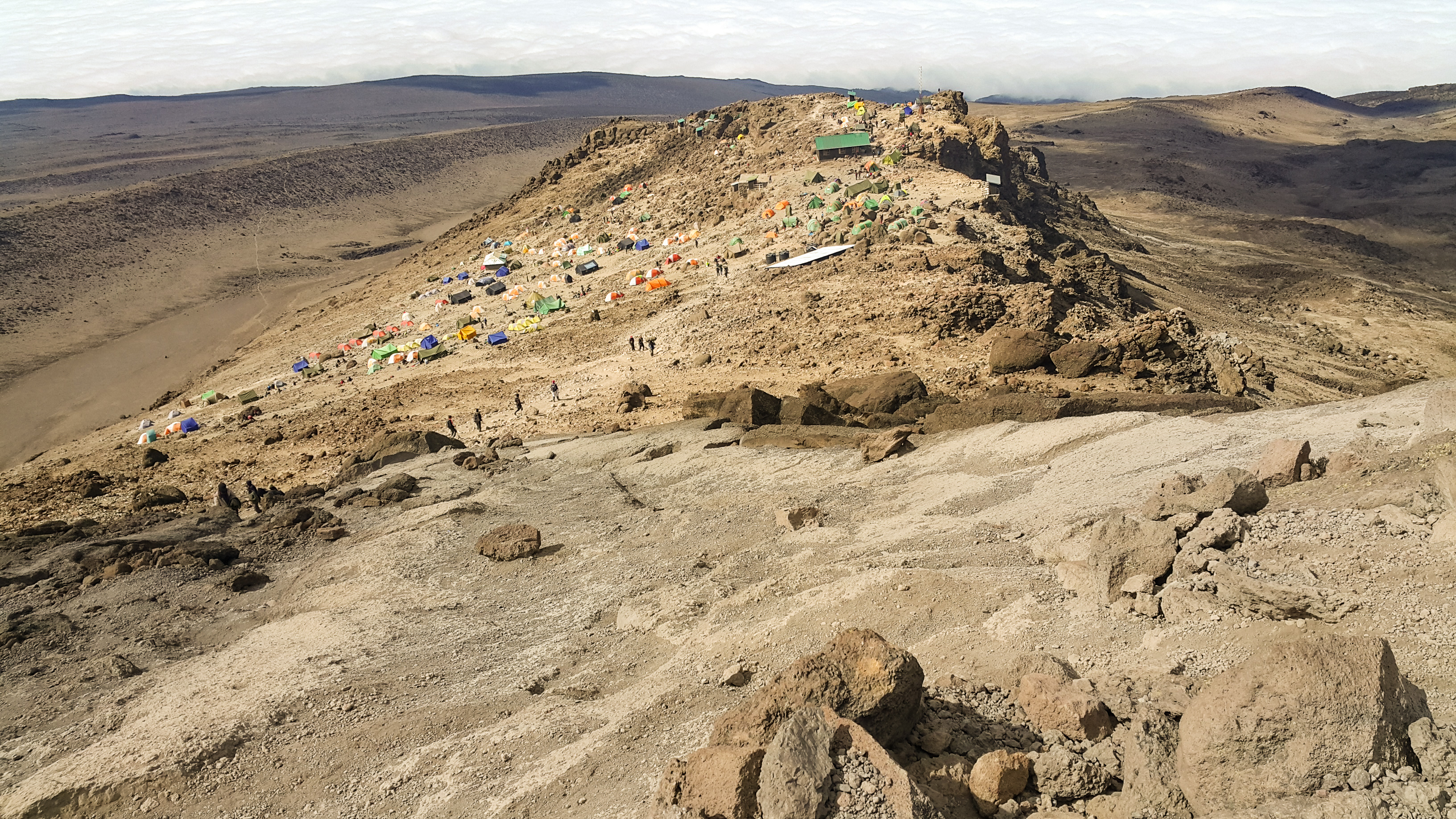
Hiking back to Barafu Camp through scree and dust
Finally I got my appetite back. For some reason (most probably due to the altitudes), the higher we hiked, the less appetite I got. I literally had to force myself eat during the last 2 days as I had the feeling I am already full to the top. The moment I reached the camp, I was like in that Snicker’s advertisement “You are not yourself when you are hungry”.
Believe it or not the descent for me was the most unpleasant and challenging part of the entire hike. After lunch, we had to pack everything and get on another 4-hours descent through rocks and sand and dusty wind. It was a long night and day. From midnight to 4.30pm on the next day we’ve done 6,5 hrs up and 7 hrs down to our last camp on the mountain – Mweka Camp at 3100m.
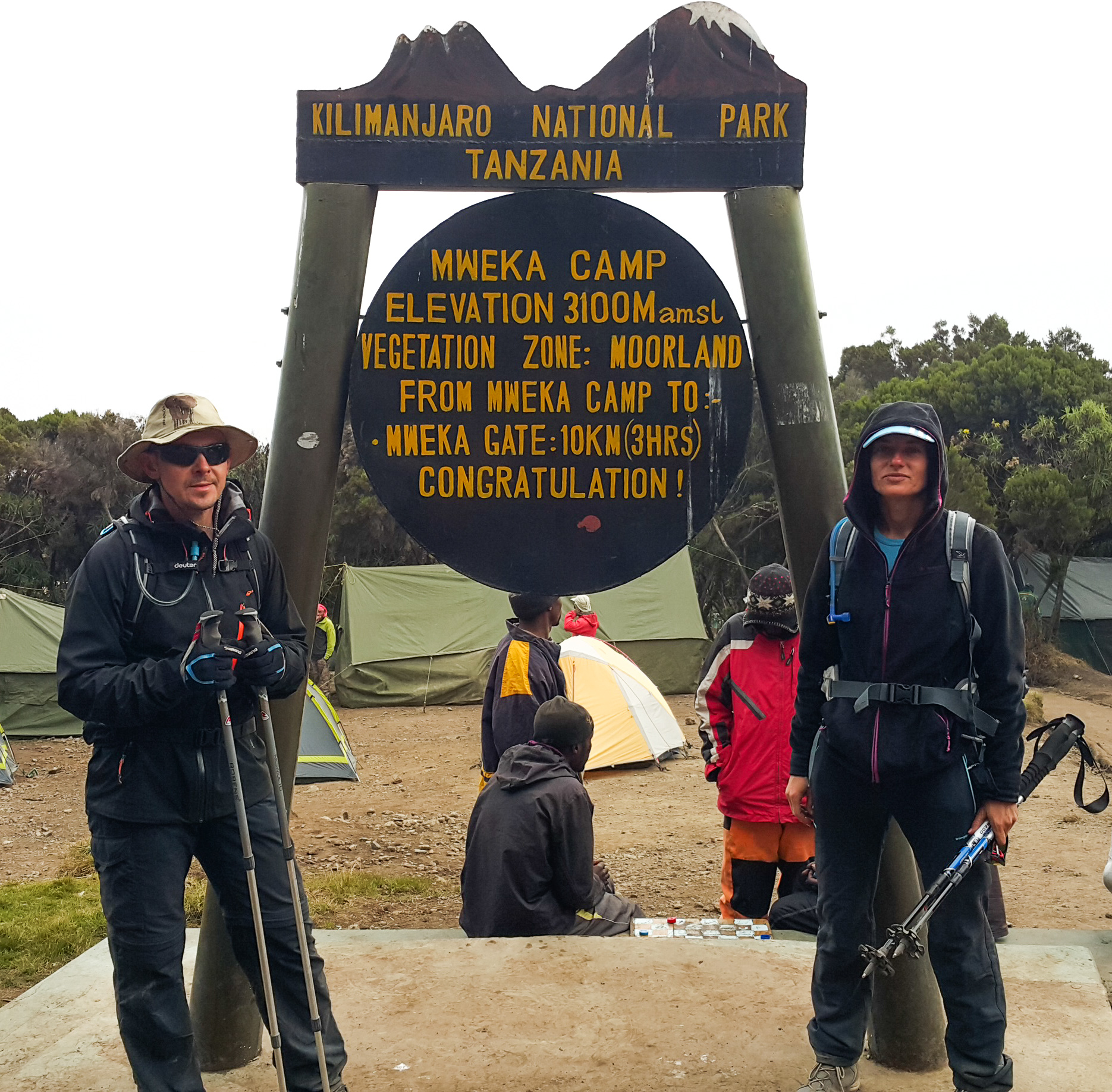
My legs were ok but my tennis knees and feet, especially the toes just refused to work anymore. I desperately needed foot massage.
Next morning I felt much better so the last 3 hours of descent felt like a short walk in the forest.
And here we are, at the exit signpost of Kilimanjaro National Park.
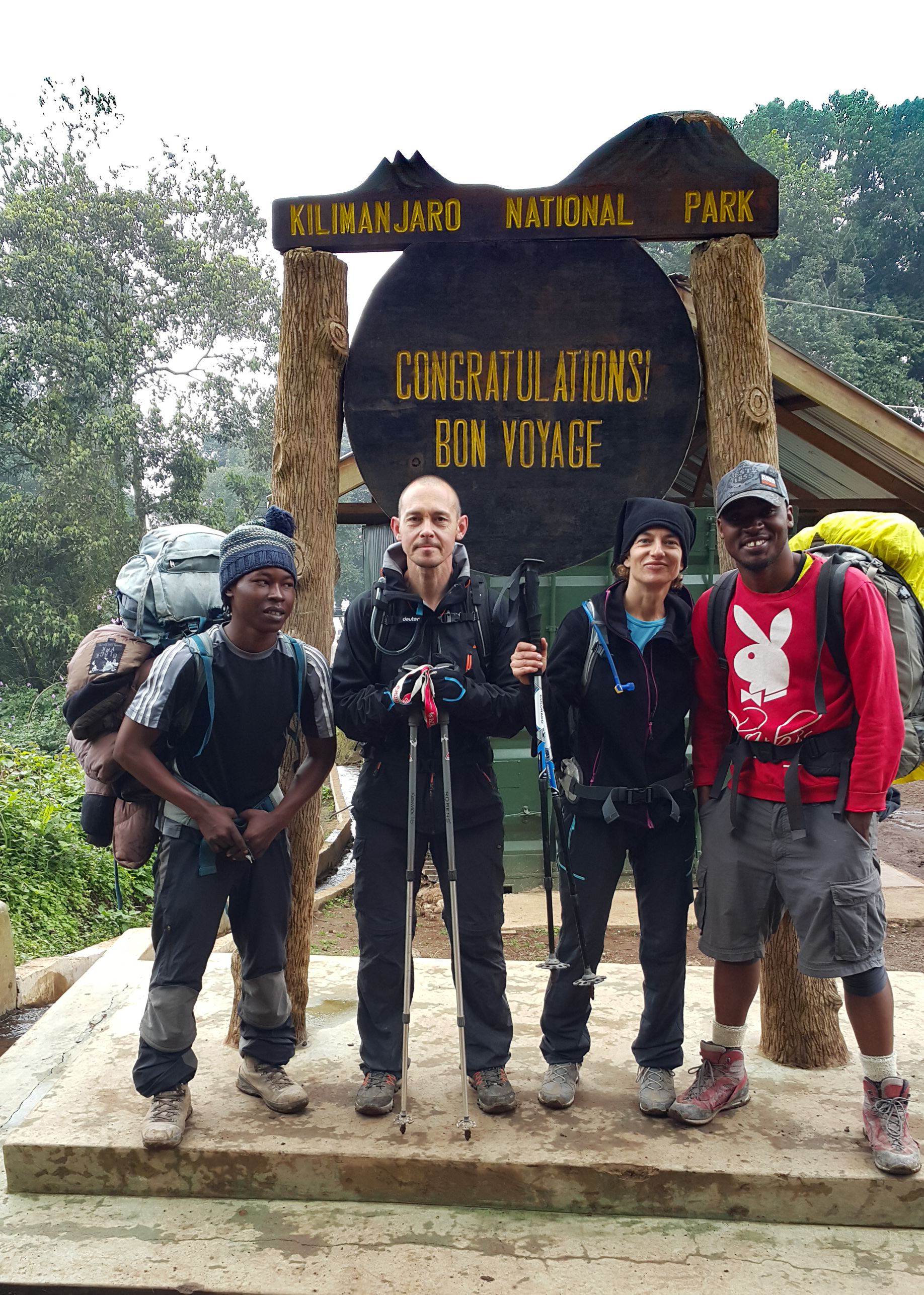
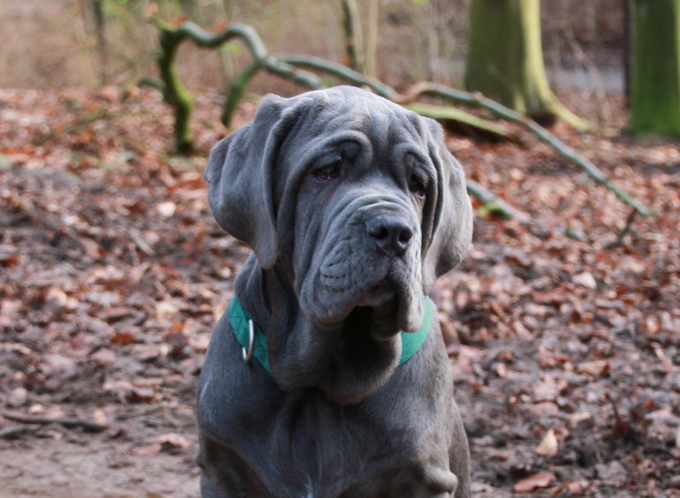
If you wonder what our faces remind you of, let me help you – there is a dog breed called Neapolitan Mastiff. Do you also find a striking similarity? 🙂
Guess what I did first when we returned to the hotel. Booked a massage. While waiting for lunch, I took the longest and the hottest shower of my life. Now I understood Mirella who usually needs to be dragged out of our bath.
We then had a debrief session with our guides and became proud owners of Golden Certificates for reaching the highest peak of Africa.
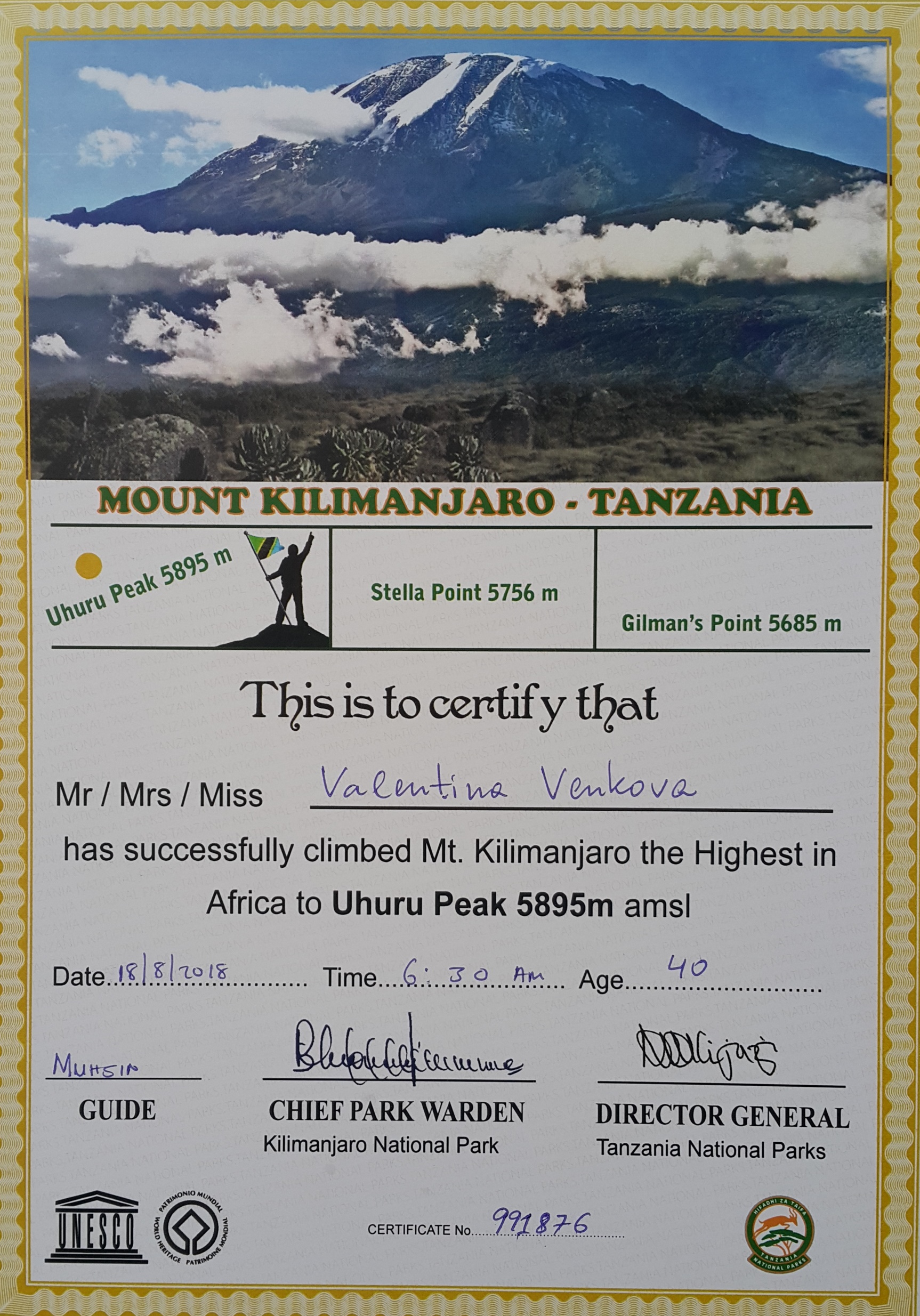
Although we most probably could have caught the flight to Kigali on that same evening, we preferred to take it easy. Pole-pole. Eat, relax, love, if I can put it this way. We caught the return flight on the following afternoon.
I noticed that when you don’t push things too much, other good things happen. So for example, our prolonged stay opened an opportunity for me to do a guided tour around Moshi town. My guide Tchungi took me on a 3 hours walk to the town center and back, showed me a few landmarks including the old German railway station, took me to a local bar where I tried Serengeti Light while he got his favorite Kilimanjaro beer, then we passed through a local market and headed back to the hotel.
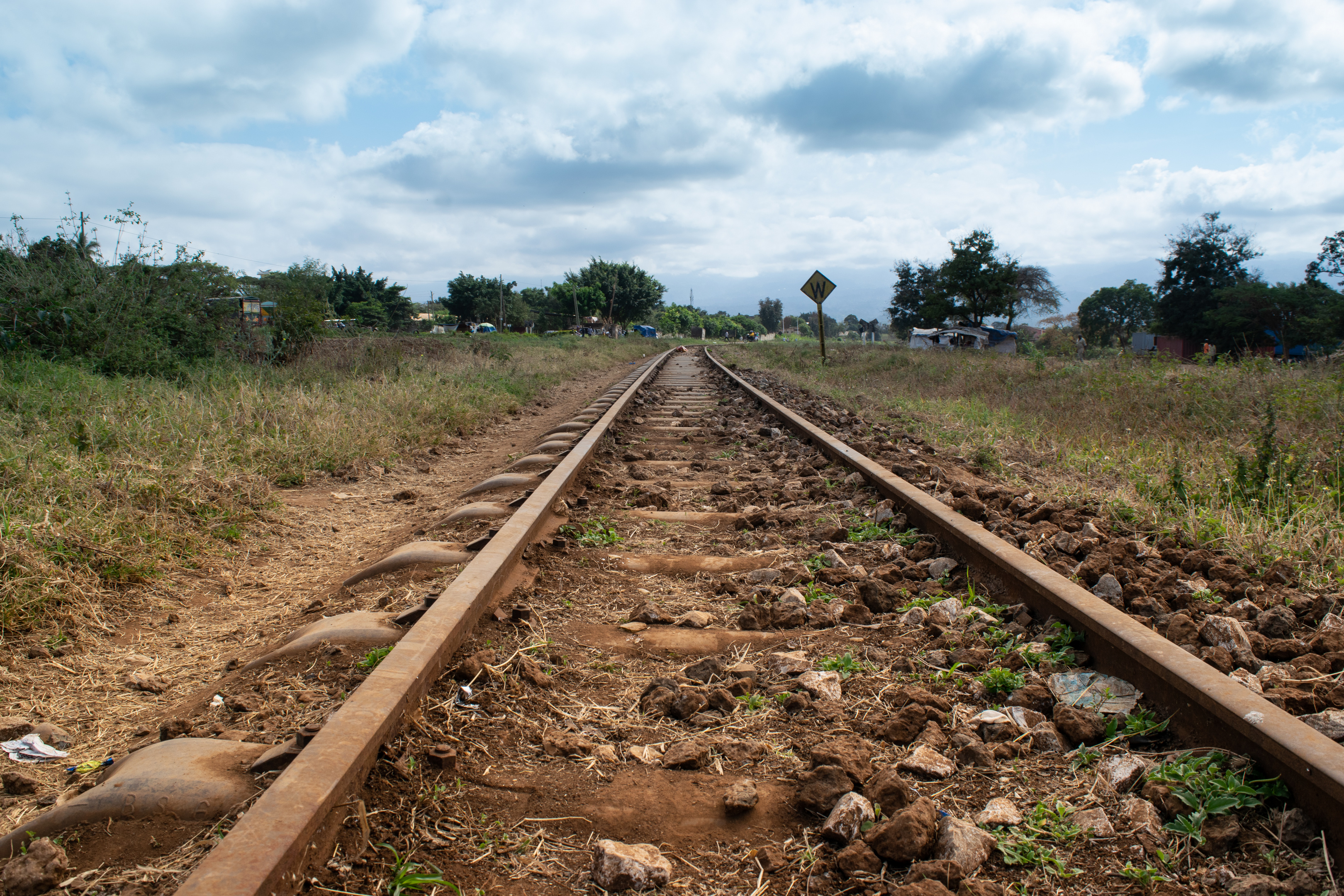
Old railway built by the Germans in the 60s currently used by locals to reach the town center by foot.
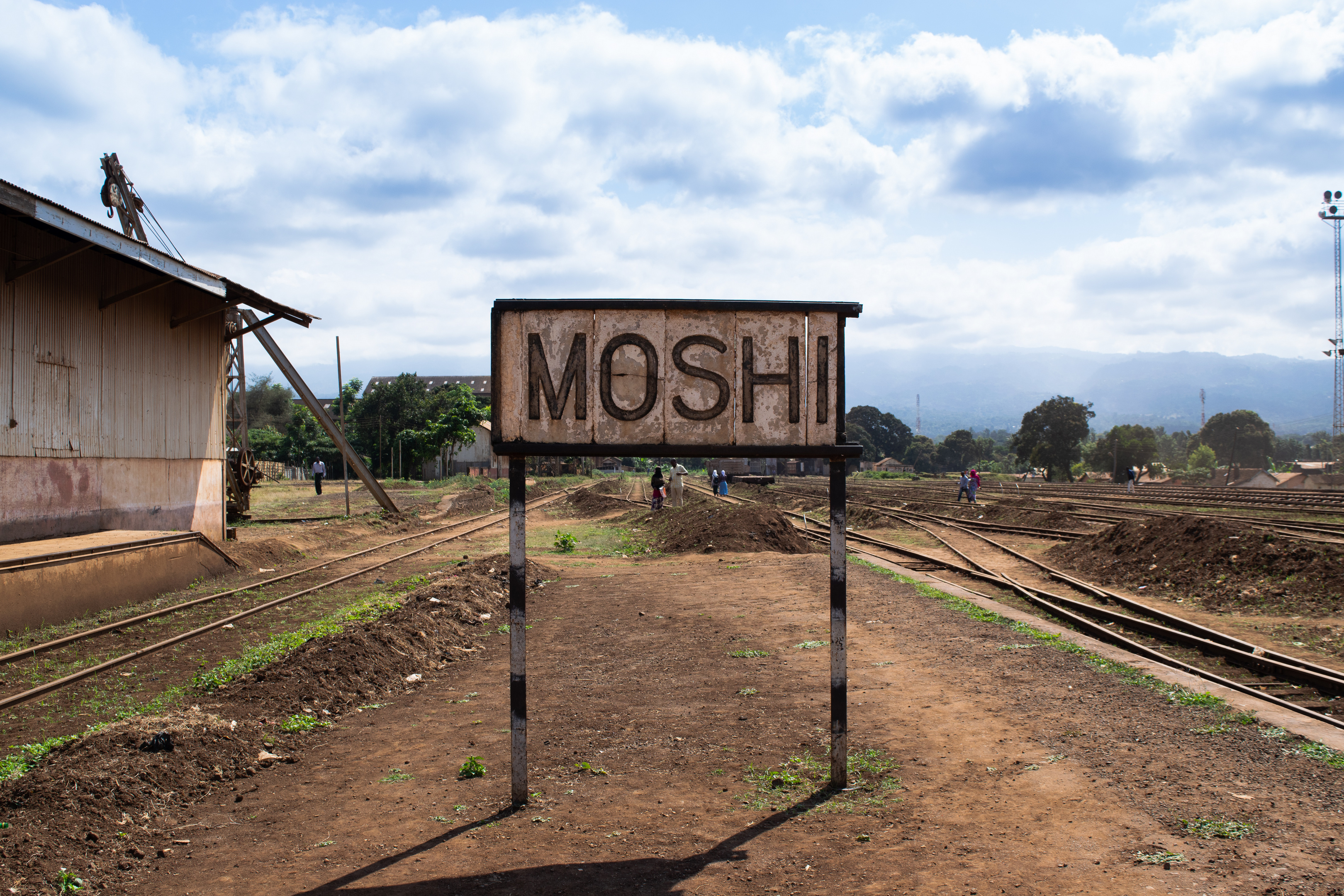
The old railway station build in 1961.
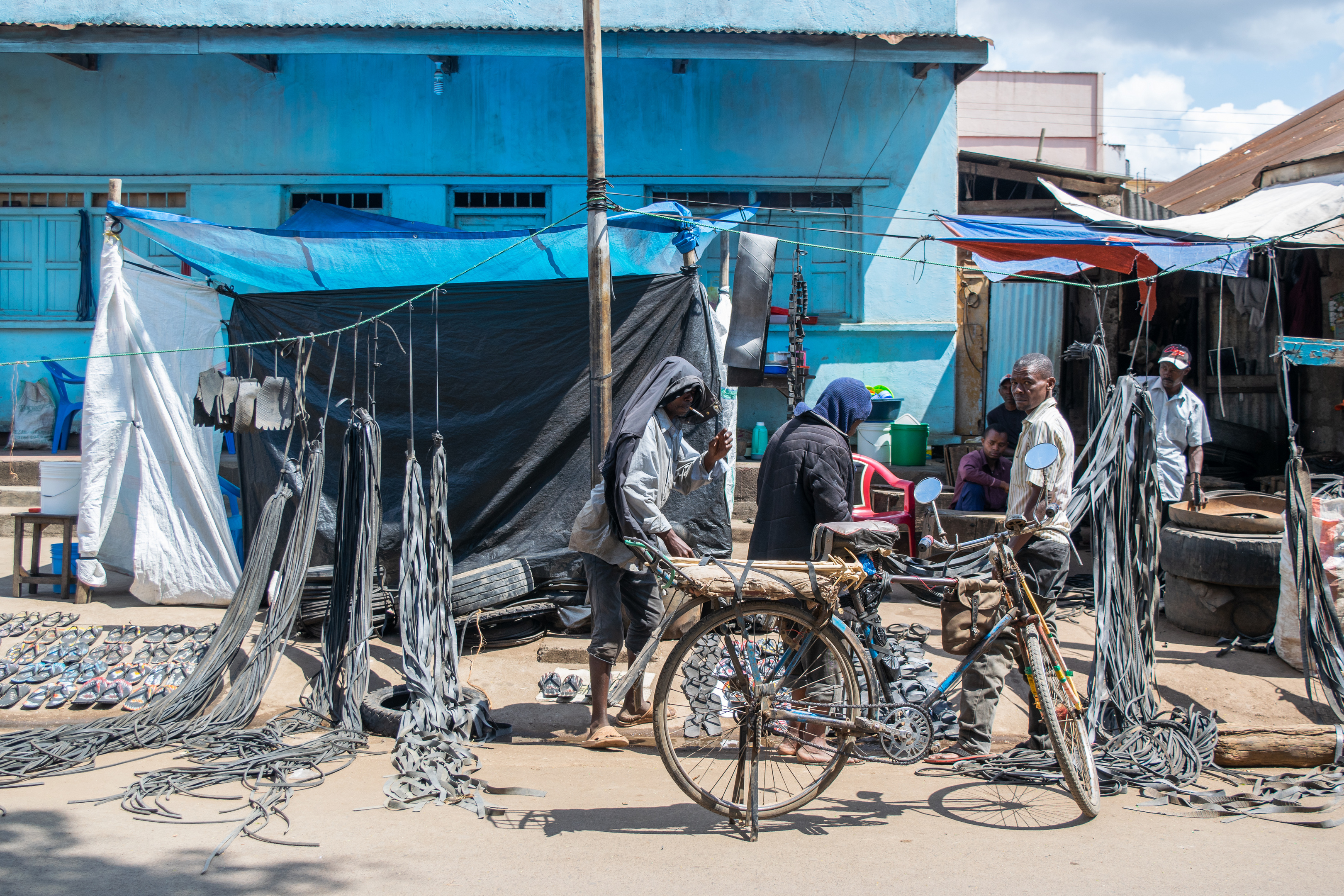
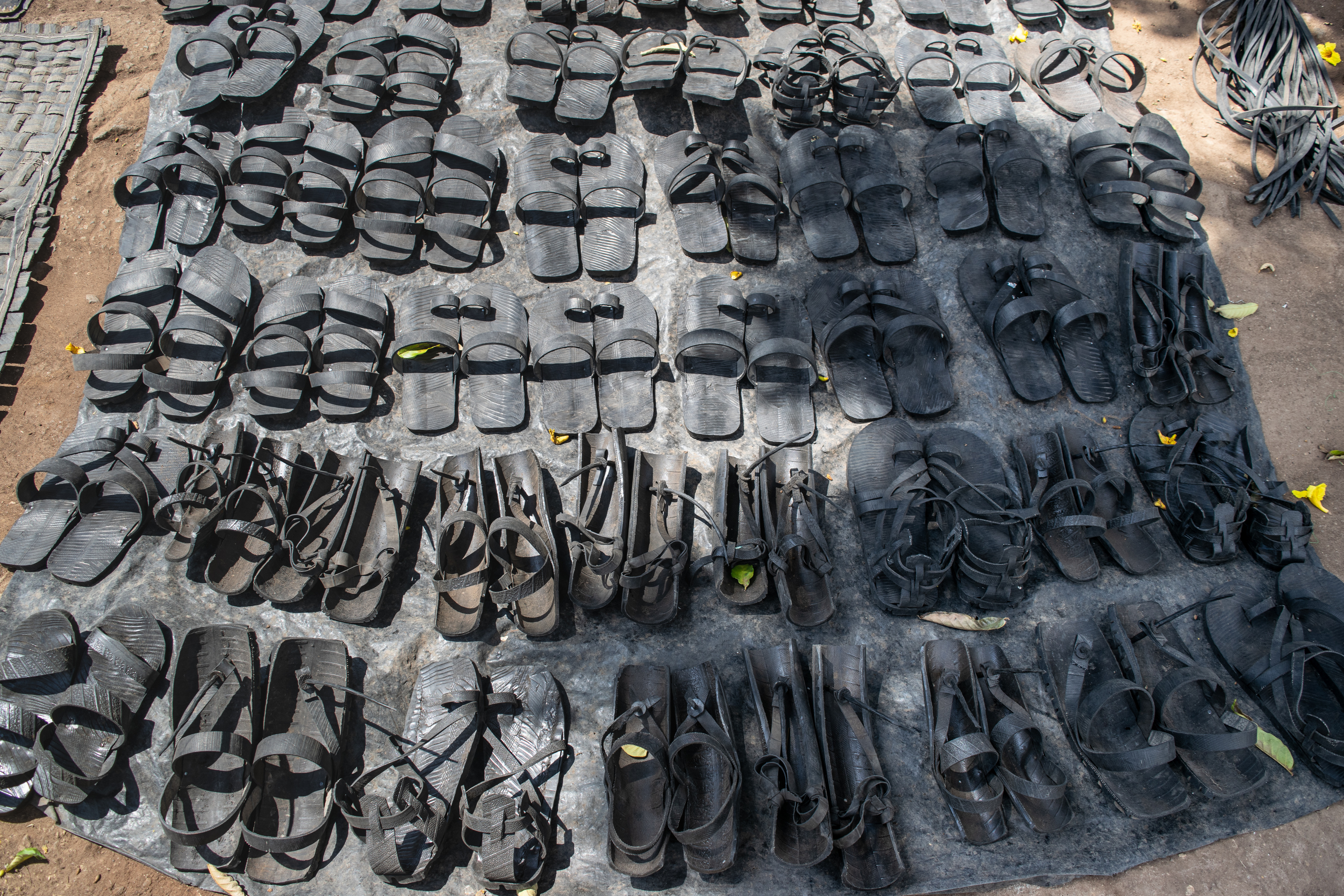
Shoe workshop. Sandals are often made from tires here.
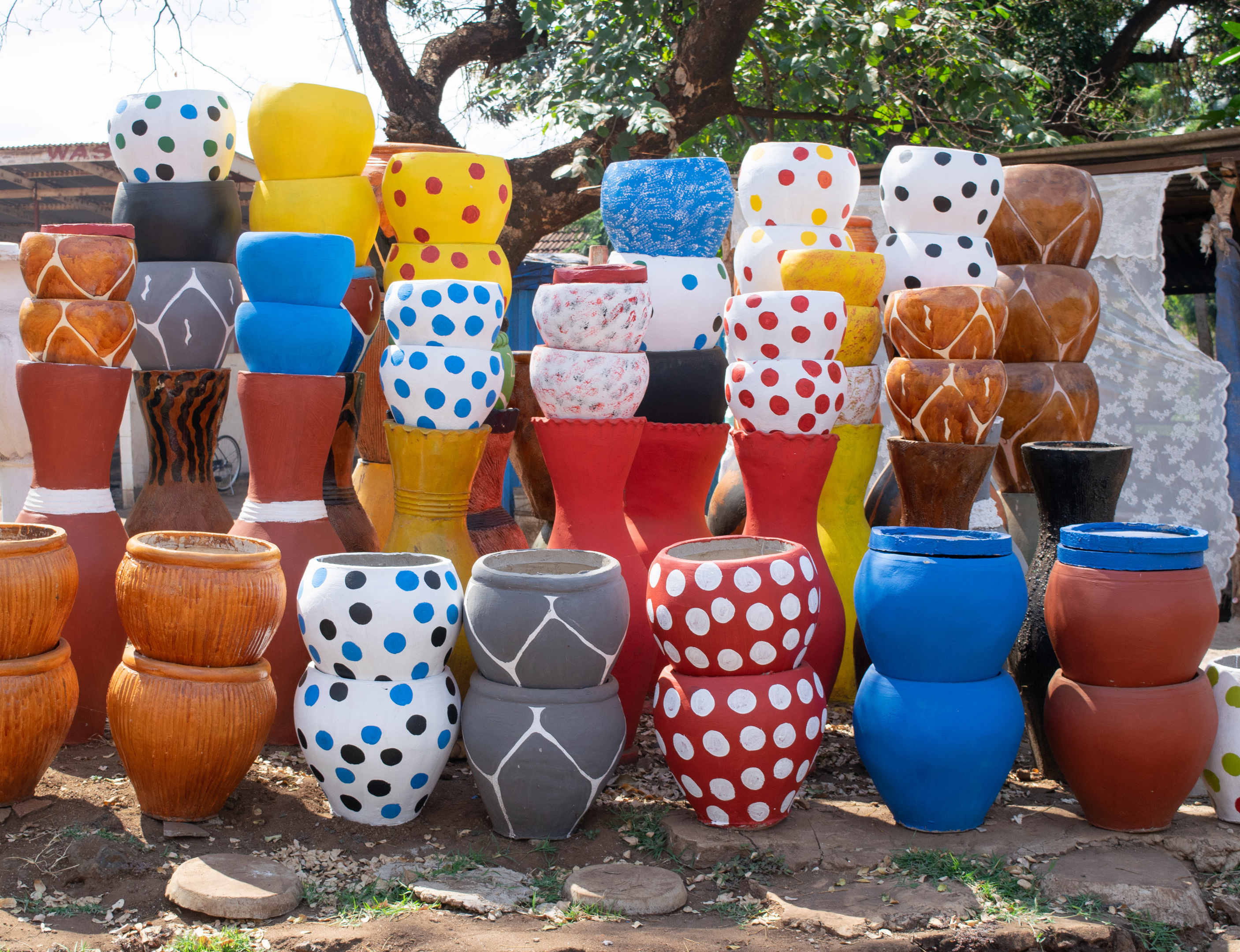
Beautiful garden pots contrasting to the surrounding booths at the market
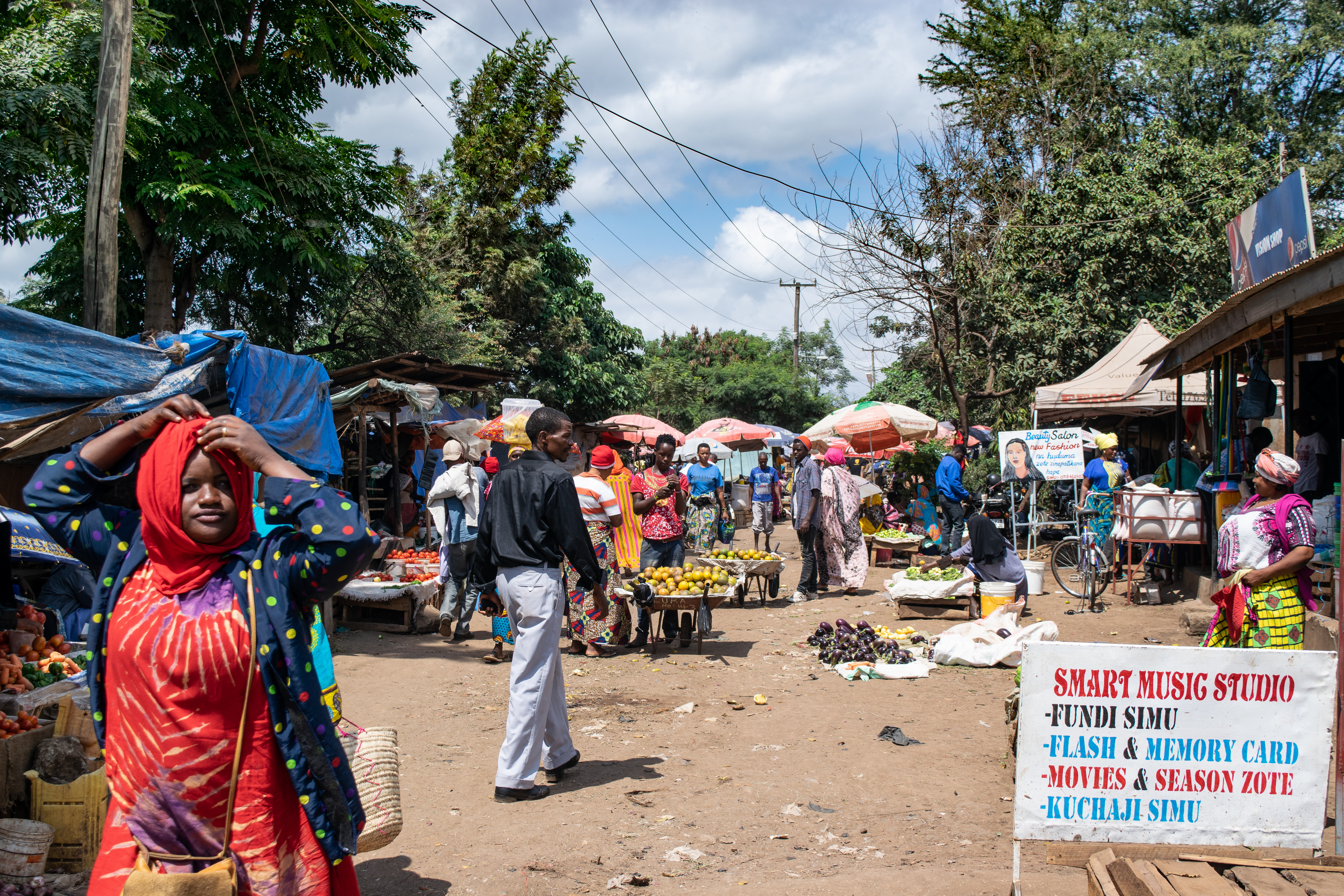
Passing through the local open market
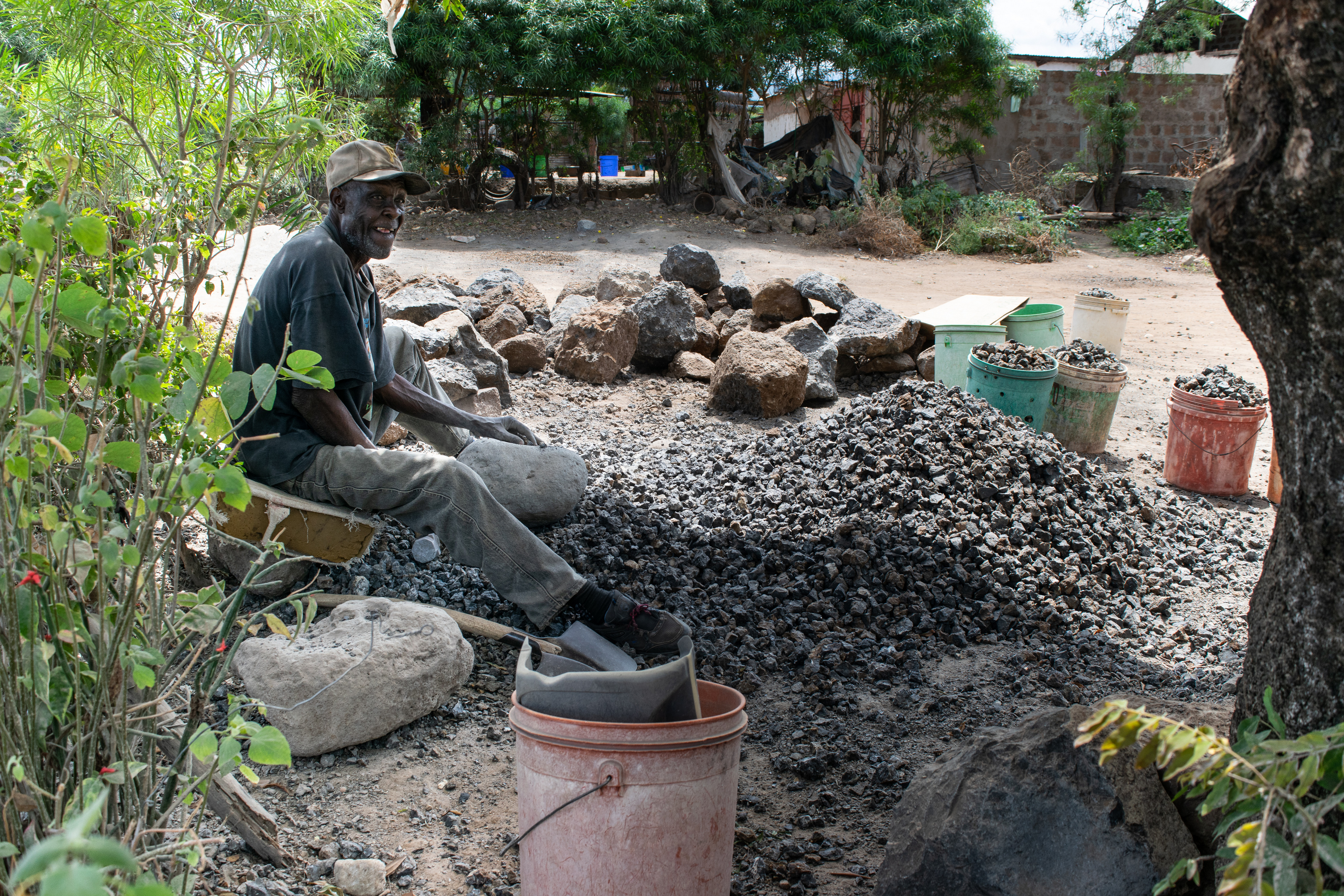
Stone breaker – a popular job in times of active road construction works
This walk served as a good reminder about who I am, where I come from, and how fragile life can be…But this is probably a topic for another post…
As I promised earlier – click here to download my list of hints & tips (open the link in a new tab) in case you decide to climb Kilimanjaro one day. The list contains additional advices to the ones you will certainly receive from your trekking agency. And of course, feel free to contact me should you have extra questions.
And I think my next hike will be the long planned Mount Karisimbi in Rwanda (4507m). It’s not as challenging as Kilimanjaro but still high enough to keep me in shape!
The End.