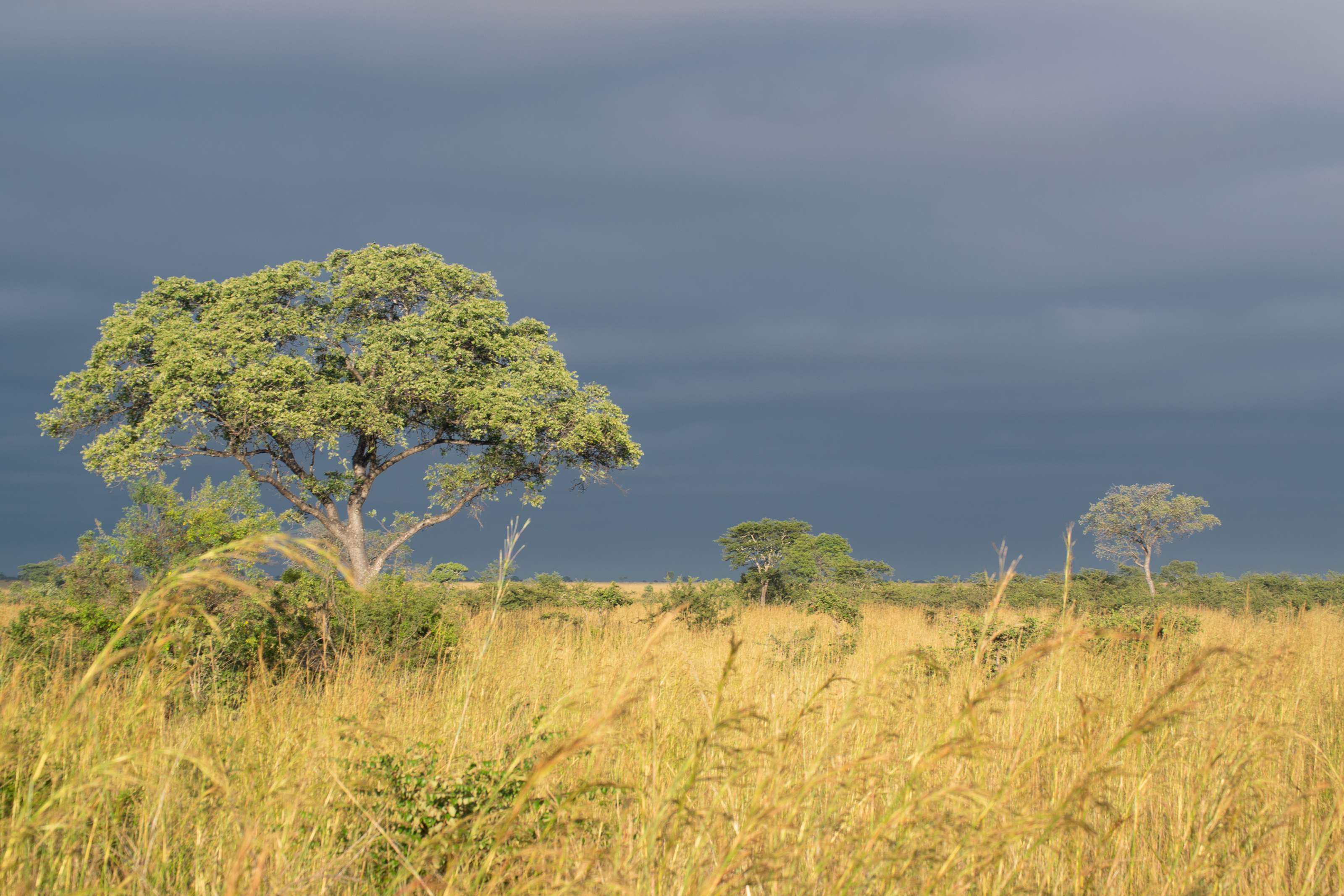
If there is anything that I like more than nature is… the wild nature!
We spent the rest of our 1-week vacation in Zambia in the wild, remote and beautiful Kafue National Park. Exactly what I needed after the shiny and quite touristic Victoria Falls.
Zambia’s top wildlife watching areas are Southern Luangwa and Lower Zambezi due to the variety and density of animals. For the same reason these two national parks are largely explored and attract most of Zambia visitors.
Kafue National Park is unique – it is untouched, unexplored and unspoiled by the mass tourism. Covering more than 22,500 sq.m., it is one of the largest National Parks in the world. Pure wilderness, waiting to be explored.
Kafue is easily accessible – just 3-4 hours drive from Lusaka. The main road took us through a series of villages, where occasionally I noticed local people playing billiards in the traditional cement or mud houses along the road. I cannot imagine how the billiard tables got to this remote place in the middle of Southern Africa.
As soon as we drove past through the main park gate, we were greeted by a pack of wild dogs along the road. Although resembling a little bit the spotted hyenas, wild dogs definitely look cuter to me J
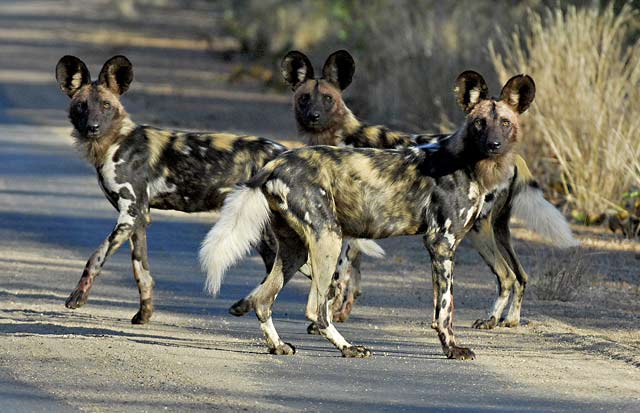
Wild dogs; Photo credit: Apogee photo magazine
We reached Mukambi Lodge just on time for a sundowner, overviewing the vast Kafue River. After a short check-in procedure, the staff hastened to inform us about the rules at the Lodge, from which I only remembered this one:
“You should not walk on your own between your chalet and the lounge/dining area during dark hours due to a very high chance of running across a herd of hippos, elephants or a passing lion. In case it’s dark, you should always be accompanied by one of our staff who knows how to react and deal with these animals”
And then the staff member added: “For example, last night we had elephants feeding on the trees here, and a lion hanging around during the whole night. Hippos also like coming out of the river at night to graze among the chalets. So you should be careful”.
Wow! Instead of fear, I felt extremely happy to hear that. It was already getting dark. Let the adventure begin! 🙂
Although tired from the air and road travel that day, I was too excited to fall asleep and just moved around restlessly in bed anticipating the wild animals to appear around the lodge area. Not before long I heard the distinctive sound of hippos grazing the grass behind our chalet. They were literally a couple of meters away. I hardly resisted to open the back door to have a close secret glimpse of these massive wild animals but I had to remind myself one fact – Mr. Hippo is among the most dangerous animals in the world, highly aggressive and unpredictable.
Through the thick room curtains I could figure out that the dawn was soon going to break. I was quite exhausted and just started to drift off to sleep when the roaring of a nearby lion woke me up completely. “That’s it”, I thought, “the spoiled human from the city who is so used to construction and traffic noise and can’t fall asleep because of a few wild animals…”
Well, I had to convince myself that we traveled all the way to this place to enjoy it, so hey, no more complaints, please!
It was already 6 am – time to get up and prepare for the first morning safari. Obviously it was not only me who was sleep deprived. Two of the family members preferred to sleep in, while Kristiana and me enthusiastically followed the staff member who came to pick us up from the chalet for the game drive (this is the term for wildlife watching from a safari car).
The fresh morning air and the slight drizzle sharpened our minds and senses, so he we are – ready to go deep in the bush!
The starting point was across the river, where an open safari car was waiting for us.
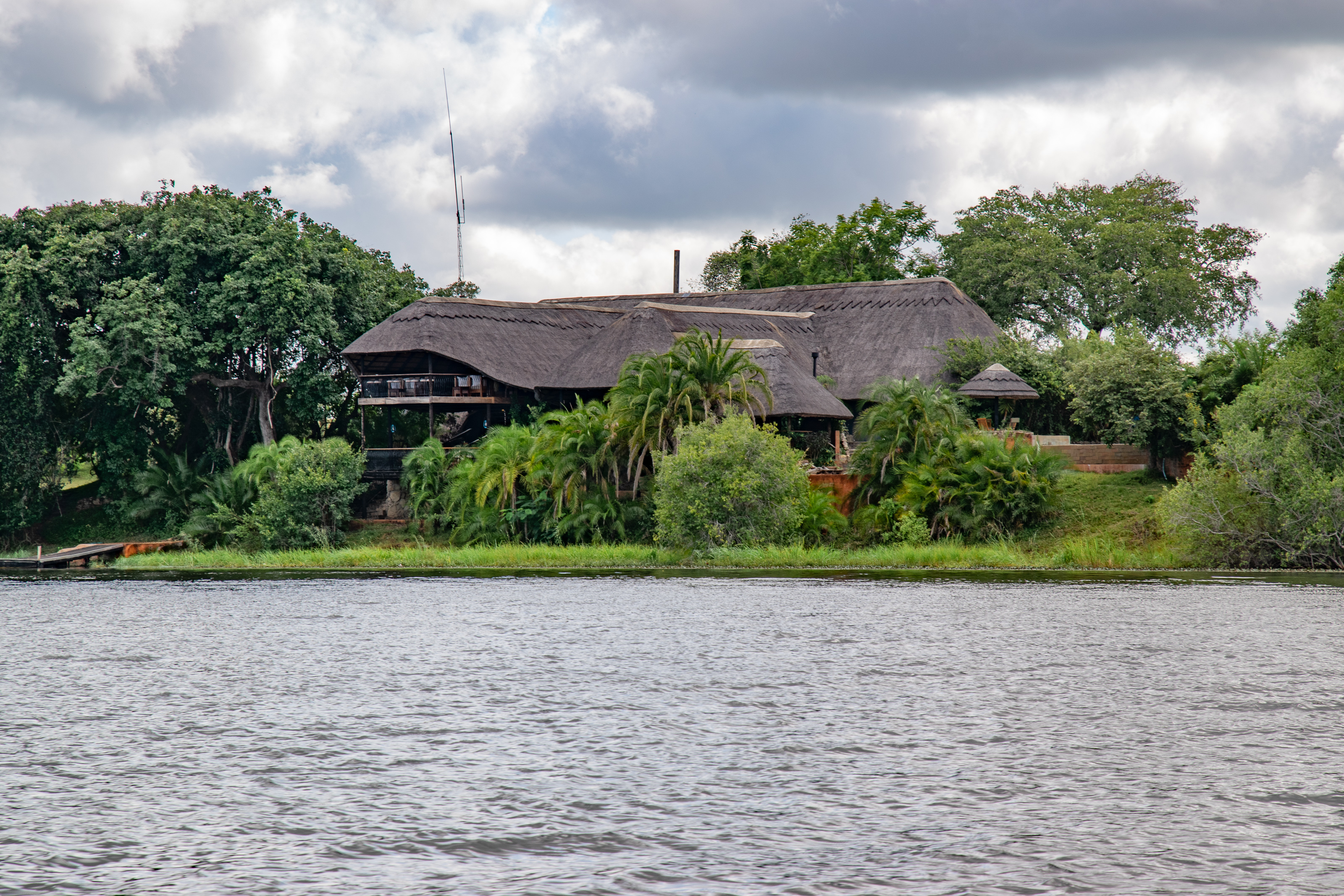
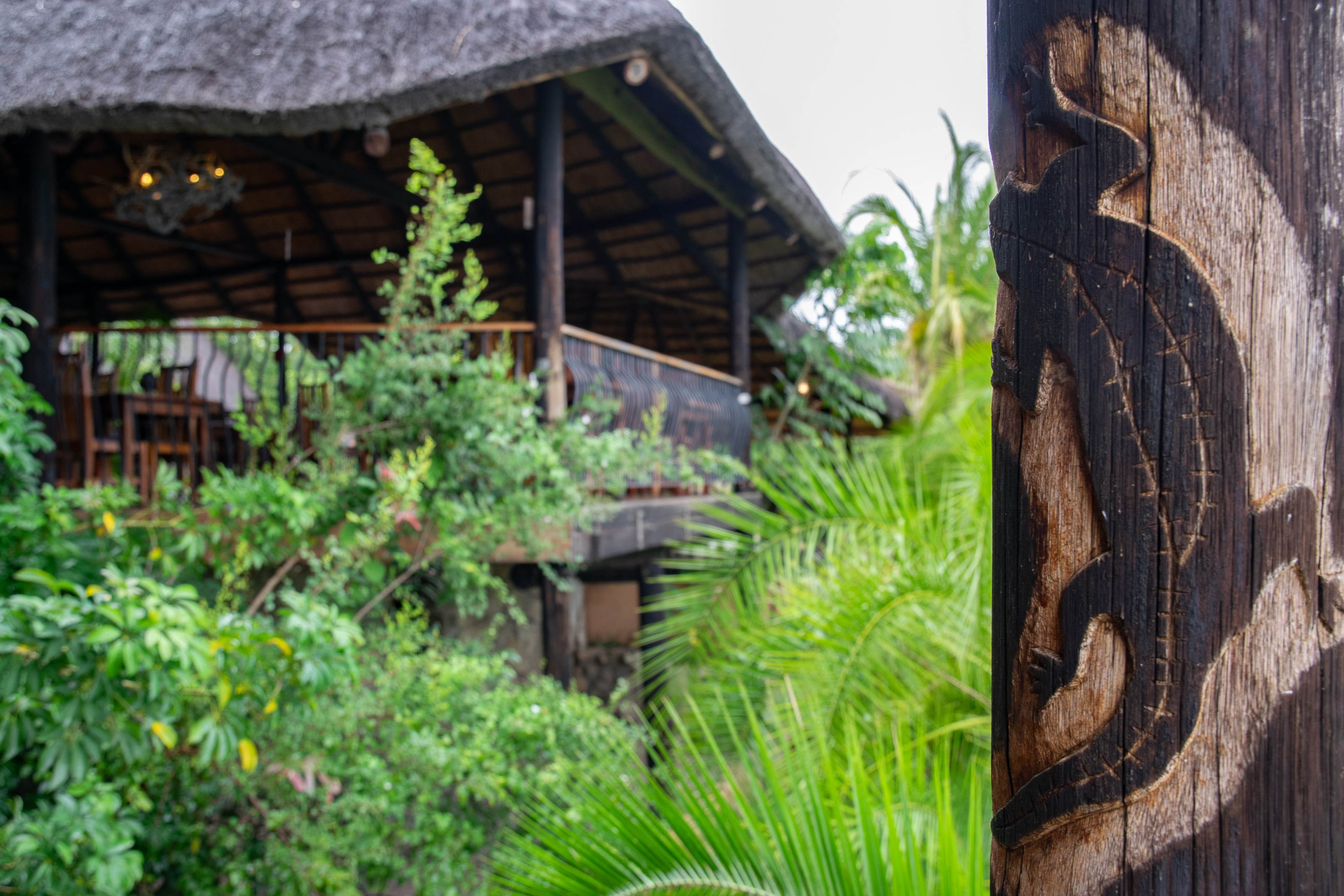
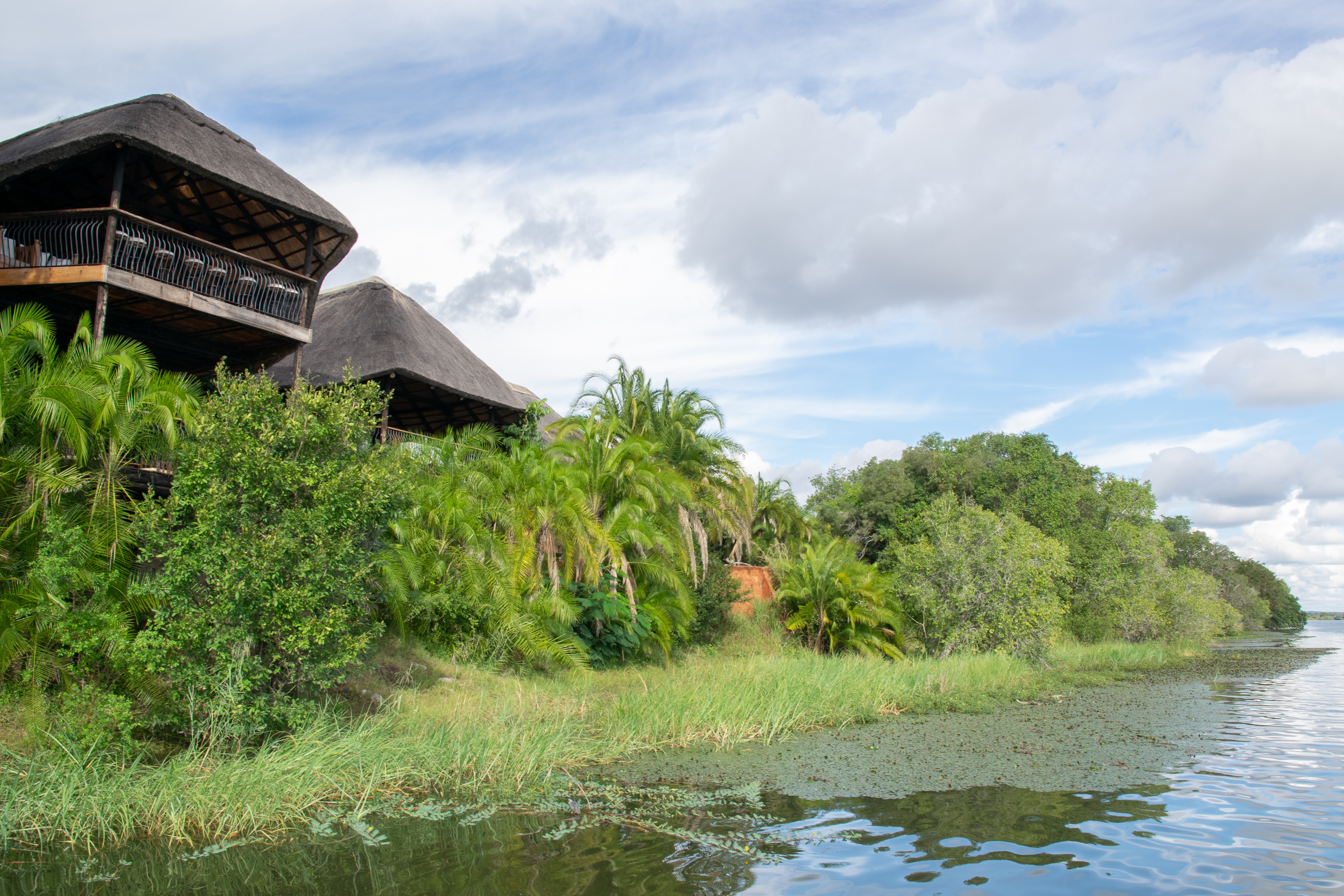
Mukambi Lodge, main thatched building
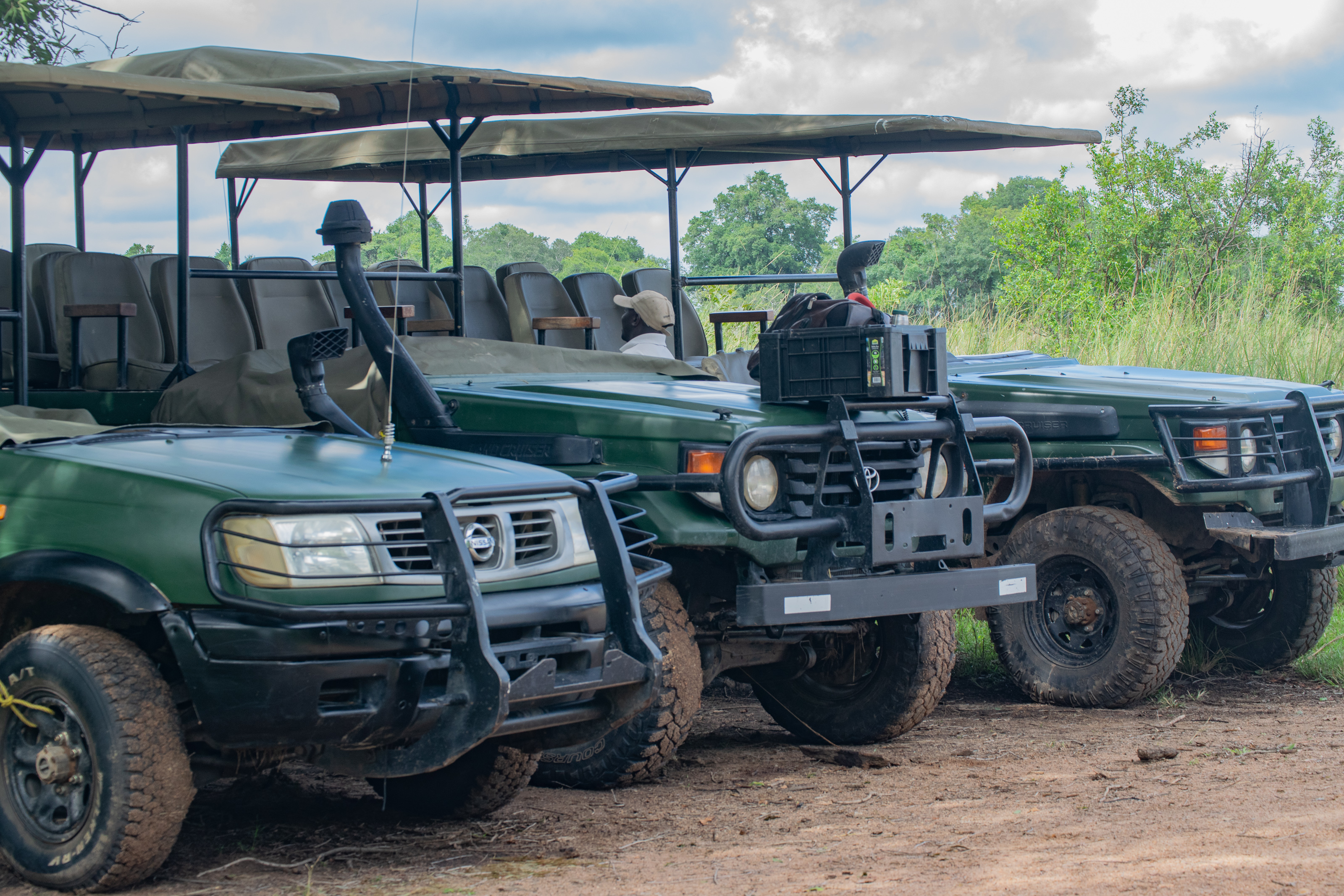
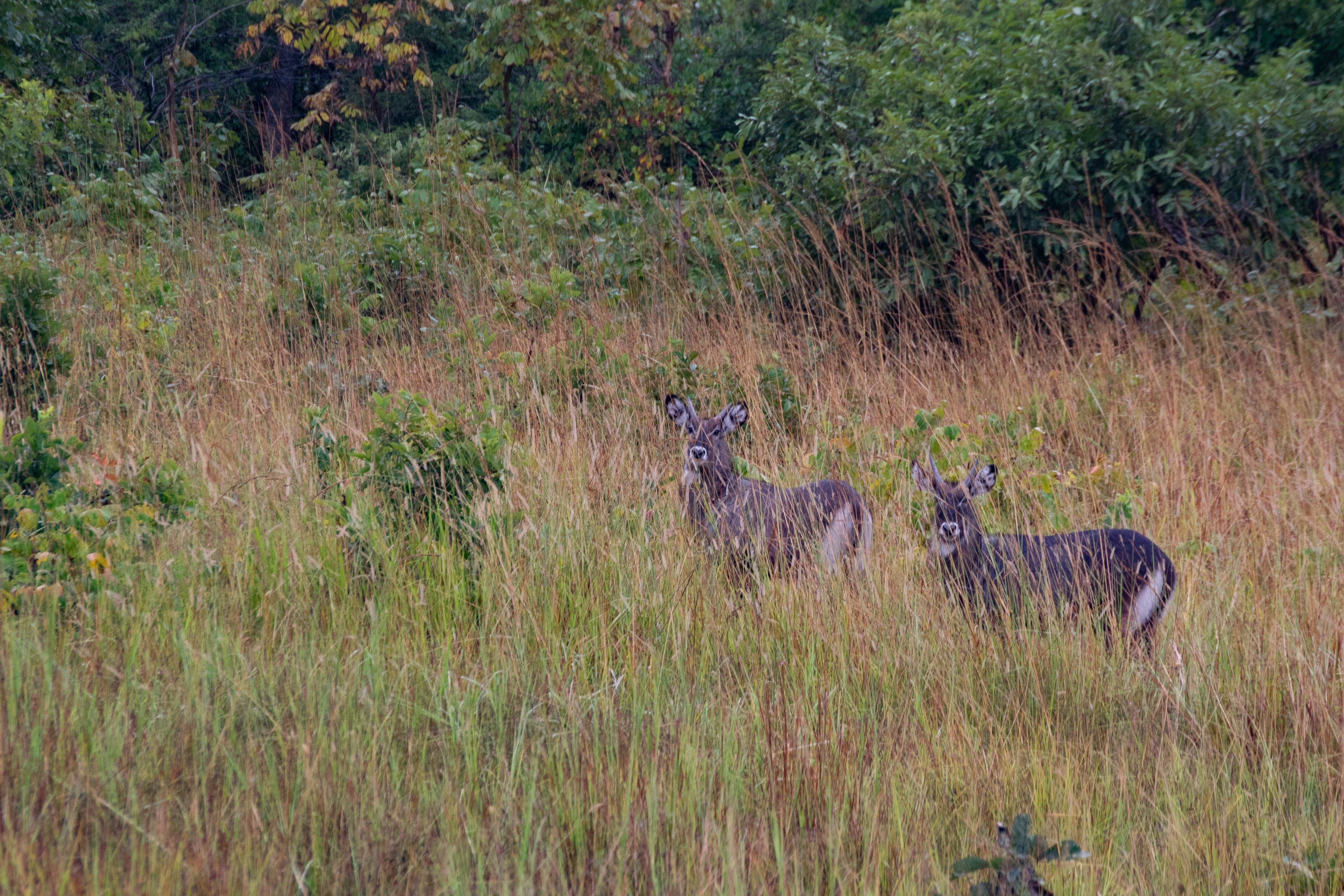
It was a 3,5 hours drive through high grass, bush, forest and plains. Due to the high grass and thick bush typical for beginning of April (end of the rainy season in Zambia), we didn’t hold very high expectations about encountering a lot of animals. However, we got to see quite enough that morning: impalas and pukus, elephants feeding on low trees far from us, two waterbucks, hartebeests, a variety of birds, and the funny guinea fowls who always (foolishly) rushed in front of the car instead of turning away into grass along the path.
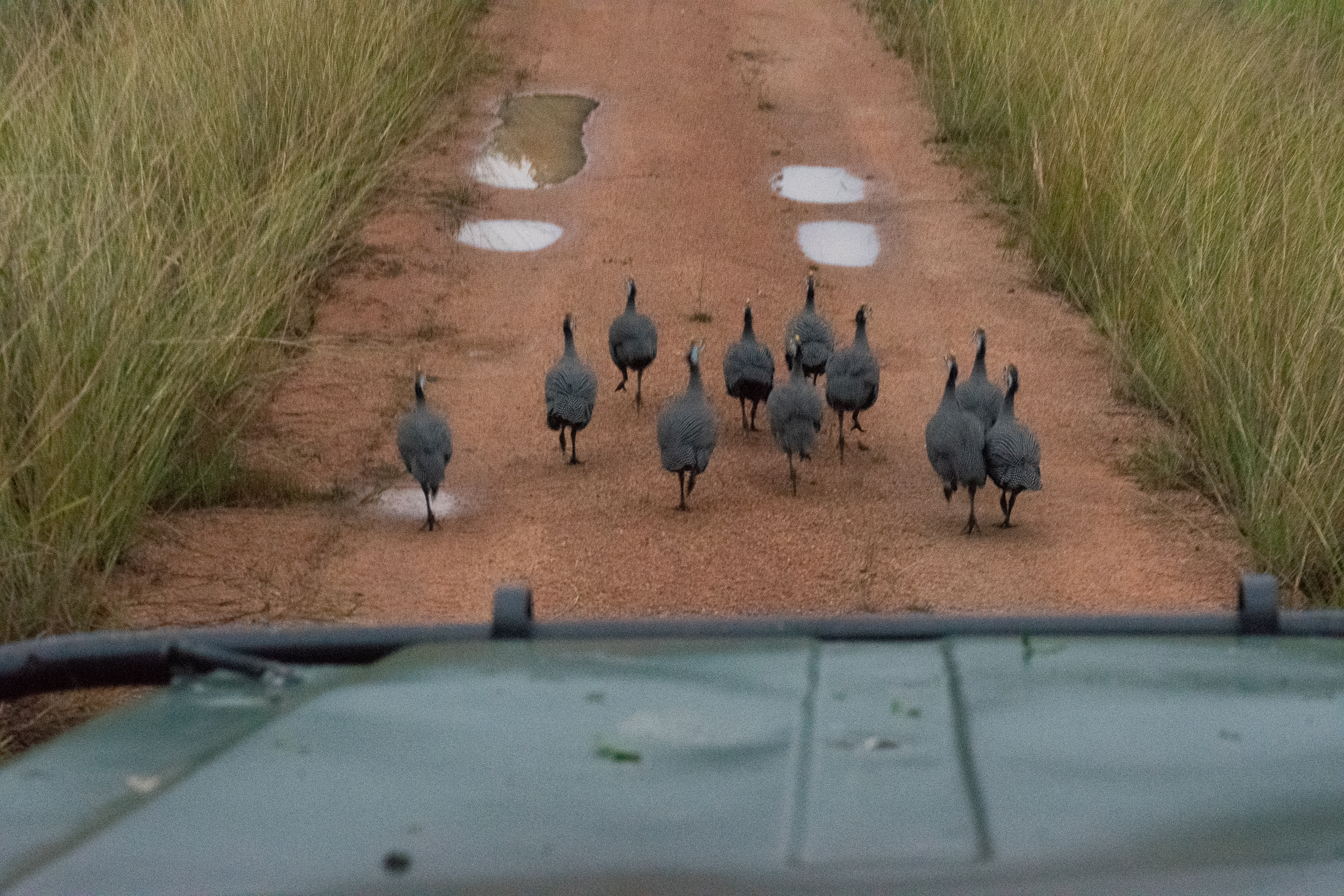
Guinea fowls rushing to escape from the car
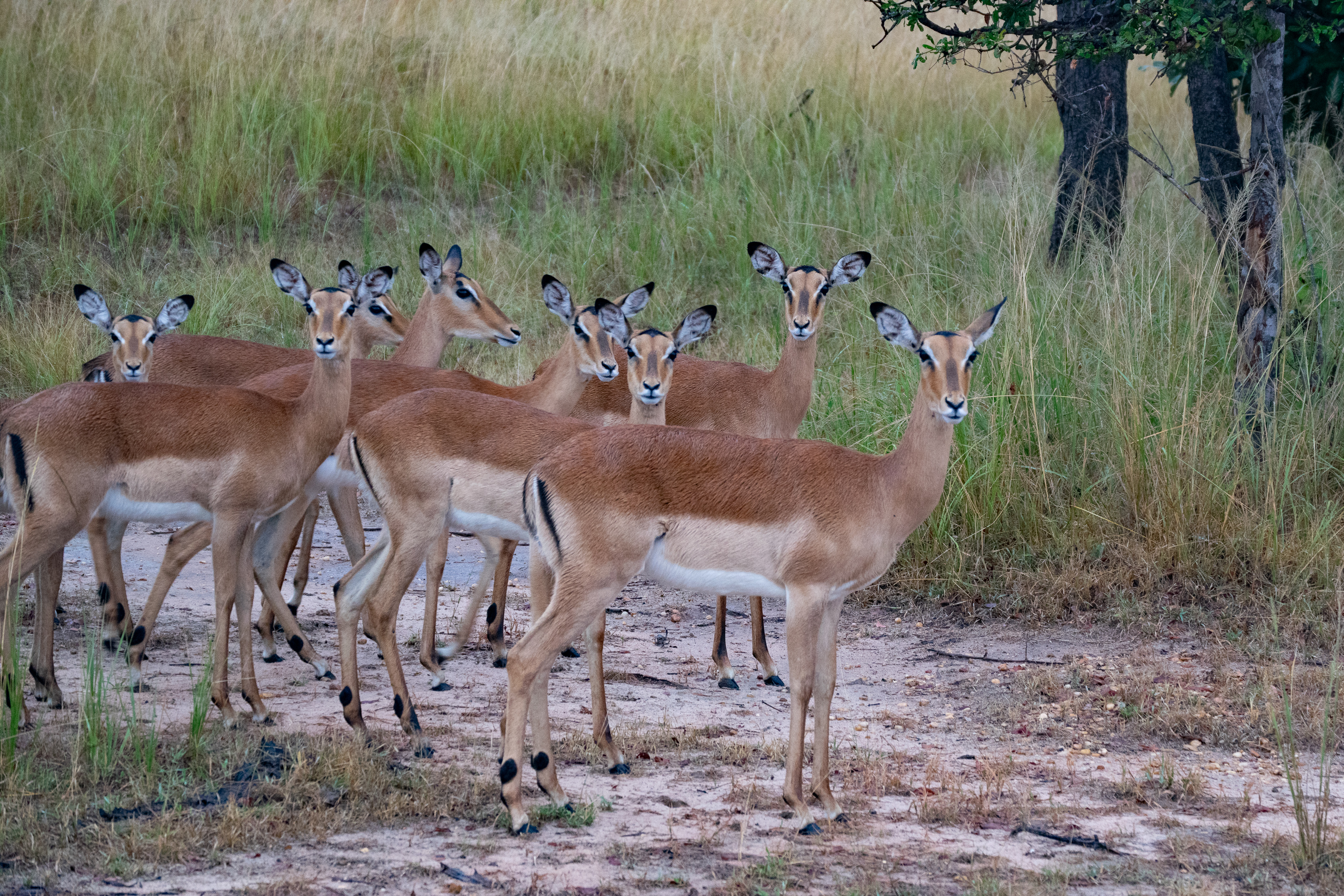
Graceful Impalas
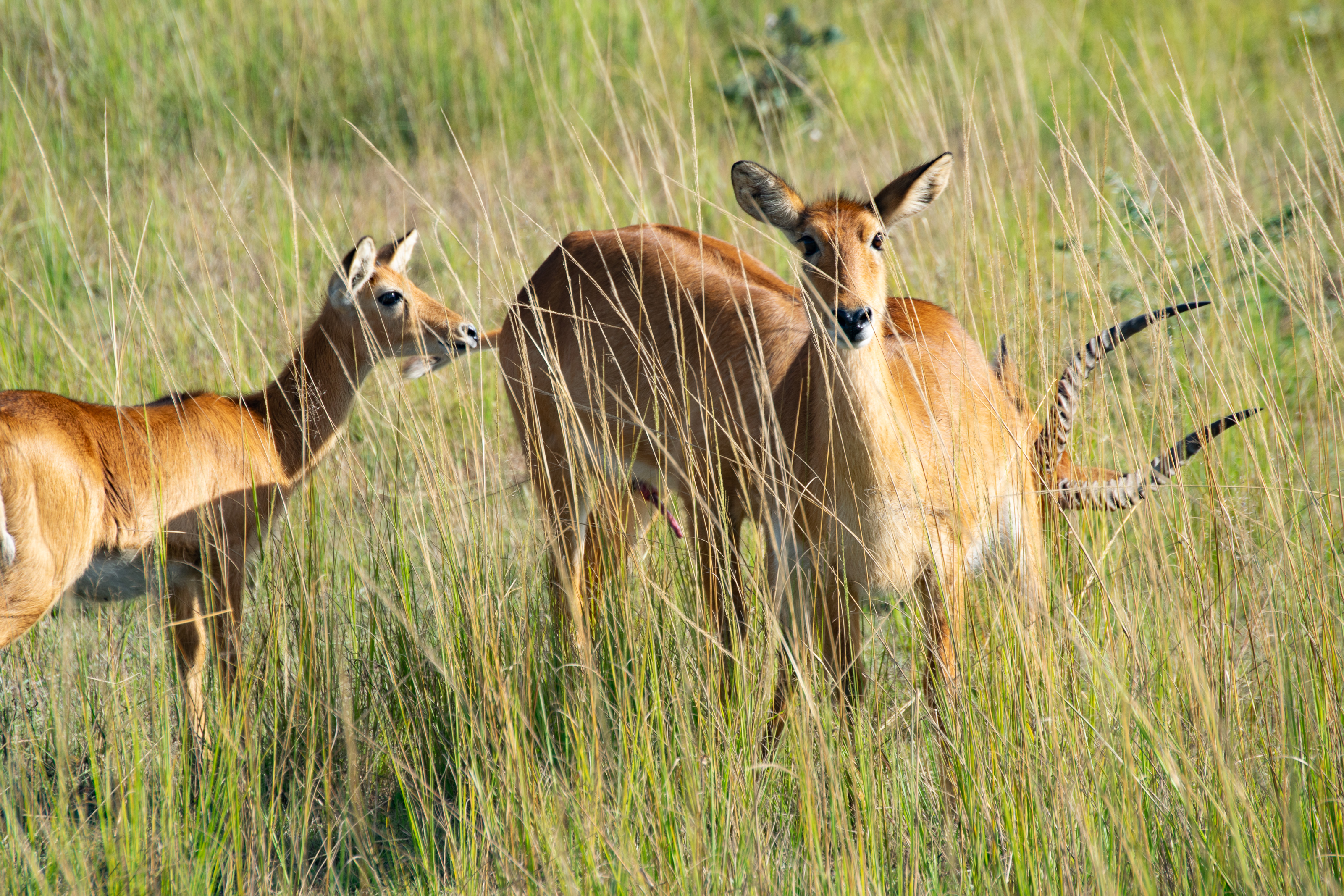
And their sisters, the Pukus – a type of African antelope found only in Zambia
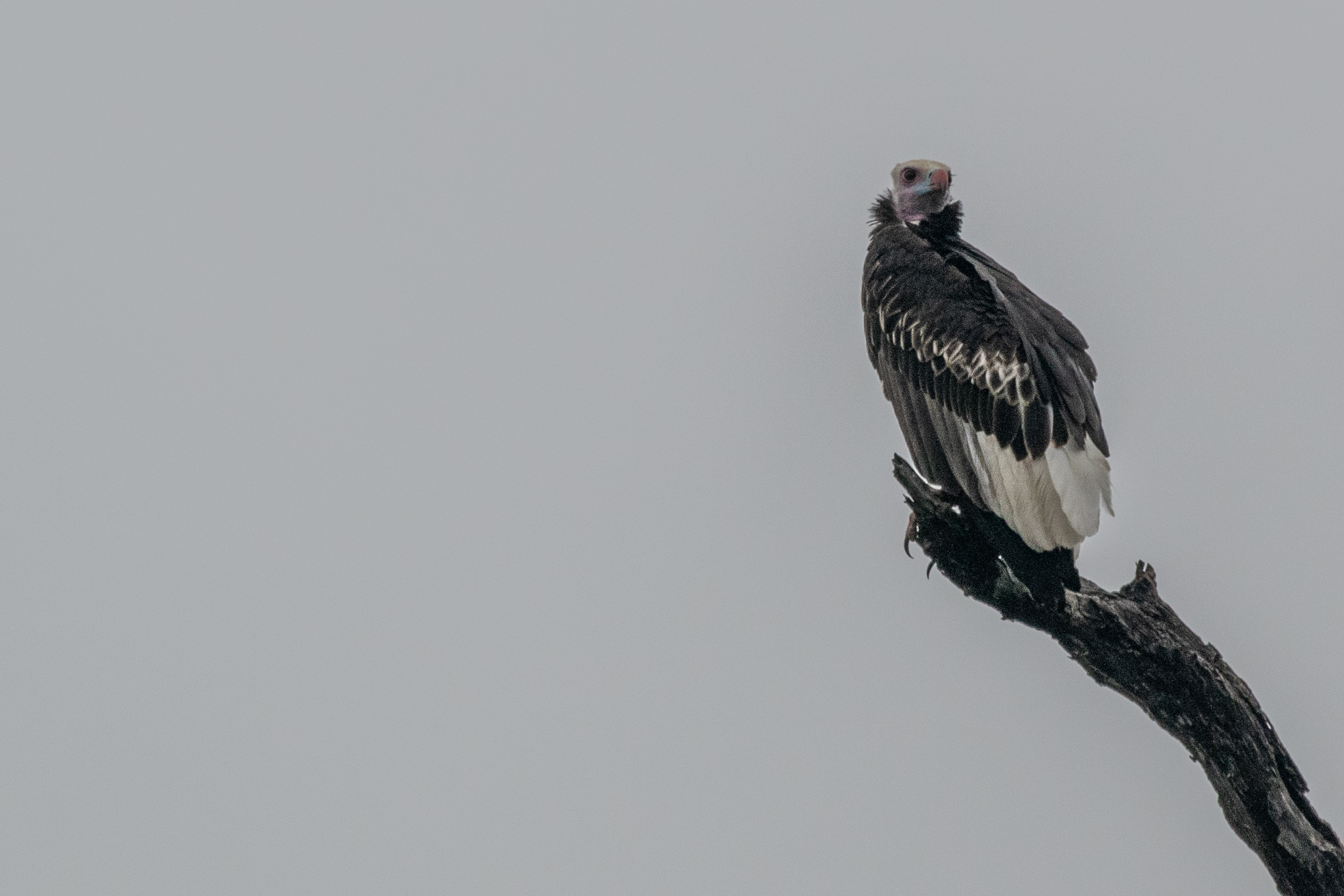
White headed vulture
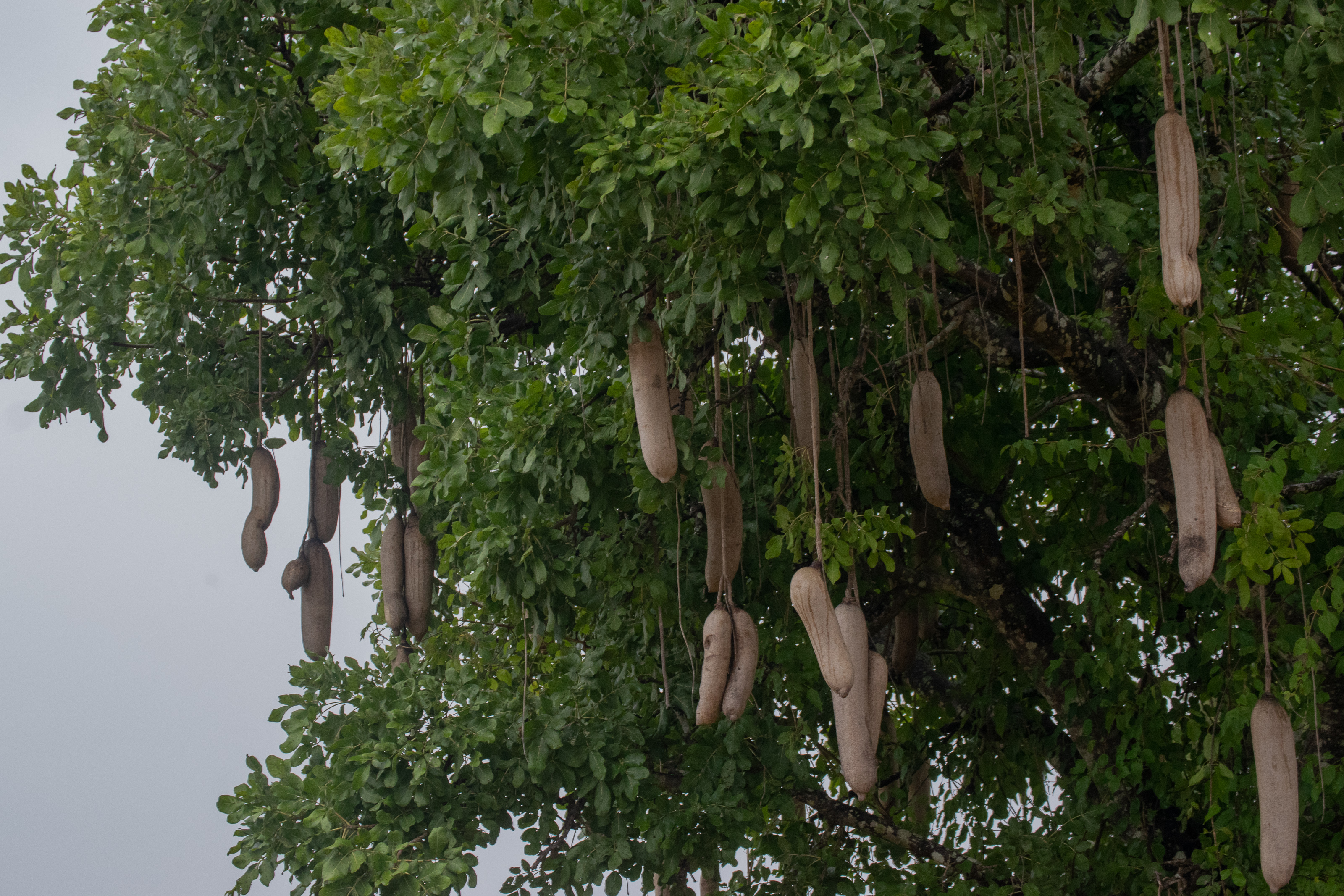
Sausage Tree Fruit – favorable dish for hippos and giraffe
For my very big disappointment, I found out that I’ve mistakenly put a wrong second lens in my bag and left behind the great zoom lens that is most appropriate for safari. Good lesson for my next luggage preparation!
No matter what we’ve seen, Kristiana and I will always remember this game drive with the swarms of tsetse flies who were fiercely flying along with us the whole time. As the safari car is open, there was simply no escape from these naughty creatures. They were landing all over our heads, backs, and even managed to crawl under the thick jeans. Aaahhh! As one of the travel guide books warned: “here is one time when you might groan at biological diversity: there are 37 different species of tsetse flies in Kafue National Park”. I can add: and there is one specific road in the park, straight and long, where the majority of these tsetse flies resides. We called it “The Tsetse Road”.
We quickly figured out that tsetse flies become most annoying at average speed. As soon as the car speeds up, tsetse start lagging behind. But then, the higher speed doesn’t allow spotting animals. On the contrary, when the car slows down, tsetse immediately attack. In other words, we were desperately tossing arms and shaking heads to dispel them, which sometimes seemed to work, at least for a few seconds.
Well, later we learned that elephant dung acts as an efficient repellent for tsetse flies, but there are three prerequisites:
1. The dung has to be fresh;
2. It should be put somewhere on the car;
3. It should be burned;
Hm, it’s never too late to learn something new! 🙂
On one of the next safaris our guide took care of this. We were driving another long and straight road through the park, which we called “The Poop Road”, “sprinkled” with dung from elephants, buffalo and God knows what else! After some time spent in the wild, we became experts in distinguishing between all of these kinds of dung.
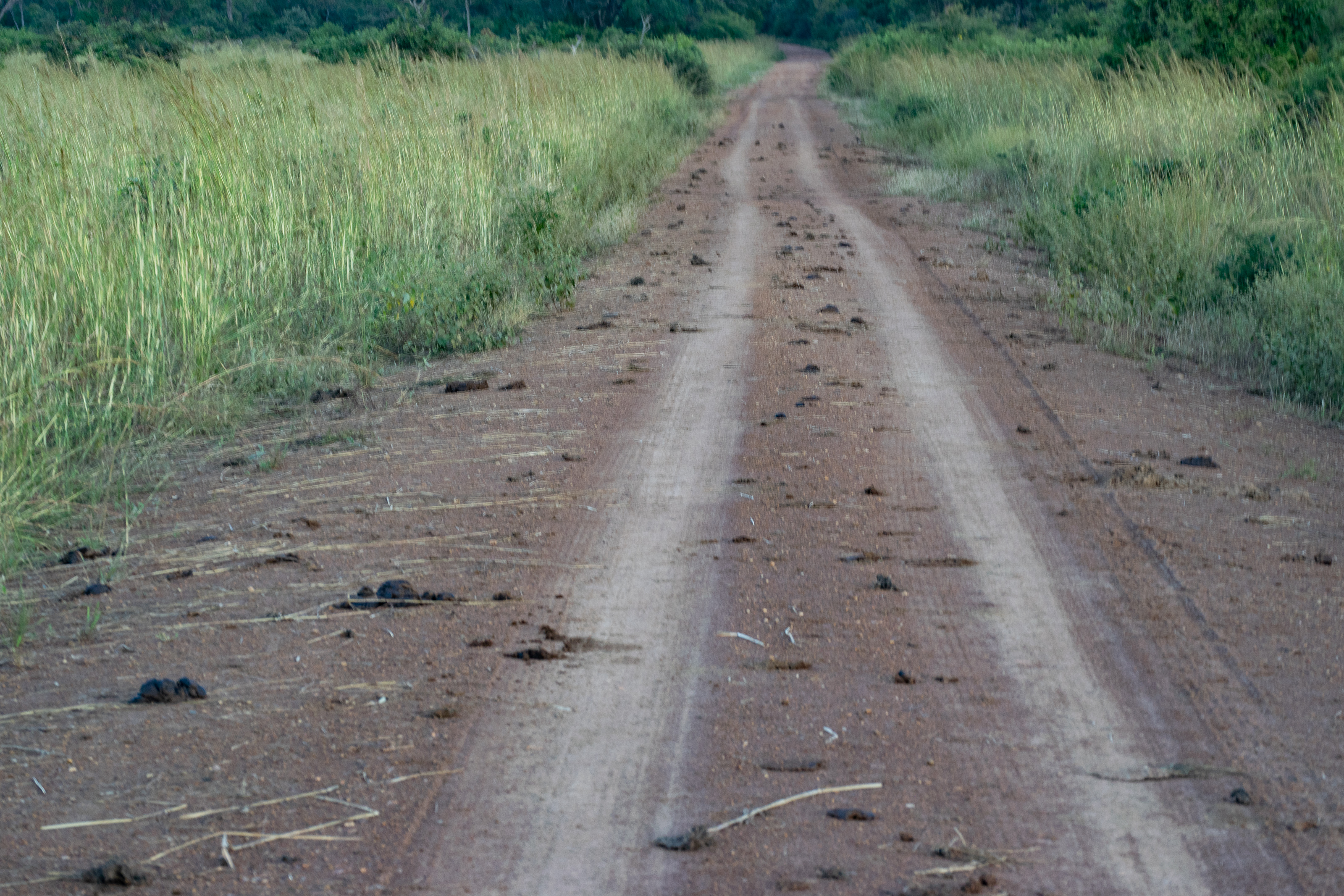
“The Poop Road”
It turned out that the car has a special container for the natural repellent.
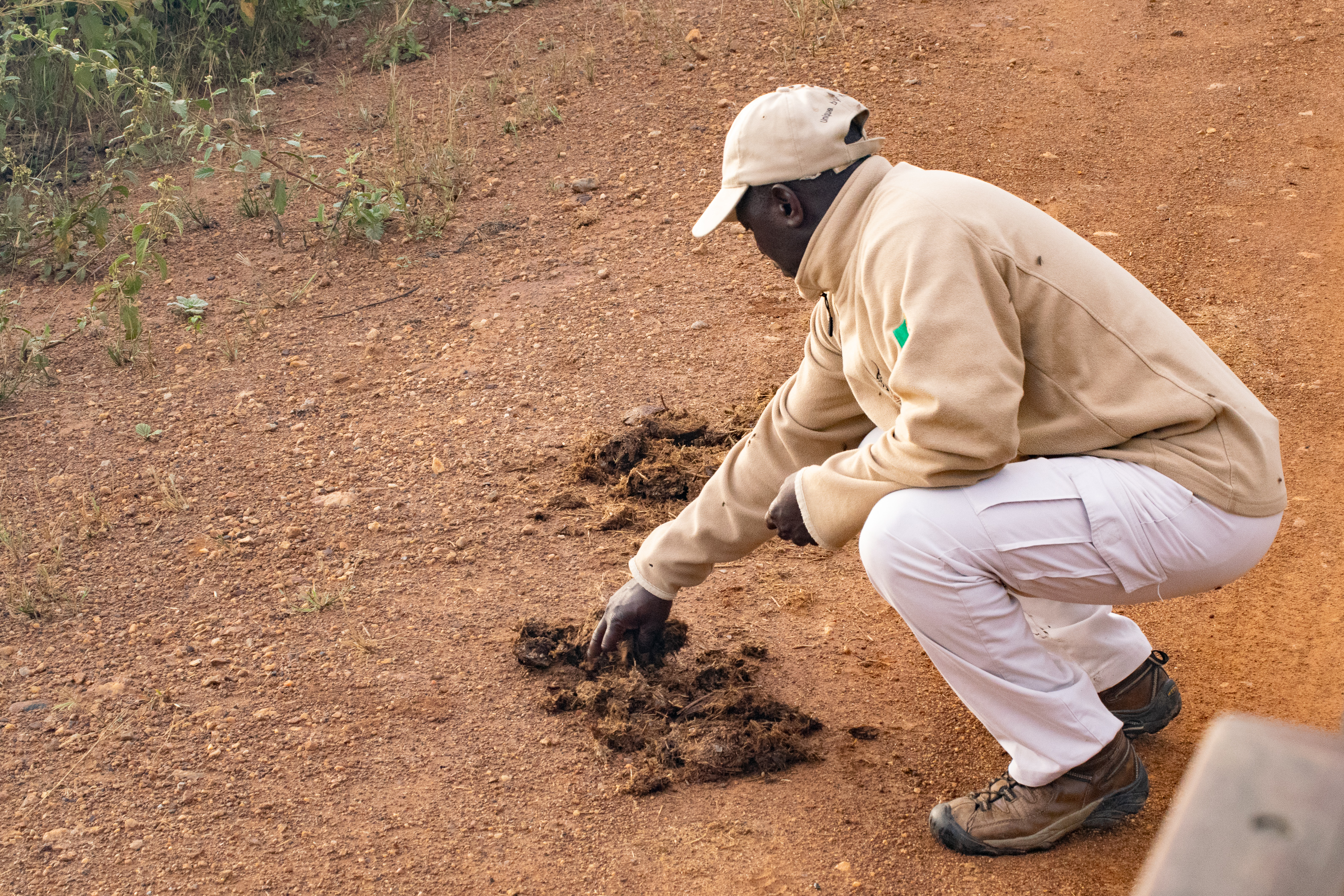
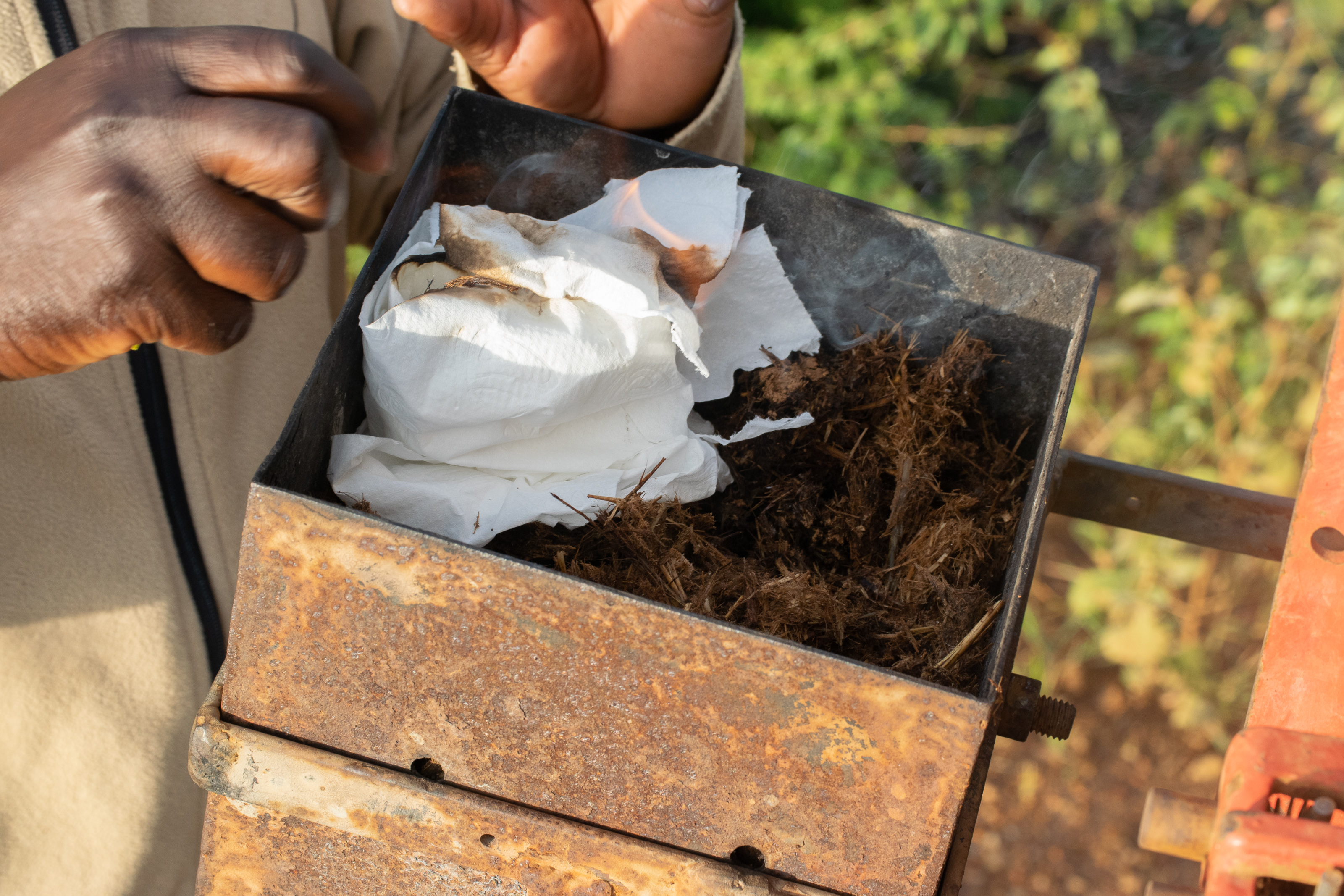
Burning elephant dung in a container at the back of the car
Fortunately, the tsetse flies were not everywhere in the park and their bite was considerably less painful than the bite of their neighbors in Rwanda’s Akagera National Park (but there you drive in a closed car). Towards the end of our stay in Kafue, we got quite skillful at catching them, and then extracting them from our skin, before they manage to bite a second time 🙂
A much friendlier species is the pangolin (“броненосец”). It was our first encounter with this animal and since I knew little to nothing about it, I decided to Google it.
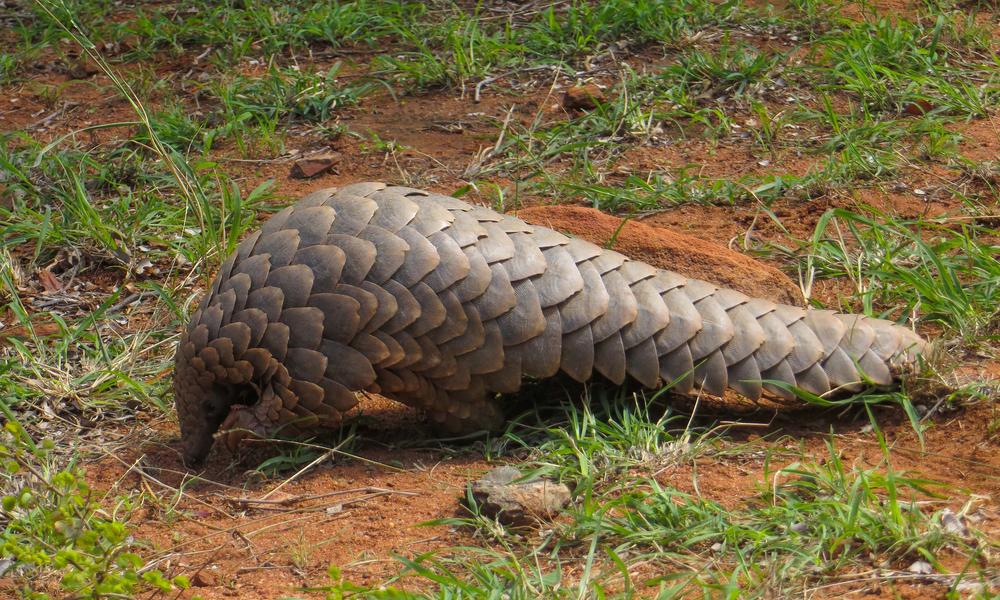
The cute pangolin
The search results were too interesting not to share them with you.
Did you know that pangolins are mammals, more specifically, the only mammals covered in scales, which are made of keratin? Or, that pangolin means “roller” and it was given this name because it would curl itself into a ball when under threat.
There is though one very sad fact about the pangolins – they are the most trafficked wild animal in the world – more than 1 million have been poached over the last 10 years, since they are considered delicacies or their scales to be having healing value in some Asian countries. And since pangolins get only one baby per year, you can imagine how difficult it is to keep the species from complete extinction. Besides the lions, elephants and other endangered big animals, pangolins also deserve protection, don’t they?
The first morning game drive was all worth the early wake-up! Upon return to the lodge, Kristiana and I were ready to roar like lions out of hunger. The other two family members were waiting for us in the lounge area impatient to learn about our experience.
They also had an interesting one, more precisely a domestic encounter, i.e. in our chalet. They were just waking up, when they heard very strong knocks on the full-length window. According to them, it was a bird but they couldn’t see it. I only found out what it was later when I was relaxing on the wooden deck of our chalet.
A giant kingfisher was standing on the wooden handrail staring at the window.
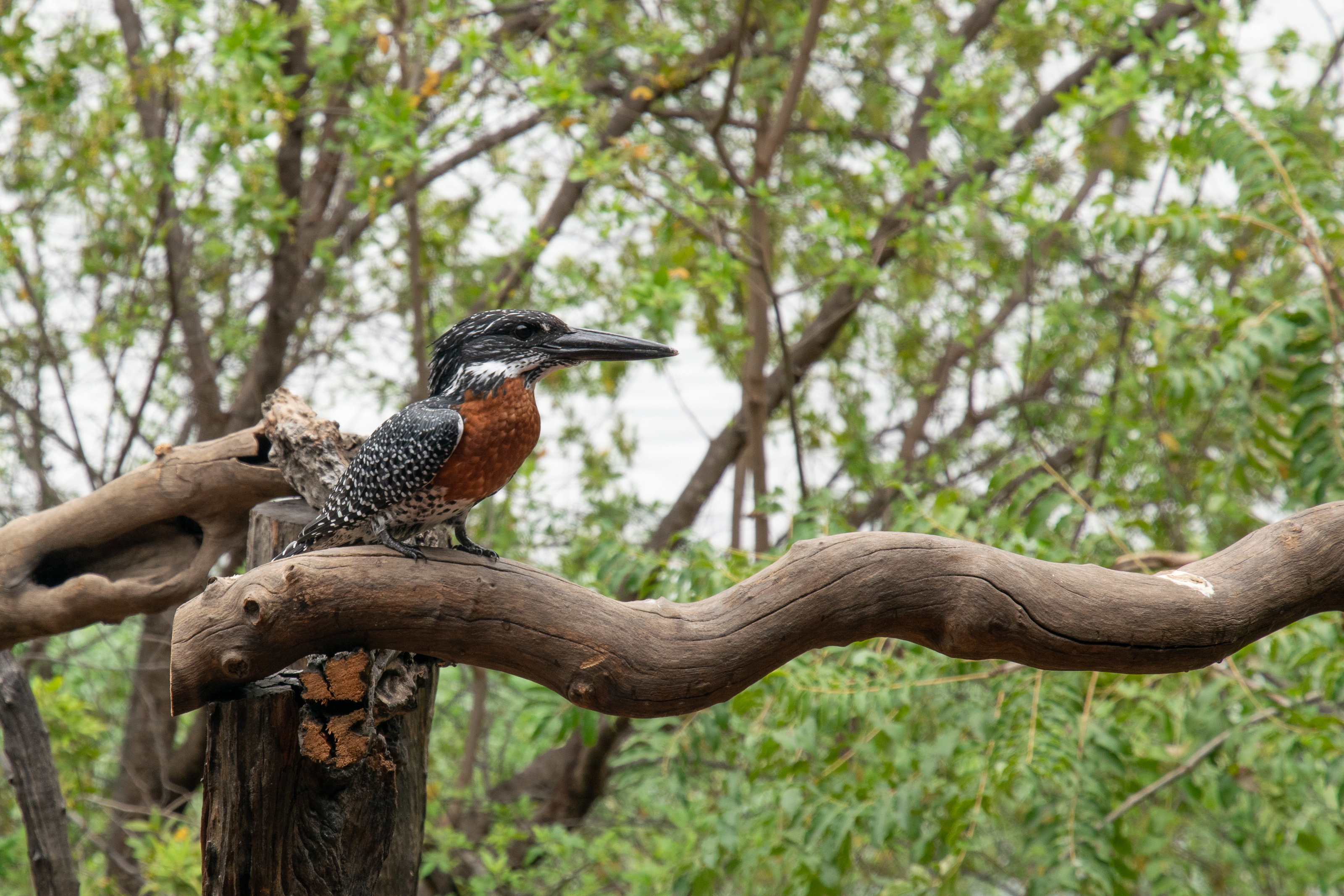
Giant Kingfisher
The bird was watching its reflection in the window and apparently thought it was another bird. And then it charged. I don’t know how the window survived after such a strong strike made by the bird’s beak. It was scary and I couldn’t help thinking about the movie “The Birds” by Alfred Hitchcock.
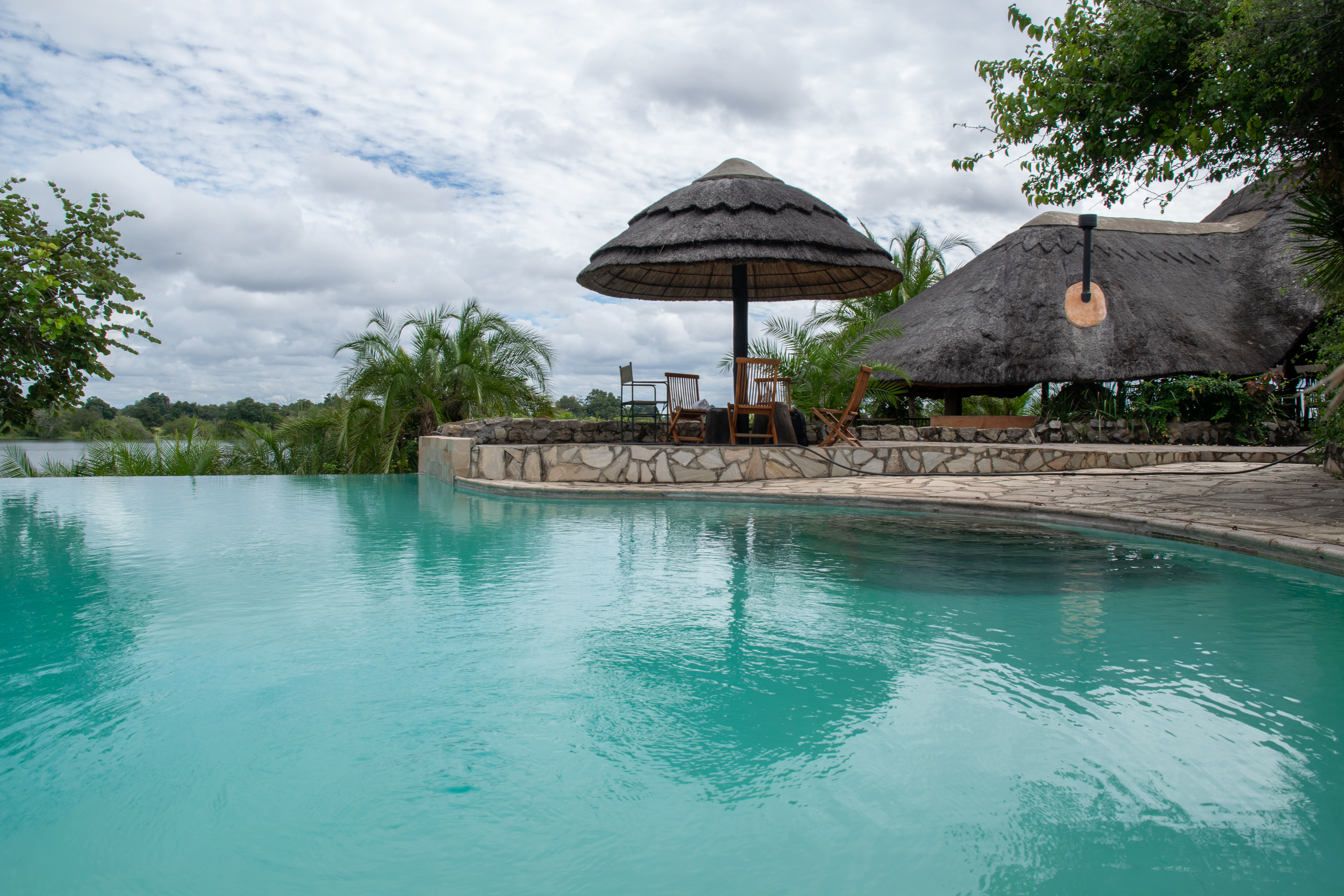
Between the early morning and late afternoon activities, we were enjoying the cozy and relaxed atmosphere of Mukambi Lodge. The lodge and its team probably deserves a separate post but I can at least dedicate a few paragraphs as I believe it is one of the best examples for responsible tourism.
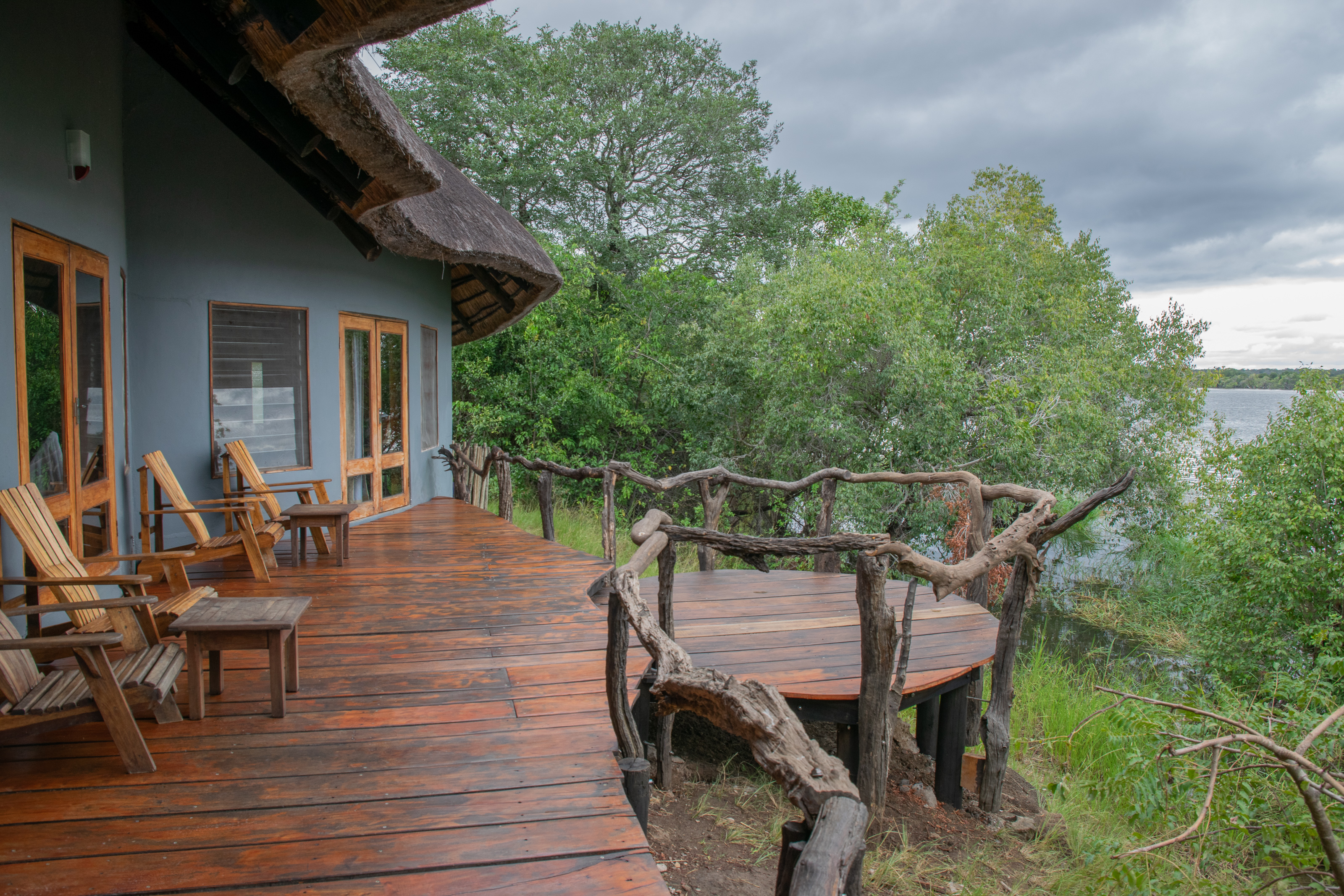
For one, it’s beautifully located on the bank of Kafue River and the main thatched building has several wooden decks creatively decorated and overlooking the wide river. When we were not on a game drive or boat trip, we were enjoying everything that the lounge areas of the lodge have to offer – reading books, including from the lodge library, playing table games, chatting with the lodge owners, staff members and rangers, playing with the lodge cat Simba, or simply absorbing the serene views to the surrounding nature.
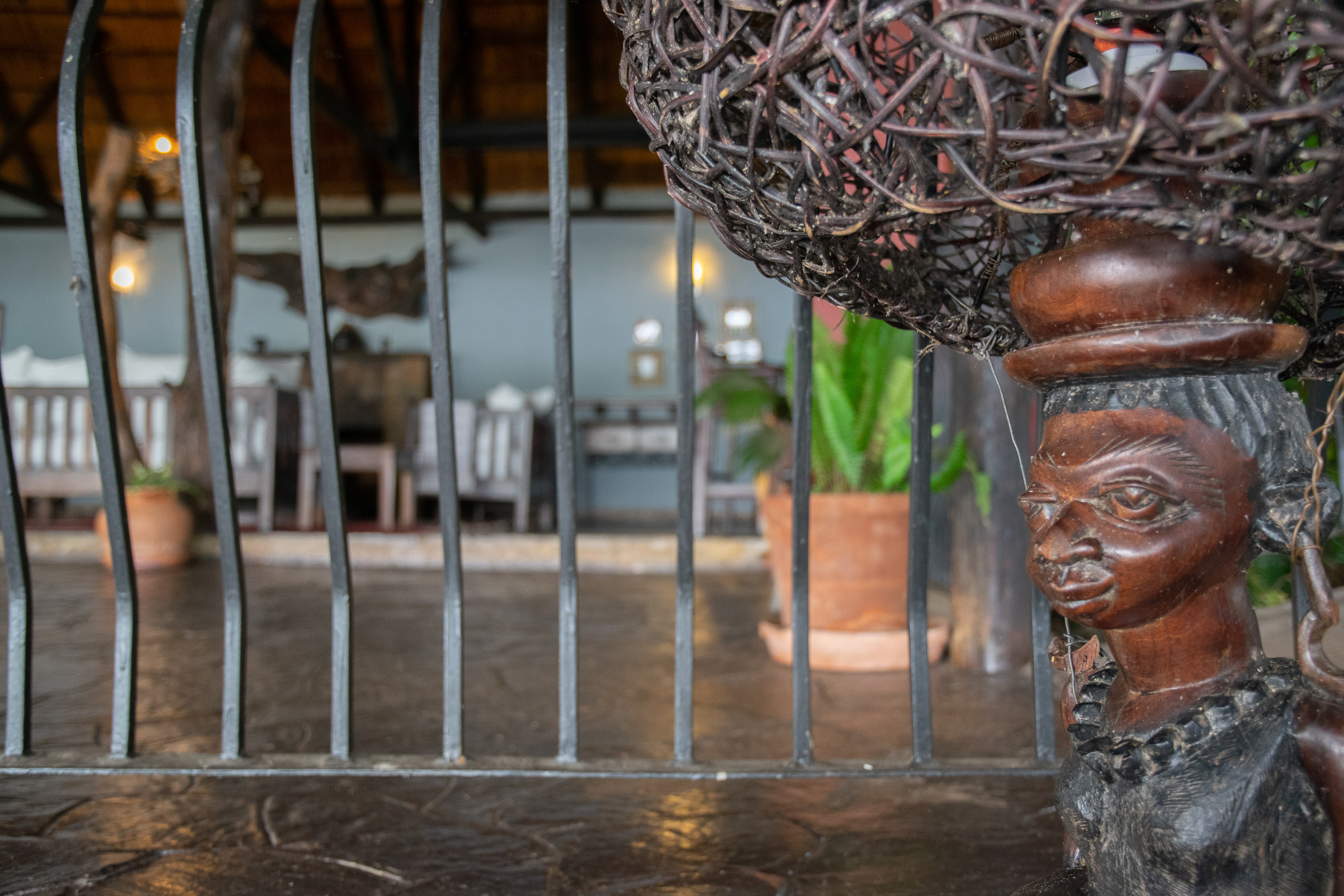
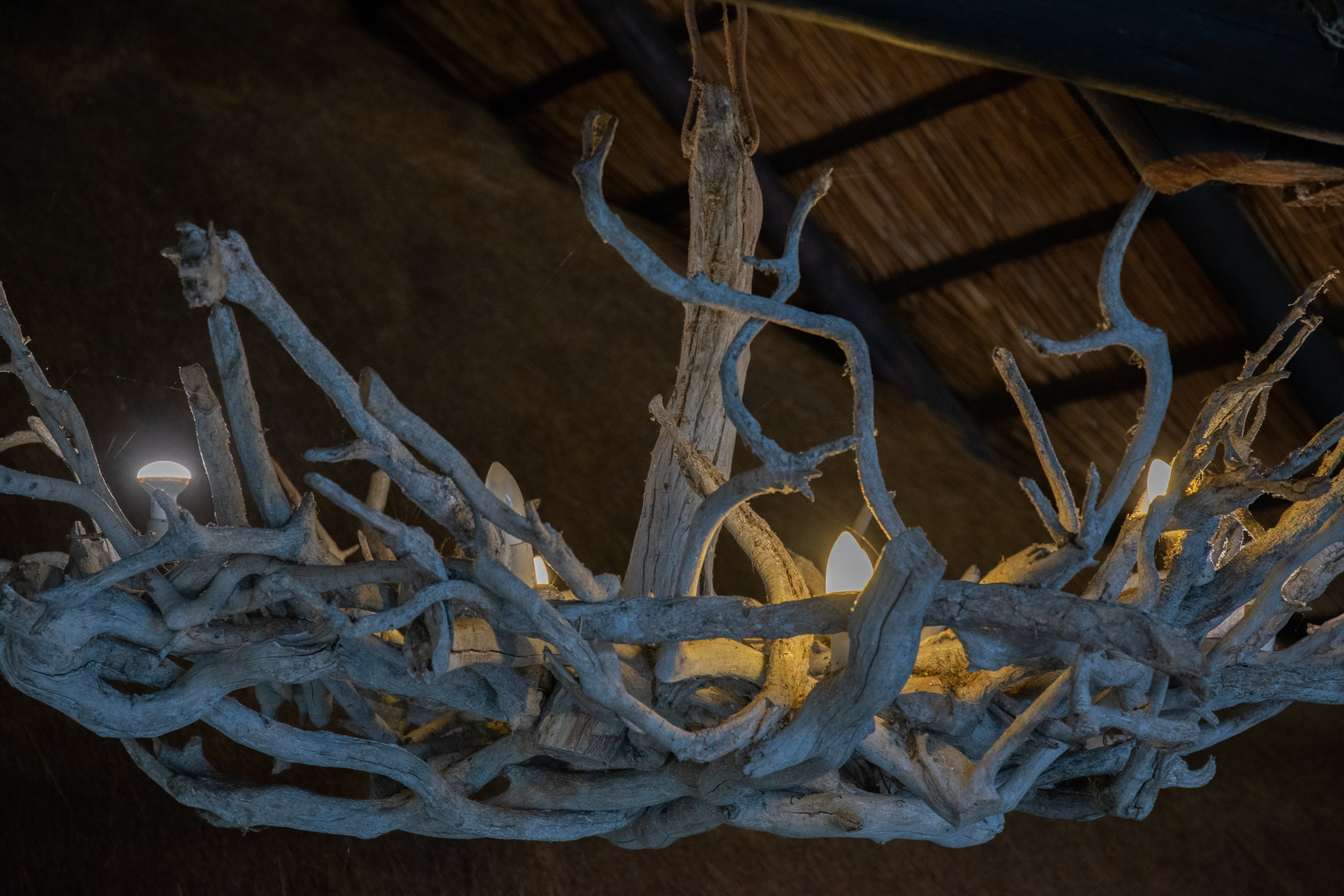
Wooden chandelier made from branches that have been broken down by elephants by the river bank
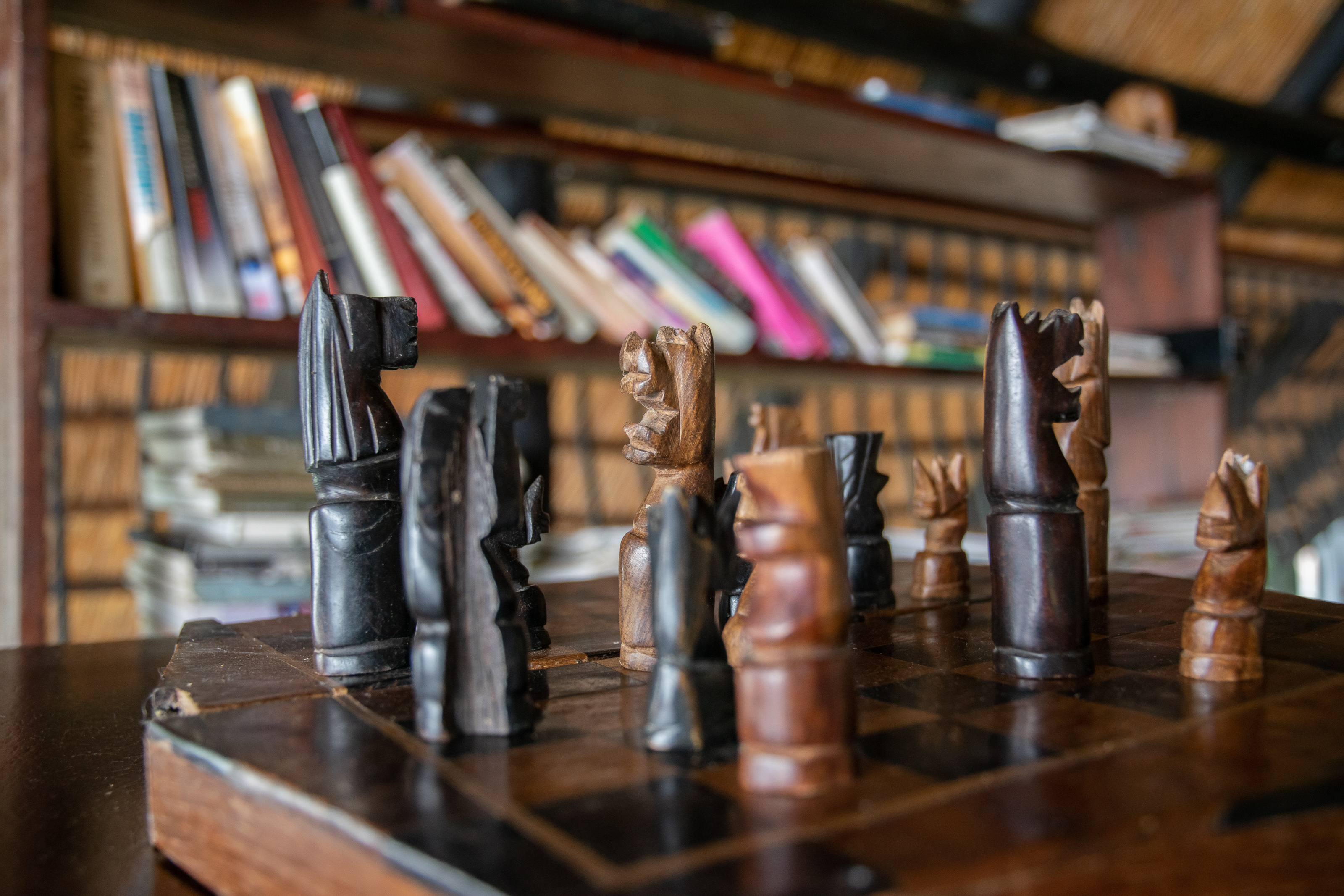
Hand-made chess. It took us some time to understand the figures
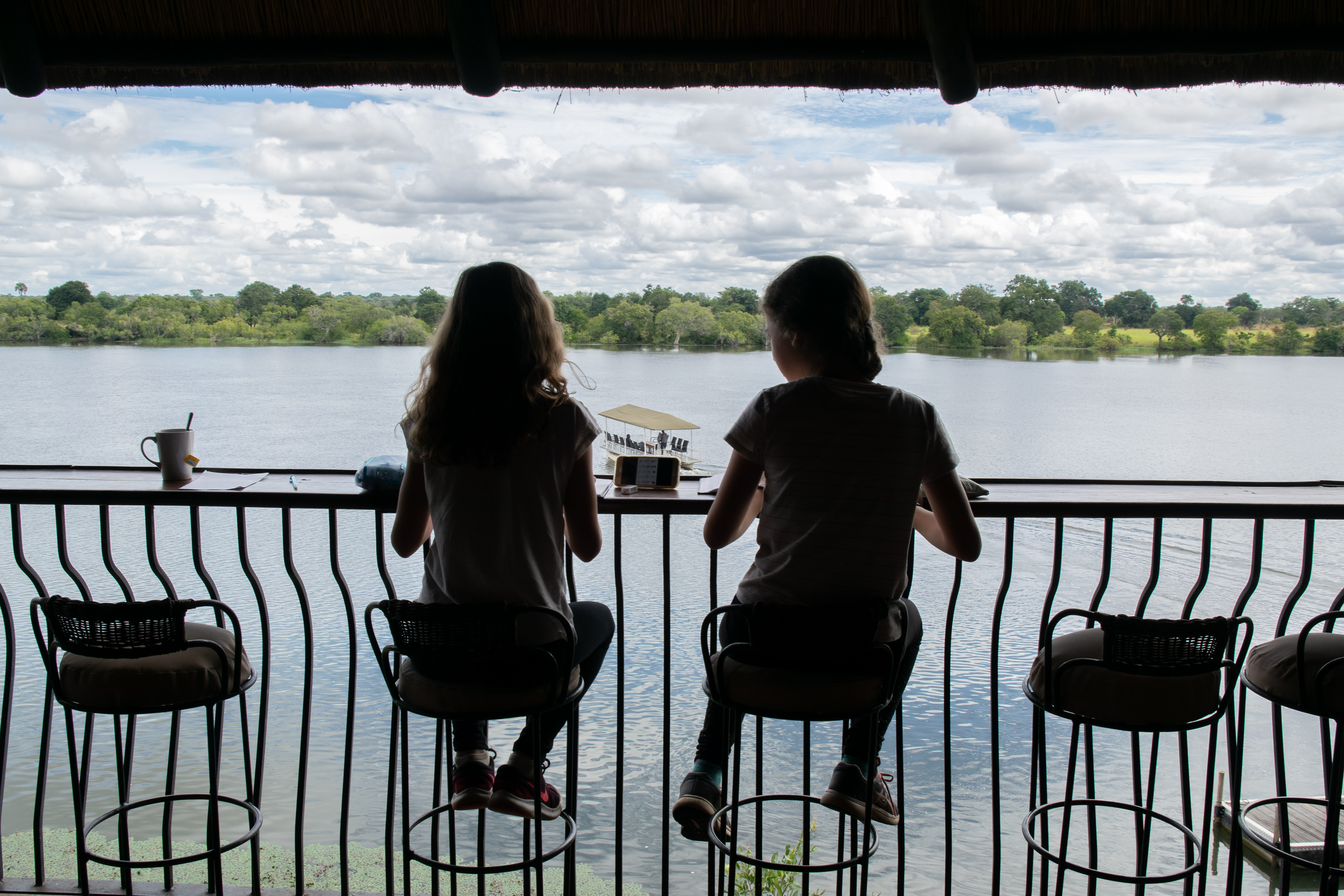
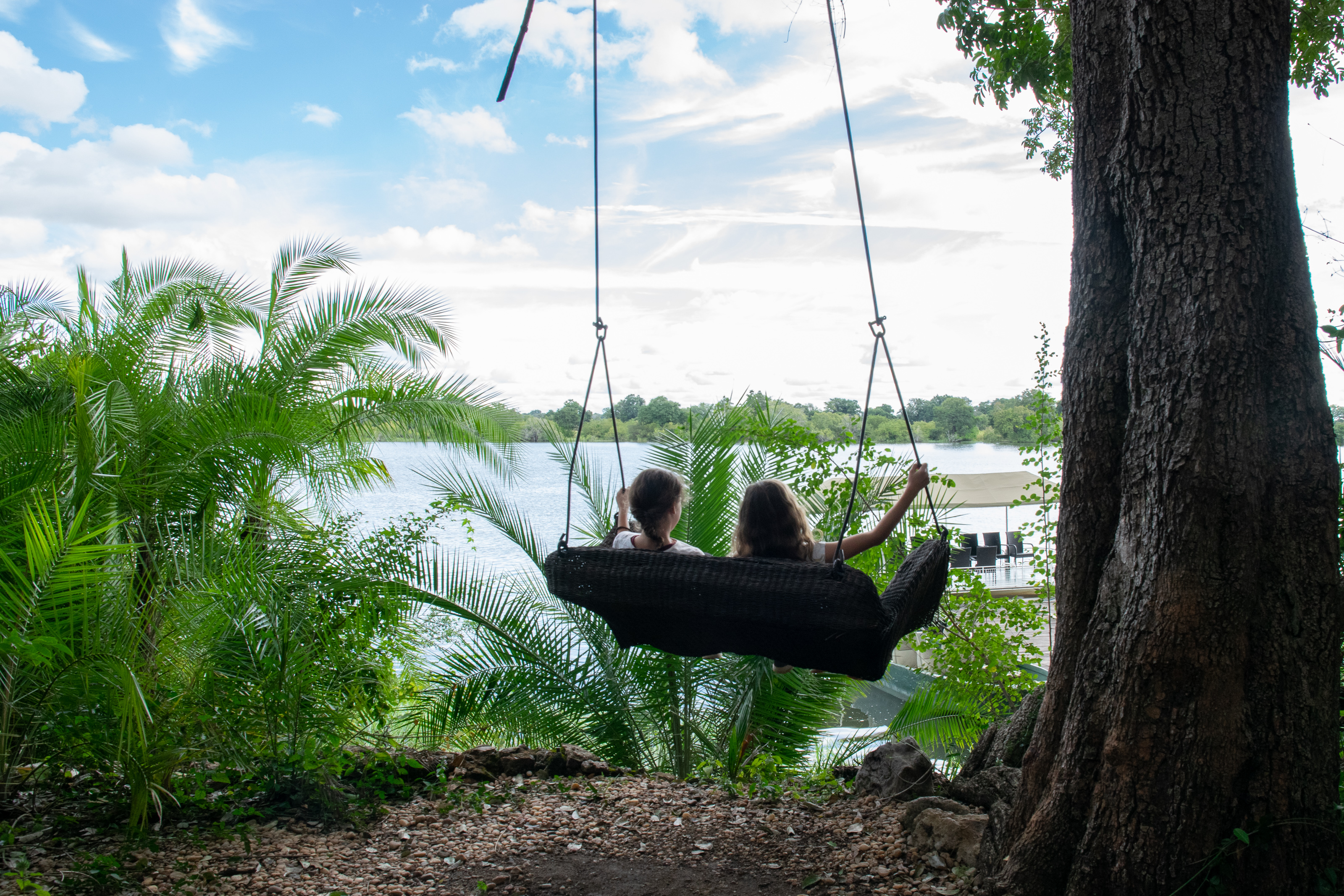
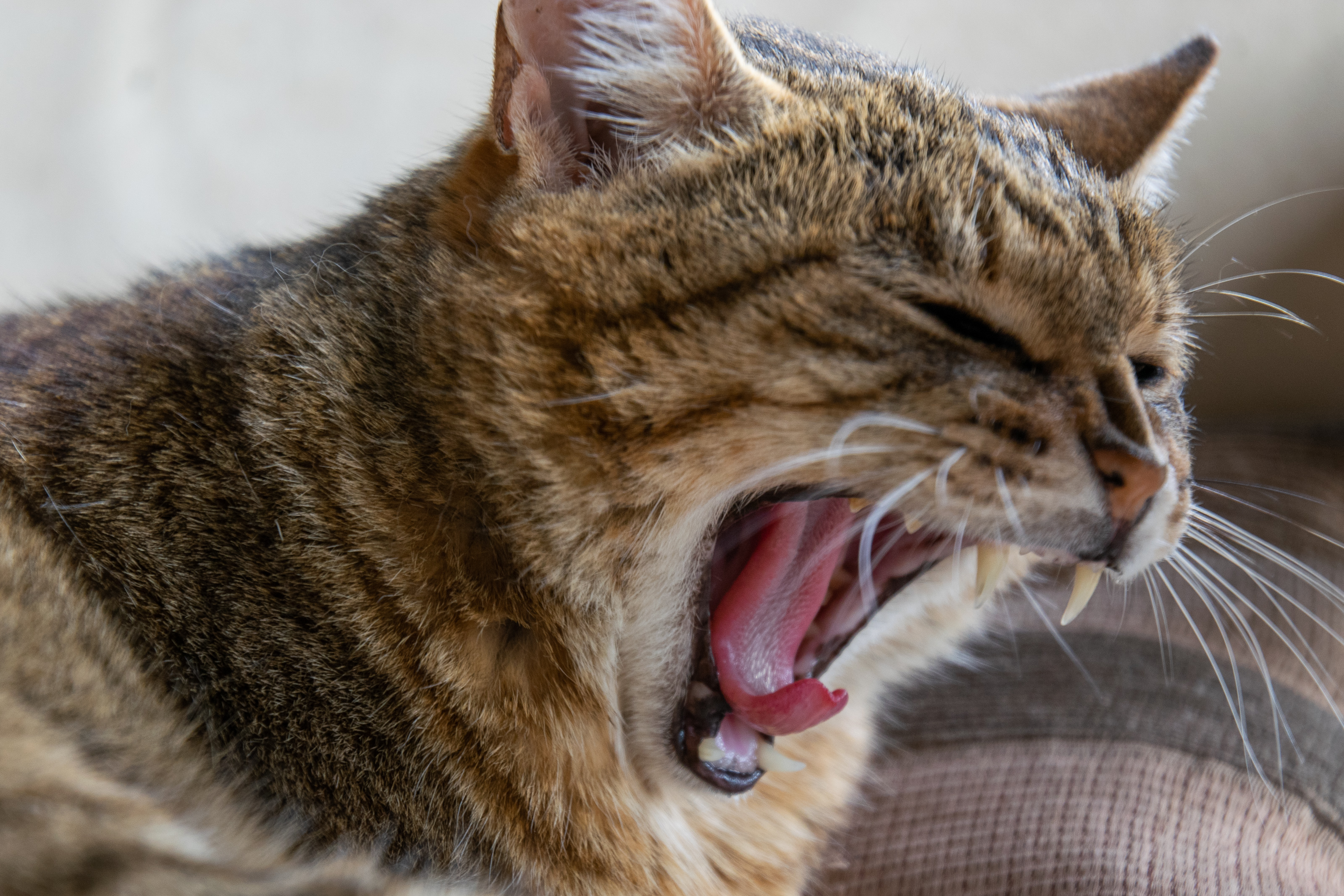
Simba – the lodge pet
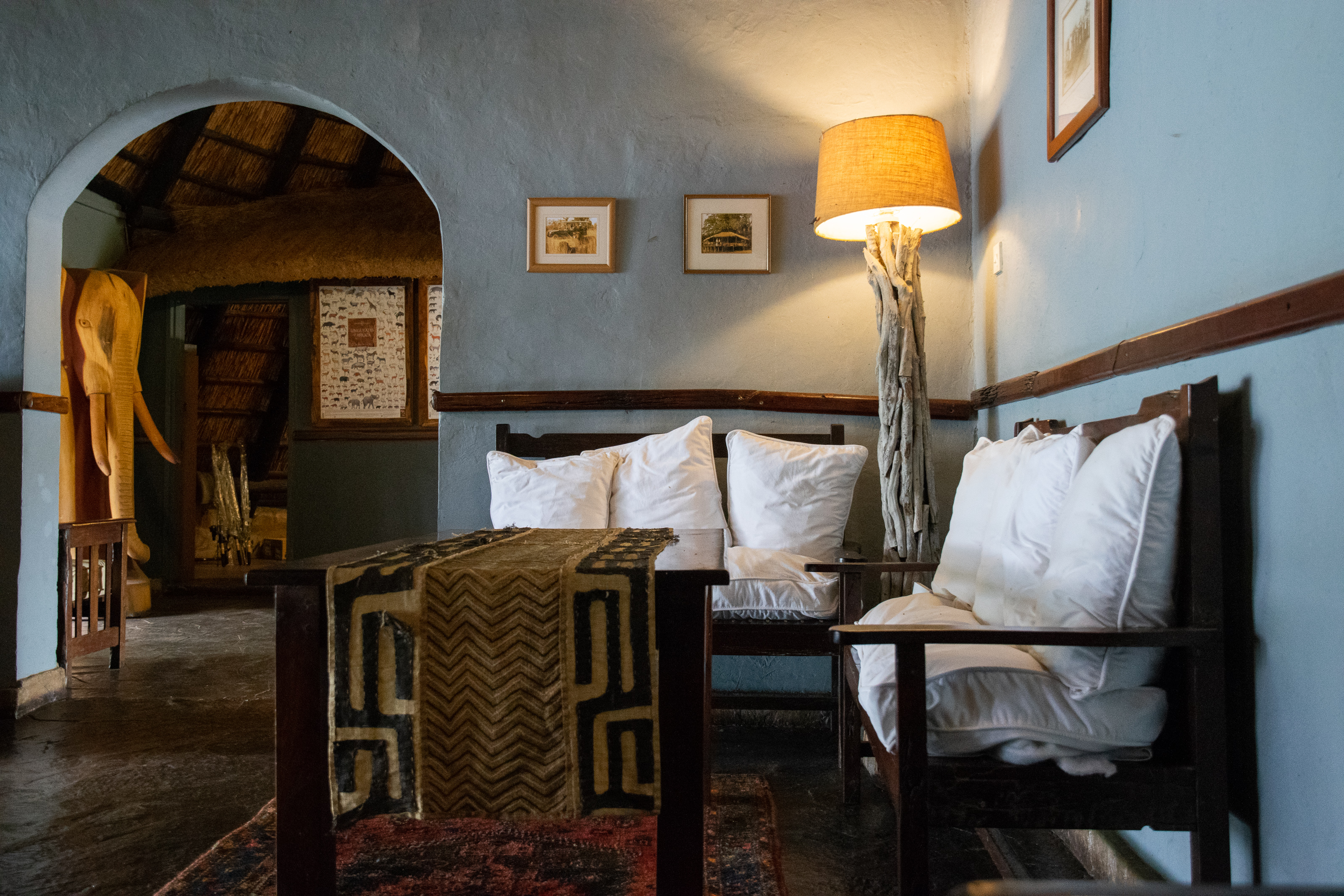
The accommodation consists of tents and chalets scattered around the lodge area, also so lovely decorated that I wished we could have stayed longer.
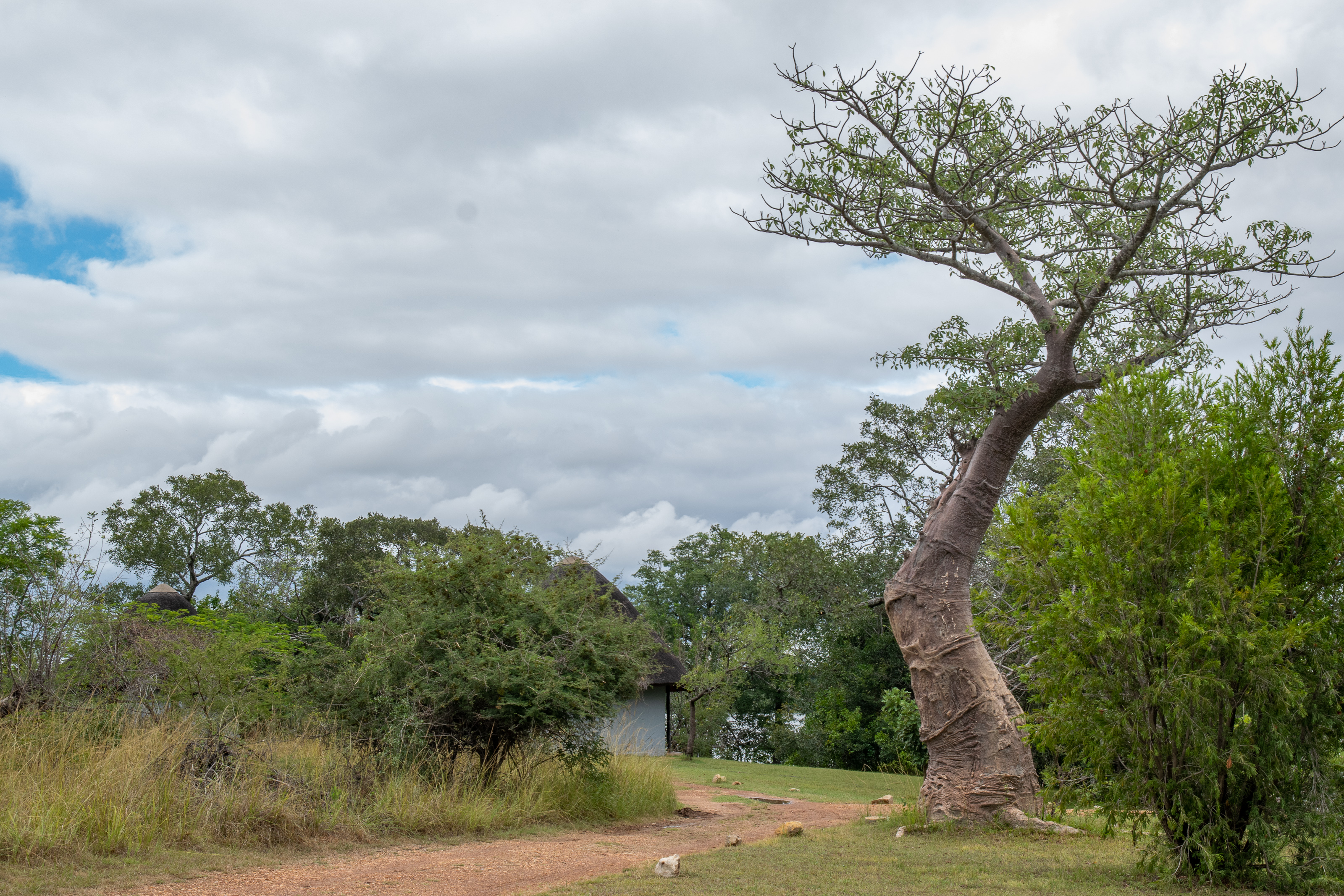
The path to our chalet which we shouldn’t walk on our own in the dark hours
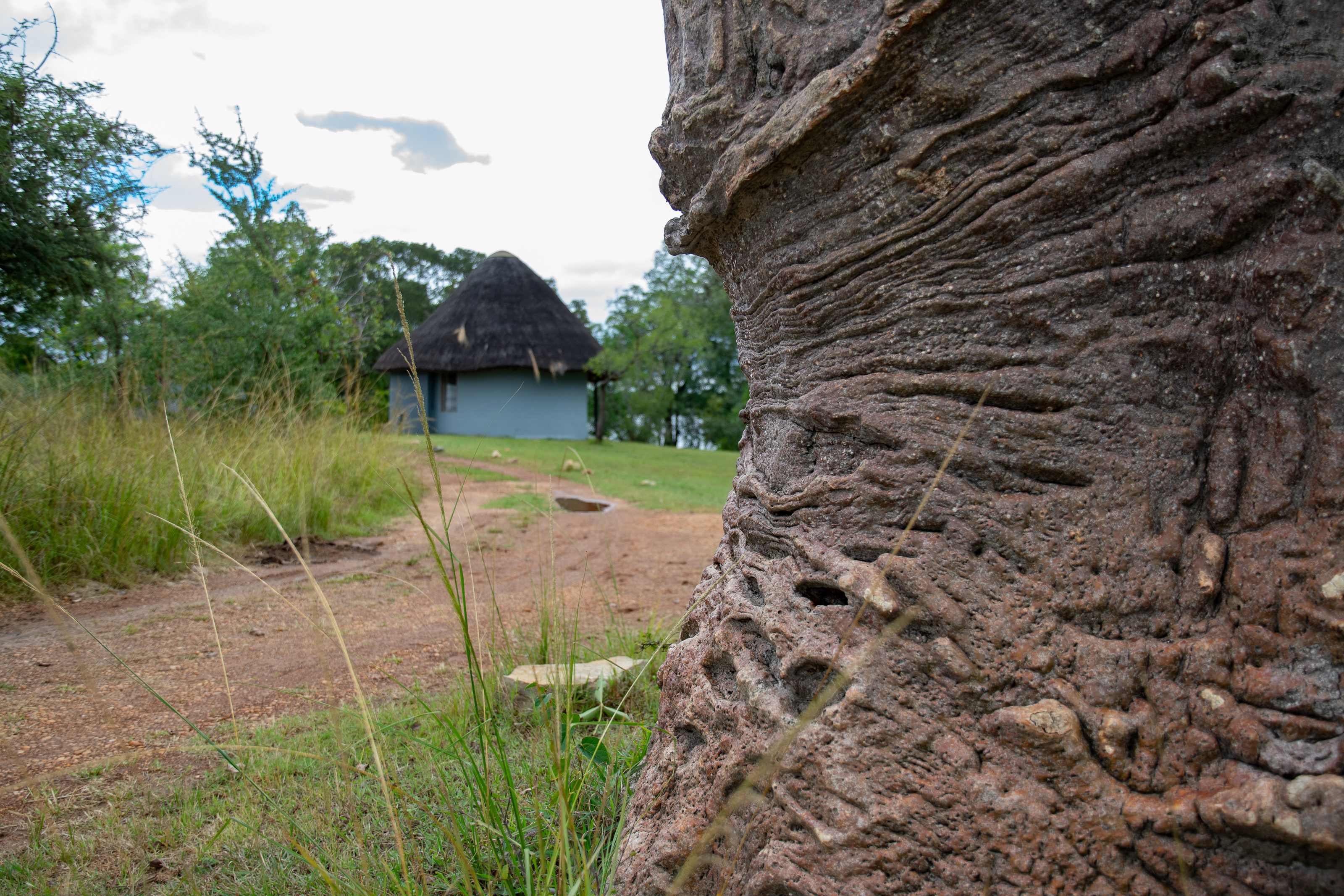
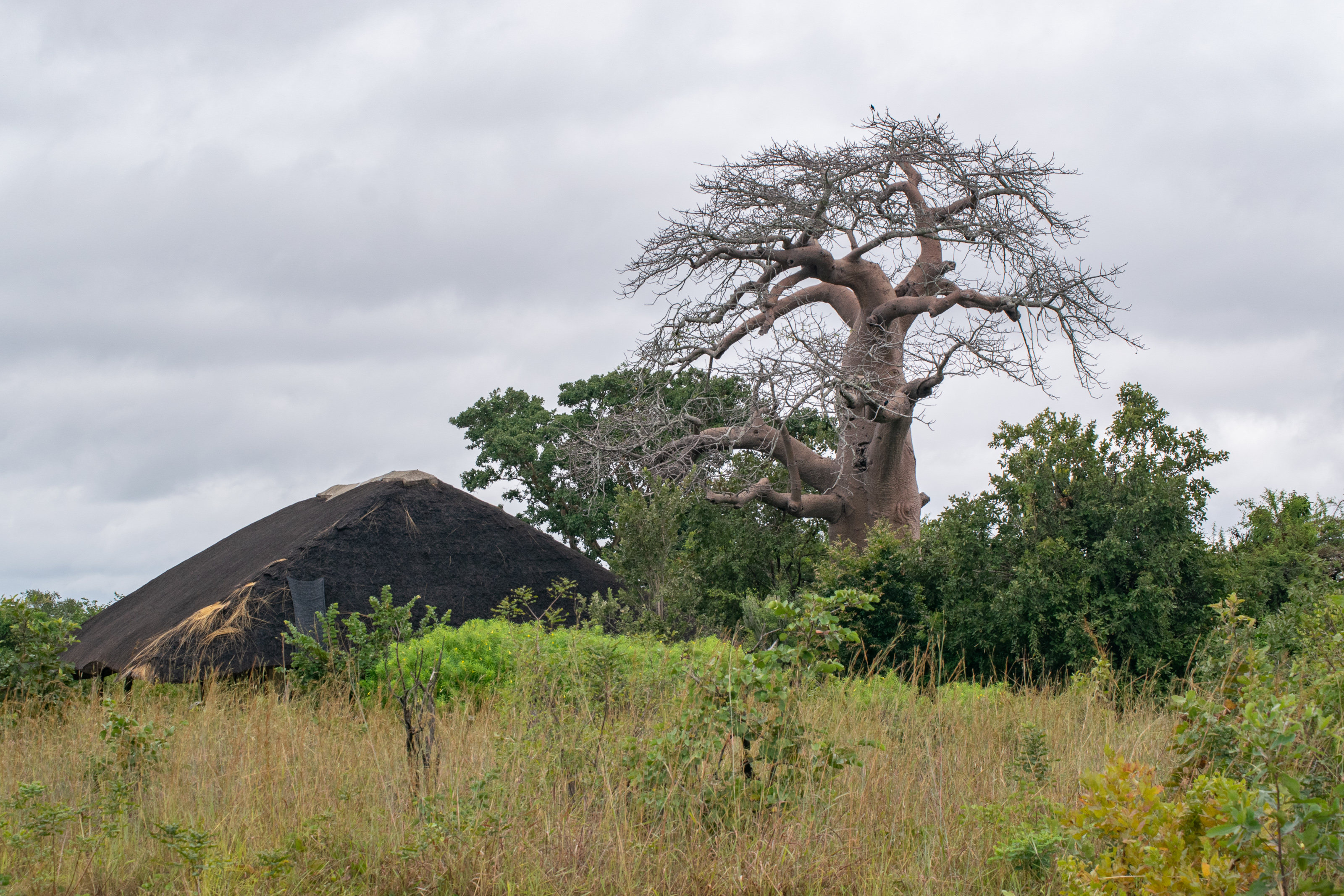
Baobab along the path. As a staff member said – it is a teenager baobab 🙂
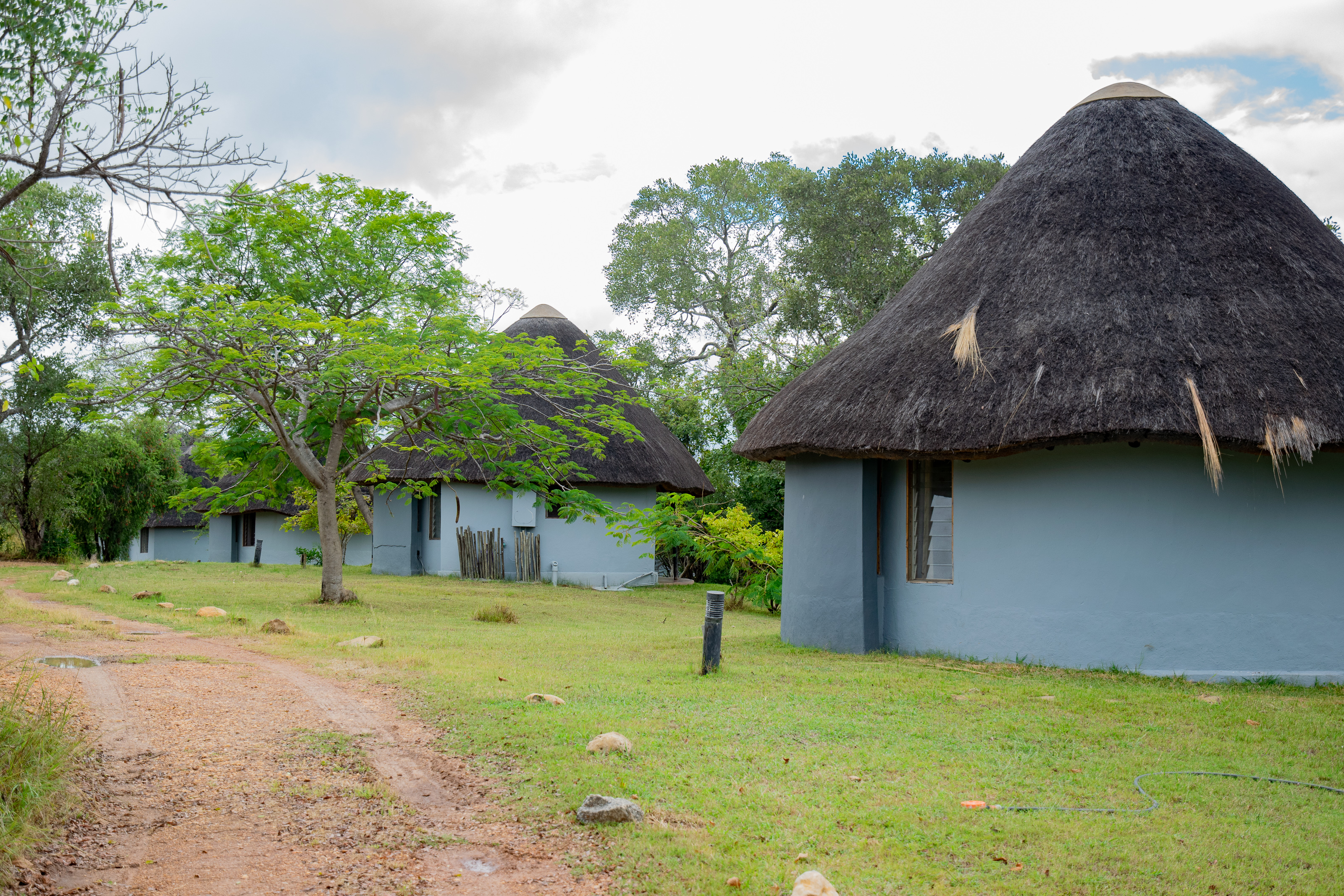
The family chalets
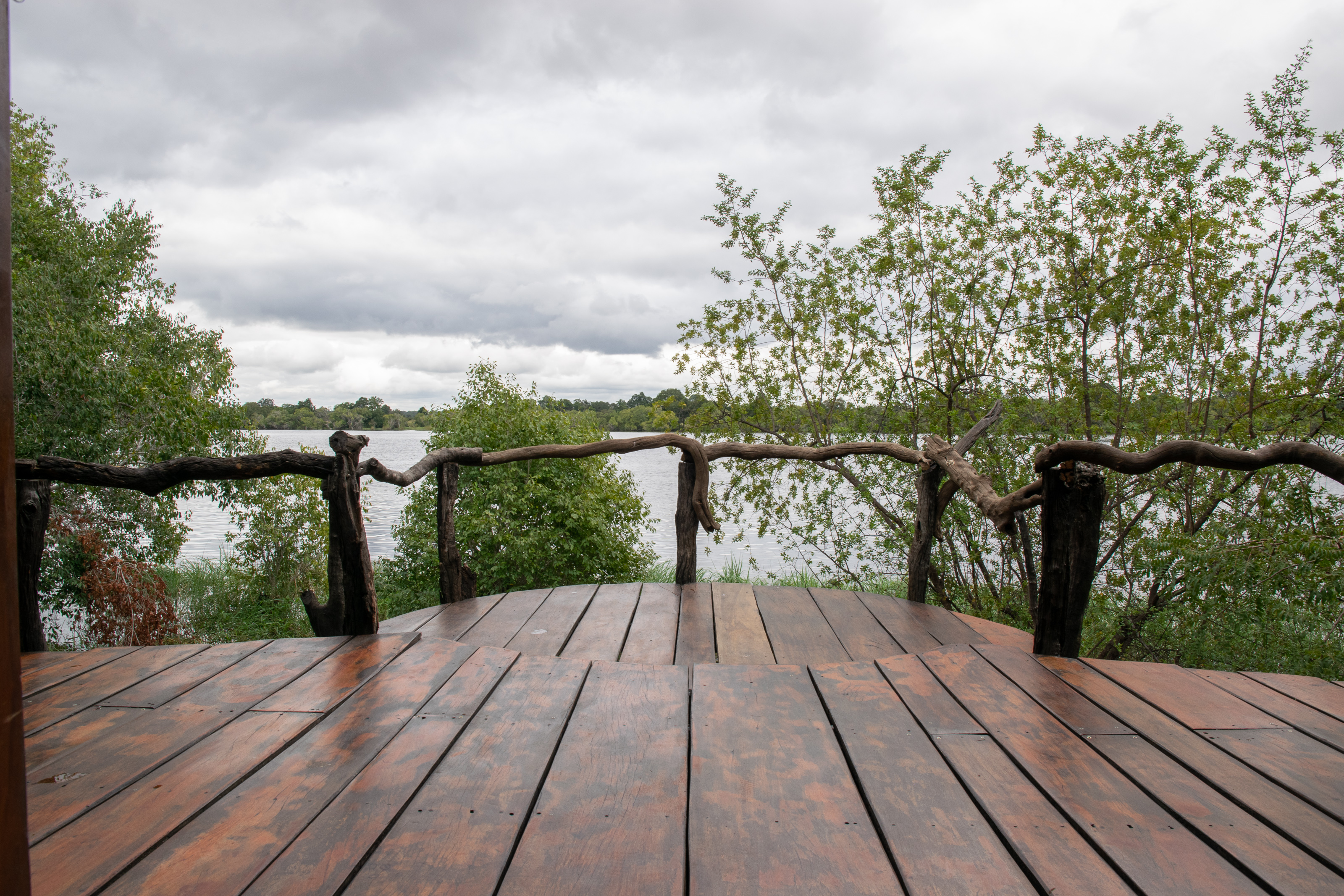
Our wooden deck overlooking Kafue River
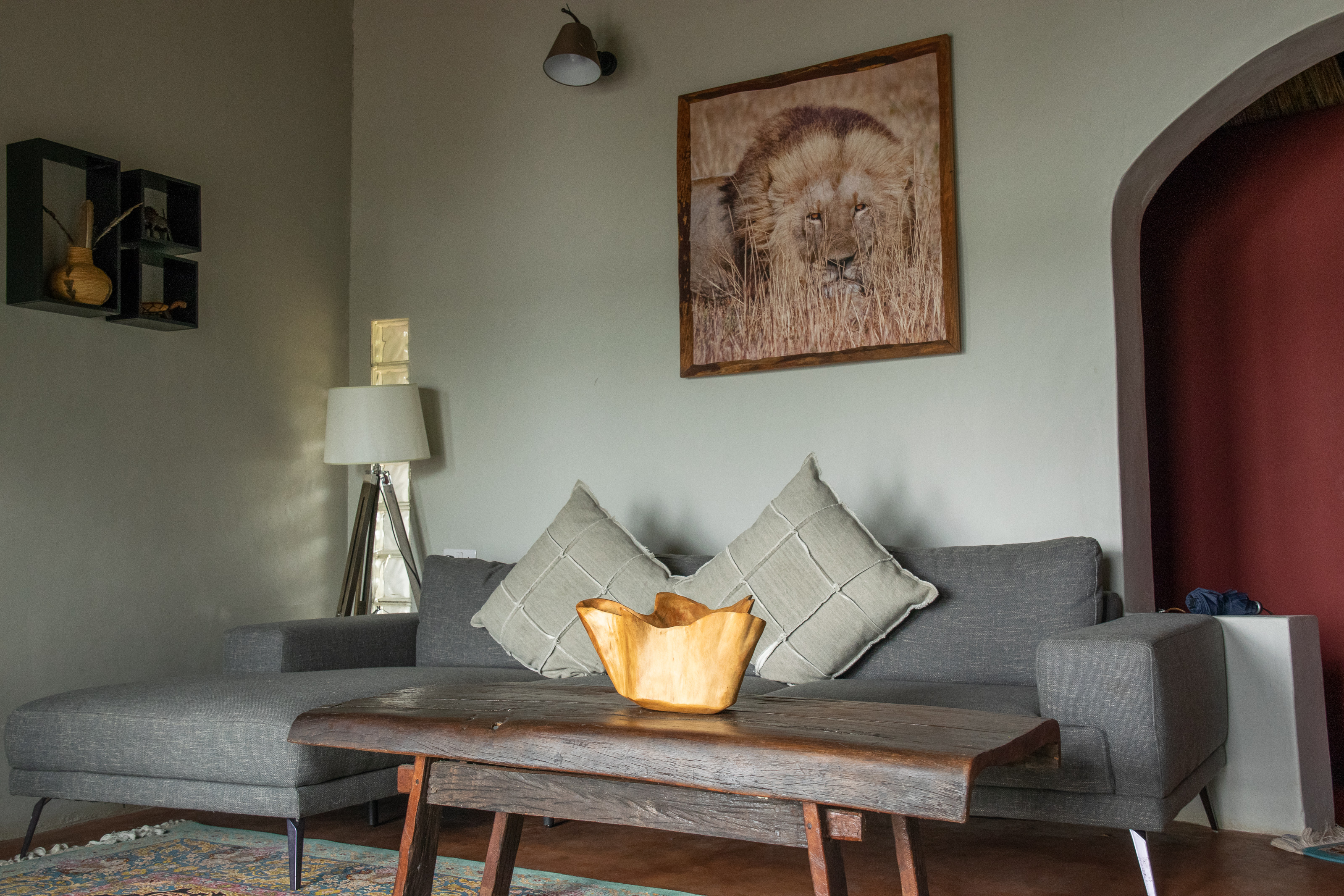
Lounge area in our chalet
Now, back to the responsible tourism – a topic that is getting quite hot in the recent years.
Mukambi Lodge nailed it very well on their website: “Responsible tourism has to come from a real desire to make a difference. Going green because it’s trendy and marketable doesn’t help conservation and communities”.
And everything Mukambi does, proves that this is not just a statement.
First of all, the lodge runs on 100% renewable solar energy and it is the first in Zambia to install he most environmentally friendly batter technology which significantly reduces the carbon footprint of its operations.
Secondly, the lodge started Mukambi Community School 14 years ago and now provides 80 children with high quality education and 5 teachers with permanent employment in an area where no schools exist.
Most importantly, nature conservation is part of everything Mukambi does. Not only it works closely with conservation and wildlife NGOs and governmental authorities, but it also supports local communities and runs training programs to reduce the negative effects of unemployment, poverty and human – animal conflict.
On top of this, Mukambi owners and staff are super kind and very interesting conversation partners. Only within less than 4 days, we learned a lot about wildlife, nature conservation and heard incredible wild animal stories.
Like the story about Bazzo – the young male hippo who one day (not night) appeared at the entrance of the lodge with some wounds on his body, looking for a refuge, apparently being rejected by his group. There are pictures of Bazzo on one of the reception walls – Bazzo in the dining area, Bazzo having a nap in the lounge area… Unimaginable! One day, he even visited the lodge with his girlfriend :-). Unfortunately, he didn’t live long. They found him dead on the water surface close to the river bank, with more wounds – most probably after an unsuccessful attempt to get accepted by his group.
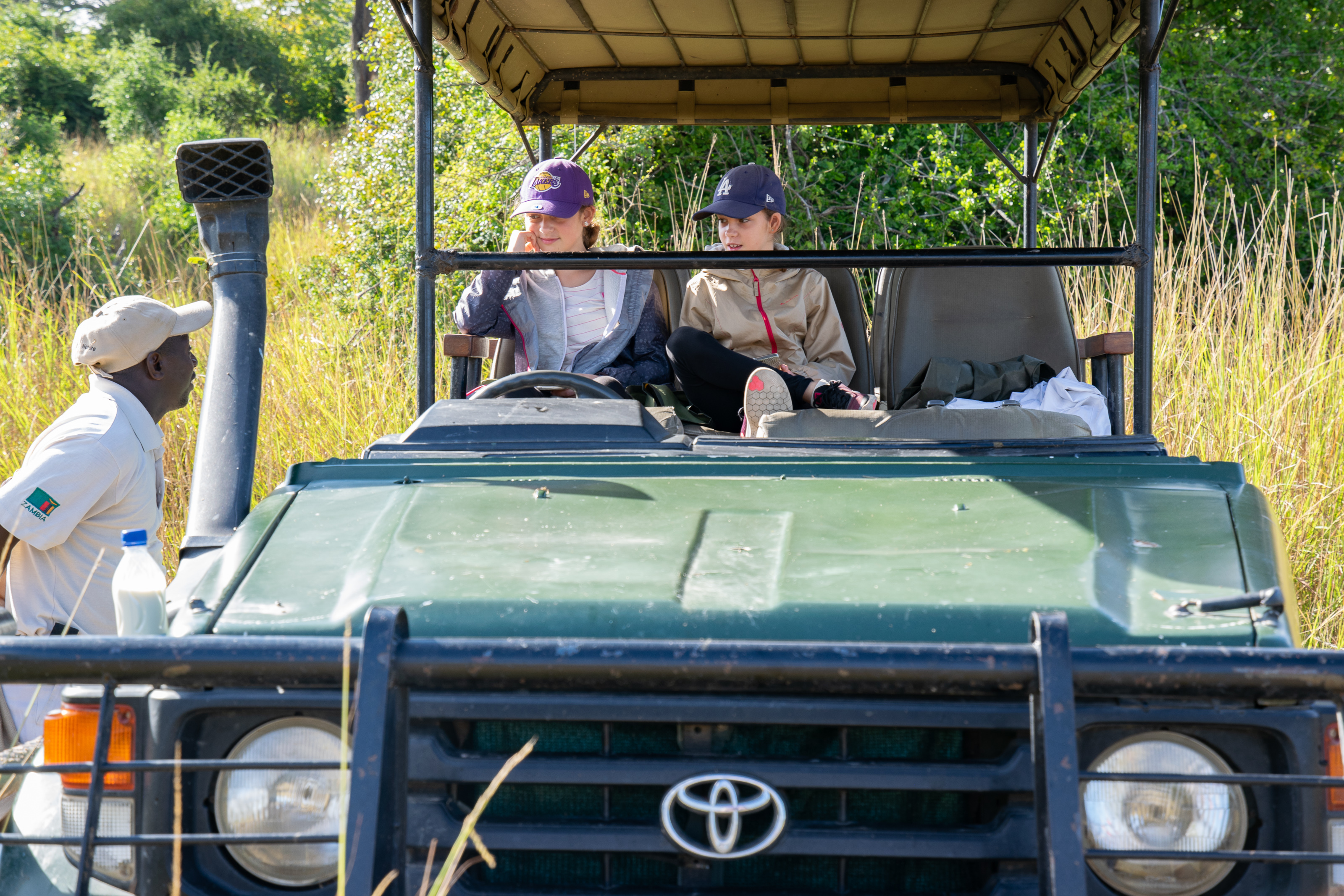
I took full advantage of our stay in Kafue National Park, and didn’t miss any of the three early morning game drives. On one of them I was alone so the driver-guide and I had a fantastic conversation while exploring the wildlife around us.
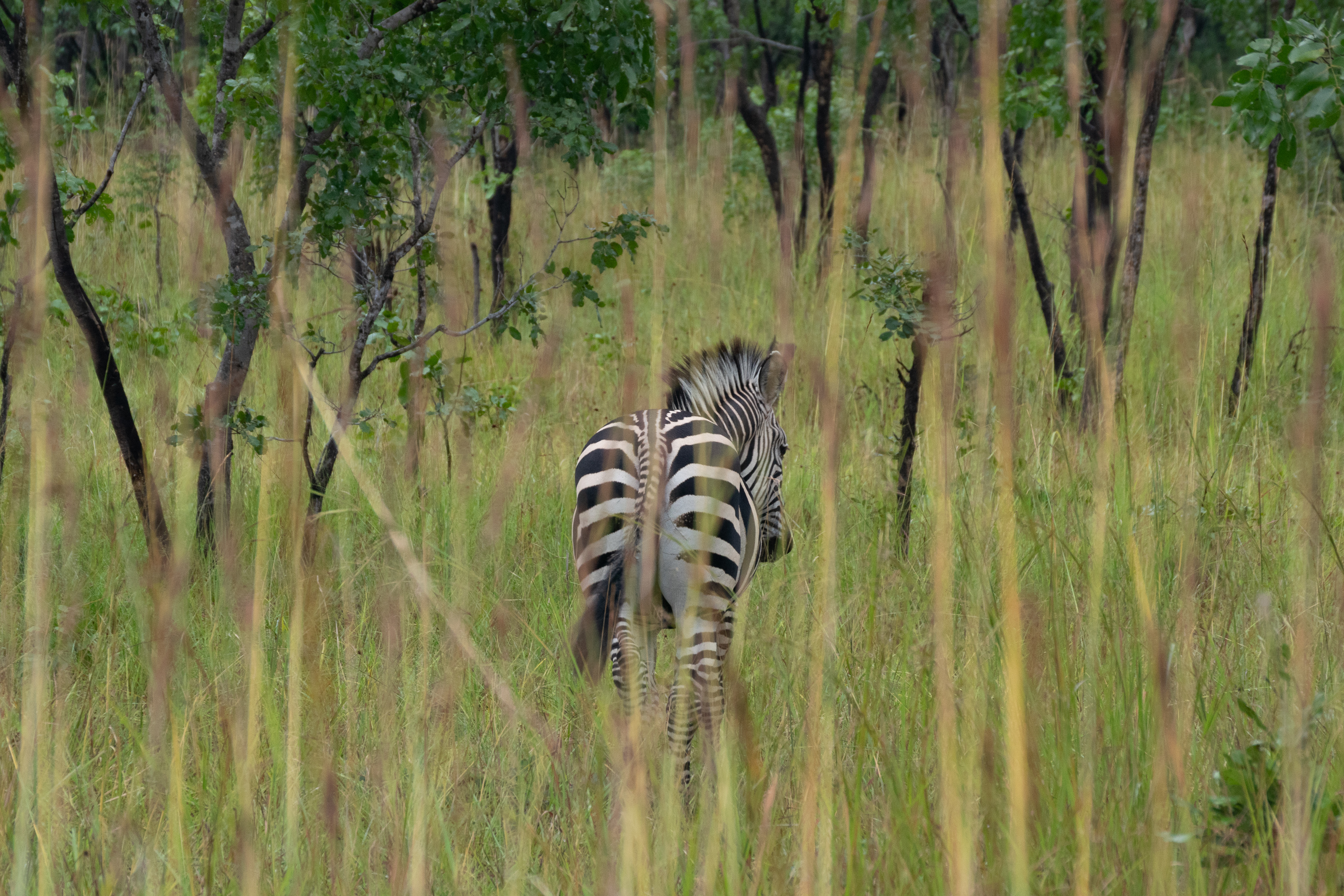
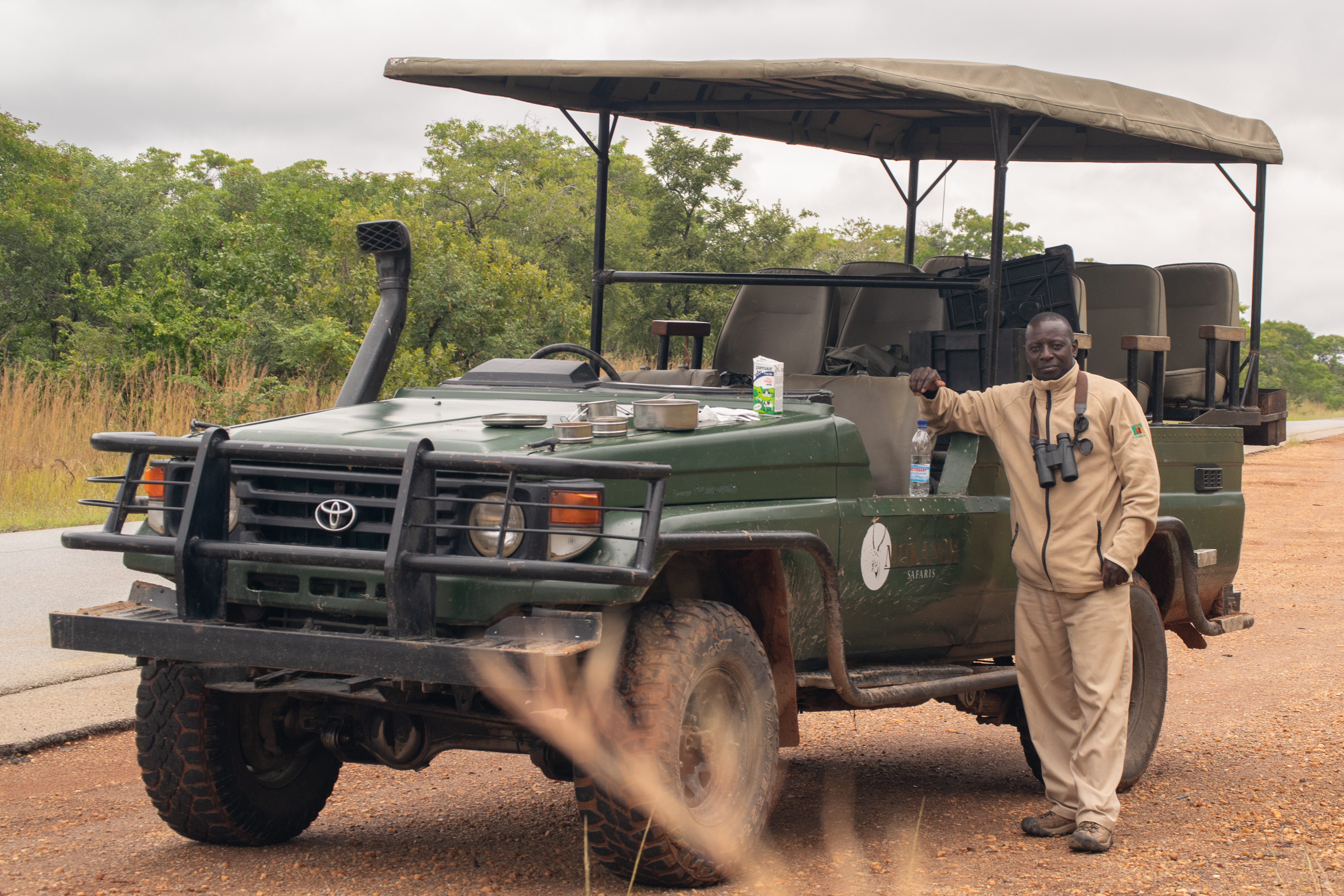
A short tea stop with Nicolas, the driver-guide, on a tsetse free road
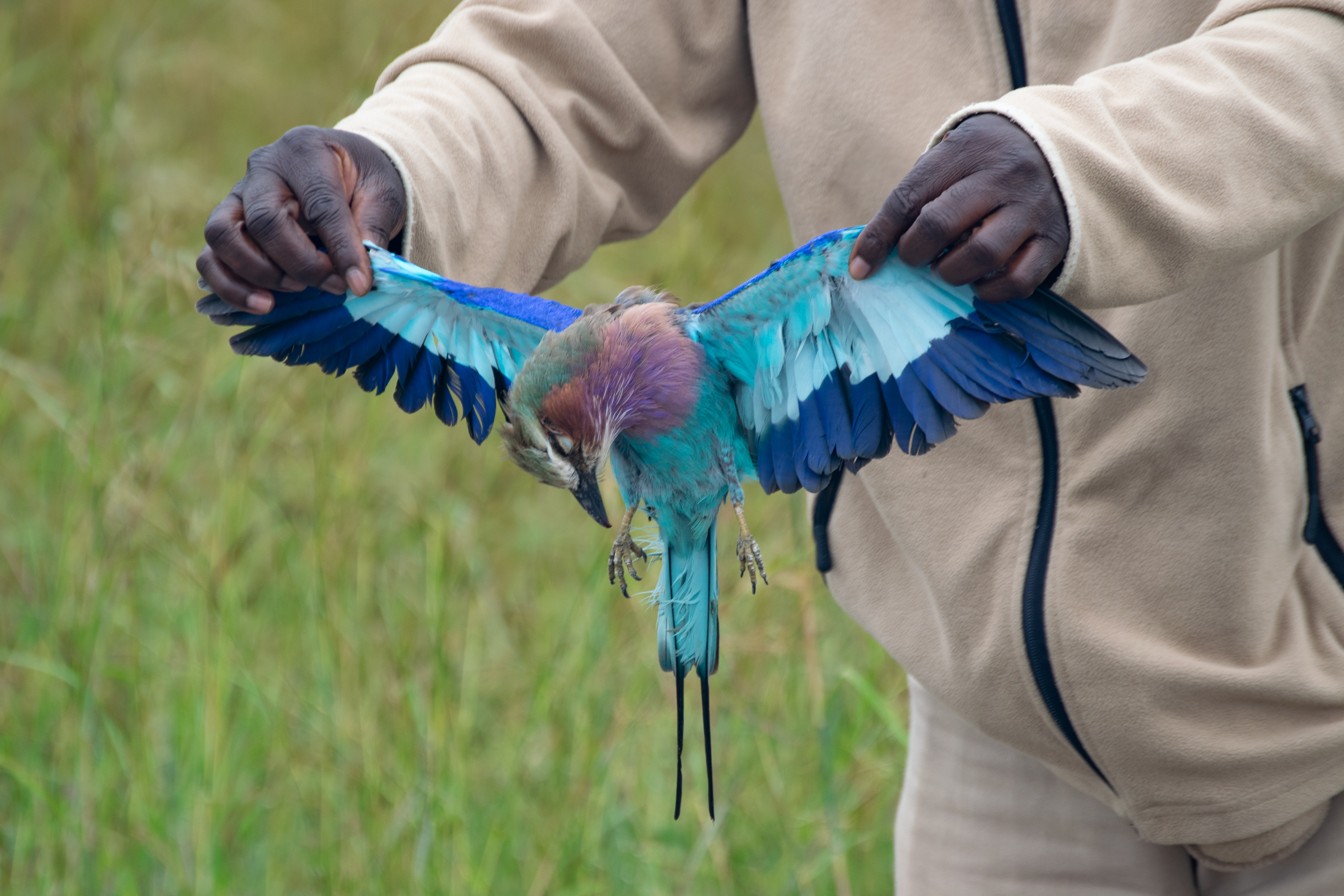
Dead blue kingfisher on the road, most likely hit by a fast driving vehicle
I was wearing my elephant t-shirt with the hope that I will finally see an elephant crossing our road. Miracles happen and towards the end of our drive we saw it! 🙂
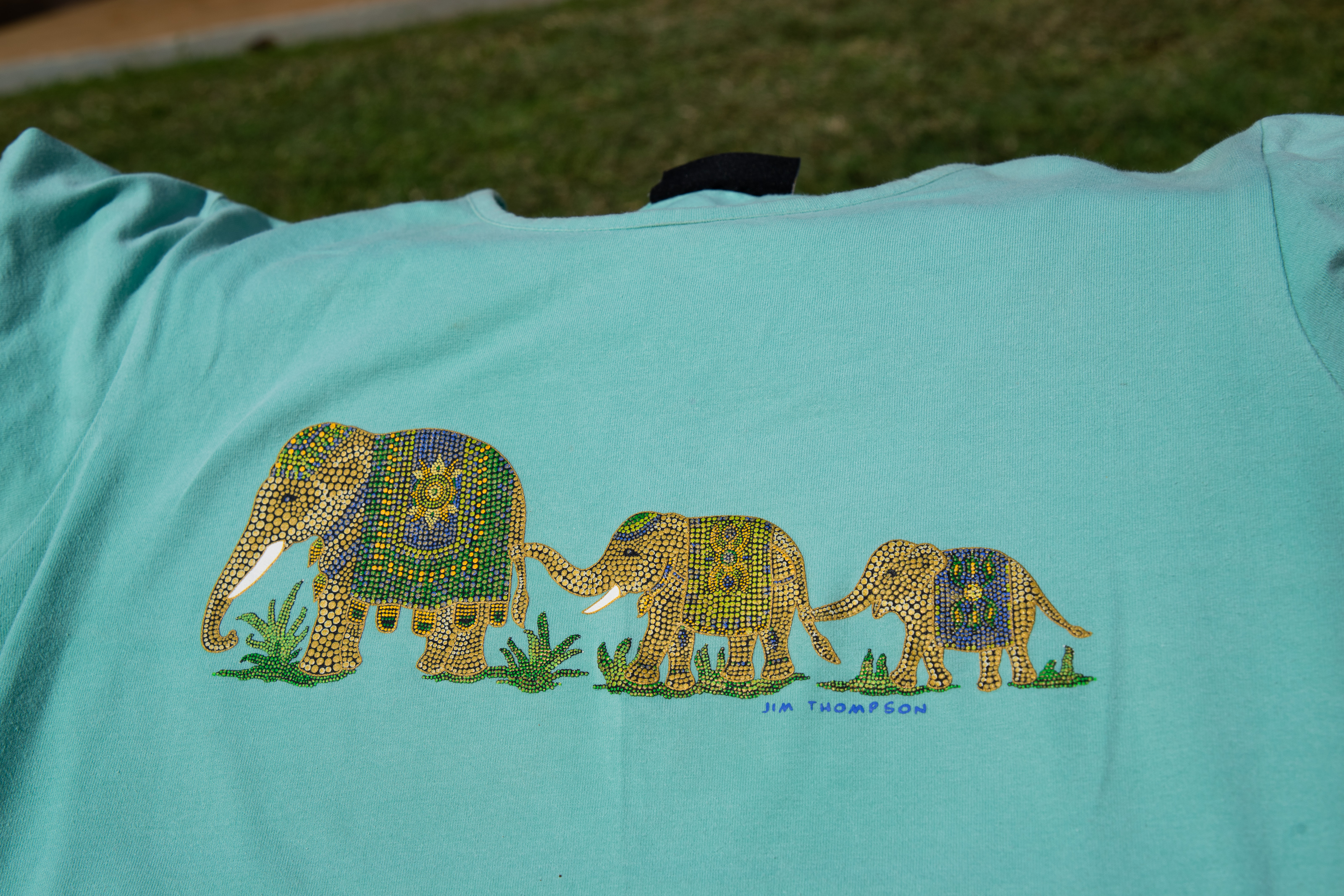
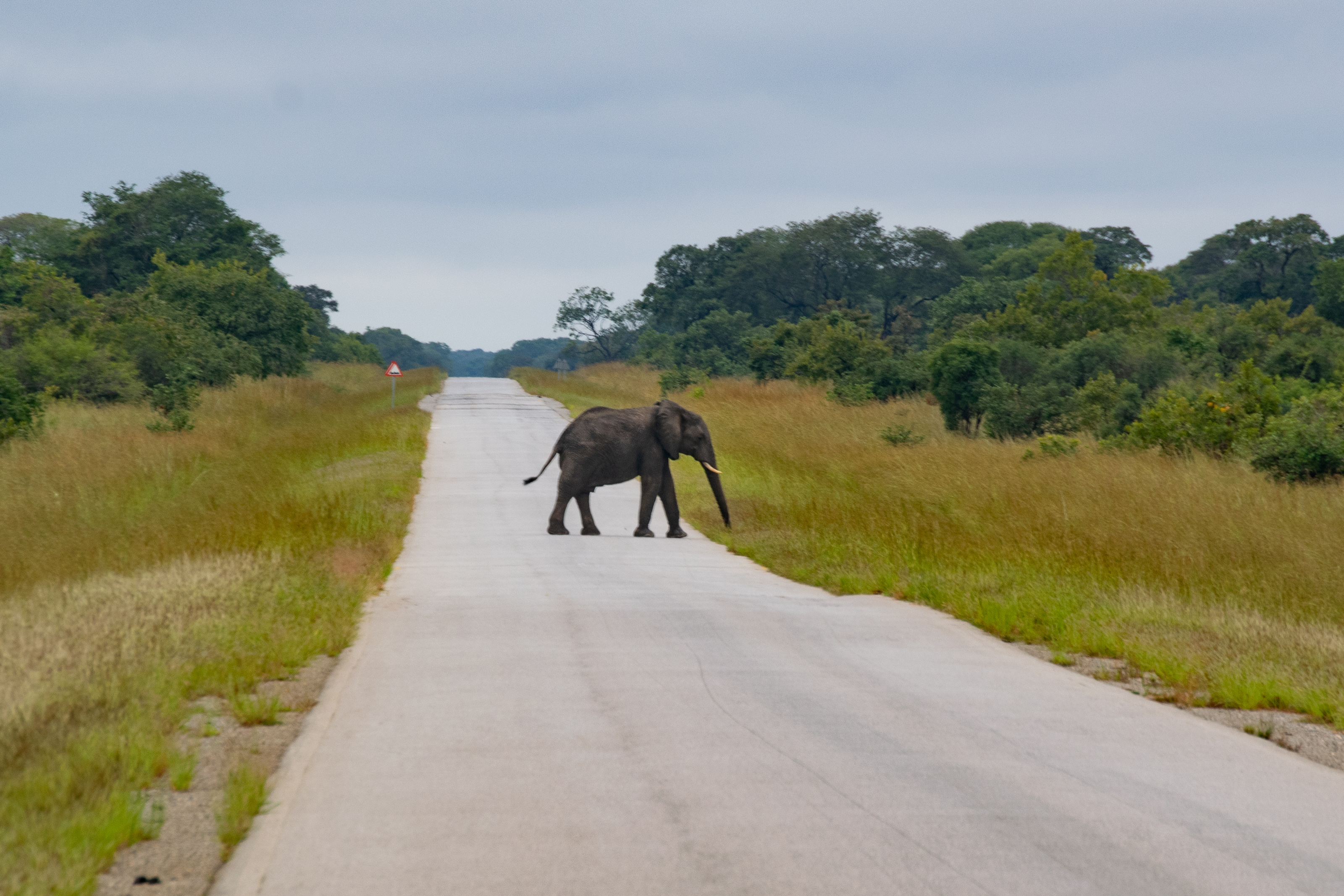
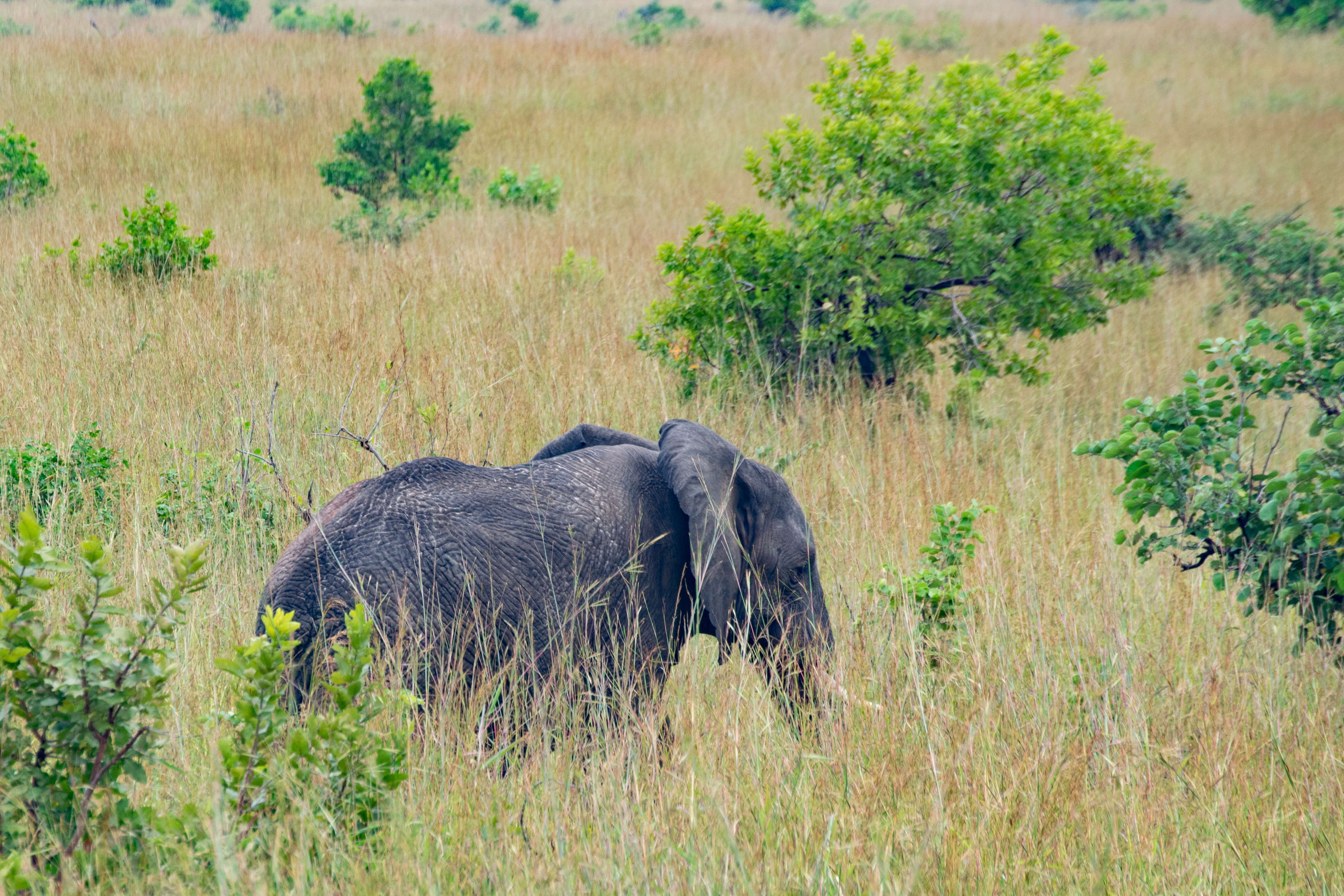
He quickly crossed and hid into the bush
The afternoon safaris had their own charm with Kafue landscapes bathing in the golden sun setting on the horizon. Tsetse flies were also getting lazier in the afternoon, so we could drive slower and stop more often to enjoy the views.
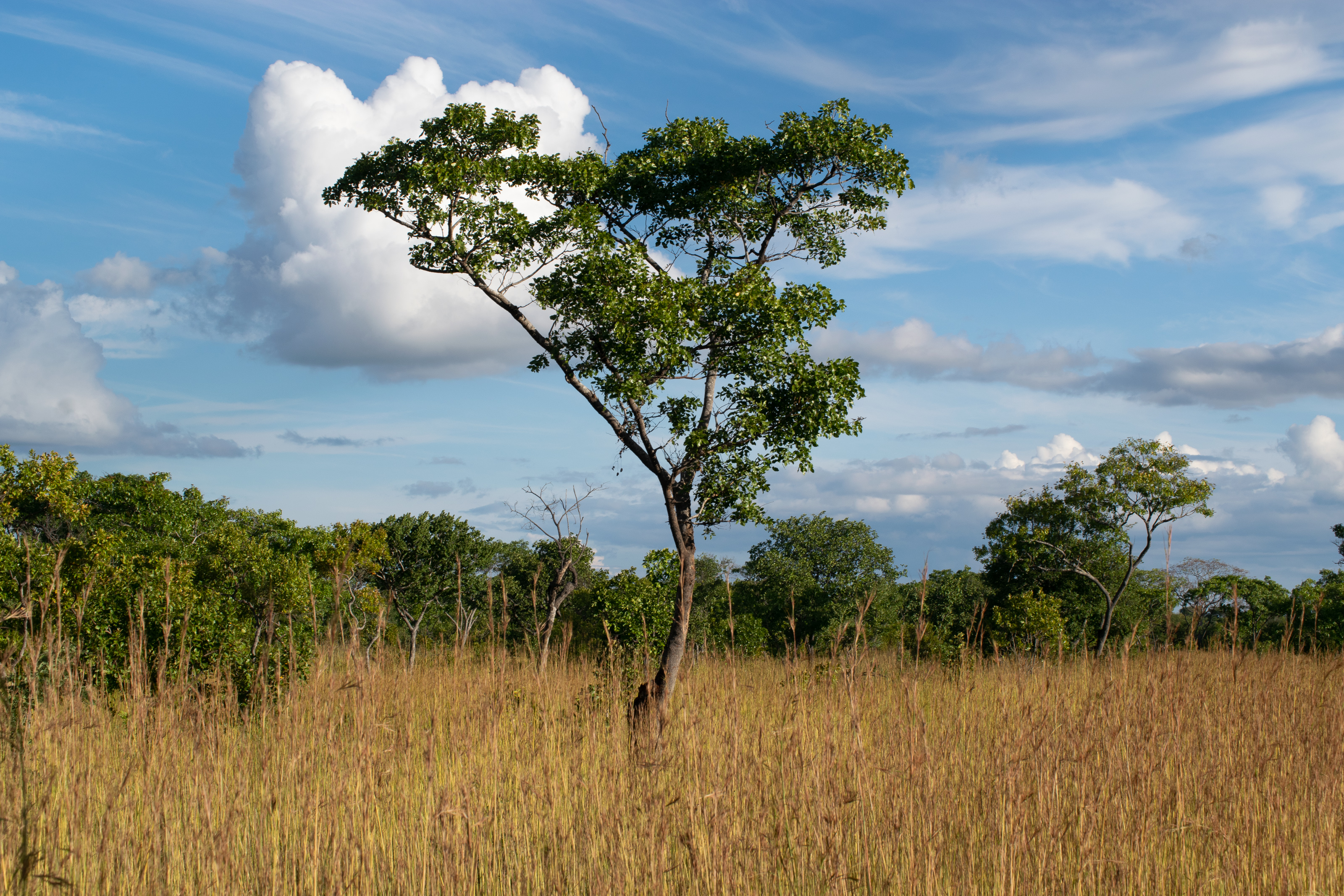
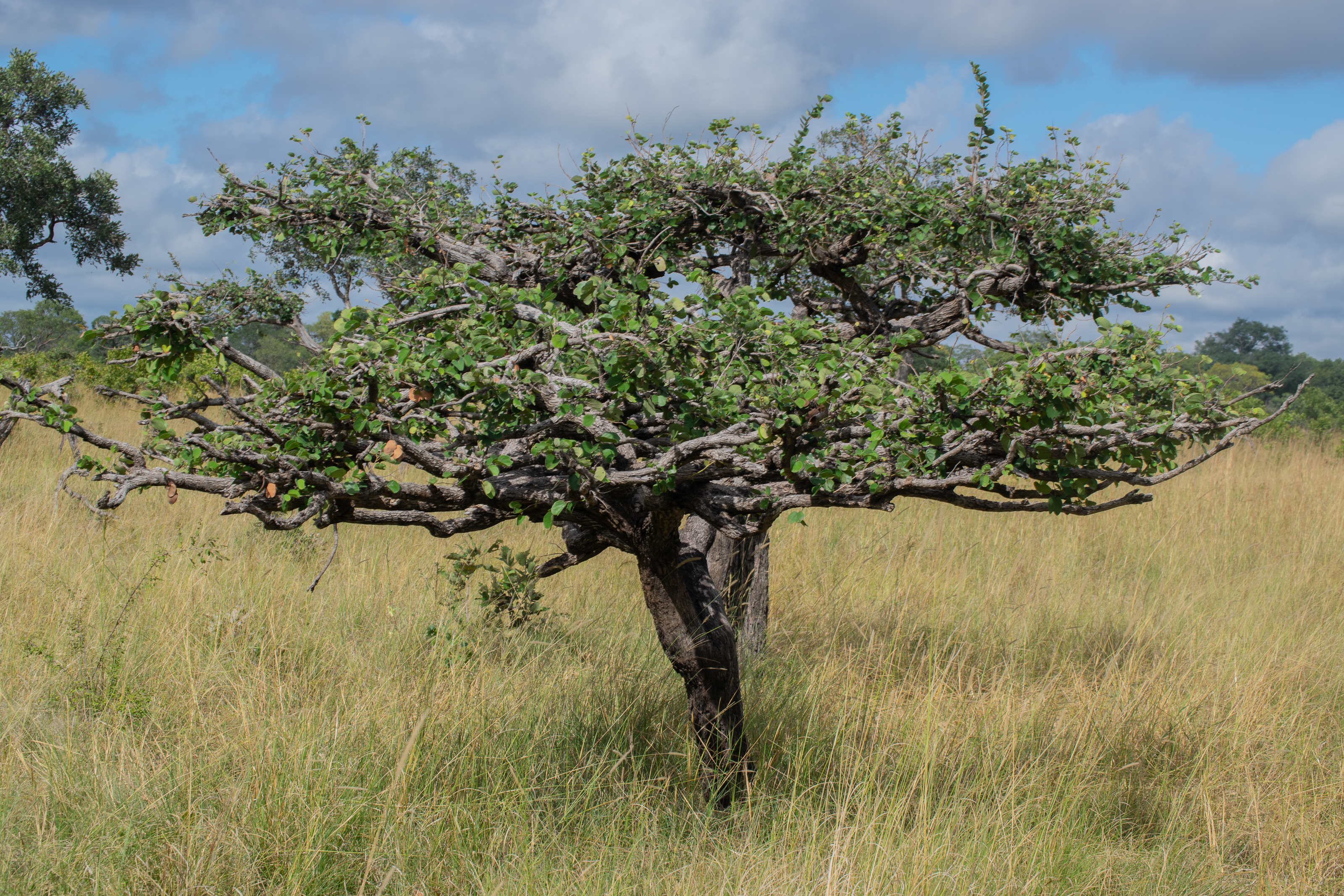
Elephants’ favorite Monkey Bread Tree
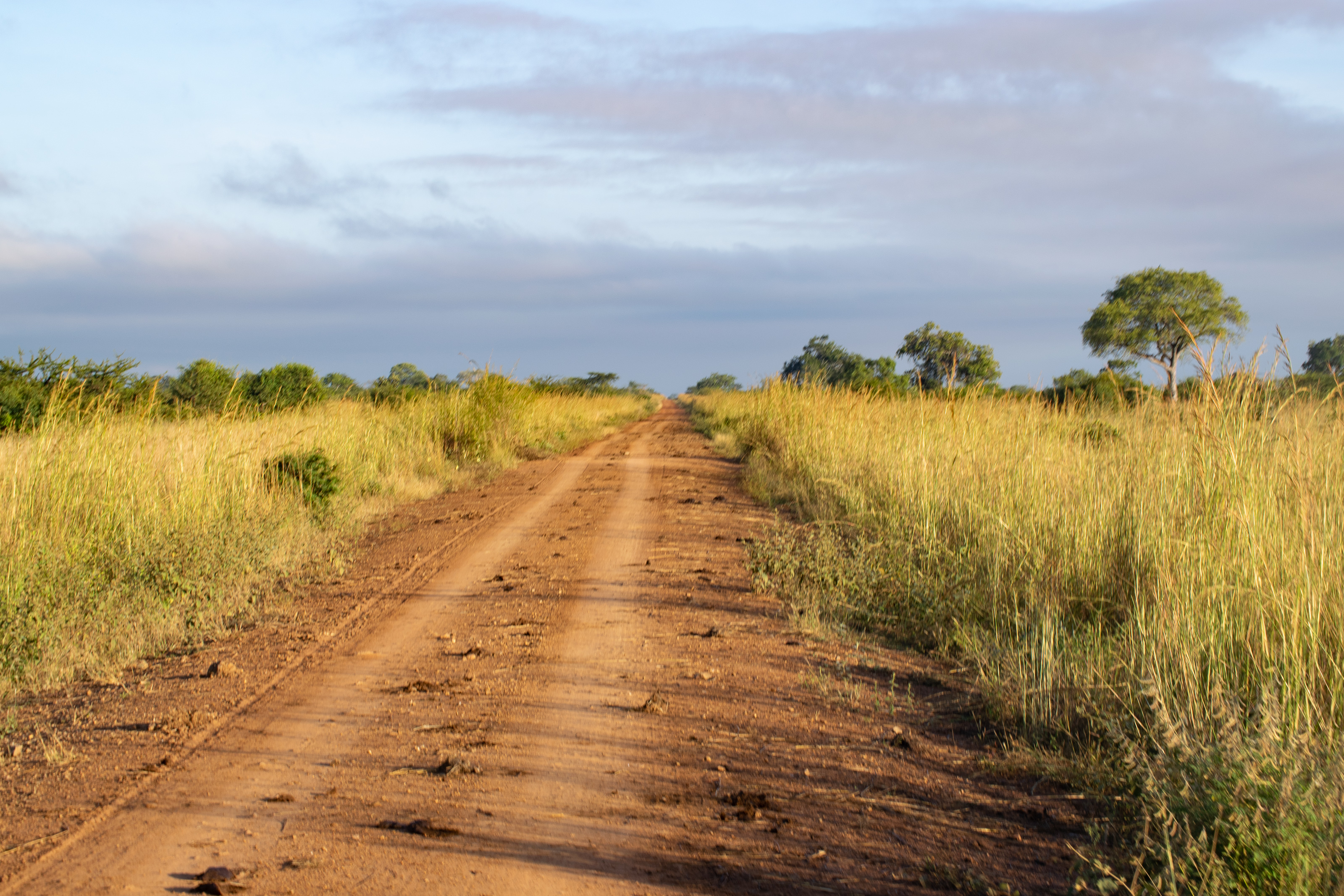
“The Poop Road” in the afternoon
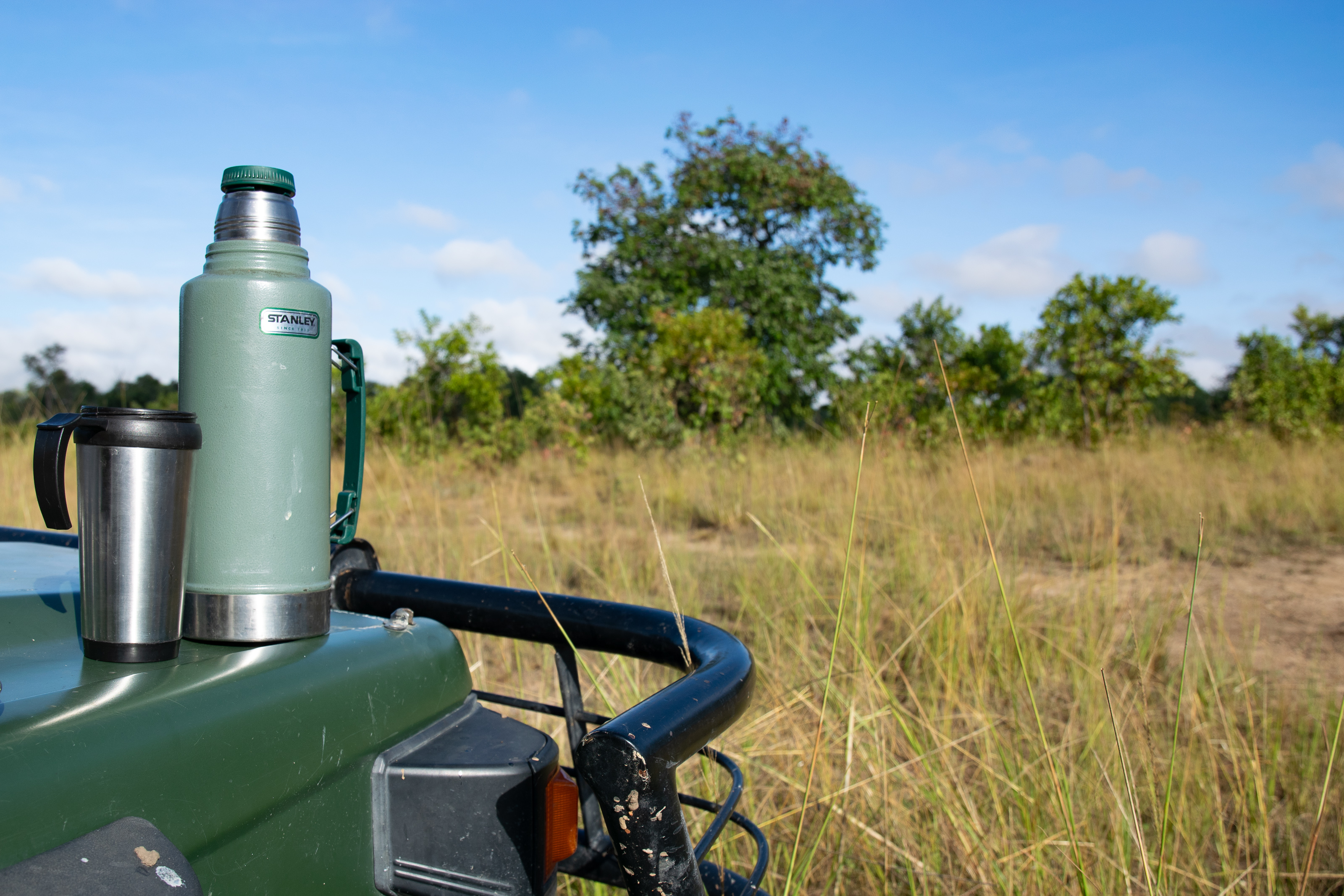
The kids and I combined the last morning game drive with a tea & cupcake picnic. We were actually on the track of a group of lions that we missed the previous day but only found the remaining of a porcupine – a quill – which we took with us as a trophy.
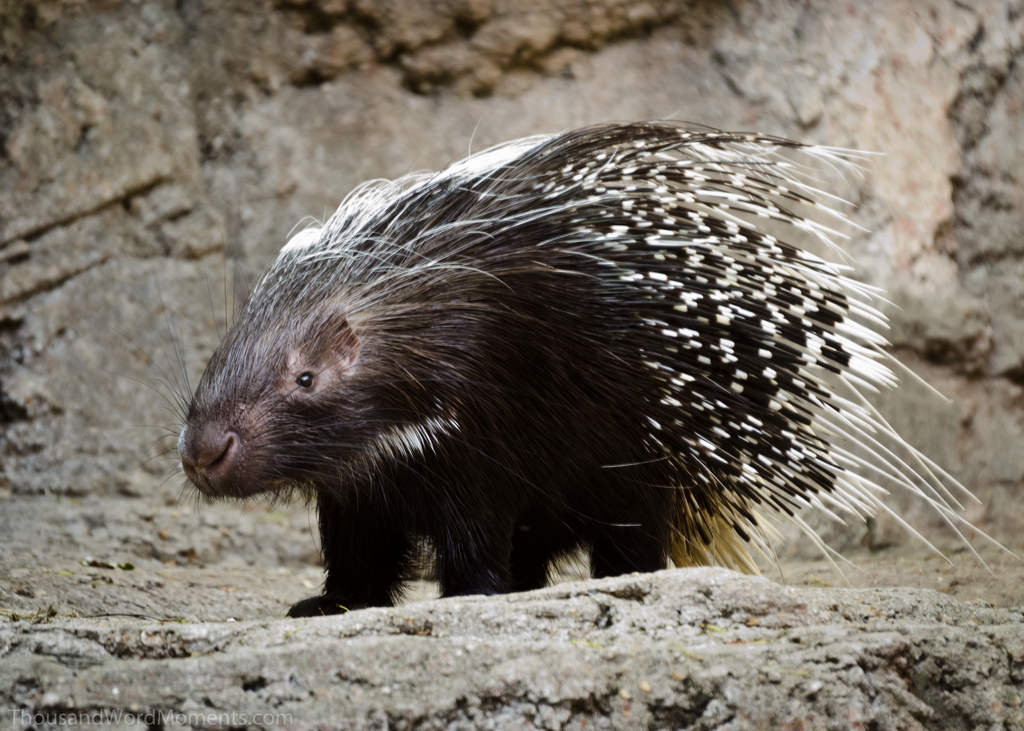
Porcupine with his beautiful quills. Photo credit: http://creatures-of-the-world.fandom.com
Then the driver got a call from another ranger that the lions moved far to the south, so we gave up and stopped for a picnic instead.
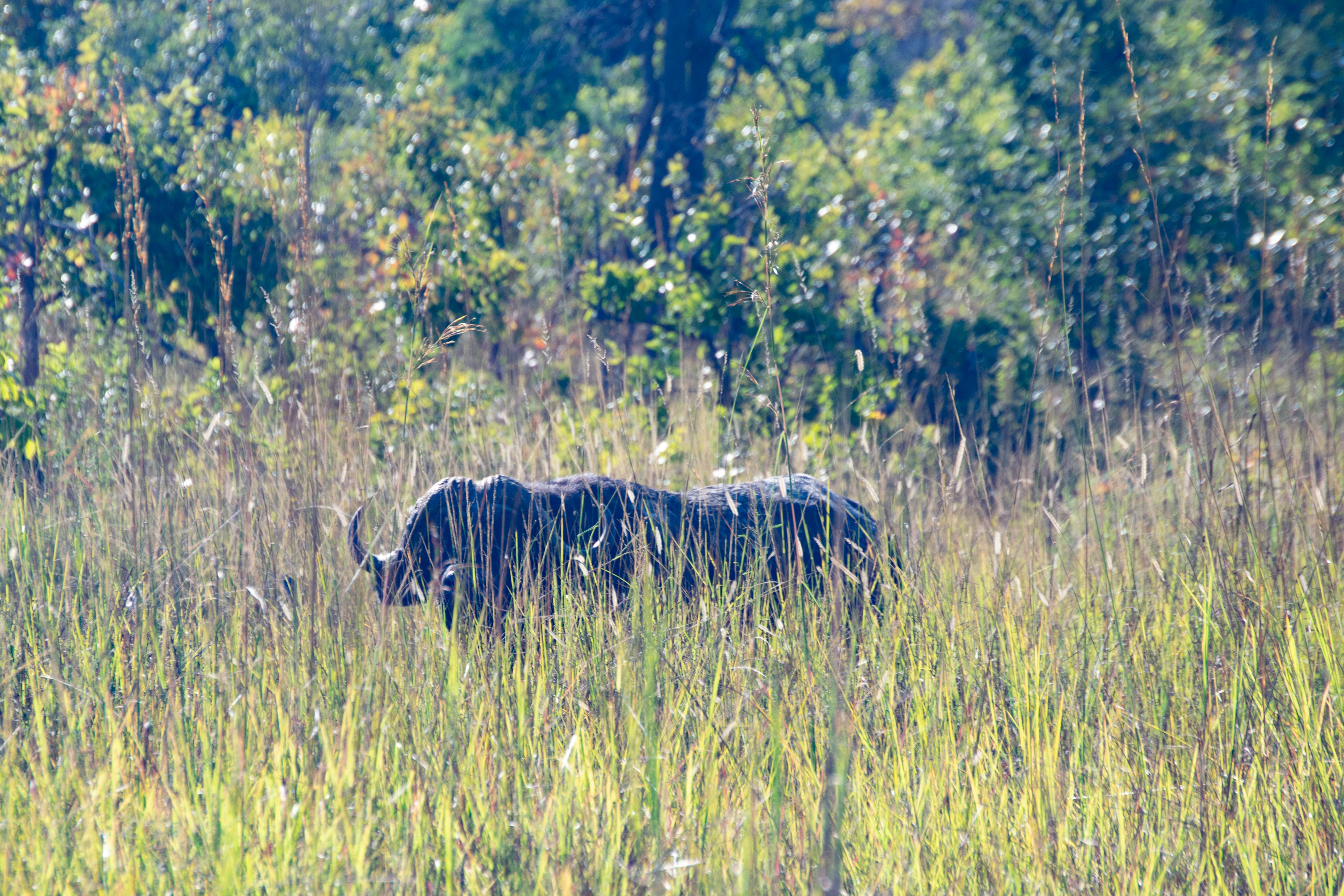
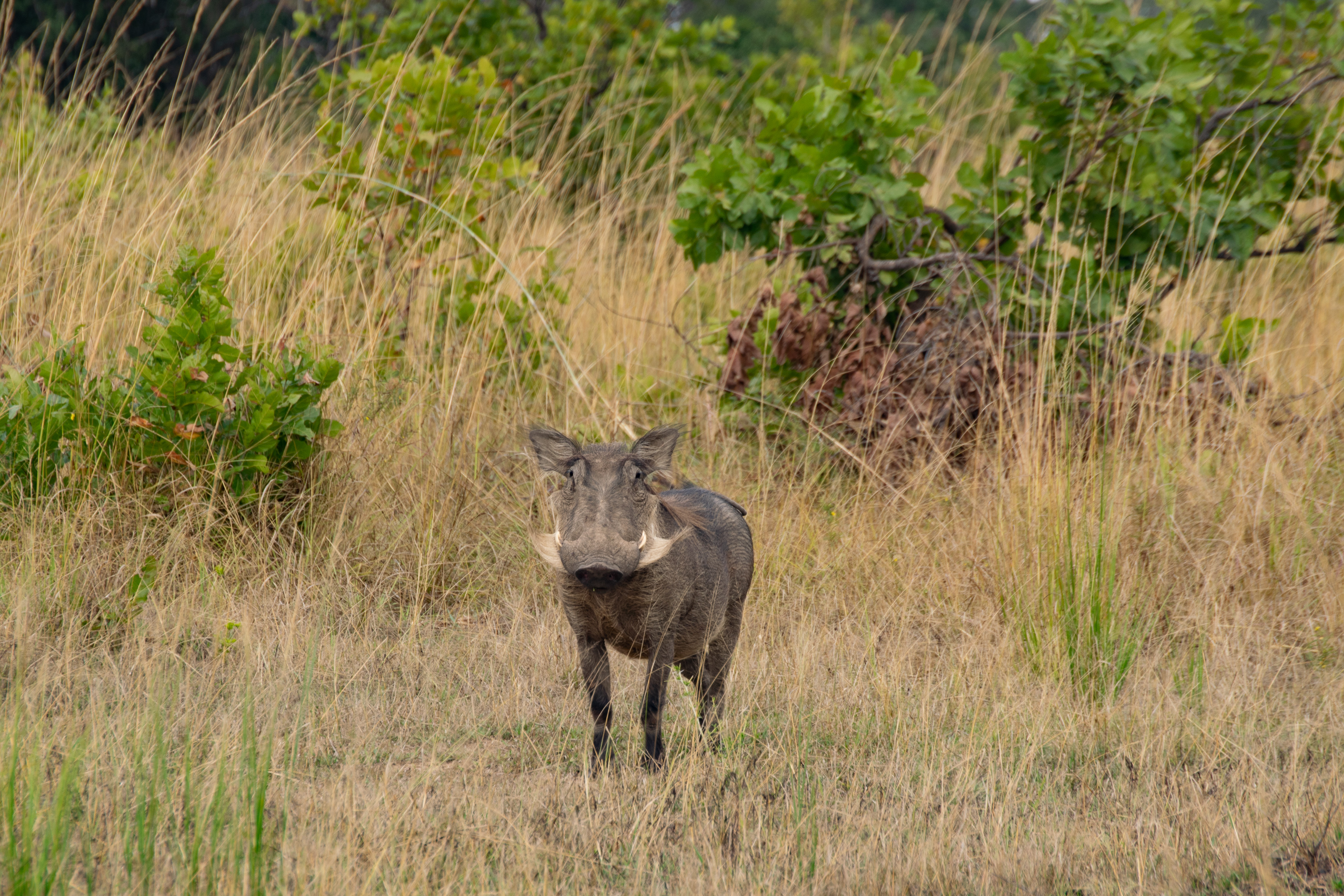
Buffalo in the high grass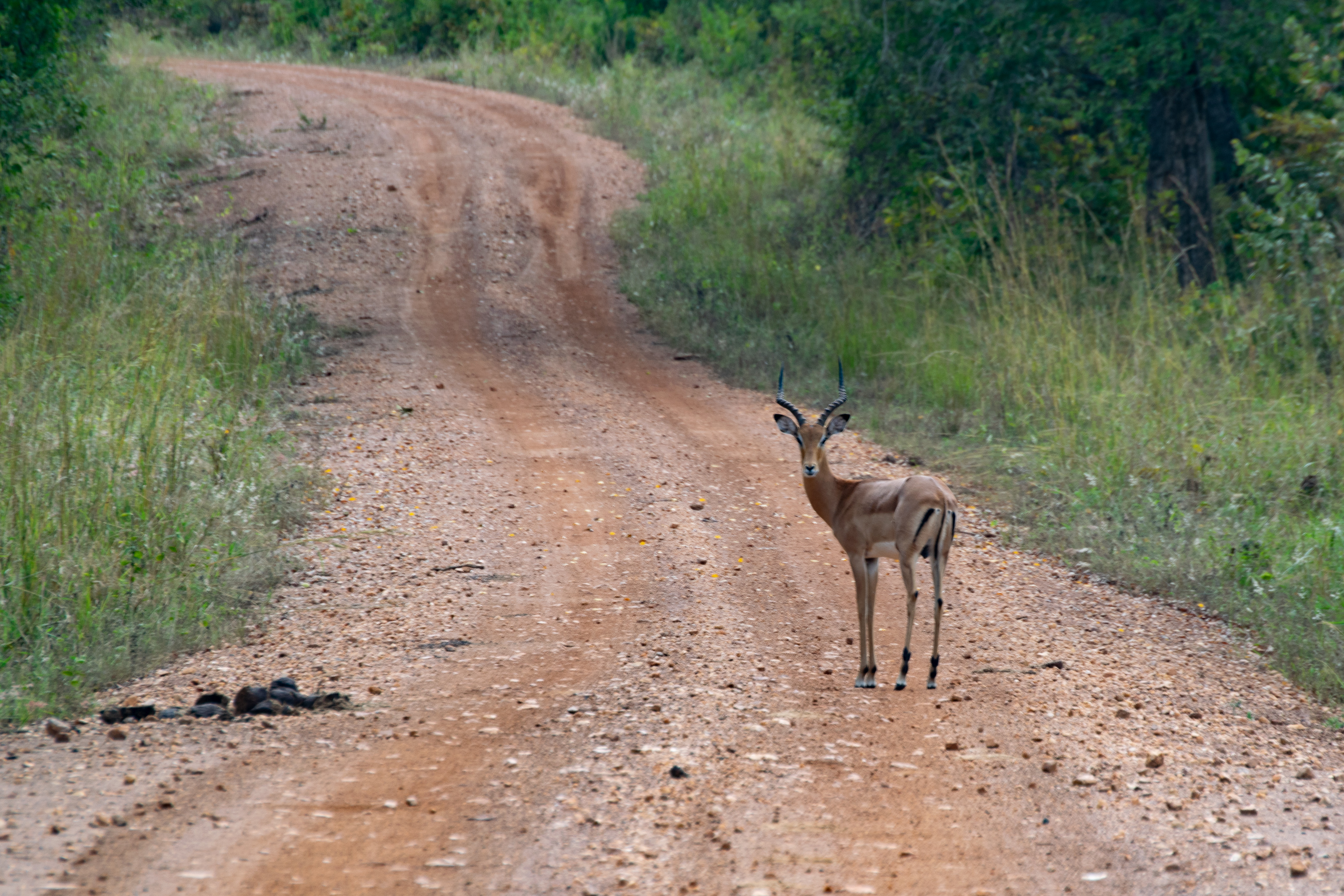
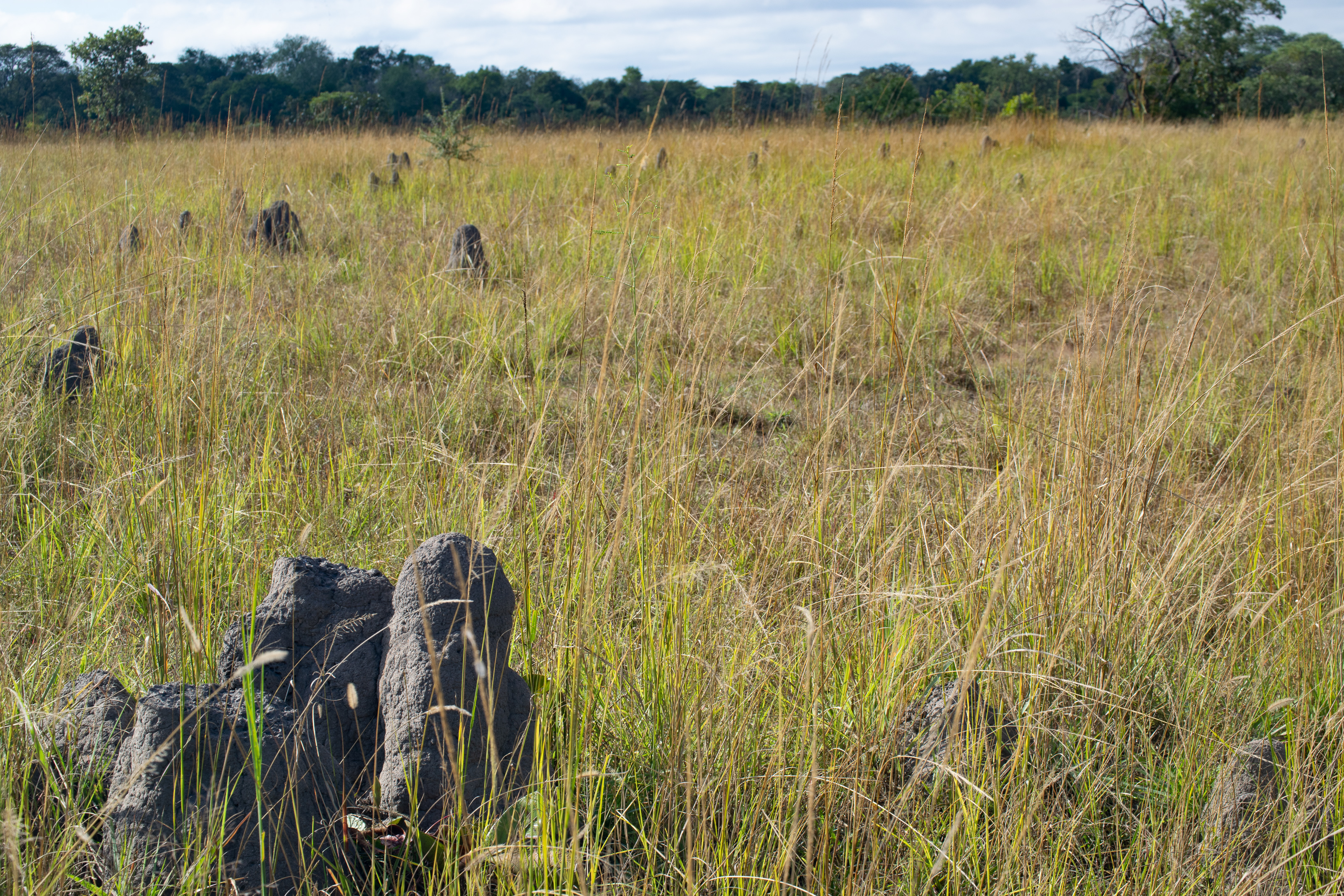
Termites chambers across the field
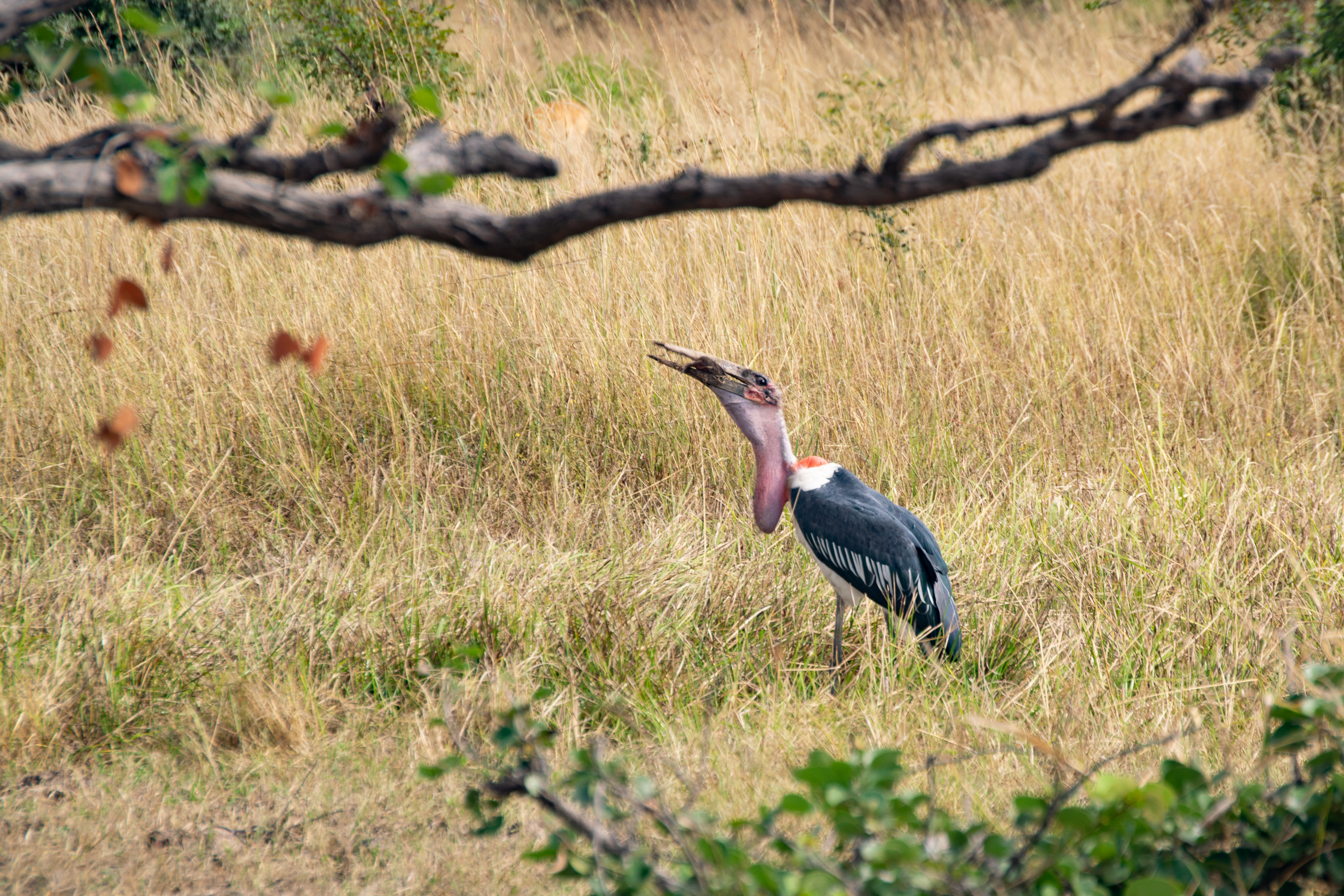
Marabou stork just after swallowing a fish
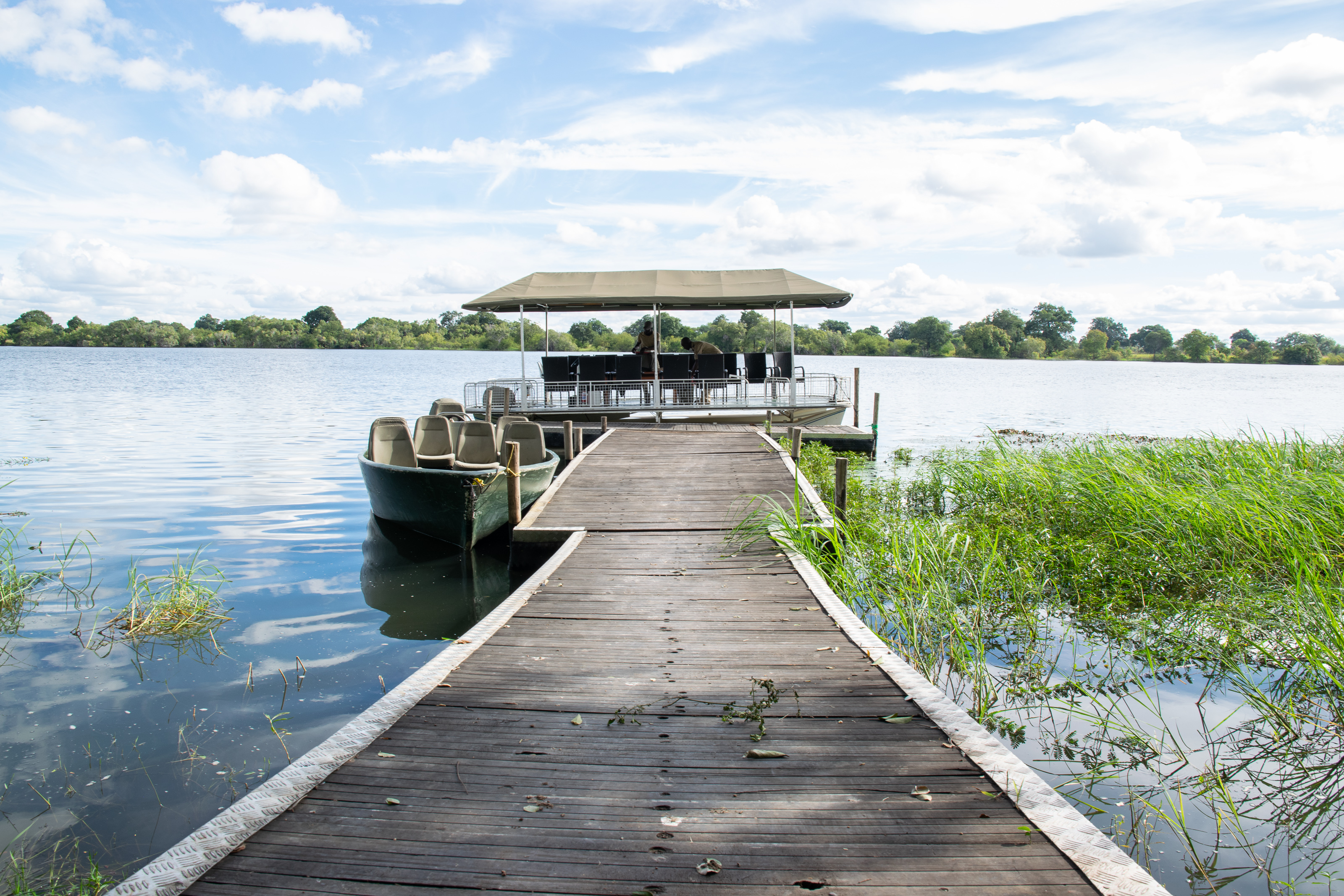
Another unforgettable experience was the sunset boat trip we made on our last afternoon in Zambia, which revealed the beauty of nature from another angle.
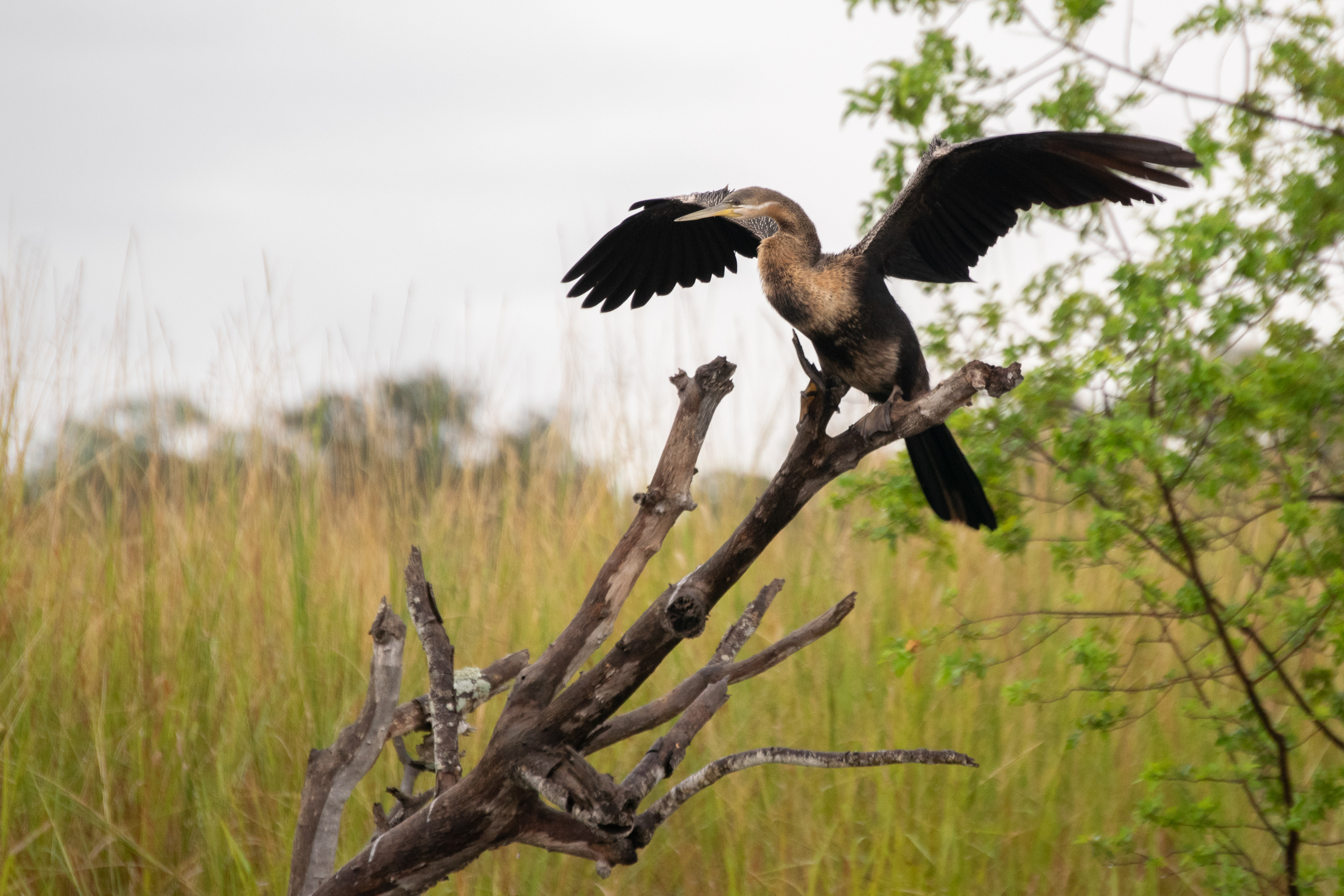
Snakefish
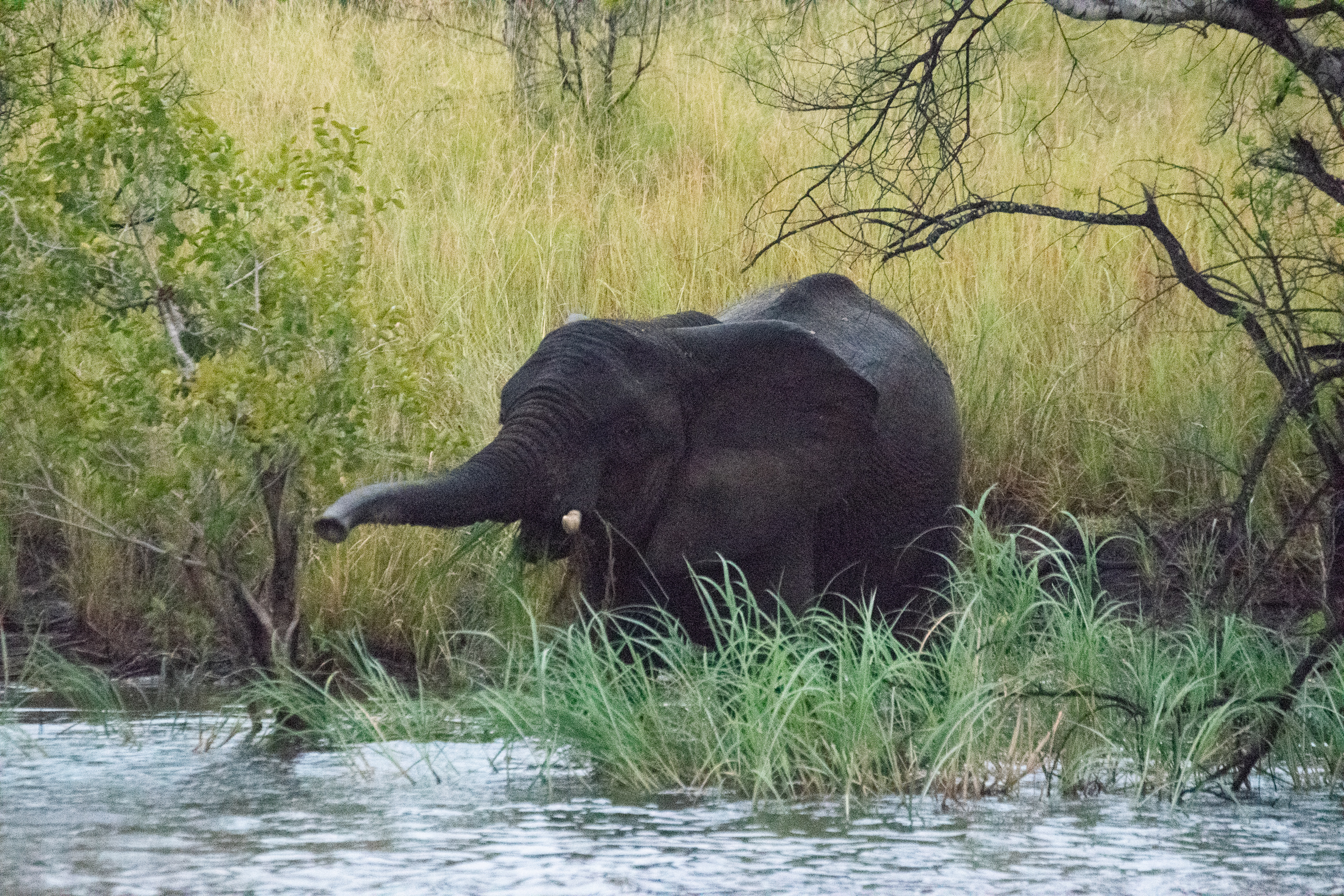
Elephant carefully cutting the ends of tree branches before taking the softer green leaves into his mouth
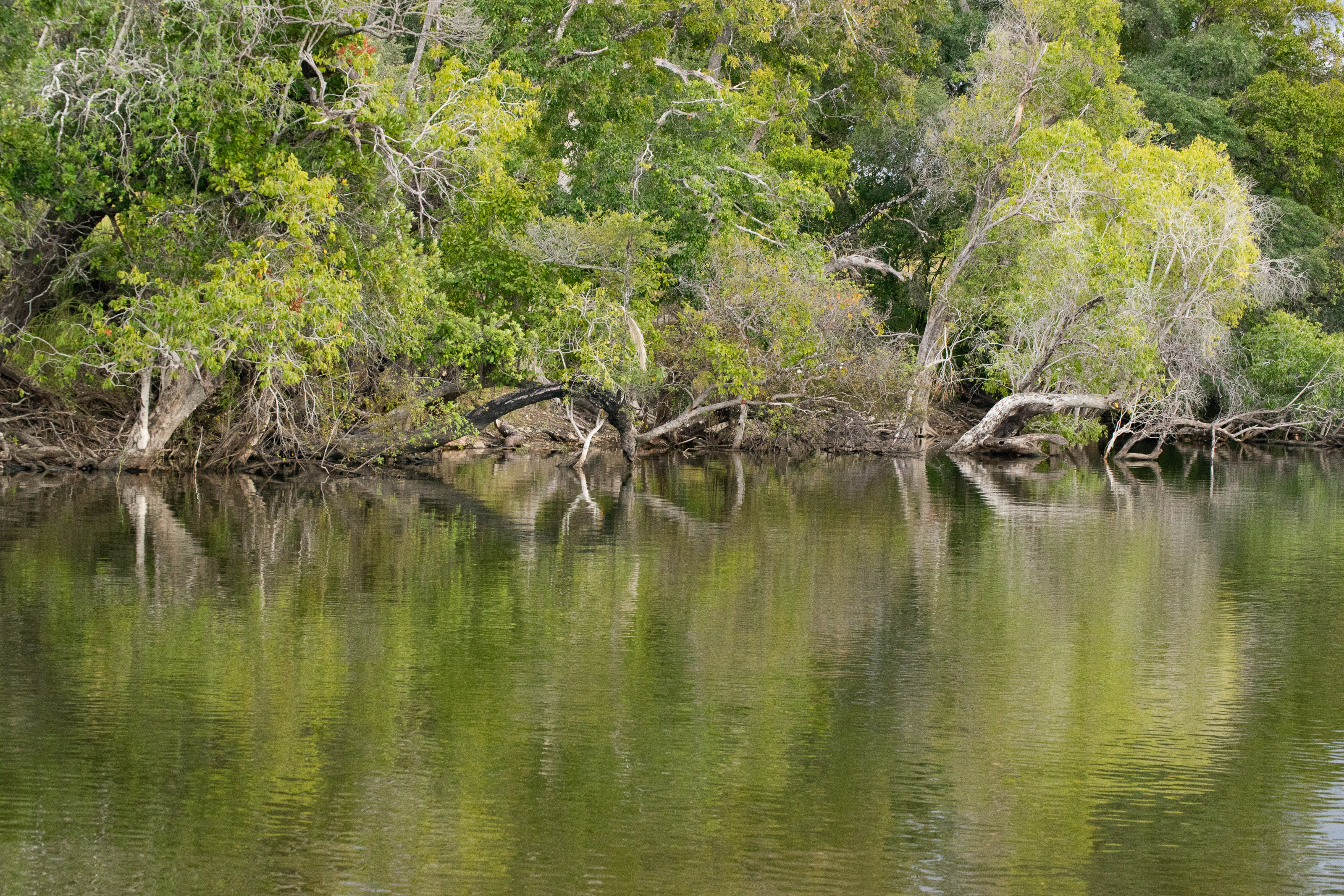
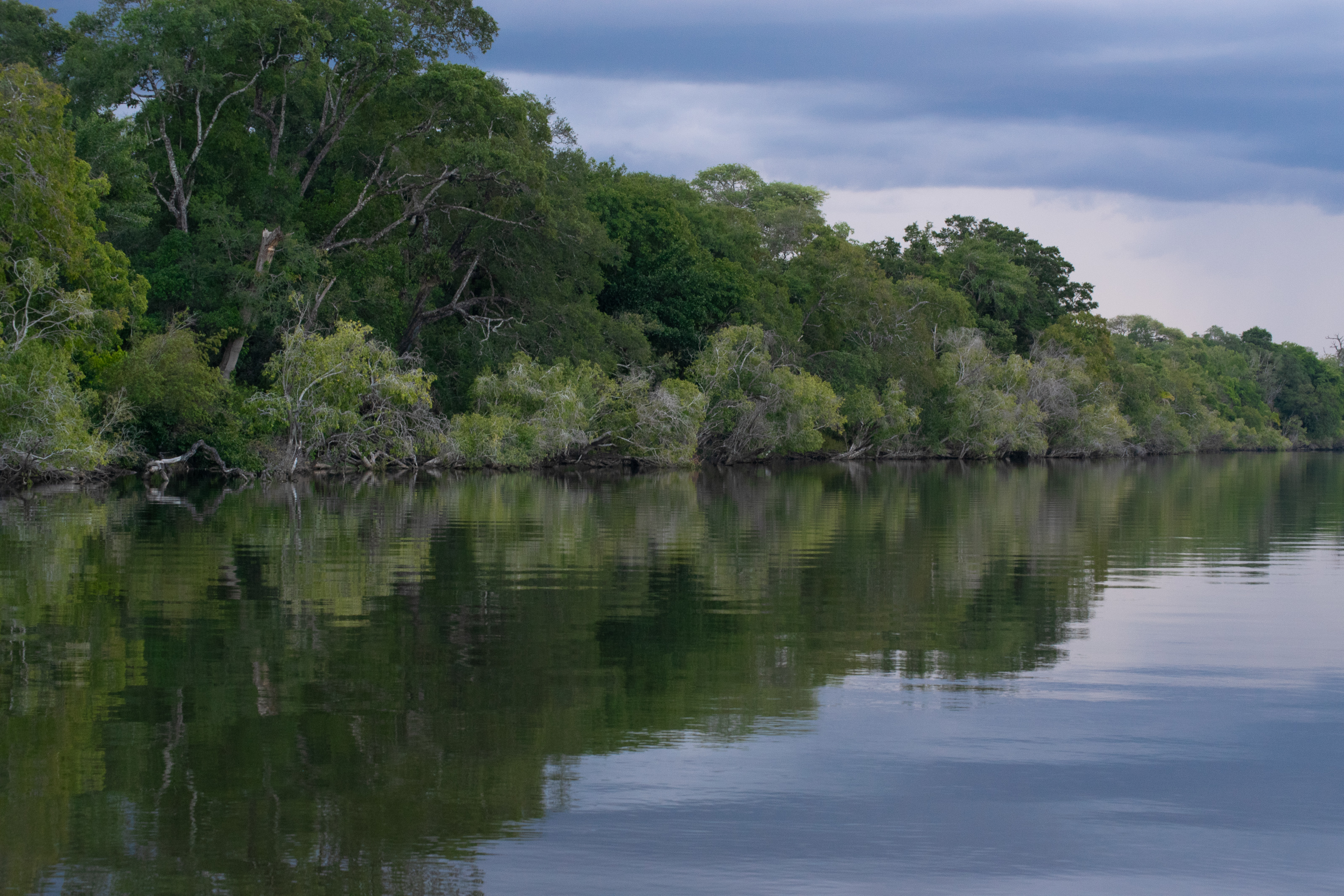
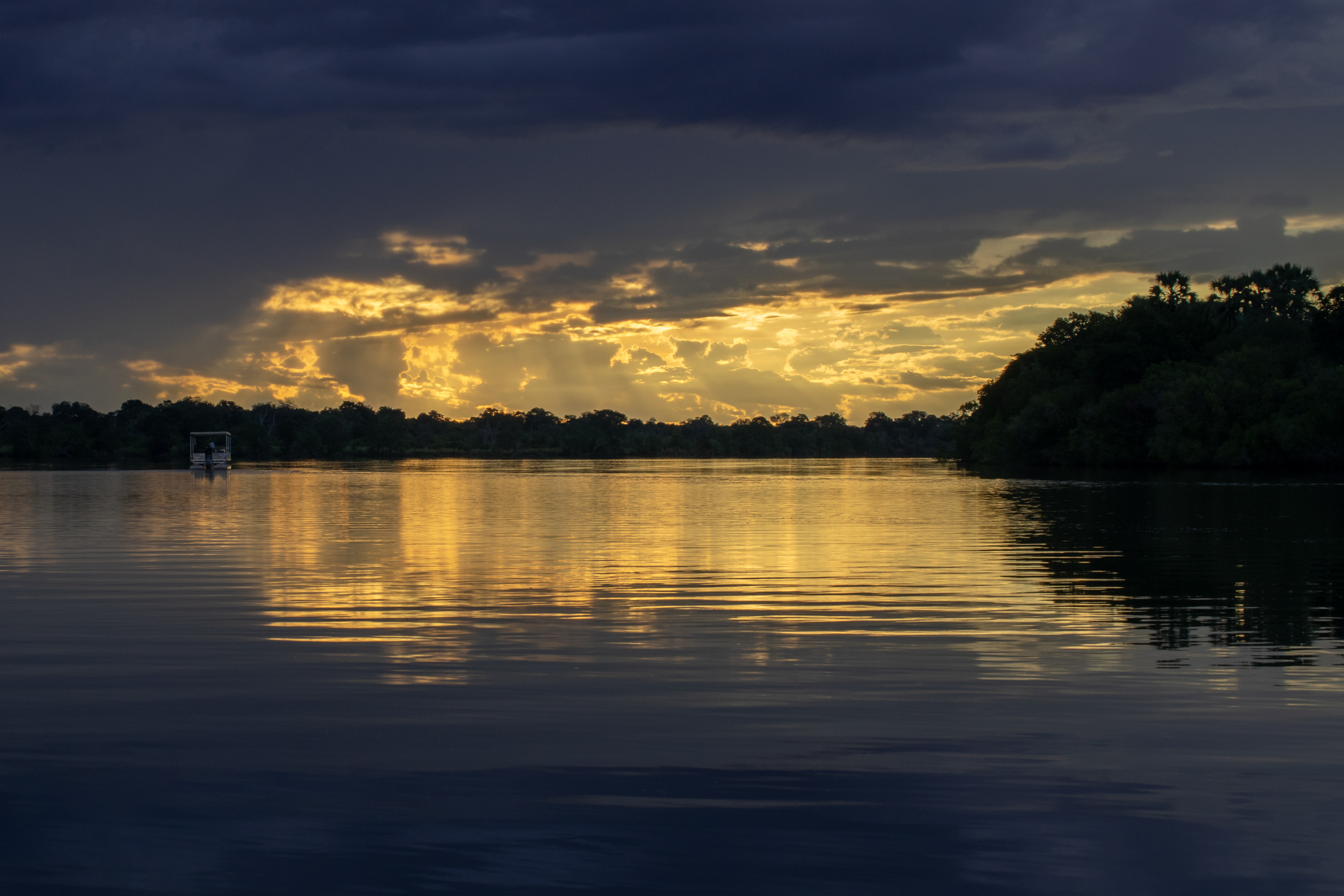
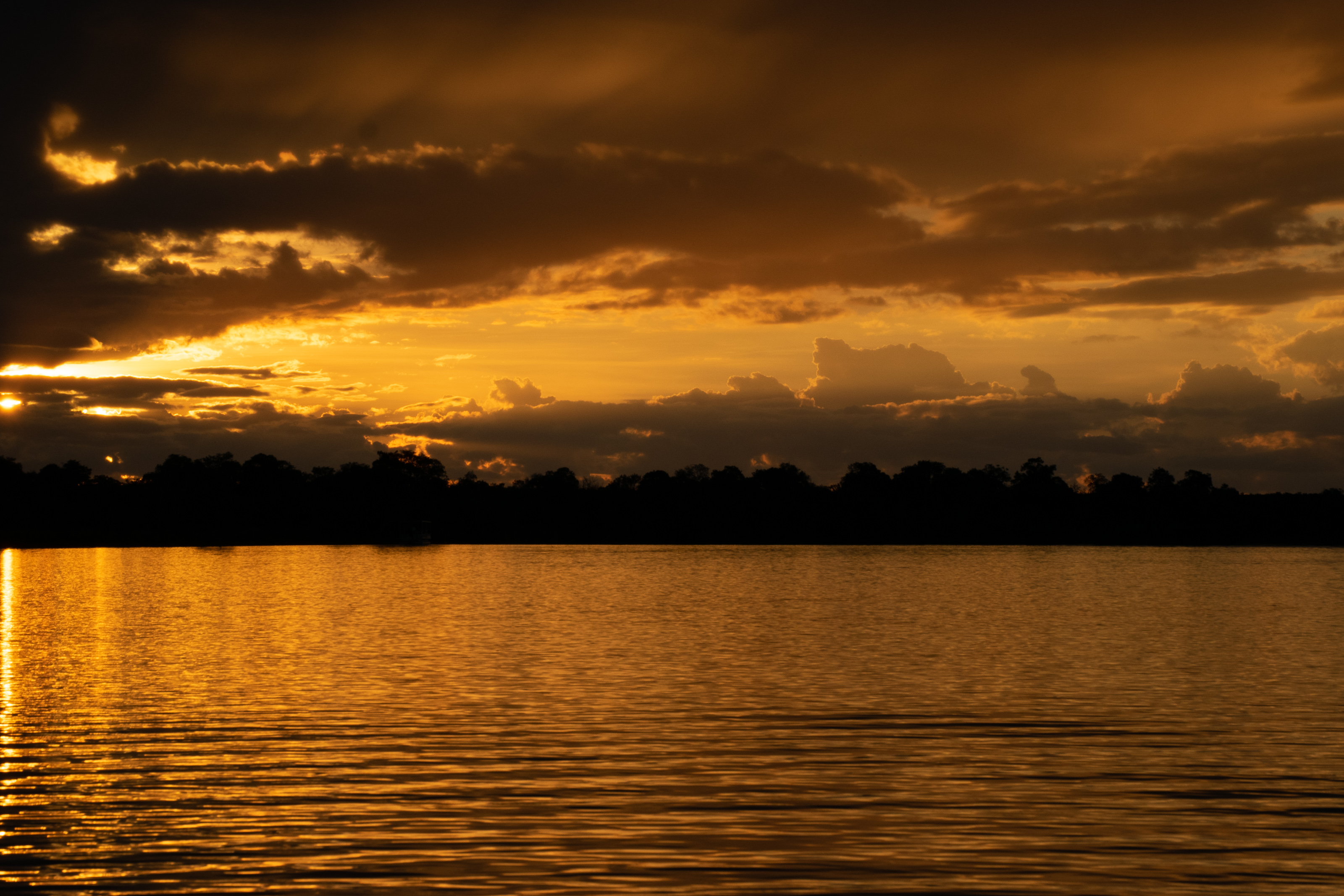
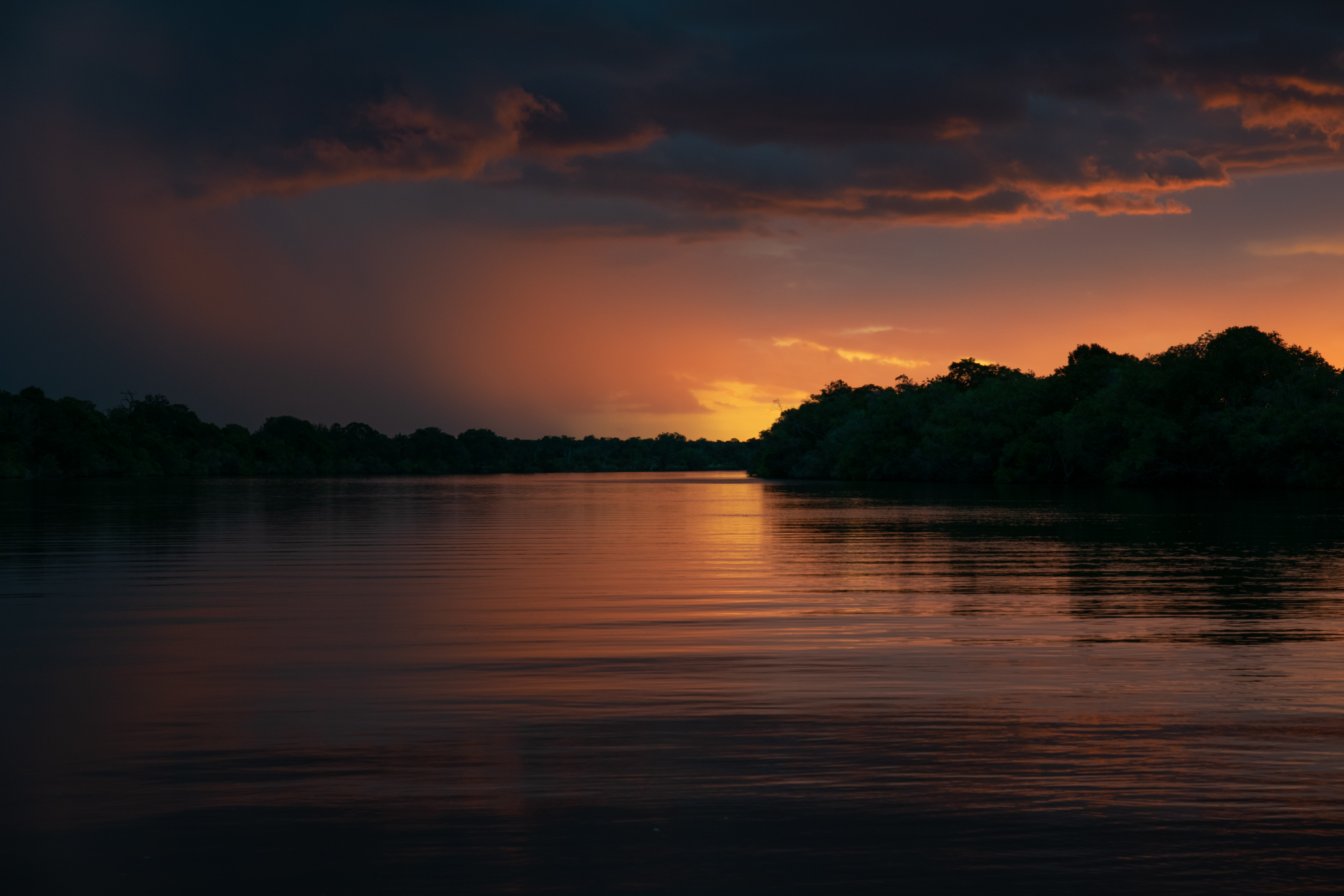
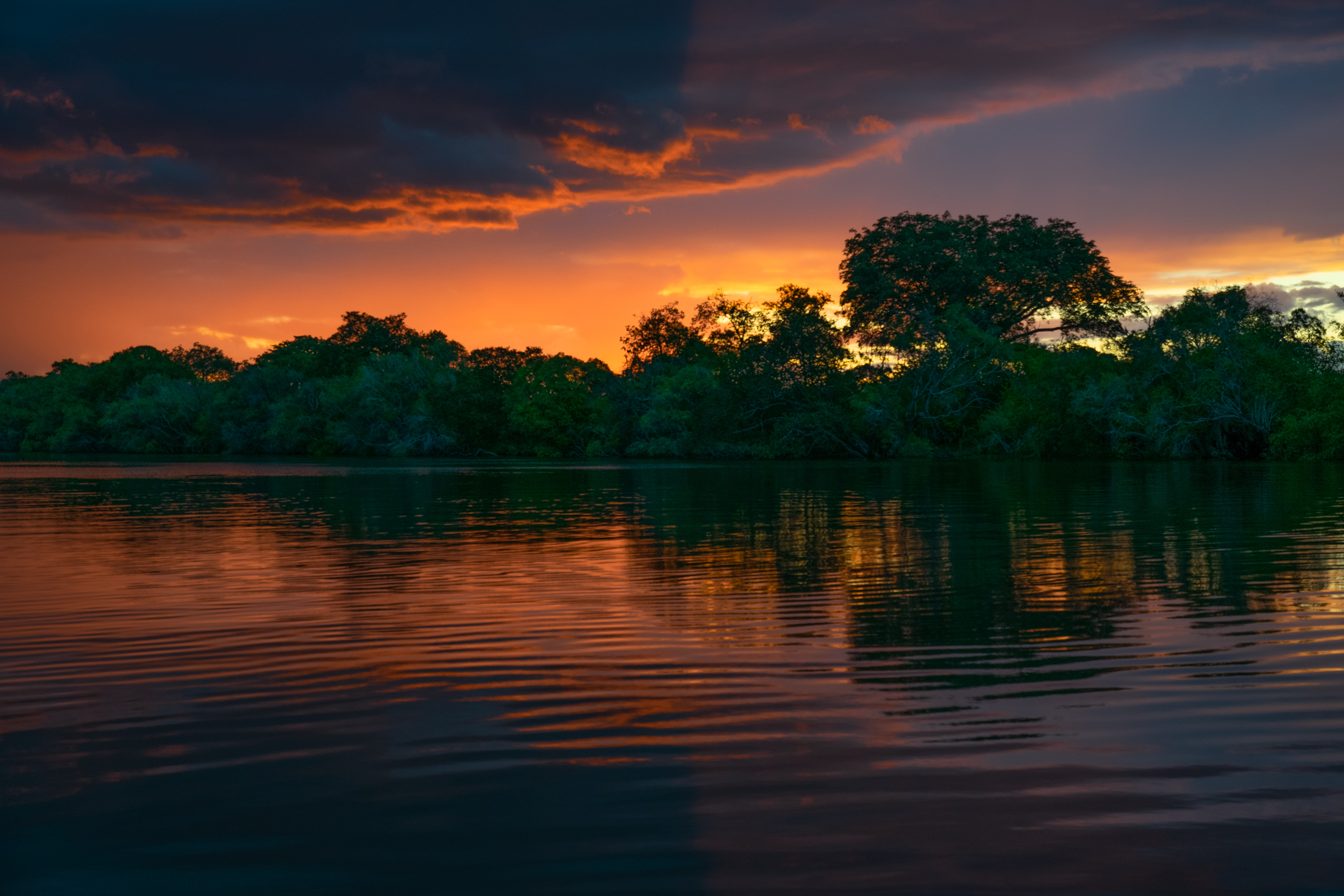
These incredible pictures will remain deeply ingrained in my mind and I hope that one day I will return to this place to experience them in live once again!
The End.
Click here to read Zambia – Part 1.