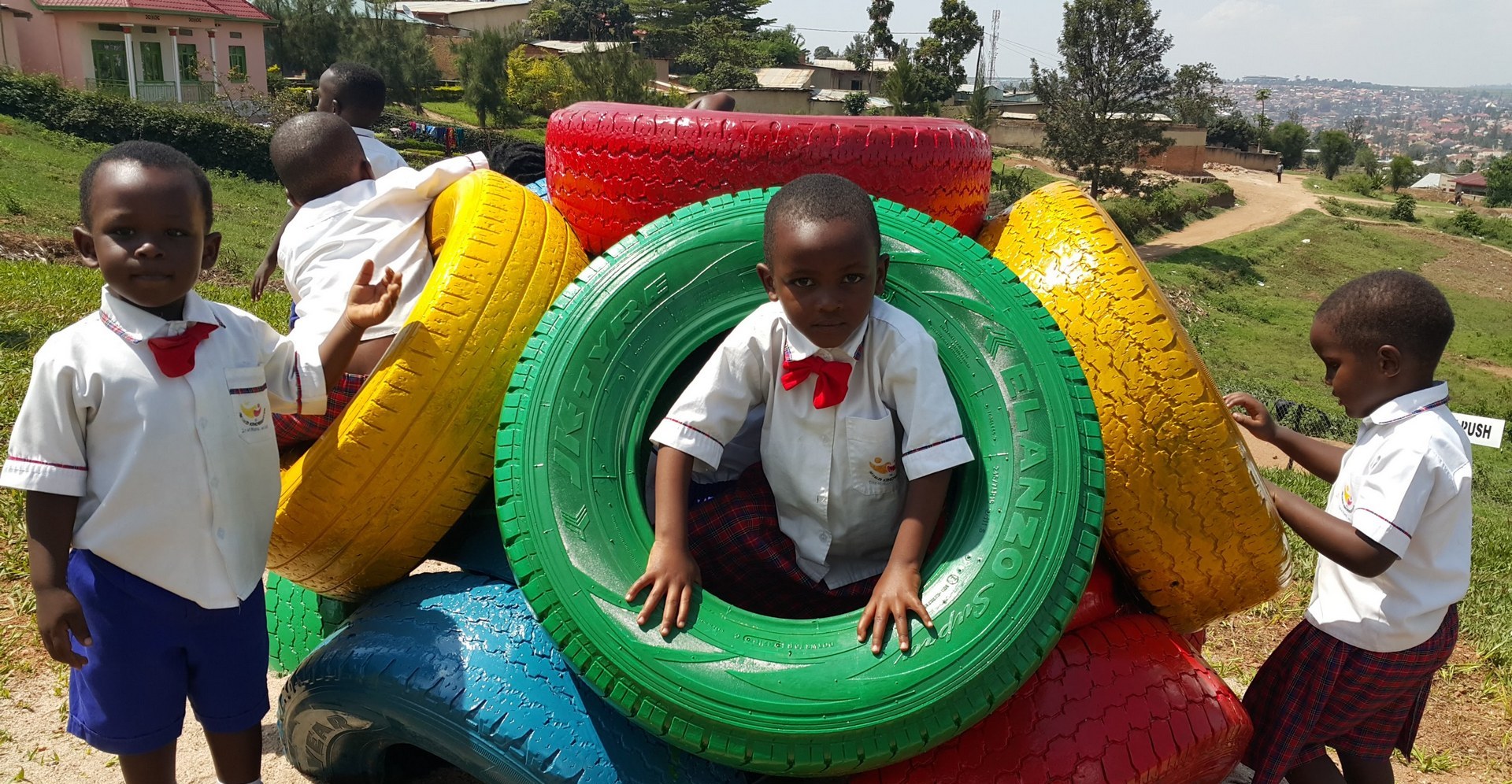
Hope is 4 years old and she goes to the kindergarten for about a year now. She has never seen a playground before. Hope can already count to 20, read and write some simple words but she never climbed a monkey bar or had fun on a real swing. Well, she has seen her older brothers playing soccer with a ball made of fabric stripes and rubber bands. The girl has also tried out a swing that her sister made of left-over pieces of their mother’s old dress…
One morning, as she enters the kindergarten holding her mother by the hand, she sees a few people working on the fenced grass area in front of the kindergarten – digging holes, joining wooden beams, assembling tires, tying ropes. She doesn’t quite understand what’s going on so later in the classroom she asks his teacher. “Oh, they are building a playground for our kindergarten so that you and the other children can play in the sand, climb, hide, slide, swing and much more”.
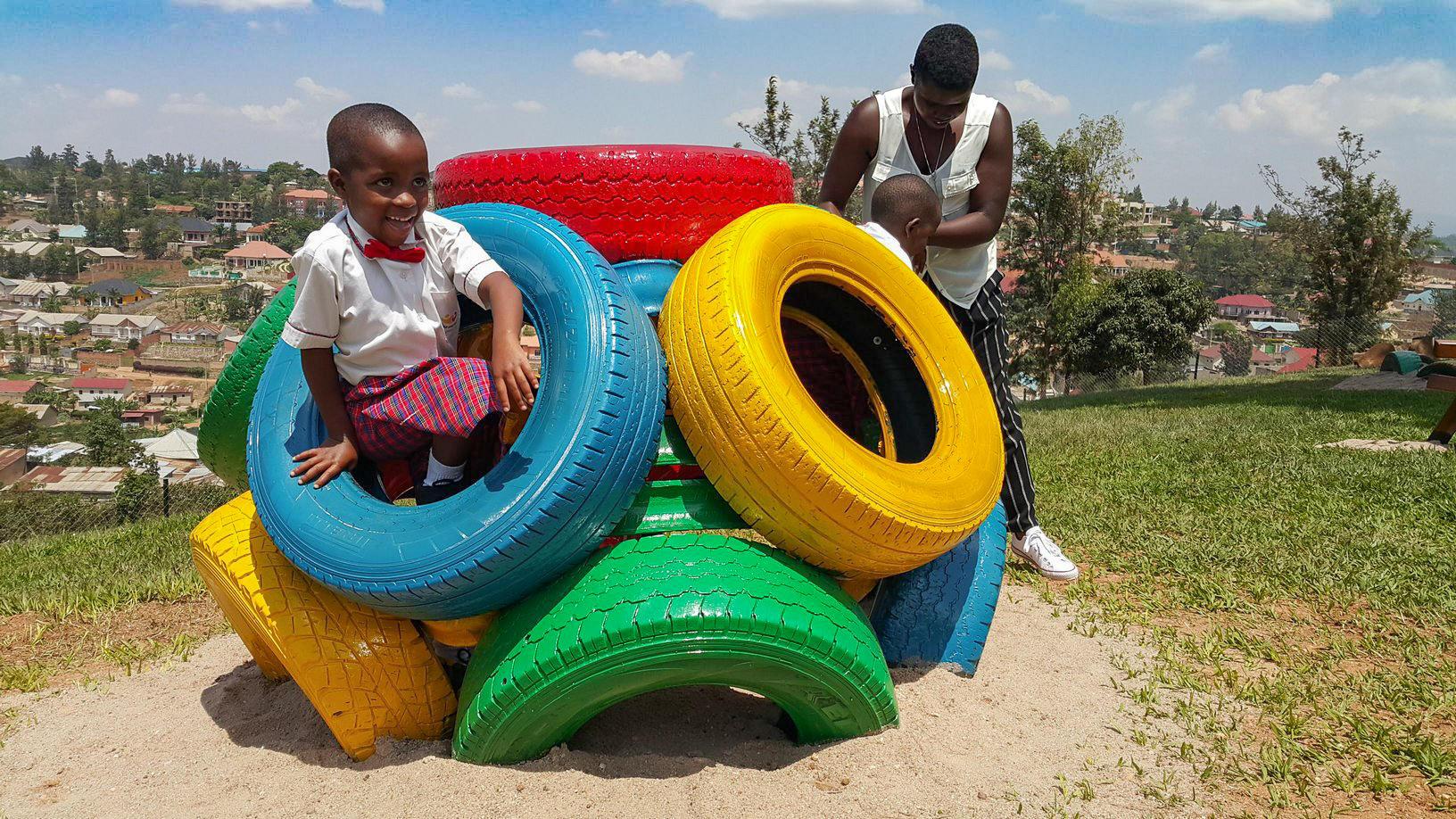
Now every morning, Hope pulls her mother on the way to the kindergarten, impatient to see if the playground is ready yet. She can’t wait to climb on this weird colorful tire sphere… or on that big triangular wooden thing over there…
Then one day, when her patience is almost gone, the teacher informs the children that the playground is ready and they are now going to play on it. The teacher goes on to explain something about rules but Hope is not listening anymore. She cannot wait a minute longer. She is finally allowed to go climb those things. This is the best day of her life. She is so happy!
The big picture
Hope is one of the 90 lucky children enrolled in this Early Child Development center in Kigali. The kindergarten, owned and managed by a local NGO, was built to become a model center or a best-practice for other communities and schools to follow. It strives to provide young children from disadvantaged areas or vulnerable families with the best possible start of life – quality of learning, physical, mental and social health and ultimately, lead a better life when they grow up.
Rwanda has a very young population. According to the World Bank, 43% of the population in 2010 were kids under 15 years. More recent statistics show that Rwanda has around 5 million children of which 15% are potential beneficiaries of Early Child Development service; unfortunately, only few ECD services reach this population. Kindergartens like the one Hope attends represent only a tiny share of all ECD center around the country.
Of course, play is just one of the pillars for a healthy child development; nutrition, hygiene and appropriate parenting are certainly critical factors, and also priorities in the national ECD program of Rwanda. However, my current observations are that classroom learning is given more importance than play in many local early childhood centers, while the later, especially outdoor play should actually take higher proportion of time as many ECD specialists would argue. I am certainly not an expert but I can confirm this based on my own experience as a mother (have you also been surprised by your kind, patient and well behaved infant back home after having spent several hours outside playing? J)
An innocent comment by my daughter
If someone told me two and half years ago that I would get involved in building playgrounds in Rwanda, I wouldn’t have believed them. But now that the first playground is a reality, a second one is underway and a business plan is being created to put this on a more solid ground, it all looks a very natural development of an idea sparked by a spontaneous comment of my younger daughter soon after we moved to Rwanda.
The seed got roots
I clearly remember a conversation my daughters and I had while walking back home from a nearby grocery shop – it was our first week in Kigali and we’d just found out that there are no public playgrounds here. As any other child who had the privilege to grow up with playgrounds around nearly every corner of the neighborhood, my daughters got really disappointed. The reason was obvious to me but not to them so I tried to explain that the country has other priorities to handle and building playgrounds is not among them, not yet. Although they seemed to understand, my younger daughter apparently was not satisfied with my answer: “Mom, but you could change this and start building playgrounds here!” My spontaneous reaction was to agree with her (“yeah, why not, this is not a bad idea…”).
Later I caught myself thinking about my daughter’s innocent suggestion quite often. And the more I thought about it, the greater my willingness was to take action. The more I explored the whole topic and the more I traveled around Rwanda, the stronger my conviction became that this idea has a real potential to unfold into something meaningful and impactful.
Although my daughter’s comment ignited the idea, I realized that there was another, stronger driver behind my decision to get involved. It was (and still is) this overwhelming feeling of sadness and injustice I get every time I visit a local school, walk through a local neighborhood or travel around the country. Why do children have so many outdoor playgrounds in Moscow with two and a half months summer time, while children in Rwanda have none by the all-year-round summer temperatures? After the initial excitement I started to realize the real source of my motivation – the answer to the question WHY. Now I “only” had to find out HOW and WHAT exactly to do.
It was around that time when I met a local lady who shared the same belief that play has a tremendous impact on children development and who was passionate to take action too. So we decided to partner up and see what we can do together.
As in any other start-up initiative we were faced with lots of questions, challenges and unknowns at every step.
WHO will/should be our beneficiaries?
Obviously, a public playground can reach a significantly larger number of children regardless of their schooling situation. In more developed countries free public playgrounds are usual elements of the residential landscape. Unfortunately, building a public playground in Rwanda became quickly out of discussion for us due to the lack of play-specific governing policies or regulations. At the time being this is simply not on the agenda of the respective local authorities despite the presence of a National Early Child Development Policy. I think it’s a matter of time for play interventions to explicitly enter the ECD policy and become an integral part of any ECD or primary educational program.
In fact, there are already some developments in this area mainly led by international NGOs or other Child Funds or Protection programs but oftentimes their focus is on indoor play rather than outdoors.
So we then looked at local schools and communities as potential beneficiary groups: the first one seemed more viable simply because there will be a clear owner of the playground in the face of the school management; communities tend to be slow in decision making and responsibility often blurs when shared by the group.
HOW should we do it?
Should we partner with an experienced organization from abroad, should we simply import playground parts and structures, or should we look for an entirely local solution?
There are hundreds of organizations around the world who design, produce, sell and even recycle playground structures. There are also non-profit organizations who build playgrounds from recycled materials in disadvantaged areas of the world. Unfortunately, Rwanda has not been among the target countries so far.
Although a tempting idea, the import of ready playground structures, materials or parts was quickly rejected as an option. Transportation costs and import taxes are simply too high but what is more important – maintenance, which is not less important than the construction of the playground itself, can create big headaches if you need to import replacement parts or repair anything that has not been produced locally.
Naturally, we came to the conclusion that we should go into local production utilizing locally available resources, including local labor, which lead us to the next question.
WHAT exactly should we make?
In other words, what would our playground structures look like and how we can make them?
OK, I have never been involved in any early child development initiatives; I don’t have a background in this area, neither in construction, design or architecture. Building a playground is different from building a toy house at home :-). It’s about children safety in the first place but also about creativity, durability and other critical success factors which I wasn’t aware of at the start. And of course, it is also about financial resources.
We had to make all decisions in parallel – what materials / resources are locally available, what type of wood is best for outside, which carpentry workshop to work with, where to source playground designs from, where to search for local carpenters willing to work with us given all the uncertainties.
After months of research, discussions with ECD specialists, consultations with architects and carpenters, and even Skype calls with play organizations from abroad, the pieces of our puzzle started getting together to shape out the picture of our future playground.
Not before long came an excellent opportunity for a location. A friend of mine who is a local self-thought artist and a certified architect shared with me that he is supervising the construction of a kindergarten whose architecture design was created by him. He suggested to put me in contact with its management – a local NGO who had included some outdoor play space in the architecture plan even though they didn’t account for it in their budget. I was impressed by the vision, activities and management style of the NGO. I felt this was an excellent opportunity for both sides – we finally got a chance to gain experience and “test-drive” our capabilities, while the kindergarten would receive a beautiful playground as a donation.
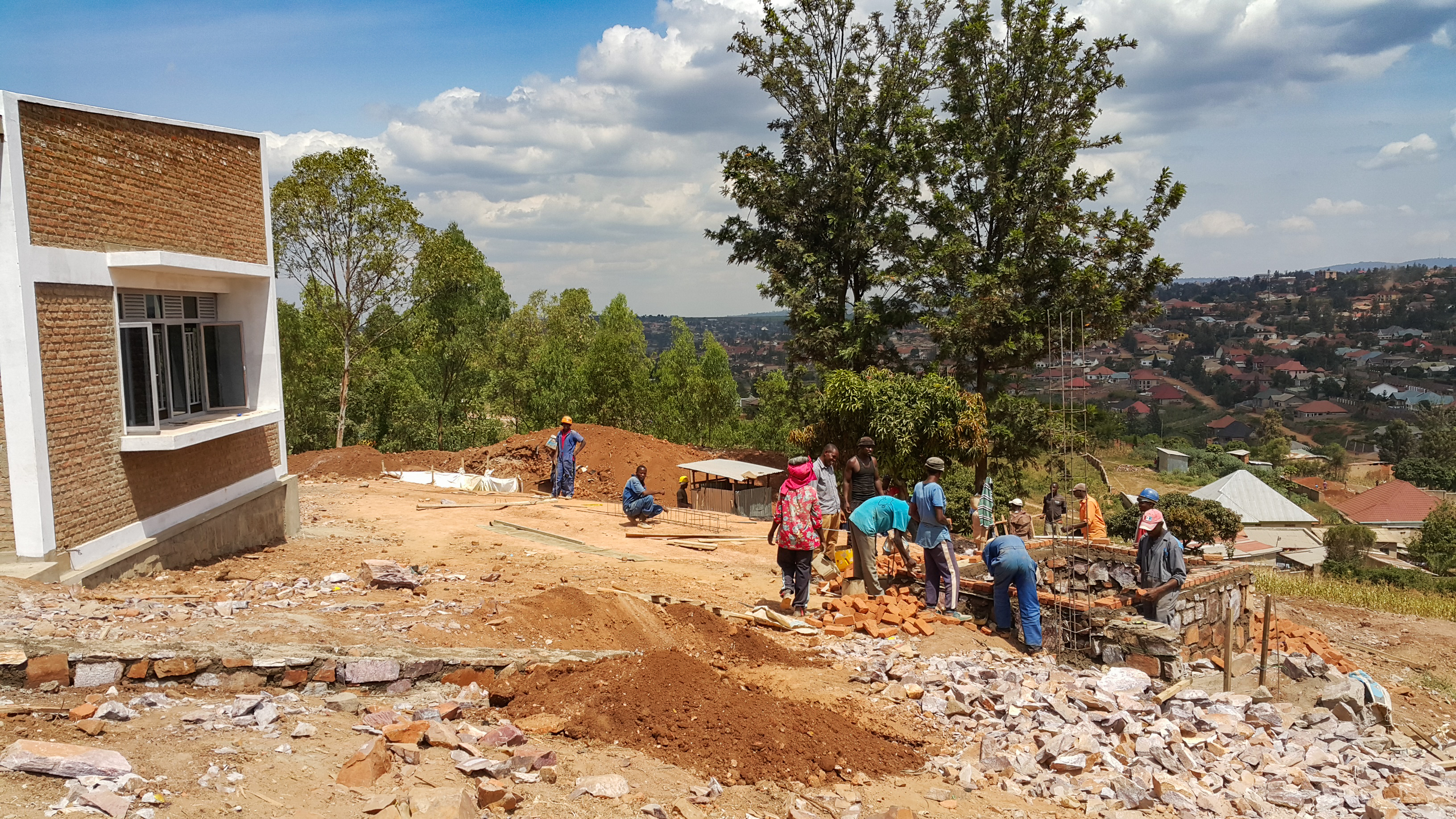
Construction of the kindergarten
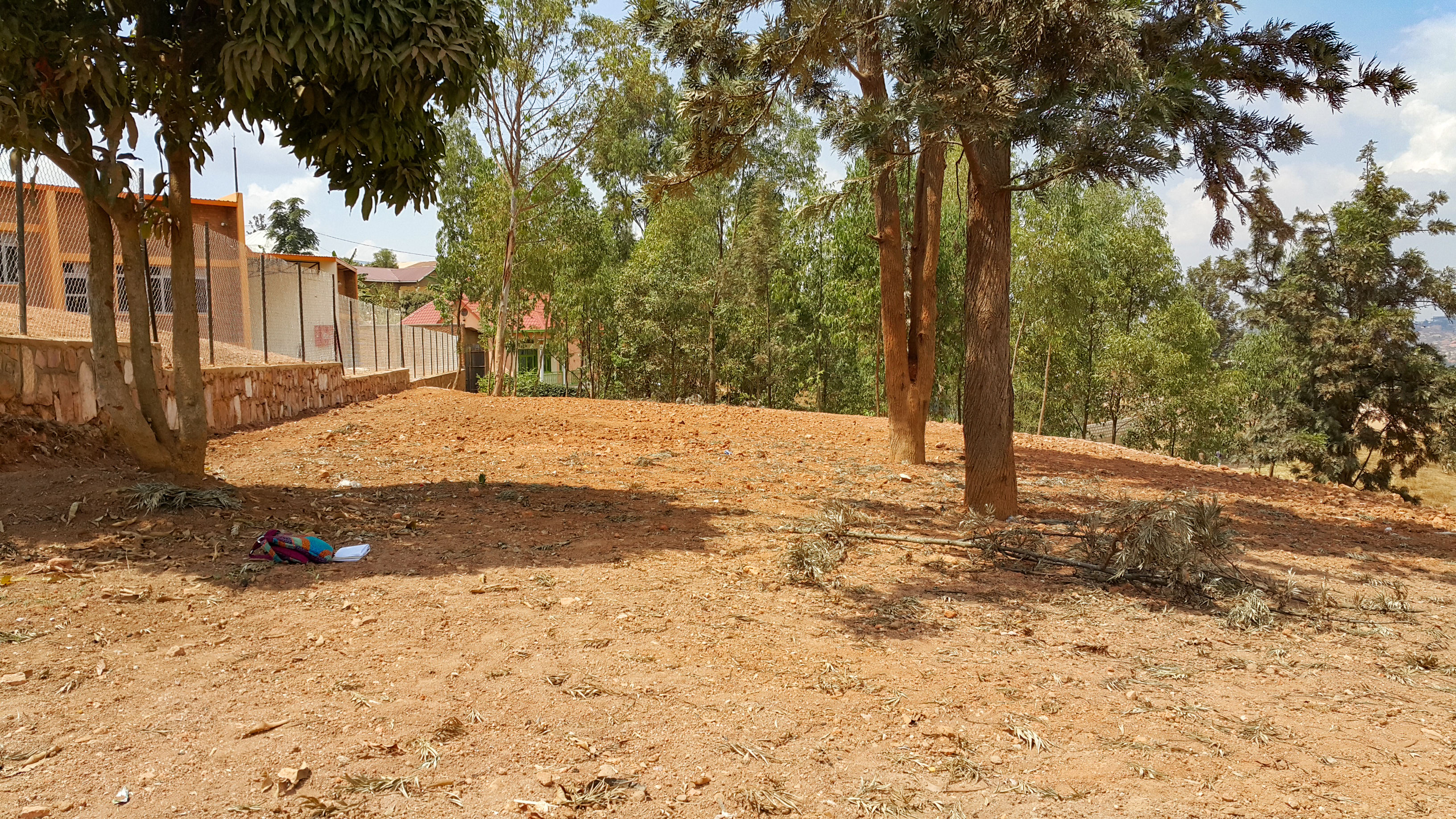
The playground site (during the dry season)
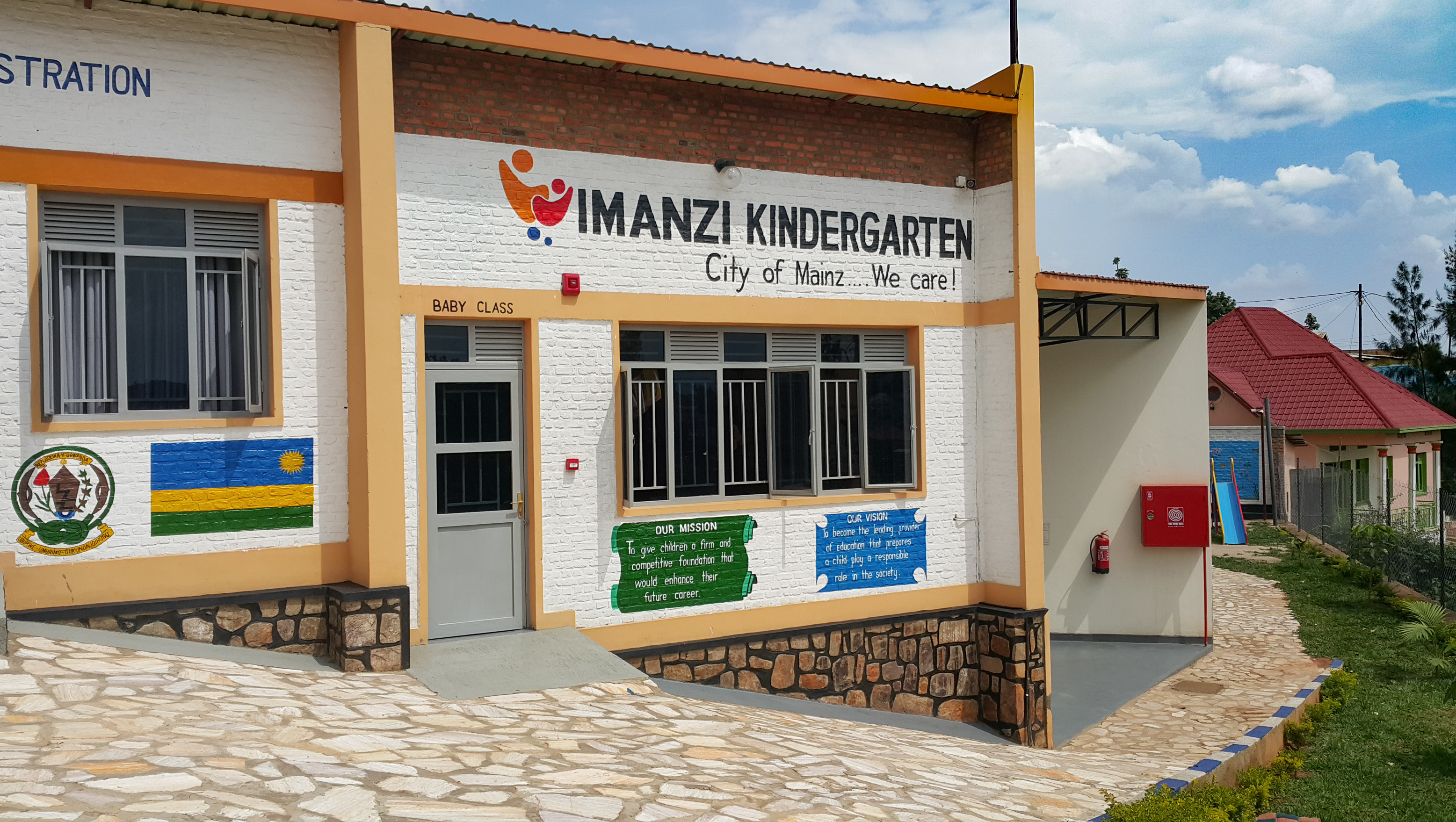
Imanzi Kindergarten ready to open doors
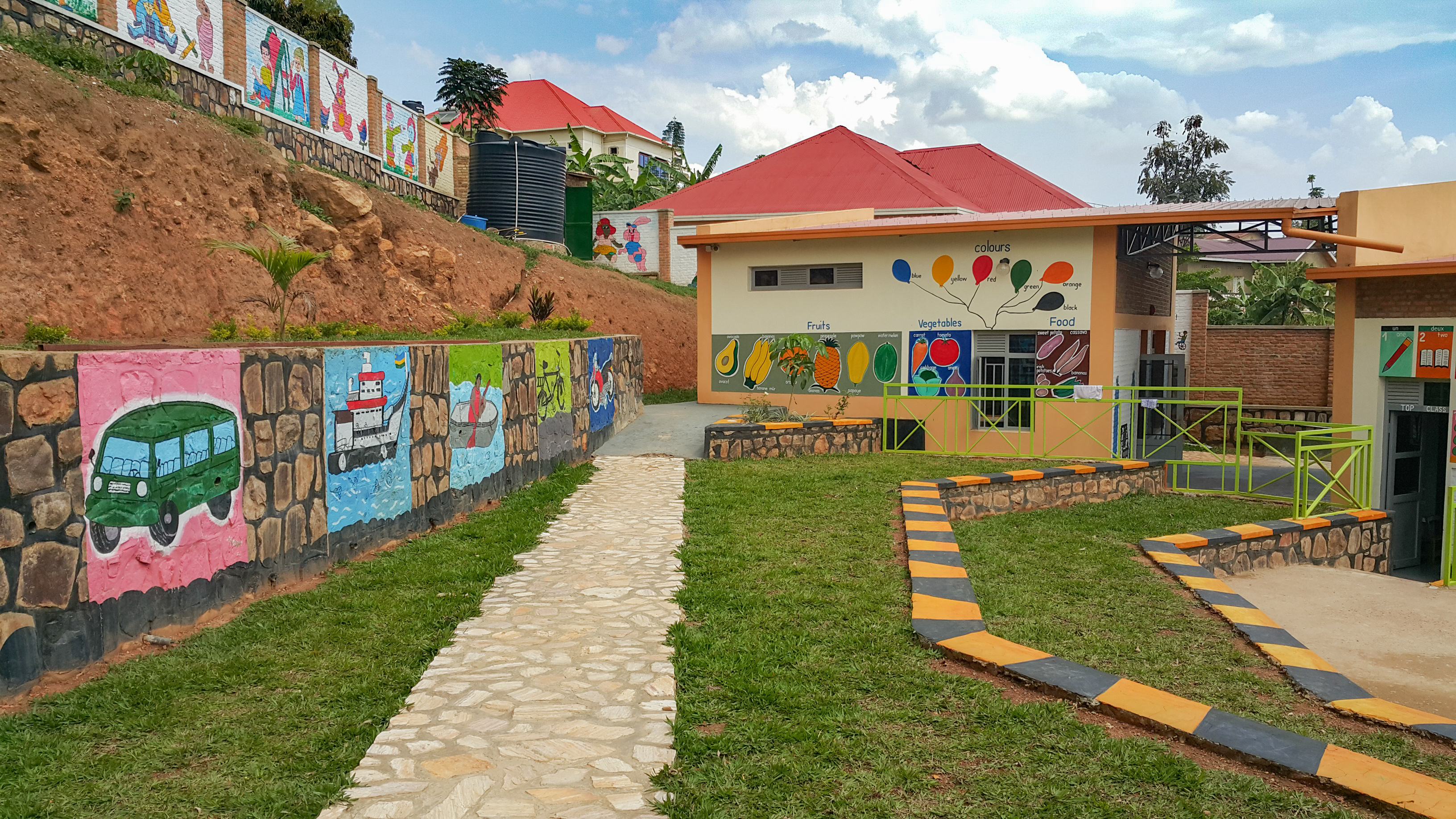
Imanzi’s backyard with an amphitheater for children performances
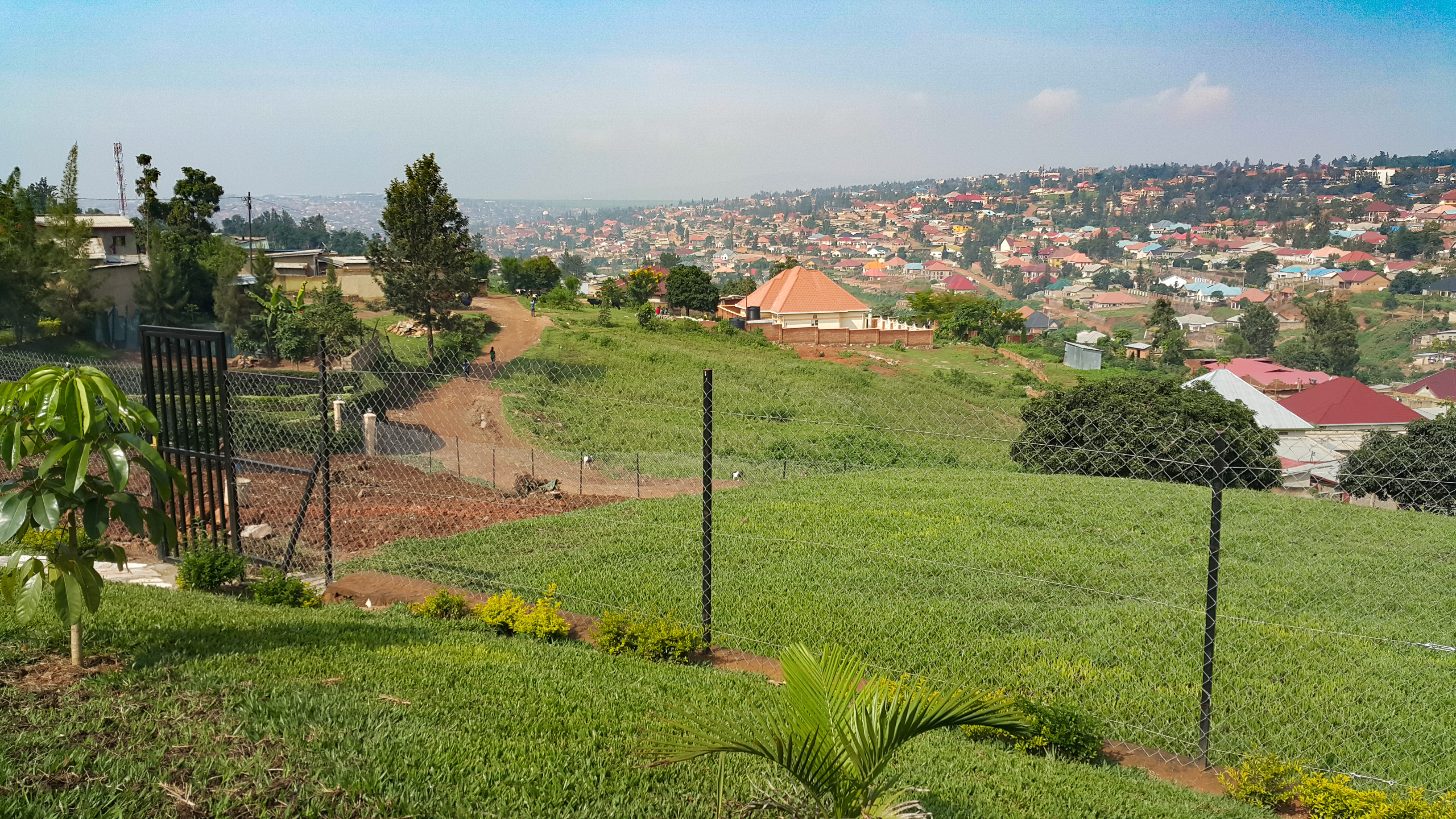
The playground site (beyond the fence) all covered with fresh grass after the rains
Fundraising for a social cause
Finding a financial supporter was our next challenge. By all the charity organizations, NGOs and other development aid programs operating in this part of the world, getting a grant for constructing a playground turned out not easy. As a complete fundraising beginner, I thought we should try through one of the global crowd funding platforms. Although it was far from successful, it allowed us to raise a little so that we can construct a sample of one playground structure (Thank you to those who contributed!). We also understood that crowd funding is not the way to go, or maybe not this first time.
When you want something really hard and you are ready to go the extra mile, sooner or later life gives you a good hand of cards. We didn’t give up after the initial fundraising failure and soon we got an opportunity to apply for a grant provided by an embassy’s micro-project funding program. I made sure to prepare on time all application documents incl. project description, quotations, estimated budget, playground site plan and timeline. Also, I decided to include an extra document describing our vision and objectives beyond this particular project, to make our application stronger.
About a month later, we received a positive answer. Looking back, I believe that one major factor played out in our favor: our passion could be felt throughout all application documents as well as in our verbal communication; passion for bringing more smiles on children’s faces, passion for making a real impact, passion to serve on a cause that is bigger than us…
Rolling our sleeves up
We were thrilled to finally start the real work. It was a steep and rich learning curve. For one, we didn’t have the luxury to find all parts, tools or services readily available in the more developed markets, where you could simply go to the nearby warehouse or DIY store and get all you need. We had to be creative and find local solutions, especially when we started assembling the playground structures on the site.
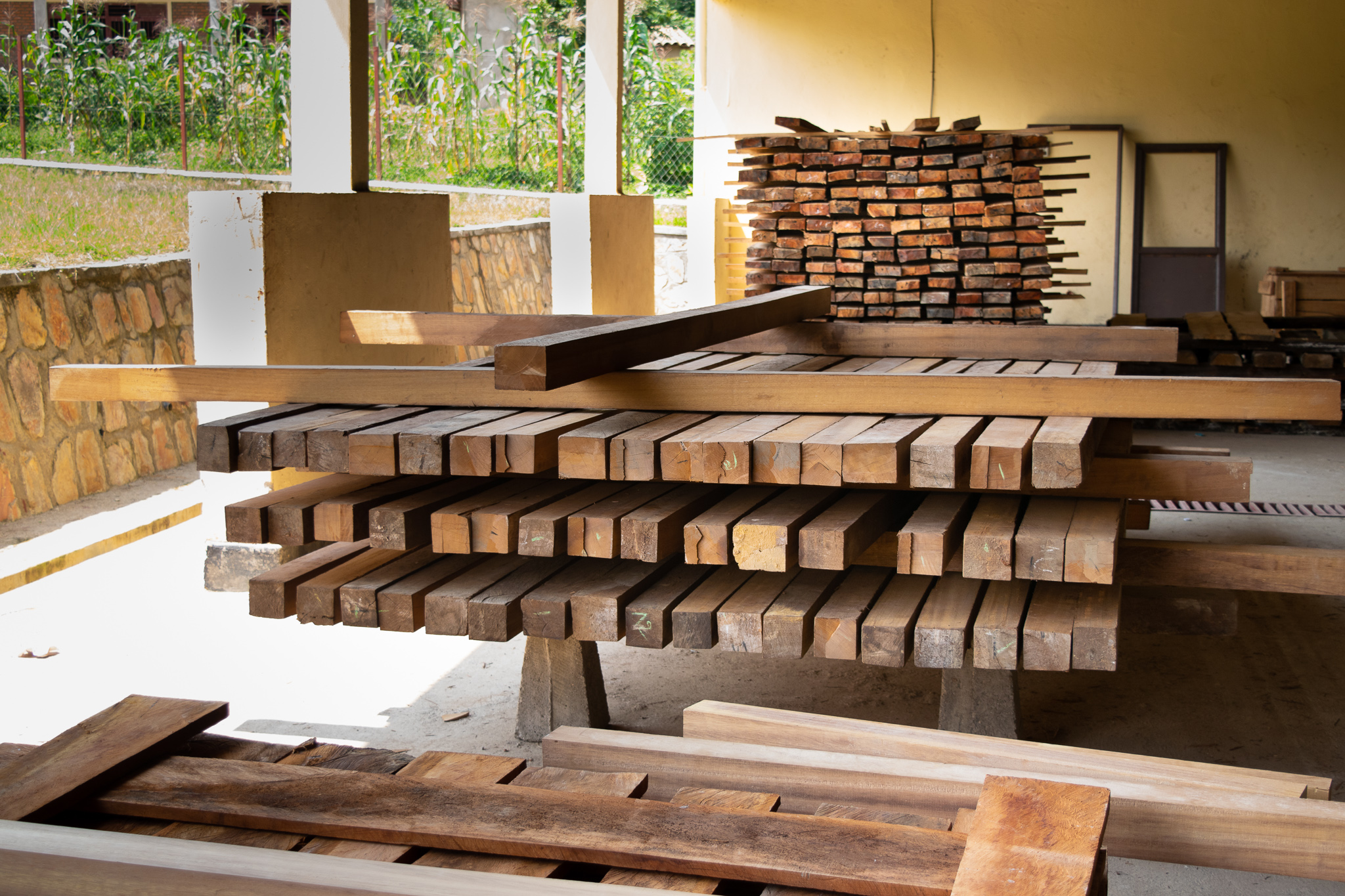
Drying the wood properly was essential for the playground quality
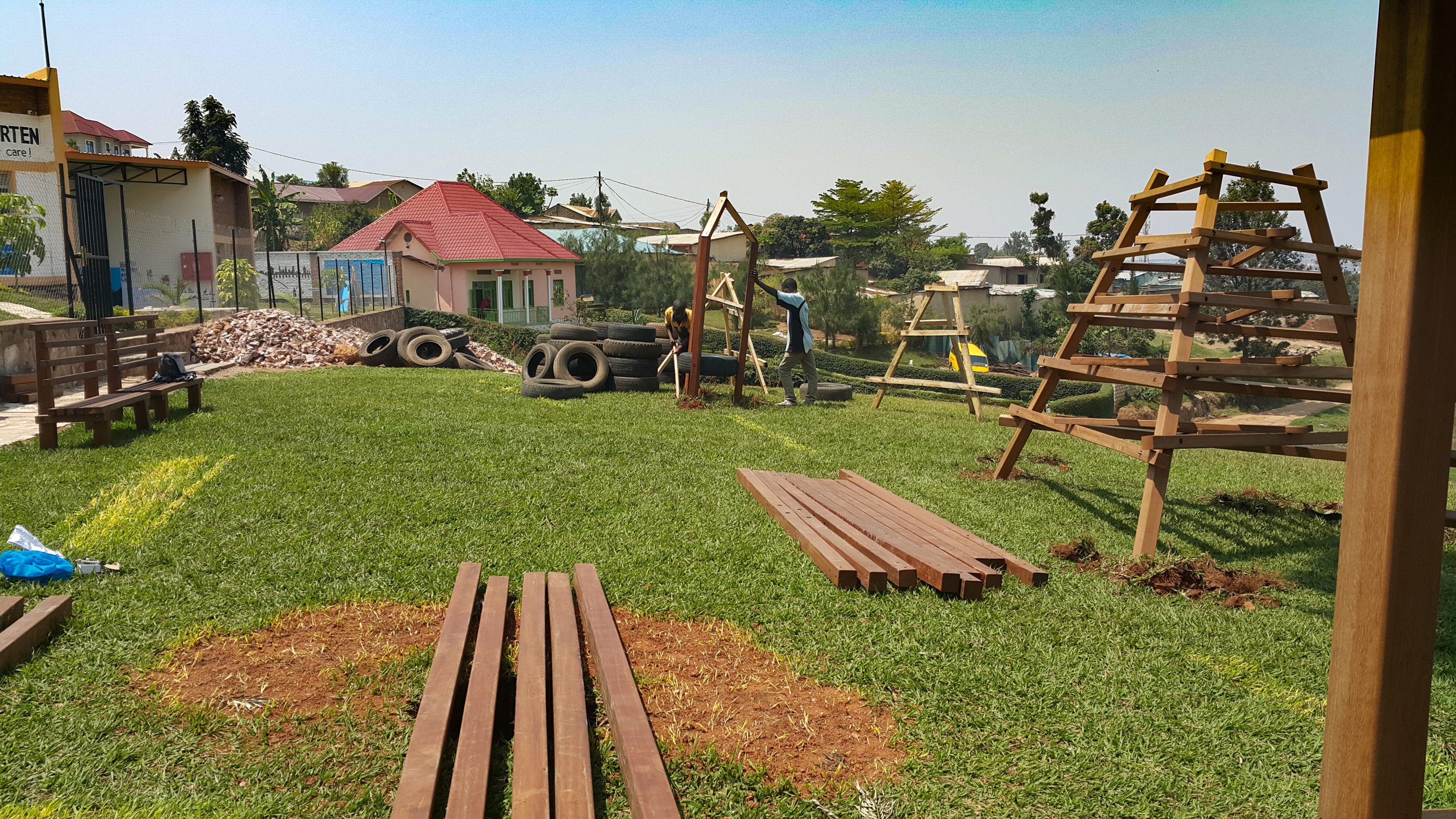
First days of installation
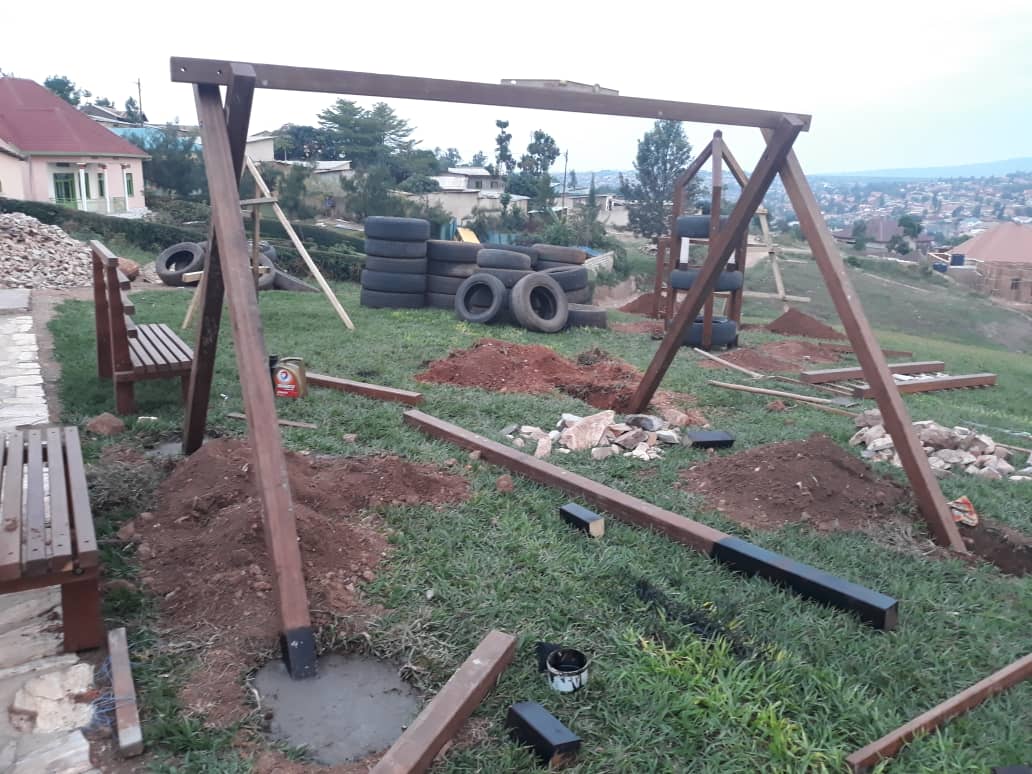
Sometimes it got quite messy on the site
The core execution team consisted of 3 people: Reine – our main carpenter, Jacque – Reine’s main support during the installation and myself. Reine – a very young, talented and reliable local lady – was involved from start to end, always open to discuss issues and alternative solutions, and always available despite her busy work schedule on her main job.
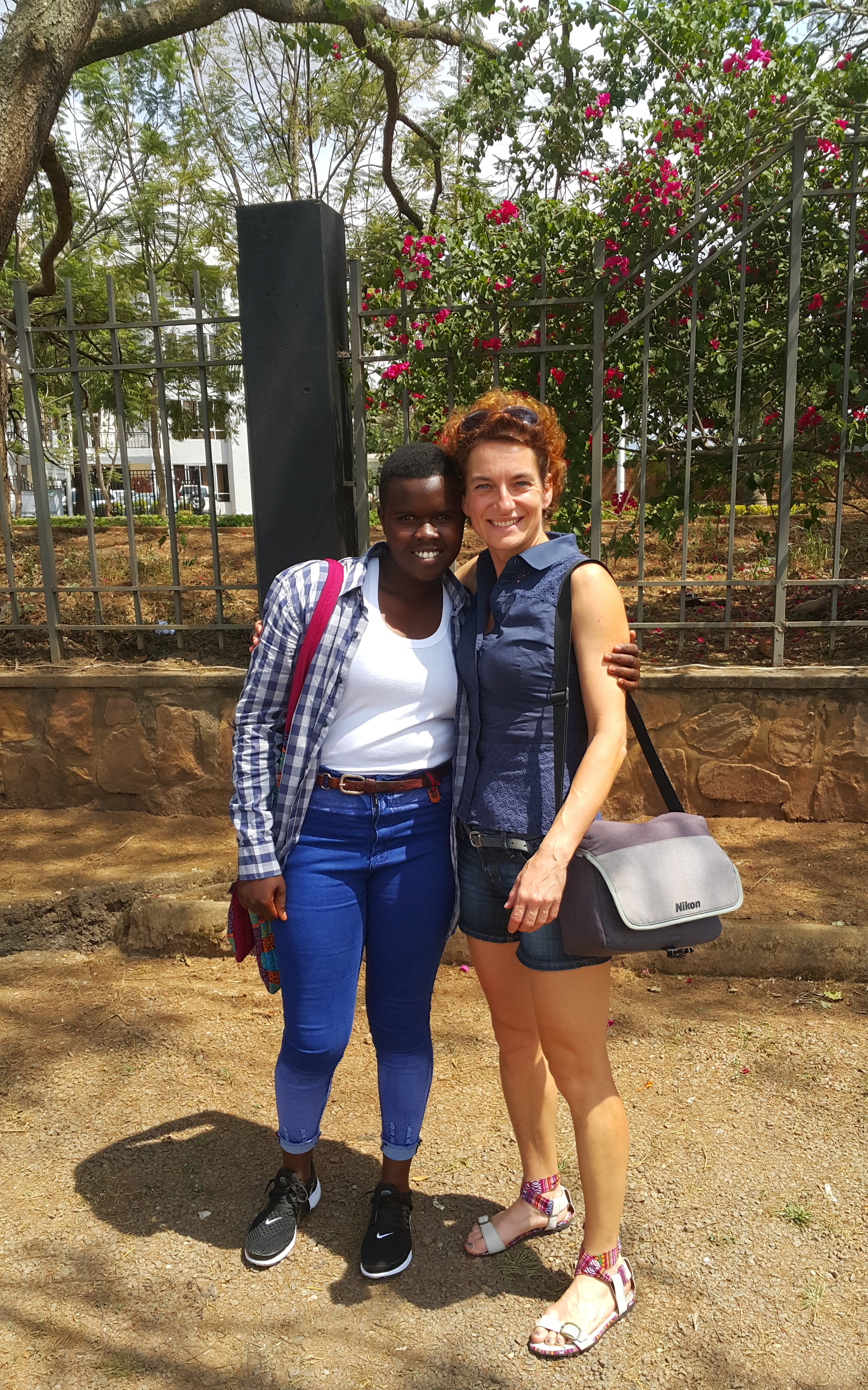
With Reine after a planning session
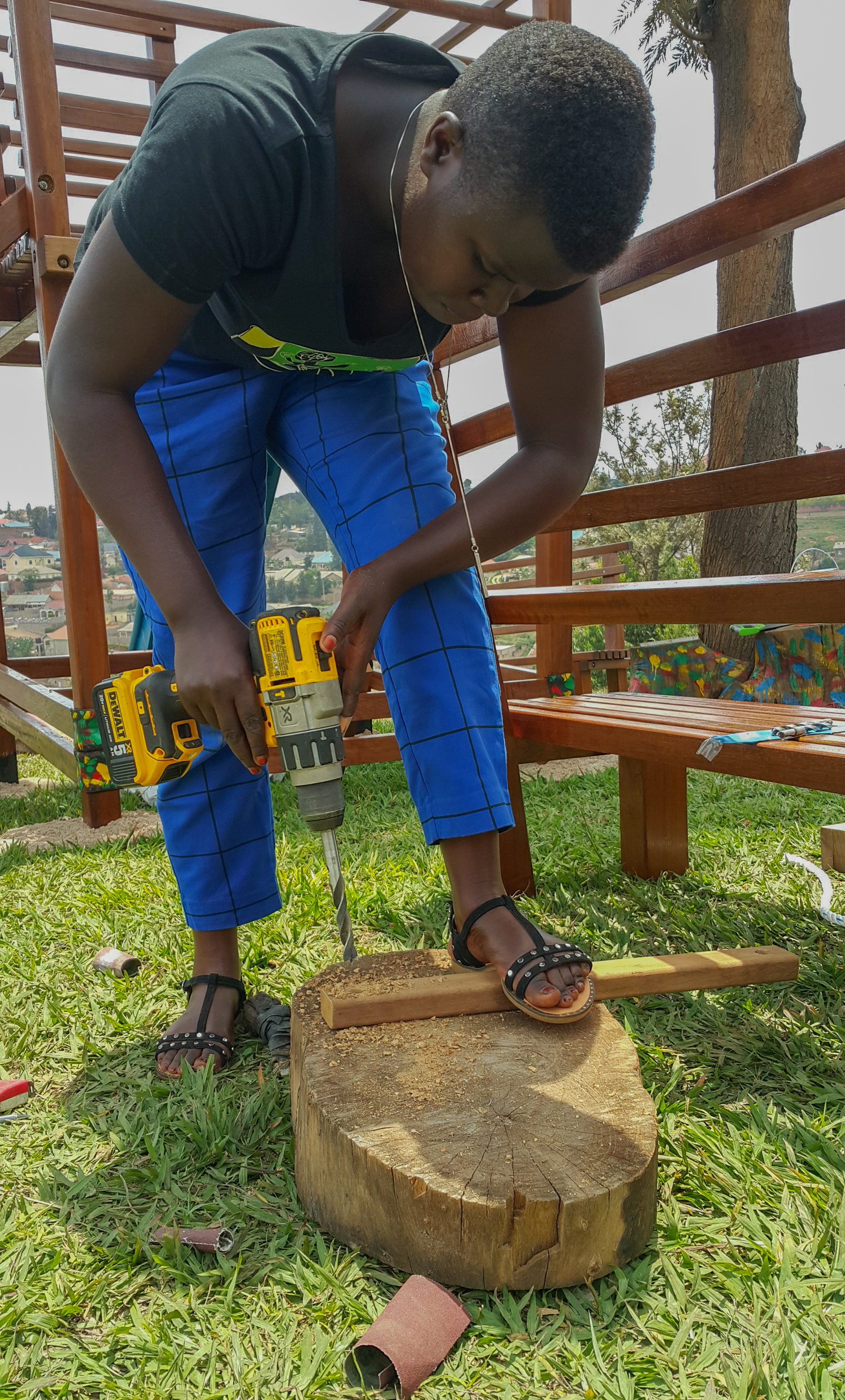
On the final line…
I learned a lot from her about carpentry, and in return she learned a lot from me about project management and resource planning :-). Well, I should admit that the local circumstances didn’t allow me to put an ideal project management system in place (and I am not sure it would have found big supporters among the team, if I did) but I do believe it helped us a lot. And of course, there is always some room for improvement.
Jack got involved at the installation stage and he quickly proved a good fit to the team although he only speaks Kinyarwanda and Reine had to translate for us 🙂
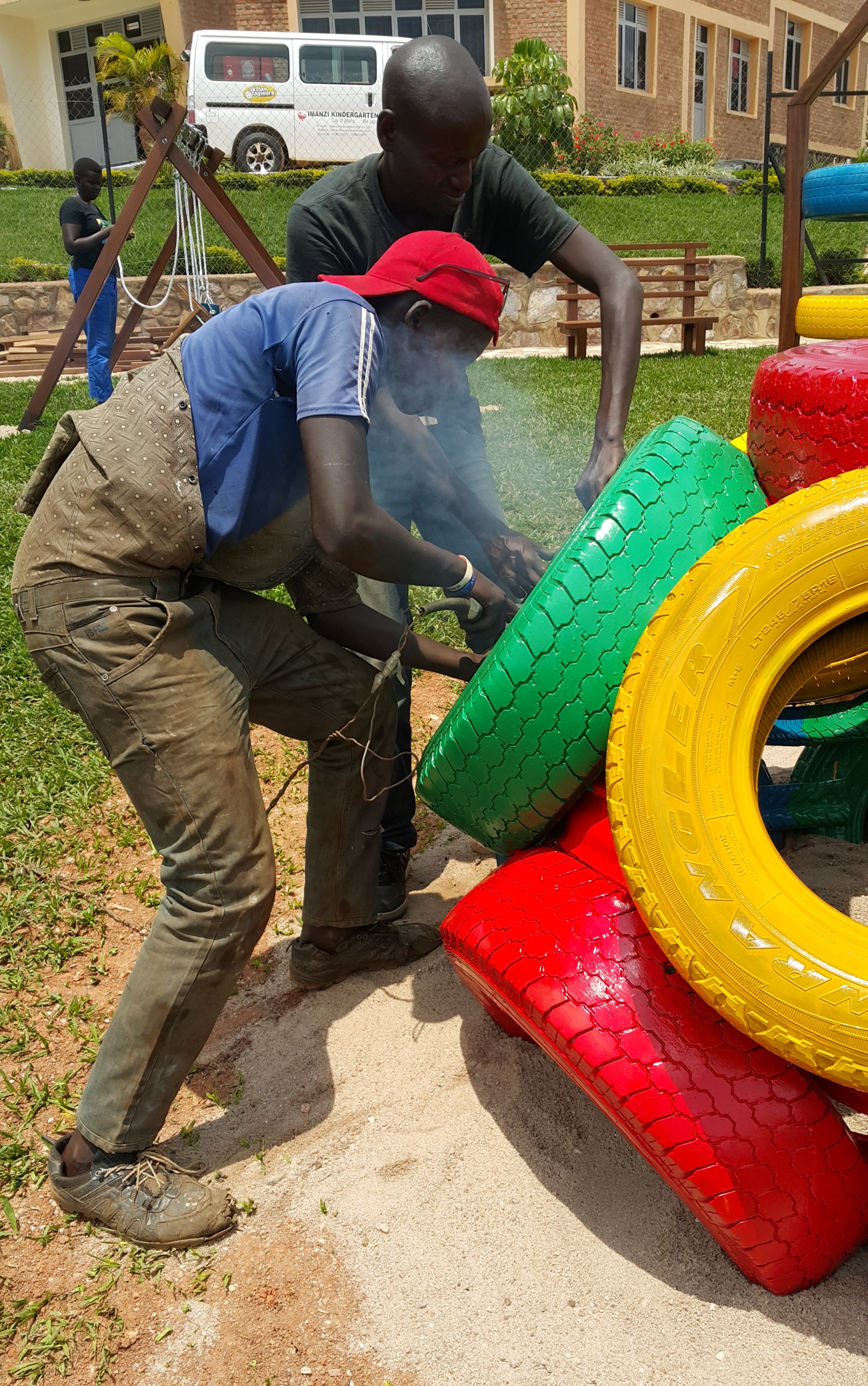
Jack (at the back) helping out a guy cutting short some bolts
We also got support from other people, like service providers from the neighborhood for cutting motorcycle tires, chains or other small jobs; but mostly it was workers hired on the street or the lower-level staff from the kindergarten who helped us move heavy elements around on the playground site, dig holes or varnish.
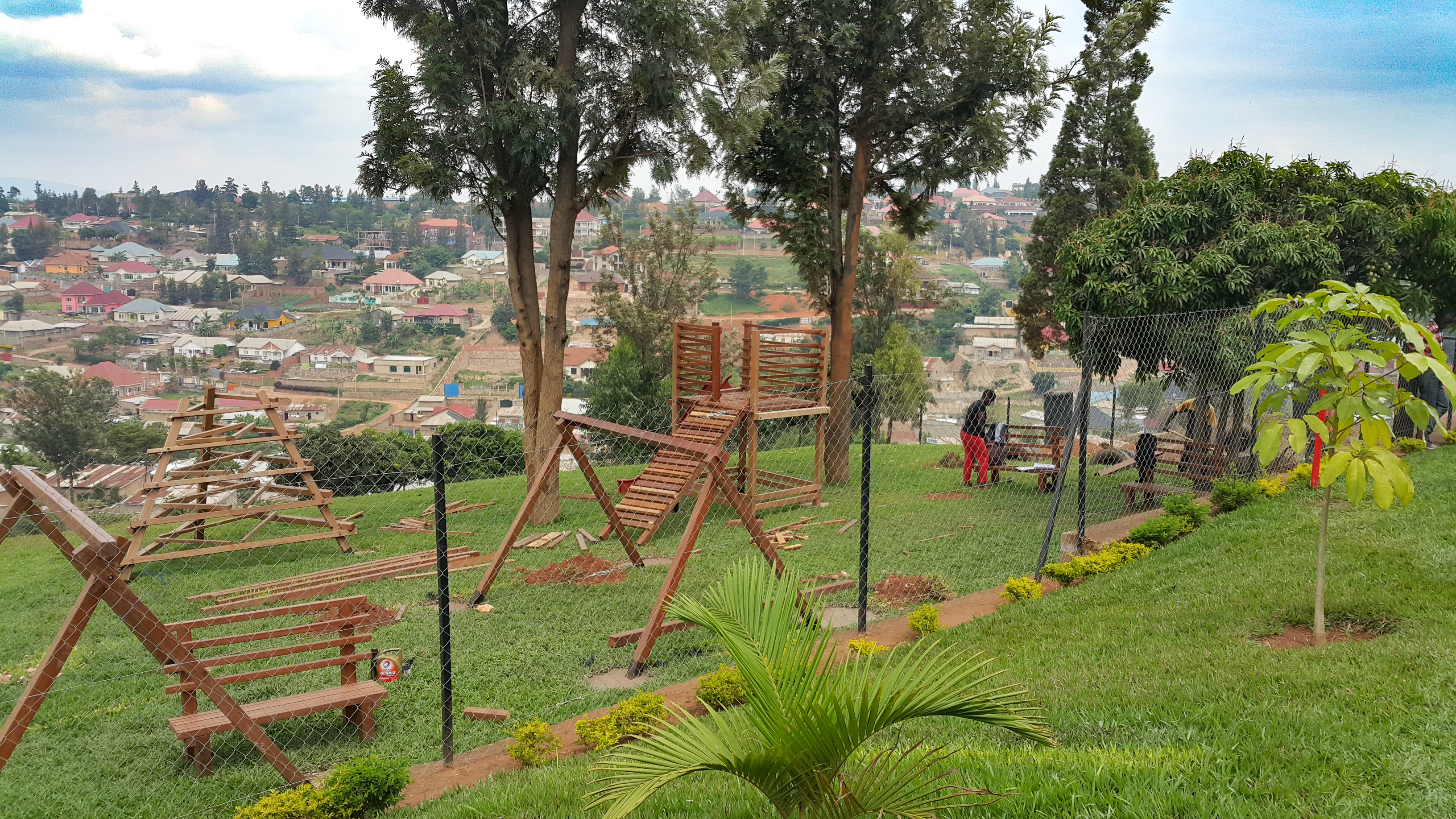
It was getting better and better…
I was personally involved at all stages, being driven by the desire to gain real practical experience and knowledge which would help me manage the next project more efficiently. Fortunately, the team really appreciated this (as opposed to perceiving my interventions as unwanted micro-management).
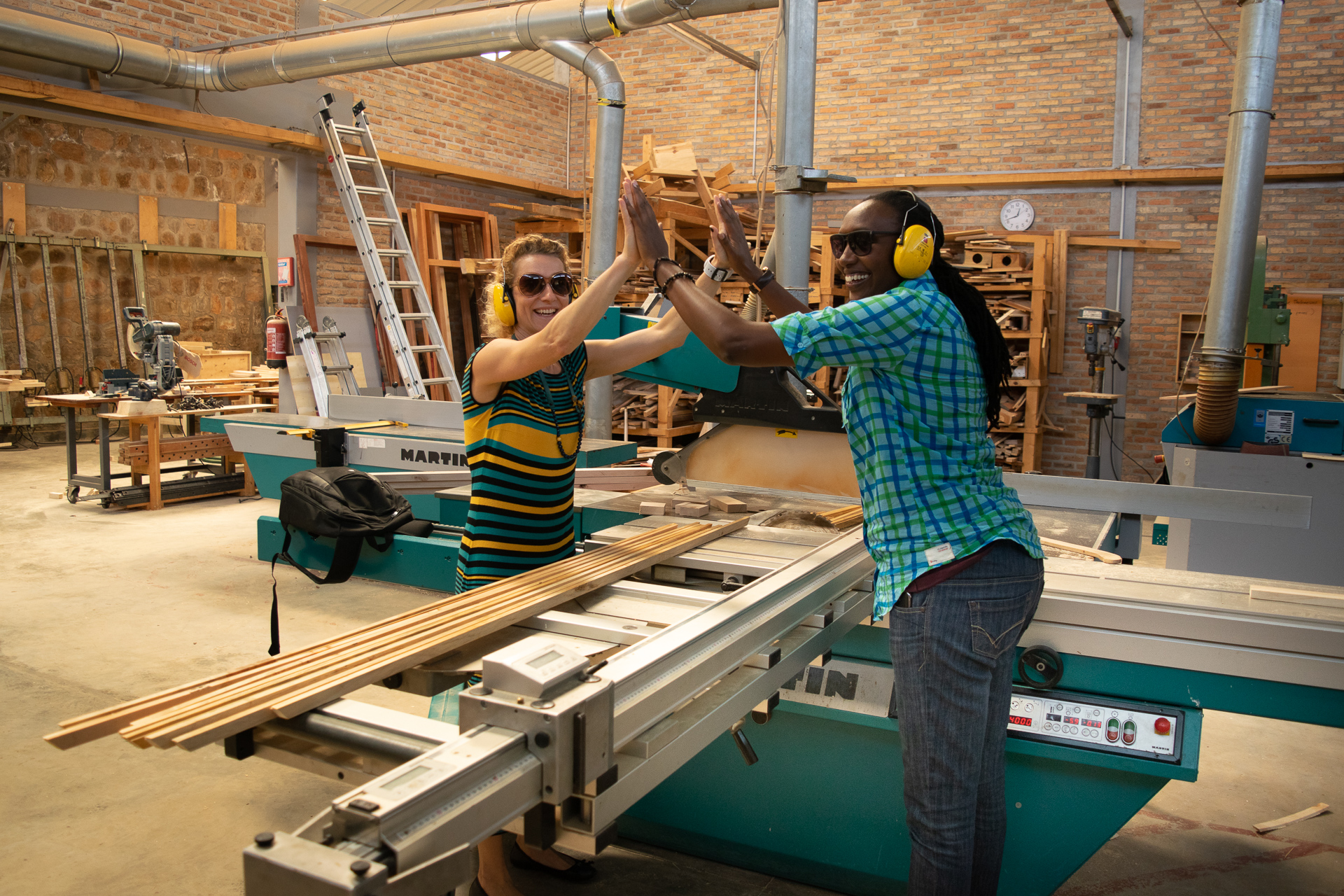
At the workshop with my project partner Julian
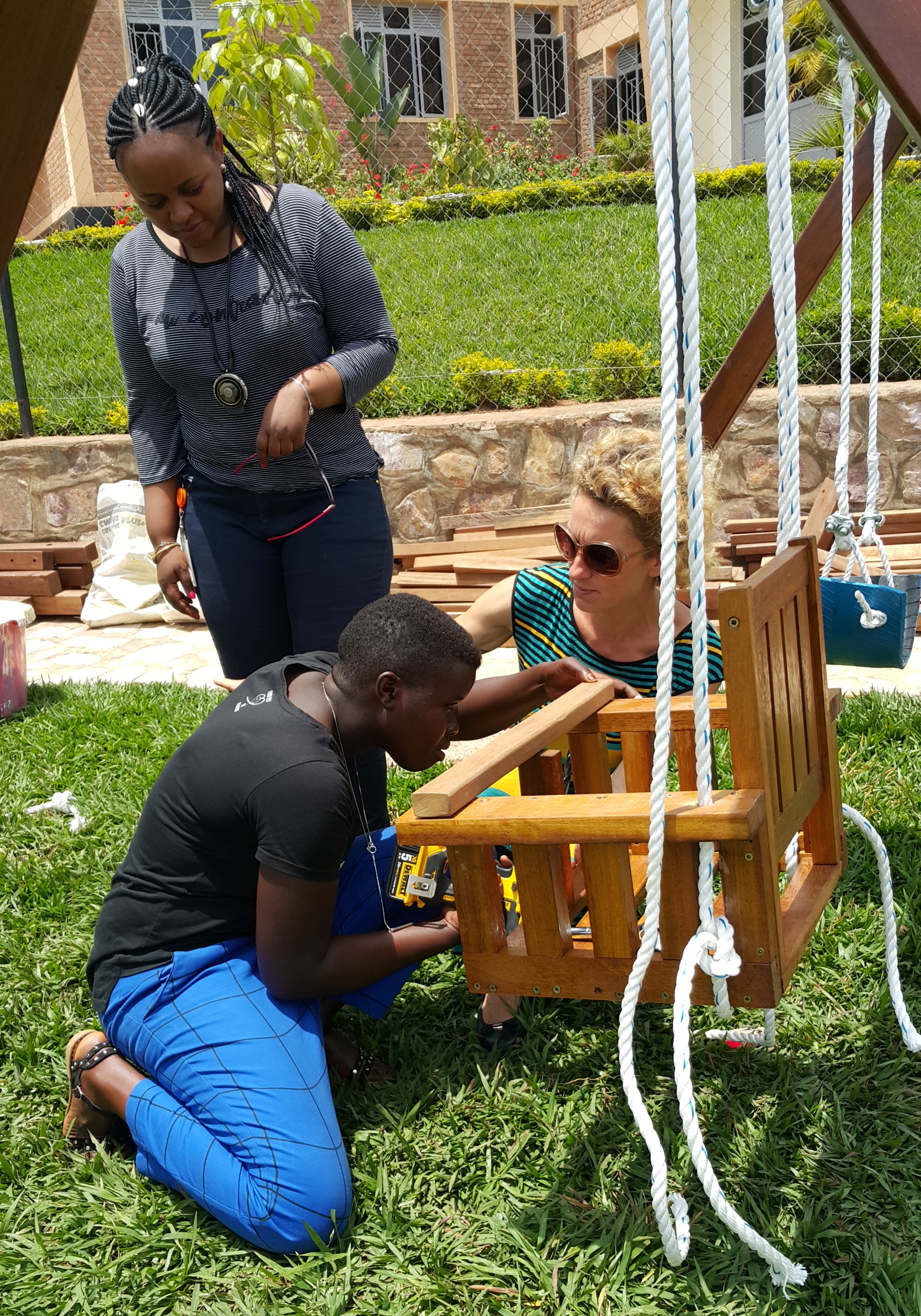
Assembling a swing chair
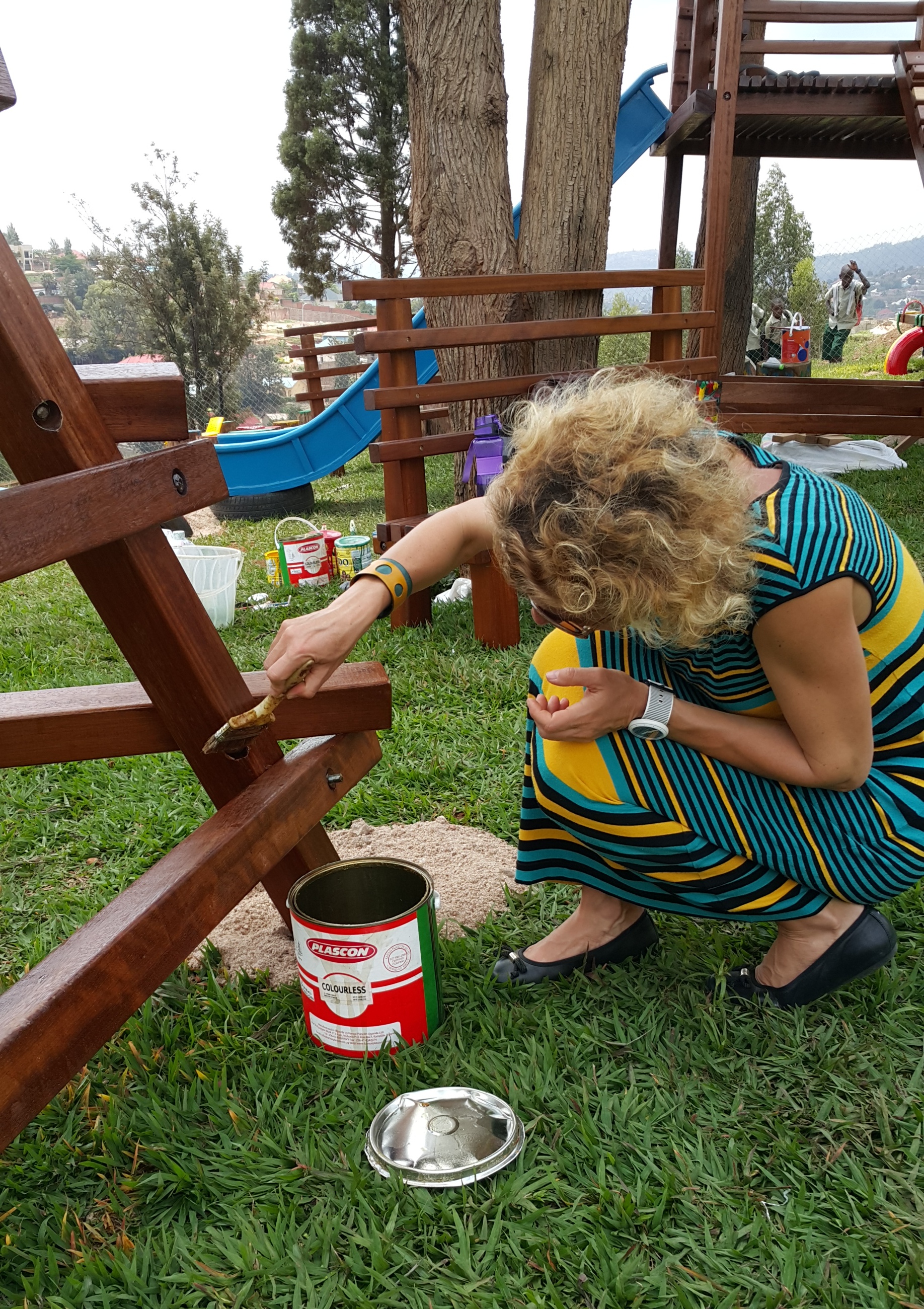
Applying a second layer of varnish
As the name of a famous Shakespeare’s play says “All is well when it ends well”, I didn’t settle until the project was 100% delivered, meaning the playground was tested in real life with children, and a Safety & Maintenance personal training and Guidelines were delivered to the kindergarten management and staff.
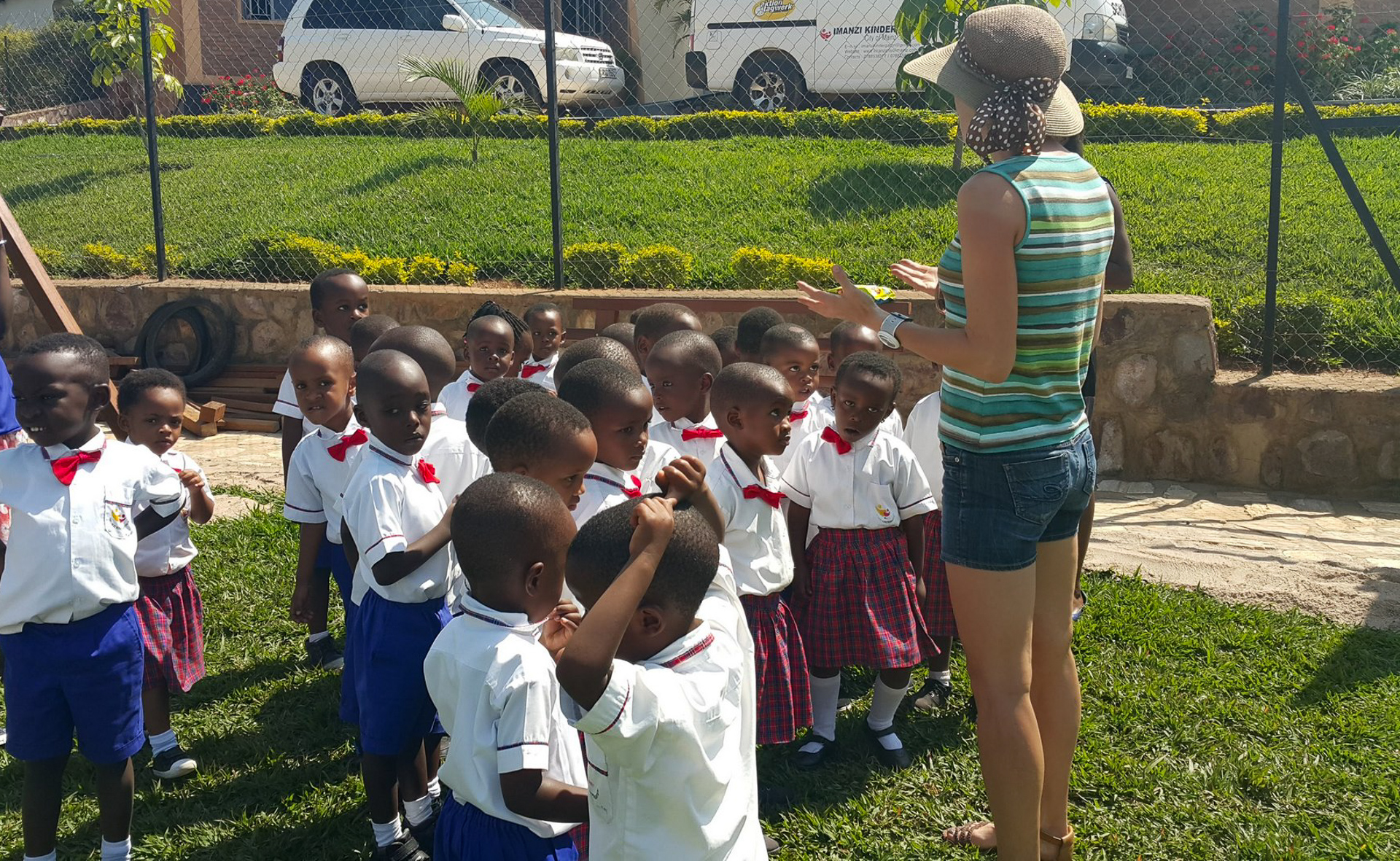
Explaining the rules of fair play to the kids. Good luck to me! 🙂
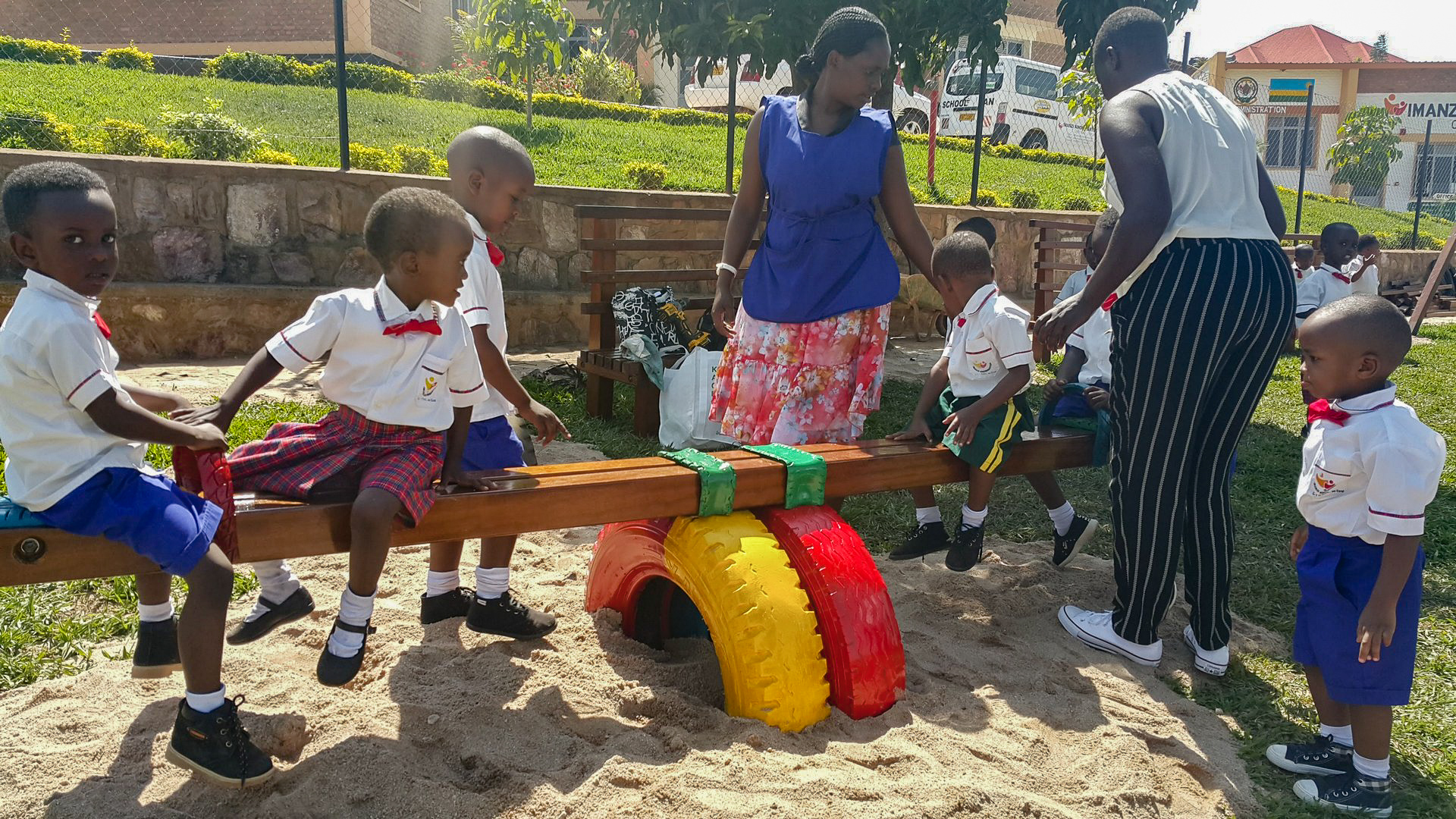
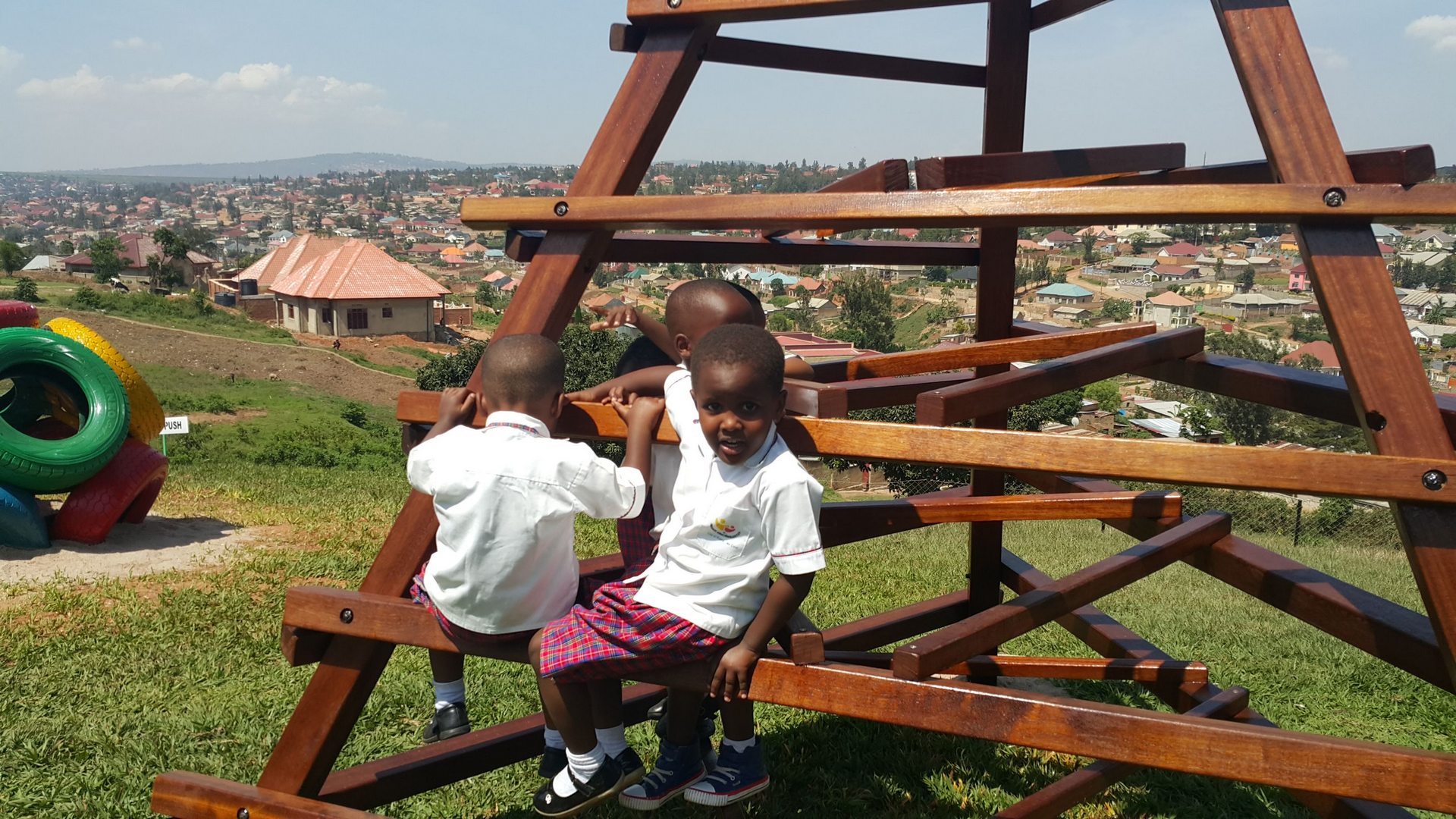
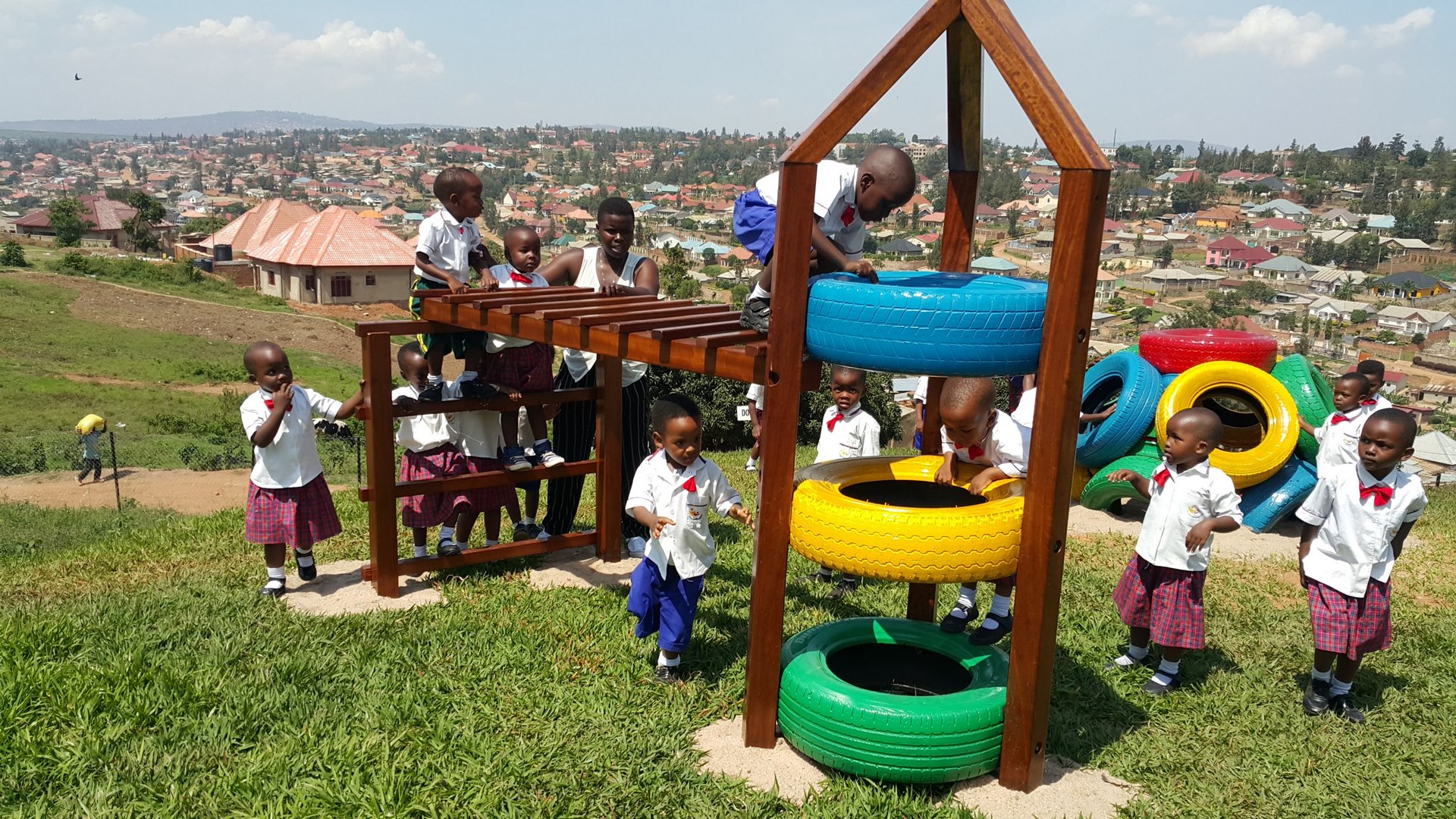
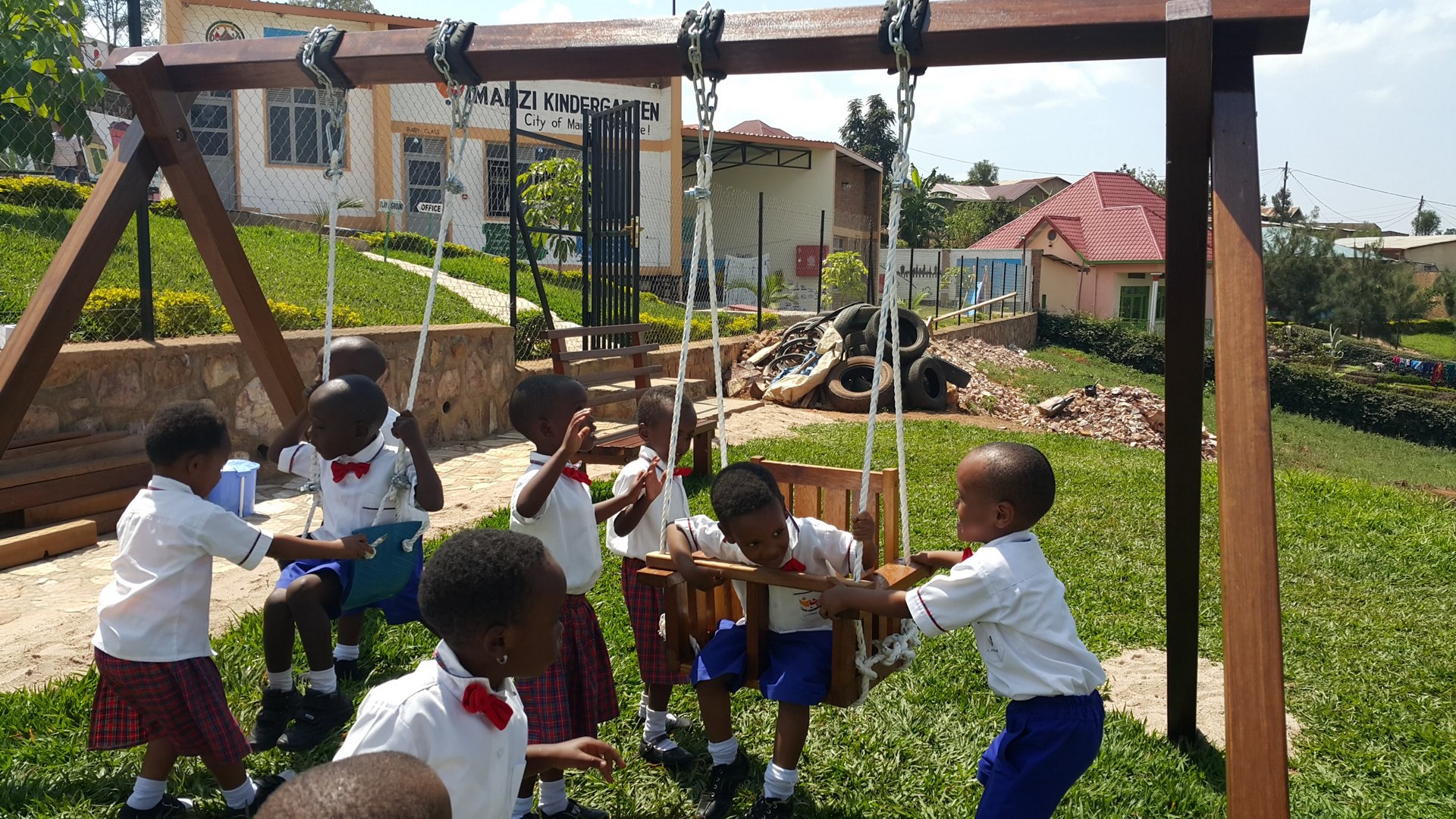
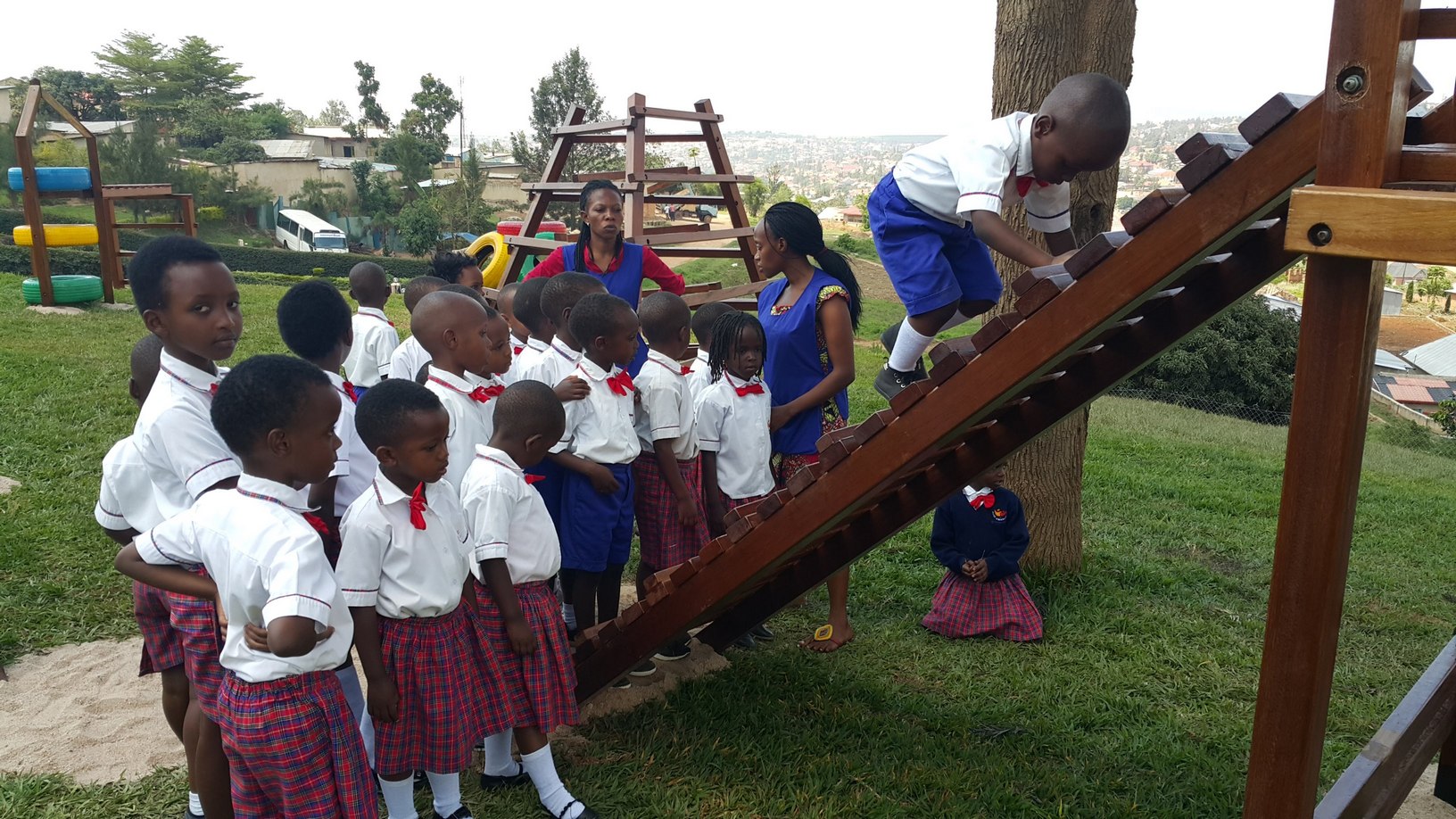
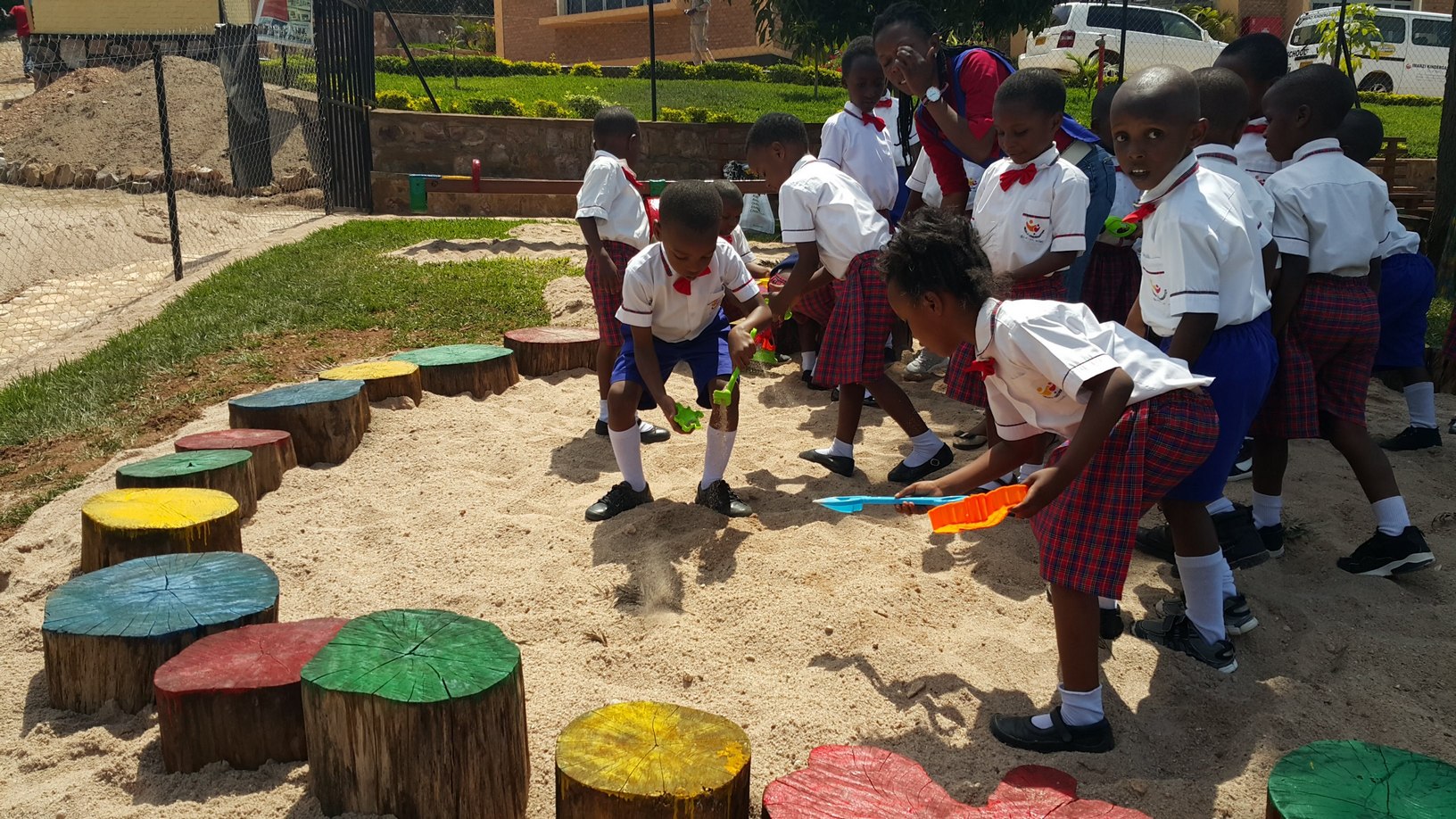
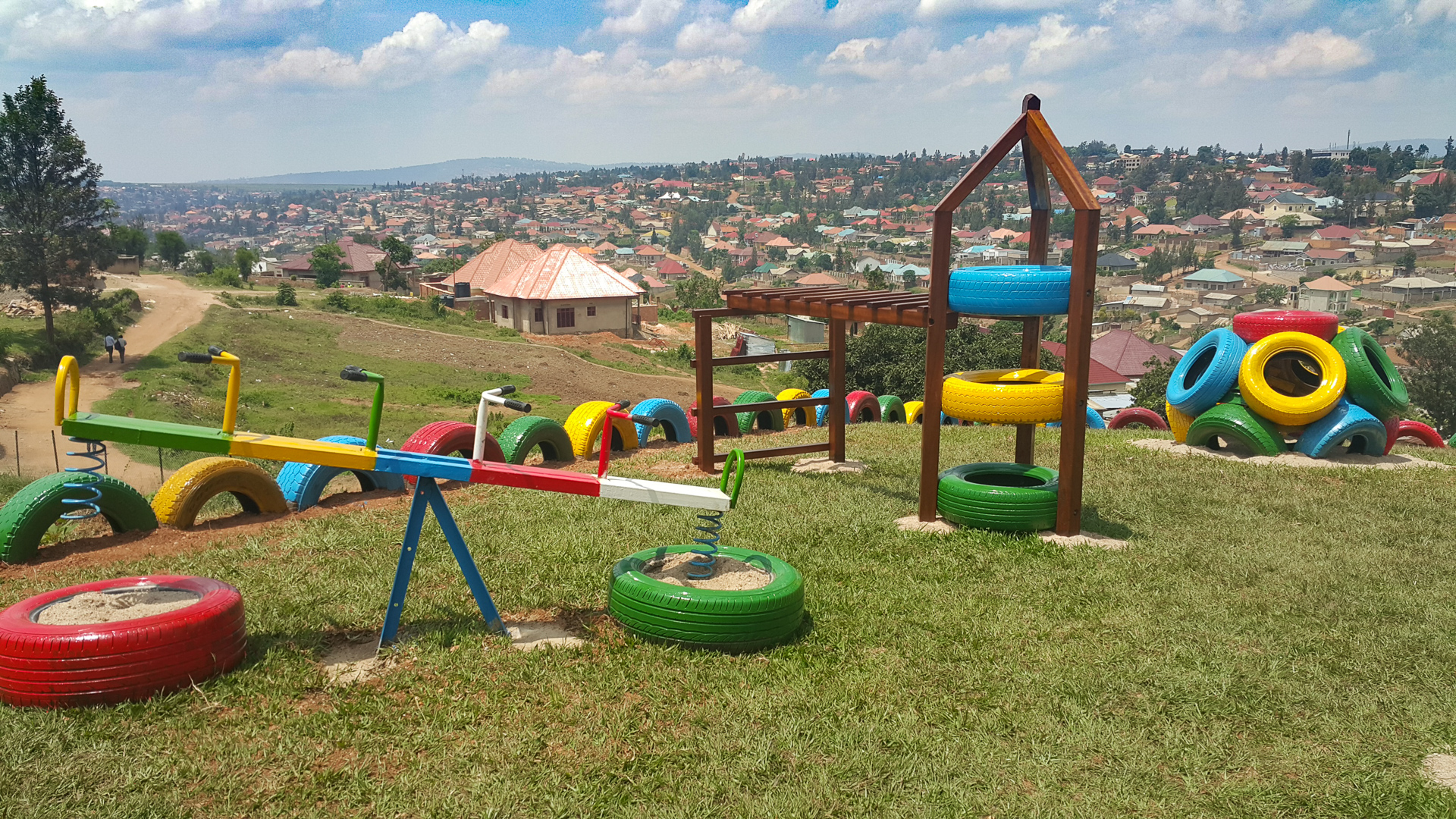
Despite all challenges I was really satisfied with the end result
Nothing has been so rewarding than seeing the kids running around the playground impatient to experience it all. My heart was singing and my eyes were welling up by the many smiles I saw that morning. This was my first voluntary project and it was successful. Last but not least, it was finished just on time for the official inauguration of the kindergarten in the first days of October.
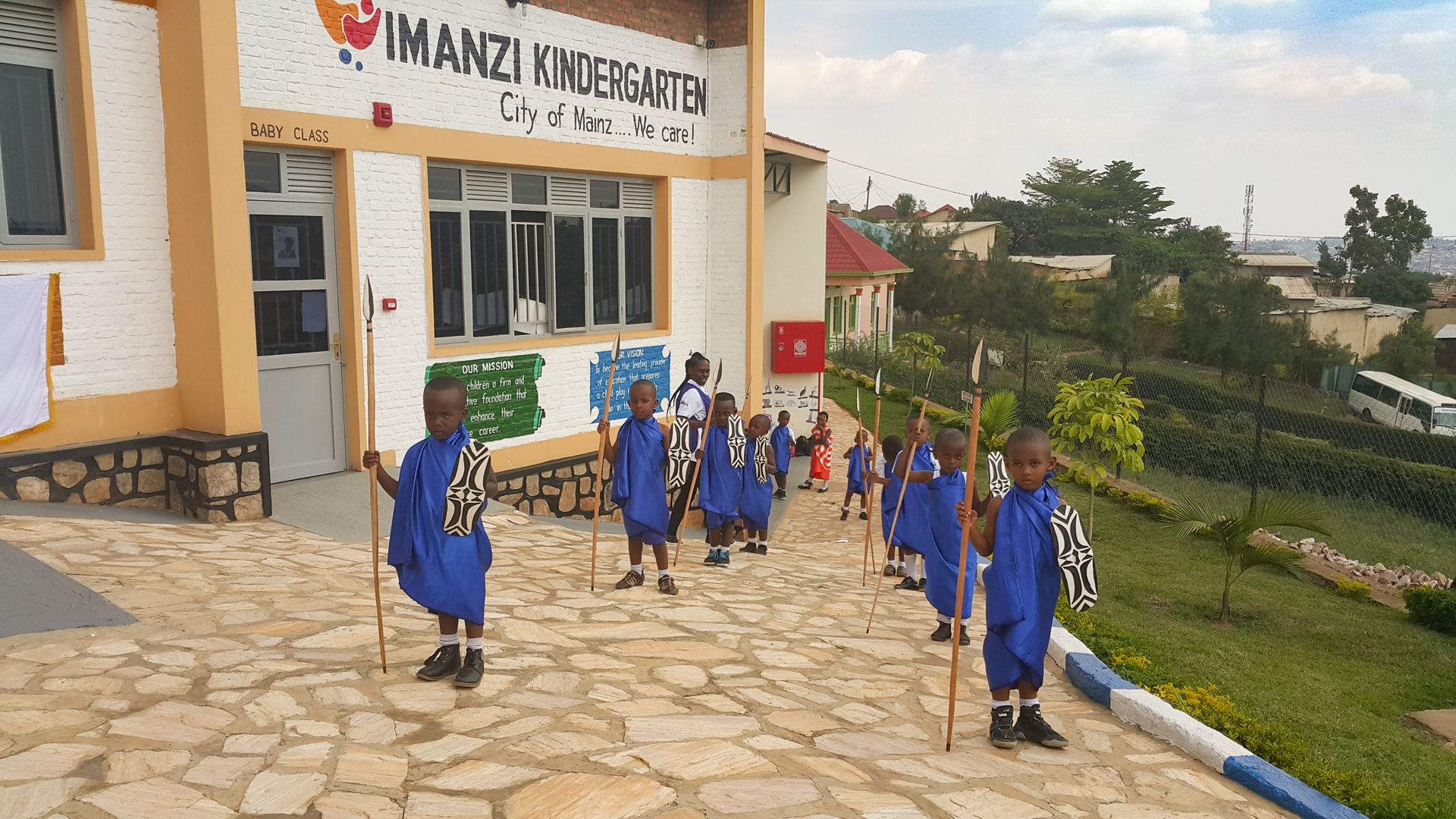
Expecting some VIP guests at the Official Inauguration
What is next?
One thing I know for sure: I will not stop here. I will not settle until I bring smiles on more children’s faces in Rwanda. They deserve it, and I am absolutely capable of doing this for them. One way or the other.
Raising the awareness about the importance of play and building more playgrounds, for the children!
Reflection
I surely don’t need to convince my readers about the benefits of play in any aspect of children development – physical, social, emotional, intellectual. Many of us who were lucky to be born in the developed world, grew up playing outside for hours on a daily basis… climbing trees, running around on the playground, riding bikes in the neighborhood etc.
What is really striking is that today’s children spend significantly less time playing outside than my generation. They are preoccupied with homework, after-school clubs and activities. Playtime is often consumed as time spent on devices, in front of the TV or indoor games. In fact, this has become an increasingly discussed topic (if you are interested, read this article or watch this video recently published by the World Economic Forum)
My point is that, while children from developed countries are prescribed play by doctors in order to gain back their healthy development, many children in Rwanda and other places of the world don’t even know what a playground is…Isn’t it ironic and what could/should we do about it?
This is not the End.