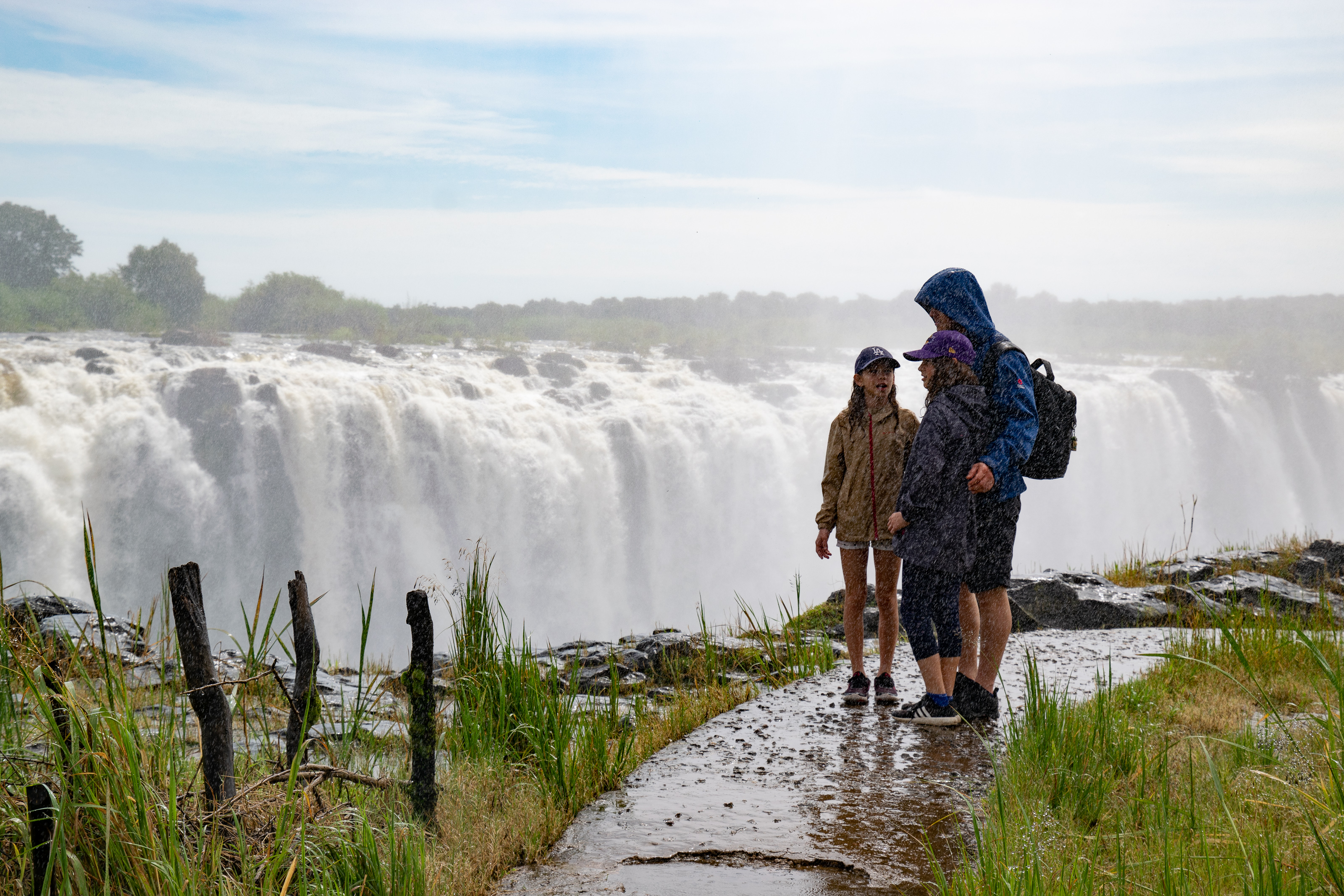
Africa is the second biggest continent on earth and I visited only about 15% of its countries but I can already say that Zambia is a country I can imagine living, raising children and working in (something I can’t say about other African countries I’ve been to). And it took me just a week to realize this. A week full of adventure, natural wonders, mesmerizing wilderness, great hospitality at all three place we stayed and intriguing conversations with locals or Europeans living there.
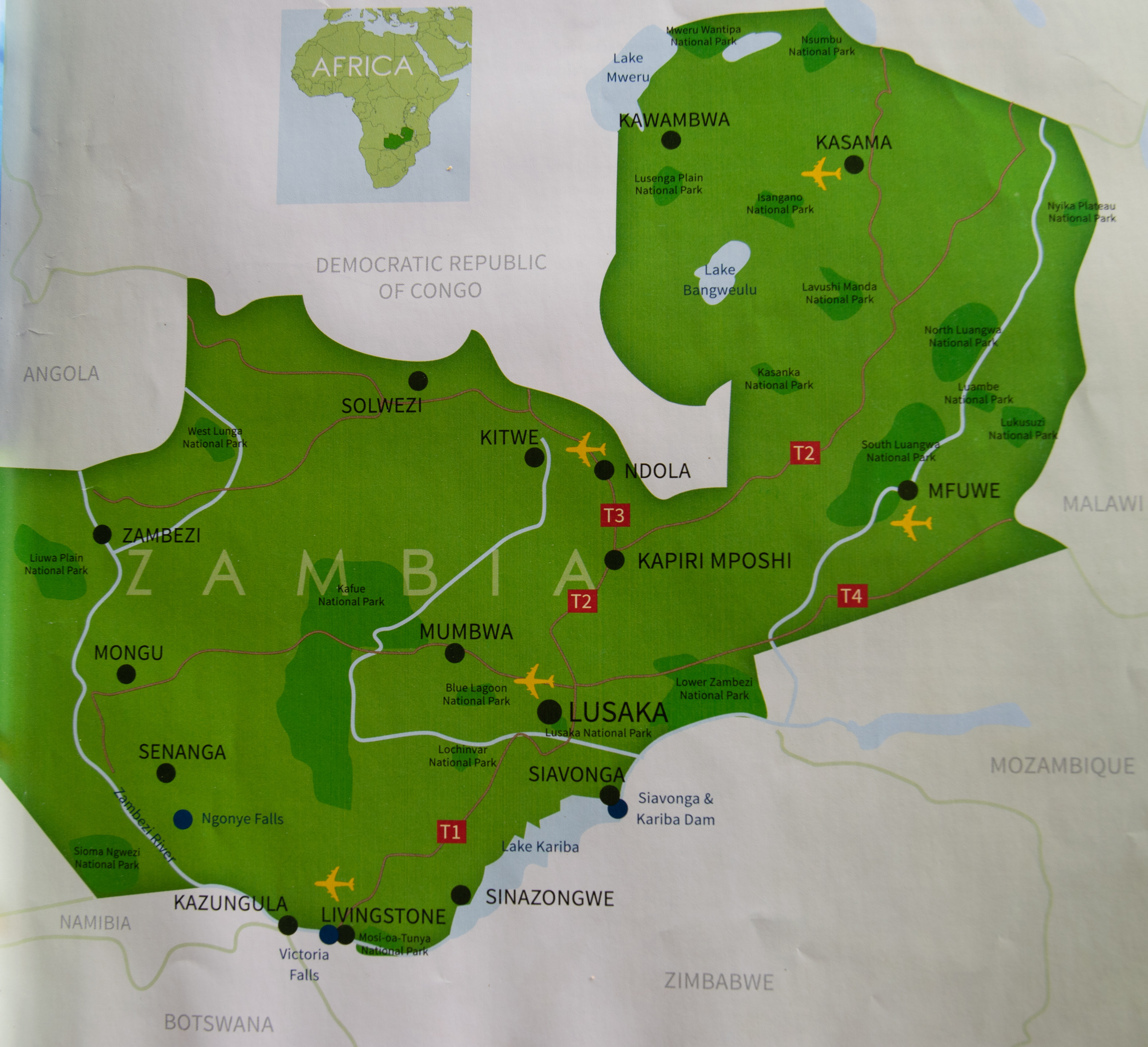
I know, I know – these are all very emotional reasons and one doesn’t usually choose their place of living based on the holiday experiences they have done 🙂 But I can add a few rational reasons, too: Zambia is a very safe country (it is the forth safest African country, after Botswana, Morocco and Rwanda, according to the Global Safety Index of 2019); it is doing quite well on demography, doing business and economy rankings, and quite importantly for us – it offers good international schooling opportunities and the official language is English, which means the language barrier wouldn’t exist for us.
Well, OK, Zambia does have its political ups and downs but name a country which doesn’t. Since 2014 Zambia’s had three presidents, and the current one faces lots of challenges such as corruption, nationwide power cuts which hinder the economy, wildlife poaching and the influence of Chinese investment in the mining, agriculture and manufacturing sectors (a highly controversial and complex topic concerning many African countries and definitely worth reading about).
All rational reasons and factors aside, Zambia is simply beautiful with all its remote wilderness and astonishing diversity of flora and fauna that can only be seen in Southern and Eastern Africa. So, fasten your seat belt and get ready to experience Zambia through the lens of my camera and the story that follows.
Arriving in Lusaka
Our flight took us directly to the capital of Zambia, Lusaka – a relatively small airport but key one if travelling inland or in the region. We didn’t have time to give a proper visit to Lusaka, which I now regret a little bit; instead, we headed to our first stop – Lilayi Lodge – in the outskirts of Lusaka. On the road to Lilayi the driver gave us a short intro of Zambia. Facts are facts and not always fascinating but I will clearly remember the term Quadripoint which I wasn’t aware of before and doesn’t even exist in the Oxford English Dictionary.
Quadripoint is a point on the Earth that touches the border of four countries. There is only one quadri-country border point in the world, and this is where Zambia, Namibia, Botswana and Zimbabwe come together at the confluence of Chobe and Zambezi rivers. Impressive! I wish one day I will visit the only Quadripoint in the world!
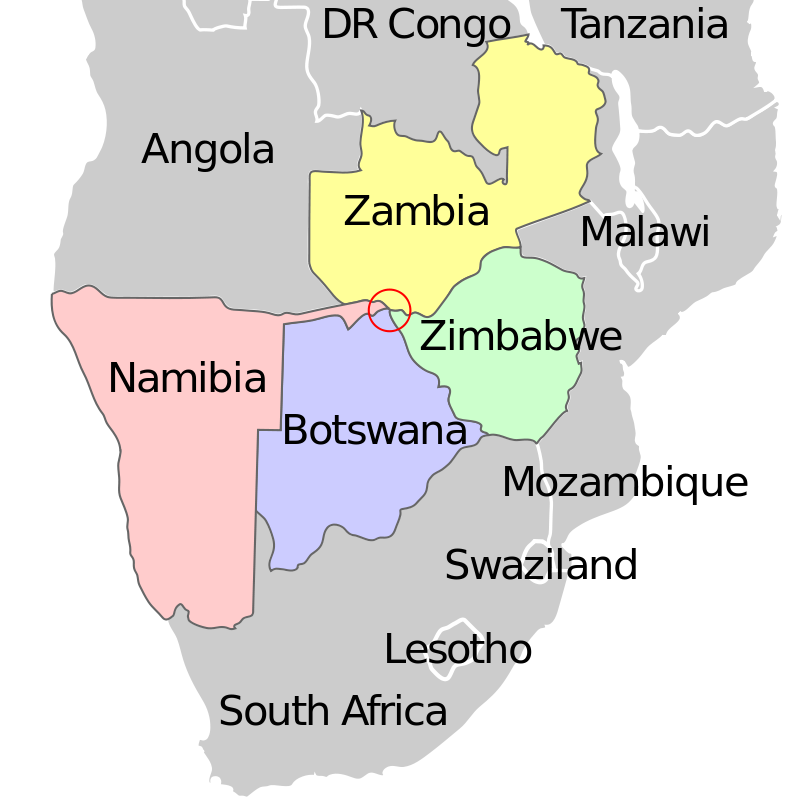
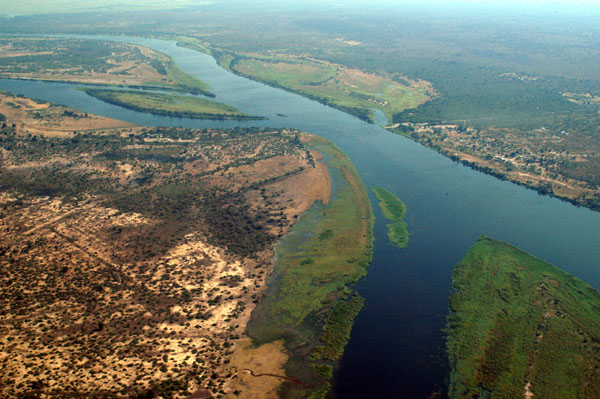
Zambezi River at the junction of Namibia (top left), Zambia (top), Zimbabwe (bottom right), and Botswana (bottom left). Copyright Brian J. McMorrow
I could feel the proud in our driver’s words boasting about Zambia’s natural wonders, safety and peaceful living together of the 73 tribes officially recognized by the Zambian government. As if to demonstrate how safe Zambian roads are, he observed all driving rules, street signs and speed limits.
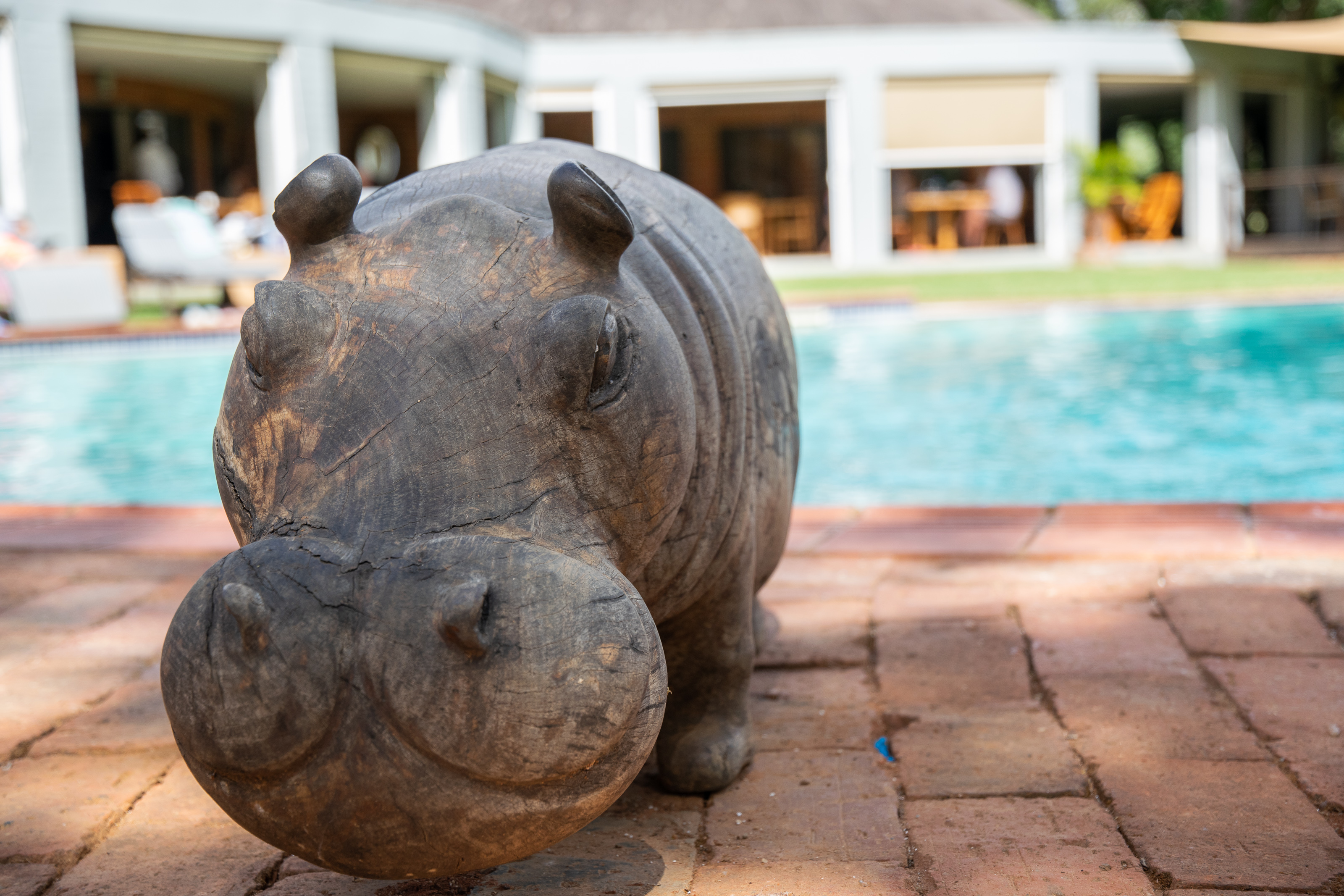
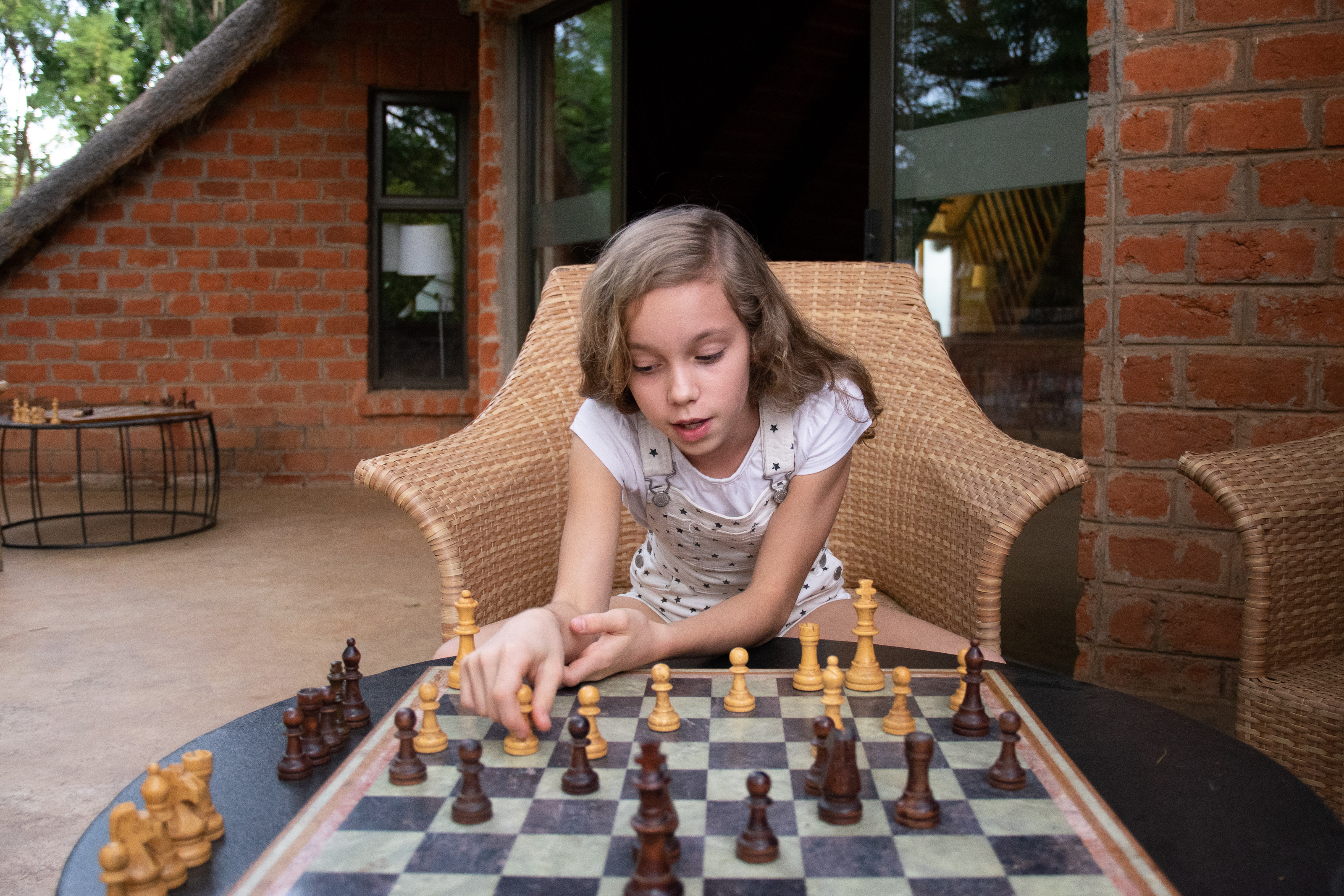
Lilayi Lodge welcomed us with a great view from its exquisite chalets nestled inside a game park, relaxed atmosphere and delicious food, rightfully deserving its name “Lilayi” which means “the place to rest at sunset”.
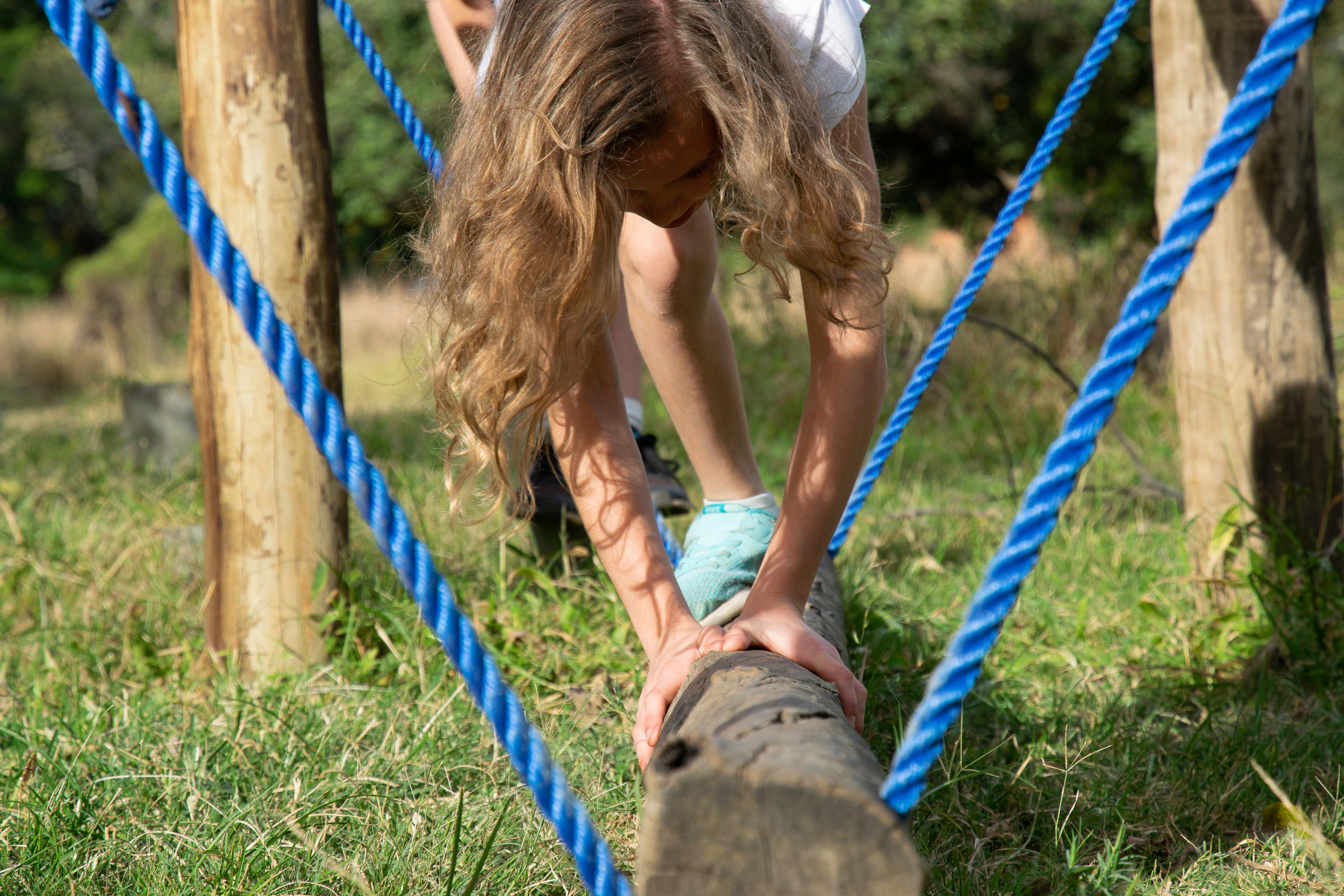
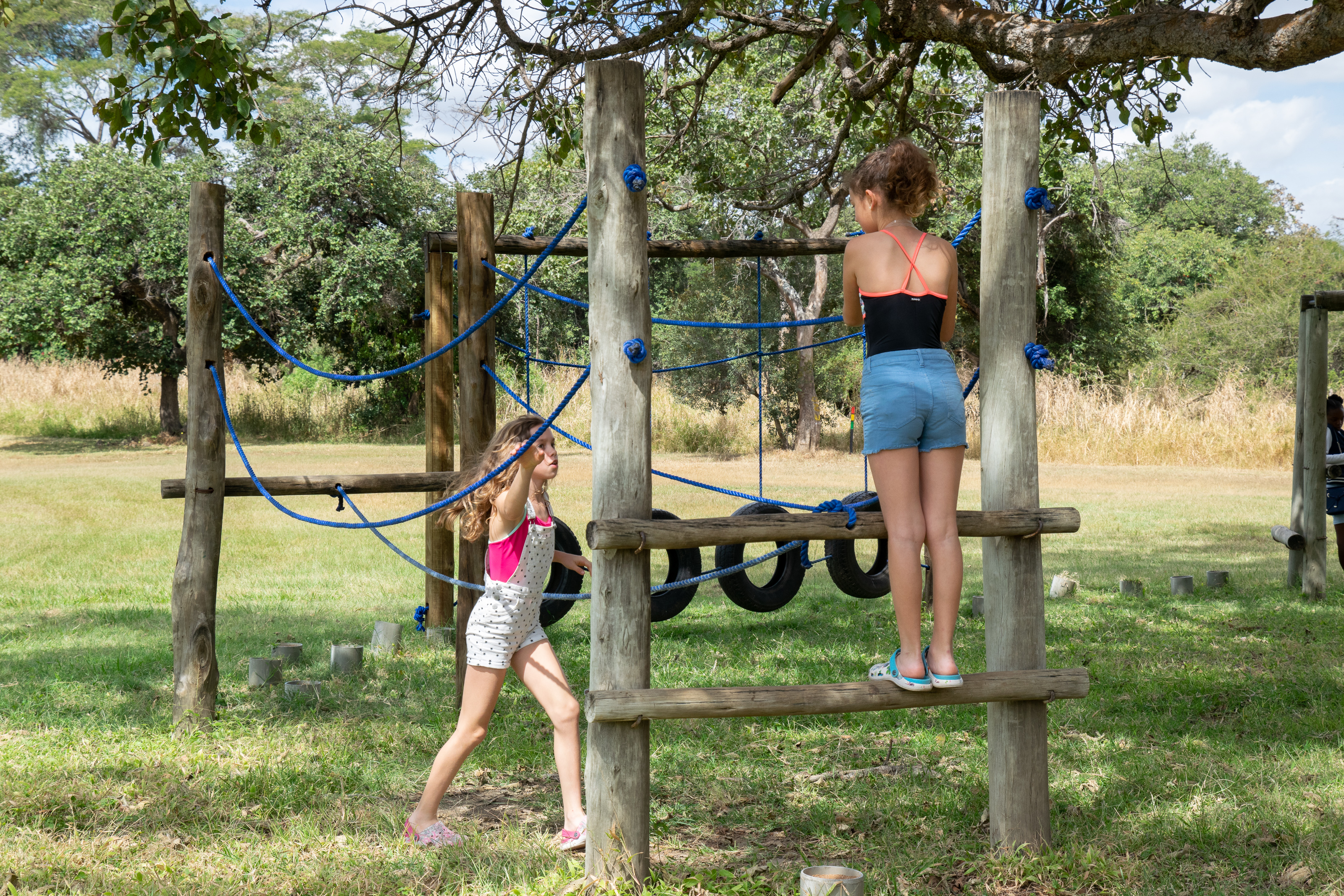
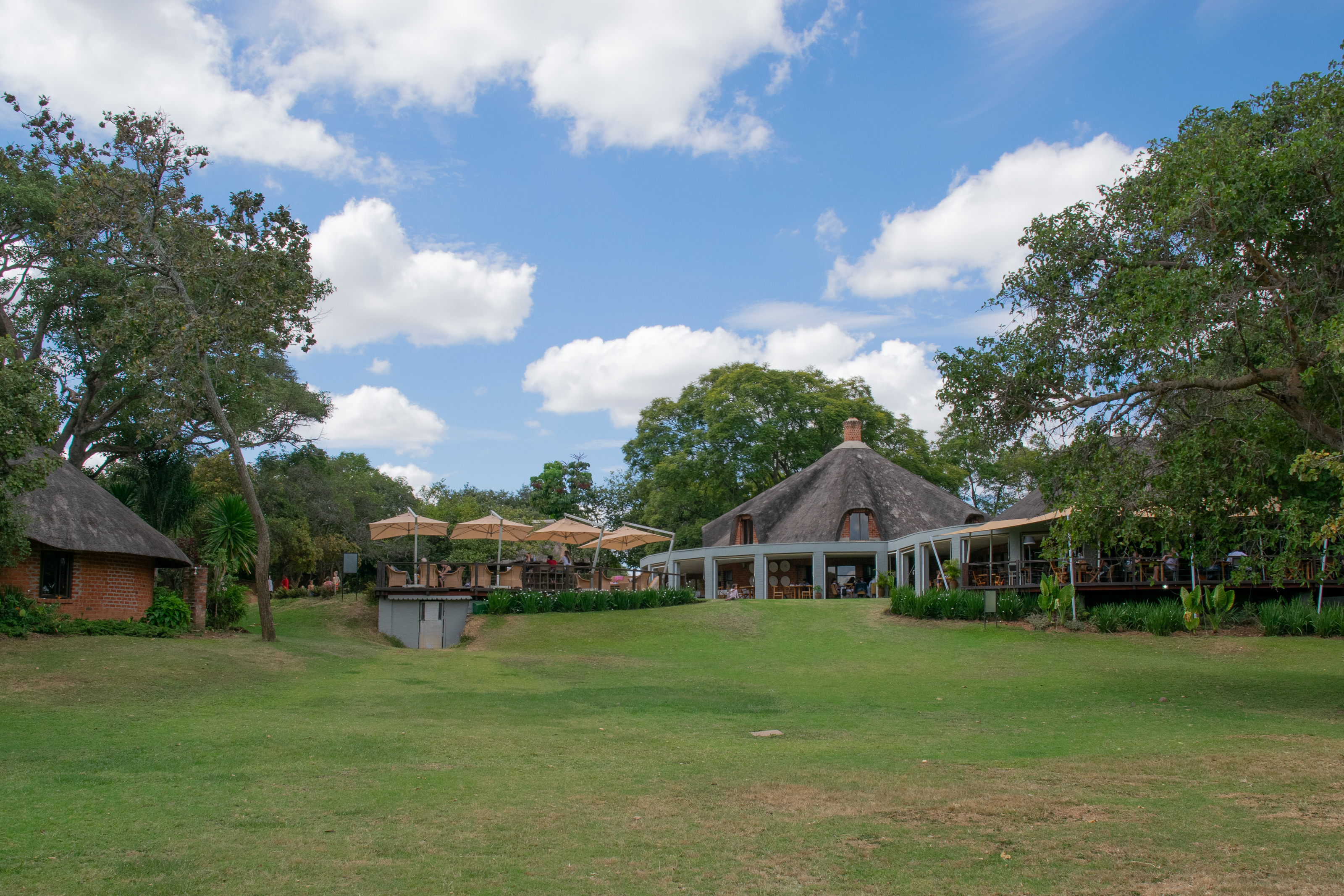 It was just a 1-night stop-over but we took a full advantage of it. The kids had a blast swimming in the chilly pool water, running freely in the wide open area beneath the lodge and fully enjoying the lovely playground built under the thick shade of a huge African tree, while I was shooting around like crazy with my camera.
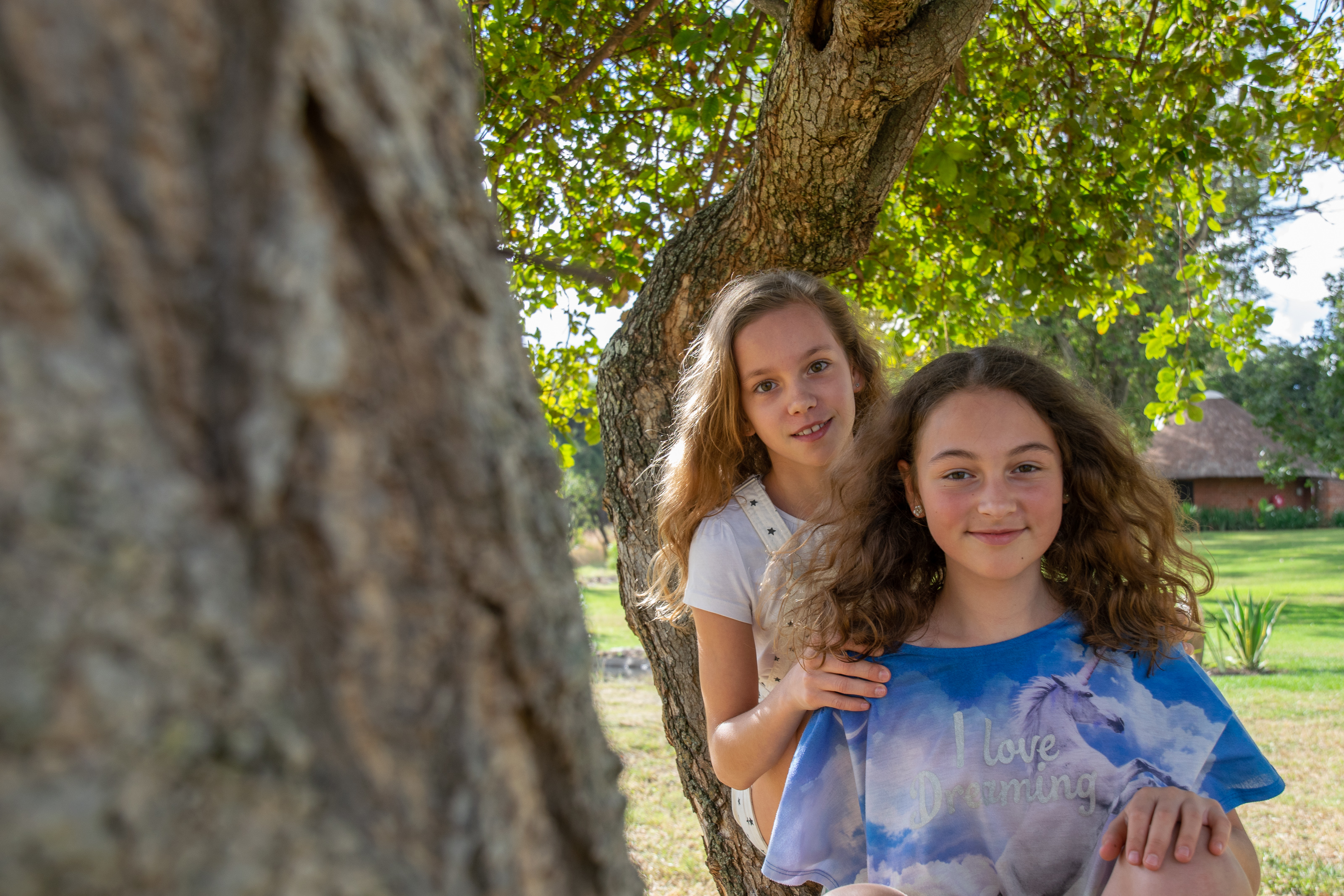
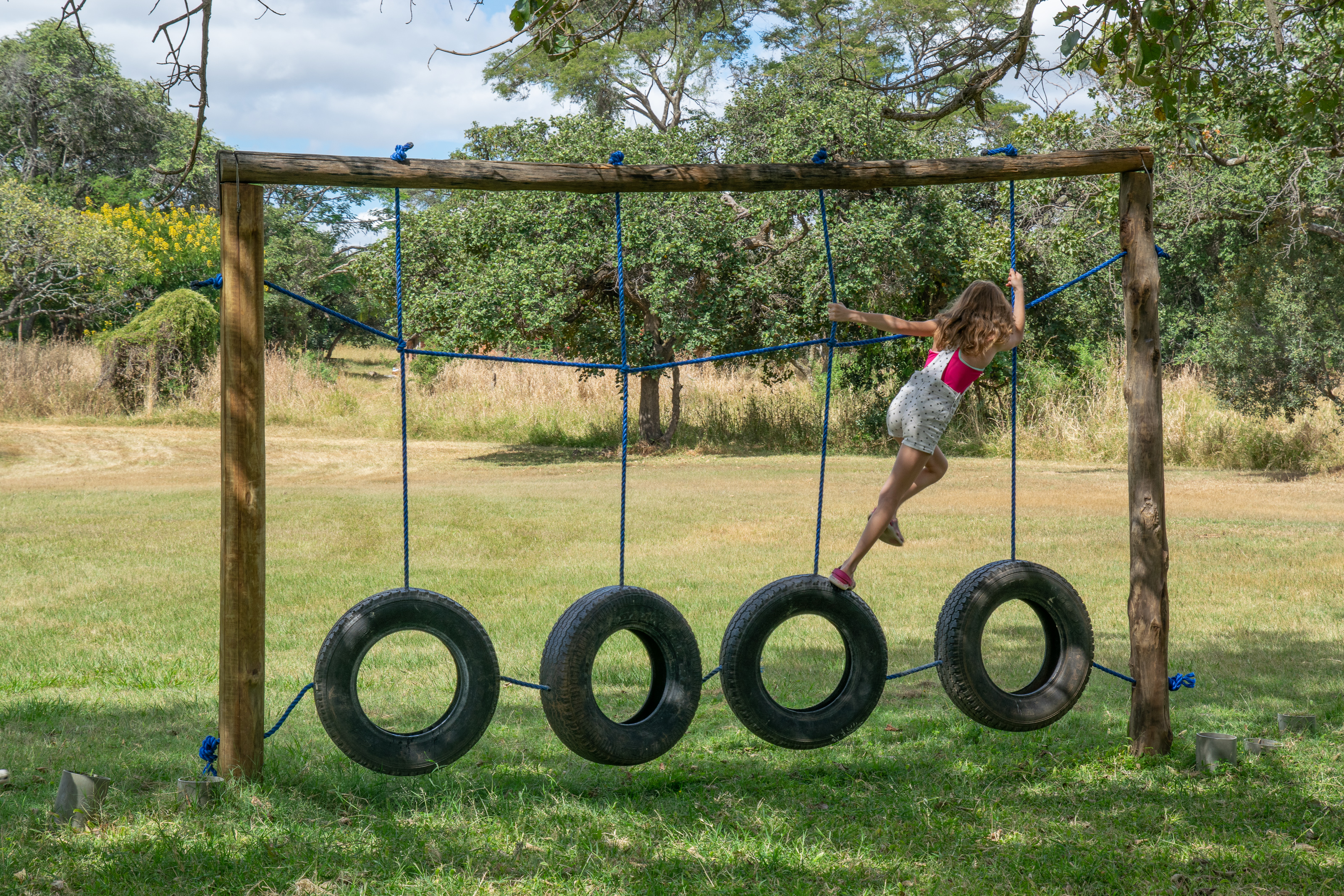
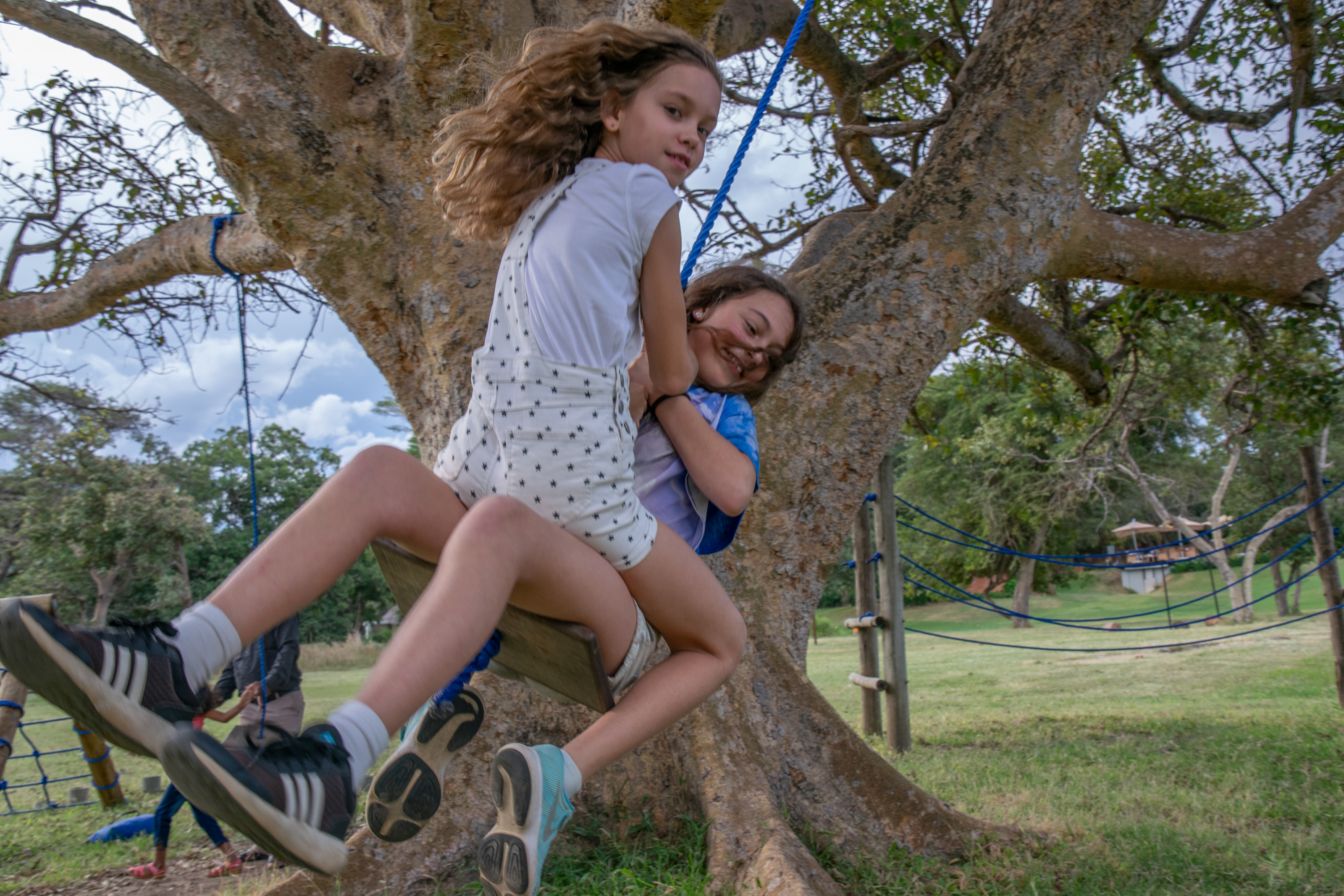
So far so good. Lilayi is indeed a heavenly place to be but the real reason for staying there was Lilayi Elephant Nursery.
The gorgeous Elephants! I don’t know how and why I got so fascinated by these charismatic animals. Their size alone makes them extraordinary but it is their complex social behavior and intelligence that set them apart from other big species. My curiosity and interest to learn more about the orphaned elephants at Lilayi was provoked by two Netflix documentaries:
- “Naledi”, which is about the fight of animal keepers and scientists to save an orphaned baby elephant at a rescue camp in Botswana while struggling to defend its entire species; and
- “The ivory game” which tells a story about the extinction of Elephants and a corrupt global network of ivory trafficking infiltrated by filmmakers to expose poachers and dealers
I was deeply impressed by these movies, to the extent that I bought a book on Understanding Elephants and chose Lilayi only for the opportunity to visit and learn about the orphaned baby elephants there from the first hand.
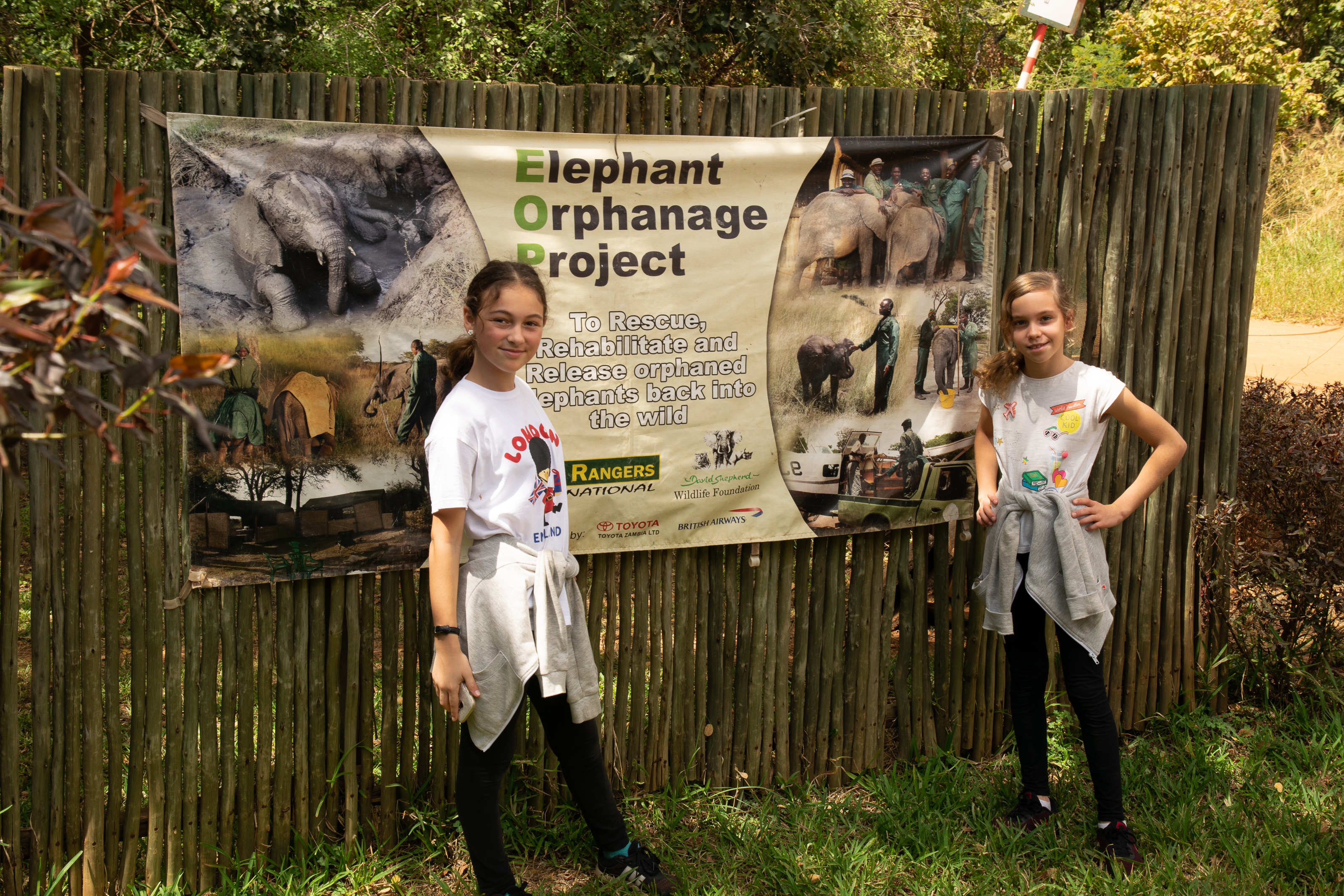
Human animal conflict, poaching and climate change is an increasing threat to the many species, including African elephants. Lilayi Elephant Nursery was born from a partnership between Game Rangers International (a non-profit conservation organization) and Lilayi Lodge to give home to orphaned baby elephants, with the ultimate goal to re-introduce them to the wild a few years later. For the past 10 years, around 45 baby elephants have been rescued and taken care of at the nursery.
And here we are, excited to get a glimpse and learn the stories of the four cute elephants currently residing in the nursery.
Infants and calves up to two years are totally dependent on mother’s milk but they generally continue to suckle milk until the age of 3-4. So you can imagine how difficult it is to take care of an orphaned baby elephant. At the nursery, they are fed with a special milk formula every 3 hours (not quite different from human babies, right?). Each elephant drinks a 2 liter bottle of milk at every feeding, which makes it 16 liters a day!
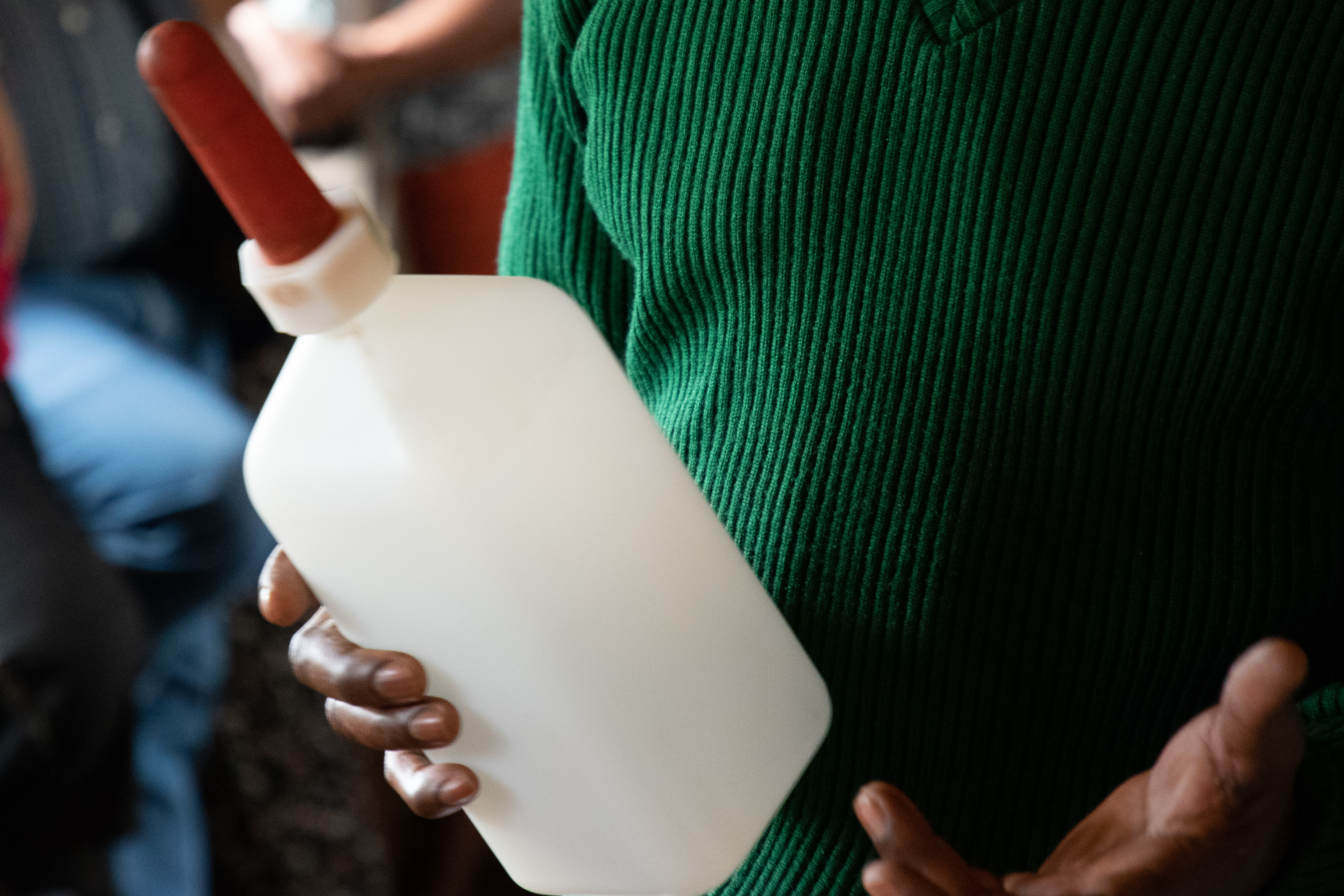
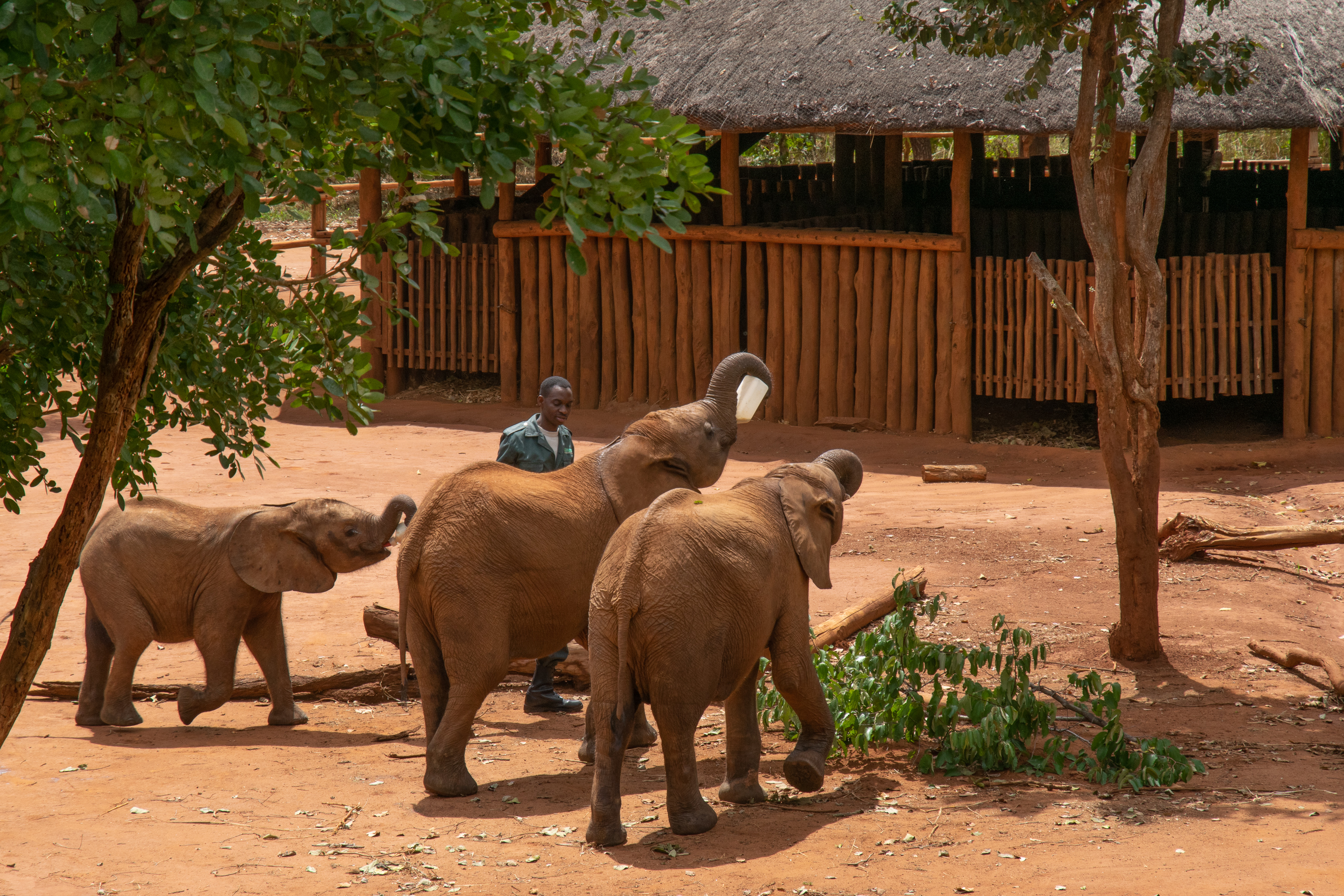
It was amazing to observe the feeding ritual, although the care-givers didn’t really need to do a lot as the baby elephants were totally capable of holding the milk bottle with their trunks. Well done!
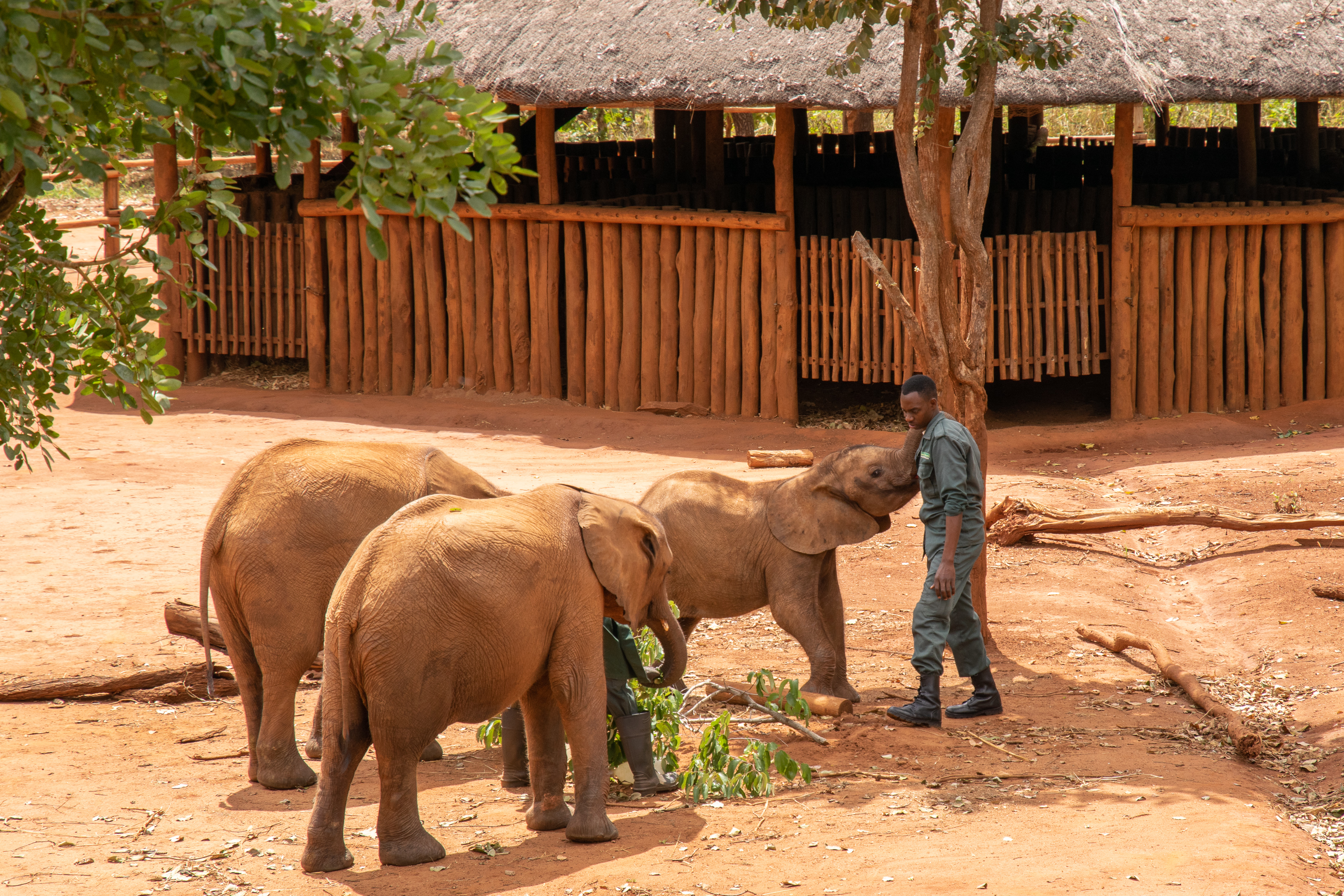
Baby elephant showing affection to their care-giver
As soon as they finished their milk bottles (which took exactly 11 seconds!), they headed to the water containers and went on playing around 🙂
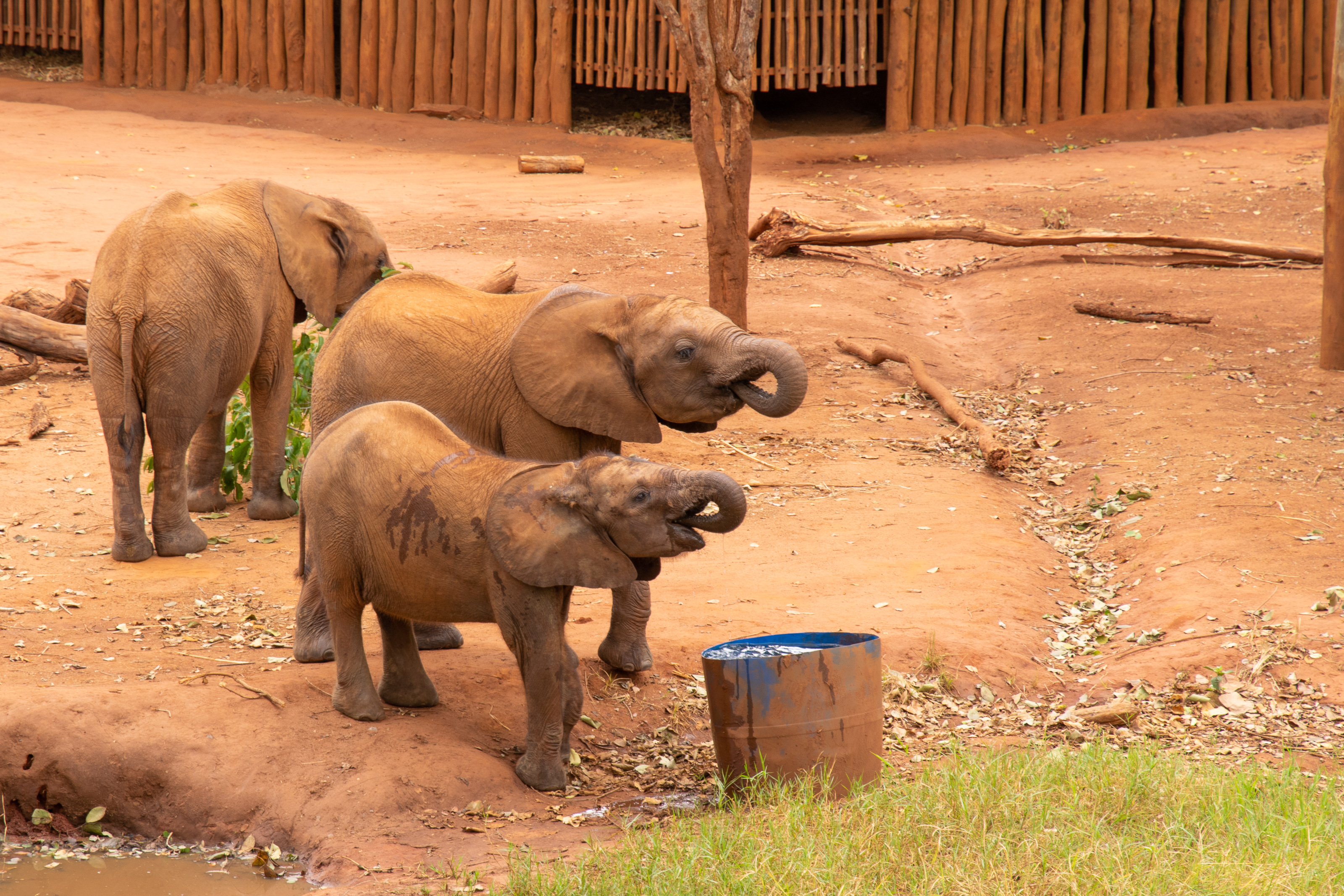
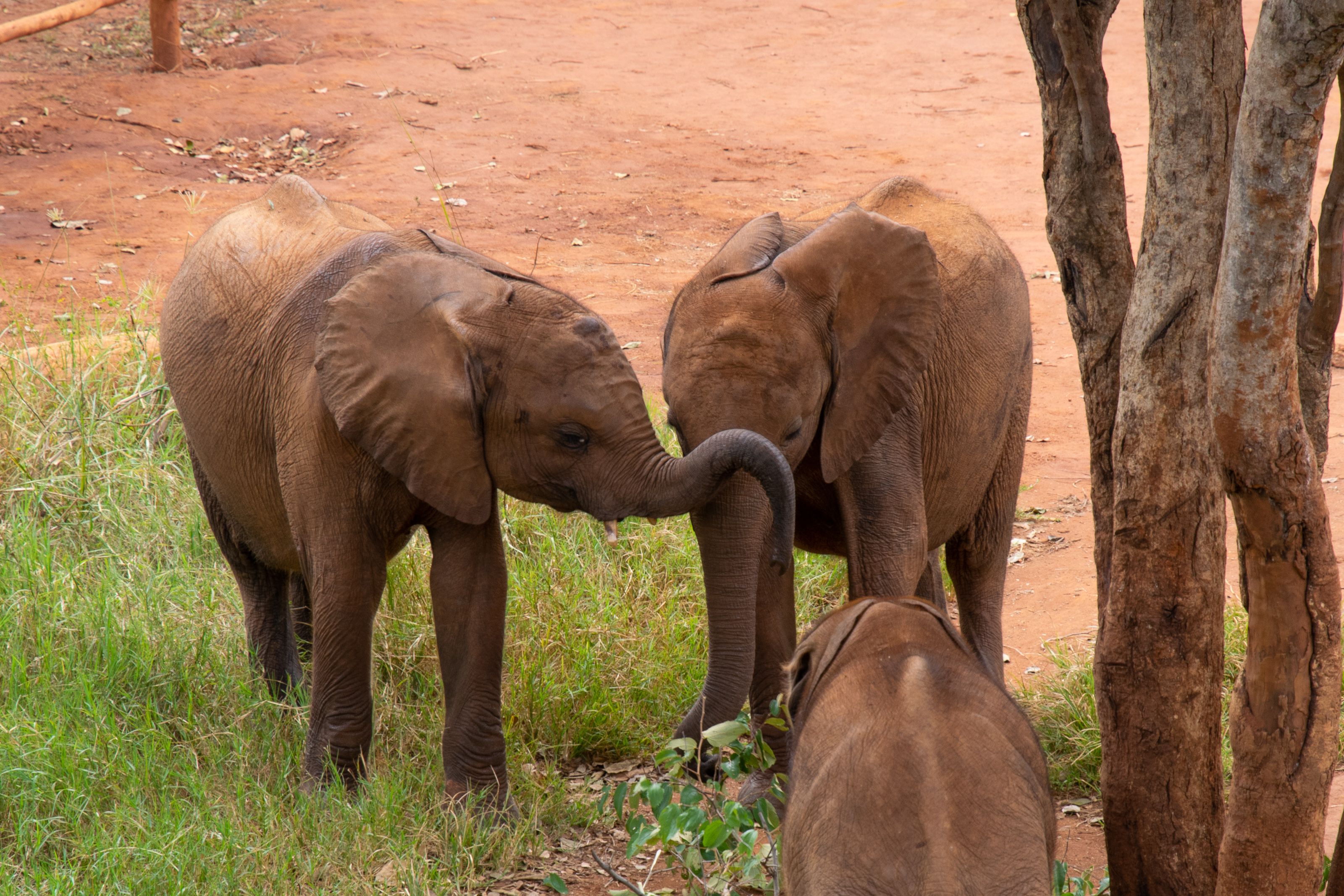
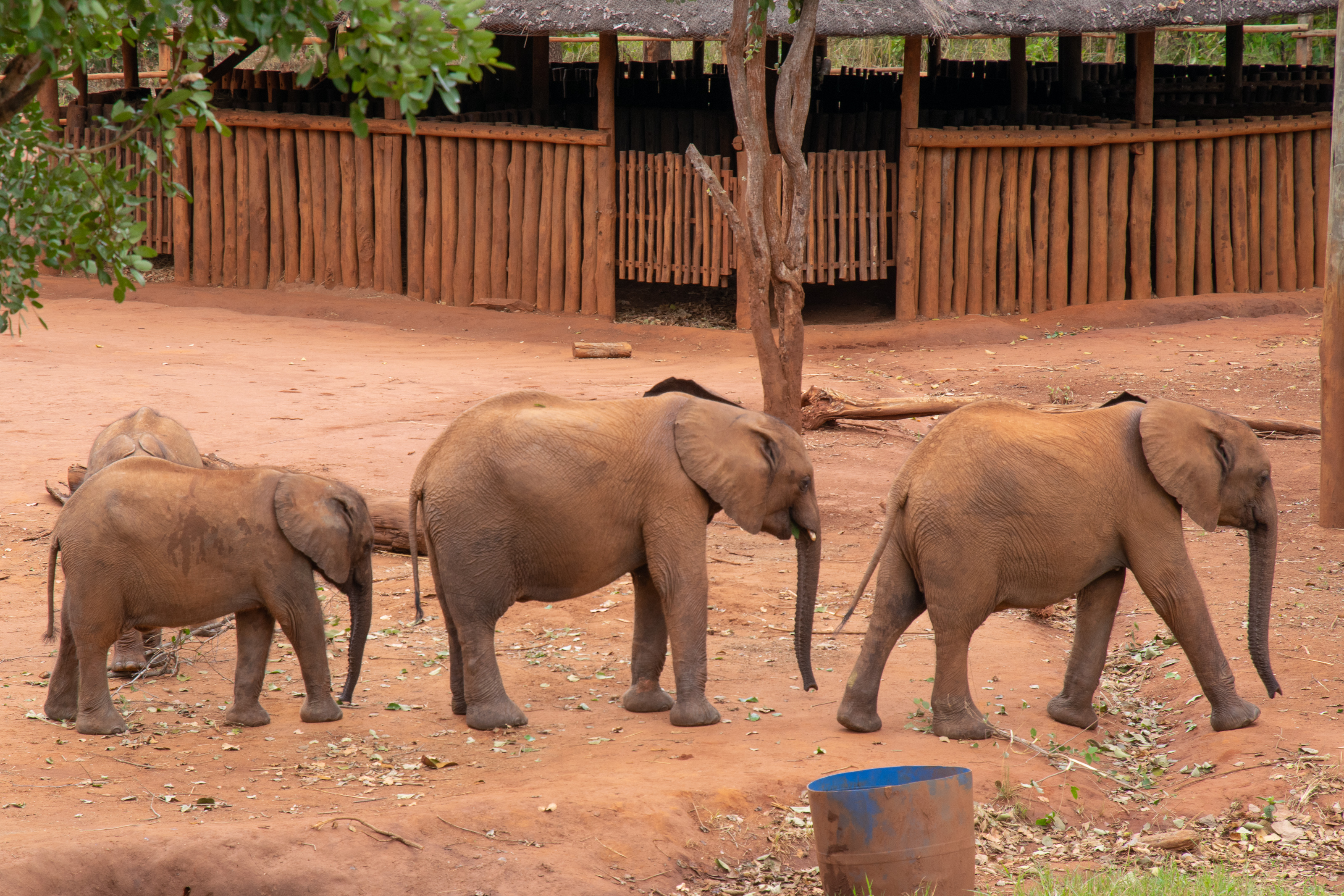
But I can’t go on without telling the story of at least one of these baby elephants.
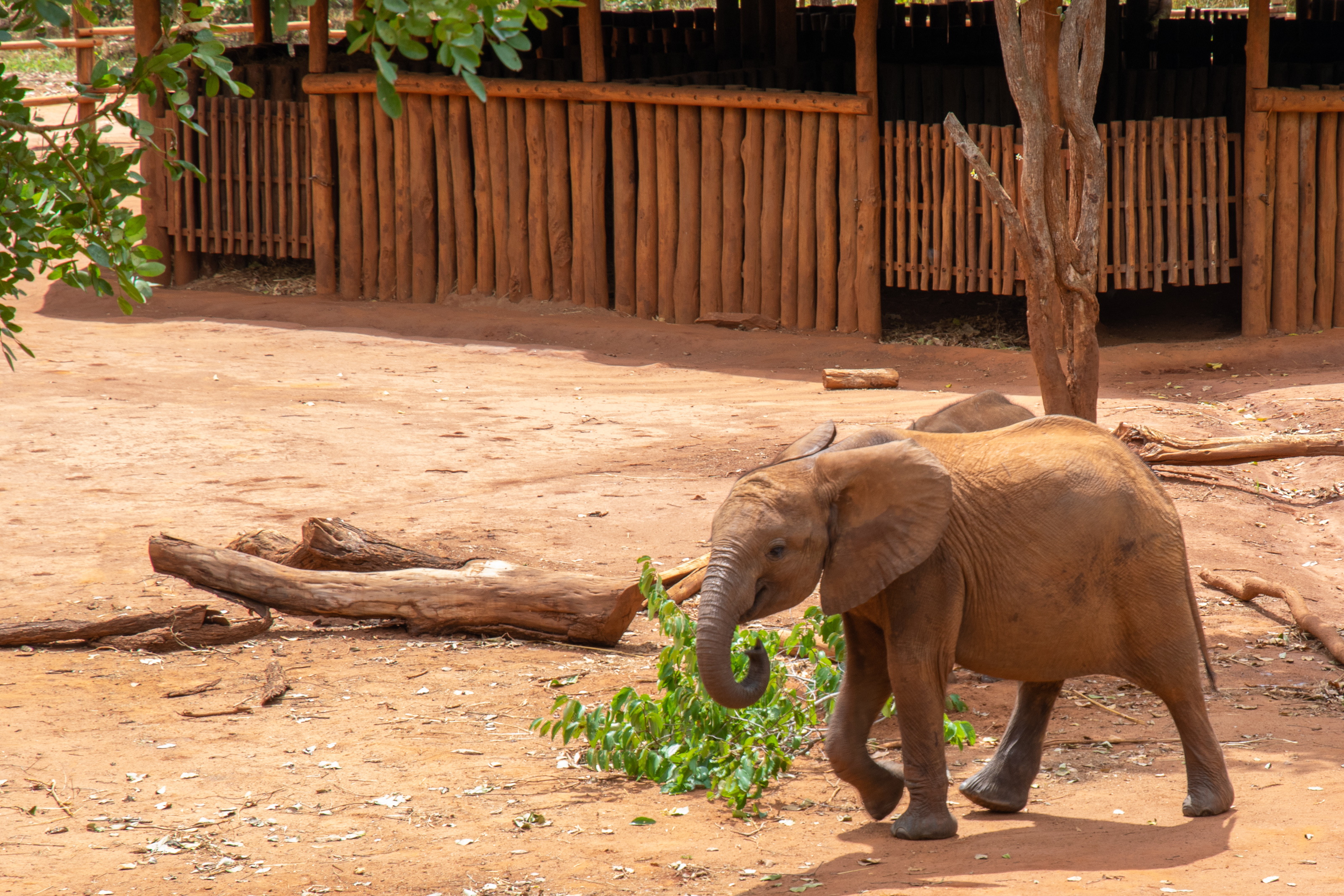
Mkaliva
Her name is Mkaliva and she was rescued in August 2017 at the age of 15 months. She was reported to the rescue team by villagers in South Luangwa National Park. Upon arrival, the team found a distressed, vulnerable calf. Mkaliva mother was killed by poachers. During the first 48 hours at the nursery, Mkaliva’s energy levels dropped on multiple occasions, at which point dripping was administered to get her back on feet. She struggled to maintain an optimum body temperature, so she was kept warm with blankets and hot water bottles, especially during nights. She improved slowly but steadily and today she is a healthy and confident elephant juvenile, ready to be transported to her next home (another special orphanage) before being introduced to her ultimate home in the wild.
If you get the chance, I really recommend you to watch “Naledi” and “The Ivory Game”, even better with your children. If you allow me to generalize, I do believe that the lack of knowledge and understanding of how fragile nature and wildlife is has led to a lot of (irreversible) damage – we need to teach ourselves, and more importantly, our children so we finally start caring more about our planet!
Jonathan Kolby, a conservation biologist and blogger for National Geographic, said in relation to the Notre Dame fire in Paris:
“The irreplaceable work of art that I worship is nature and to watch it senselessly crumble to the ground every day hurts my heart… We know you get tired of us shouting about species going extinct and we are sorry for the broken record but we’re surrounded by burning cathedrals built across millennia and no one seems to care.”
Painfully sad but true…
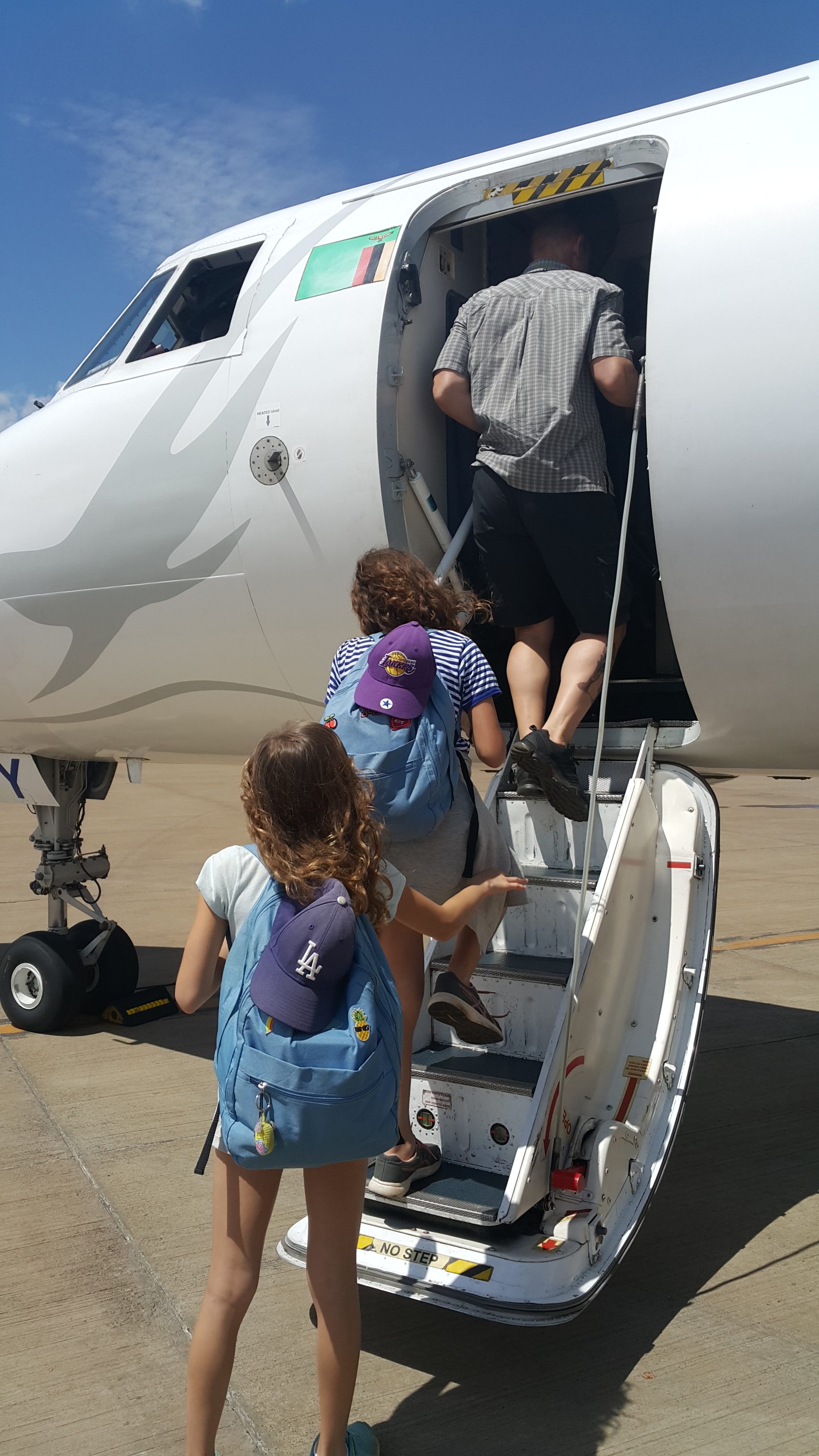
A short domestic flight on the next morning took us to our next destination, Livingstone – home to the mighty Victoria Falls, one of the seven natural wonders of the world.
The town was named after Scottish explorer and missionary Dr. David Livingstone who was the first European to see and name the Falls after the British Queen at the time. He was so impressed by the Falls that he declared:
“Scenes so lovely might have been gazed upon by angels in their flight”
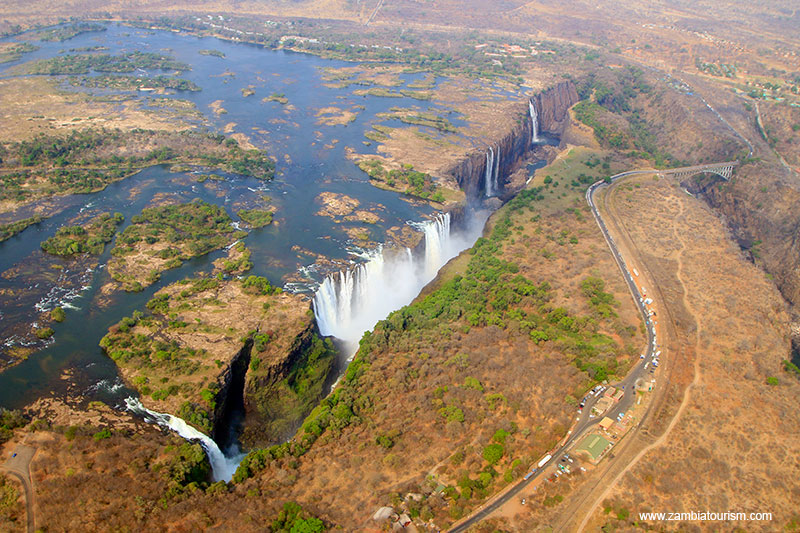
Courtesy: www.zambiatourism.com
When Dr. Livingstone discovered the Falls in 1855, he opened up the area to hunters, traders and other missionaries (and the poaching began 🙁 ). In 1911 Livingstone became the capital of what was then called Northern Rhodesia (with Zimbabwe then called Southern Rhodesia), until 2012. Even though Lusaka is the capital to Zambia today, Livingstone has built its reputation of the “adventure capital of Southern Africa” with thrilling activities such as white water rafting on the river Nile, bungee jumping off the Victoria Falls Bridge, helicopter rides over Zambezi and Vic Falls, and much more.
On the way to our hotel, we drove past through the main street of Livingstone – Mosi-Oa-Tunya – “the smoke that thunders”, with plenty of historical and cultural buildings, arts & crafts shops, bars and restaurants.
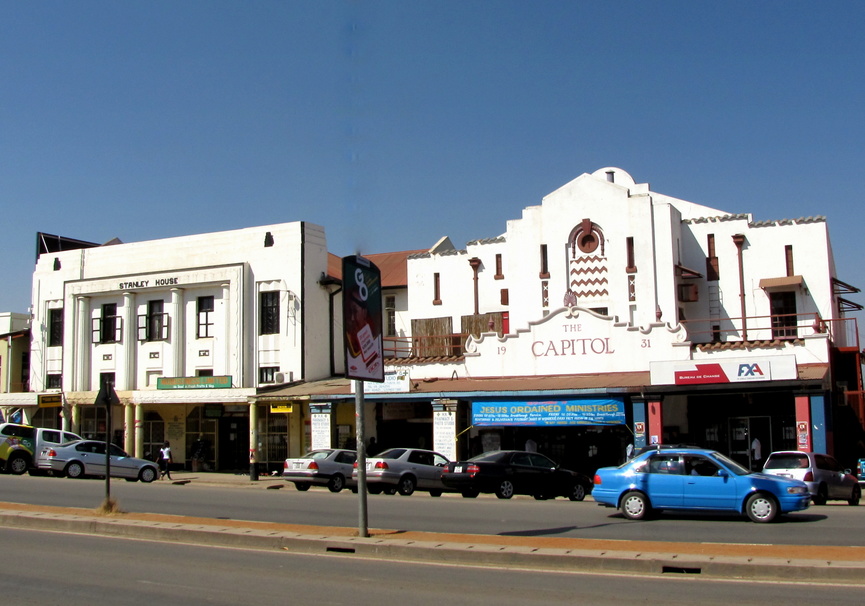
Mosi-Oa-Tunya main street of Livingstone
I didn’t realize how close our hotel to the Falls is until the receptionist explained “It’s just behind the corner, 5 minutes’ walk from your hotel room”. Wow! I Googled afterwards and the following aerial picture of the hotel best illustrates its location:
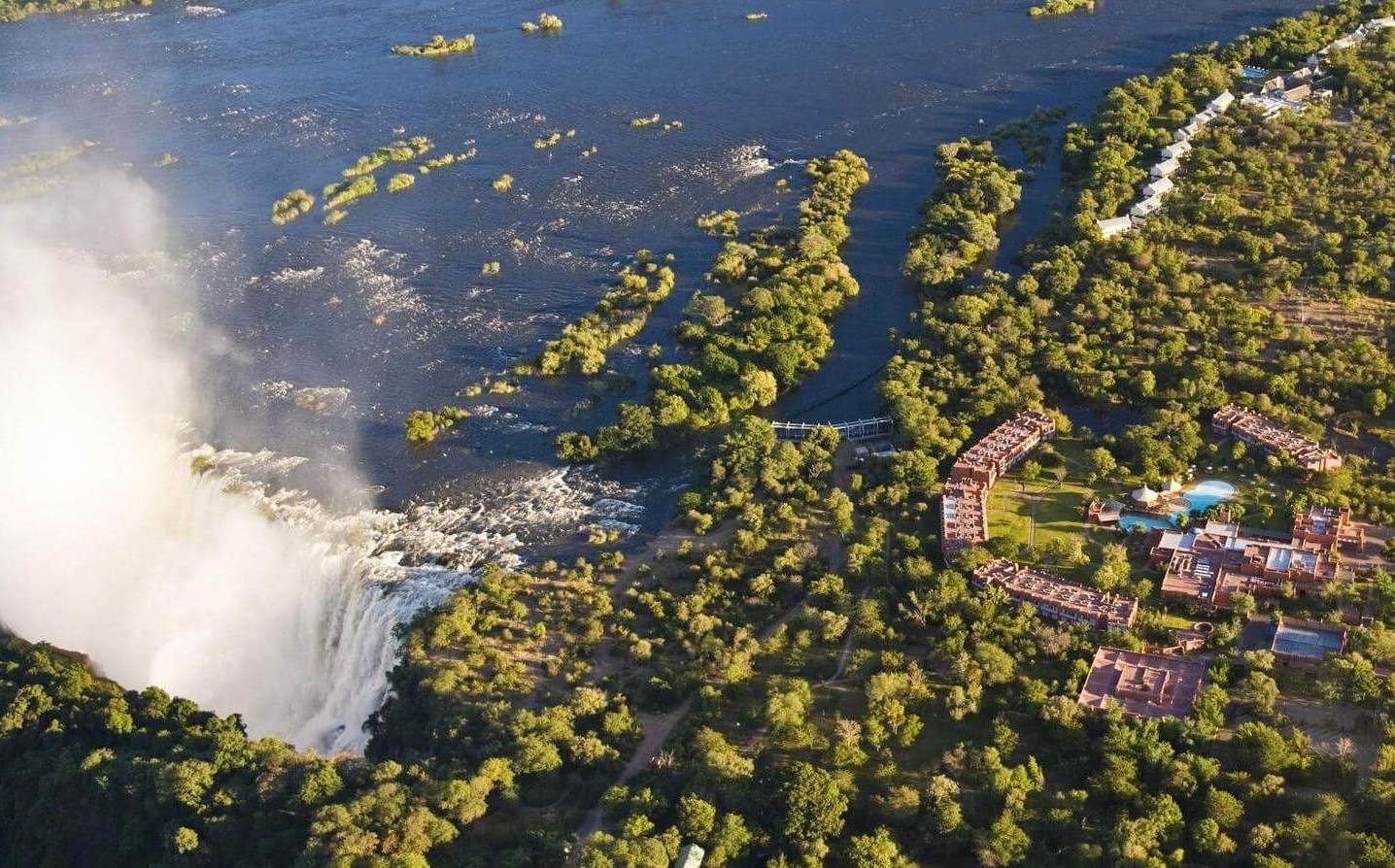
Avani Victoria Falls Resort. Courtesy – Bush Breaks
What happened next caught us completely by surprise. We were crossing the lush green gardens to reach our room when we saw zebras, scattered all around the field, calmly grazing the grass. At first I thought these were some kind of very realistic statues of zebras but no, they couldn’t be more real. Obviously not entirely wild, although they clearly didn’t like the presence of crazy tourists trying to get as close as possible to them for a selfie.
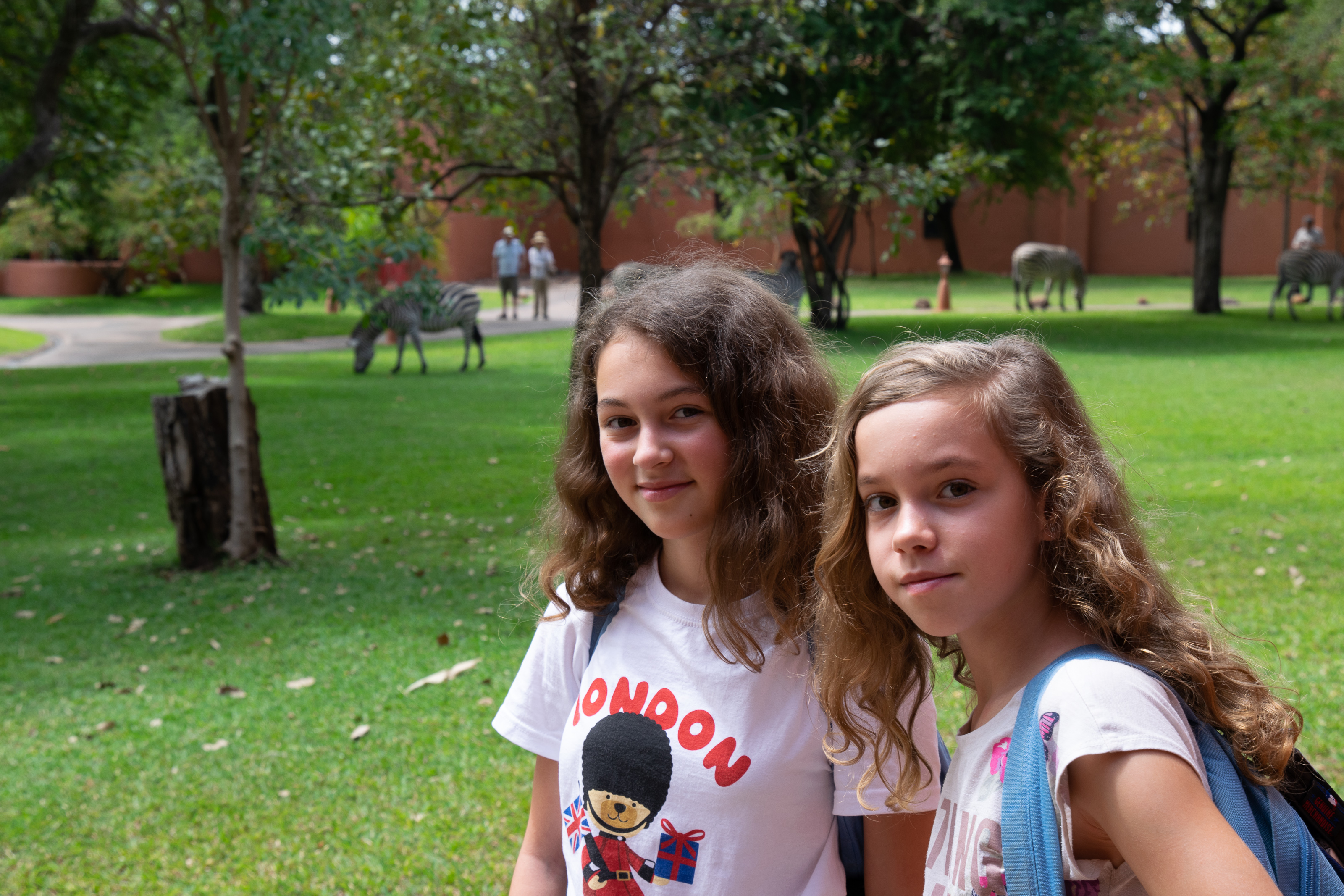
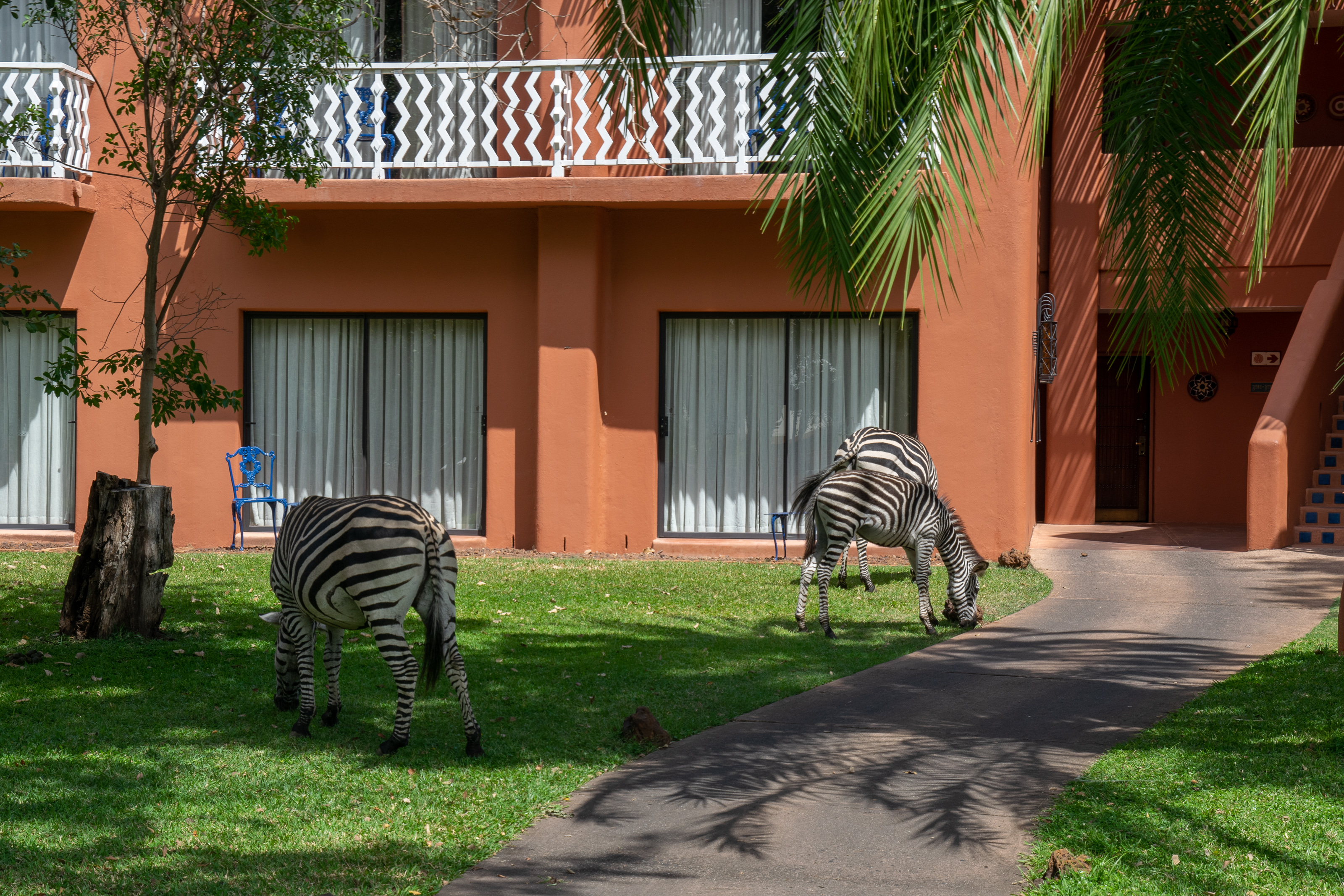
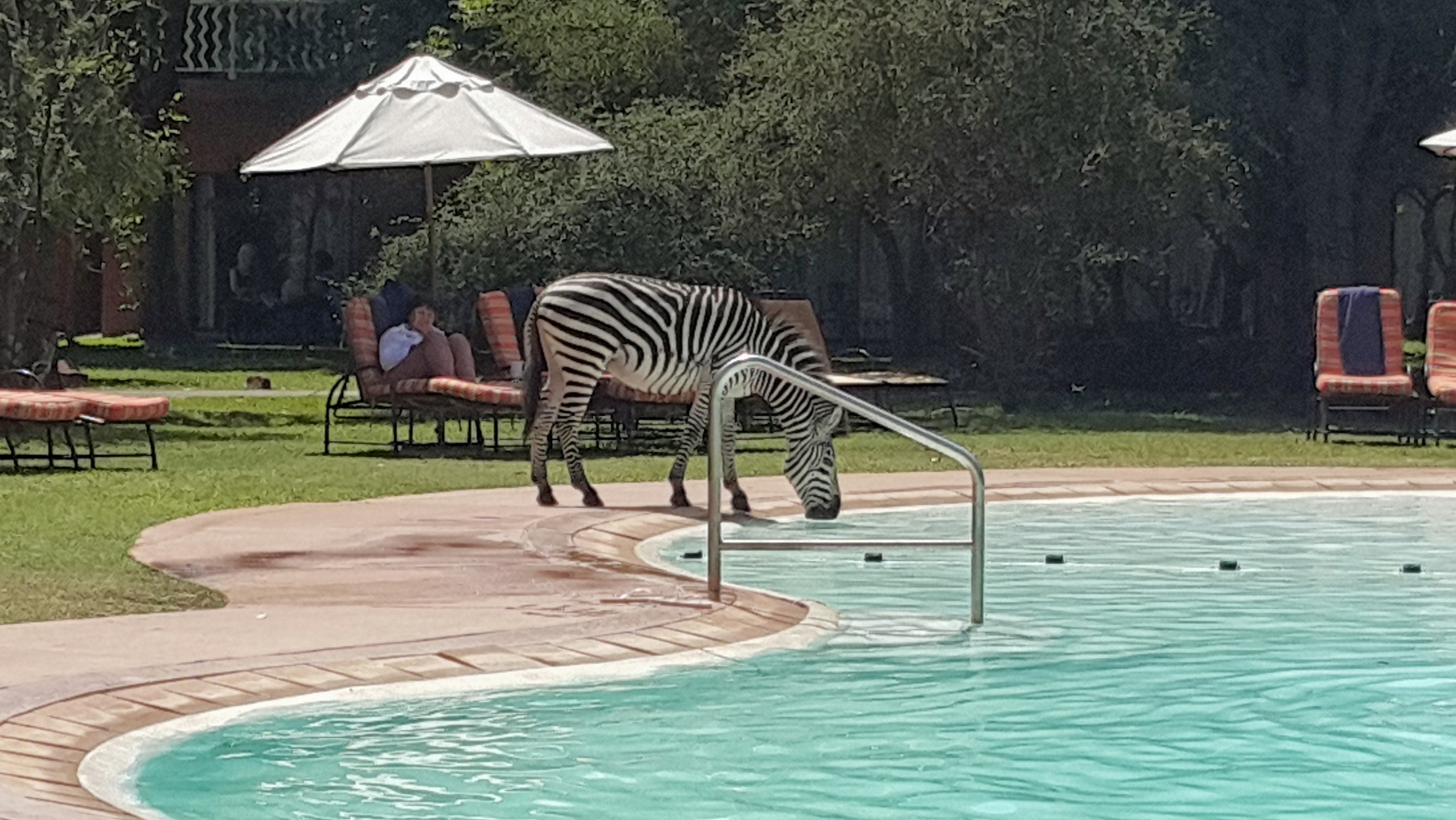
On the other hand, these zebras could surely compete with the tourists in showing weird behavior, for example, when every now and then they quietly approached the swimming pool to quench their thirst.
It came out later that the juicy grass attracts not only zebras. After sundown a herd of impalas appeared in the garden, some of them literally walking by the rooms’ whole length garden windows. Our room was on ground level, so I was almost expecting impalas to knock on our sliding garden door and ask for some extra snack later in the night 🙂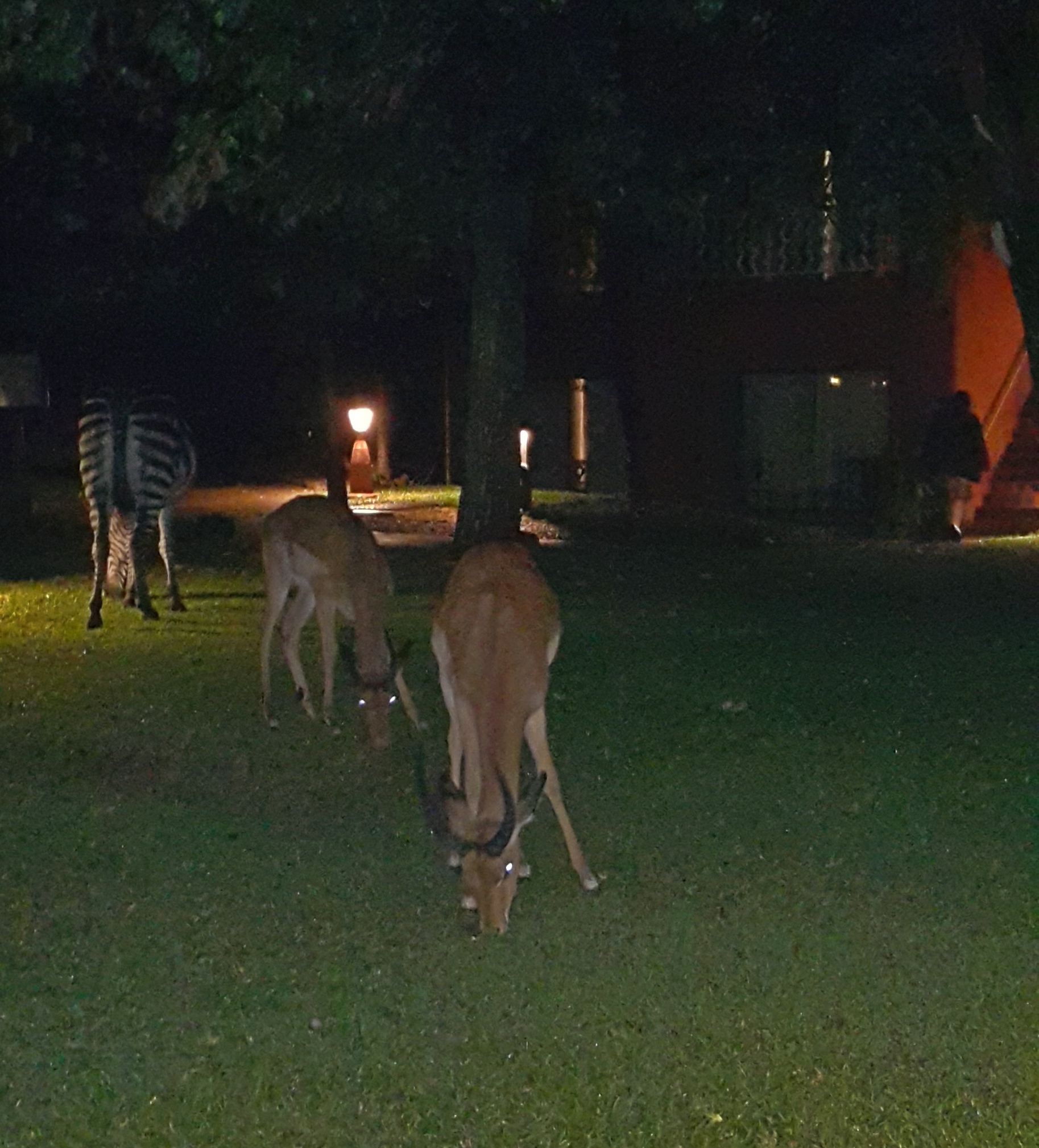
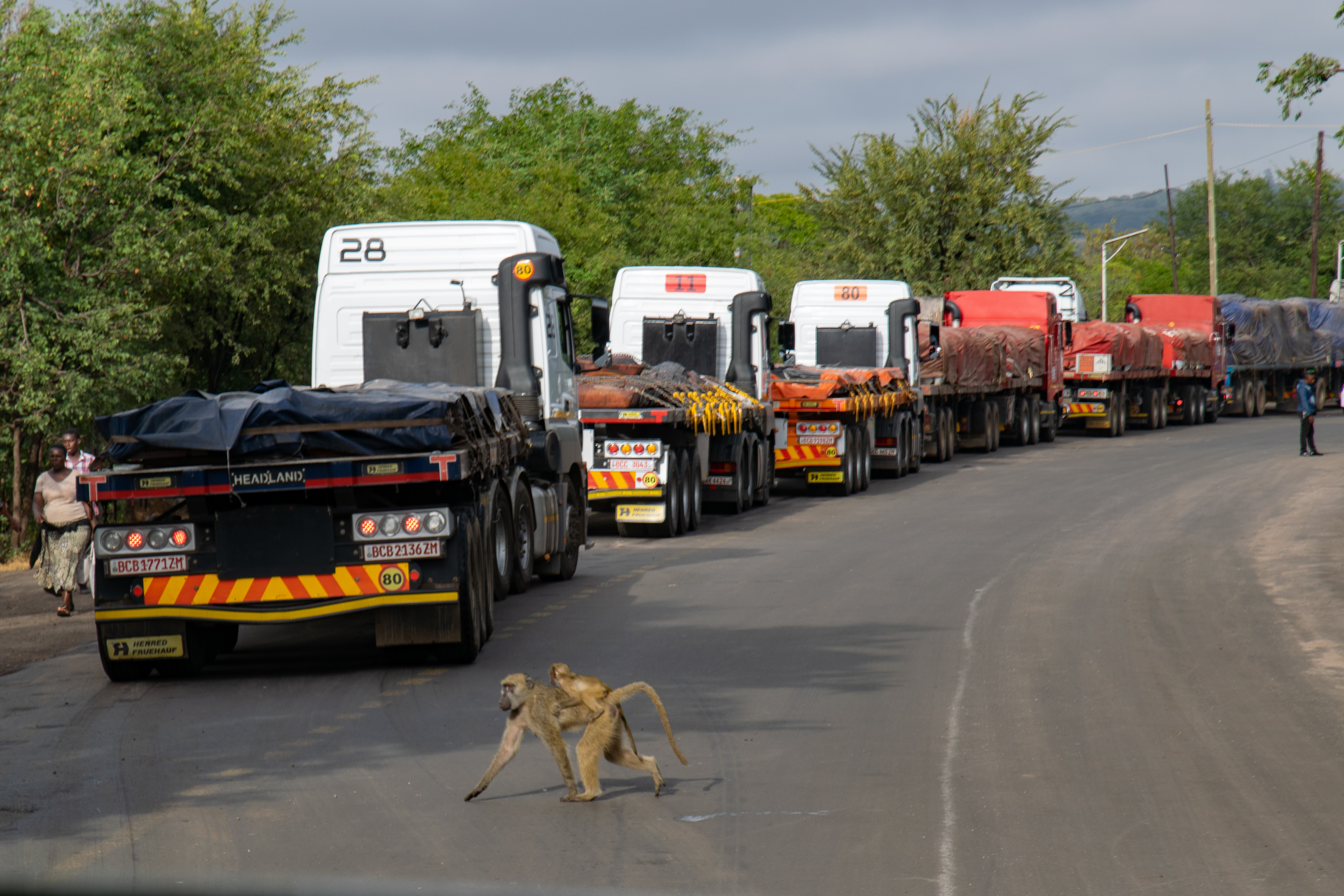
As if this was not enough, but we also had naughty baboons in the compound who apparently didn’t care what people think about them as long as they managed to steal some food whenever it was left unattended.
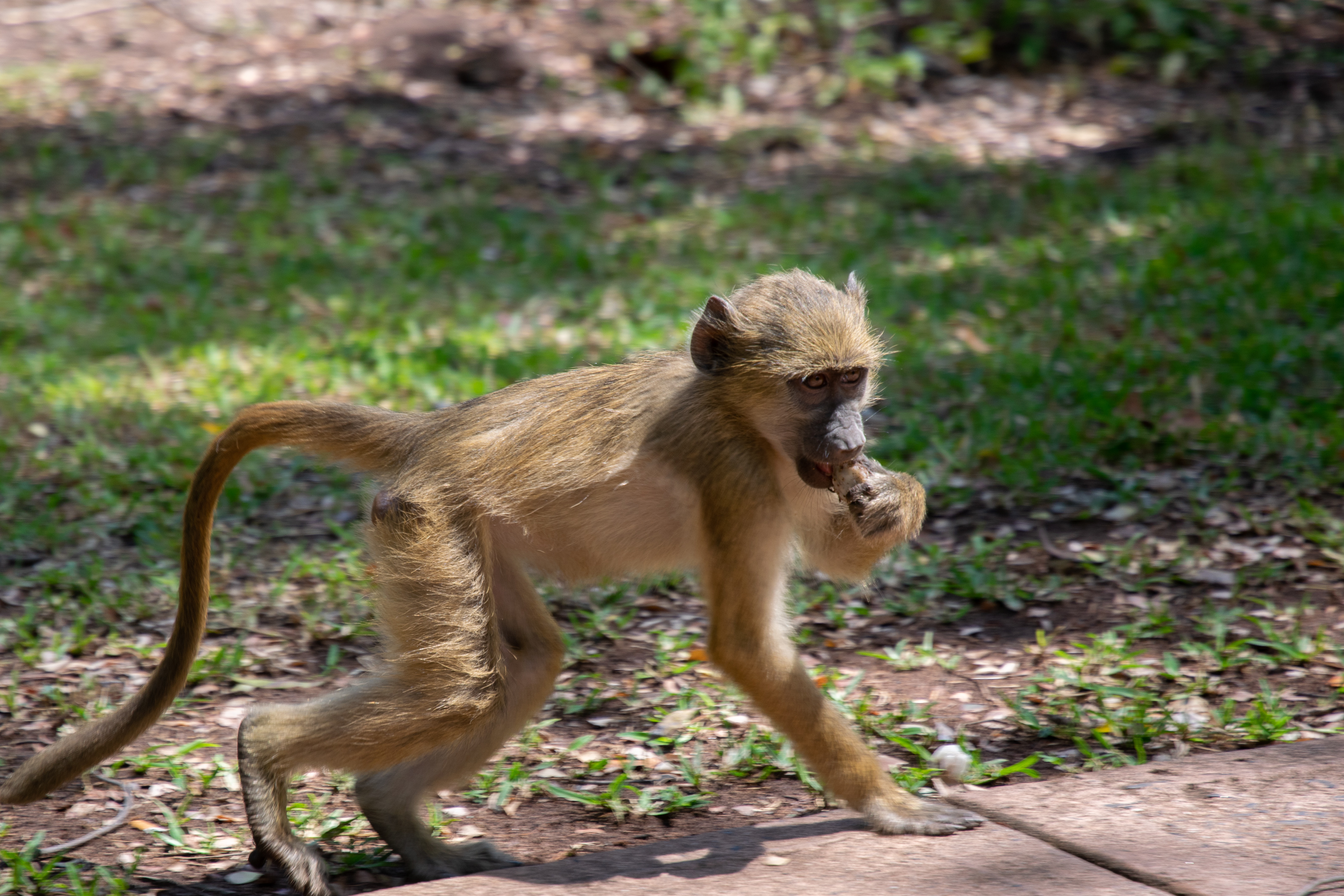
I felt like living in the Zoo. Even better, living in the wilderness of Zambia!
Avani is a lovely place to stay while in Livingstone – besides the magnificent garden views, comfort and proximity to the Falls and other sight-seeing, it is all decorated with traditional colorful African charm – something that I couldn’t pass by without taking a photo or two.
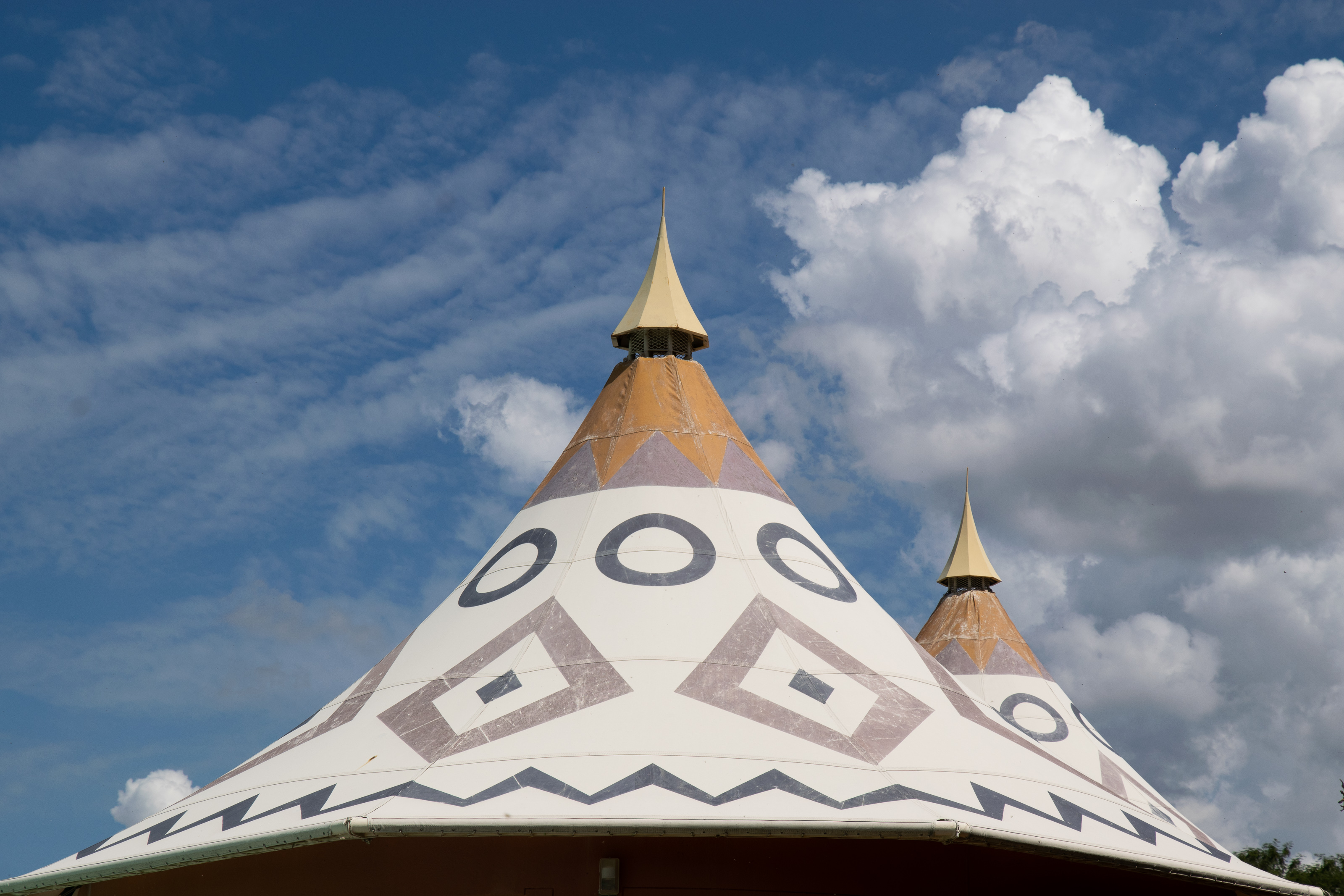
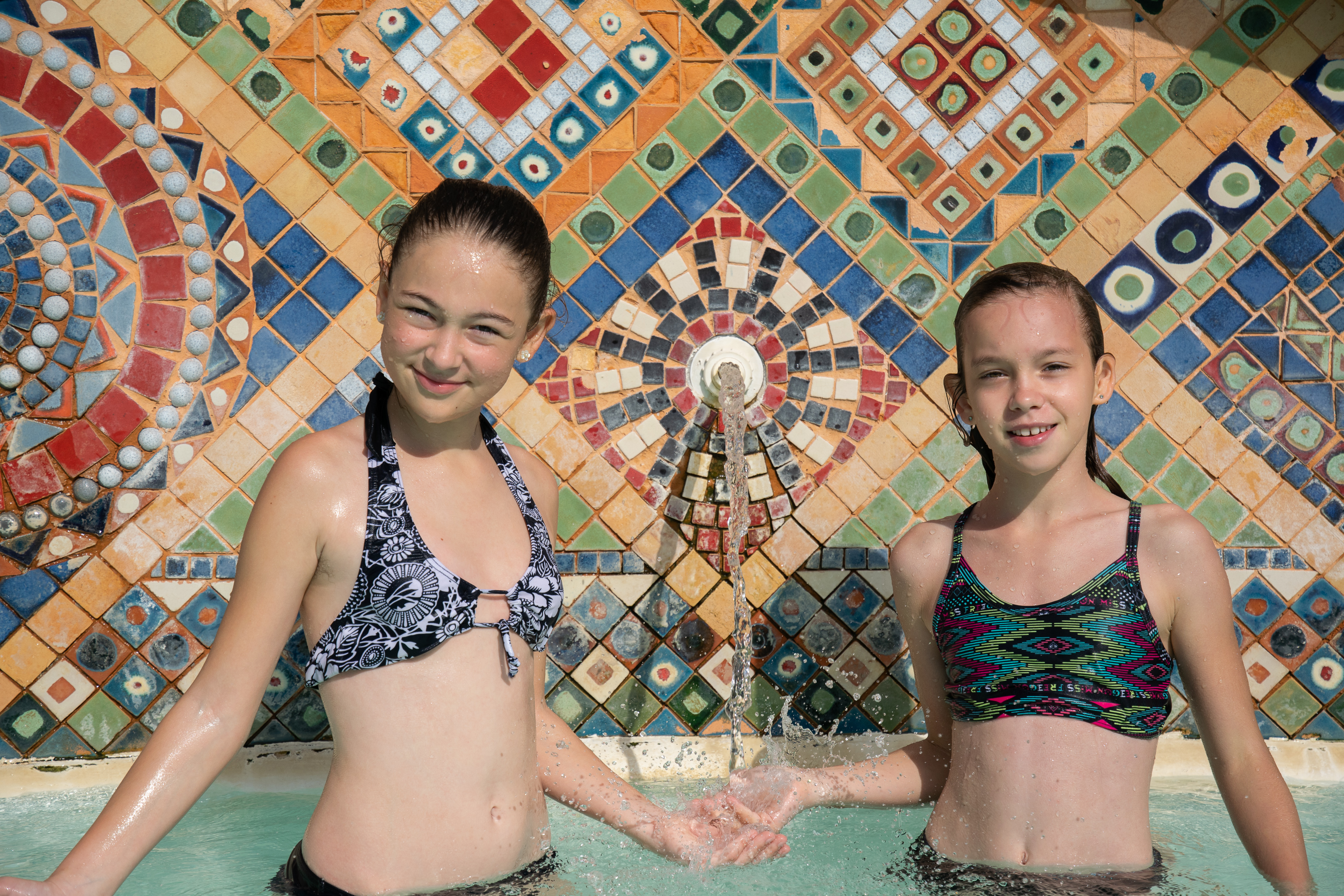
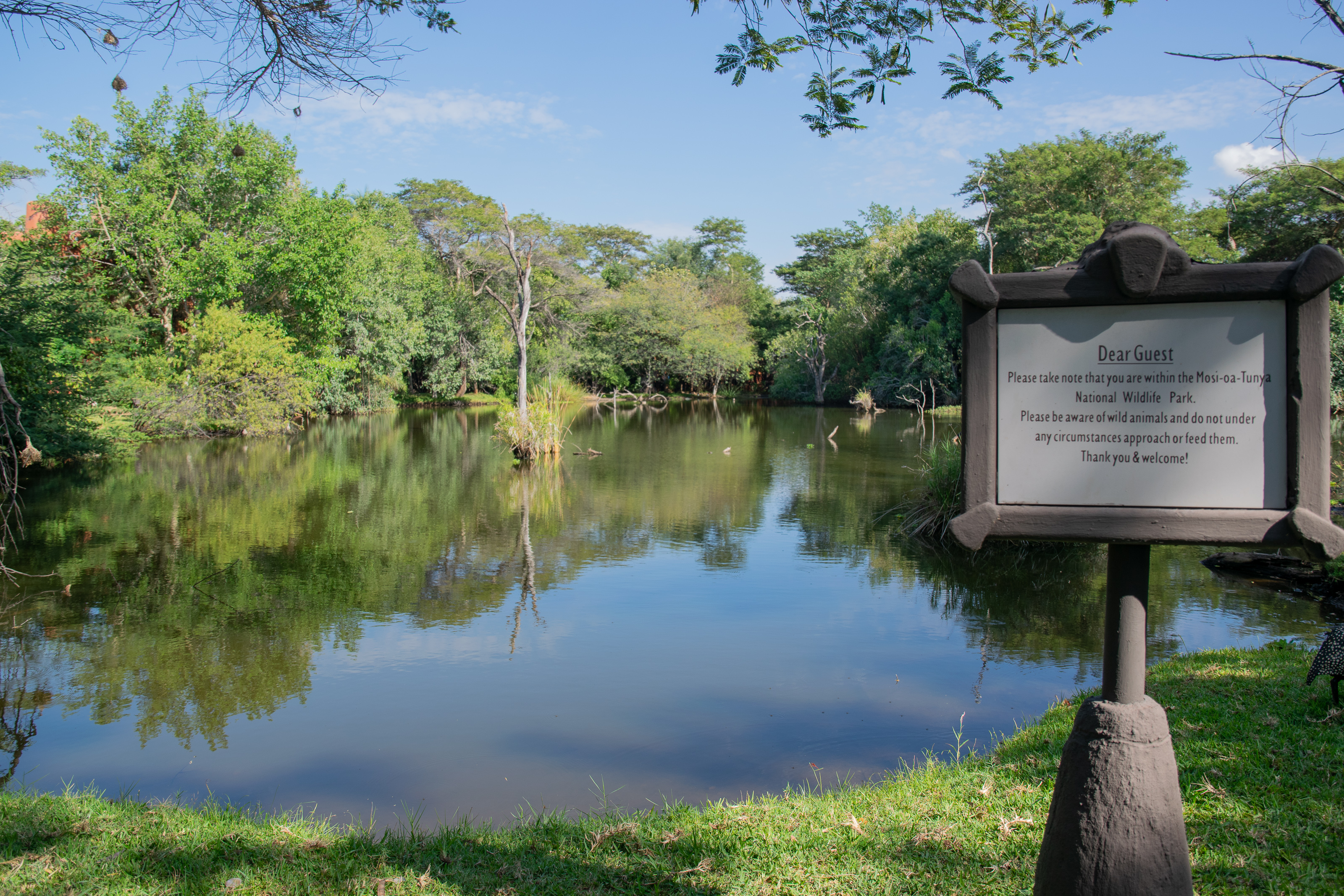
Apparently the hotel is a popular convention and business destination as there was a global Commonwealth Conference during the days we stayed, with the President of Zambia, Mr. Lungu, attending, and who we shortly missed, unfortunately.
After a late afternoon shower and a cloudy early morning, the day of our visit to Victoria Falls promised to be sunny and warm.
ZIM or ZAM? – is the most often asked question by tourists. In other words – is it better to visit the Falls from Livingstone on the Zambian side, or from the town of Victoria Falls on the Zimbabwean side. I already had an answer – visit them from both sides, especially if it was a matter of 5 minutes’ walk from our hotel on the Zambian side. But we started the day with a tour crossing over to the Zimbabwe.
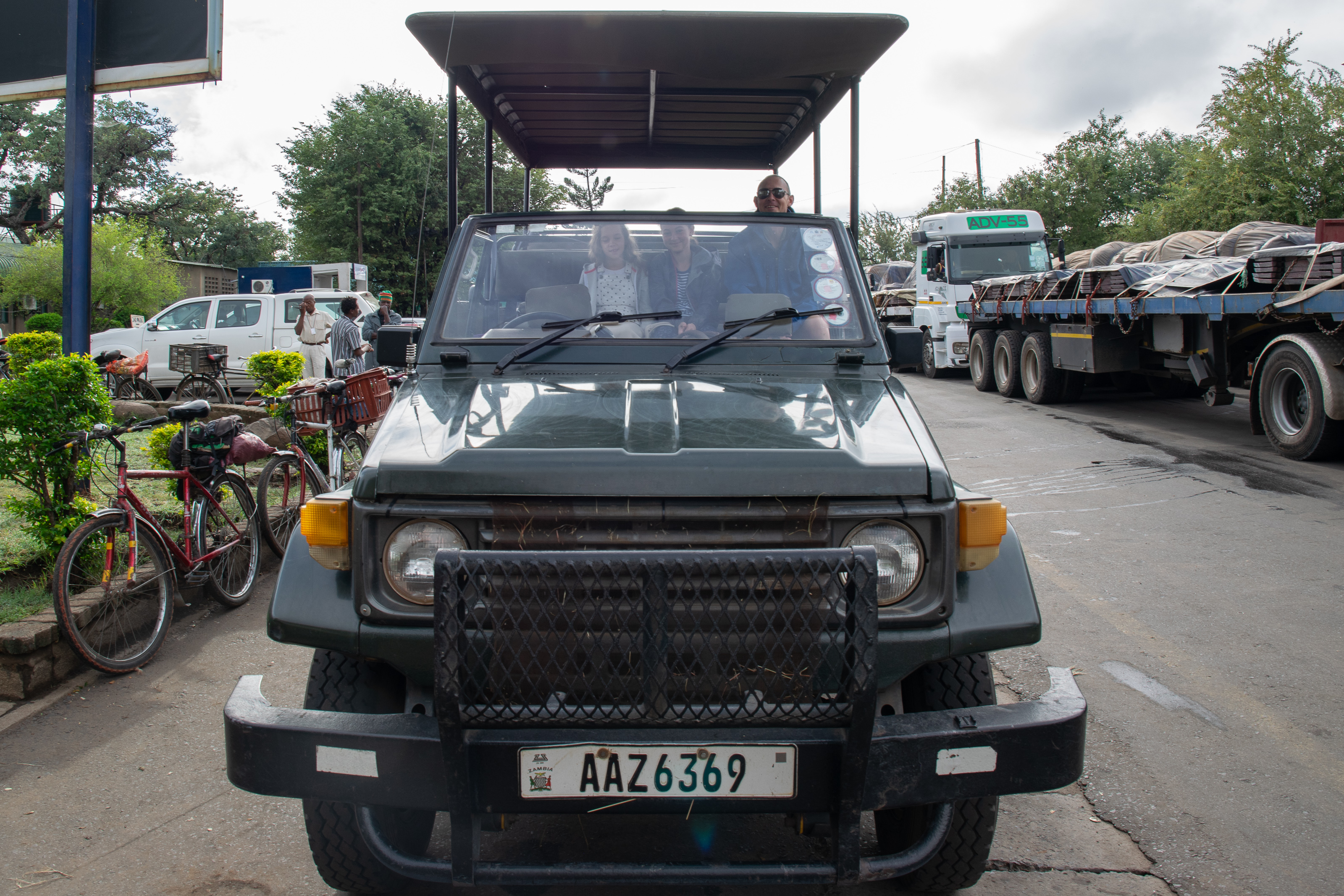
And here comes my favorite moment of the whole day. 10 minutes’ drive took us to the border with Zimbabwe but before we reached the border post, we had to cross the Victoria Falls Bridge. We were approaching the bridge when, out of the blue, it started raining. I got a bit upset because I knew that the rain would stop us from enjoying the Falls in all its glory.
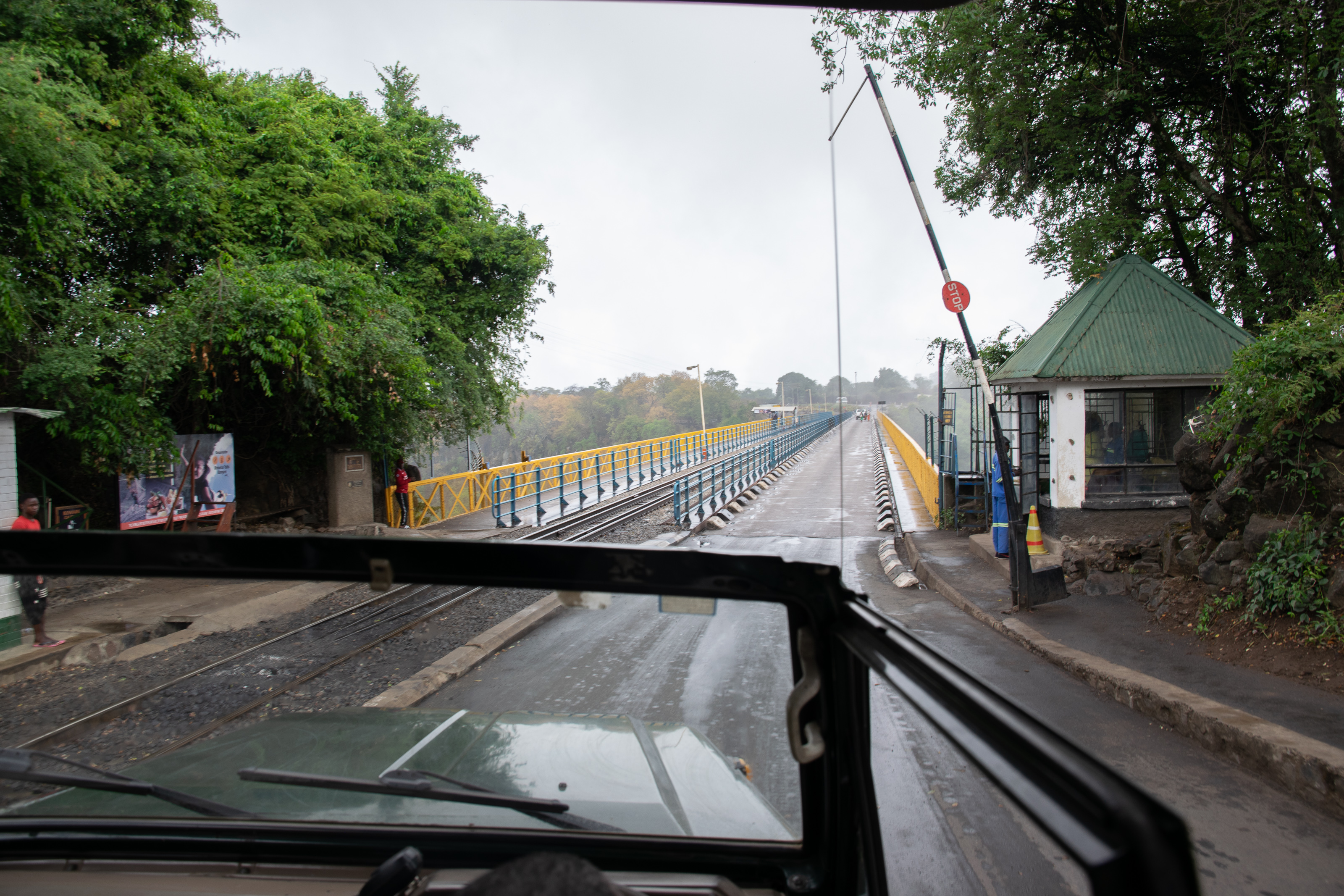
The driver noticed my disappointment and grinned. And then it struck me – it was not raining. This was the spray coming from the Falls 🙂 And this was only the beginning!
Our tour guide Mthulisi (not an easy one to pronounce, isn’t it?), was just great – not only had he introduced us to the history and geological peculiarities of the grandiose Victoria Falls but he also enlightened us in the politics of Zimbabwe, the growing Chinese investments in Africa’s economies, the geo-politics of the region and the world, including Russia 🙂 I liked the Victoria Falls topic more, although I noticed his point of view on the geo-politics was backed with facts, and solid arguments, and quite interesting to listen to.
Here we come, Victoria Falls! Let the real shower begin!
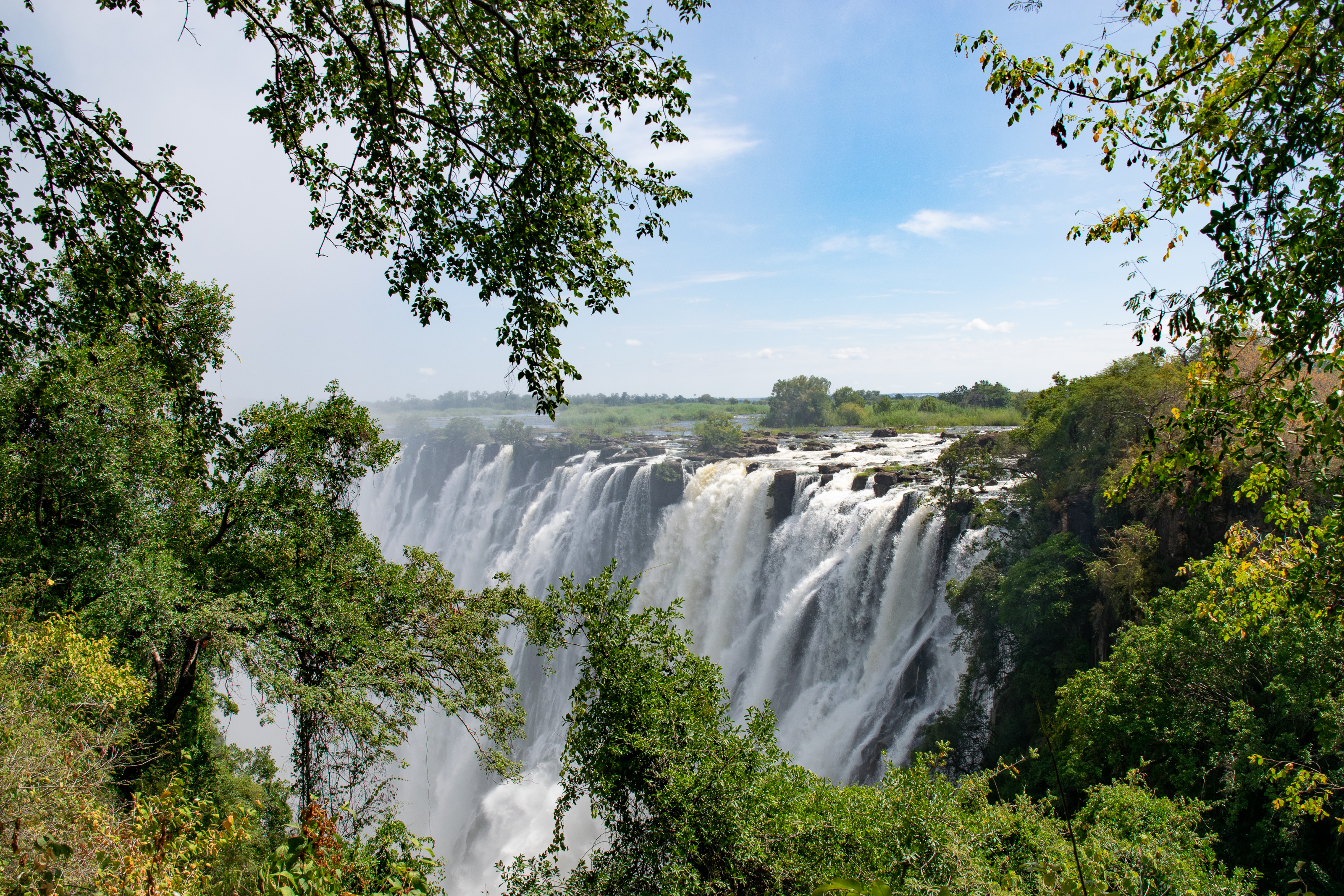
Victoria Falls (Mosi-Oa-Tunya, or the smoke that thunders) is the biggest curtain of falling water in the world, measuring an incredible ~1,700 meters wide, shared between Zambia and Zimbabwe on the Zambezi river, and ~100 meters high, with a flow of 10,000 liters per second in the peak season. Our tour started on the Zimbabwean side with a view to one of the biggest cracks of the basalt plateau.
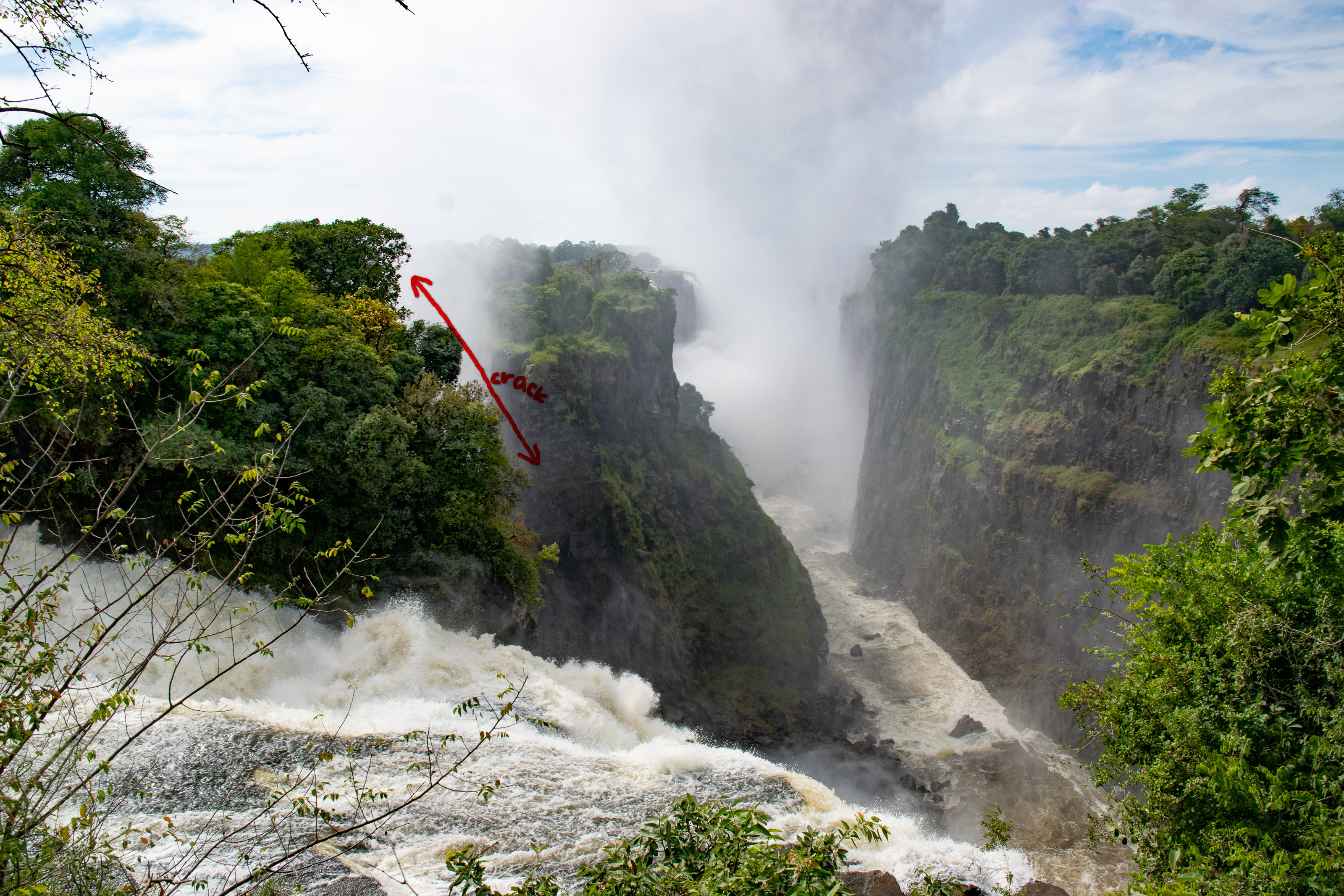
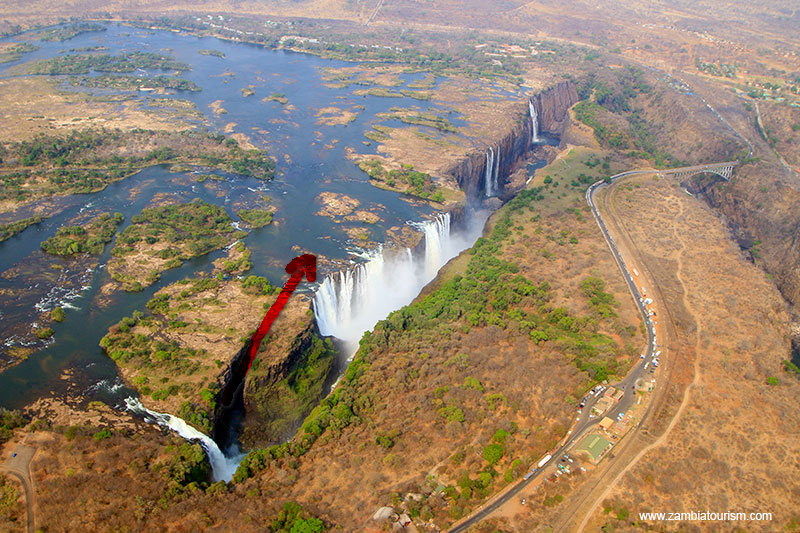
Mthulisi shared that this crack is getting bigger and in tens of thousands of year time it may completely change the view of the Falls, leaving Zambia without its part of them. In fact, we learned that during the dry season (July to October) the river bed on the Zambian side dries out so viewing of the Falls is only possible on the Zimbabwean side.
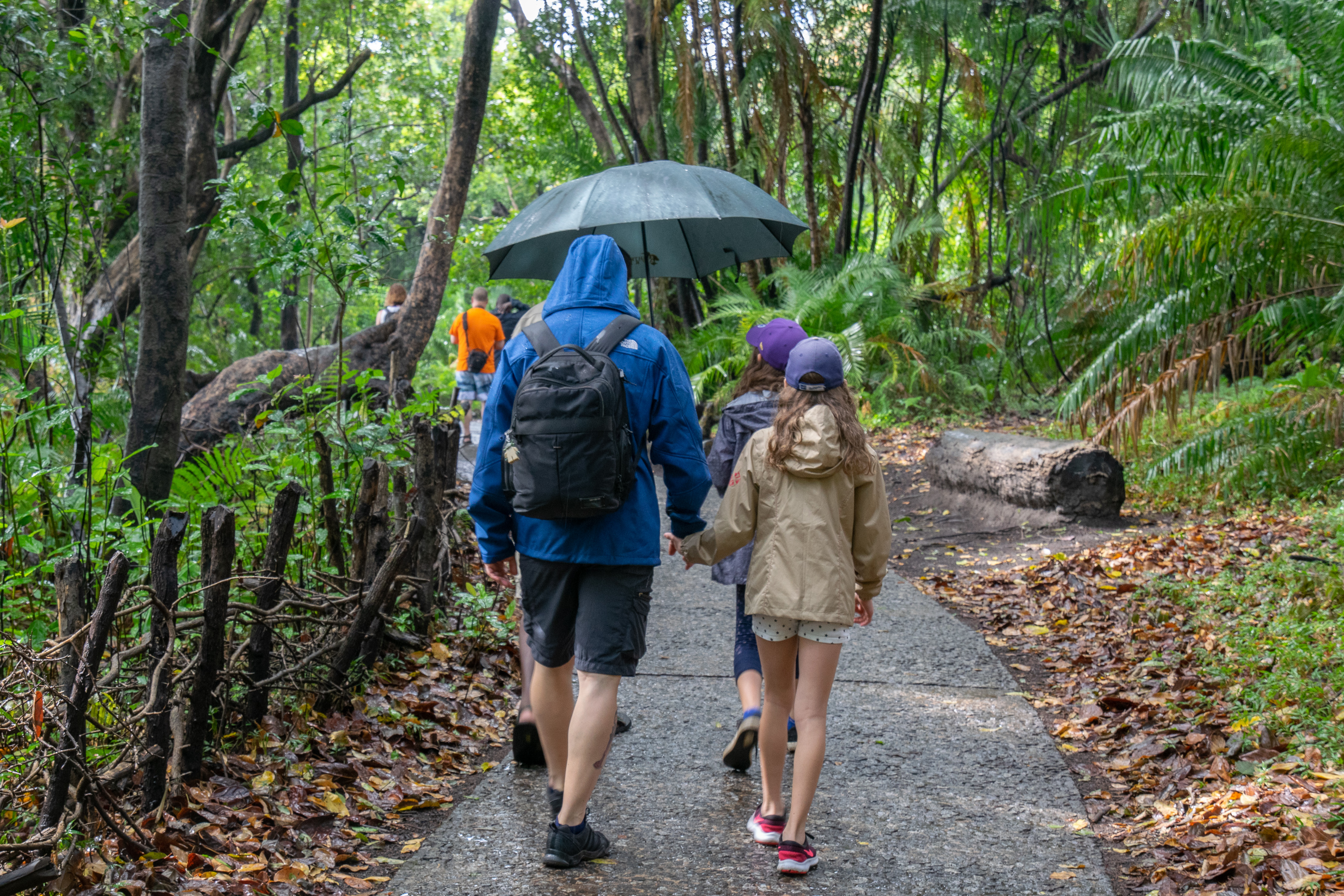
A path on the edge of a rain forest along the Falls led us to a series of tremendous views and every time a new viewing point opened up we got stunned by the spectacular sight and refreshed by the spray 🙂
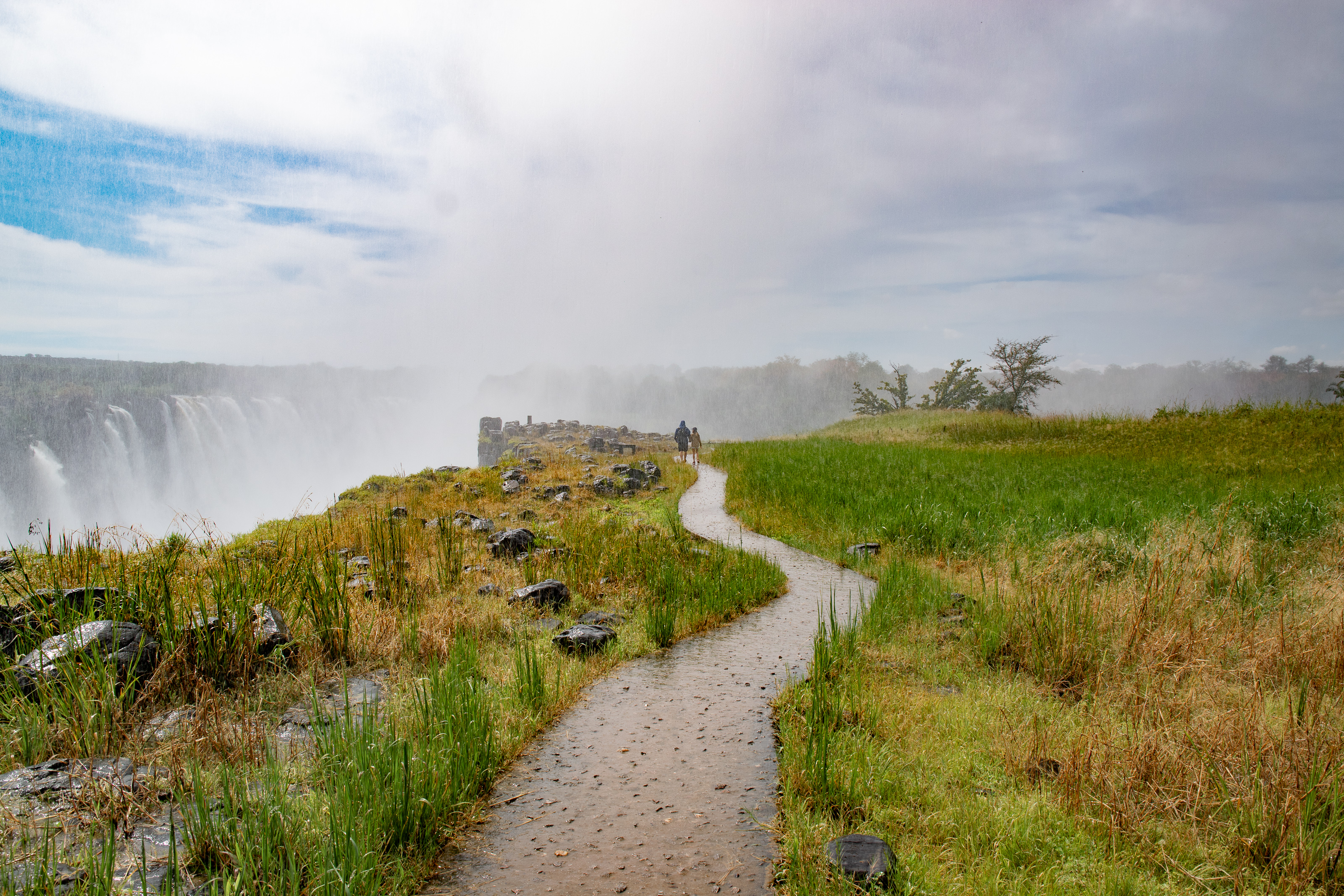
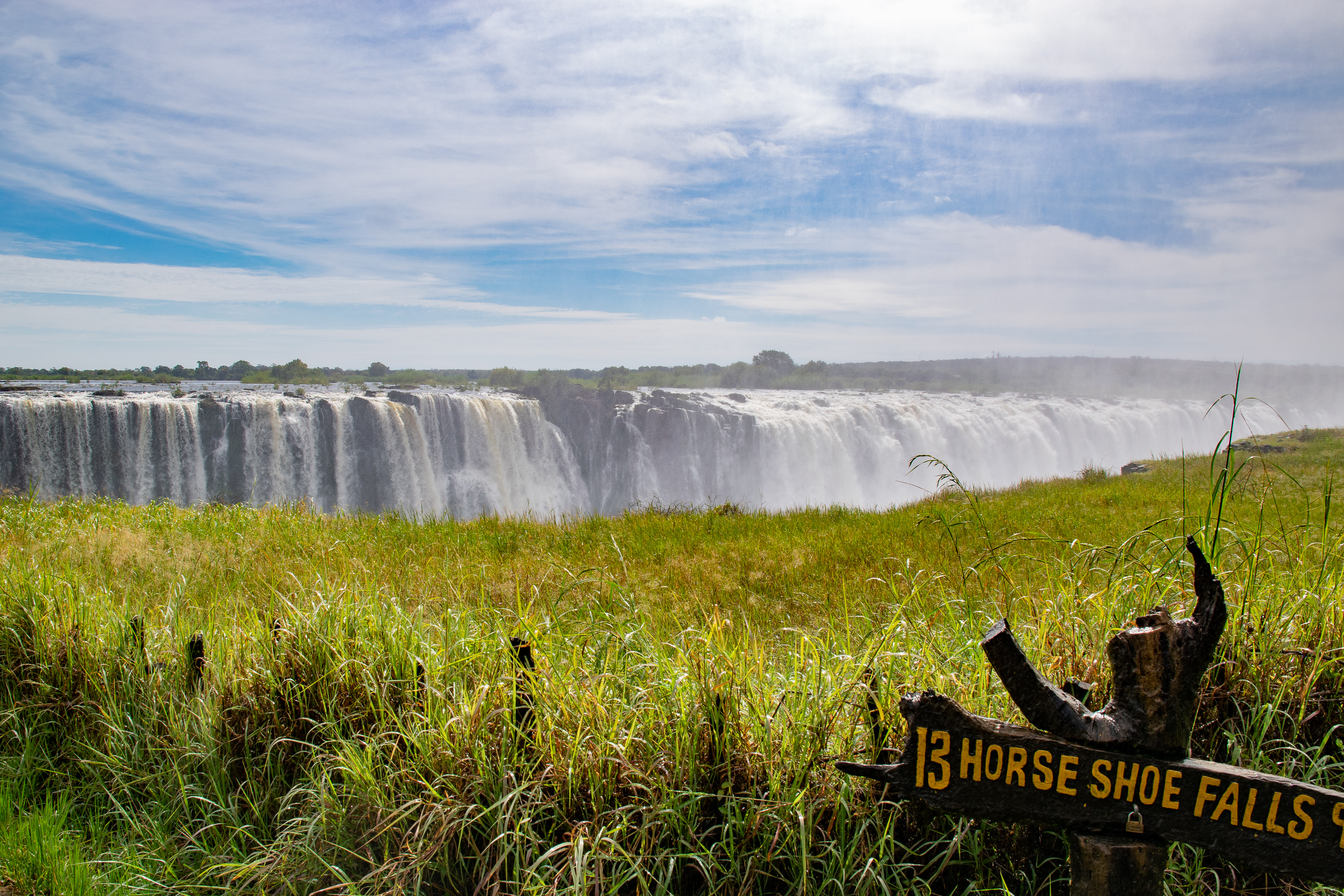
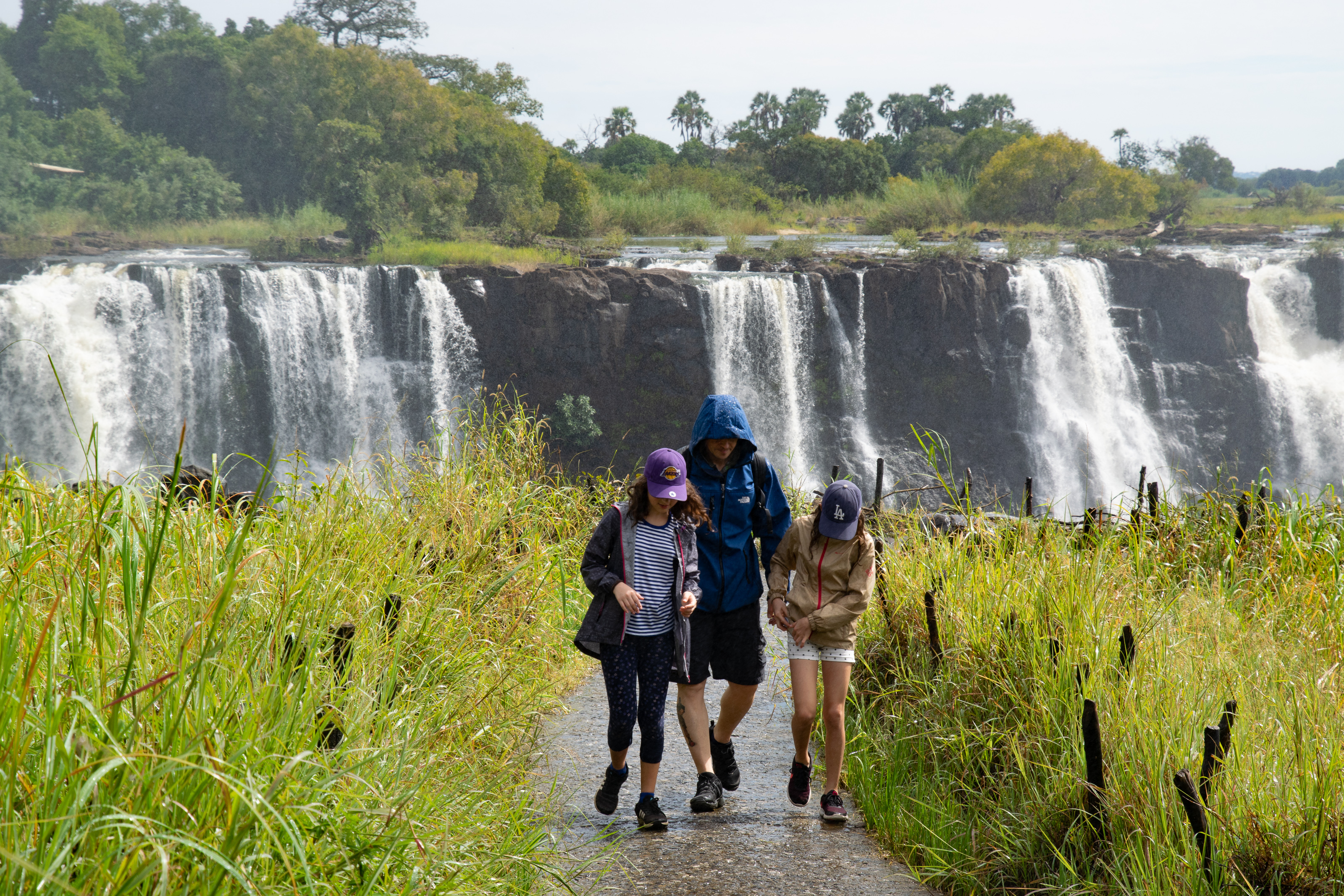
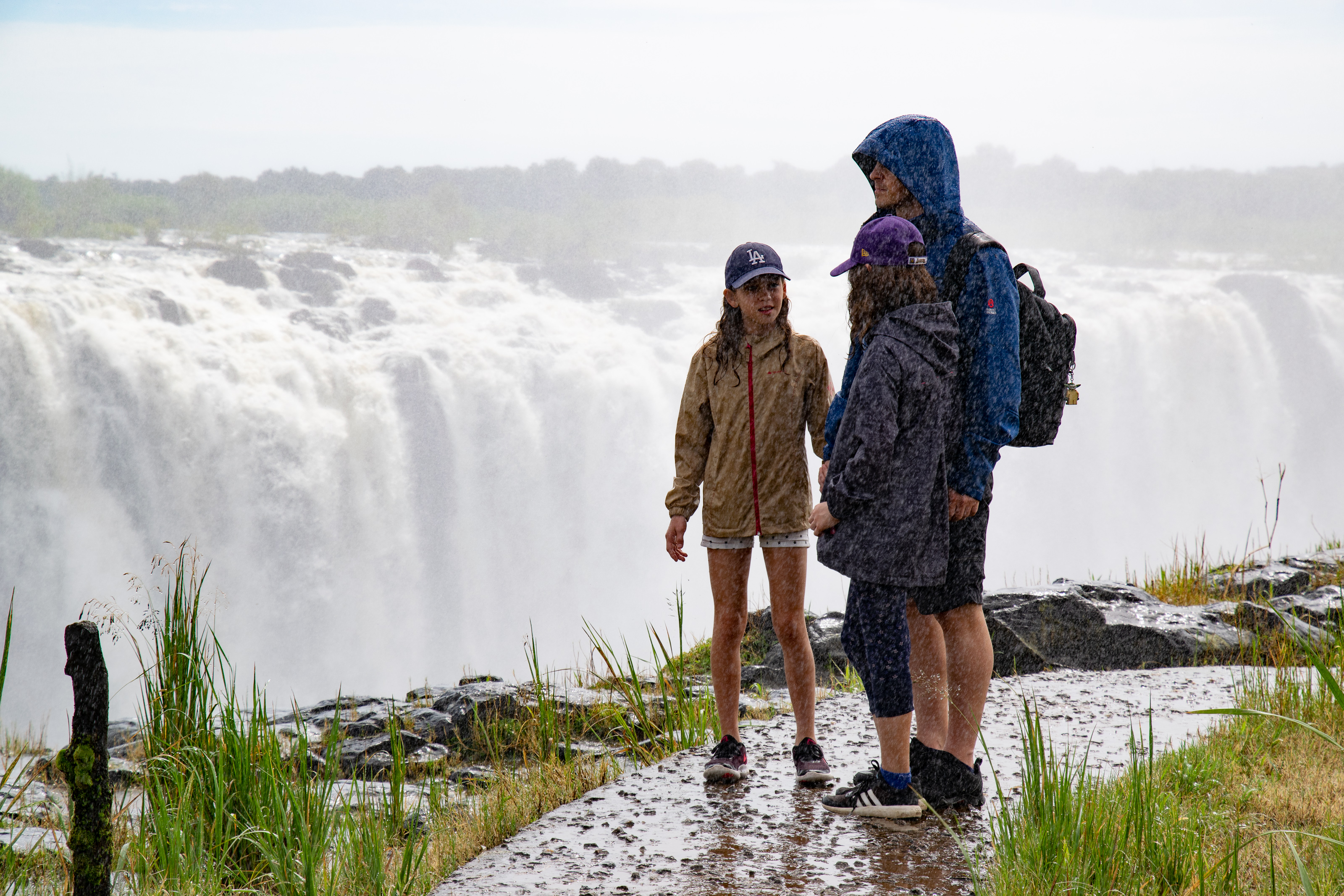
Victoria Falls provide plenty of other unique view points and attractions, among which I believe the Devil’s Pool is the most thrilling one. The erosion throughout the years has formed many rock pools near the Falls, and one of them is right on the edge – the Devil’s Pool – rightfully named “nature’s ultimate infinity pool”.
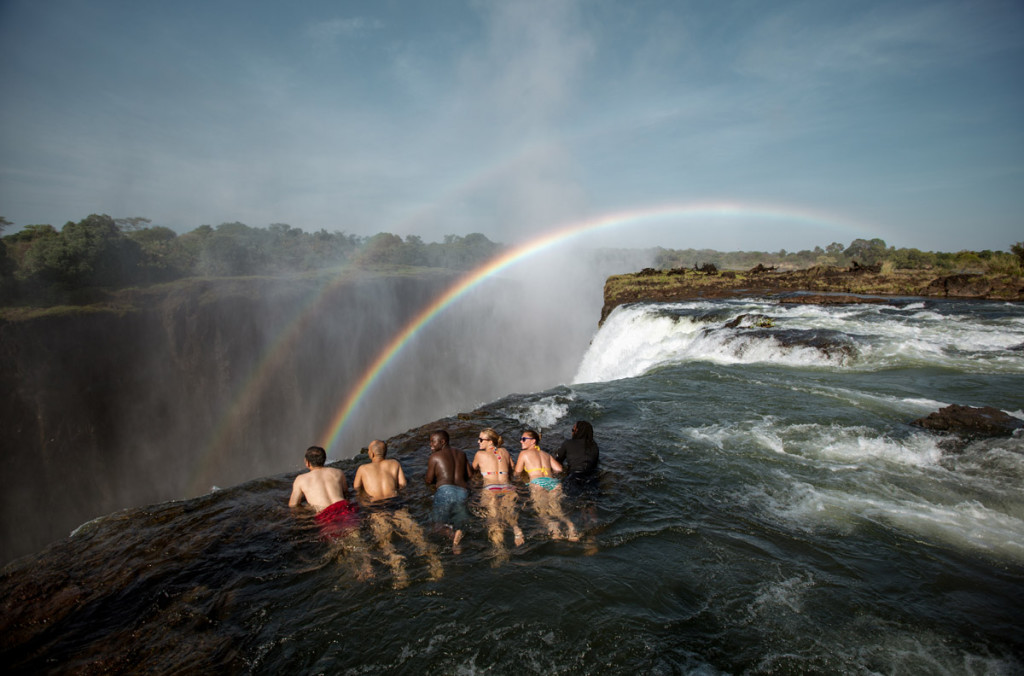
Devil’s Pool. Courtesy: www.zambiatourism.com
A rocky walk and swim takes you to the edge of the pool, where the braver can leap into the swimming hole and get pushed by the rushing river to the “Devil’s armchair”.
Unfortunately, the pool is accessible only from August to October (peak of the dry season) but if I get back to Zambia one day, this will be one of the top reasons to visit Victoria Falls again 🙂
On the way back the mild wind has changed its direction and skies got clear so we decided to walk the Victoria Falls Bridge to enjoy the Falls from yet another angle.
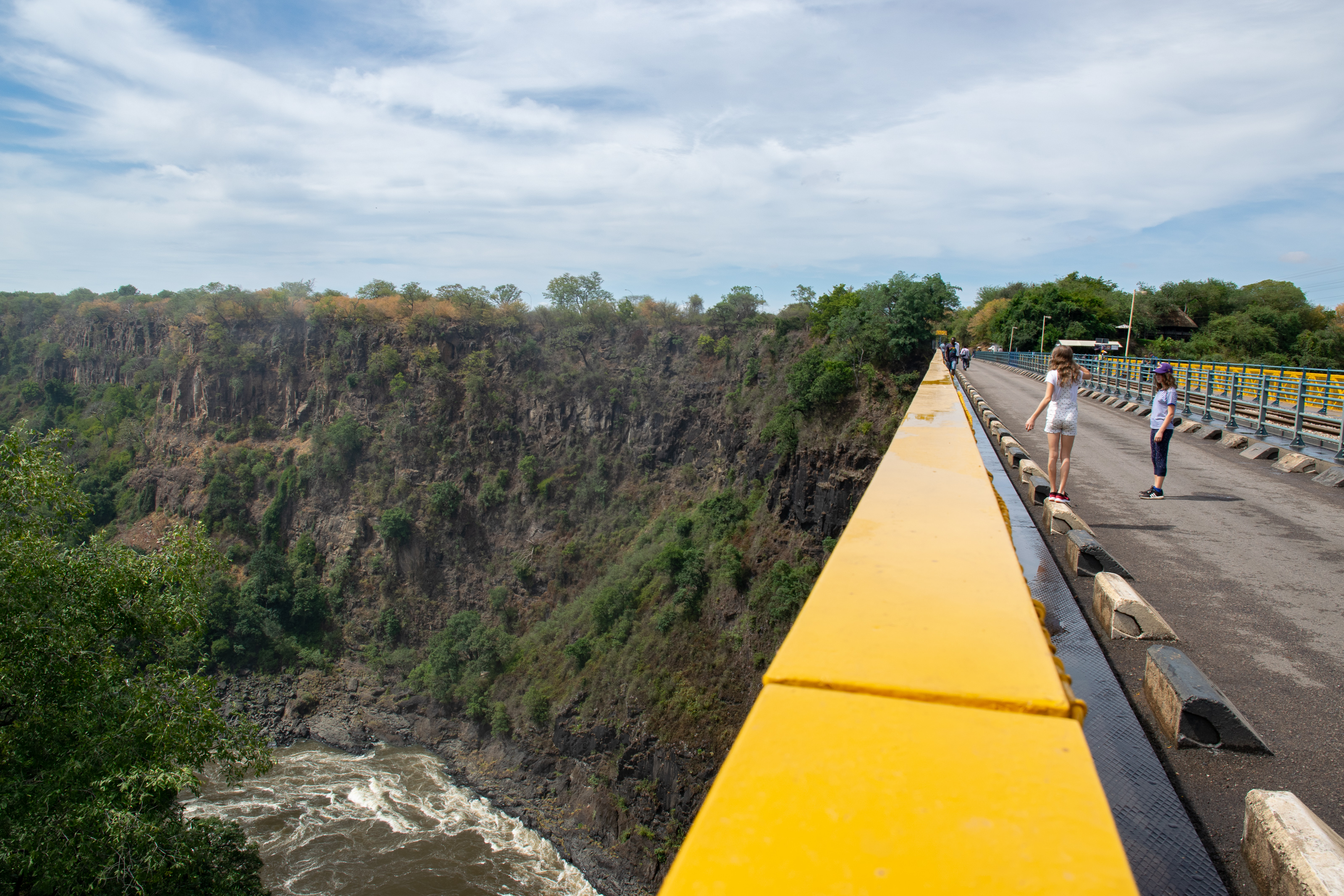
And as if the Falls sprayed not just water but some kind of magical drug on us, after crossing back the border, we didn’t waste a minute and headed right away to the Falls on the Zambian side! We were already completely soaked so we didn’t mind getting some extra spray.
We were told that the views to the Falls from the Zambian side are not so impressive. This is partly true simply because a larger part of the Falls’ length is on the Zimbabwean side. However, we fully enjoyed the Zambian side too, getting yet another solid shower and a great view to the Victoria Falls Bridge.
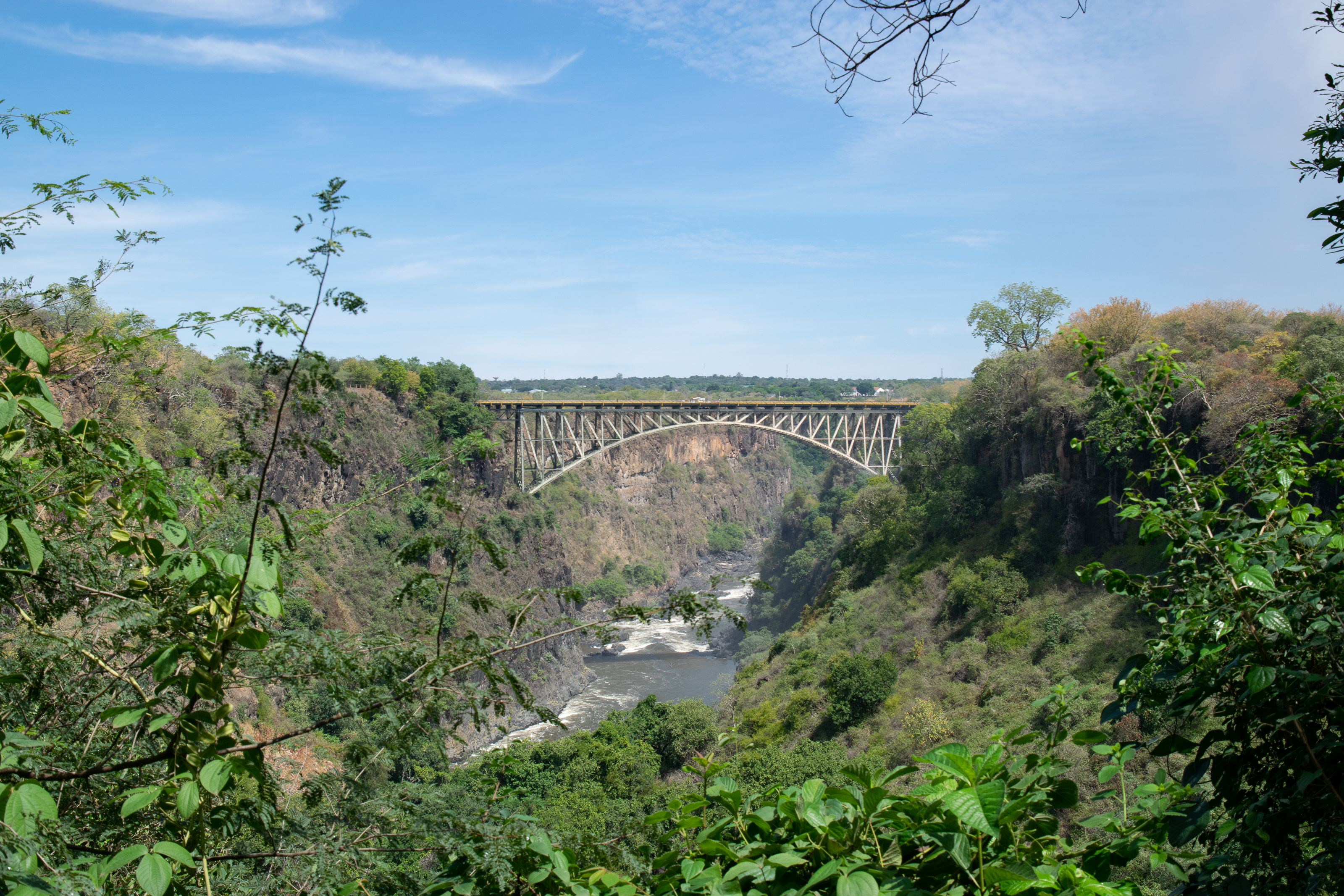
Magnificent view to the Victoria Falls Bridge from the Zambian side
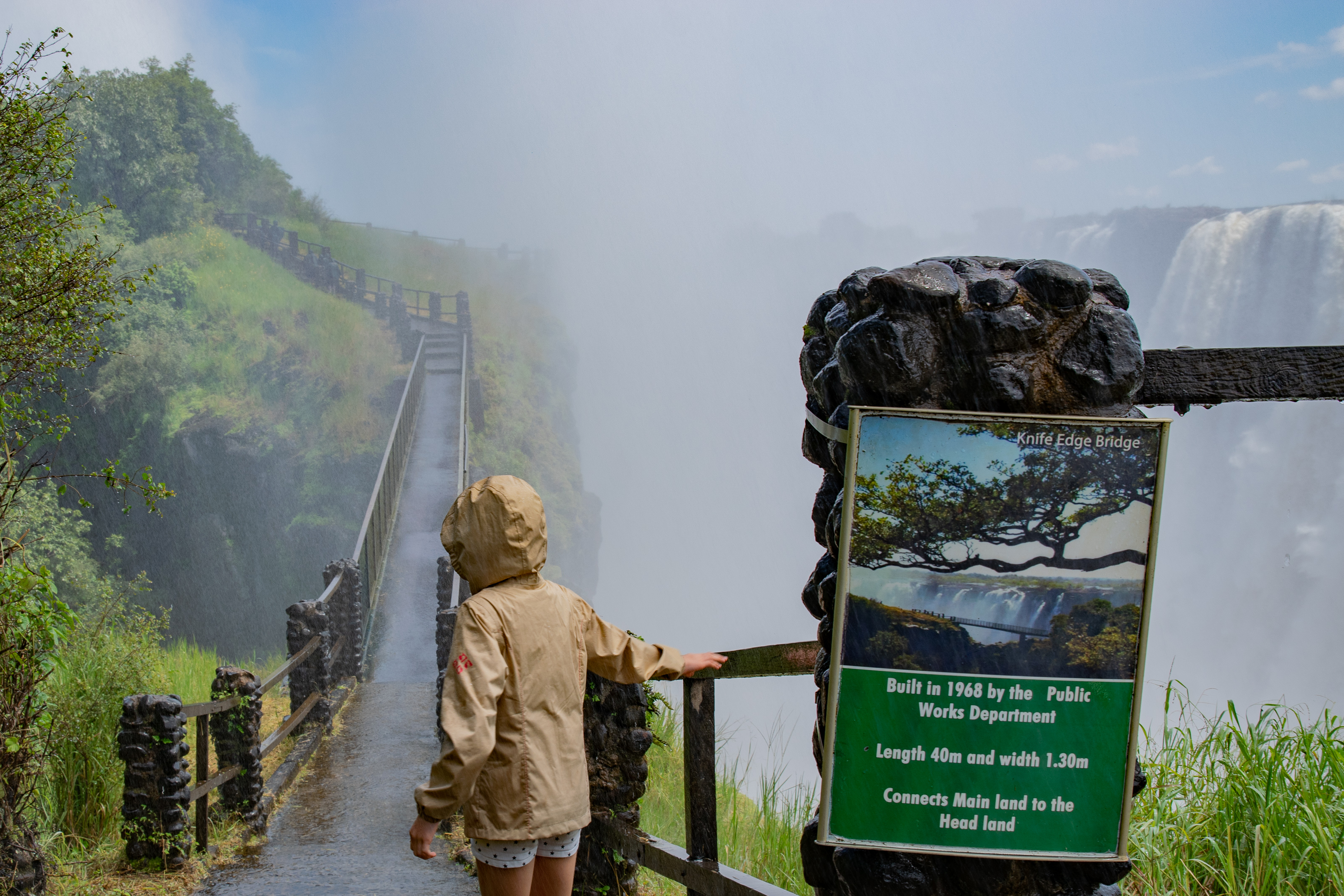
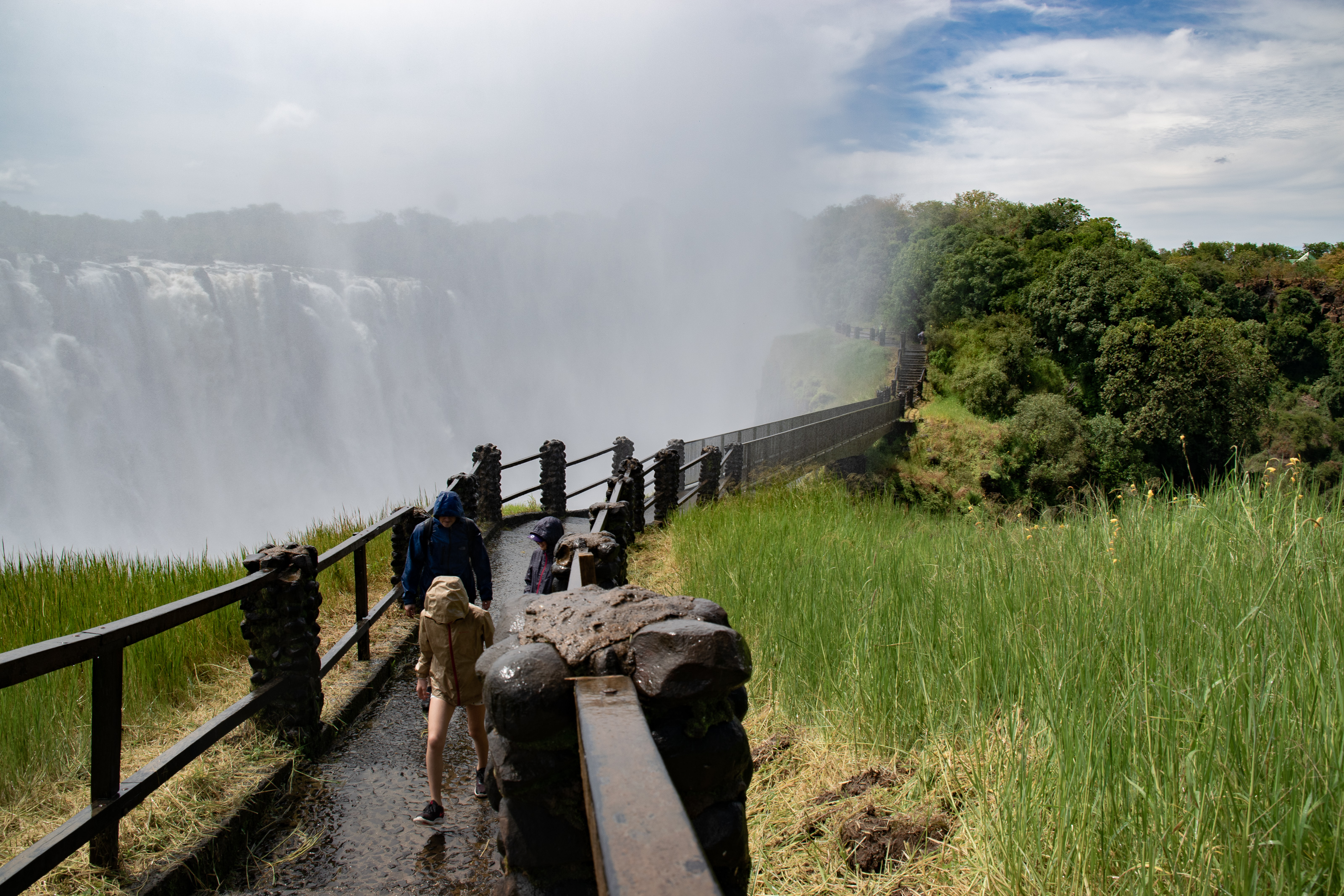
On the Knife Edge Bridge from the Zambian side
With this our Victoria Falls experience came to an end and it took us 5 min walking to get back to the hotel room.
My main travel rule is this: no visit to a new country or place is considered completed without having the chance to expose yourself to the local culture. We had only one afternoon left in Livingstone before heading to the deep bush in Kafue National Park, so we took a 3-hour tour to the nearby Mukuni Village to learn about the origins and vibrant culture of the Leya people (one of the ethnic groups in Zambia).
We were welcomed by a very kind and charismatic local lady right in the “center” of the village, at the big acacia tree. This is where the Chief of Mukuni met David Livingstone back in 1855, and today the tree is still a popular meeting point.
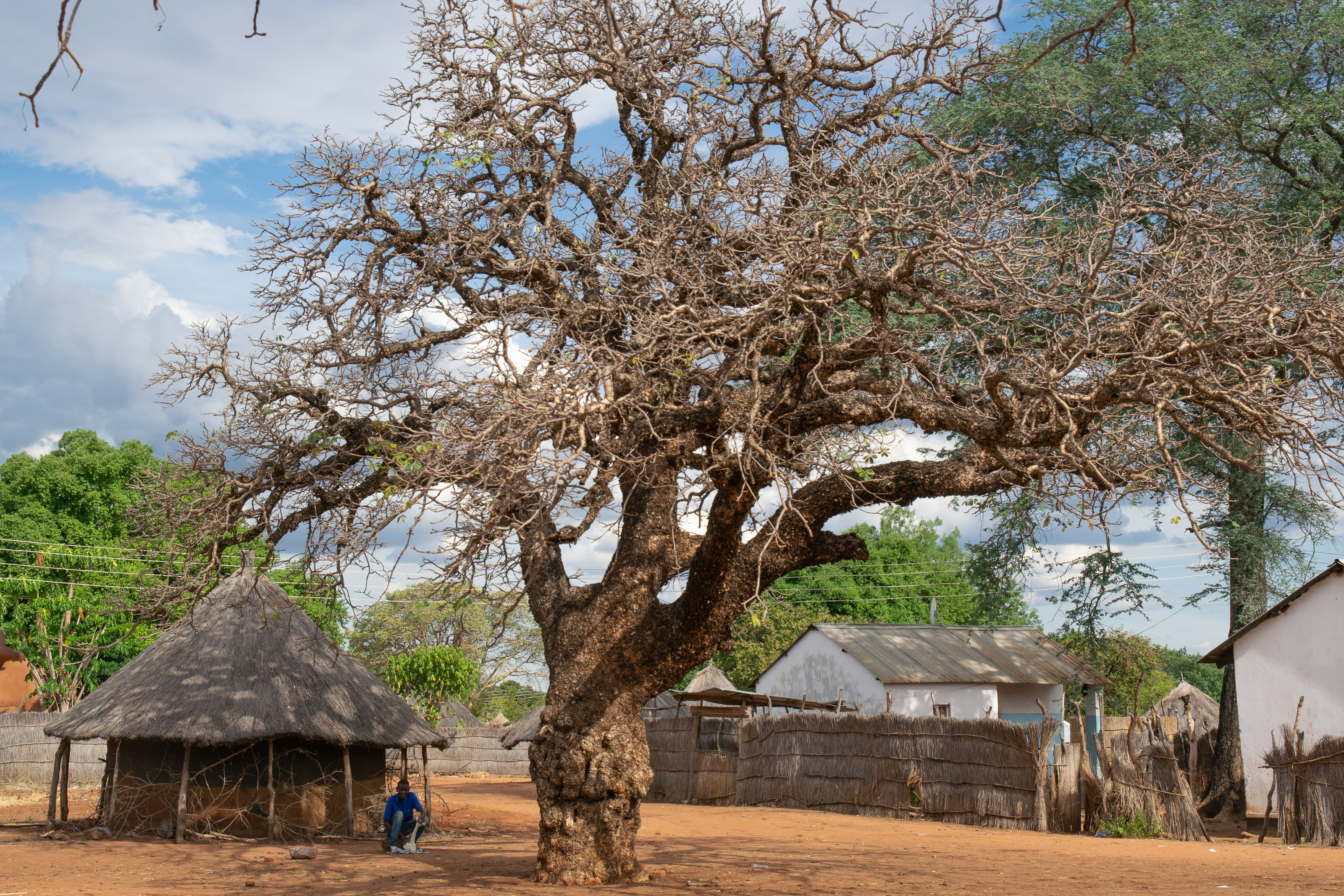
Mukuni means “Big Tree”
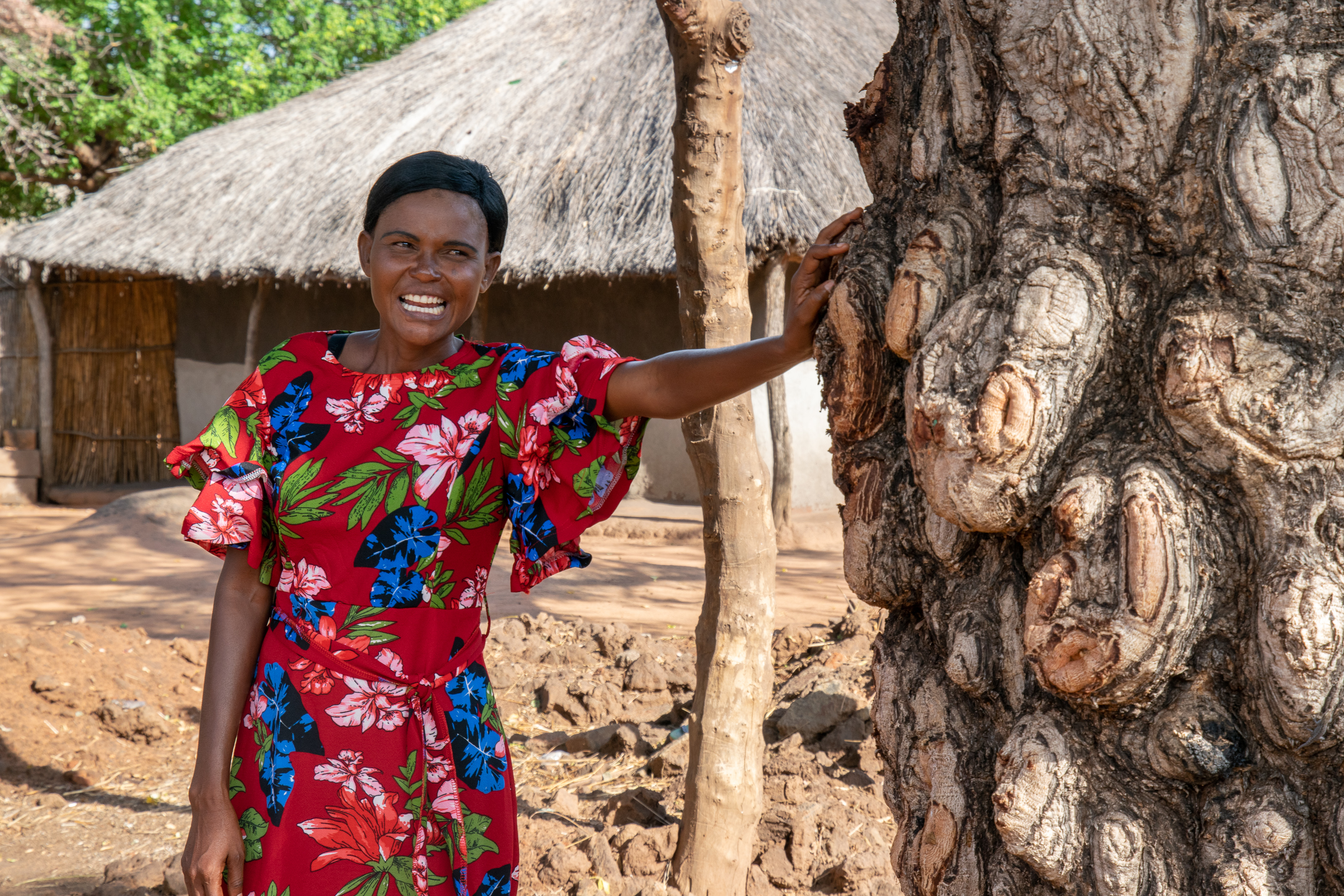 When she started talking about the village I felt like in an African fairy tale. I am not sure how much truth there is in this but she explained that if the current Chief of Mukuni fells sick or cannot pursue his governance duties due to sickness or old age, he should get killed (poisoned) so that a new Chief takes over the power. My daughters were deeply impressed and Mirella kept asking afterwards how exactly they would poison the Chief 🙂 I personally think that this is a great story to impress tourists but who knows, this is Africa and many things are possible..
Another curious fact was related to the “neighborhood watch station”, or the so called “prison” of Mukuni, located close to the big acacia on the central square.
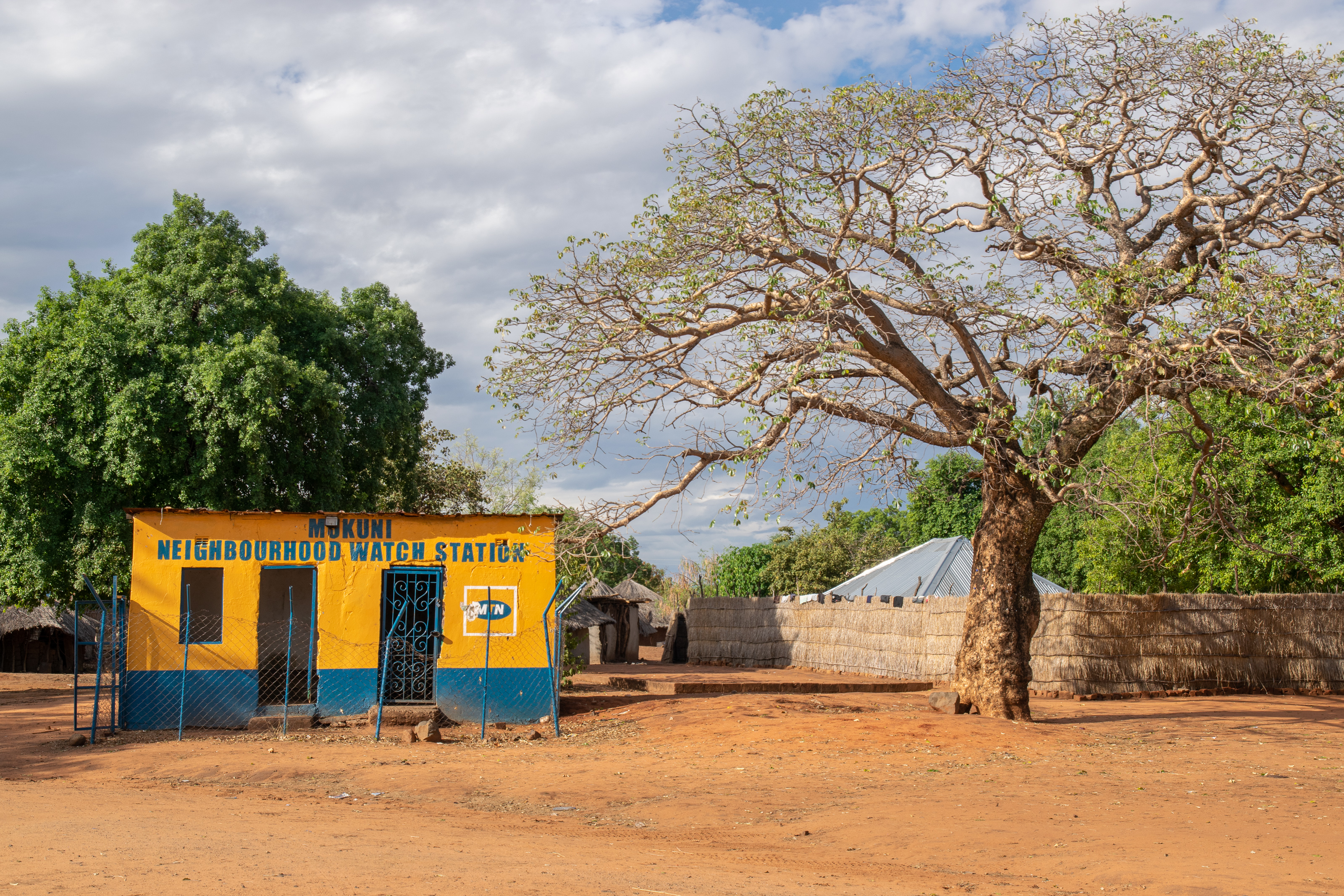
Since there is no Police Service in Mukuni, local people take full responsibility of the observation and regulation of public order. So whenever a local citizen gets drunk or does something wrong, his/her neighbors takes him/her to the local “prison”.
We then walked through the village to observe the local everyday life. The guide showed us how manketti nuts are crashed, pounded and their oil extracted, and we visited a local house (or more precisely, a hut). Despite the poverty and the sandy soil, on which the huts were constructed, they looked neat and tidy – flower beds were separated by green bottles whose necks were carefully tucked into the ground.
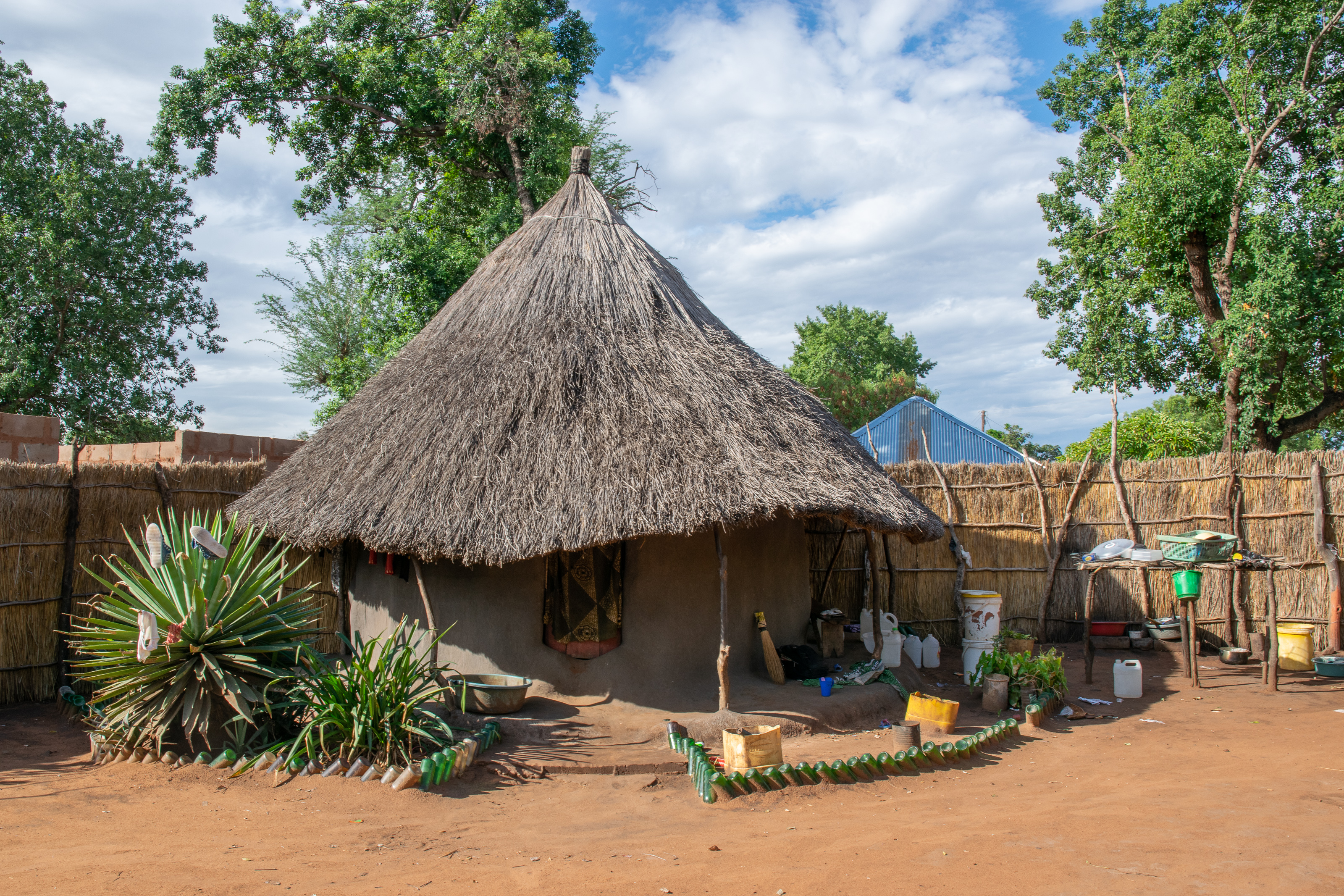
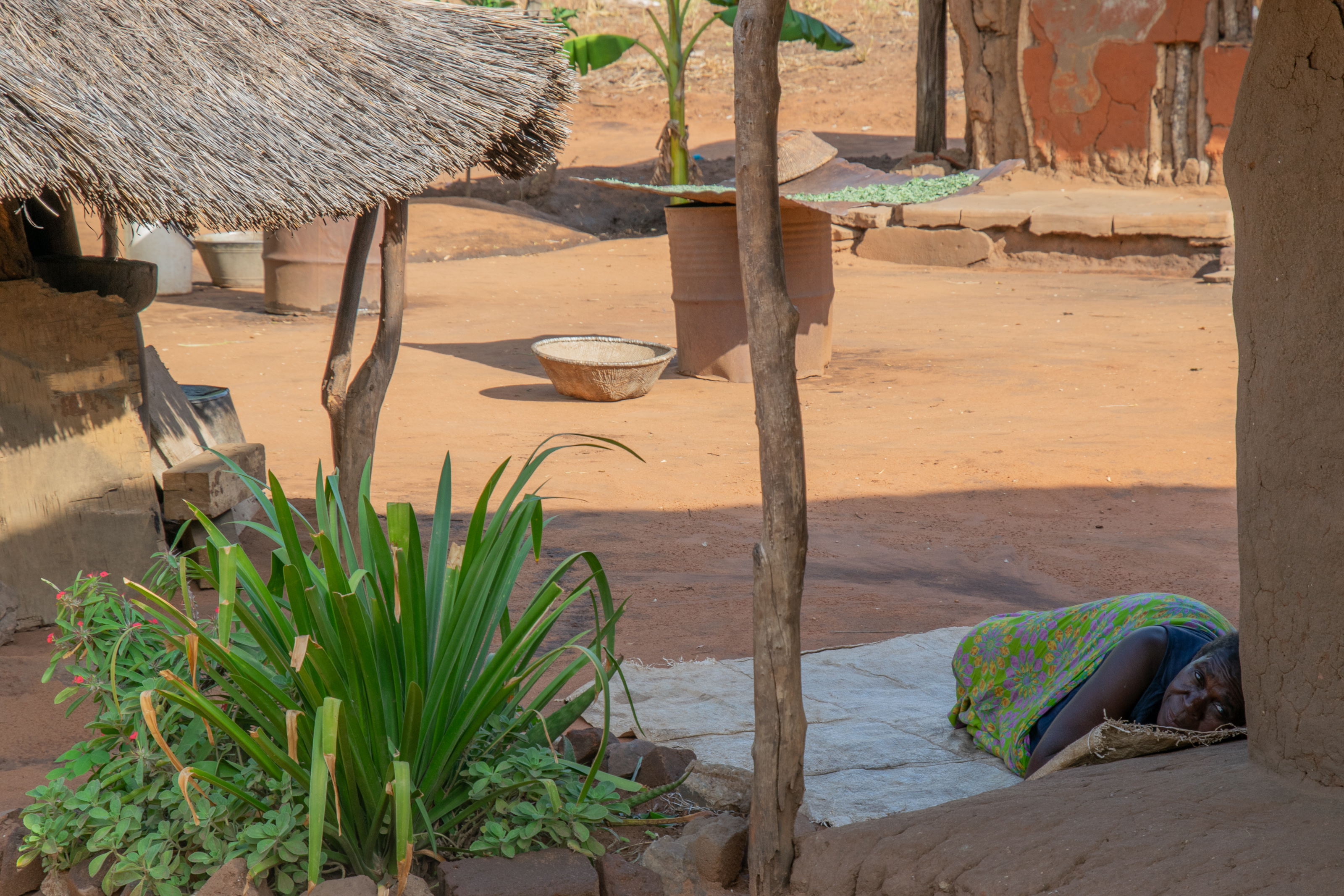
A woman having a siesta in the shadow of her house
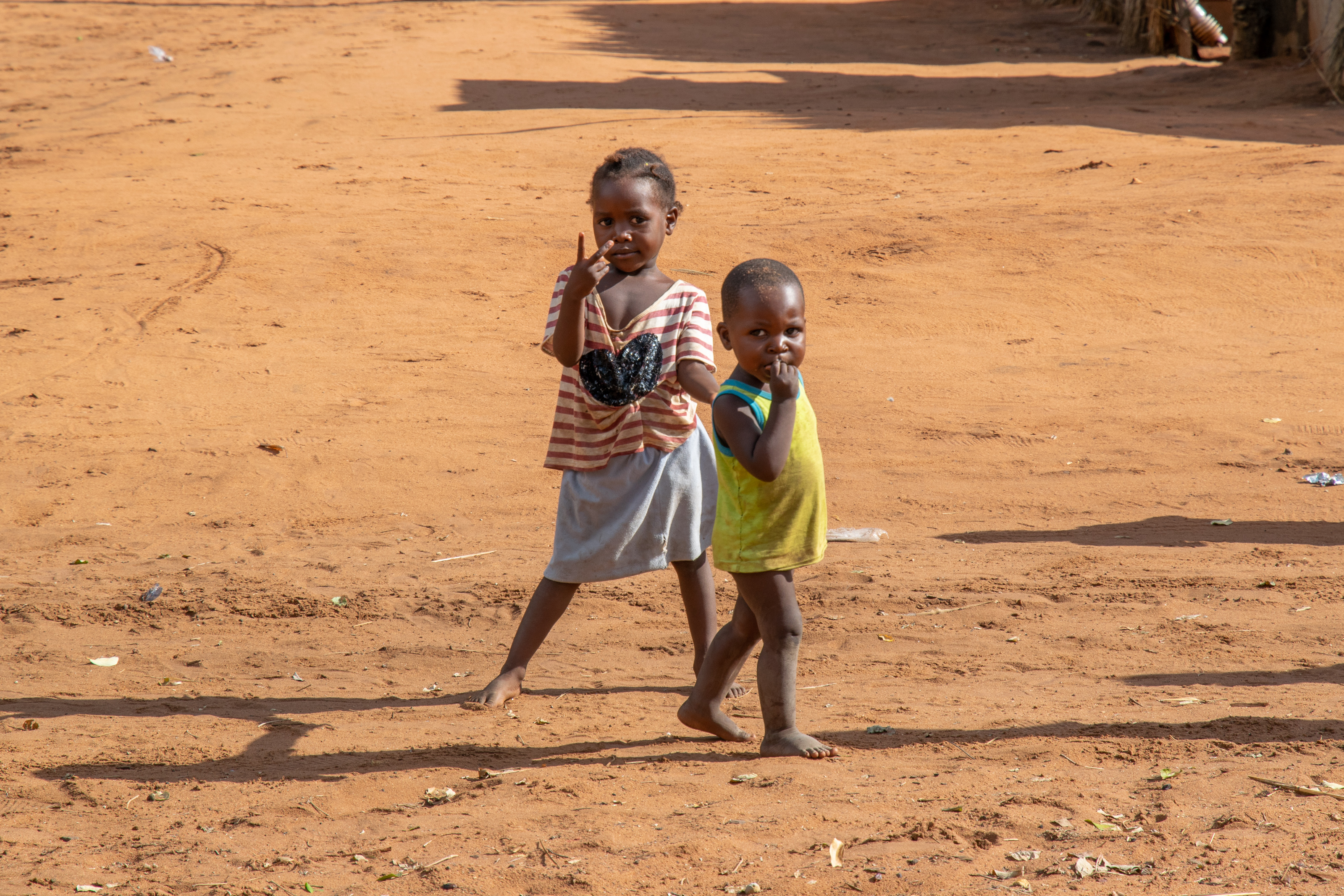
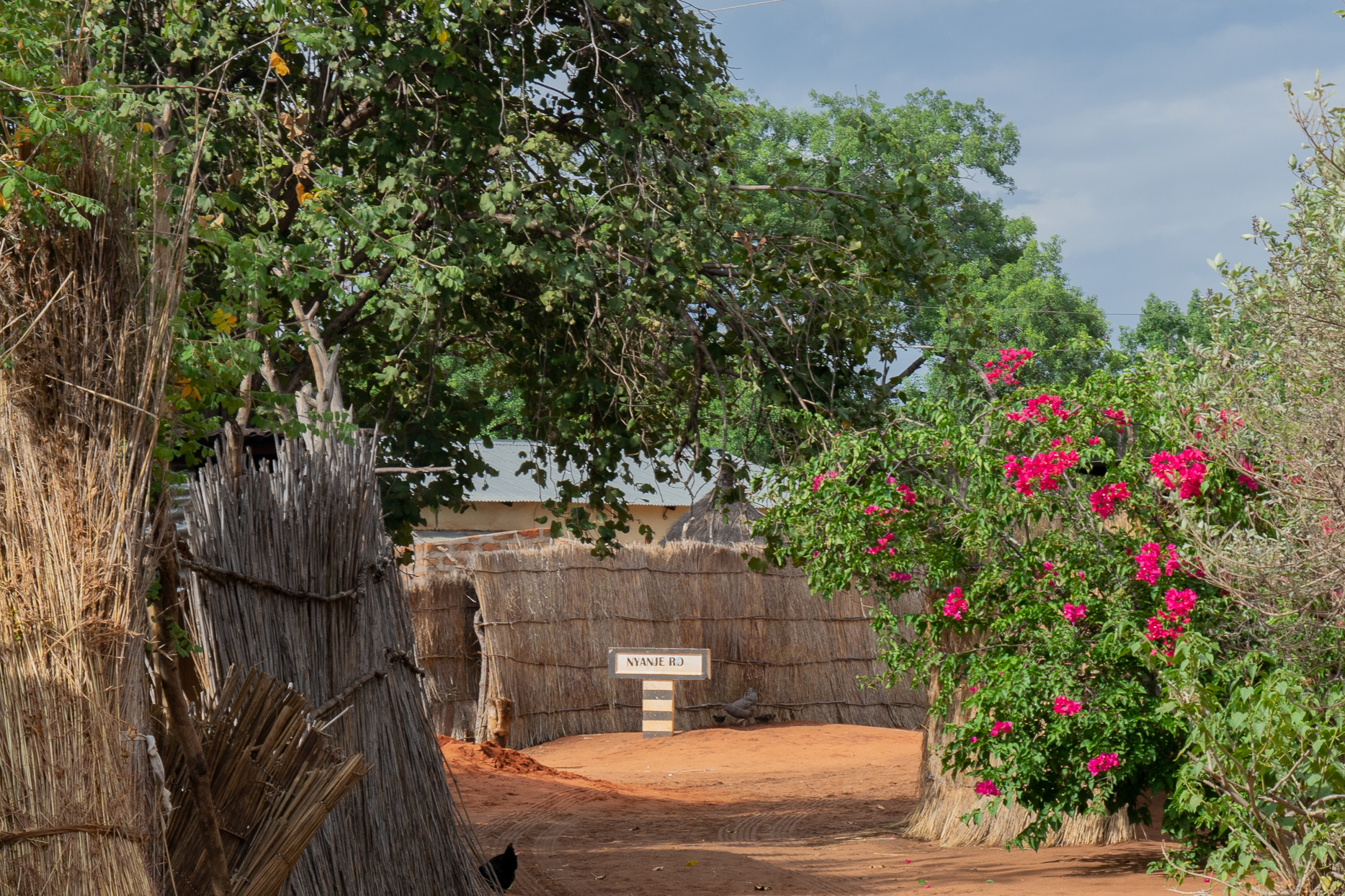
Even the only street in the village is given a name 🙂
The last thing I could expect to learn about a place like Mukuni was the tradition to burn garbage in designated holes in the soil, and recycle anything that can be recycled. No comment about the traditions in the so called developed world!
We walked on to reach an open-air hut where local craftsmen created African souvenirs, mostly from dry wood broken down by elephants. It was amazing to observe the working process, which was obviously divided into work stages – rough cutting of the wood, smoothing, final touches, coloring etc.
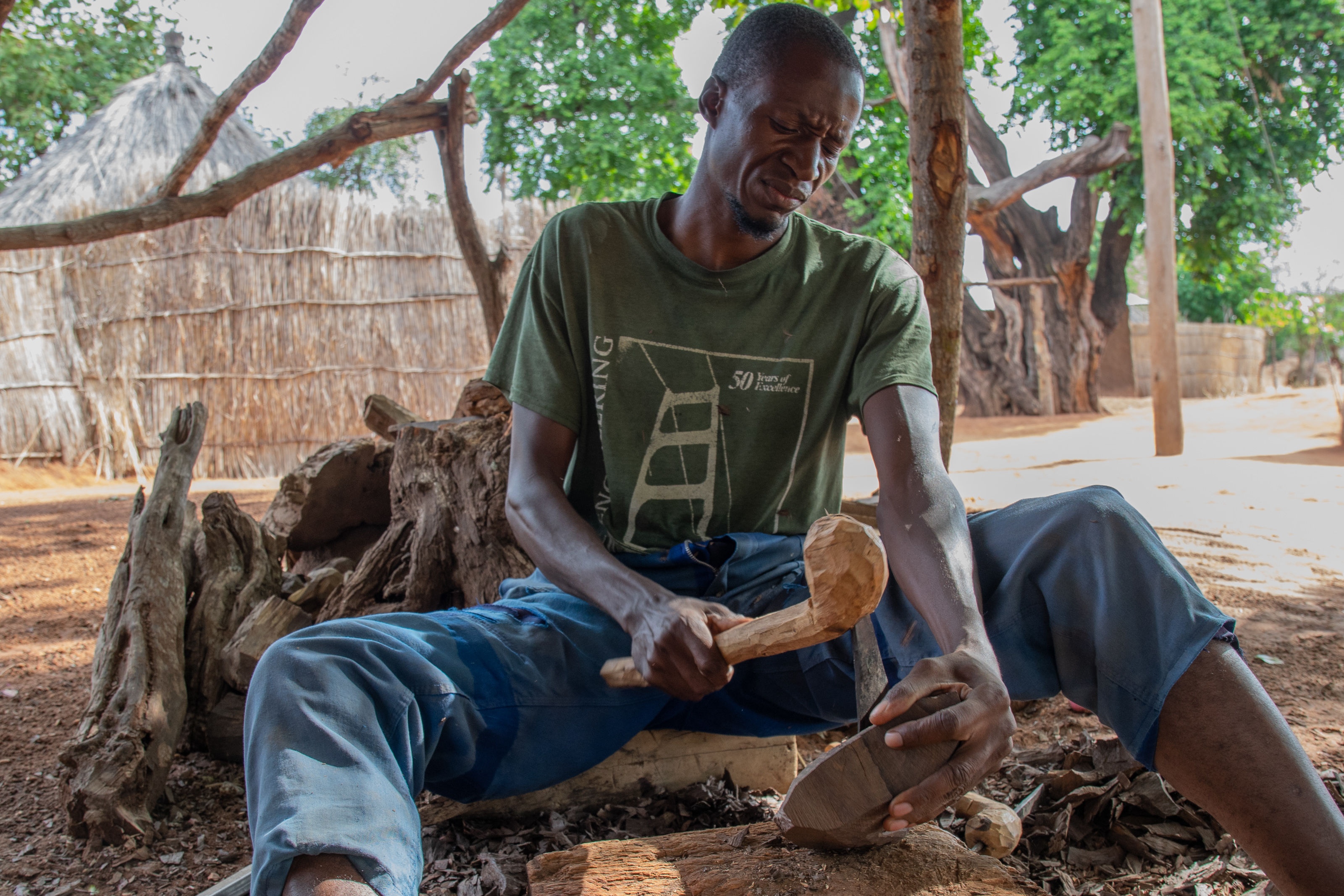
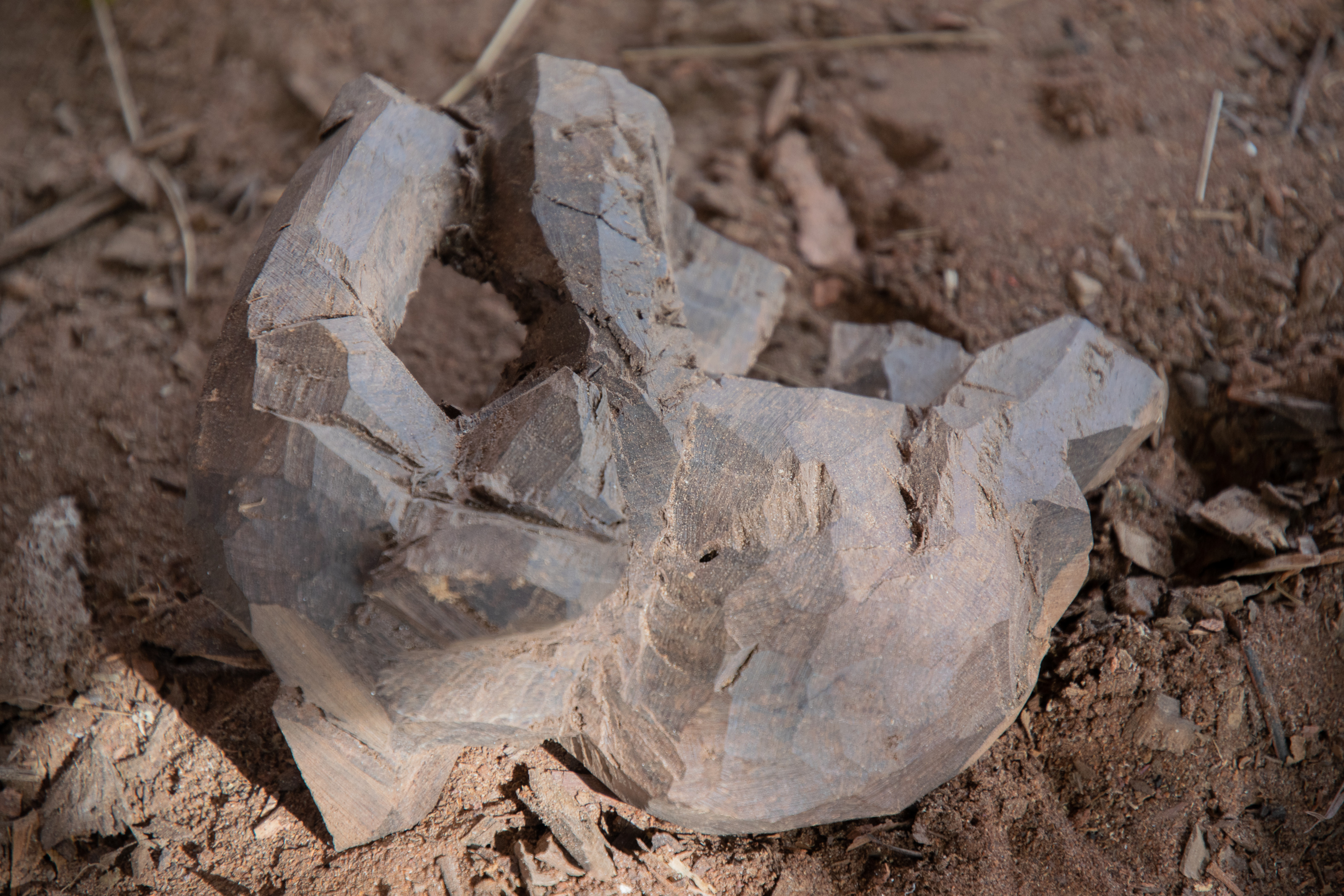
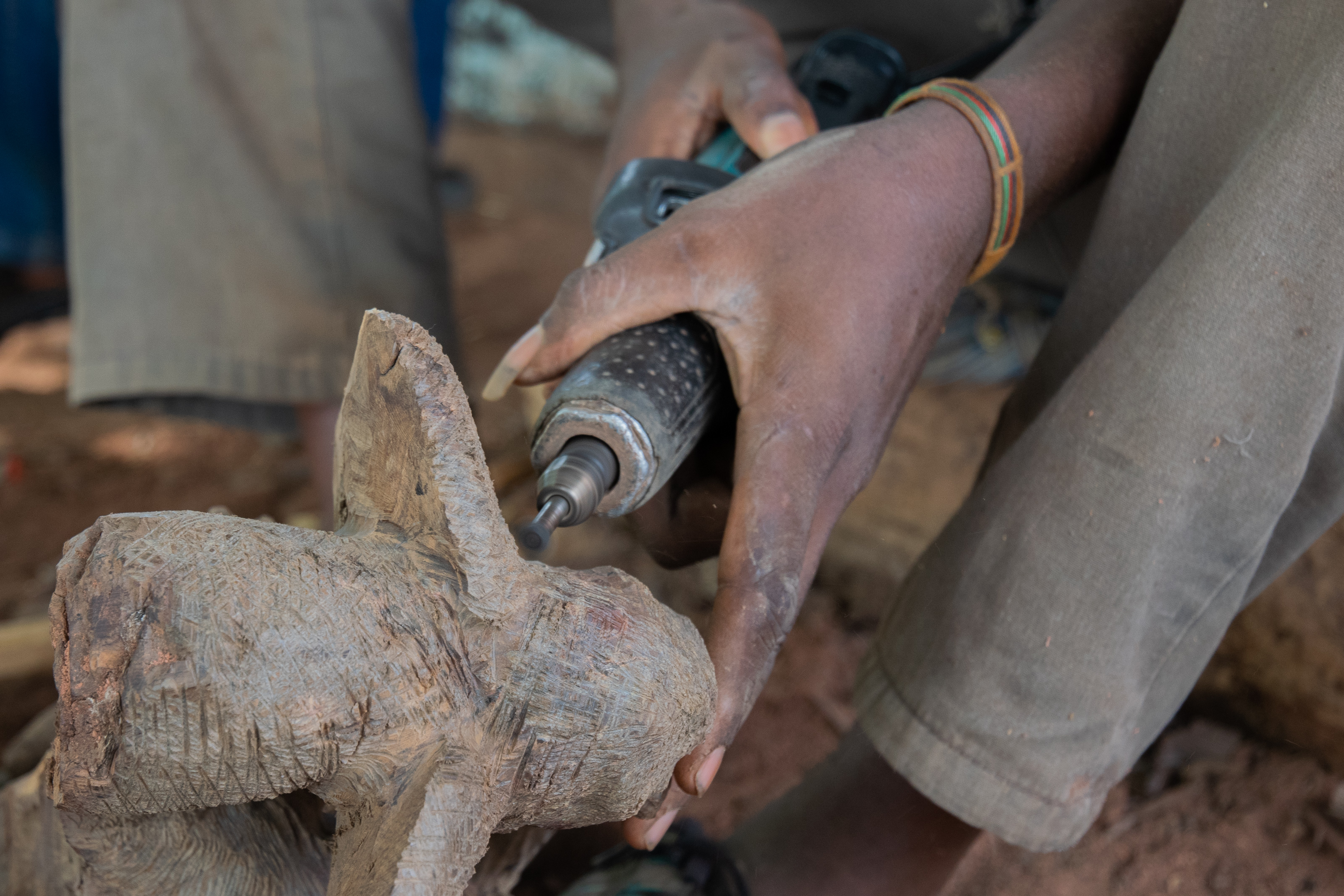
It was funny to see how they actually colored the dark patterns on the wooden giraffe – with a permanent marker – as simple as that.
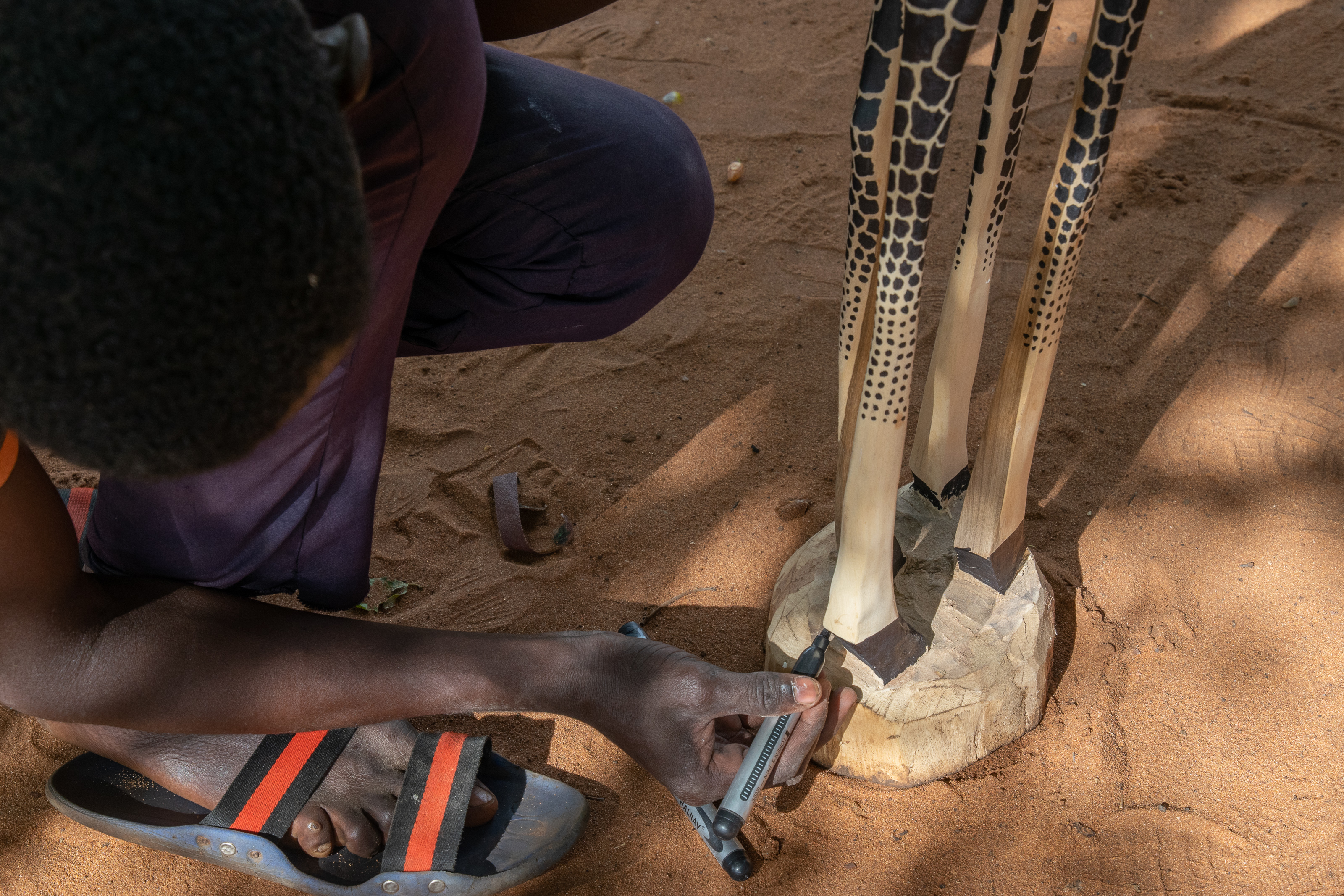
The tour ended at the craft market where each stand was a wonderful collage of colors, stone and wood sculptures, bowls, and jewelries. We couldn’t walk through the stalls without a trader promising their best offer. It was really hard to make a decision which one to support but then I saw one of the craftsman who was working on a piece of wood just half an hour ago, so the choice was made quickly.
It was about the right time to return to the hotel area and go for a sundowner on Zambezi viewing deck at Avani’s nearby sister hotel Royal Livingstone. With another great view to the Falls. What a day!
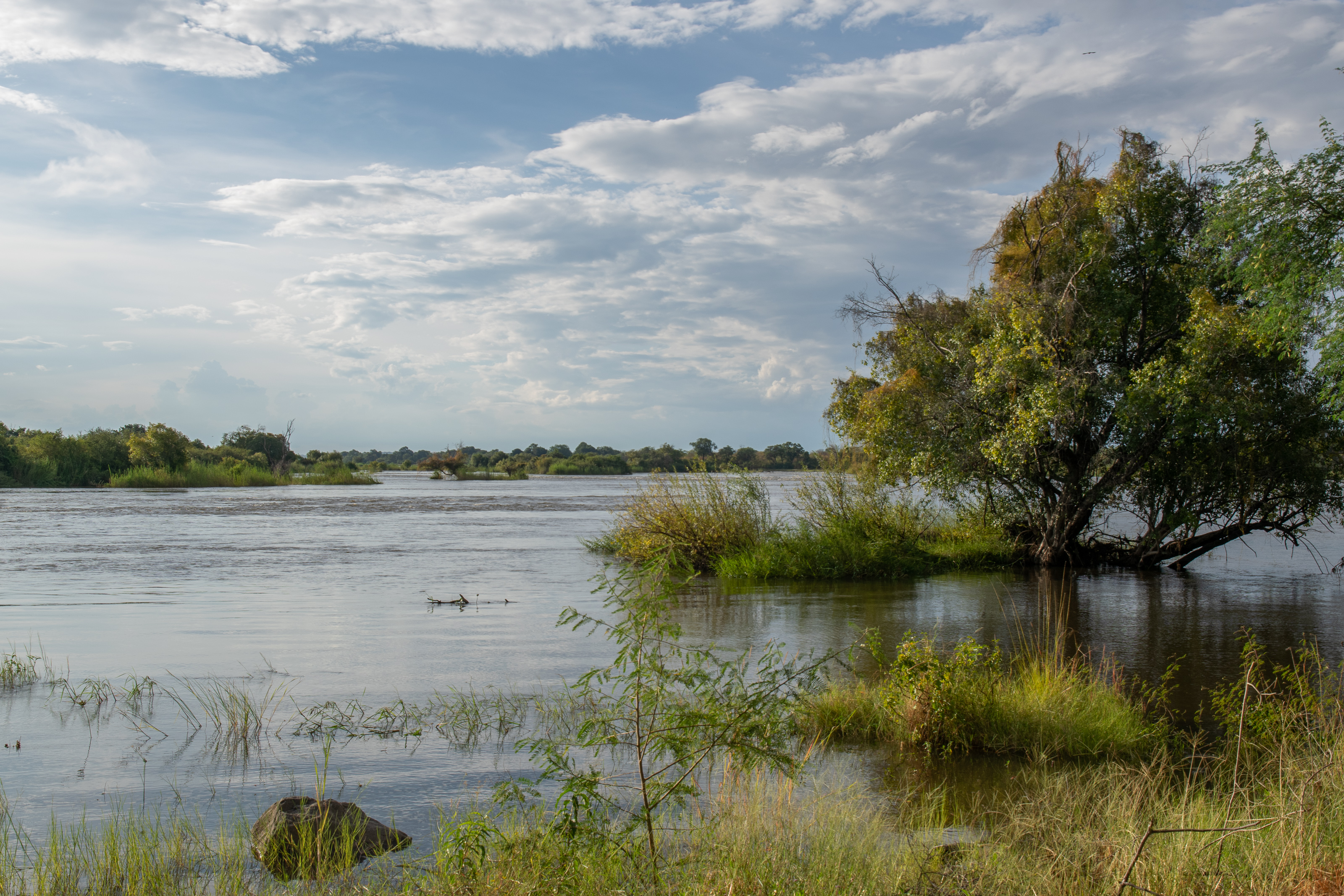
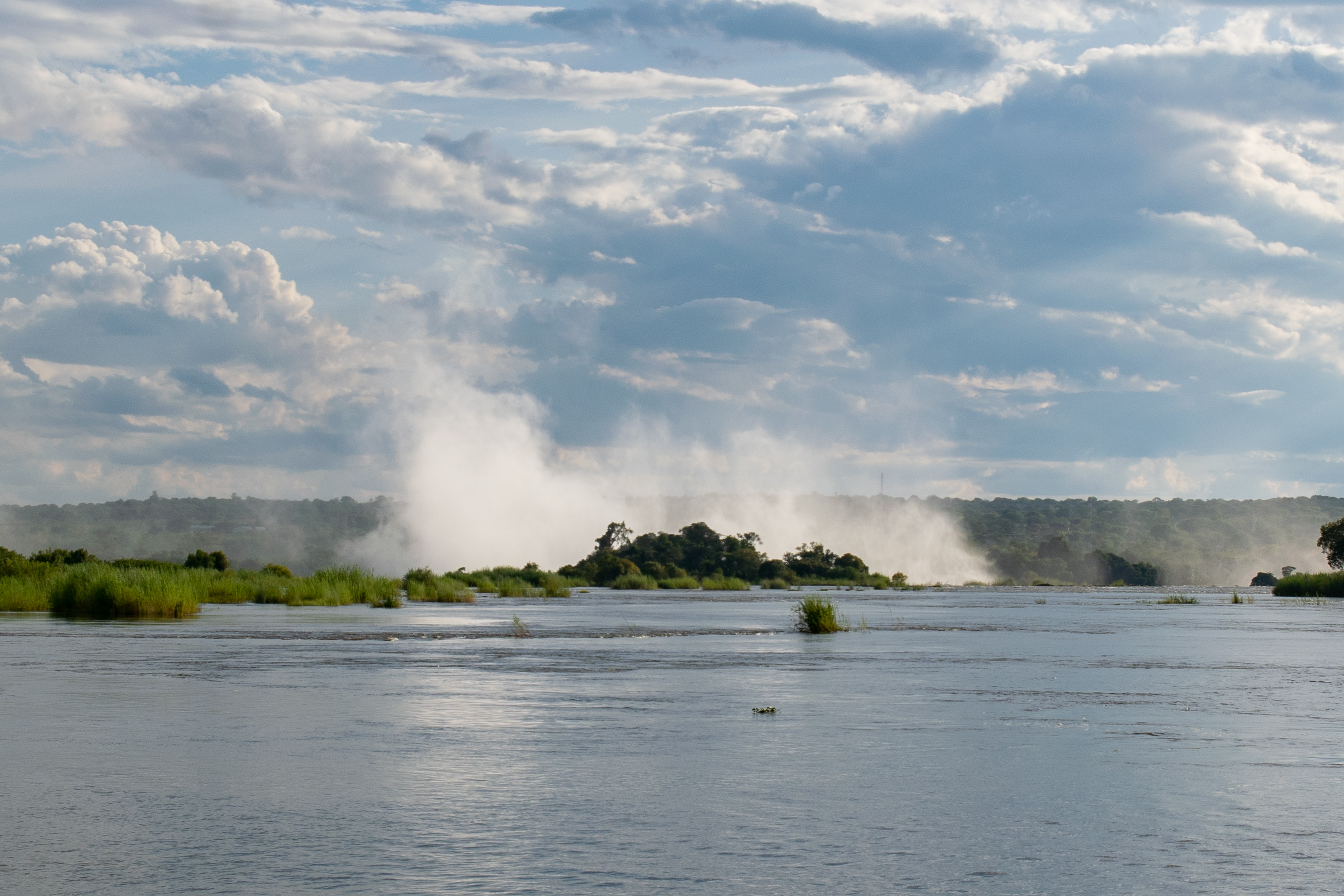
“The smoke that thunders” can be spotted from as far as 50 km.
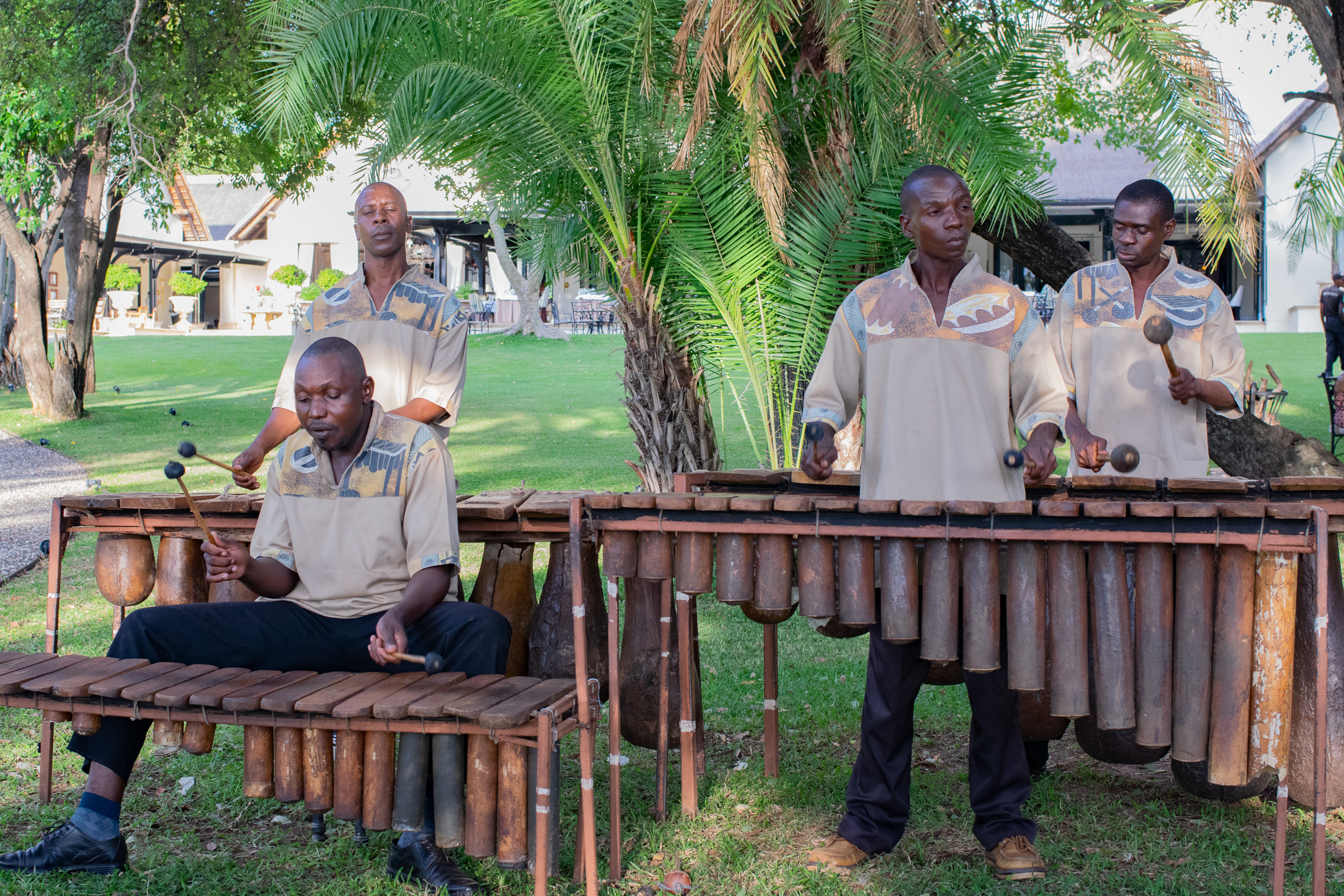
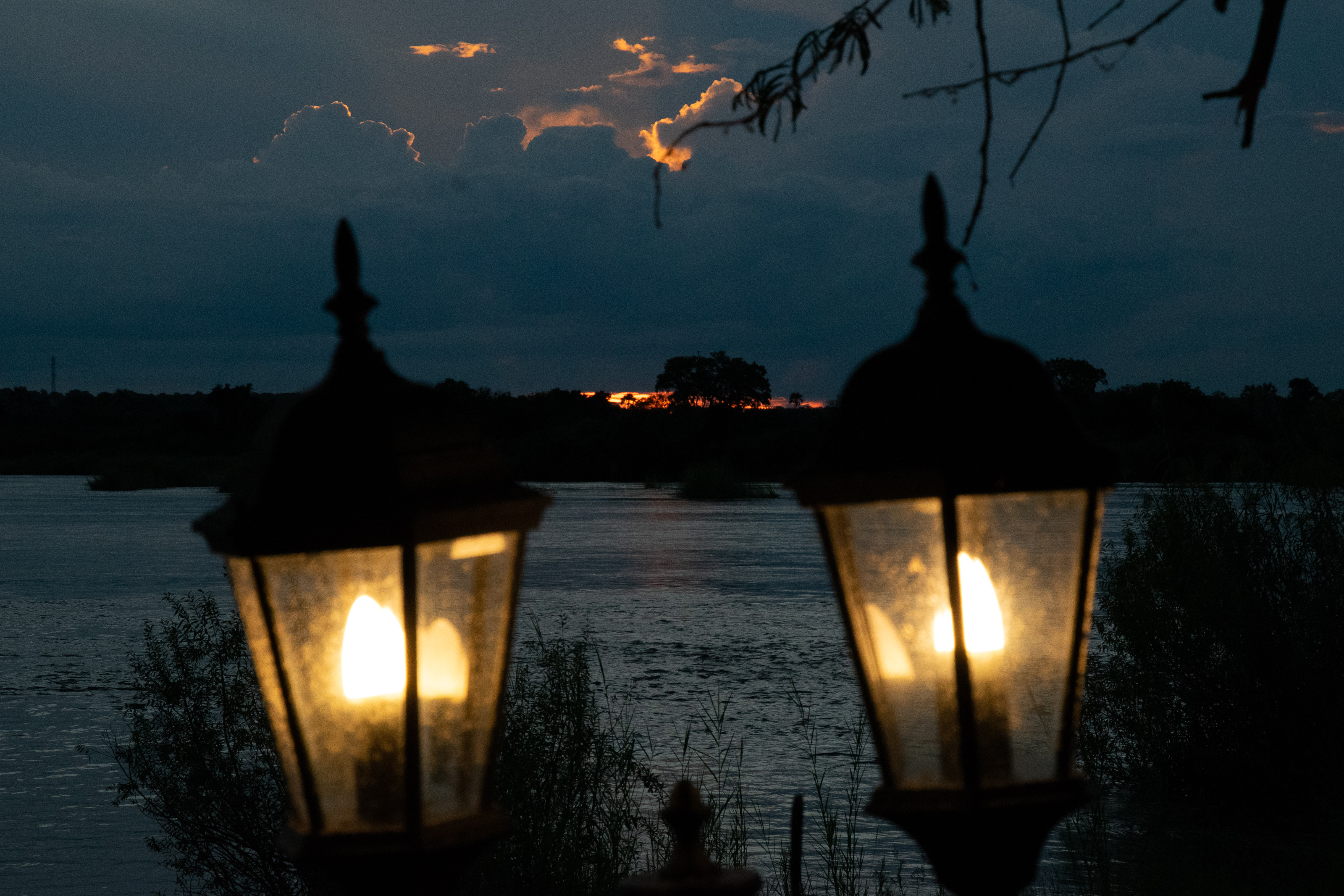
This was also the end of the civilized part of our Zambian Trip. And it was just about enough. My thoughts were already somewhere in the wilderness of Kafue National Park and I couldn’t wait to finally get in the deep bush.
End of Part 1.
Click here to read Part 2.