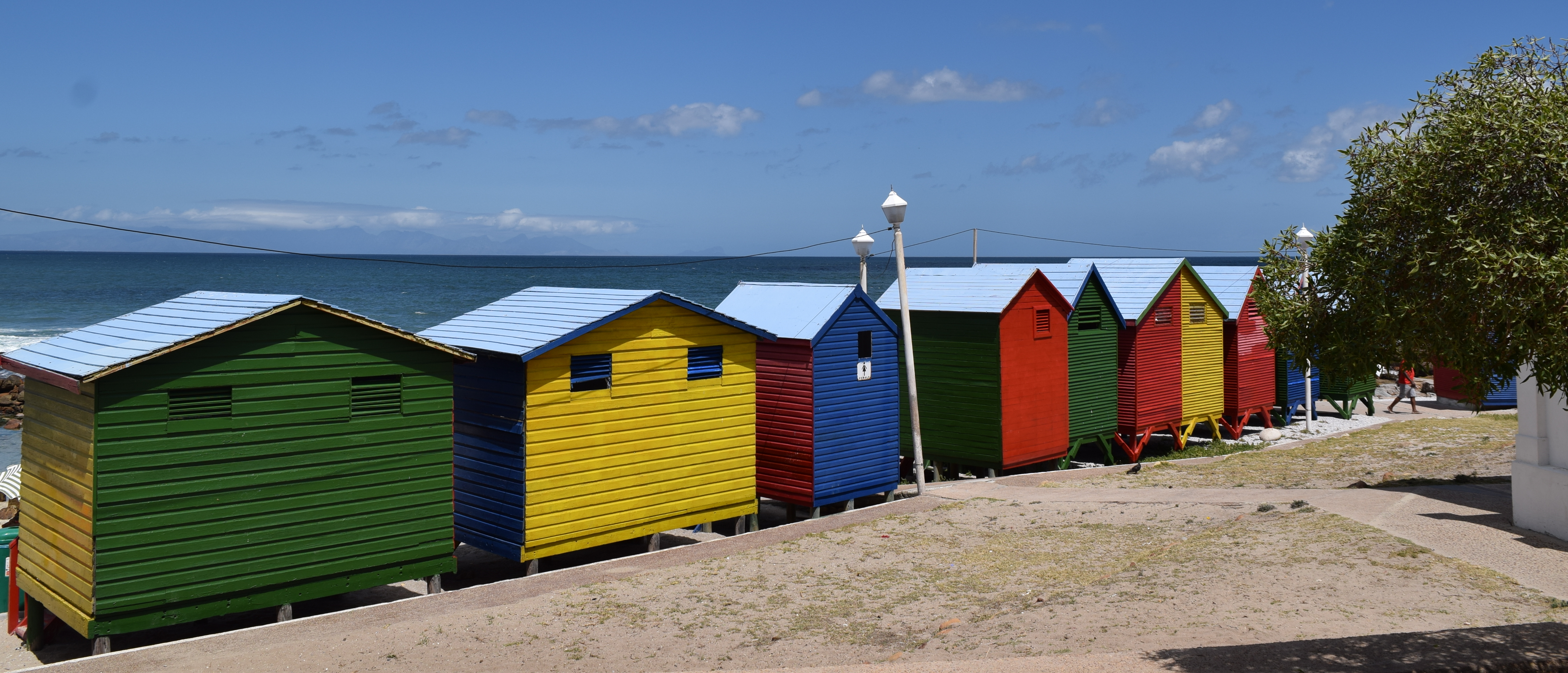
The Mother City captured my heart from the first day. Although this was probably the best ever planned holiday in my vacation history (detailed planning often ruins the beauty of spontaneous travel), Cape Town and surroundings surpassed all my expectations. Home to majestic Table Mountain, endless golden beaches, turquoise oceans, abundant vineyards (oh, these South African wines…!), this vibrant, multicultural, spacious, green, modern and artistic city is a dream place to live.
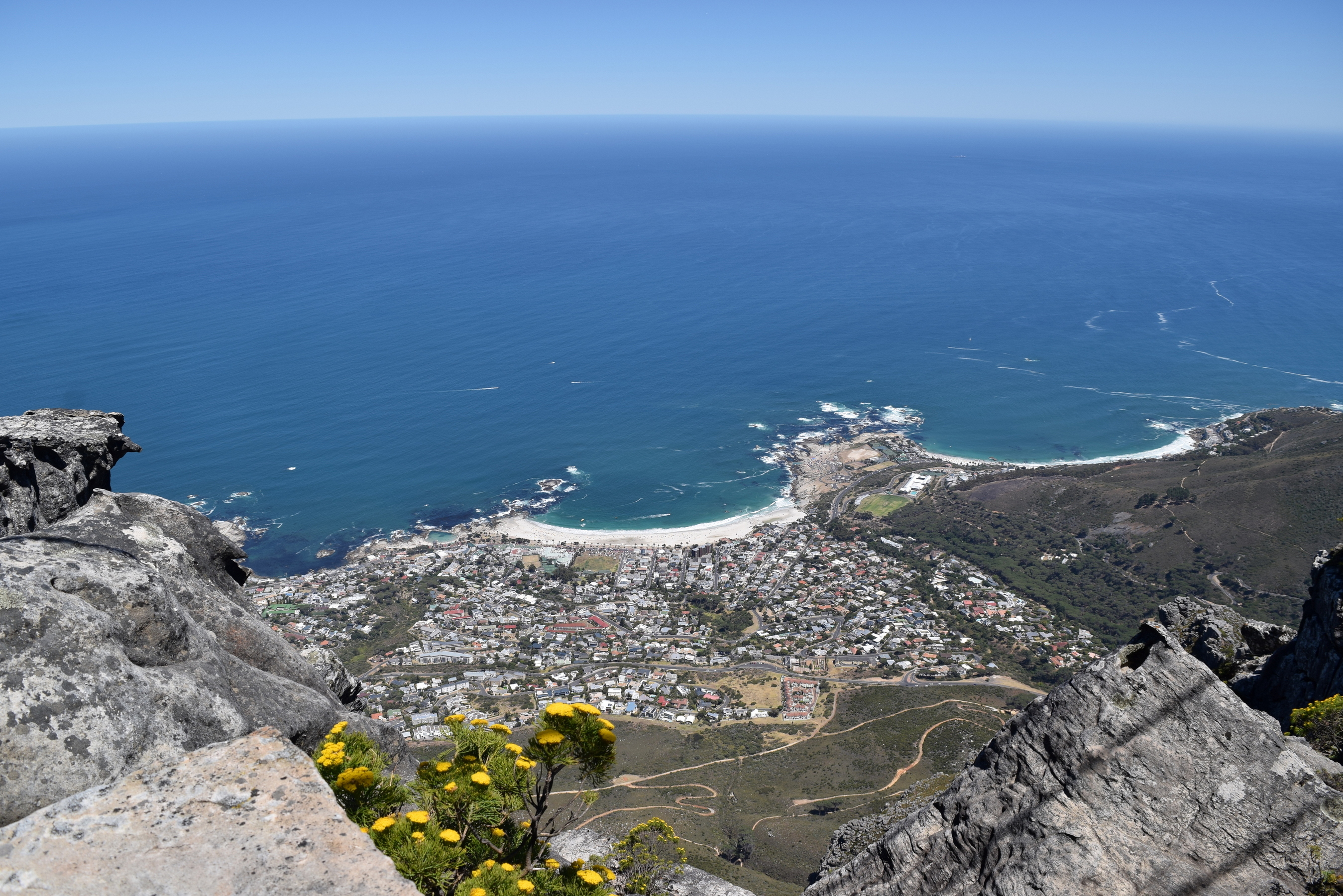
View over the city from the top of Table Mountain
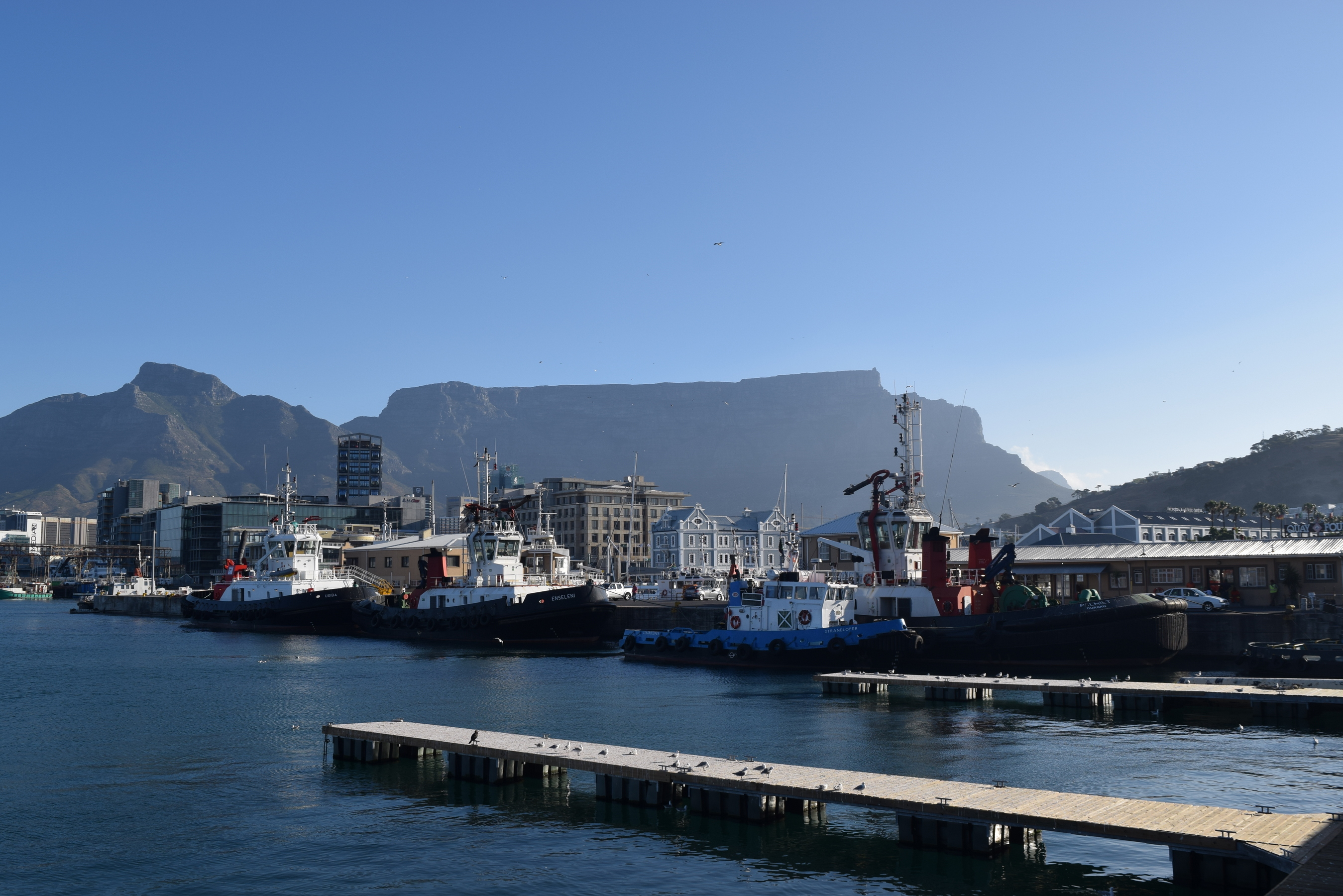
The flat-topped Table Mountain as seen from the V&A Waterfront
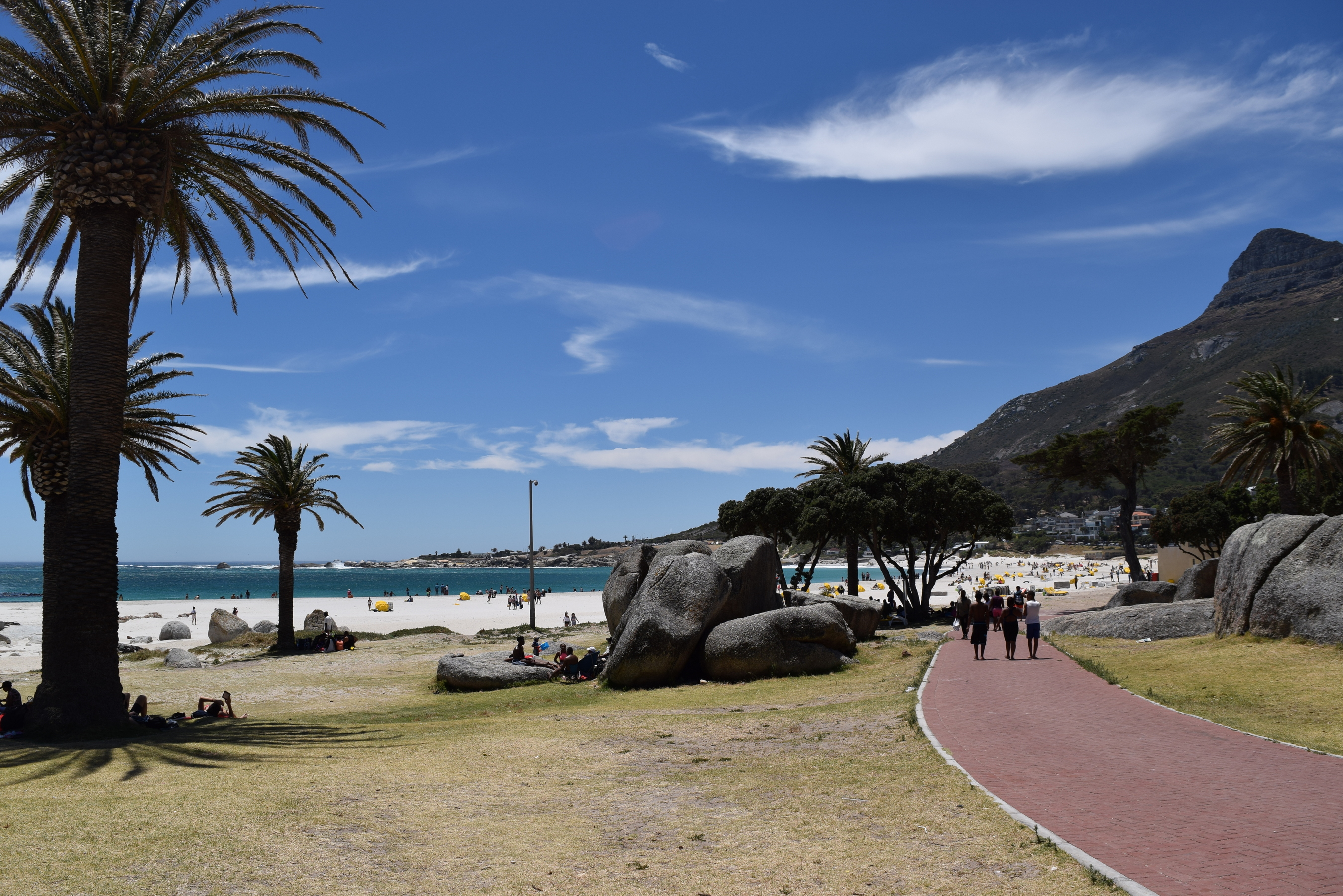
The long spacious beaches at Camps Bay with the Signal Hills in the back
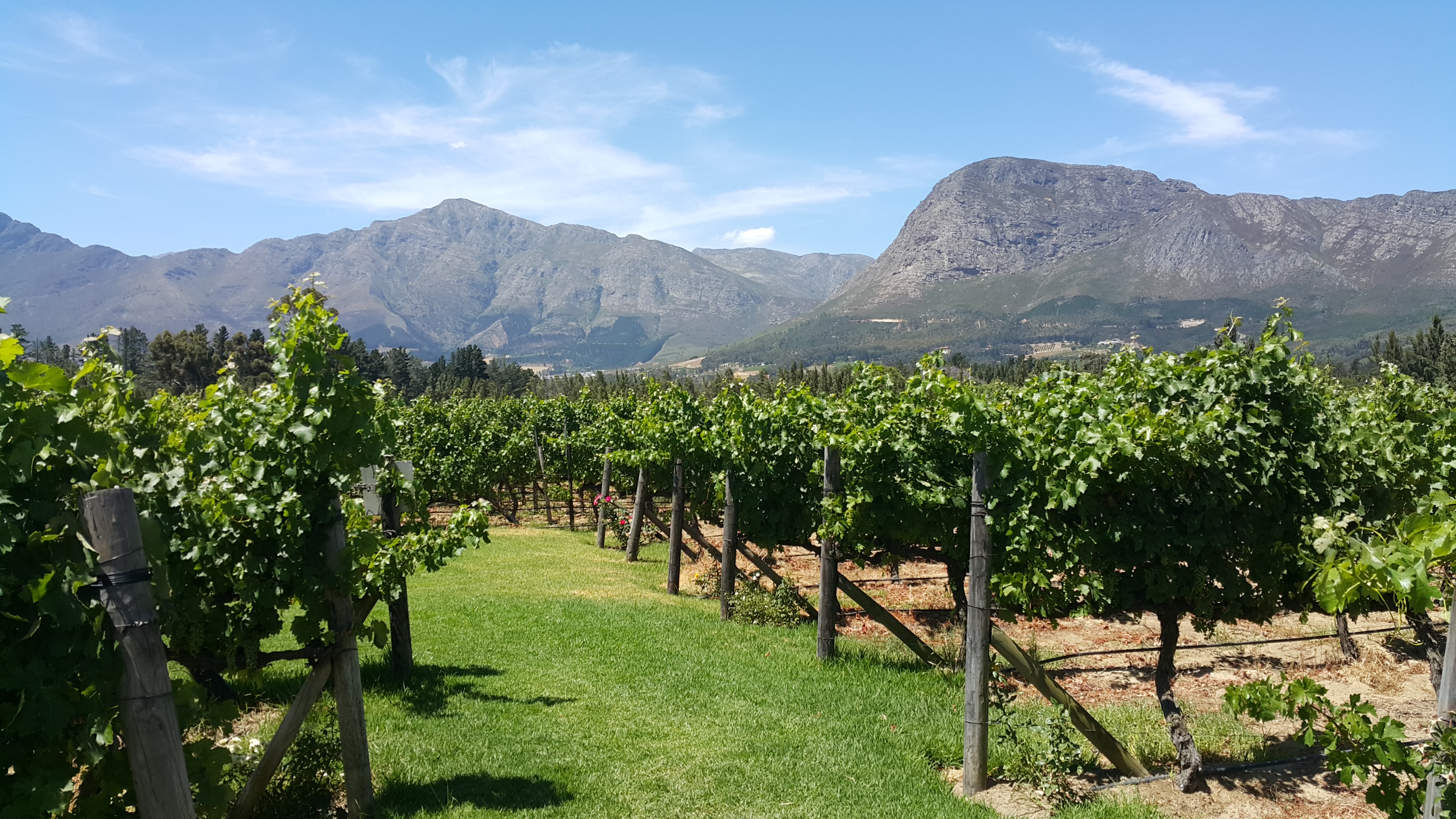
Holden Manz Vineyards in Franschhoek
“Mother City” is a lovely nickname of Cape Town and one of reasons behind is that it is the oldest city in South Africa. I didn’t investigate the topic further but whatever the other reasons are, I simply like how locals and visitors show their affection to Cape Town.
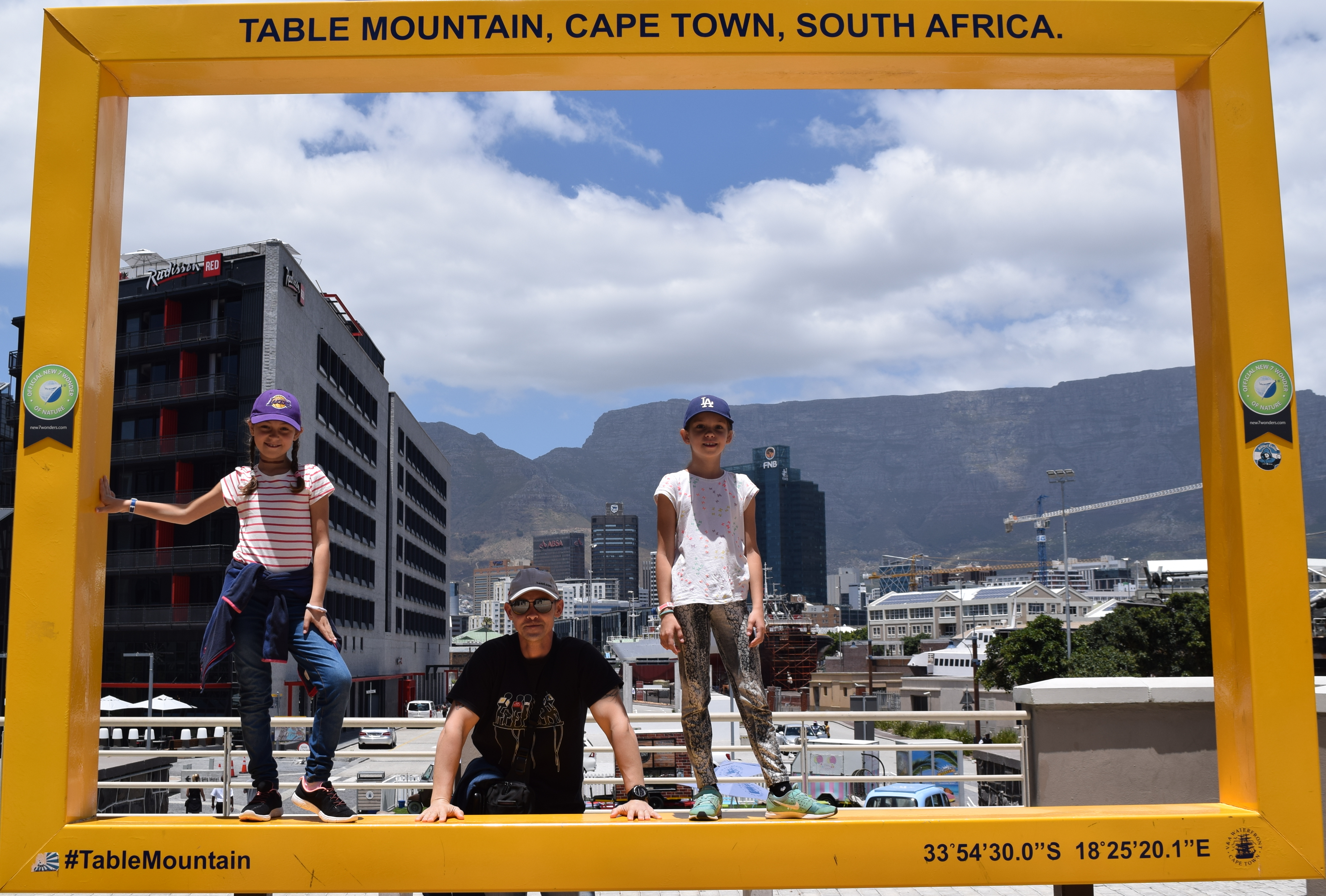
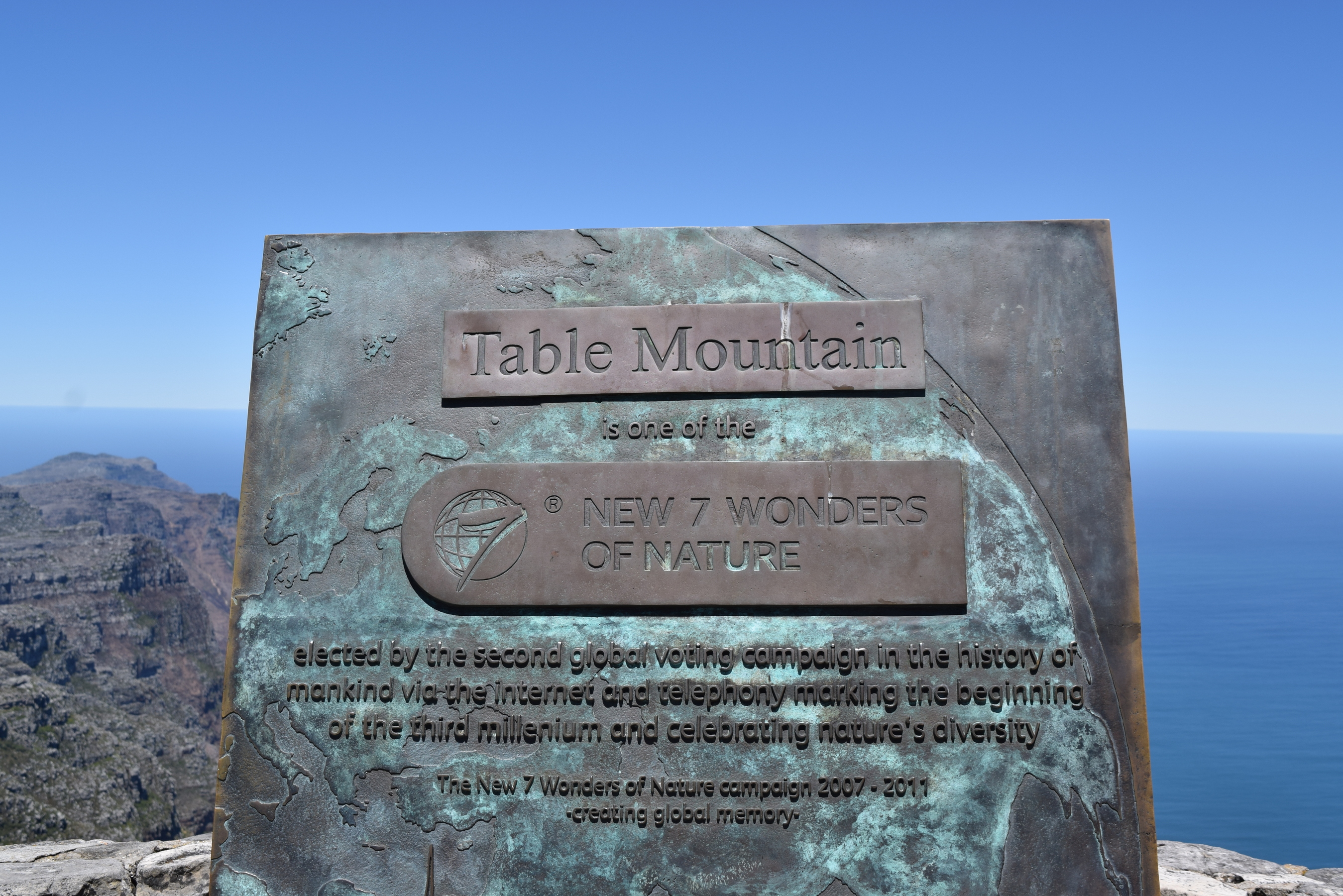
One of the seven Table Mountain frames set up in key locations of Cape Town as part of the project The New 7 Wonders of Nature
Before embarking on the story of our experiences, let me clarify why we had to plan so much in detail.
First of all, we as Bulgarians, needed to apply for visa. This was a huge effort given there is no South African embassy in Rwanda, where we currently live. I don’t want to go into detail but will just say that I’ve never seen such a long list of required documents before, even in the times before Bulgaria entered the EU. Secondly, end of December is the peak of the holiday season, which means lots of visitors from all over the world. Last but not least, December/January is the peak of the summer in Cape Town and locals take advantage of the nice beach weather, too. We were well prepared for all of this by carefully planning everything months in advance. Believe it or not, our daily program was saved in an excel file on my phone with maps, directions, entrance fees and opening times included. Wherever possible, tickets were pre-booked online. I know, I know – this sounds quite crazy but the truth is, after having thrown so much effort (and money) on getting visas, we simply wanted to enjoy a flawless vacation and focus on the “here and now” instead of planning stuff on the spot. It was all worth it!
And here we are, after a long night flight with a stopover in Johannesburg, on the road from Cape Town airport to our Airbnb apartment, with the soaring flat-topped Table Mountain in front of us.
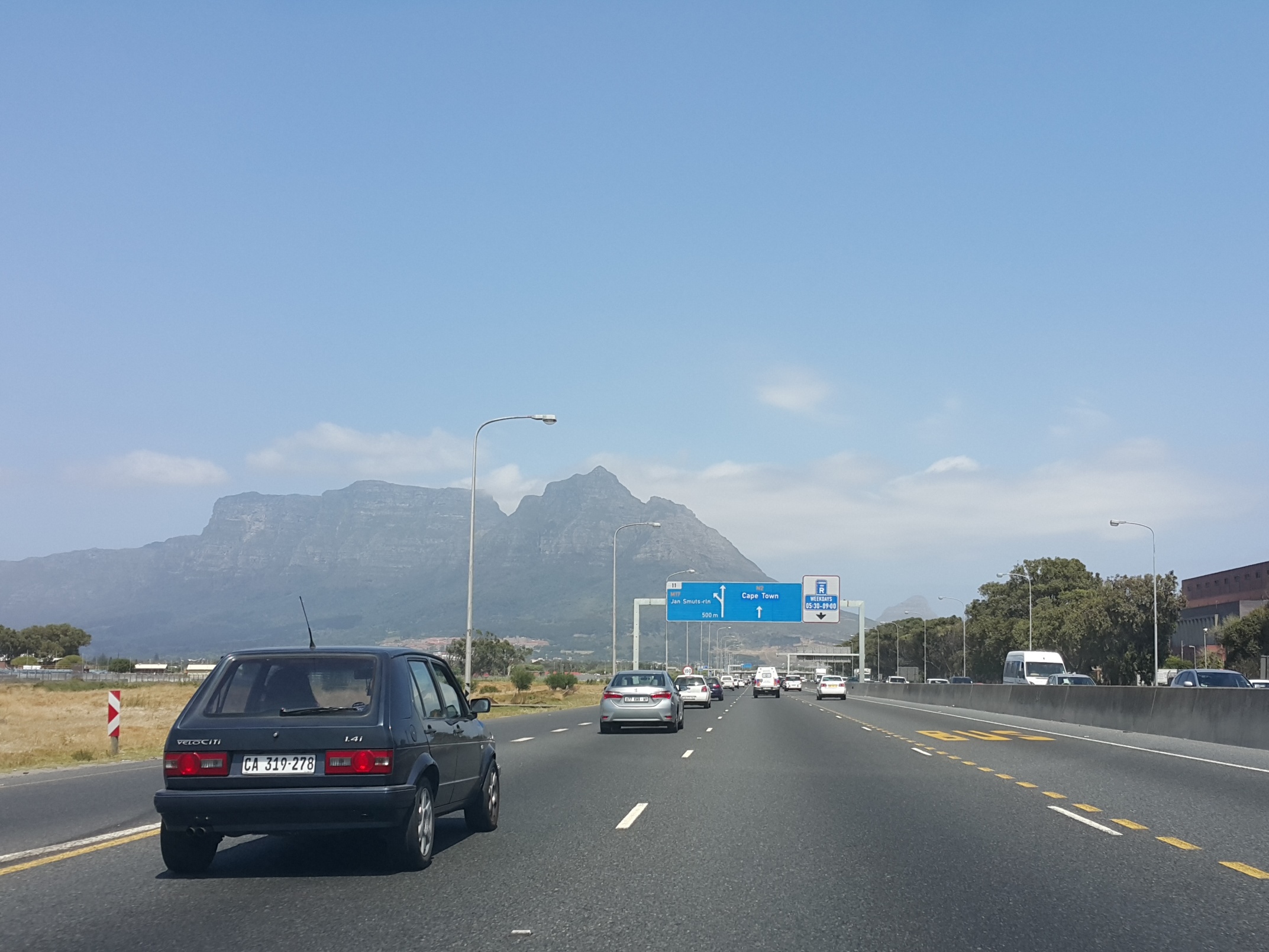
The left-hand driving experience was new to us, yet by all the surrounding nature and urban scenery, it was just a minor factor to accommodate.
We couldn’t have chosen a better location! Of course, it all depends on people’s desires, priorities and wallets, but our neighborhood, Green Point, was just perfect in any aspect – spacious, breezy promenade along the road, a huge urban park, plenty of restaurants, cafes and shops, and direct access to the popular V&A Waterfront port. Other neighborhoods, like Sea Point, Camps Bay and Hout Bay were recommended a lot by friends for their proximity to the beach and fancy restaurants and bars; however, being aware of the crowd factor at this time of the year, we made the better choice staying in Green Point.
The tiredness from the night flight was gone. We just dropped our luggage in the apartment and headed to the Green Point Park across the street. It is so enormous and diverse! Even guided tours are offered in the park. Imagine an outdoor museum of nature and biodiversity. There is plenty of space for picnics with magnificent mountain views, golf area, playgrounds and even an outdoor fitness gym. Guess where we spent most of the time! 🙂
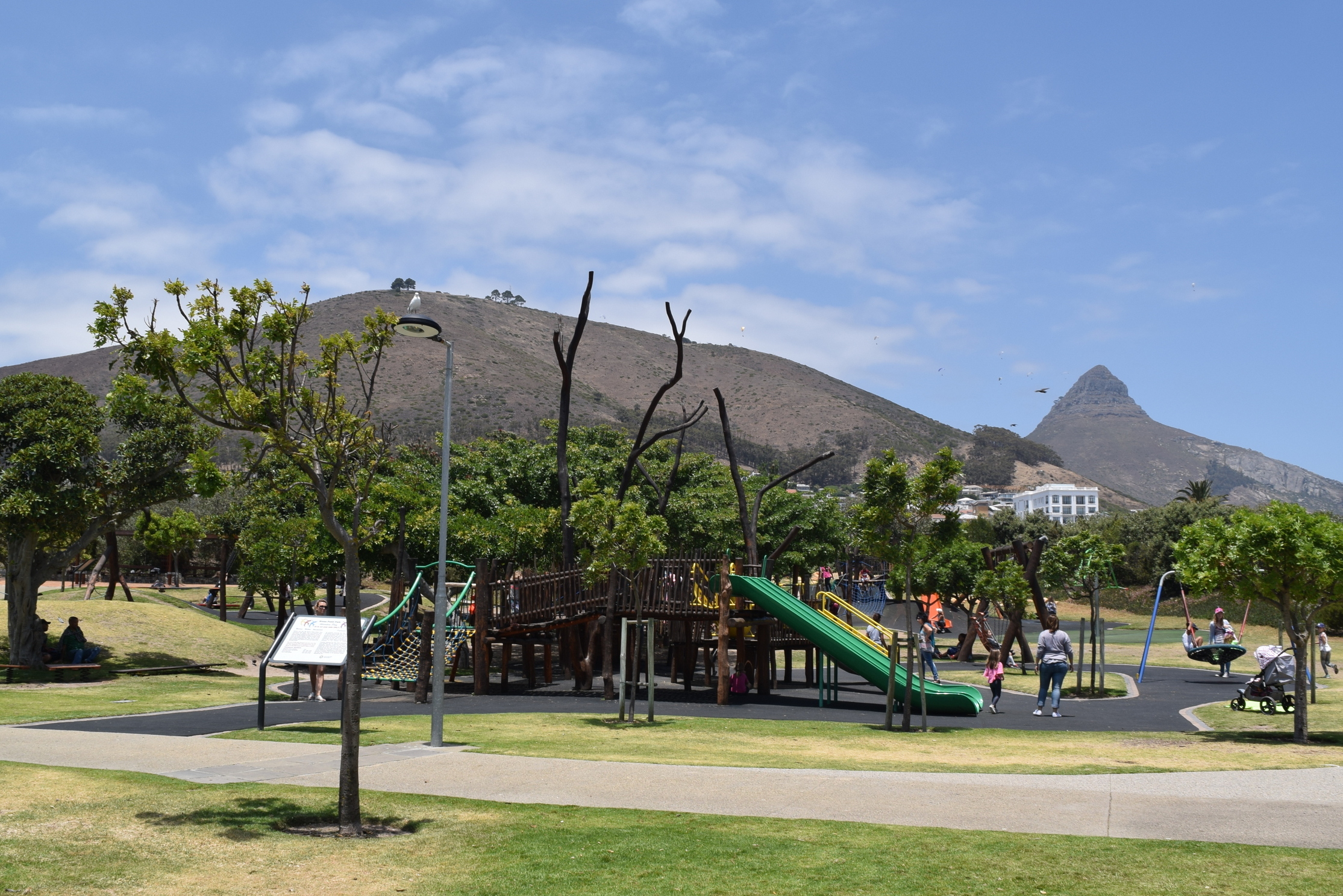
Playground at Green Point Urban Park
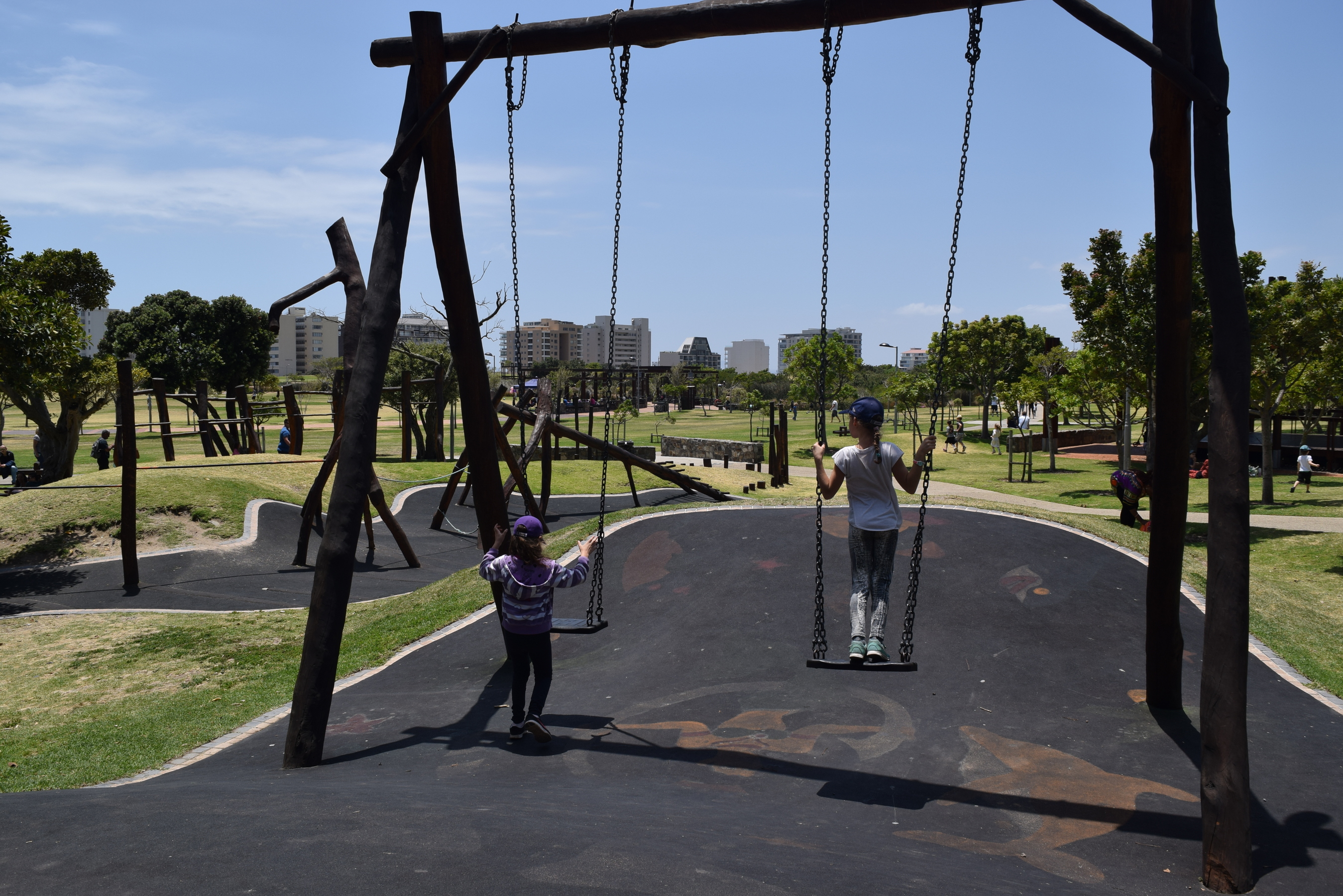
Kids loved it, and I was not less impressed by the simple but very creative playground elements. Why can’t we build more playgrounds like this one?
Jumping now to another topic that also reveals the creativeness and high collective consciousness of Capetonians. I knew about the water crisis in Cape Town (and South Africa, in general) from a friend of mine who lives there. The problem has exacerbated so much in the last couple of years that her family started searching for a water source in their backyard. A massive water conservation campaign supported by the city, business and non-commercial organizations has been launched to make everyone aware, even tourists. Just an example – all visitors arriving at Cape Town airport are alerted to the need for water conservation.
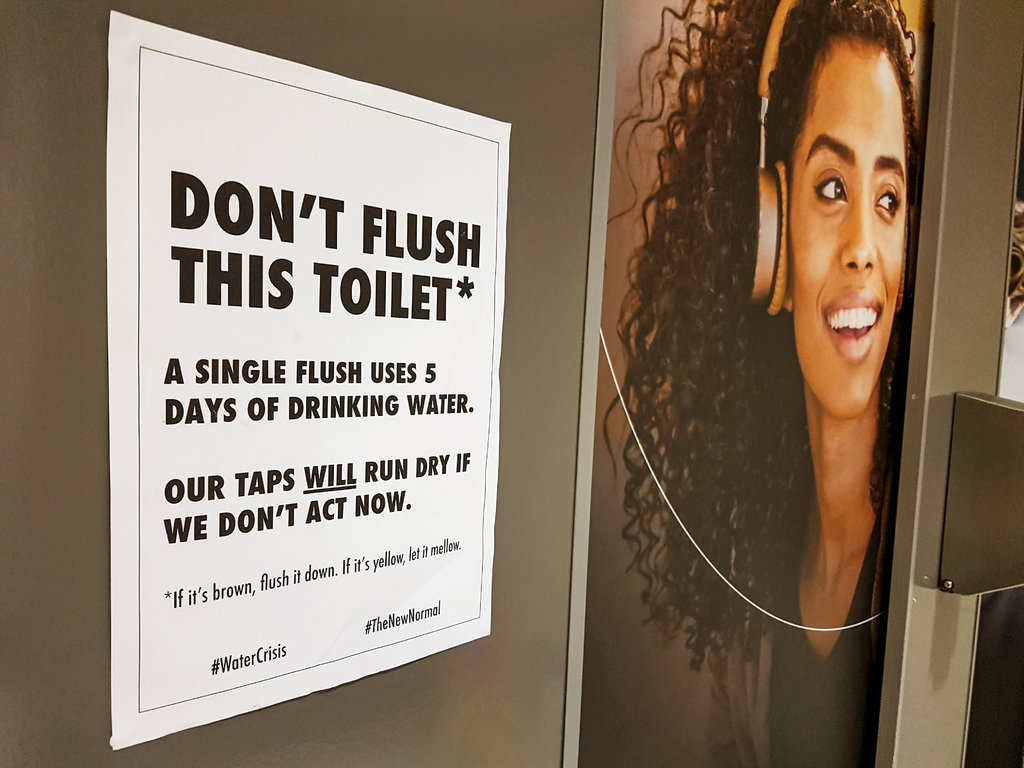
Water Crisis Campaign at Cape Town airport
Even Airbnb has been sending regular reminders including practical tips such as “keep showering time to a minimum of 2 min”, “flush the toilet only when necessary”, or “report immediately a dripping tap to your host”, with very specific calculations reflecting the waste of water and its negative impact on public supply.
It may sound extreme but it’s not a joke, and raising the public consciousness has practical significance and can really help save water. It’s another topic that the city is already taking more strategic measures – according to the media, Cape Town will have its first desalination plants (for desalting ocean water) ready to work just a few weeks before the city dams are expected to dry. I can only imagine the level of planning and discipline that are needed to put such kind of project in action.
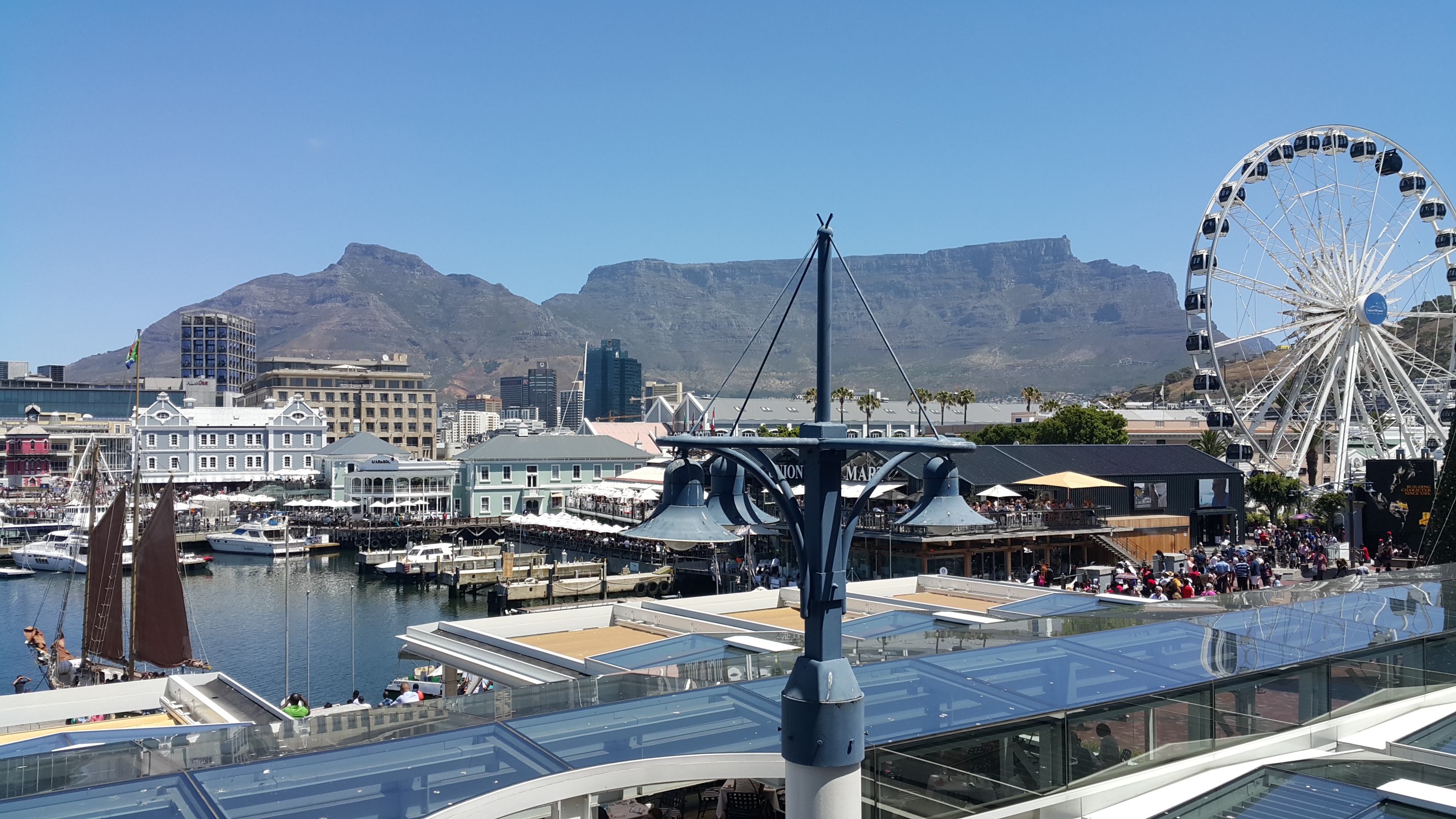
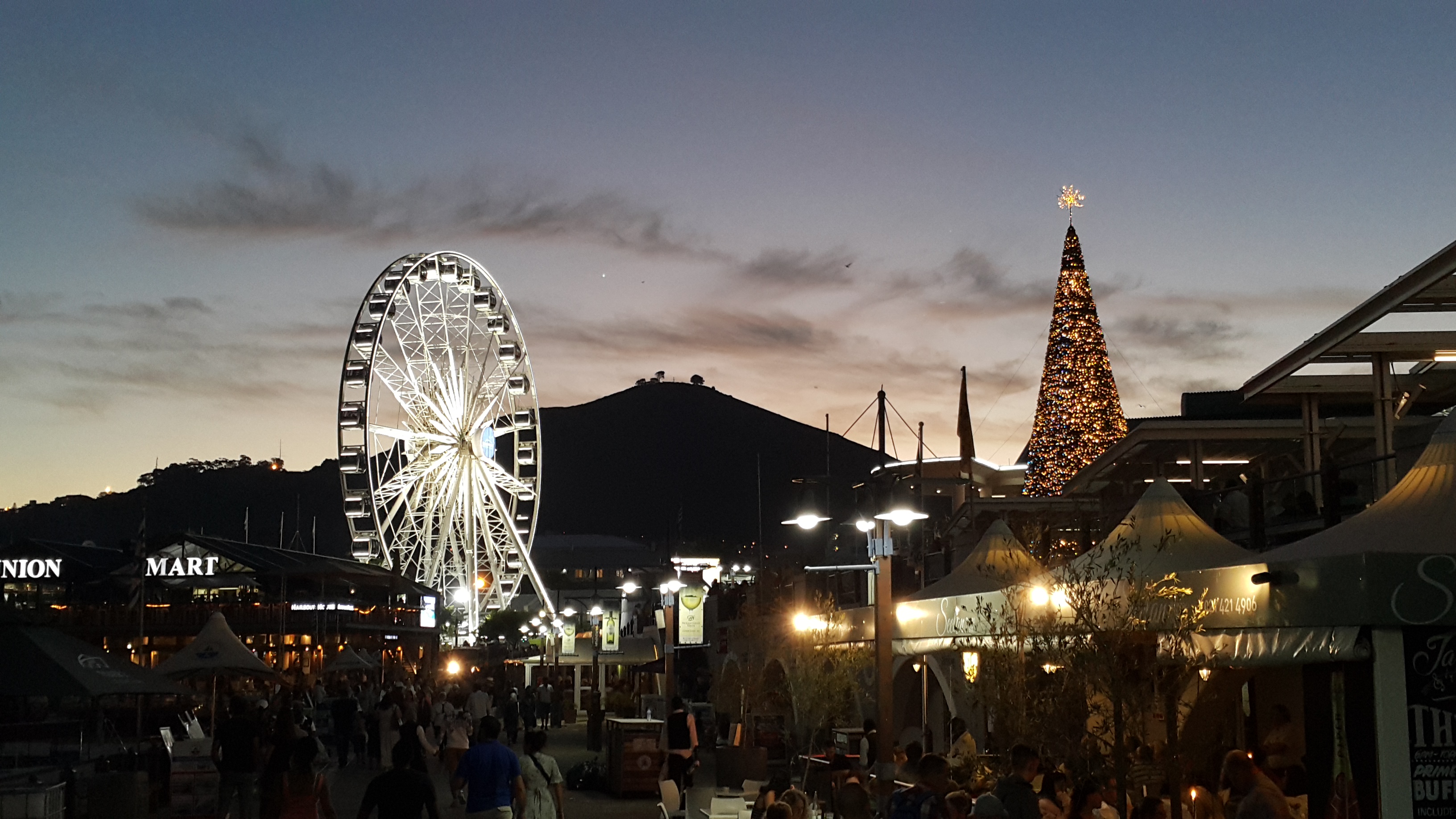
Talking about water, and on a more positive note, let me take you to the prominent V&A Waterfront. V&A stands for (Queen) Victoria and her son (Prince) Alfred, who put hands on the opening ceremony of the first proper harbor in Cape Town. Today, still being a working harbor, the Waterfront is probably the most visited sight in terms of number of tourists at a time, in a beautiful location with Table Mountain in the background. The docks have been redeveloped into a glittery mix of shopping and entertainment areas, with much of its historical heritage preserved.
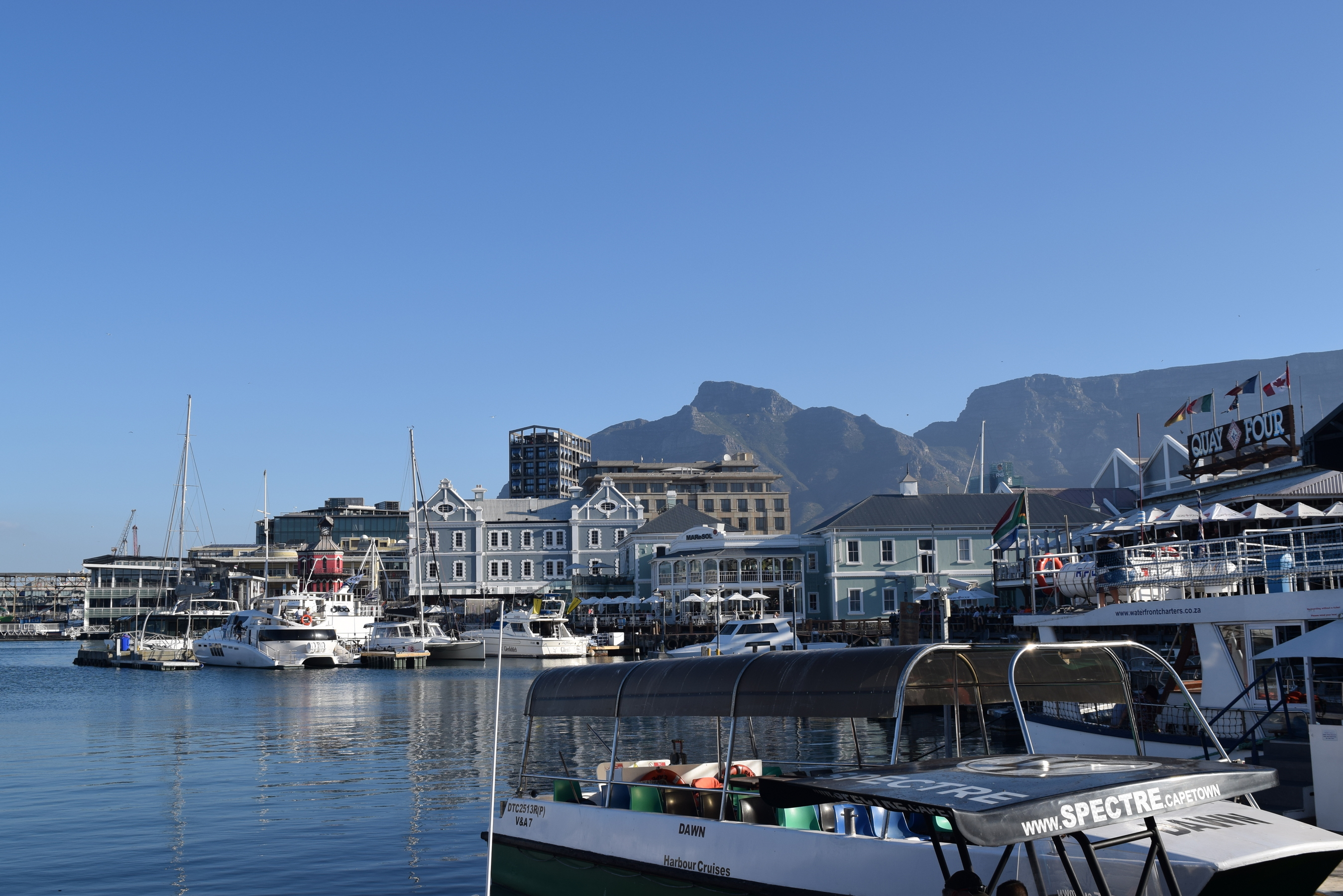
The Waterfront is a focal point for many tourists. There are lots of nice restaurants offering cuisine from all over the world, chic boutiques, main department stores, bars, and plenty of cultural and educational opportunities, including museums, historical walking tours and harbor cruises.
We went there for a walk, meal or shopping several times, at different times of the day, and every time the beauty of Waterfront was revealed to us in a different way.
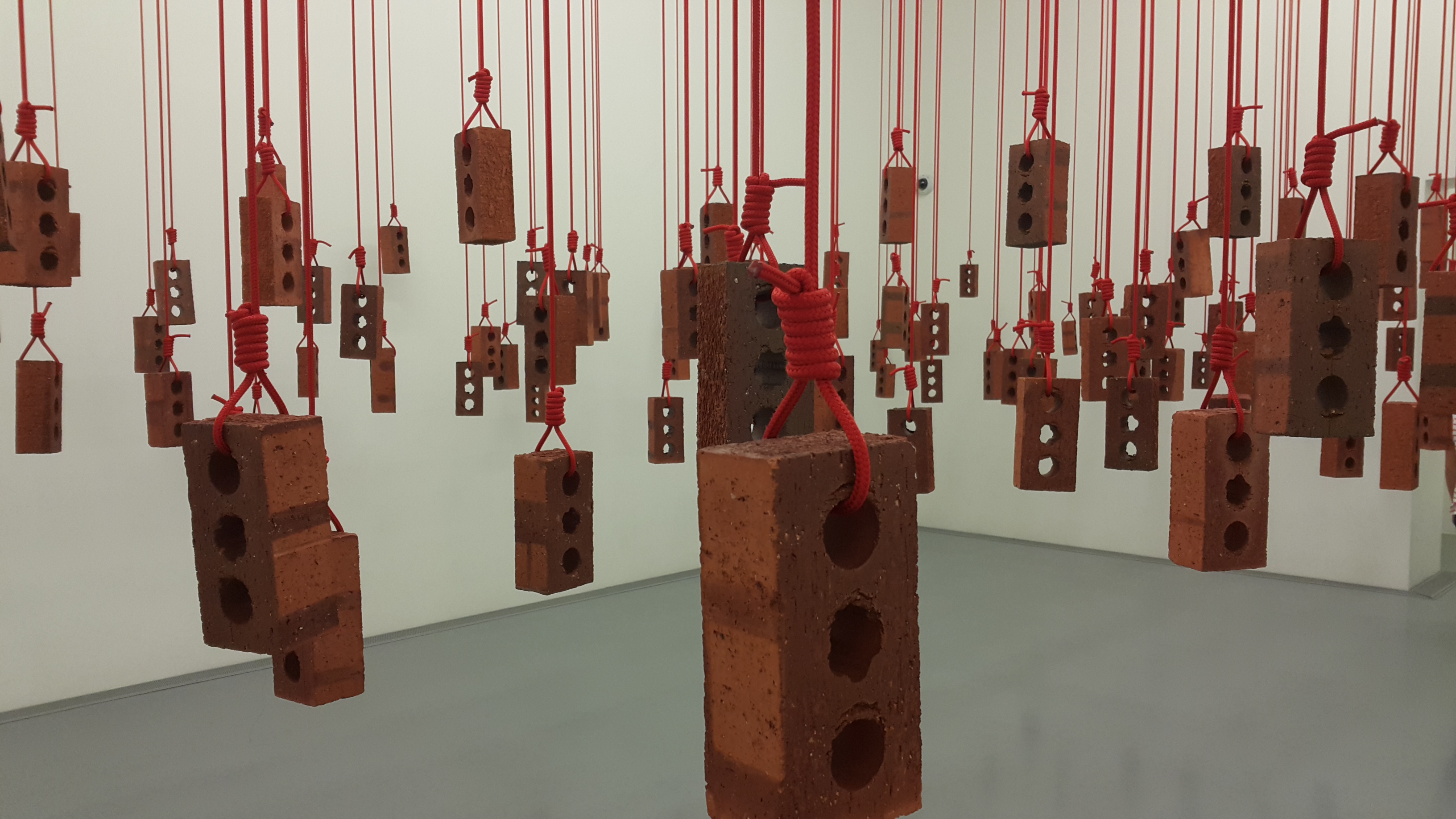
From all cultural experiences offered at the Waterfront, we had decided to visit the Zeitz Museum of Contemporary African Art which has just been opened in 2017. This was our one and only disappointment of the entire trip. I’ve been to quite a few contemporary or modern art museums in other countries, and of course, I didn’t always like or understand all the art pieces exhibited, but this time we were just standing there speechless, stunned and idea-less by the grotesque and “originality” of the expositions. Joking aside, the below art installation was the most beautiful one from all.
Actually, the story and architecture of the museum building is way more interesting than its contents. A former grain silo has been preserved and re-designed to become home of the museum, and it’s quite impressive when looking from inside. Part of the building has even been turned into a fancy hotel called Silo – one more sign revealing the creativity potential of locals.
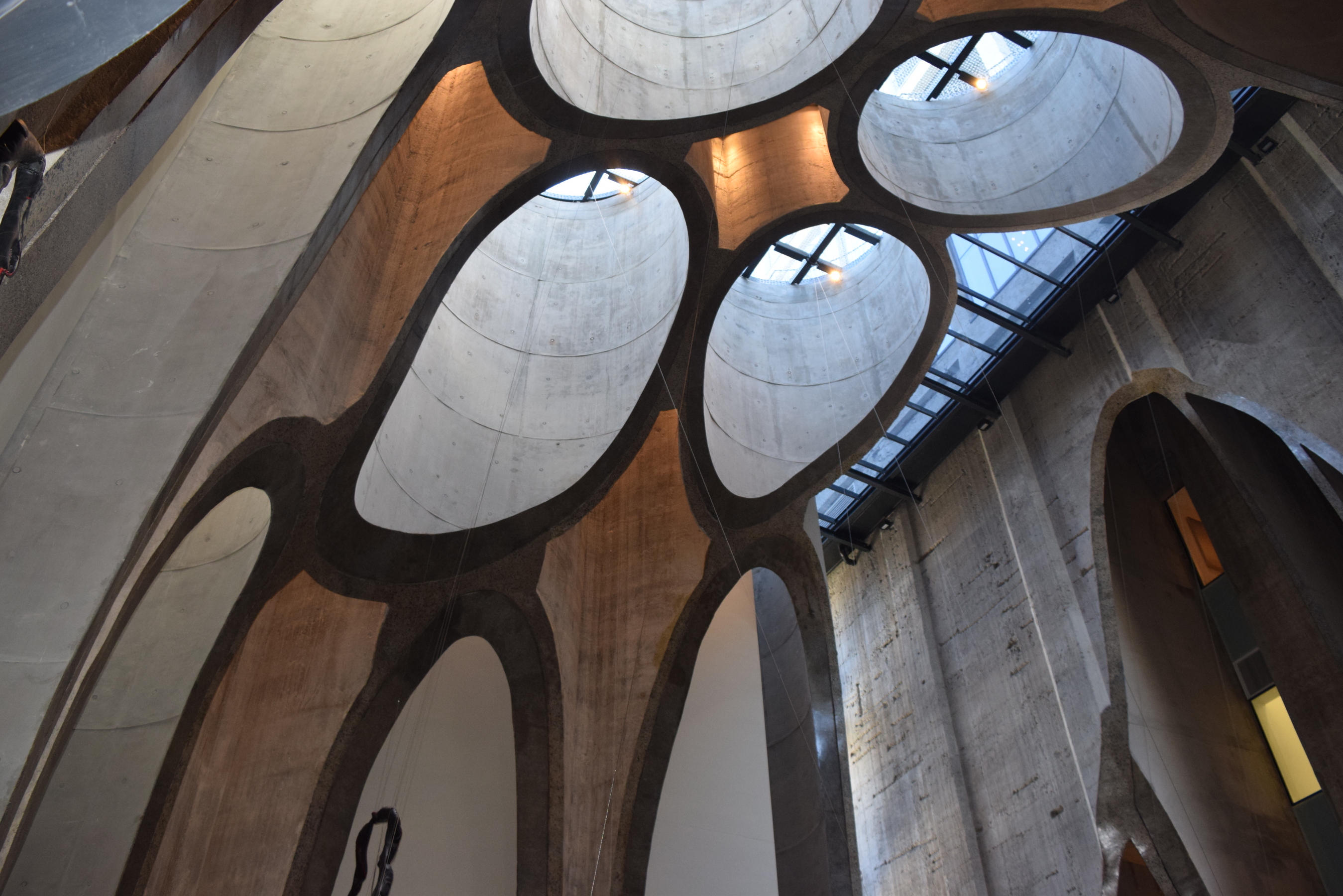
The re-designed silos inner structure of Zeitz Museum
Our first exploration journey outside Cape Town was to Cape Point and Cape of Good Hope, the tip of the peninsula that is protected by the Table Mountain National Park. Thanks to our preparations, we had already selected a longer but more scenic route via the Atlantic coastline. The road curves next to steep cliffs shooting down into the cold waters of the Atlantic Ocean. From the car we could see giant waves crushing and frothing over big boulders and beautiful golden beaches.
After about 1,5hrs, we arrived at the park entrance, from where we were only 10 minutes away from the most southwestern point of Africa.
Here I want to shed some light on the naming of Cape Point and Cape of Good Hope – these two rocky capes just a couple of kilometers away from each other, often mistakenly taken as the same thing.
The Cape of Good Hope was first named the Cape of Storms by the Portuguese explorer Bartholomew Dias in the 15th century due to the bad weather conditions causing troubles to many ships when passing by too closely to it. Later it was renamed by another Portuguese to Cape of Good Hope because of the high optimism related to the opening of the new sea route to India and the East.
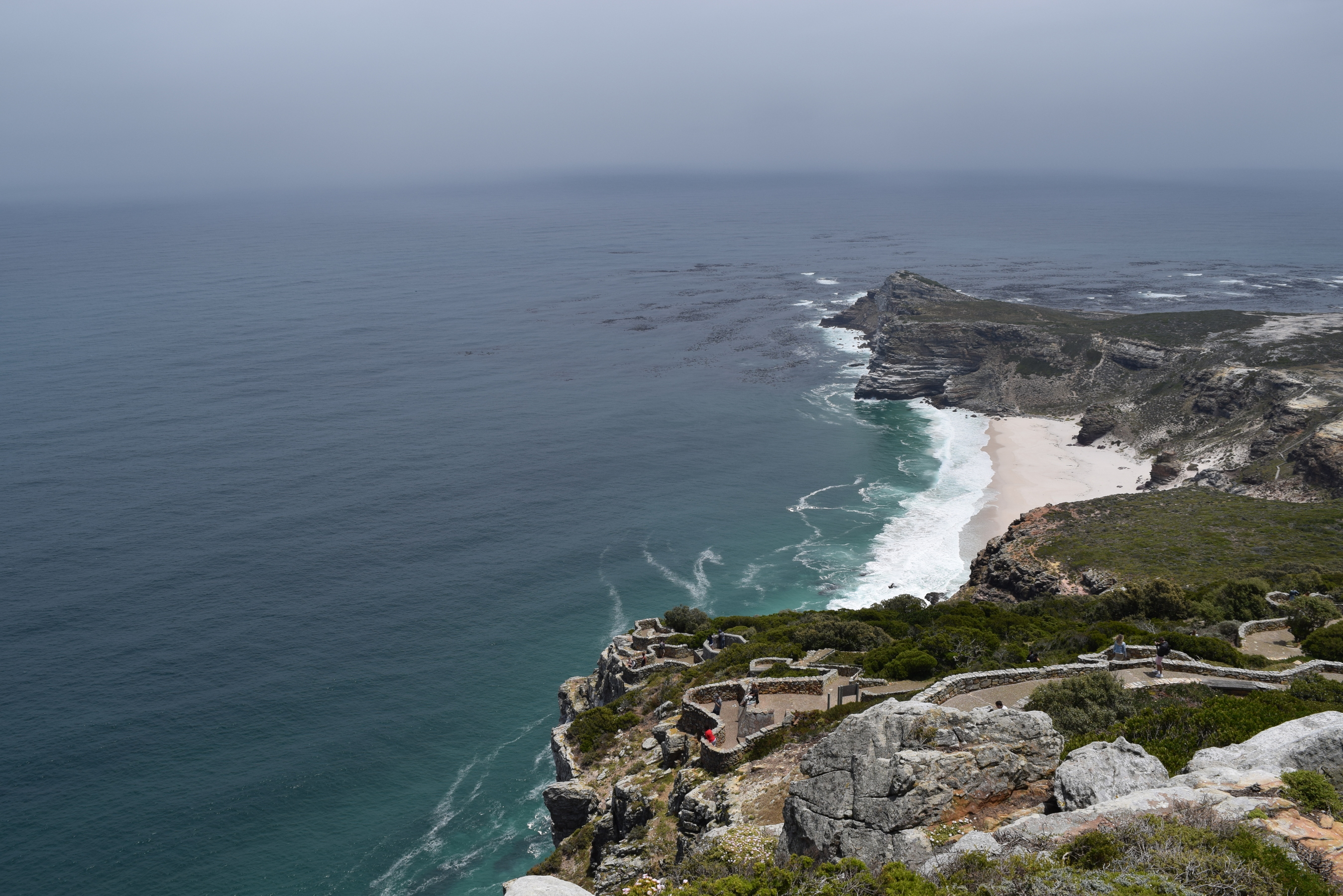
Cape of Good Hope as seen from Cape Point
The peak above Cape Point is higher than that above the Cape of Good Hope, and it has a lighthouse on top. It’s only 15 minutes walking distance up from the car park, or 1-2 minutes on the Flying Dutchman Funicular – named after the Flying Dutchman ghost ship.
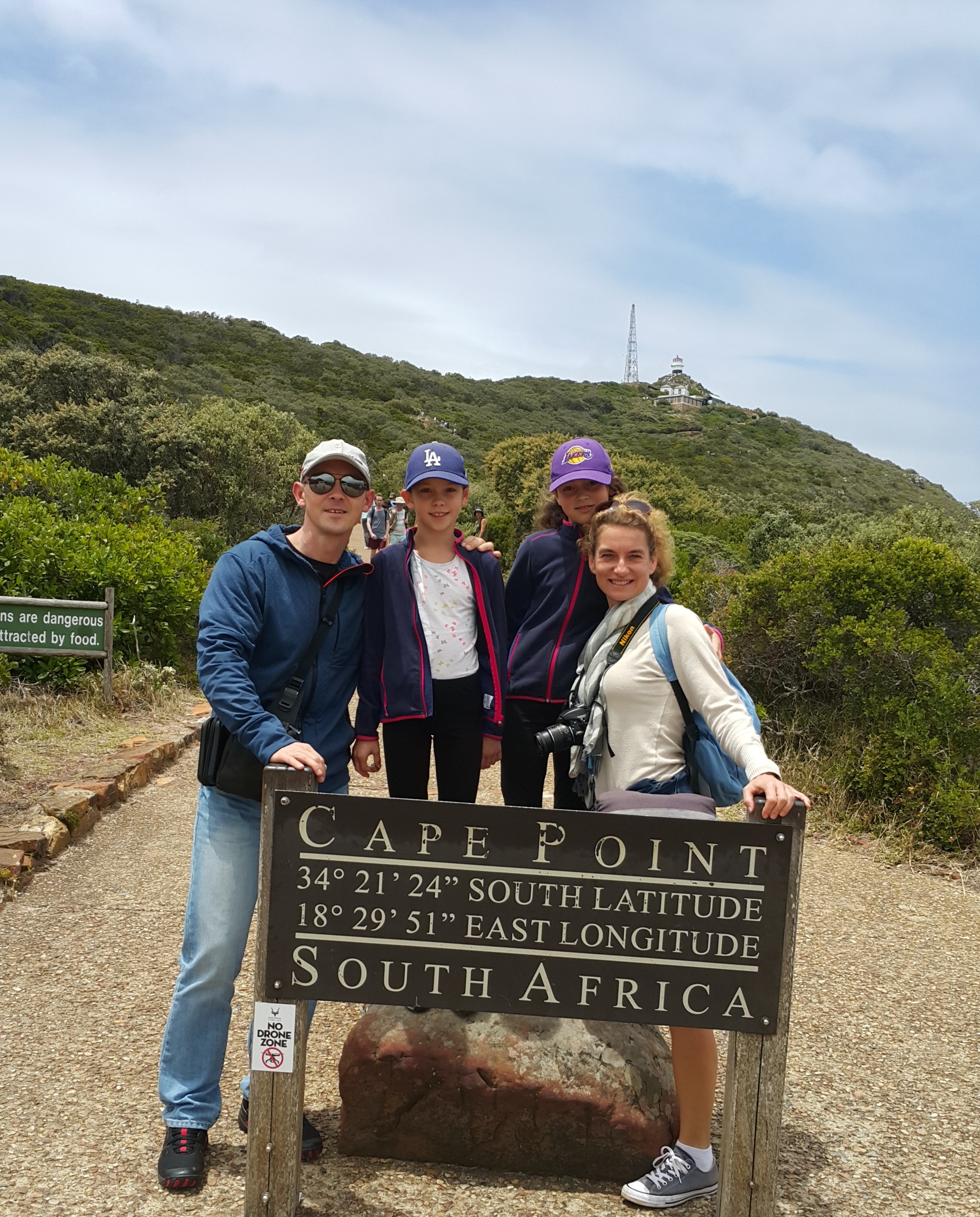
At the most southwestern point of Africa
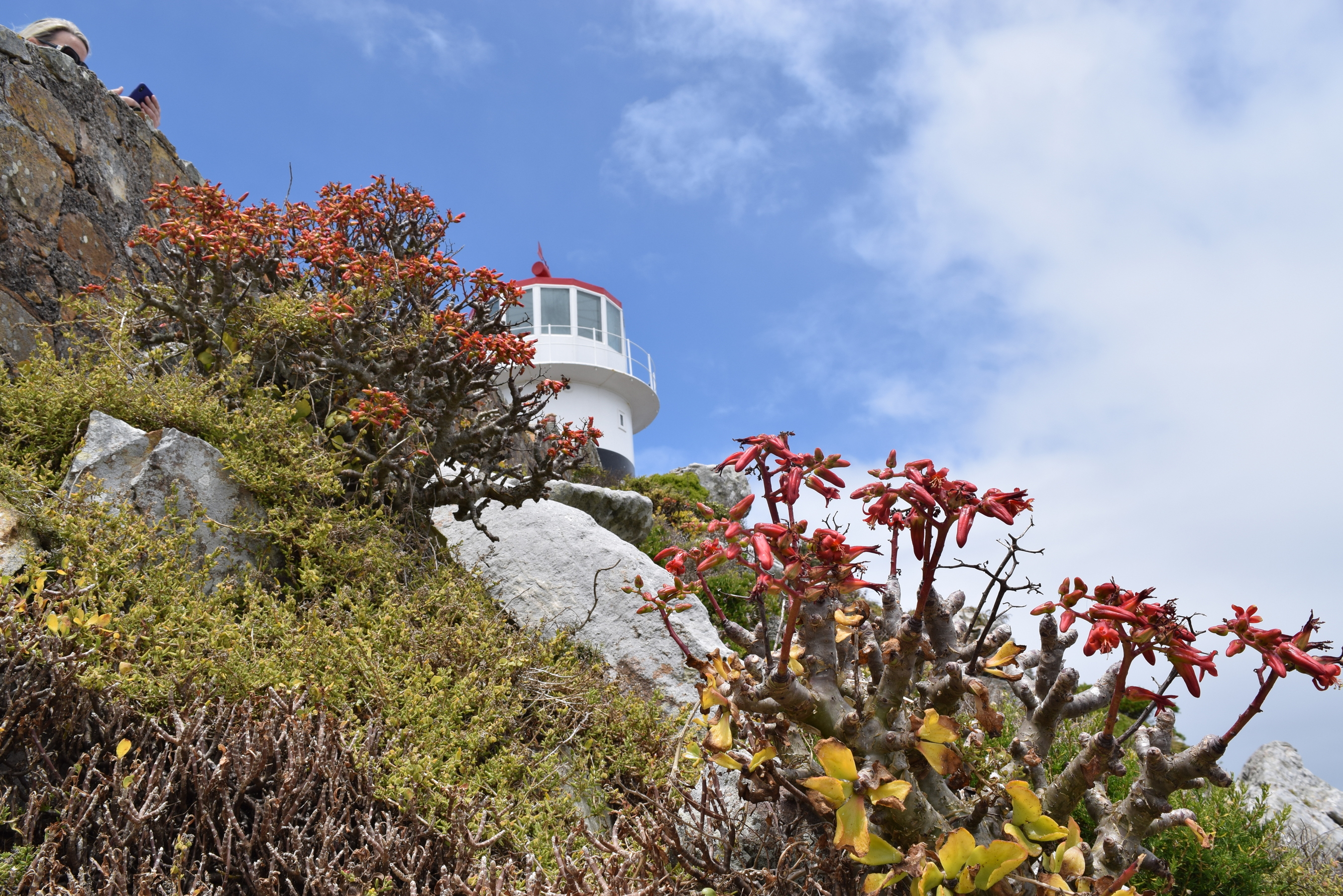
The new Lighthouse of Cape Point
We walked up the path to the old Cape Point lighthouse, and a marvelous view opened up in front of us! They say that 40 km south into the sea is where the Indian and Atlantic Oceans meet. The feeling of standing up right there on the tip of the rock staring at the horizon of the two oceans, is difficult to describe.
On the way down, we discussed whether to take the 1 hour walk to Cape of Good Hope. We almost convinced the kids to go, when a sudden drizzling rain waved by the wind in all directions started and we had no alternative but quickly hiding in the small souvenir shops.
As the rain didn’t show any signs of stopping, we decided to jump into the car and head to our next stop on the sightseeing agenda – Boulders Beach and the Penguins.
On the way out of the park, we got stuck in a small traffic jam. At first we thought it was because of the tourist crowd factor but the actual reason was related to something way more interesting… A bunch of baboons was playing around in front of the cars, blocking the road and causing a lot of excitement among the tourists. So everyone was now slowing down to observe and take pictures of these funny but very dangerous wild animals.
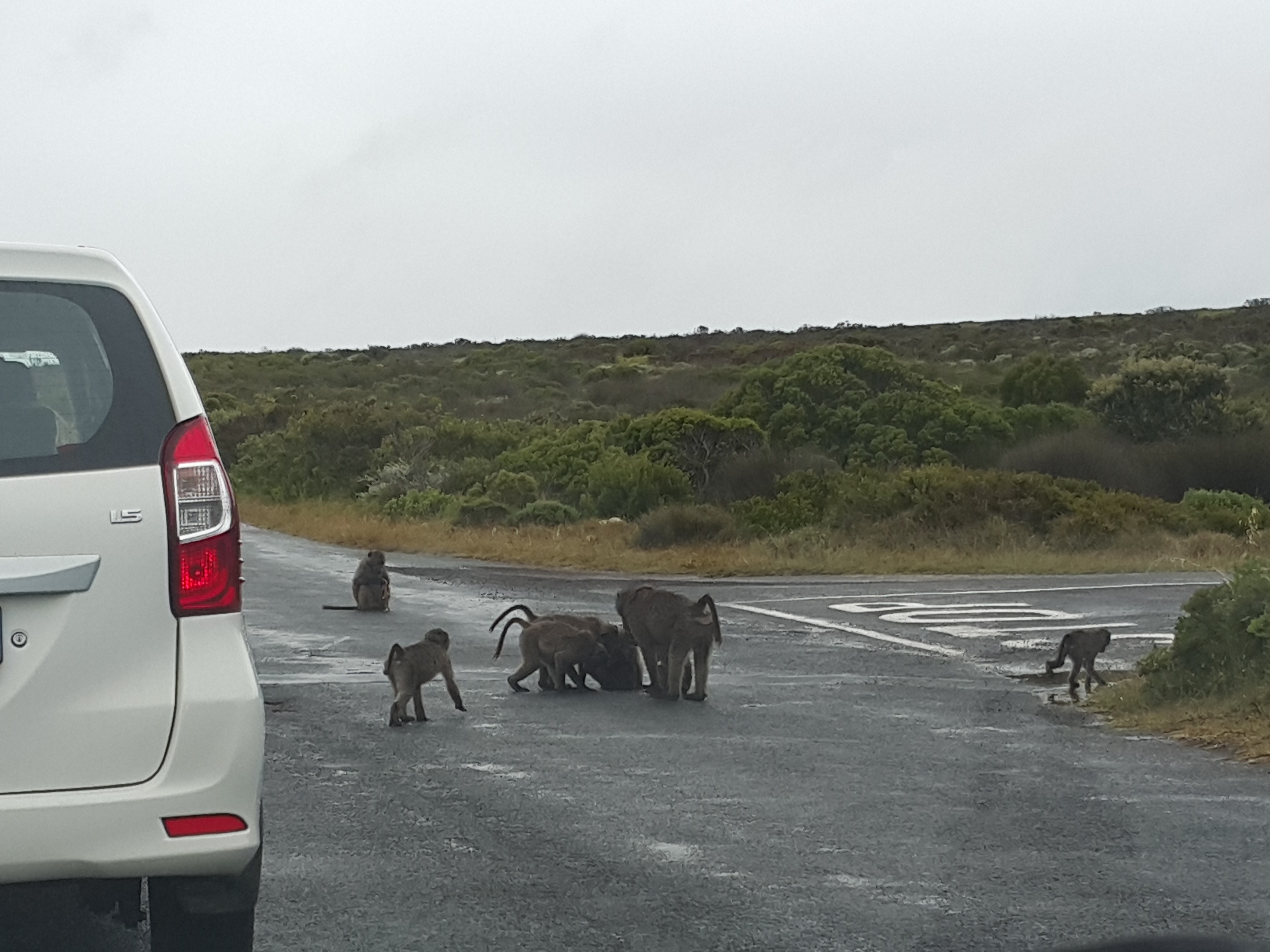
Why dangerous? Because they can become aggressive and attack, if you come across as threatening, even if you had the best intention to only give them some food. This explained all the warning signs along the roads in the park and even close to residential areas.
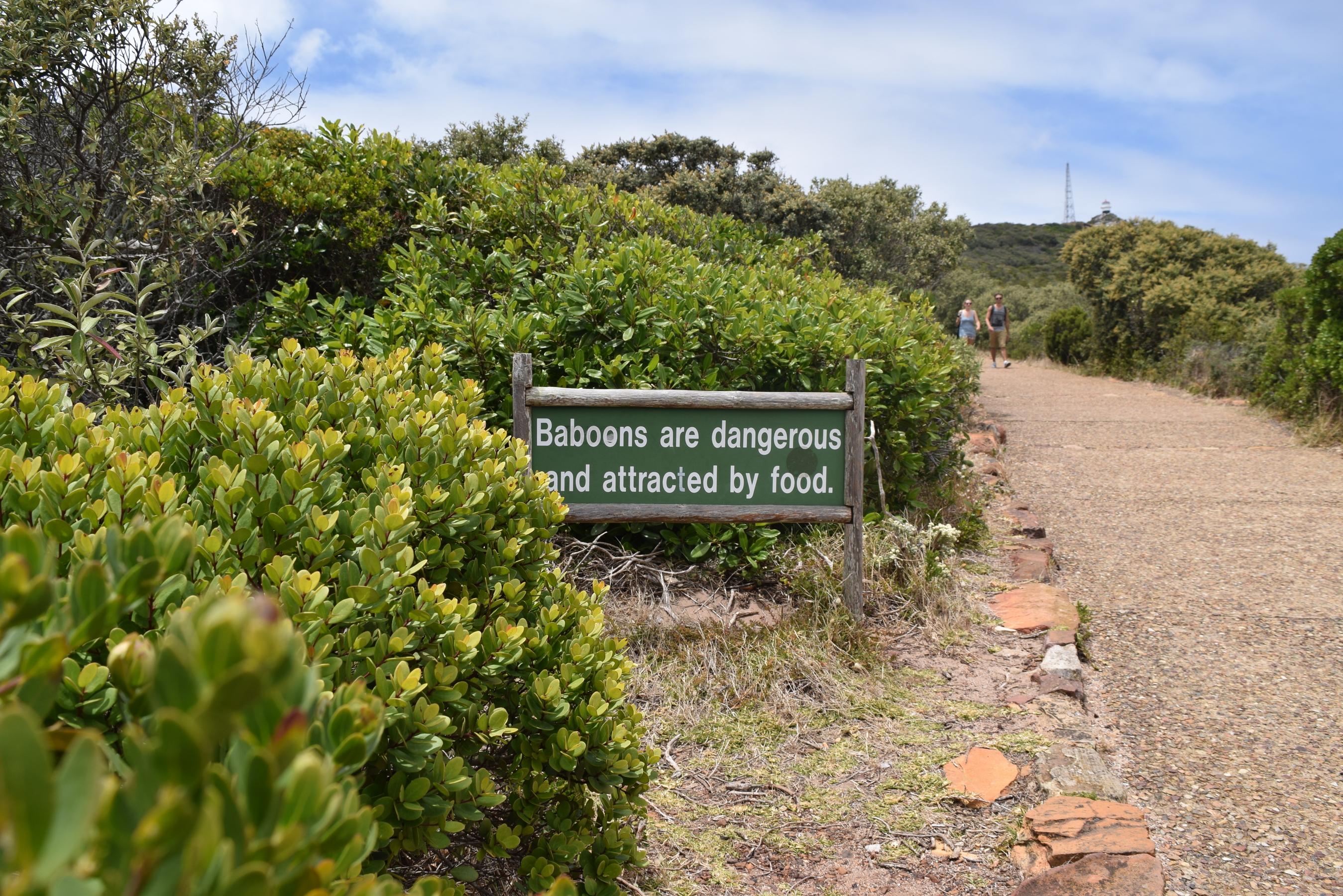
From the park exit we took the road to Simon’s Town, and headed up north to Boulders Beach, full of excitement to a long waited encounter with the African Penguin Colony. While approaching the place, a road sign caught our attention, clearly showing we are on the right way 🙂
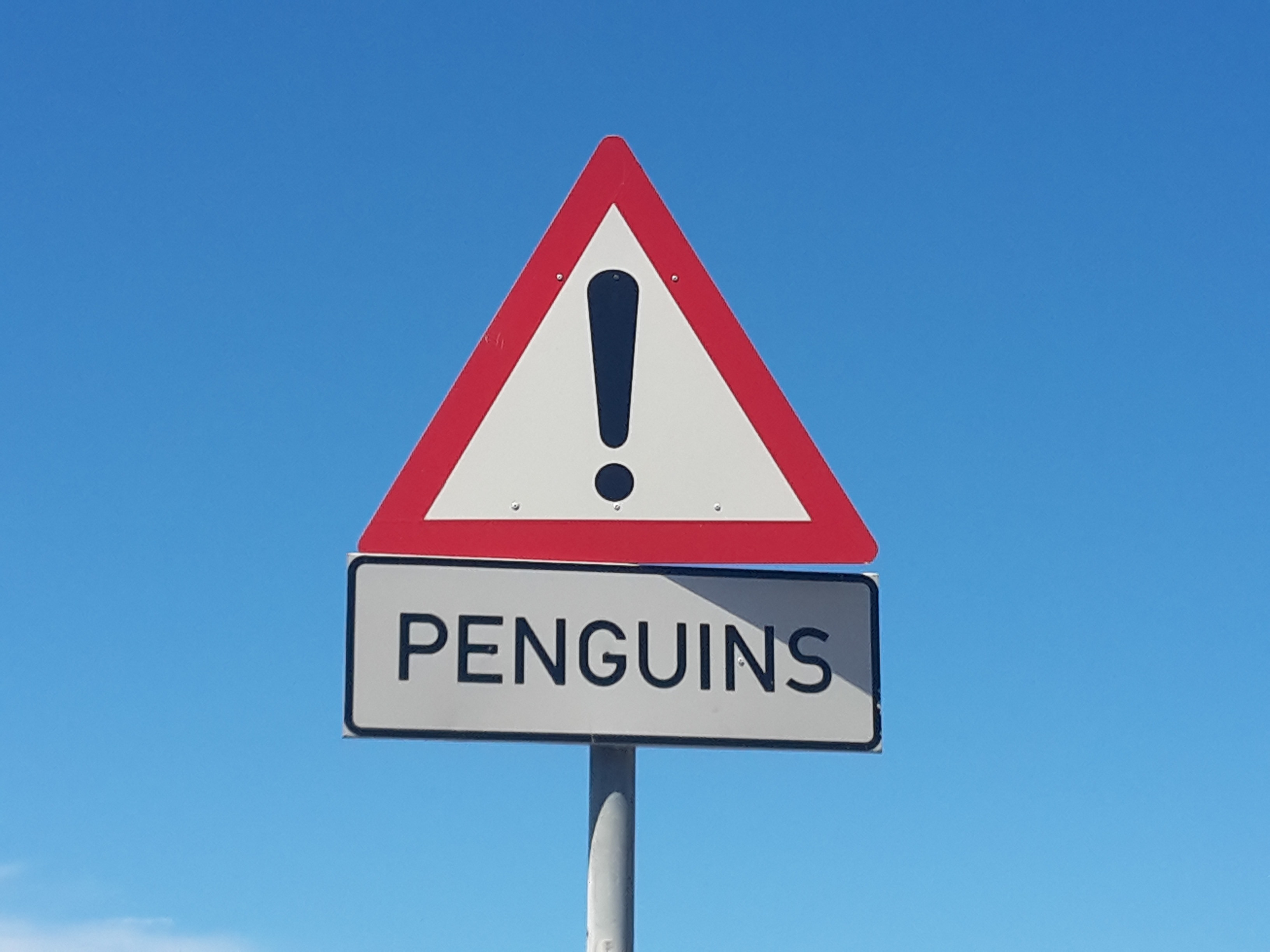
Penguins can actually bite 🙂
Boulders Beach is another breath-taking coastal area covered with enormous boulders and small sandy beaches – the home of some 2100 super cute African penguins. Beyond the ticket office, a boardwalk took us to the sandy beach, where we could “socialize” a bit with these beautiful creatures, wadding around the shallow waters or fluttering their wings, using the ocean breeze to dry them out after swimming.
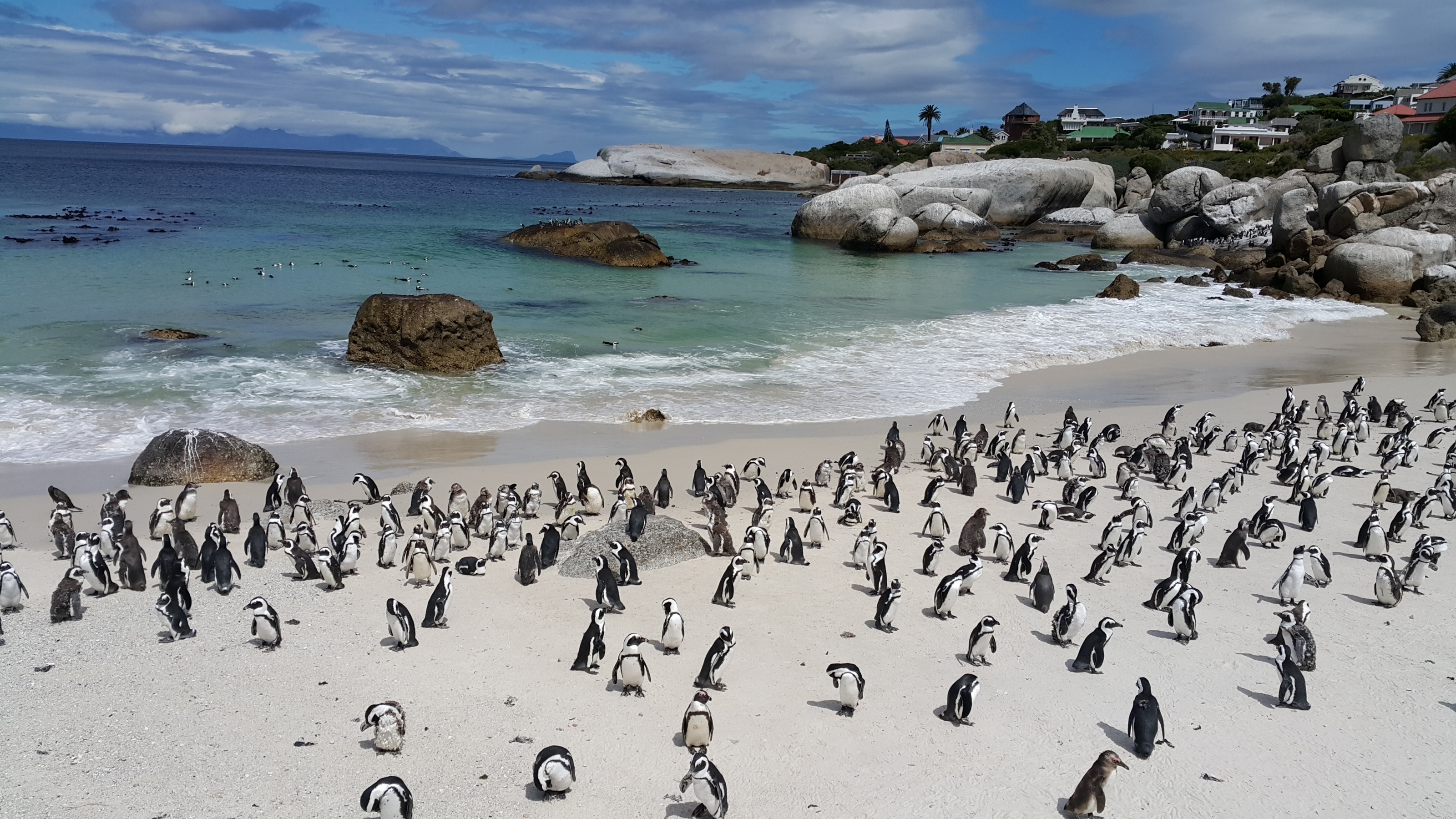
As you may already suspect, the African Penguins don’t look like the Emperor Penguins inhabiting Antarctica on the Southern Pole. Unlike their giant cousins, the African Penguins are about 46 cm tall and have black speckles on their chest. They are now considered endangered. Living and breeding on the coastal of South Africa and Namibia, there are only about 25,000 pairs left in the world.
Interestingly, some of the penguins looked quite miserable, with pale molting feathers. At first we took them as very old, but it turned out to be exactly the opposite – these were actually very young penguins who still don’t have the protection of their plumage against cold and damp.
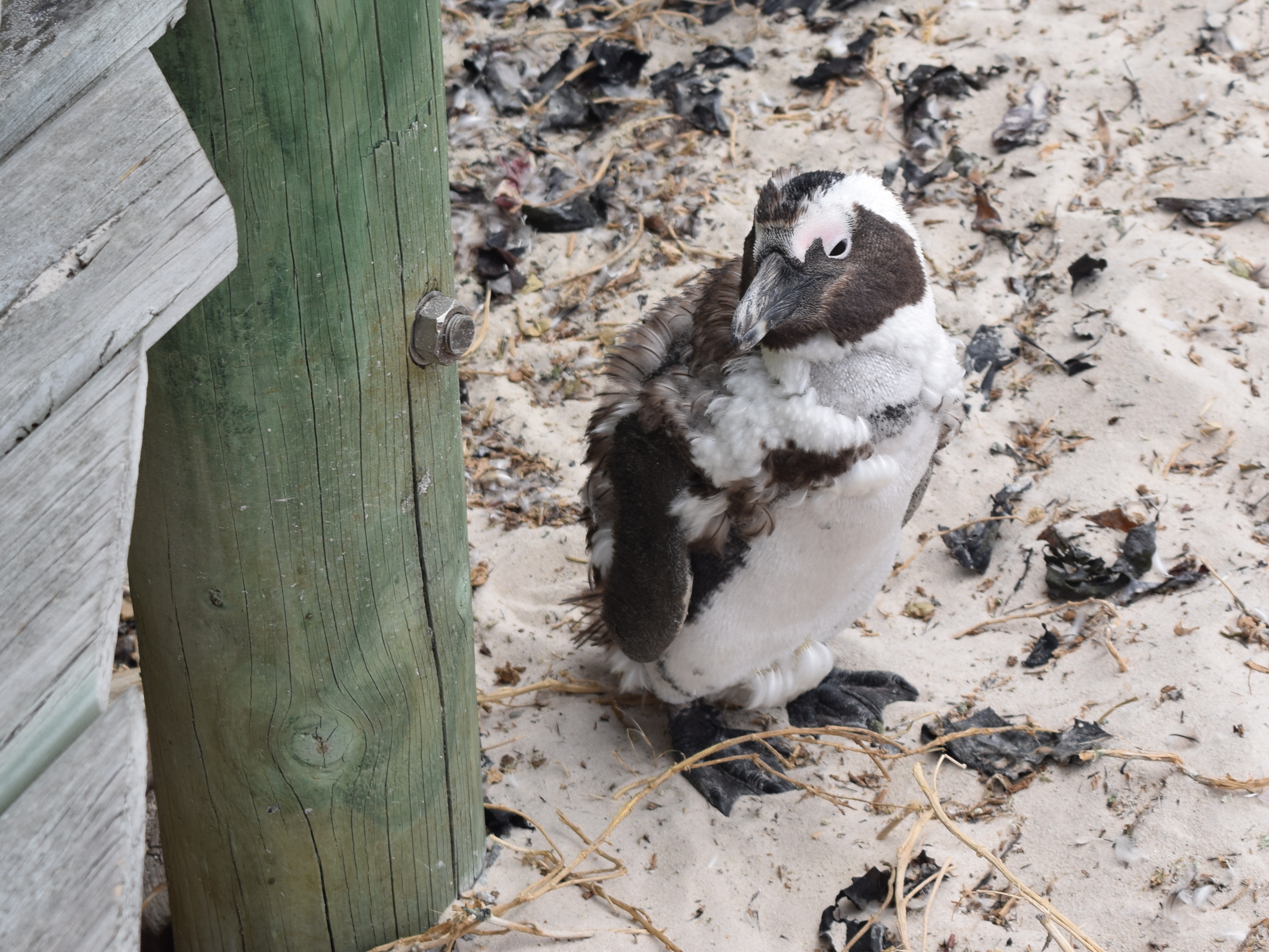
A penguin chick
After the age of 1, the already young adult penguin receives their beautiful black-and-white coat.
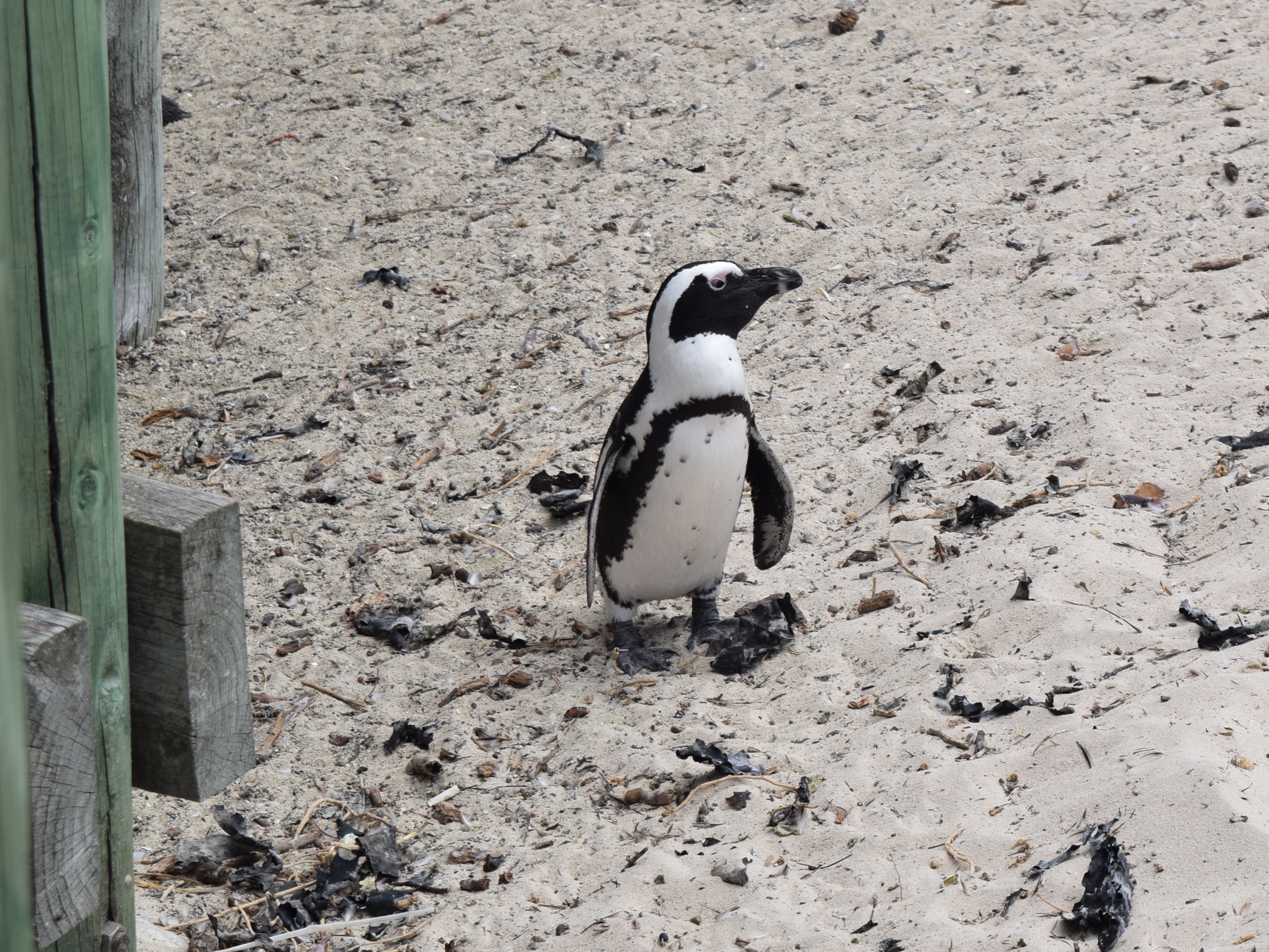
An adult penguin
After taking tons of pictures (while the penguins seem to completely ignore camera-armed tourists), we said goodbye and headed back to Cape Town.
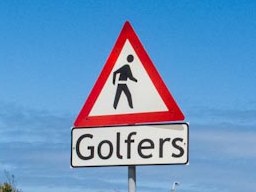
Yeah, besides being aware of the dangerous baboons and crossing penguins, there was even a road sign, warning of Golfers! What the heck! 🙂
The road to Cape Town took us through the delightful fishing village of Kalk Bay and popular surf beach in Muizenberg.
Kalk Bay was named after the lime (“kalk” in Afrikaans) produced from seashells and used for painting buildings in the 17th century. Today it is a very vibrant place, offering small art and craft shops along the main street as well as great cafes and restaurants that cannot be passed easily.
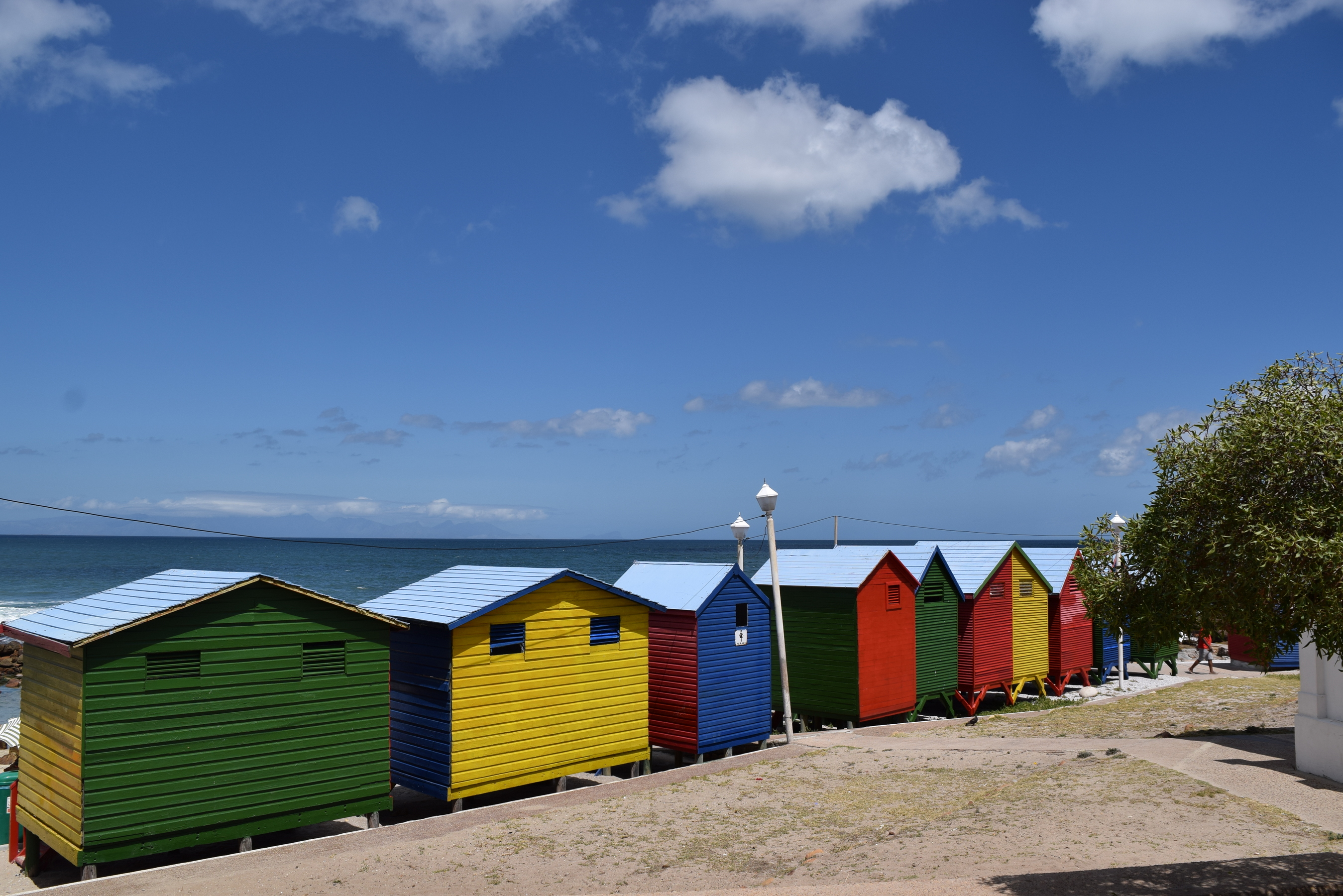
Changing rooms at Kalk Bay
We couldn’t help but stop by a small beach to admire the colorfully painted Victorian bathing chalets (or, in other words, changing roomsJ) lined up along the beach. What a simple and lovely design idea!
Another piece of art grabbed our attention while walking the main village road – “Cape to Cuba”, an authentic and very artistically furnished restaurant and a bar, offering Cuban inspired dishes, unique décor and ambience. Well, I’ve never been to Cuba, but I felt I was already there.
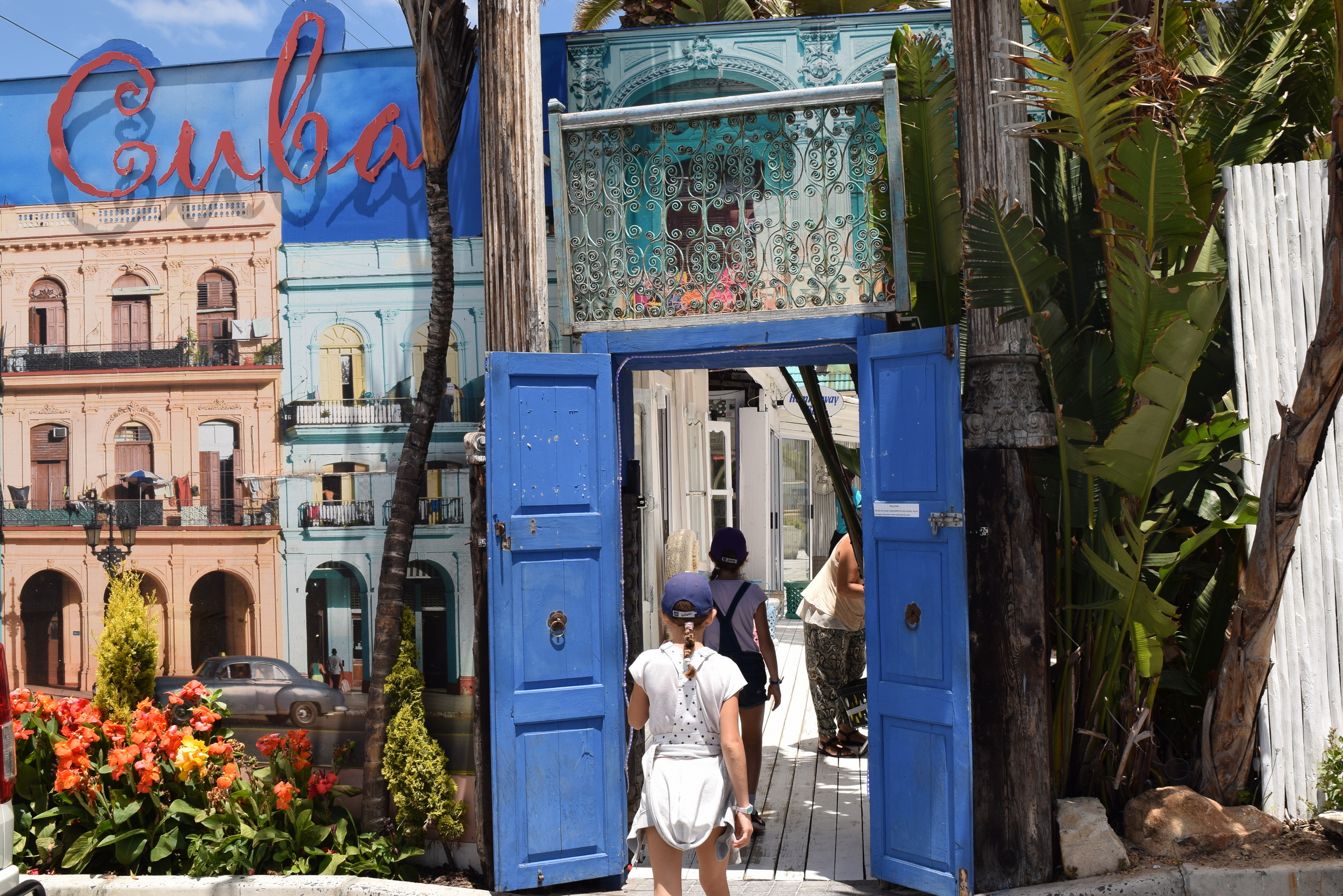
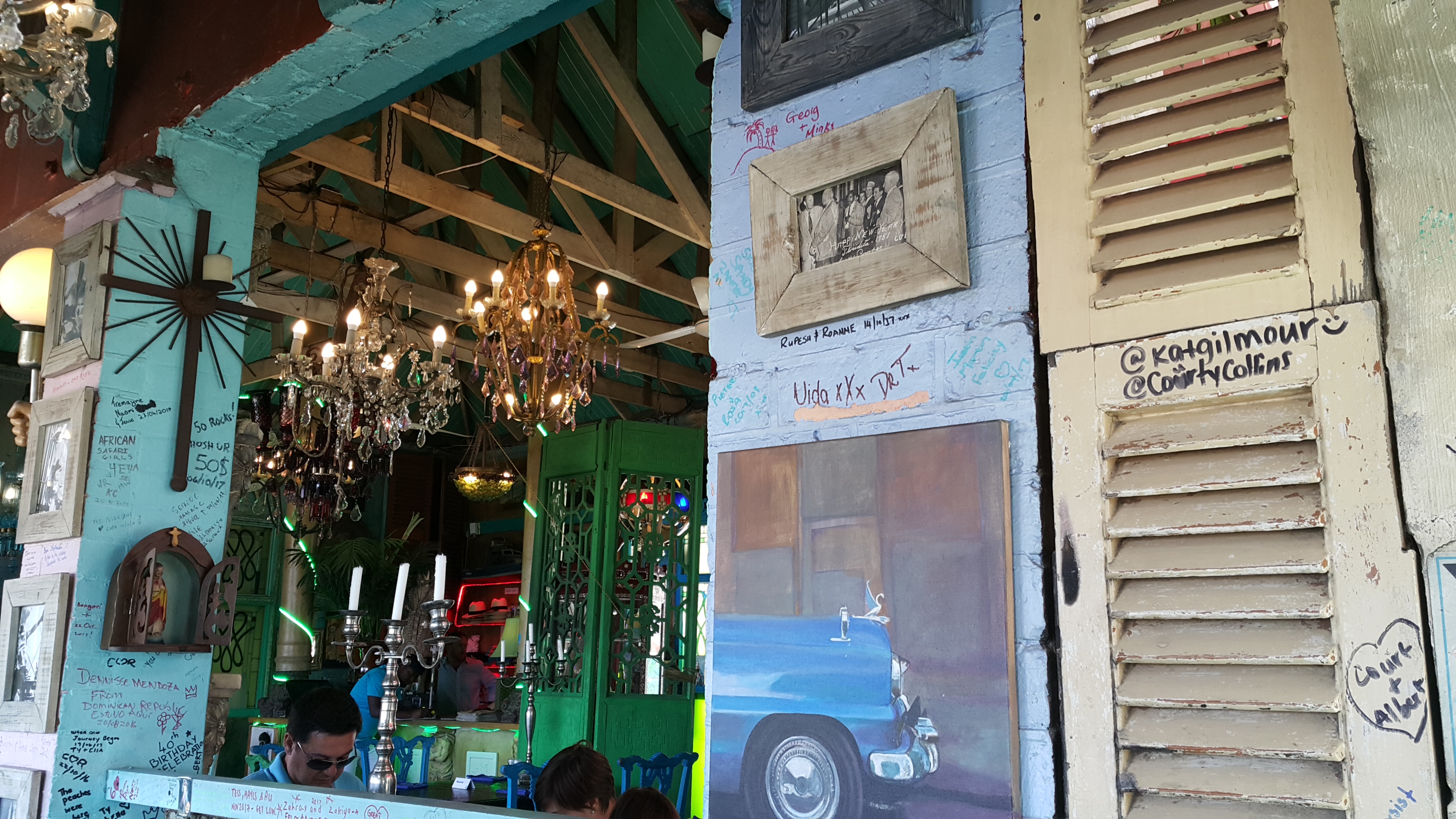
Almost all decor elements of Cape to Cuba have been brought from Cuba
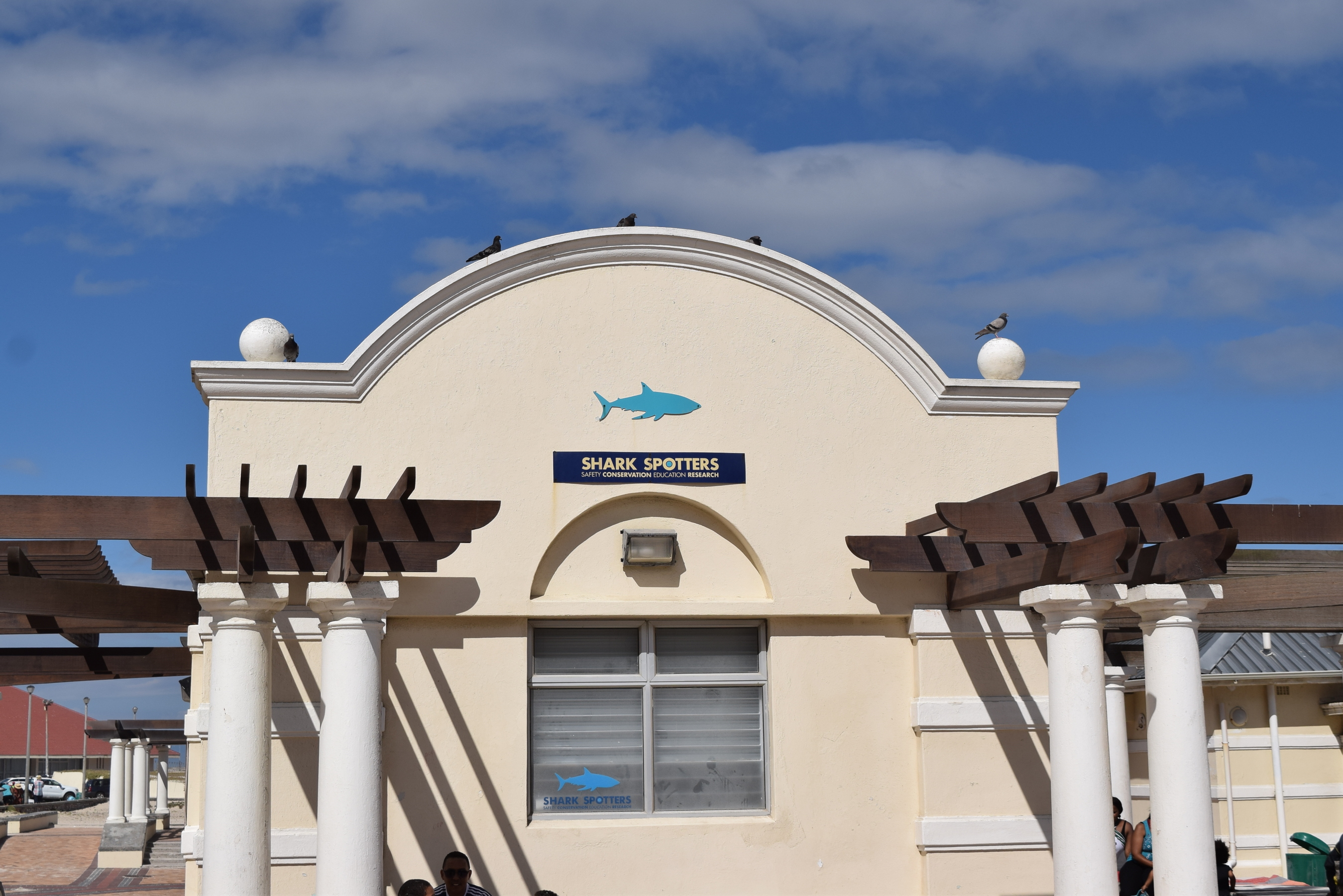
Muizenberg, just a few kilometers from Kalk Bay, is very popular among families and surfers as the sea is apparently safer here than at other beaches along the peninsula. When I say safer, I mean free of sharksJ. Yes, sharks are quite popular in this part of the world, which explains the presence of the Shark Education Center, Shark Spotters Center as well as shark education boards installed on the beaches along the coast.
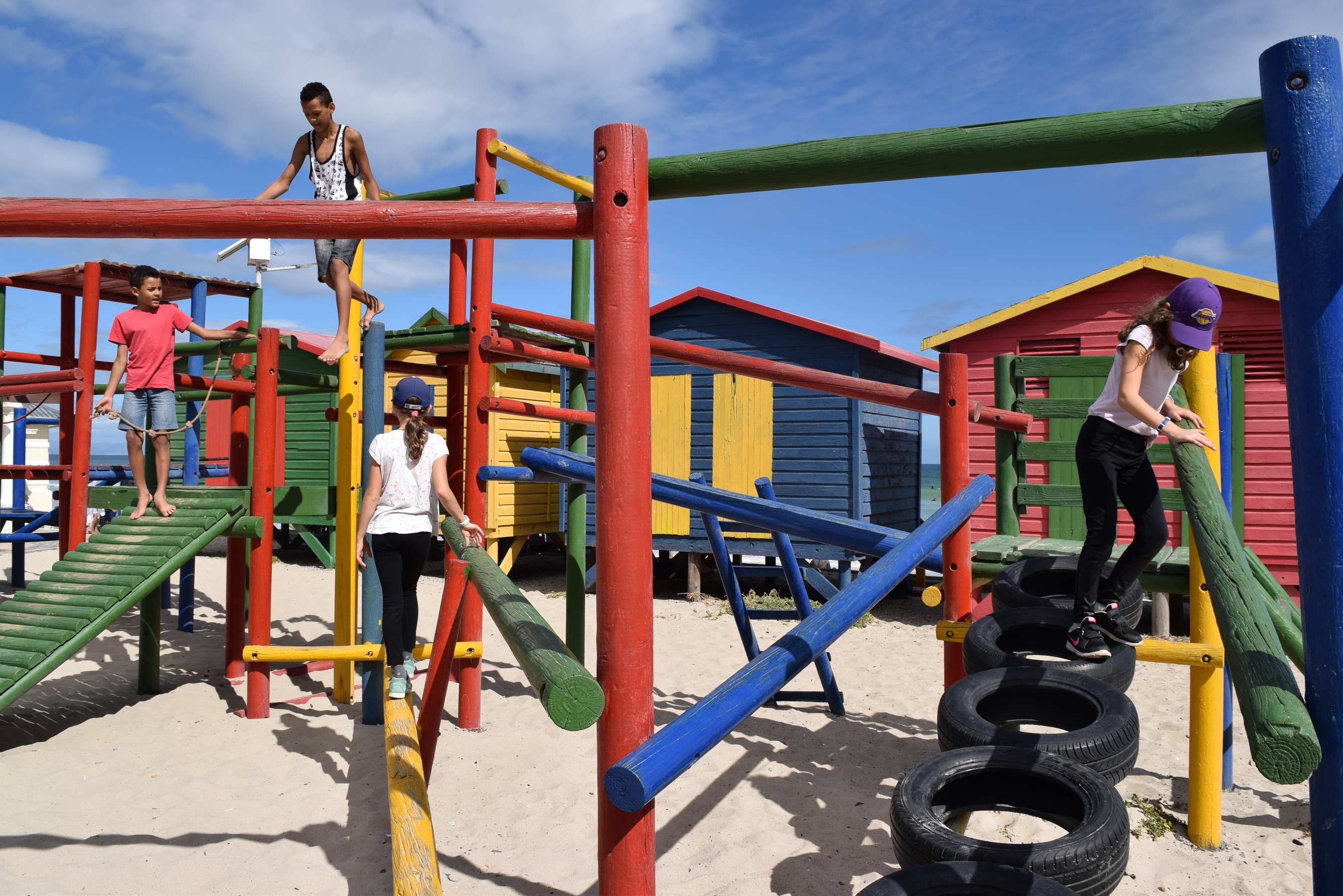
The colorfully painted wooden playground is another reason for families to prefer Muizenberg before other beaches.
Next on our sightseeing agenda were the famous Kirstenbosch Botanical Gardens – the largest in South Africa – covering 5 hectares of Table Mountain National Reserve area, and only 10 minute drive from the city. Kirstenbosch Gardens – declared a World Heritage Site, for about 9000 of South African 22000 plants are cultivated here – are a perfect place to relax, walk, make a picnic, and learn about the rich floral kingdom of the Cape.
One can easily spend the whole day in the gardens. Besides the wild almond hedge, amazing oaks, giant fig and camphor trees, the Tree Canopy Walkway (also known as the Boomslang, meaning “tree snake”) is no doubt a major attraction in the gardens. A curved steel and timber bridge, about 130 meters long, rising 12 meters above the ground, it provides wonderful views over the Kirstenbosch forests.
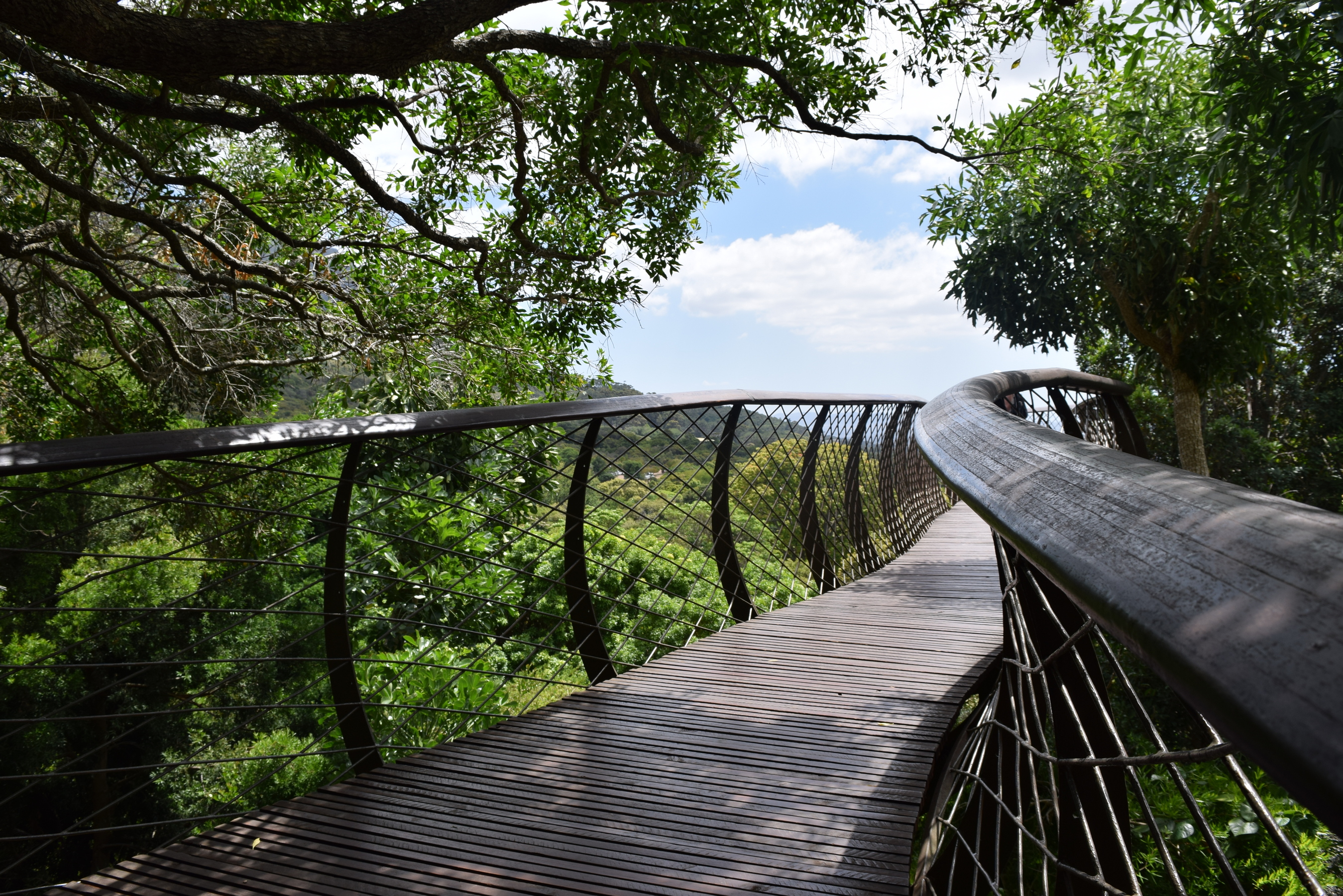
Tree Canopy Walkway
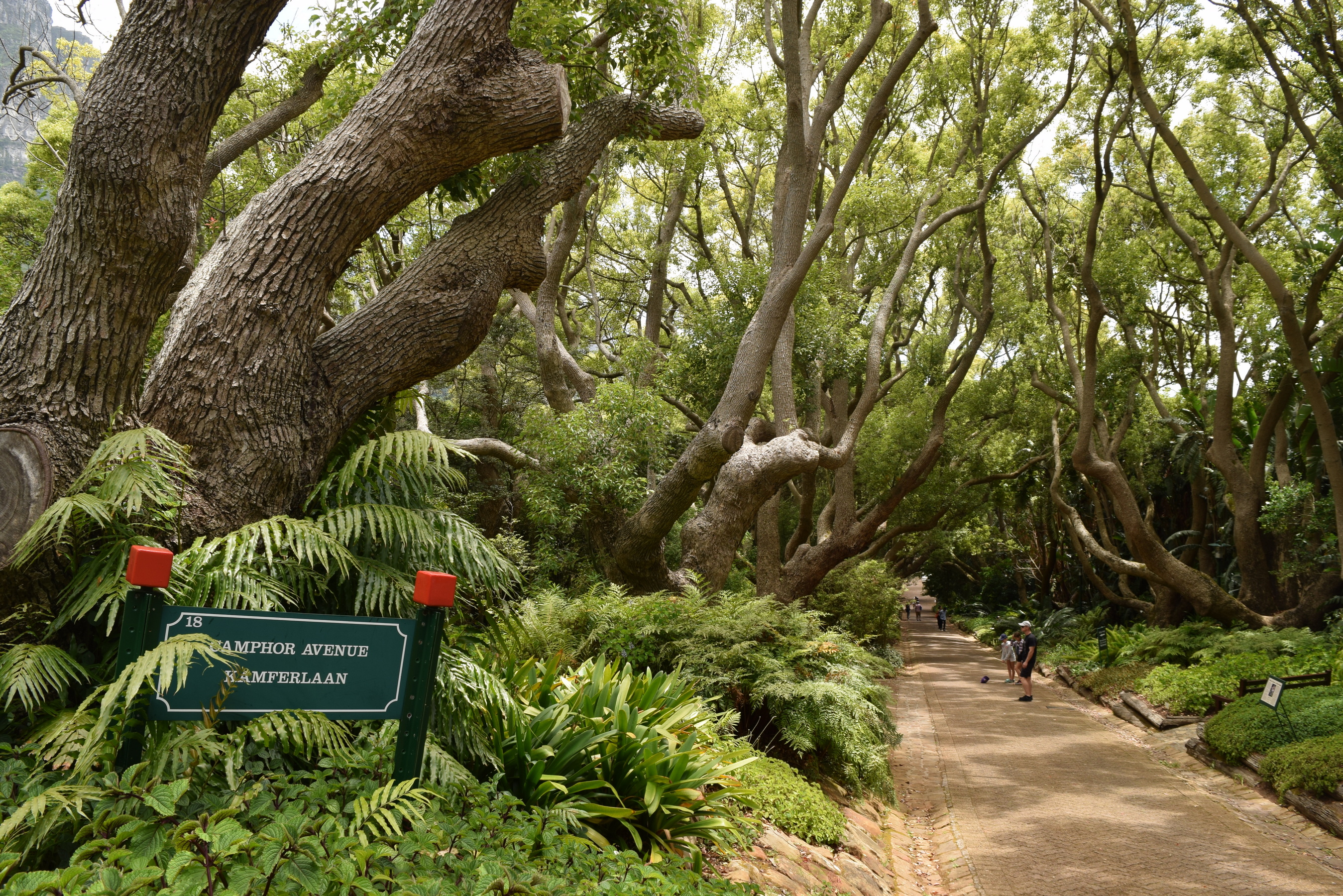
Camphor Avenue
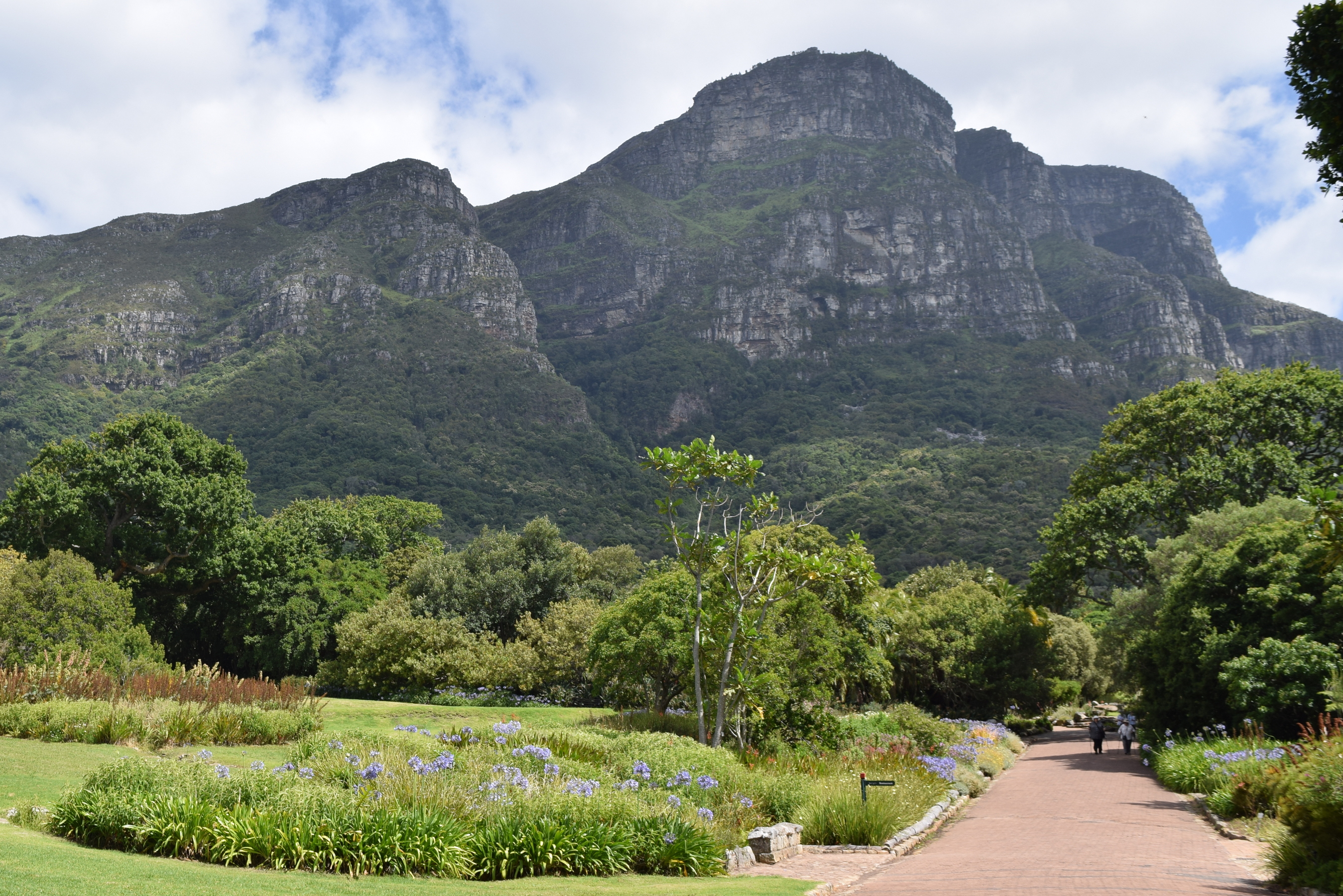
We visited the gardens on the 24th of December, hoping to enjoy the outdoor Summer Sunset Classic Concert that traditionally takes place on Sundays in Kirstenbosch, but it came out it was planned for the 31st of December. That would have been an unforgettable experience…
You can’t really say you have visited Cape Town, if you haven’t stood on top of the gorgeous Table Mountain. Around 60 million old and visible from multiple angles of the city, the flat-topped Table Mountain is a major landmark of Cape Town. In 2011, it was declared the New 7 Wonder of the Nature (if interested, click here to learn more).
We had pre-decided to take the cableway to the top, and if weather allows, find an appropriate hiking route down. Friends had advised us to be prepared for fast changing weather, so we took our fleece and rain jackets in our rucksacks; however, we didn’t need them at all as the weather on that day was probably the best during the whole our stay – no winds, no clouds, just blue skies and marvelous panoramic views across the peninsula.
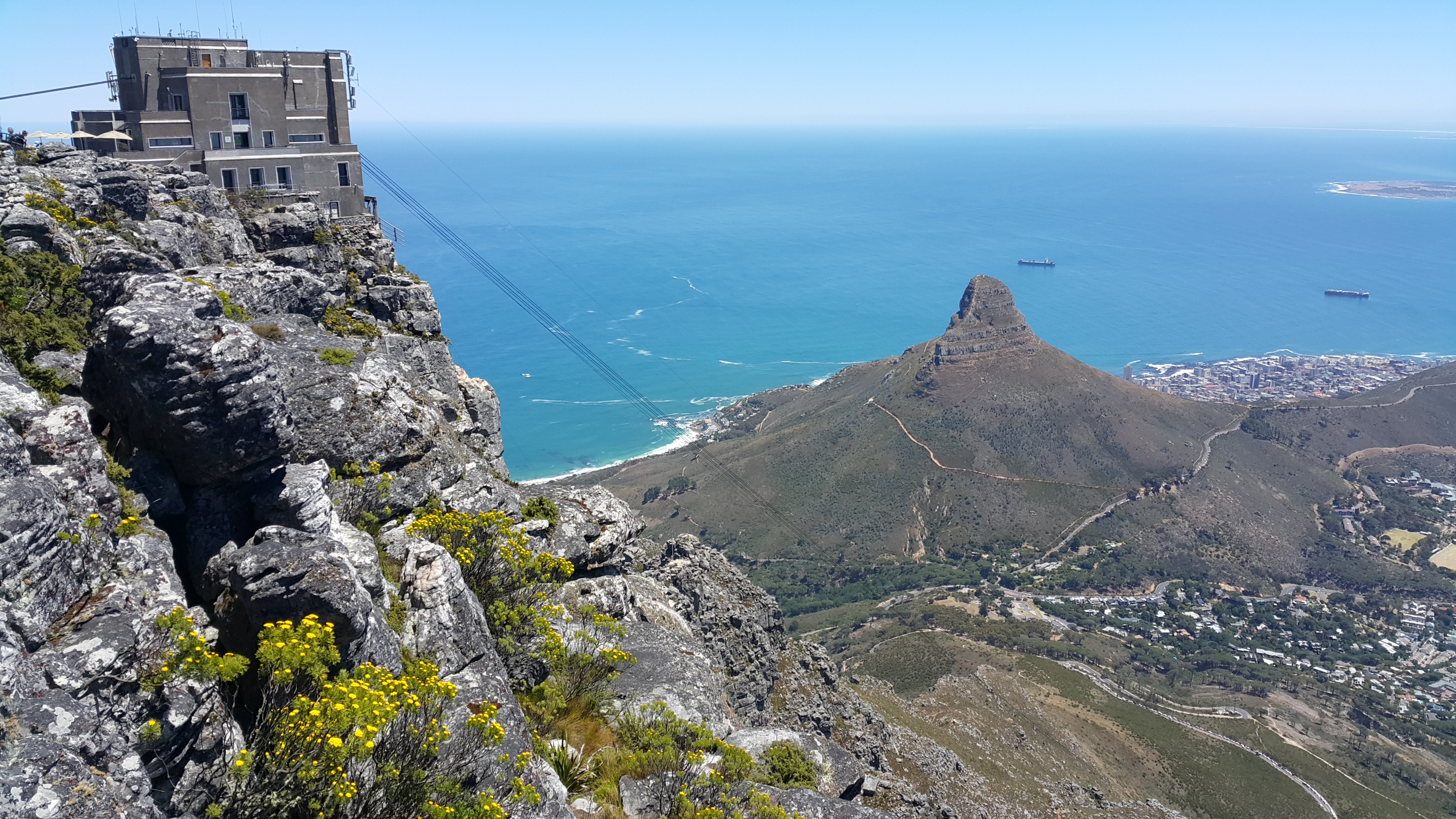
View from the top with the Upper Cable Station on the left, and Lion’s Head in the distance
Local guides advise against climbing up the mountain when the flat top is covered in clouds known as “tablecloth”. We had the opportunity to see the tablecloth on multiple days, usually in the late afternoon hours, and the view was just fabulous – the clouds would come from the Devil’s Peak end (which is not flat), quickly crawling towards the flat top, and then falling down the cliff like waterfalls.
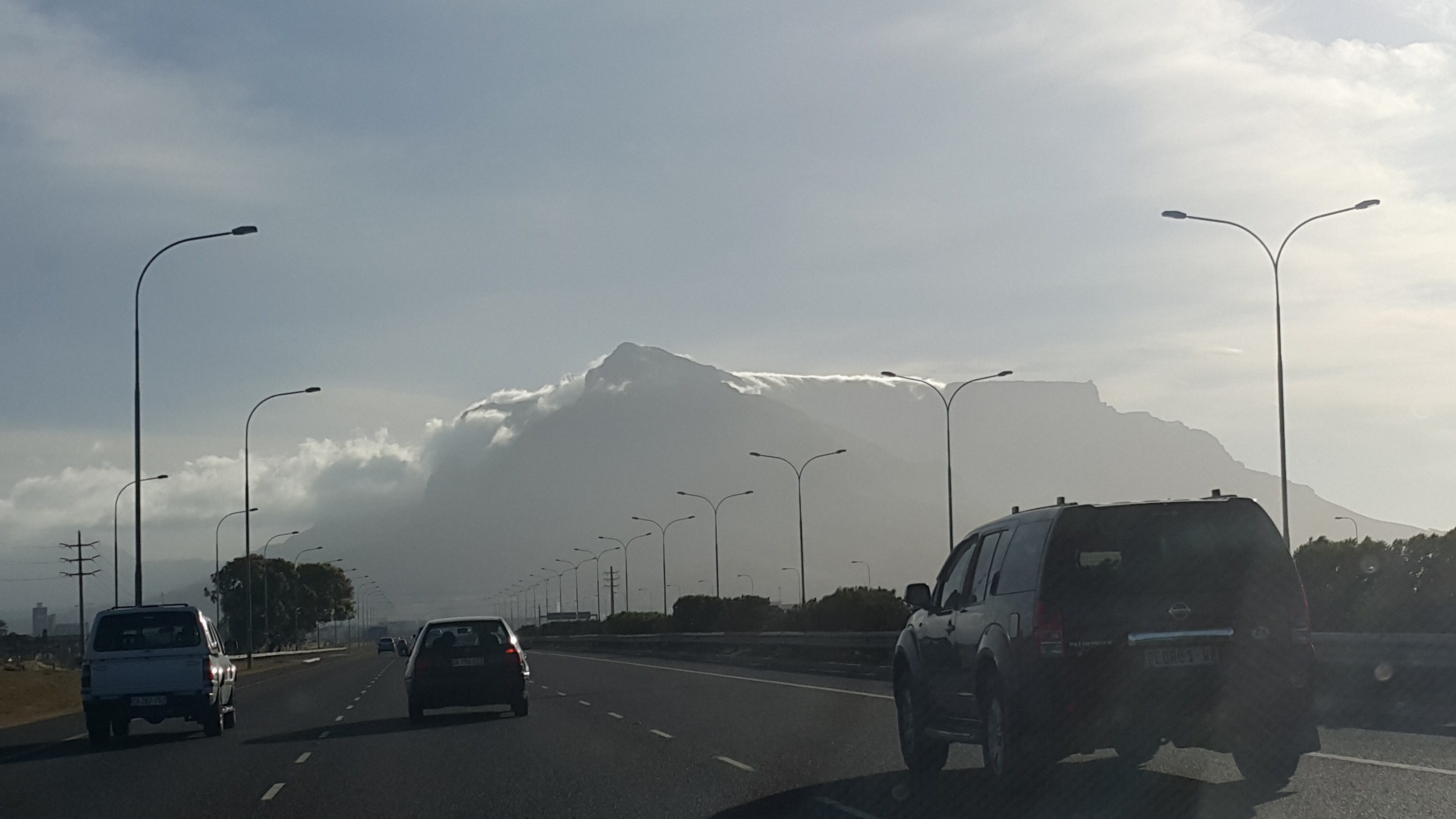
The Table Cloth covering Table Mountain
The decision to buy online tickets in advance turned out to be a very good one as it gave us the advantage to hop on the cable car bypassing the long queue at the ticket office. We were also quite lucky to learn that the cable car has just been opened. Due to strong winds it didn’t operate earlier that morning.
Needless to describe the feeling while standing on the top!
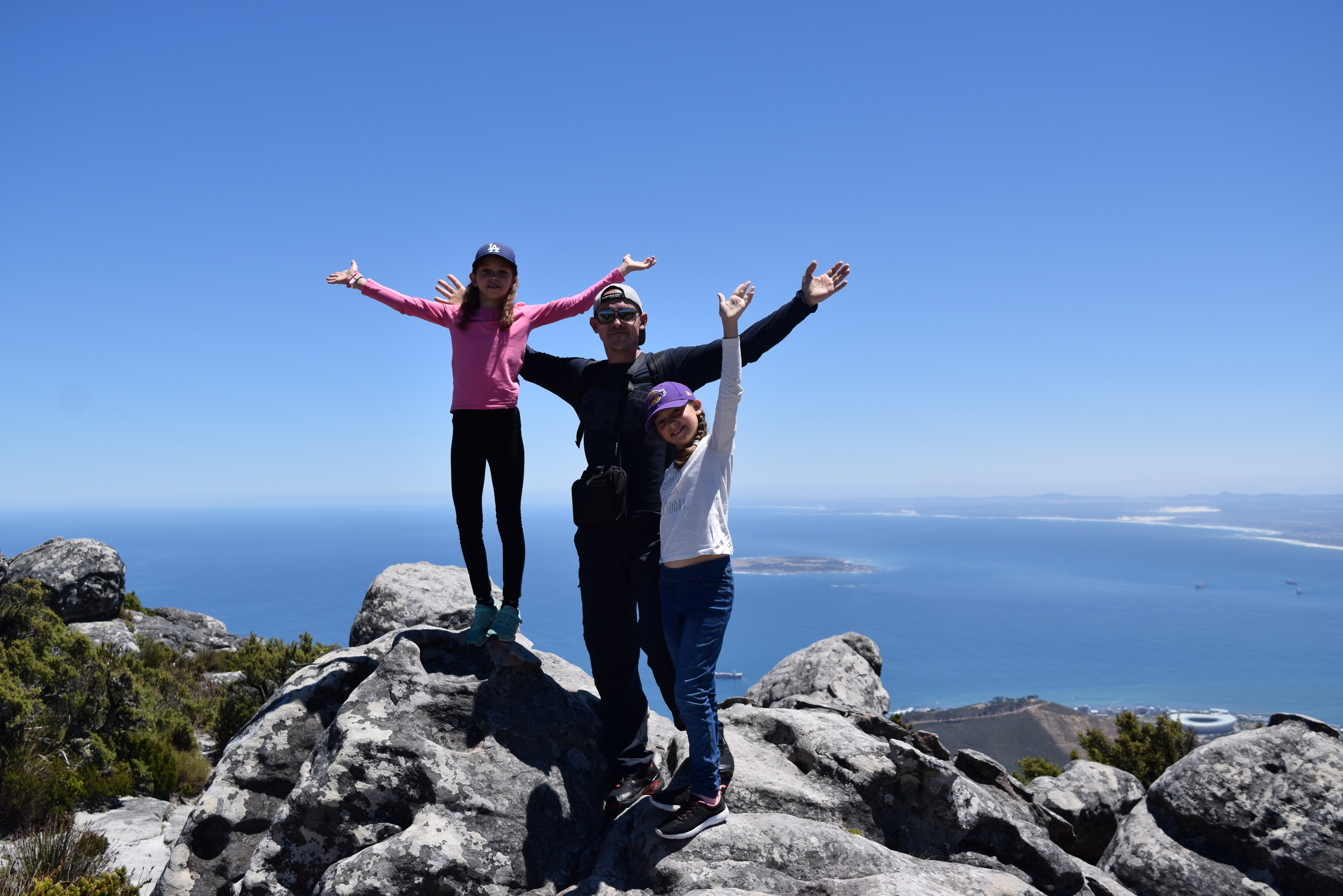
On the Top. In the distance – Robben Island, where the former SA President Nelson Mandela was imprisoned
The first European to climb Table Mountain was a Portuguese navigator in the beginning of the 16th century and he named it “Taboa do Cabo” (“Table of the Cape”).
At the top we consulted one of the local guides about which hiking route to take. He took us to the starting point of one of the several routes down, assuring us that it is safe enough for kids (“my 6-years old has done it several time!”), and would take us not more than 1,5 hrs to get down.
I am not sure what exactly happened, but after 3 hrs of hiking down a very steep rocky route, exposed to the sun and with trembling knees at many places where cliffs were just shooting down centimeters away from the path, we successfully arrived at the lower cable station!
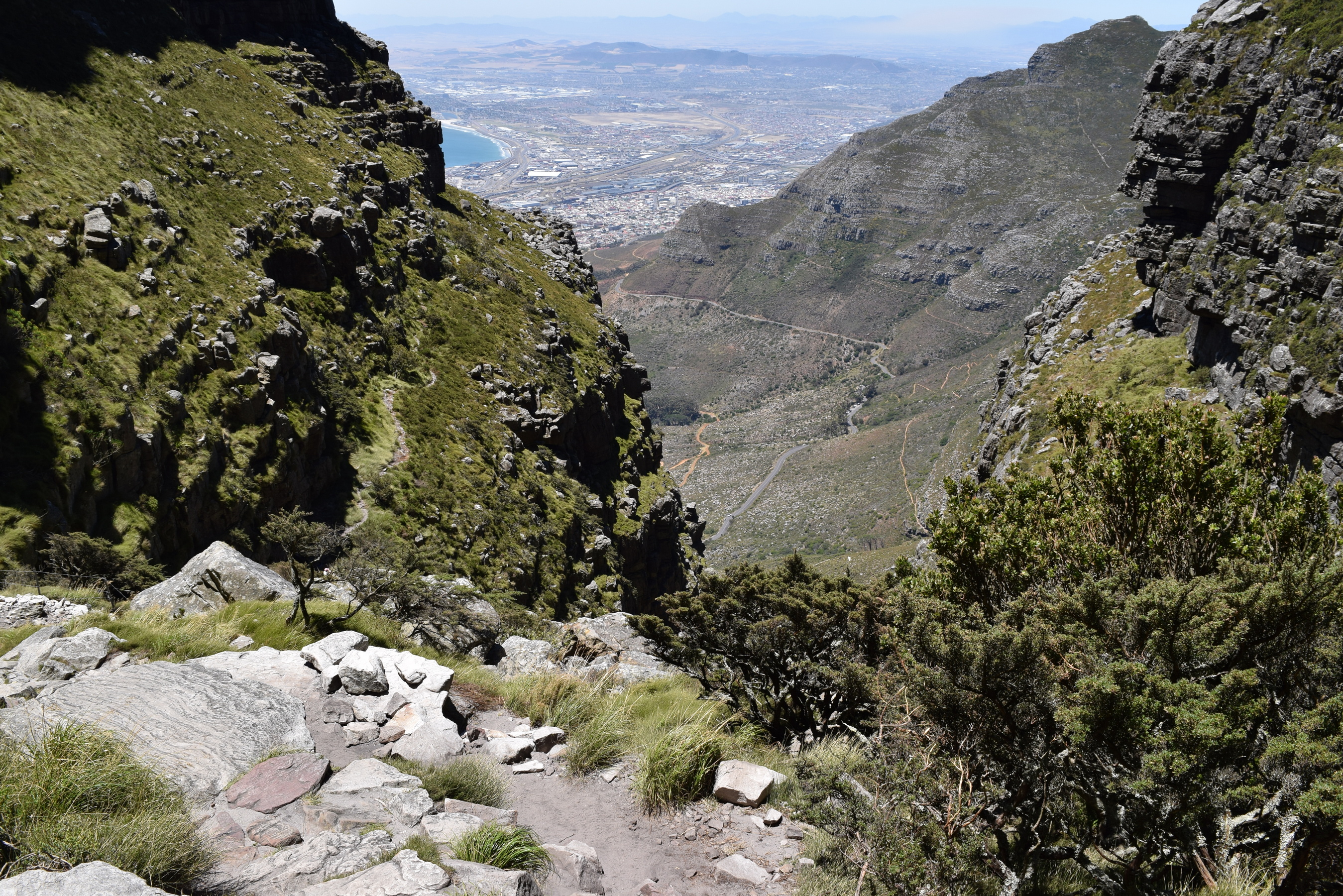
The steep rocky Plattenklip George route
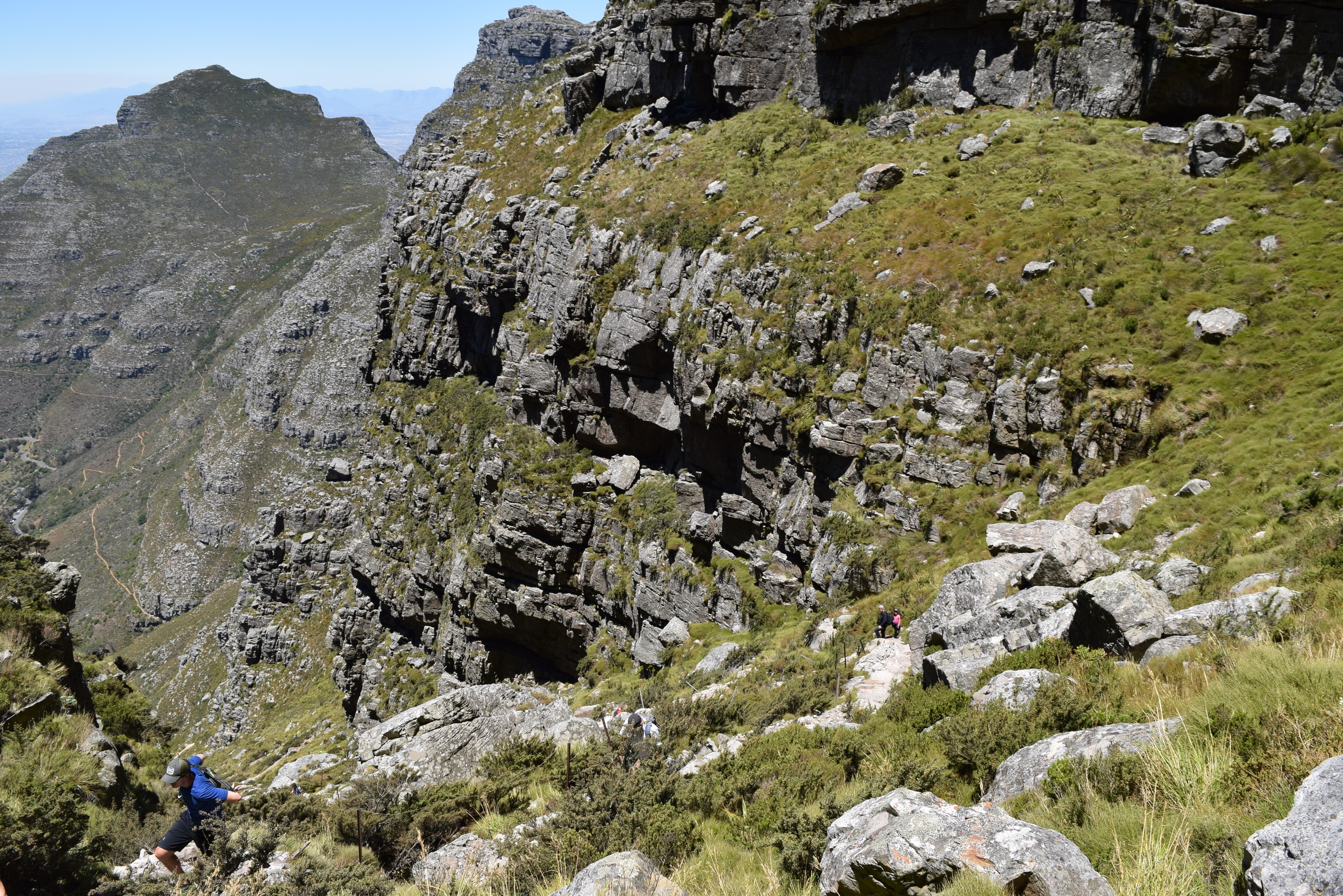
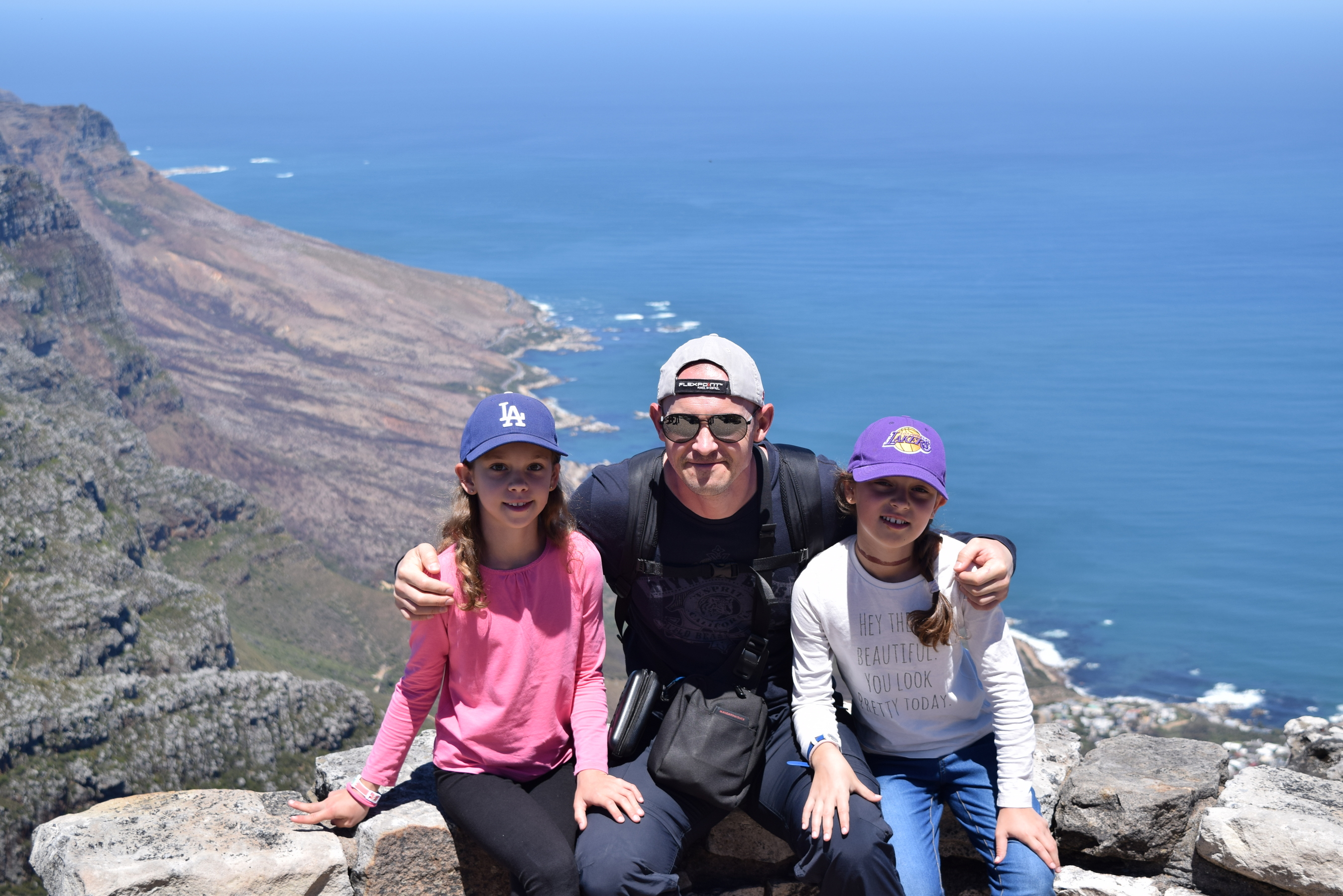
The pink and black dots in the far distance are Kristiana and Peter
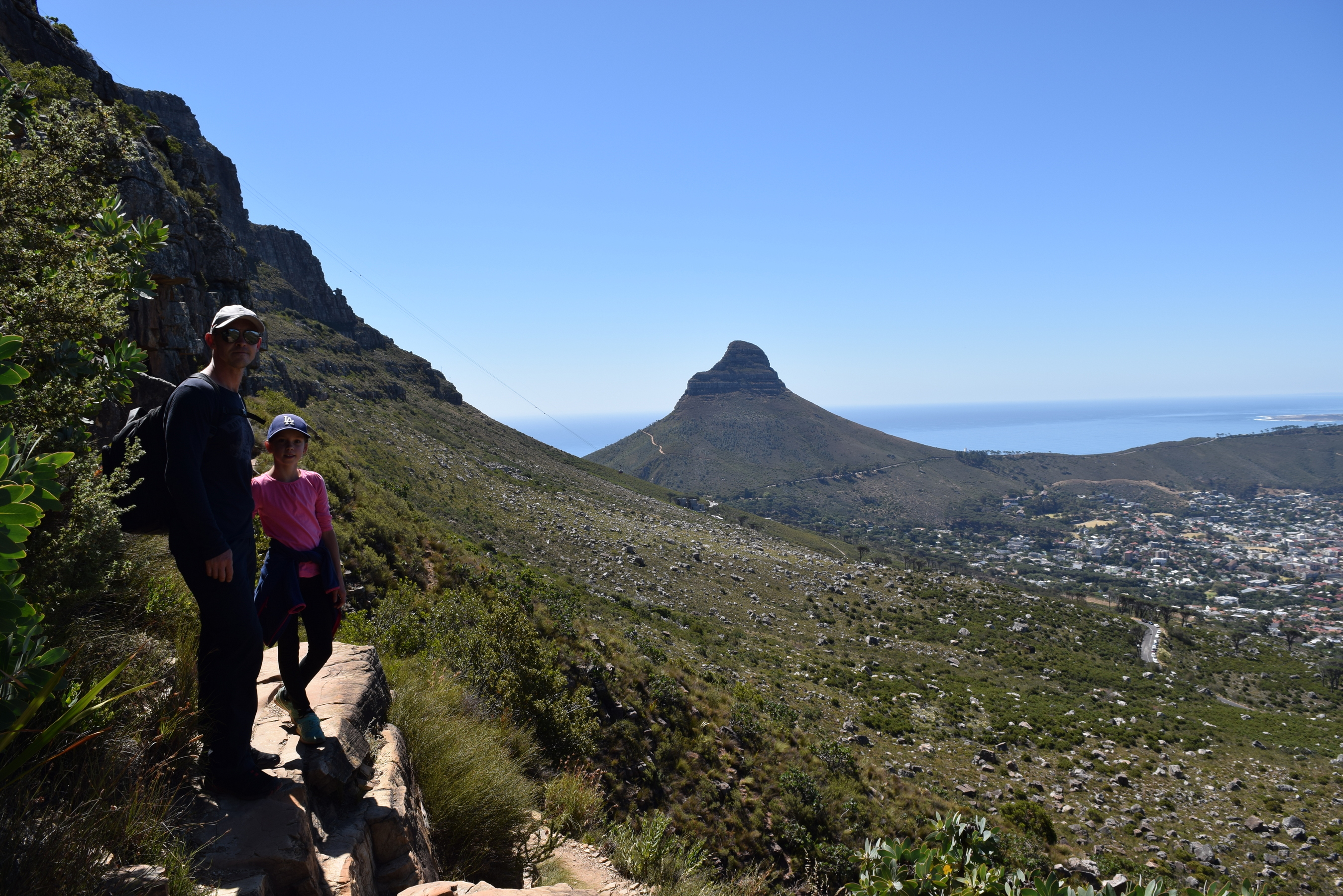
On the edge with the Lion’s Head in the background
Peter and I were very proud of our girls, who have stood up to the end of this unexpected challenge without any complains! But it was not before I looked up the route we had taken on a map, when I realized what we have actually achieved.
So, it came out that the first 2,5 hours we were hiking down the Platteklip Gorge route, which can be very difficult for kids (well, I was wondering why we didn’t see a lot of kids on our way.. J), but then the last half an hour, not-knowingly, we had taken the very dangerous India Venster route recommended only to experienced climbers.
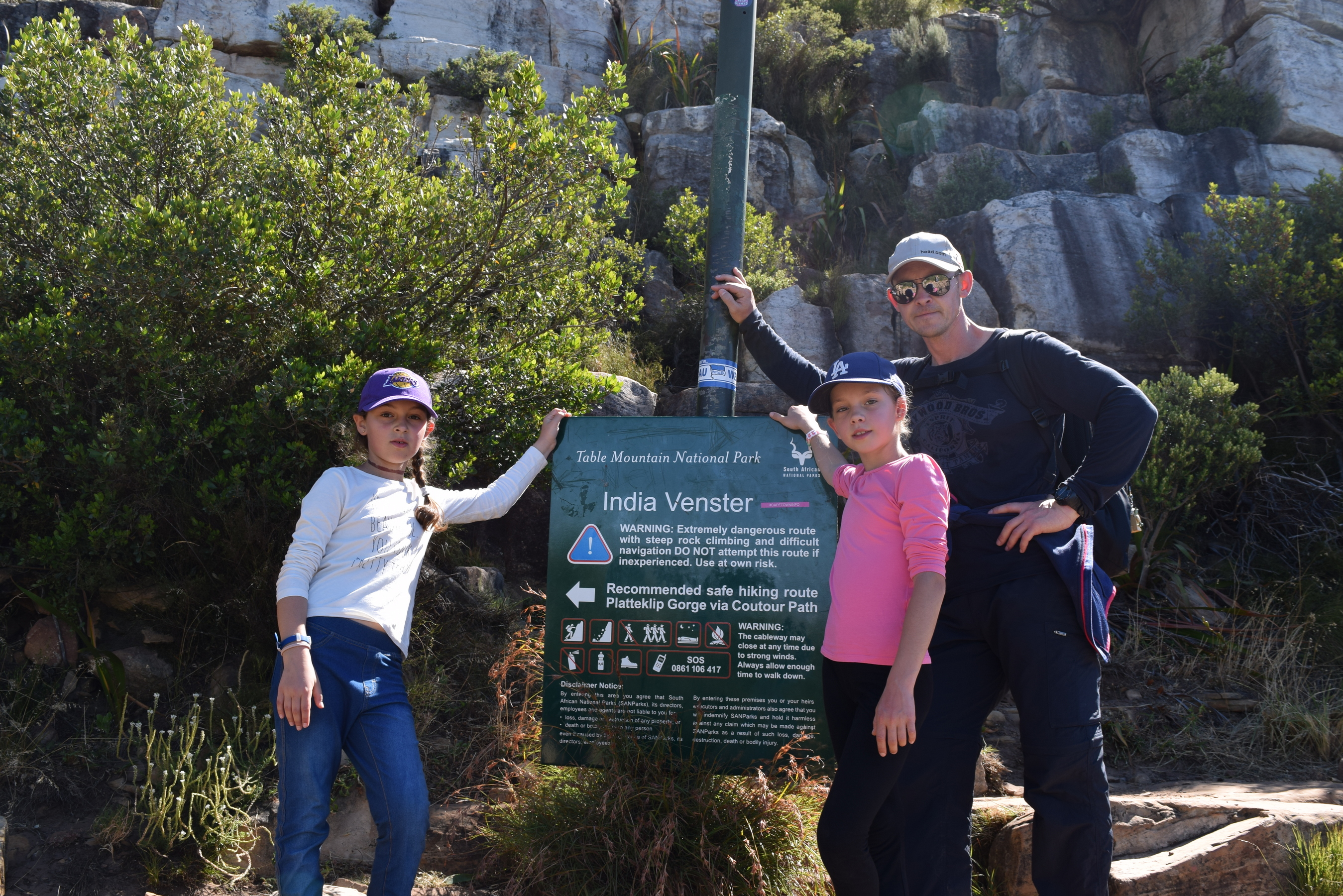
On the dangerous India Venster route
The cherry on the cake was our unforgettable wine tour in Stellenbosch and Franschhoek! OMG, I’ve never tried so many wines on a single day! Only within an hour from the magnetic Table Mountain and the city, these two Winelands destinations are a must on everyone’s agenda.
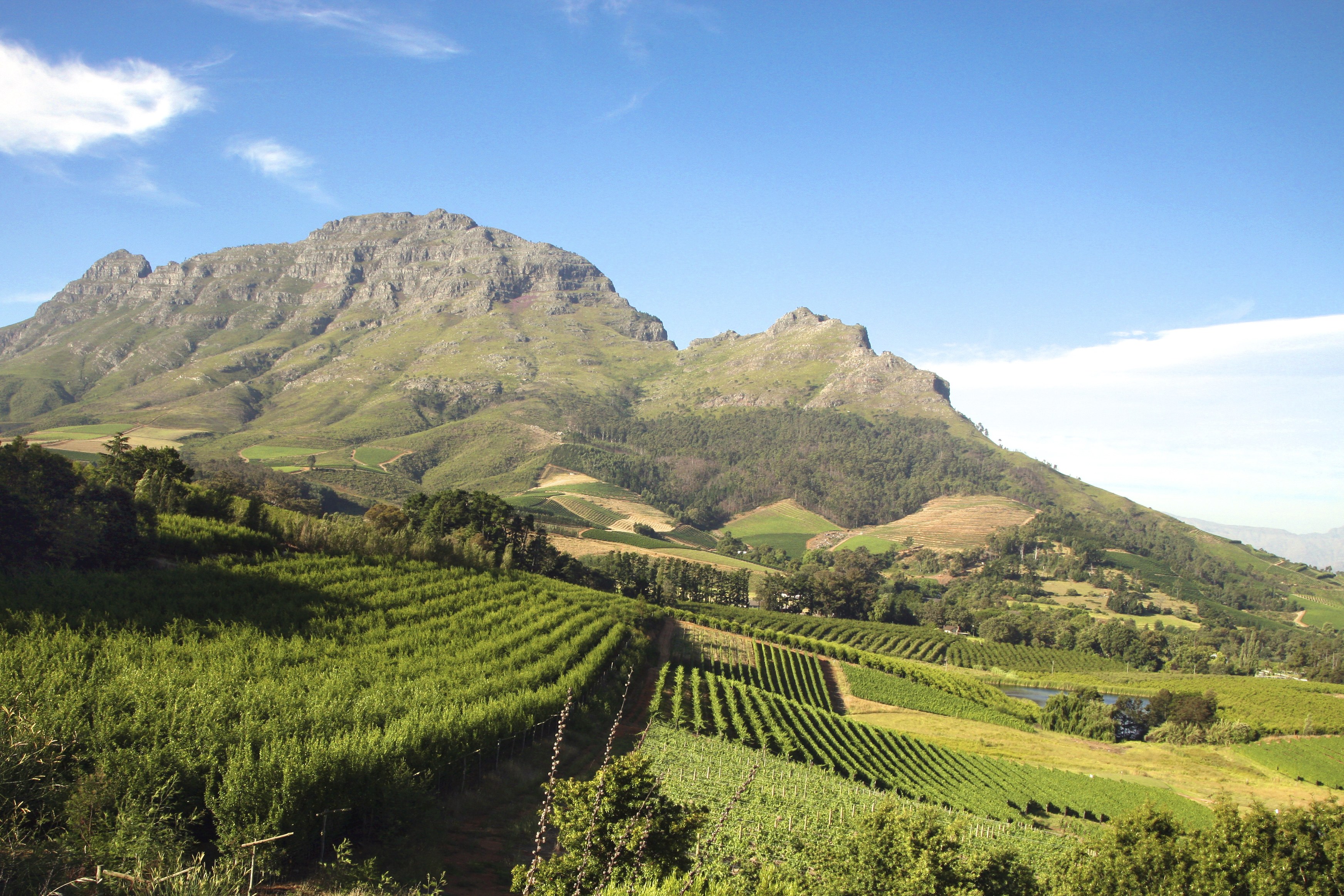
Franschhoek Winelands
Some people prefer to explore the vineyards on their own in order to spend as much time as they want in the wineries. Still, if you drive yourself, you would end up spitting rather than sipping, so our firm choice was joining a private tour. And since miracles happen, we actually joined two friends from Moscow who happen to have booked a holiday to Cape Town for the same period of time as we did.
As it was an organized tour, we had a driver who was also a wine guide, pay attention now, with a master diploma from the renowned Wine University in Stellenbosch! Not only that, but he was a 7th or 8th generation Afrikaner, with a little bit rough manners for a wine guide but otherwise excellent knowledge about the history and culture of Cape Town and the Winelands.
Not without a reason, Stellenbosch that is the second oldest town after Cape Town, carries pride of being the Wine, Food and Art capital of South Africa. It has spectacular nature and vibrant environment shaped by students, entrepreneurs and farmers with diverse backgrounds and passionate about history, wine and good living.
The wine challenge started 10.30am at one of the most recommended wine estates – Villiera, where besides the tasting of white, red and bubbling wines, we were given a short tour in the winery and learned some interesting facts about the art of wine making.
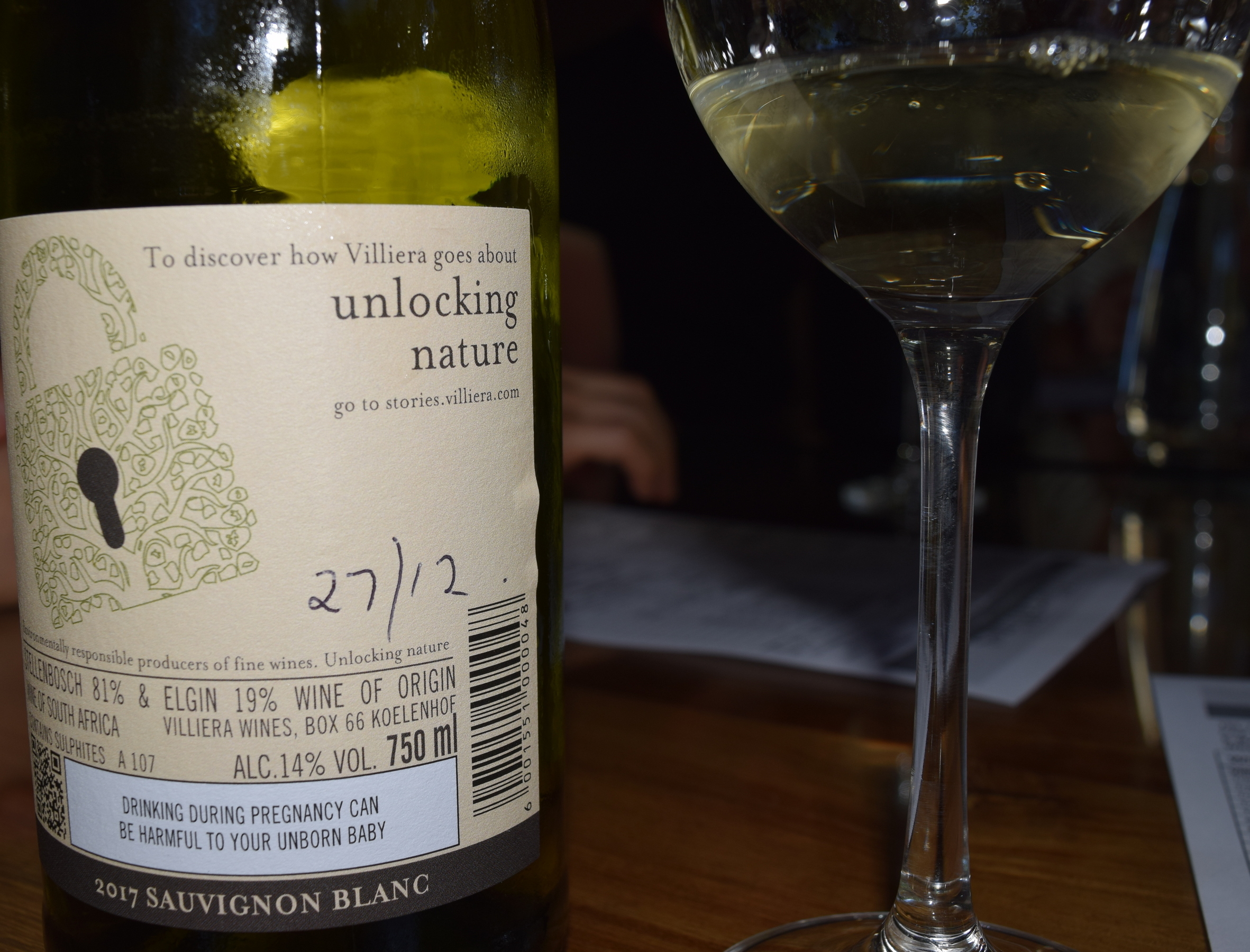
My favorite vineyard though was L’Avenir, nestled in the heart of Stellenbosch, offering tranquil setting and picturesque scenery. Without being a wine-pro, I could say that this was by far the most remarkable presentation of the wines.
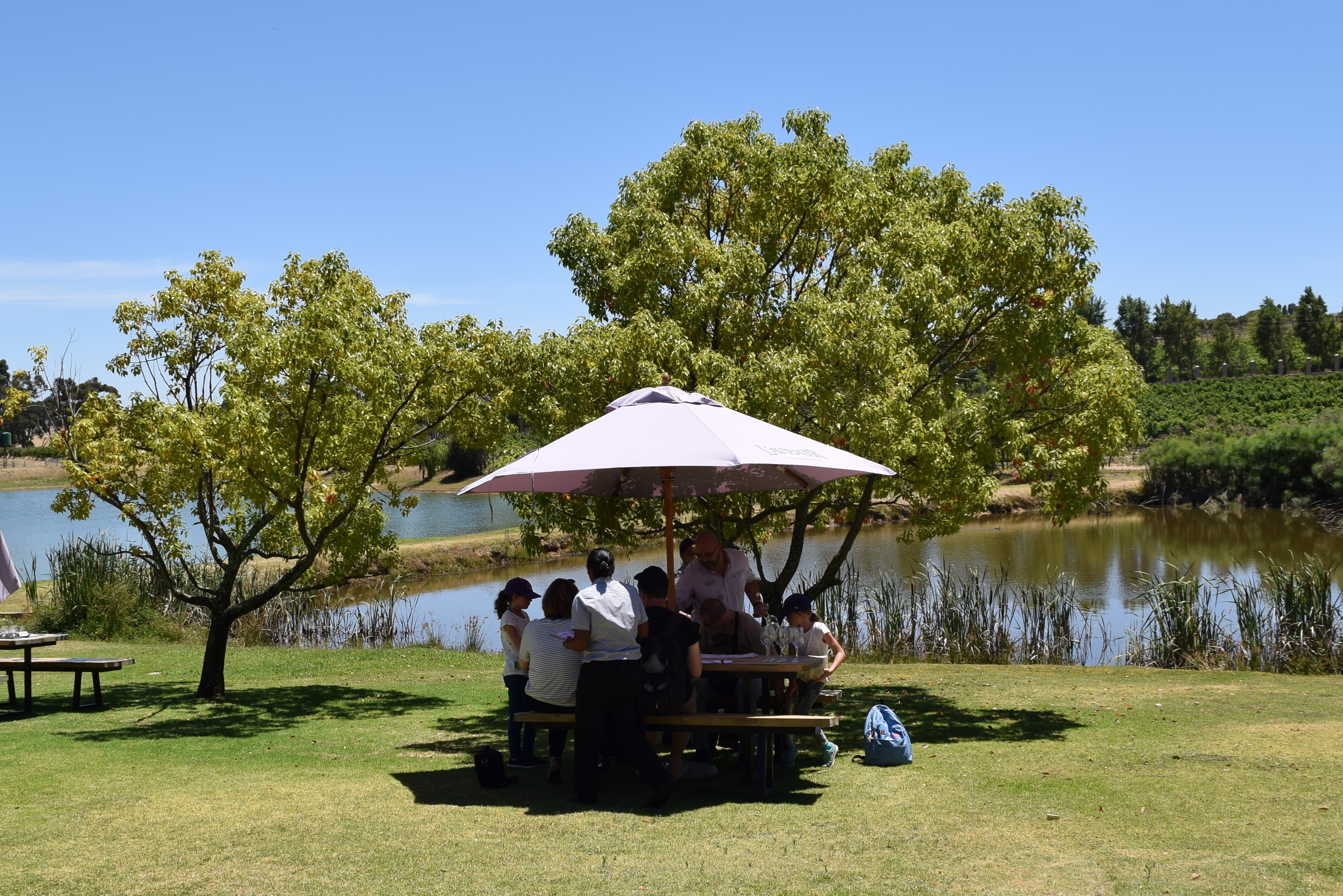
At L’Avenir (translated from French – The Future)
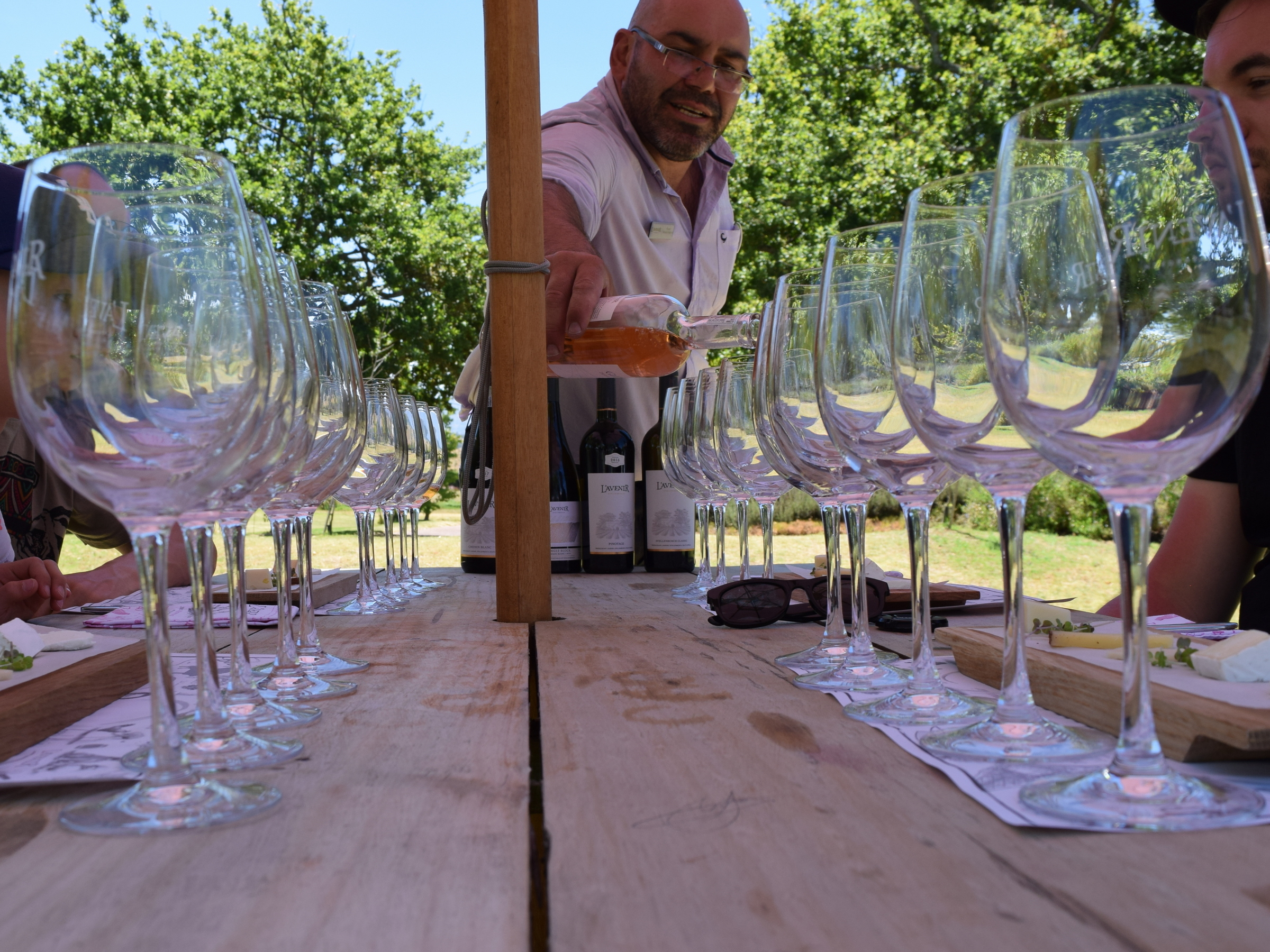
The sublime moment
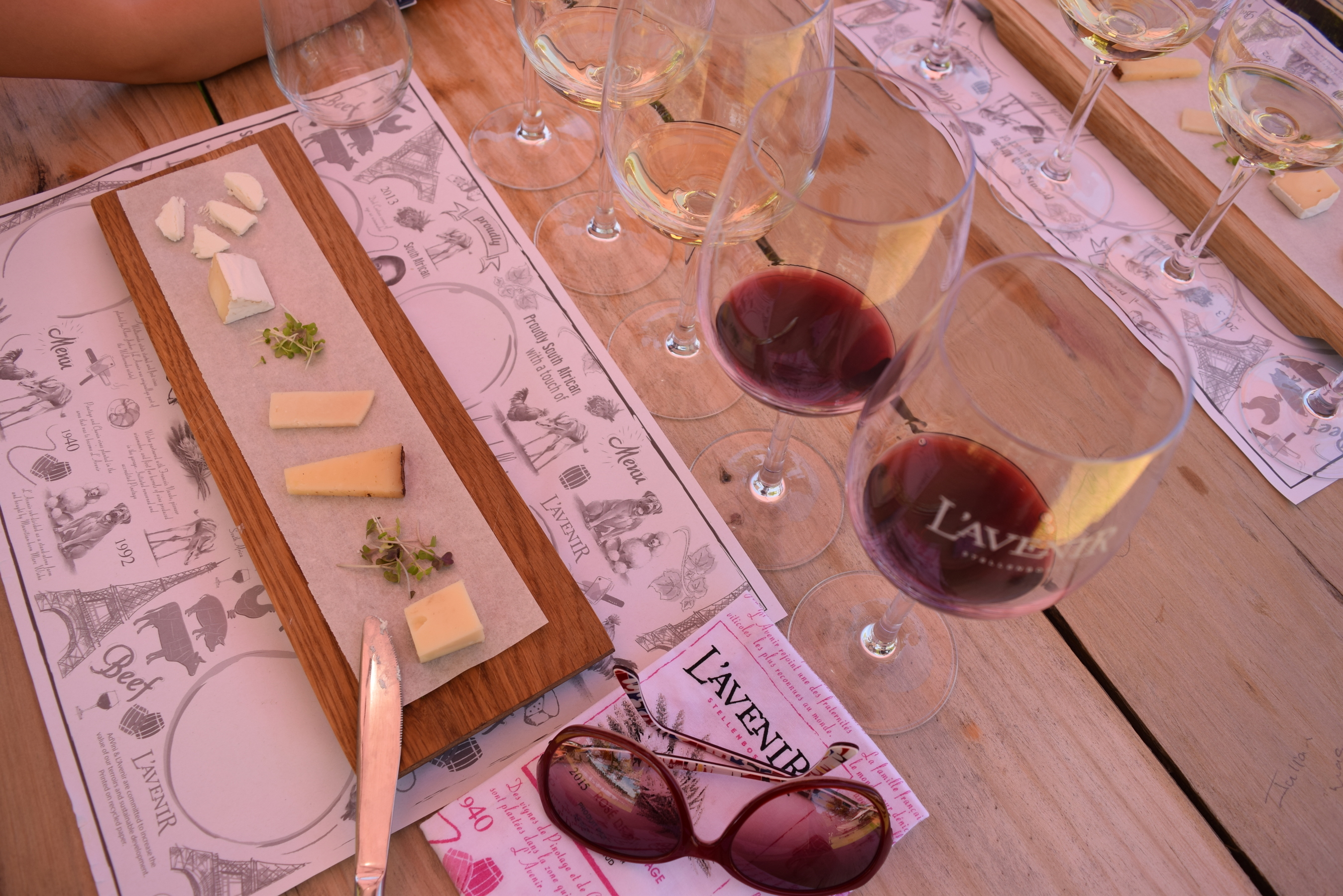
The best friend of wine:-)
I thought that L’Avenir has raised the bar and we would not be so impressed by the next vineyards on the list. I was wrong. Tokara Winery was another stop in Heaven. Not only does Tokara offer excellent wines, but also a range of olive oils, with the olive trees grown on the estate, right beyond the vineyards.
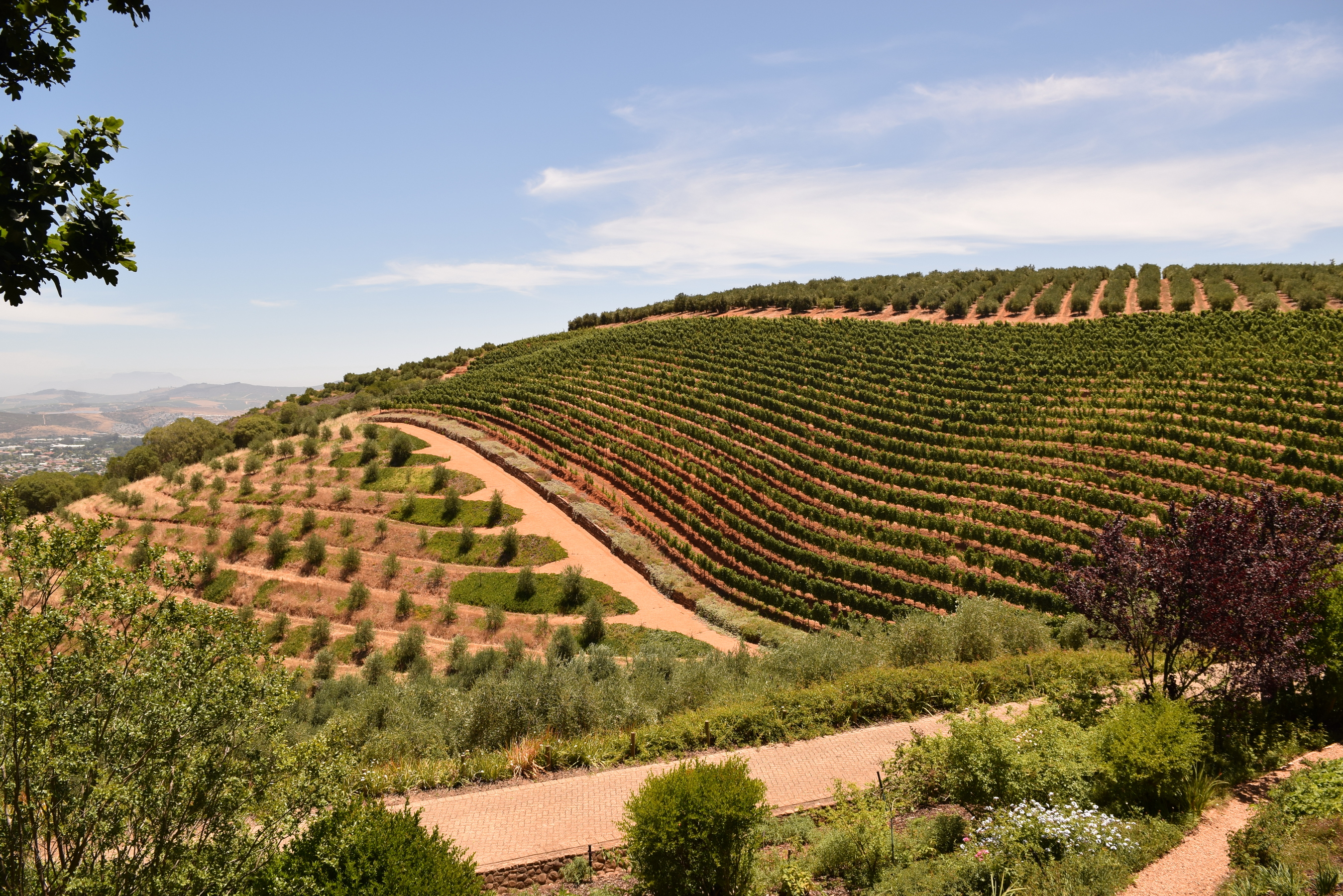
Olive trees grow just beyond the vineyard
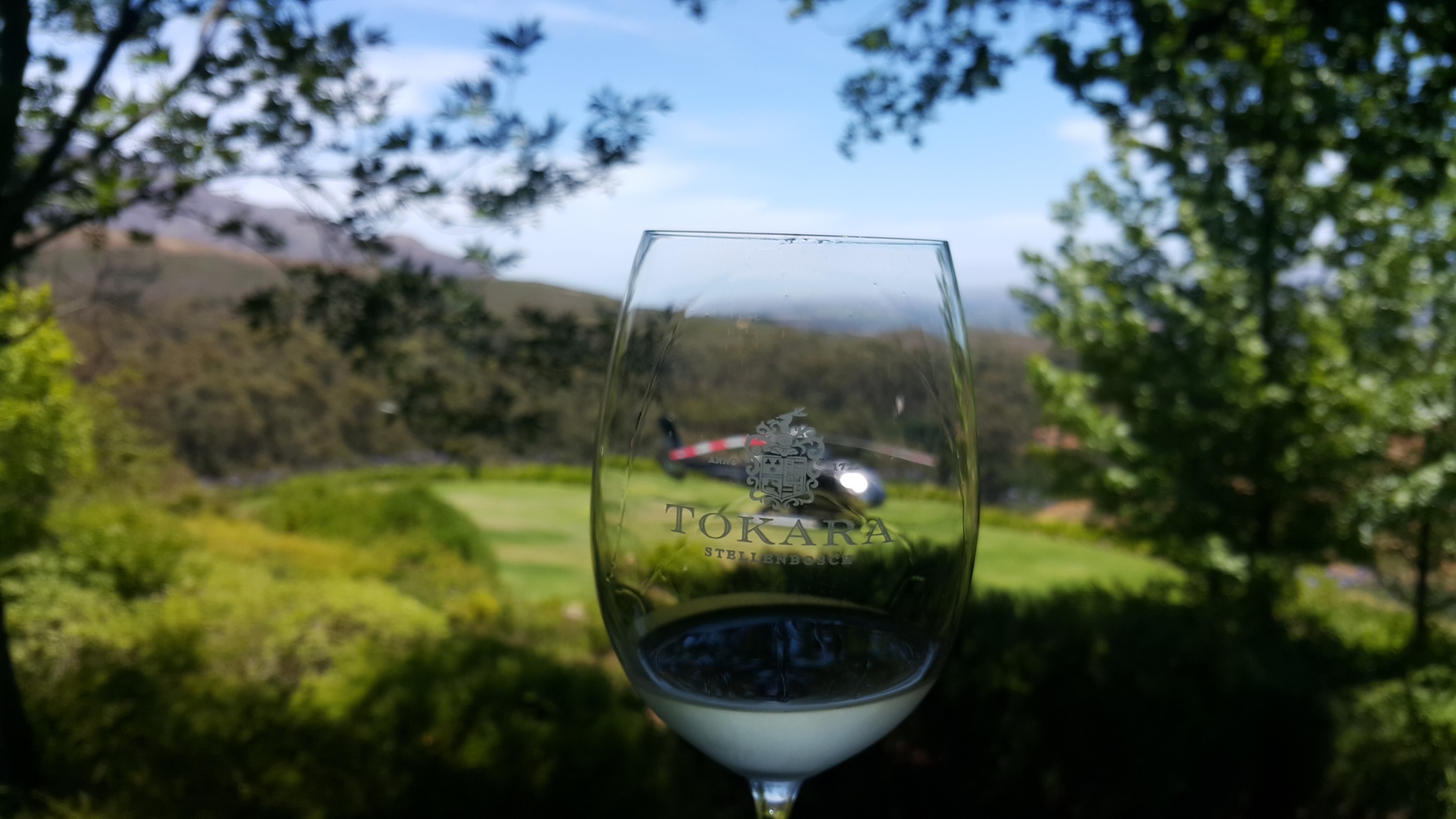
Some visitors prefer to fly to the winery
After the first three vineyards, I started feeling myself like in the movie A Good Year with Russell CroweJ Don’t know whether it was the effect of the “sipping and not spitting” but I caught myself quickly assimilating some key wine terms. By the end of the tour, concepts like “minerality”, “tenacity” or “acidity” were well utilized by the whole group 🙂
The location of the long waited picnic at the Holden Manz winery in Franschhoek was simply superb! We had pre-booked our picnic baskets full of scrumptious delicacies and a bottle of Rose. The next 2 hours we were lazily lounging under a thick shadow next to a river on the one side, vineyards – on the other, and a great view over the mountains.
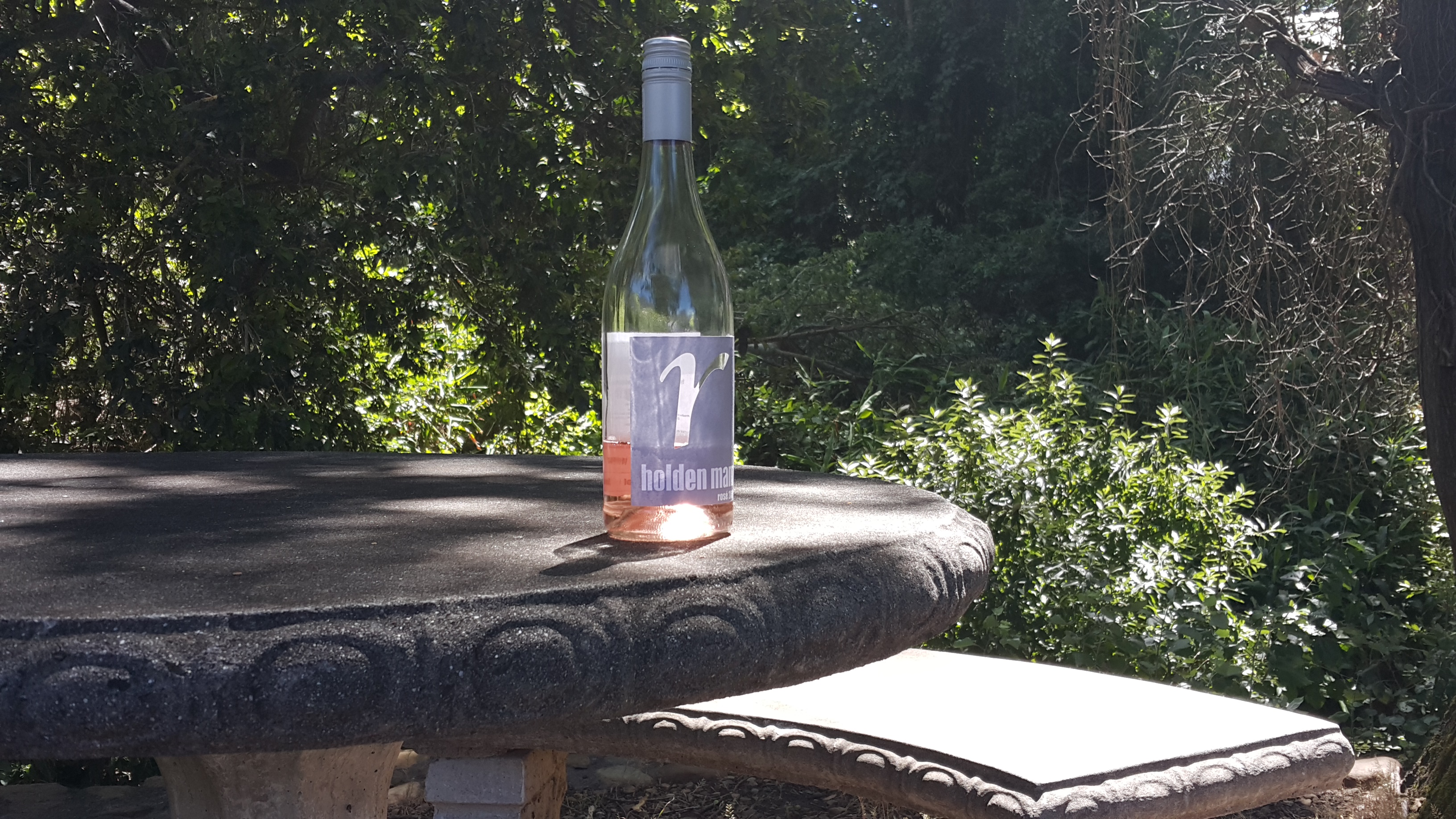
Even after having tasted 15 wines, the Holden Manz Rose finished quite quickly
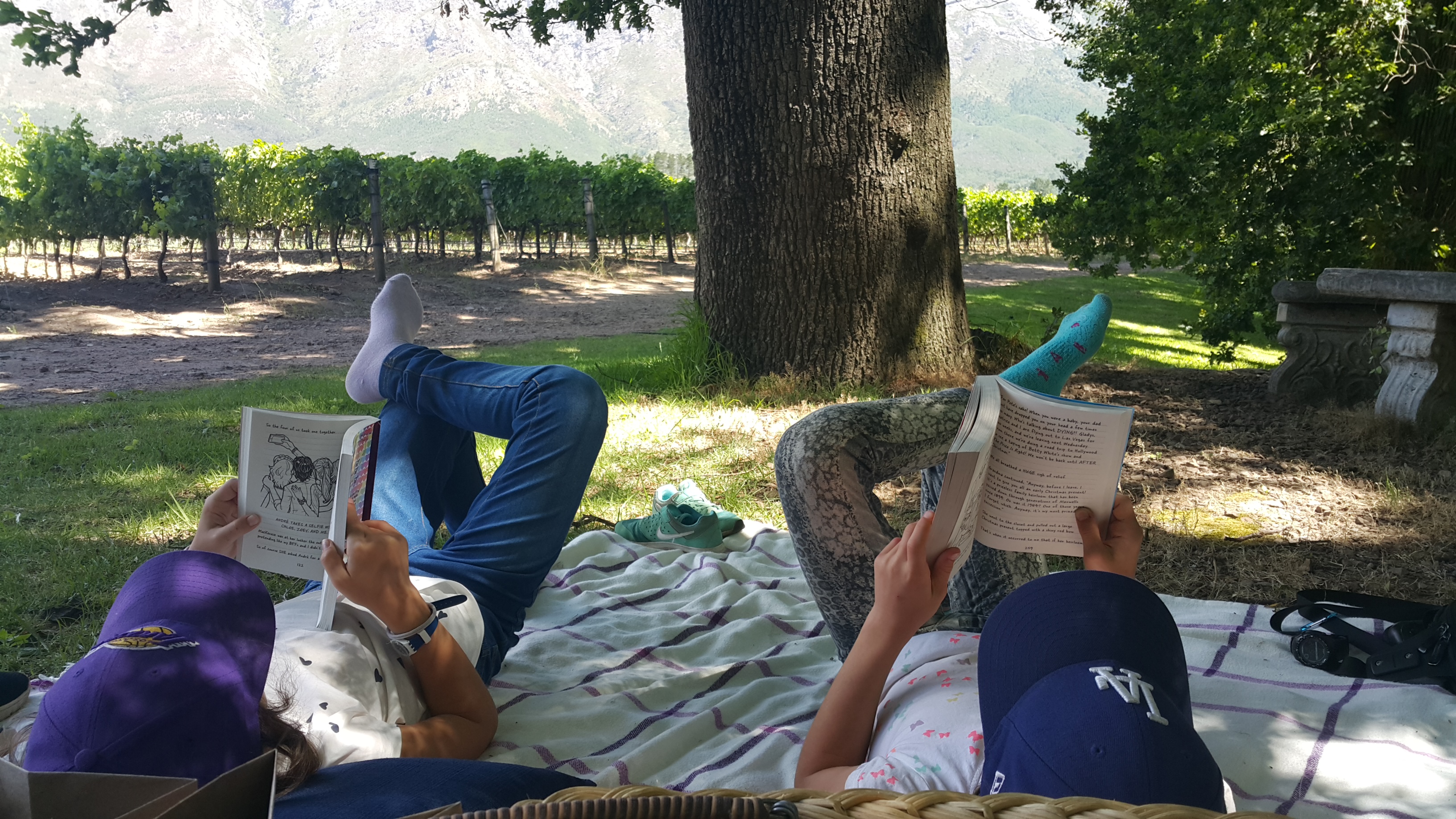
If you can’t drink wine, then you read a book 🙂
And yet, we had one more wine estate to visit. Although Moreson winery looked wonderful and the wines were very tasty, I admit it was difficult to appreciate it after having drunk wines the whole dayJ
Bottom line, we have survived a long way full of impressions, 5 wineries and more than 20 different wines. Wine tasting is contagious – at dinner I couldn’t resist one last glass of Sauvignon Blanc labelled “Fat Bustard”J
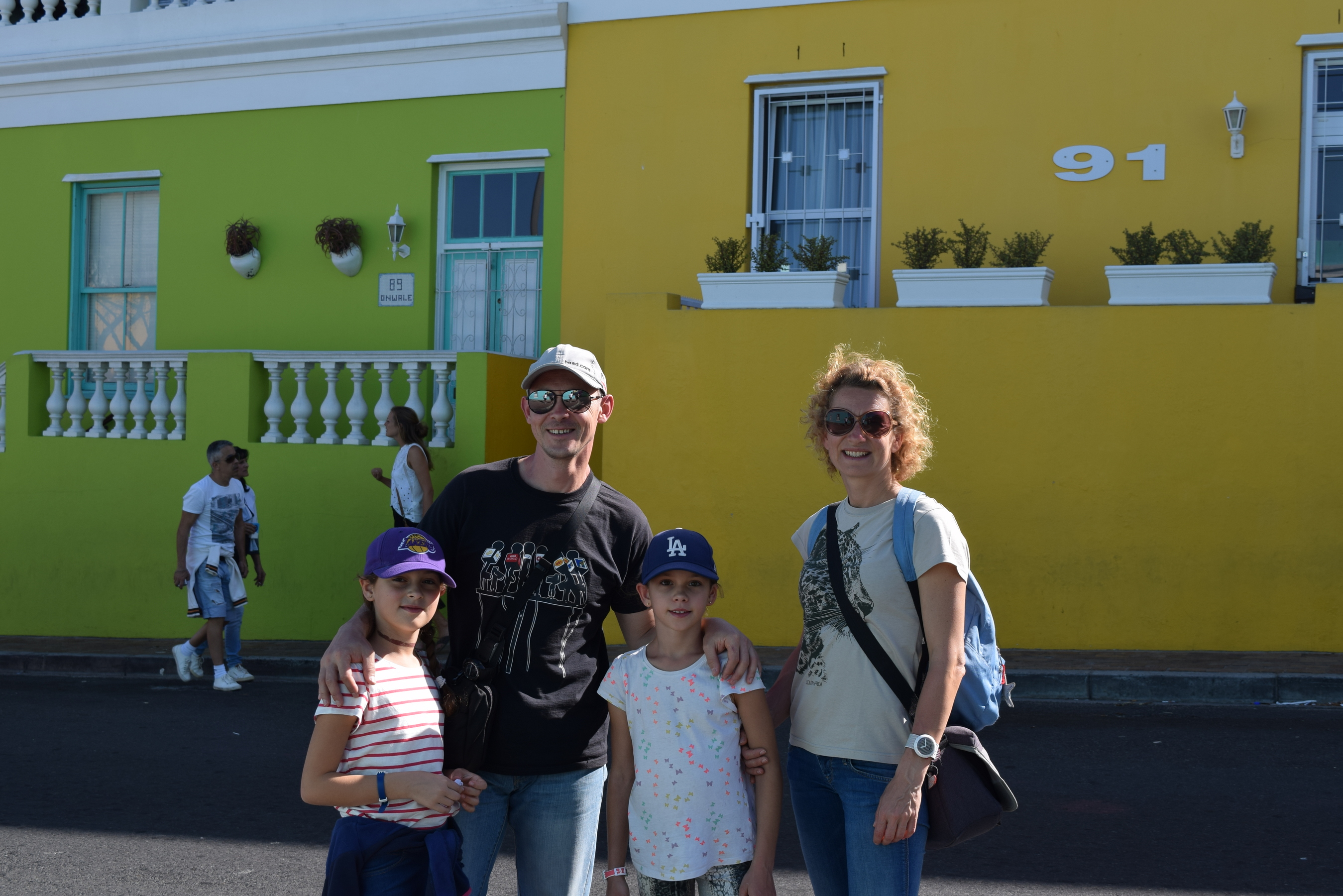
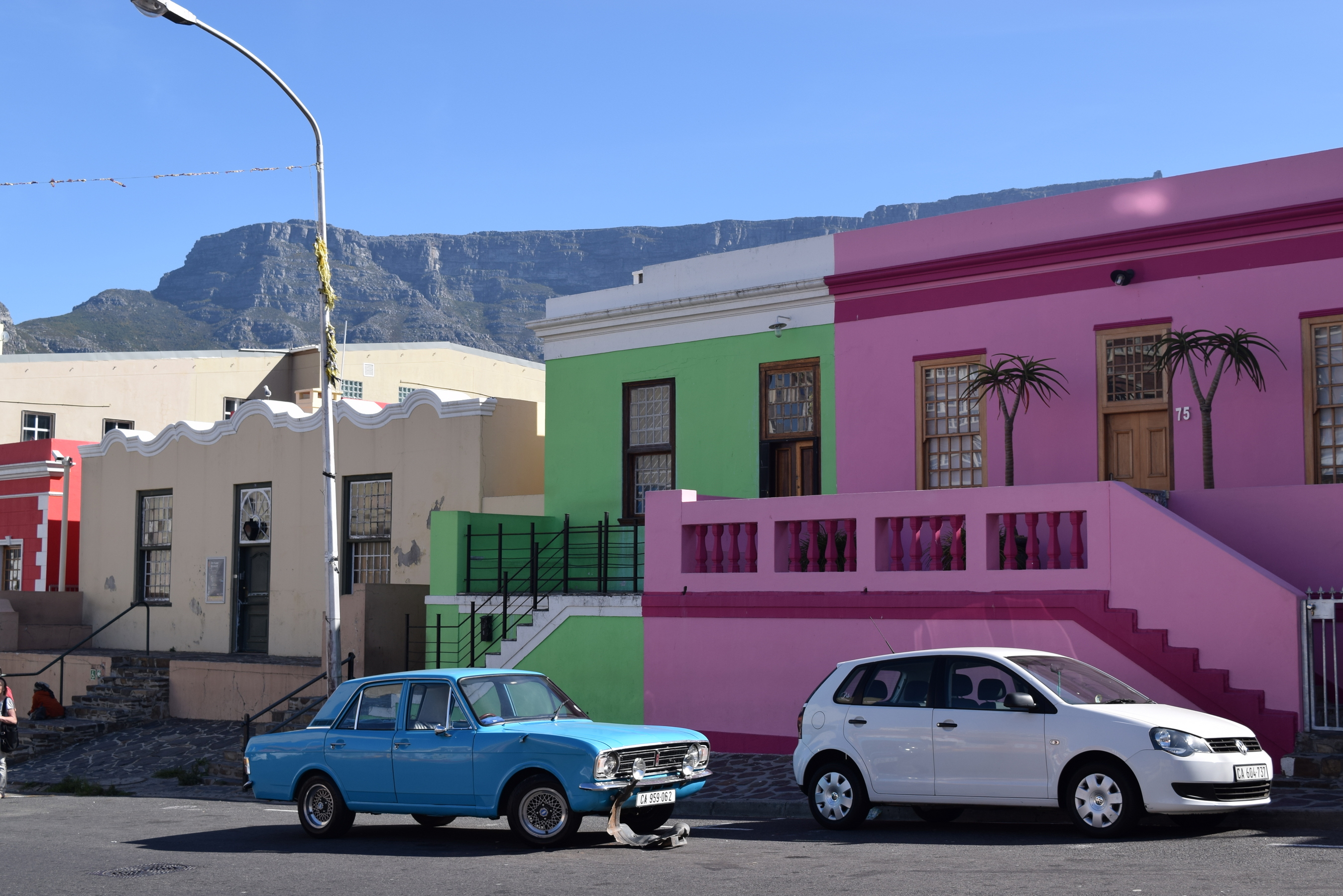
Human creativity is evident not only on the wine labels. It is in the “genes” of locals. From the brightly painted facades of the Bo-Kaap quarter in Cape Town and the bathing chalets of Kalk Bay and Muizenberg, to the unique blend of African and modern décor of local bars and restaurants. It’s no coincidence that Cape Town was declared the World Design Capital in 2014.
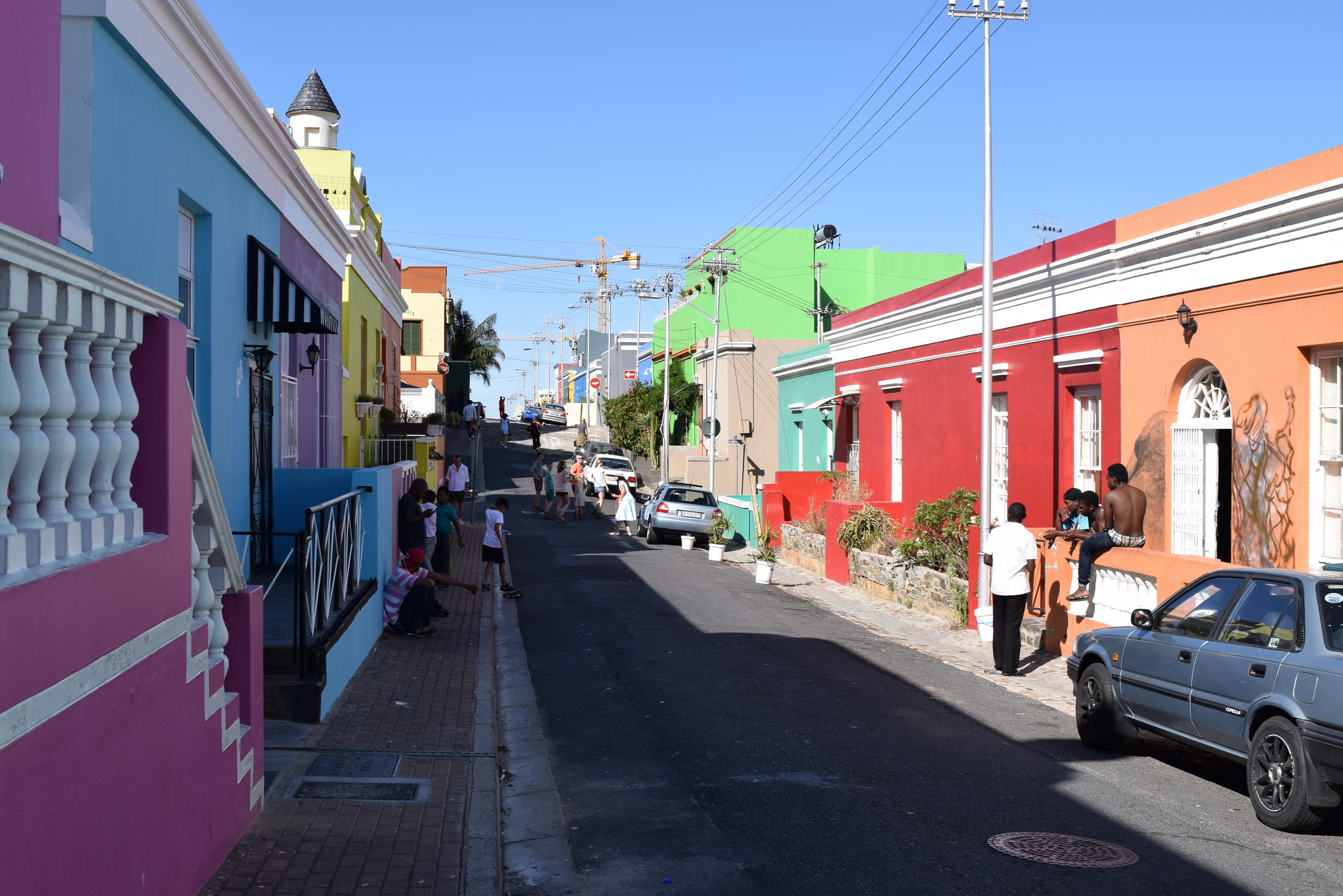
Restored heritage houses in Bo-Kaap – a former slave quarter
And when you want to wrench yourself away from the urban pleasures, it’s a matter of short drive to reach the abundant beaches of Camps Bay, Hout Bay or the charming vineyards of Stellenbosch or Franschhoek.
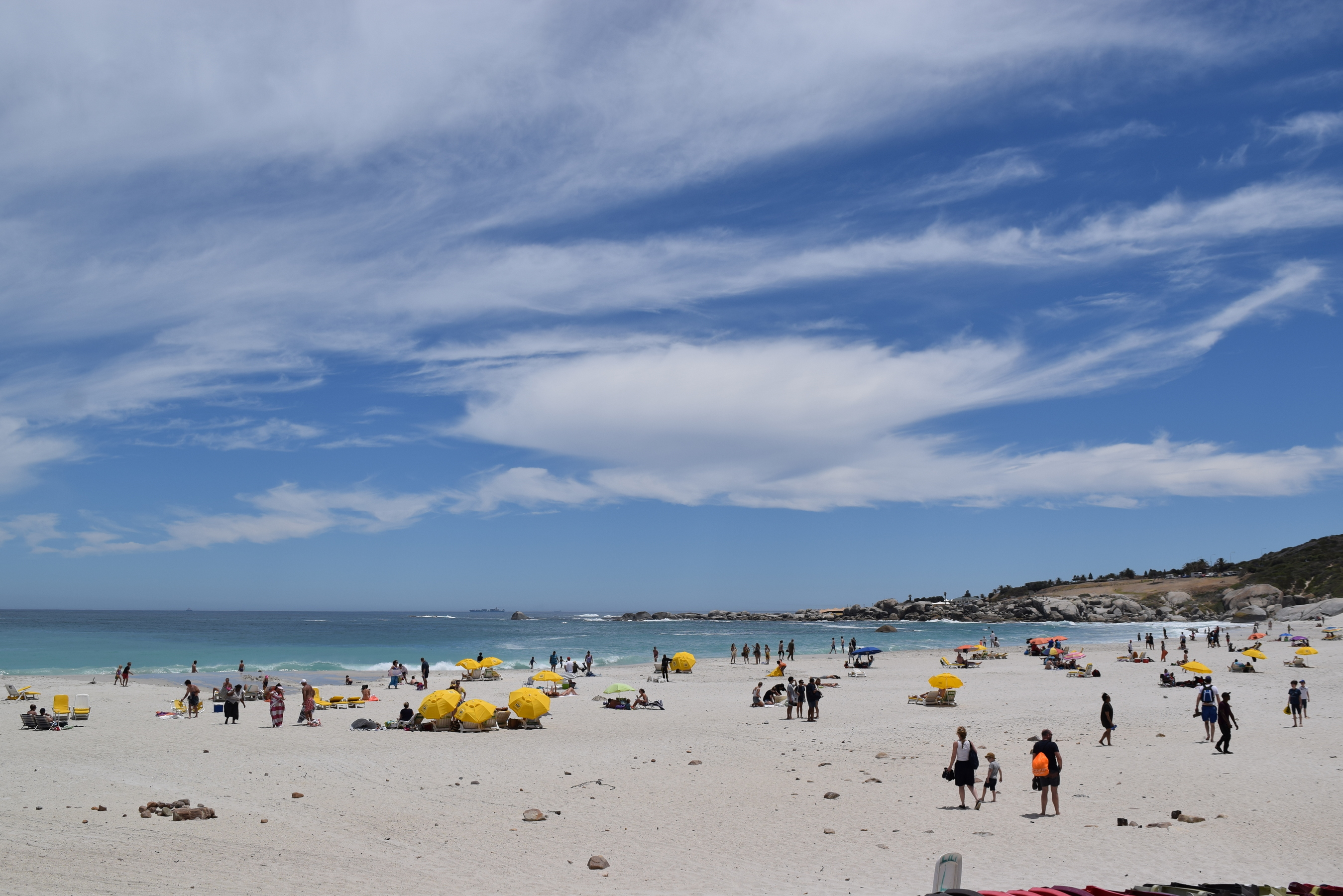
Camps Bay beach – beautiful but cold waters, big waves and some sharks keep tourists away from the ocean
The End.