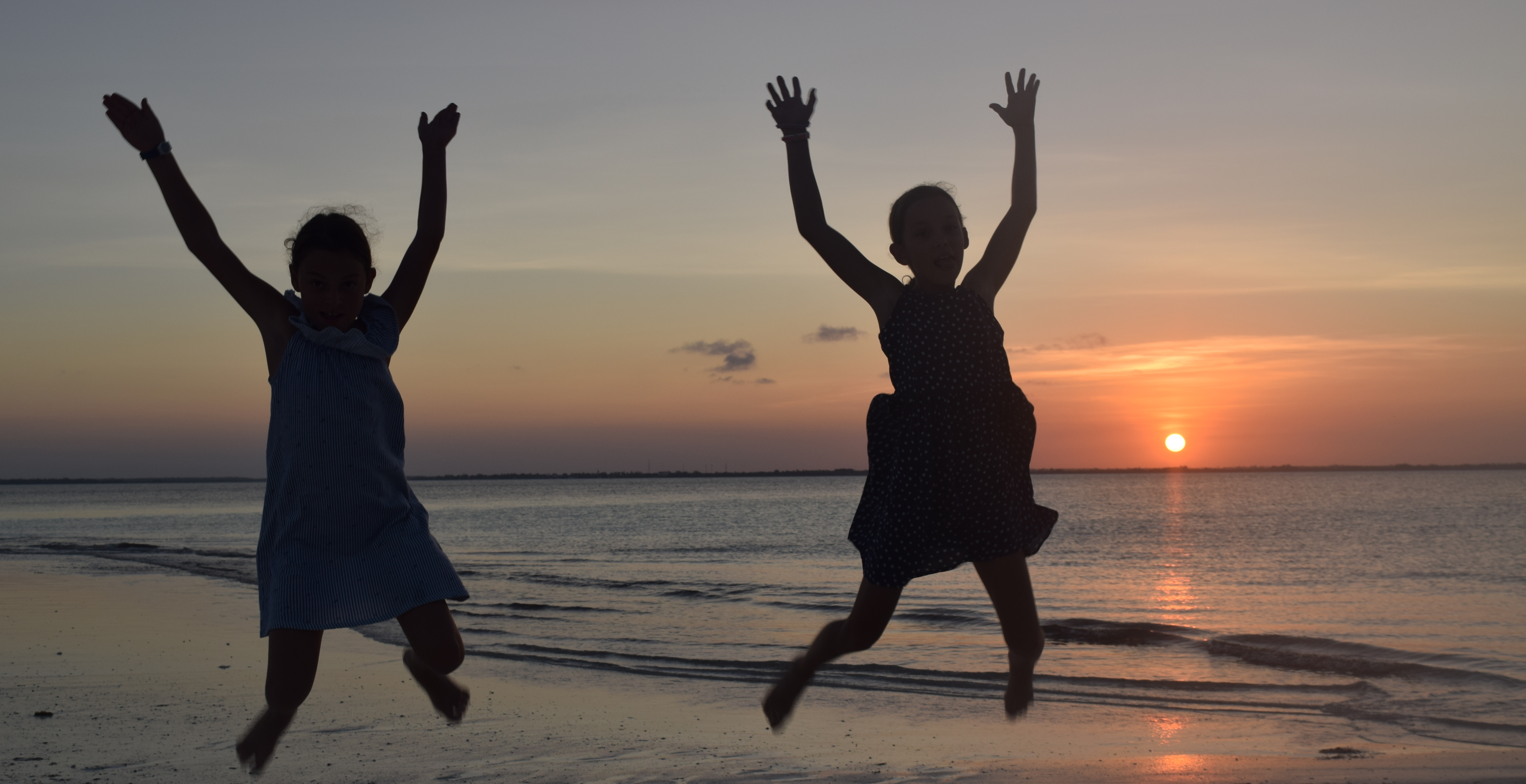
Stone Town
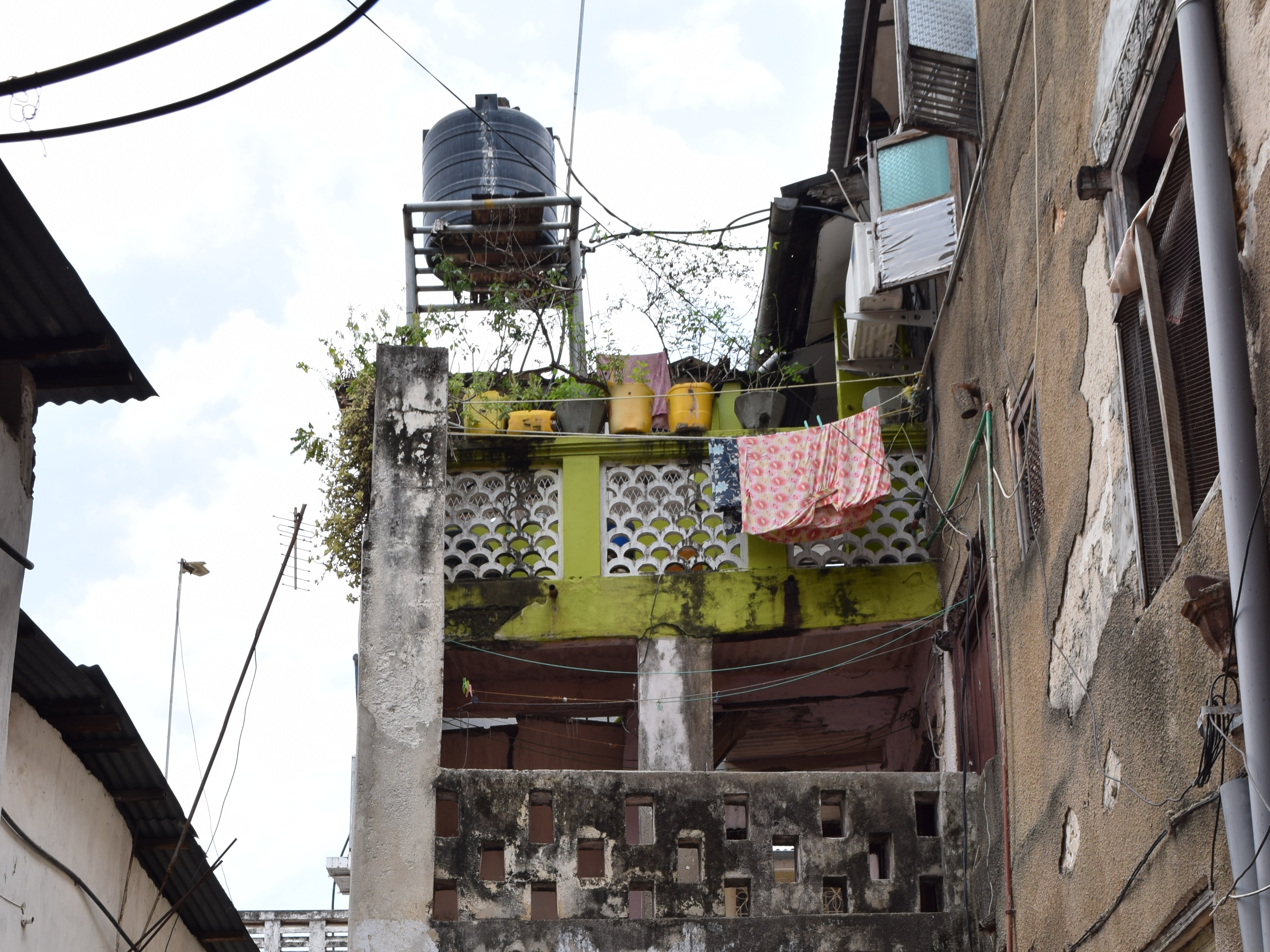
The capital of Zanzibar is one of the most alluring cities on Zanzibar – an Arabian-style labyrinth of crooked narrow streets, packed with ancient mansions, palaces and bazaars. We spent only a few hours there but the town itself has lots of interesting places to dedicate several days of aimless wandering.
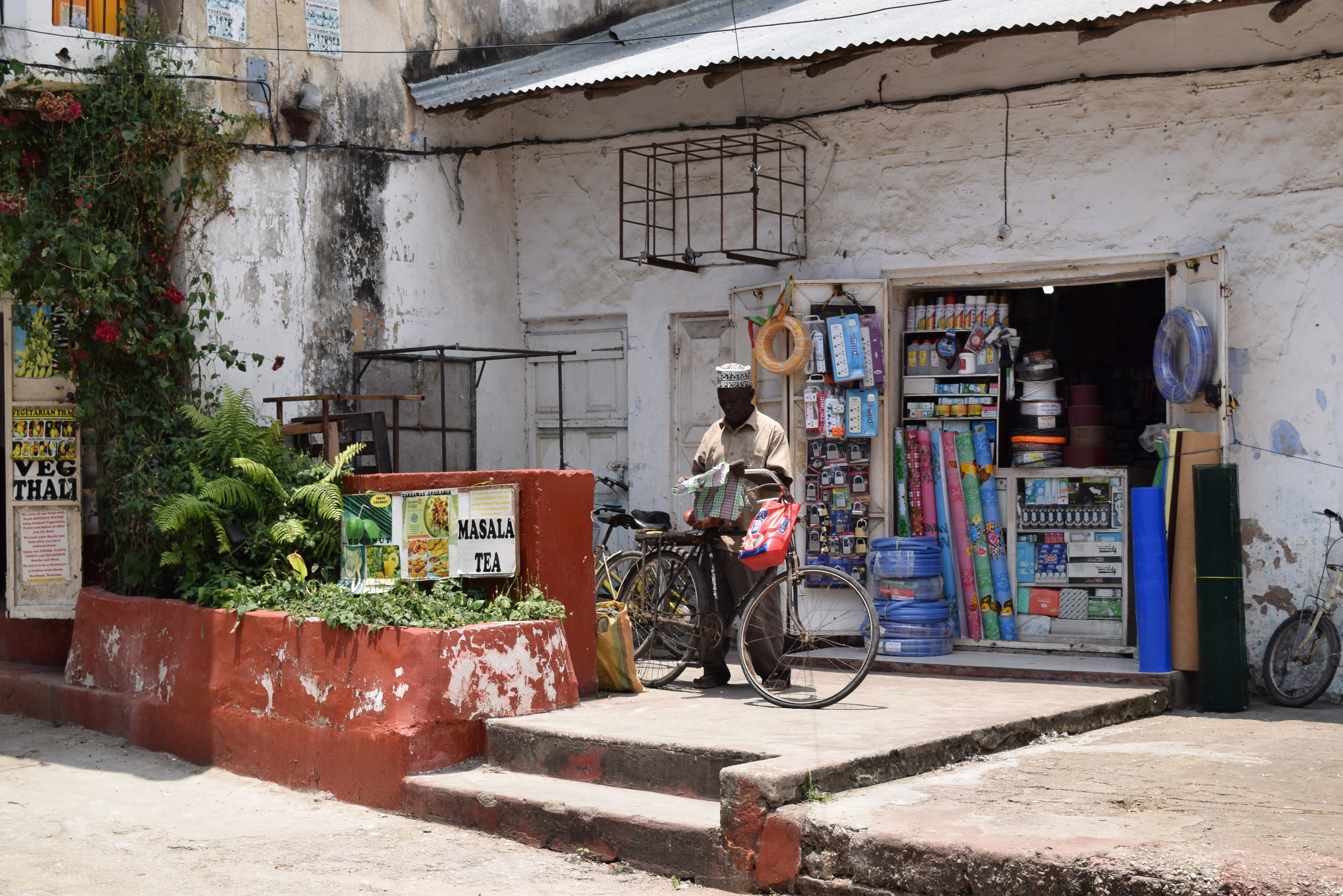
Streets of Stone Town
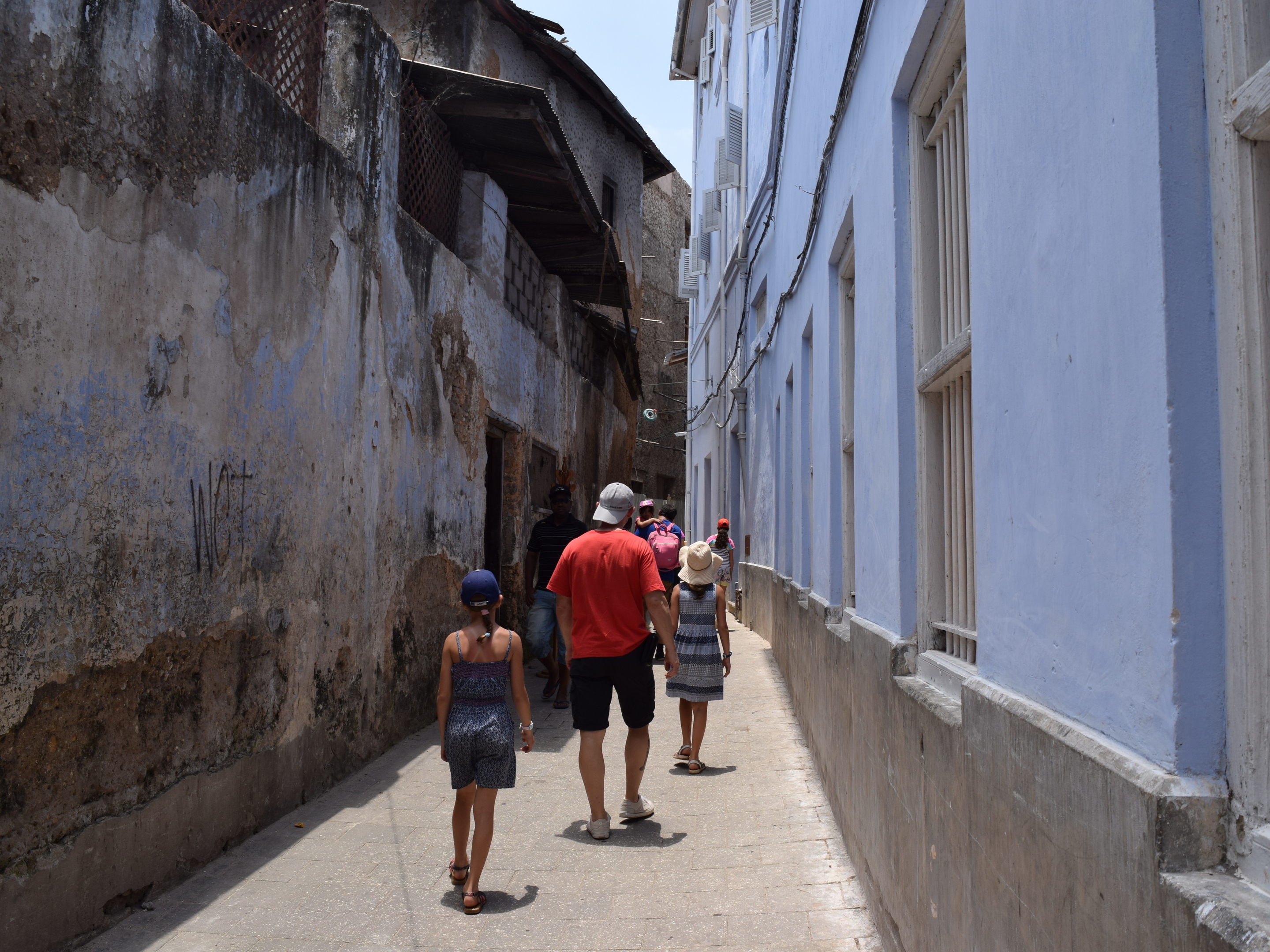
Our starting point was the main market of Zanzibar – Darajani Market. It’s a hive of activity. There you can find anything – from fruits, spices, fresh fish and meat and huge baskets full of live chickens to sandals, souvenirs, plastic buckets and mobile phones – all set out in a chaotic series of covered halls, overflowing into the neighboring streets.
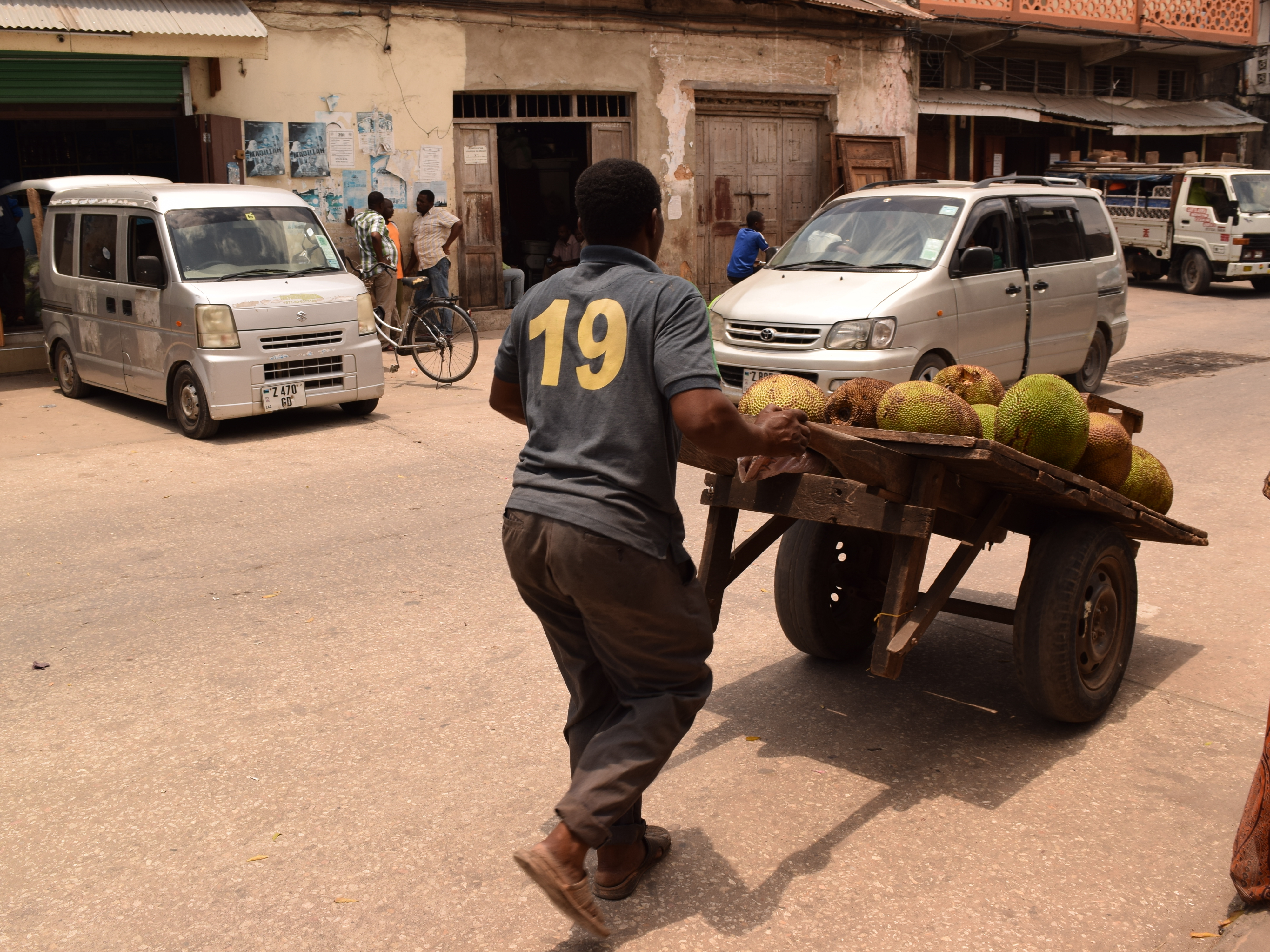
Jackfruits on their way to the market
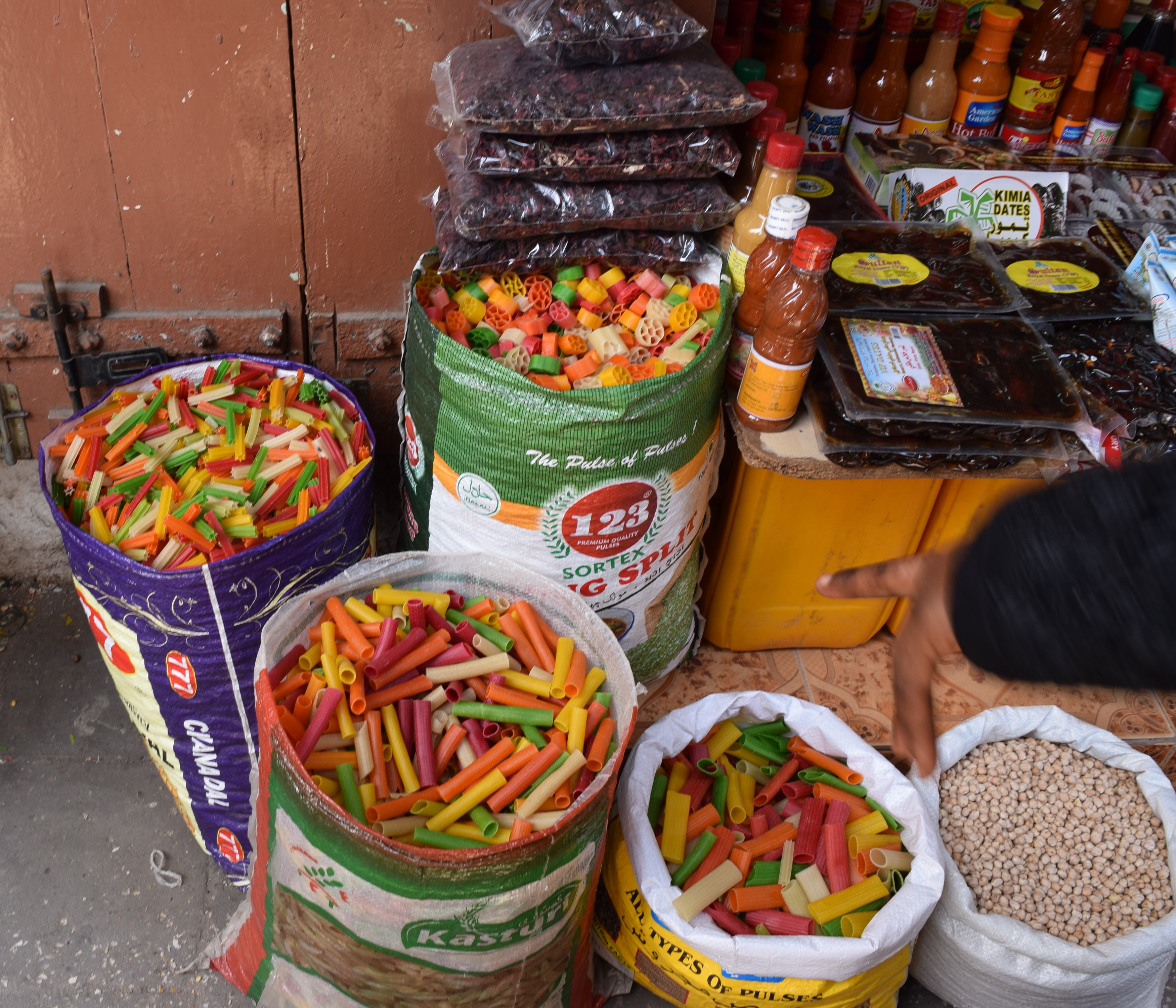
Multi-color Zanzibar pasta
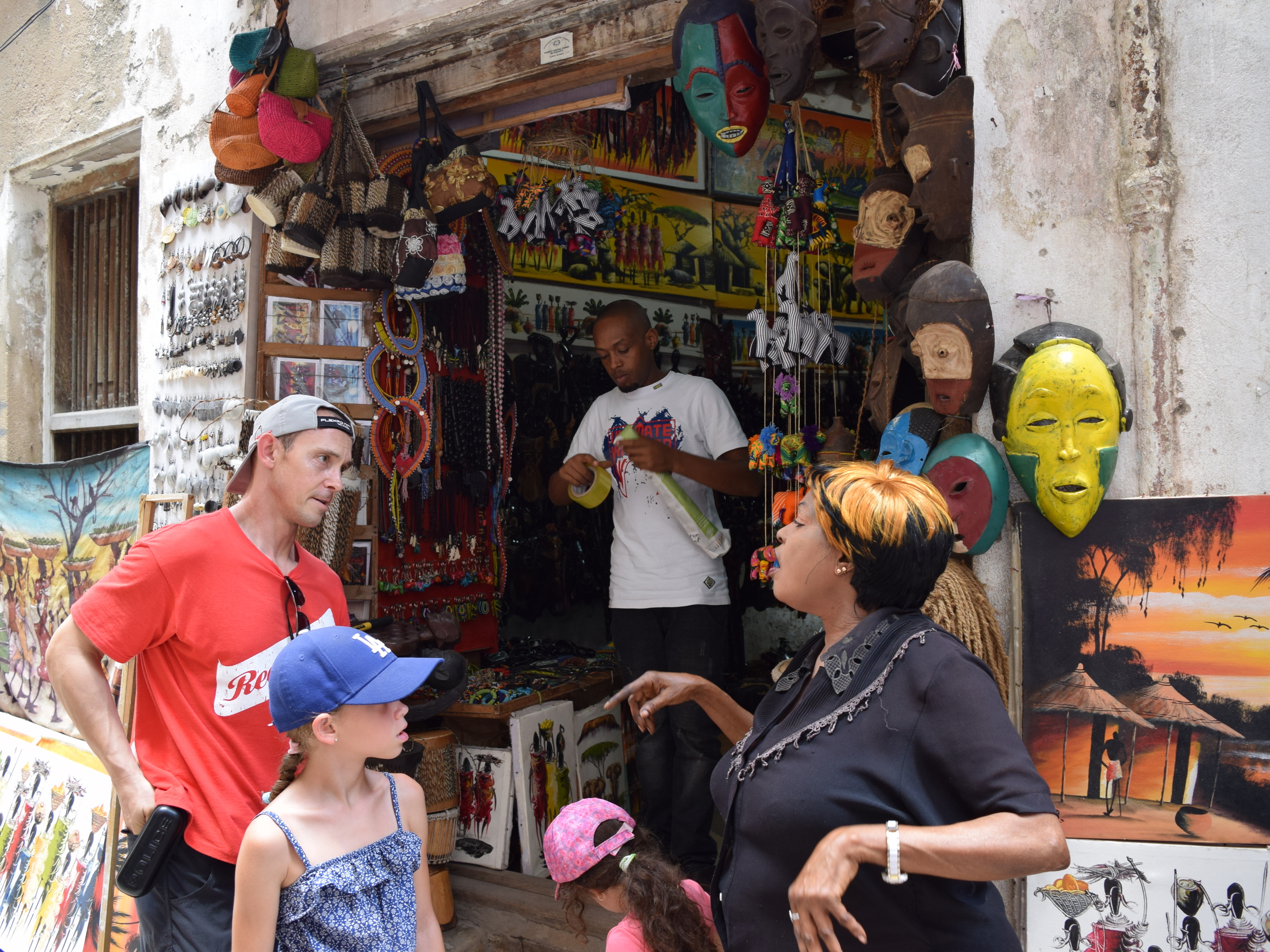
We couldn’t resist and ended up with a couple of souvenirs in our bags.
After a few of hours of wandering through the picturesque, hot and smelly streets of the town, we found ourselves in front of the Old Fort (Ngome Kongwe), also called Omani Fort. Built by the Omanis in the 17th century, it was used to repel attacks from the Portuguese, and later as a prison and barracks. Nowadays, it is a prominent touristic attraction. Its courtyard serves as a cultural center with tourist-oriented merchandise and an open-ar amphiteatre for live dance and music performances.
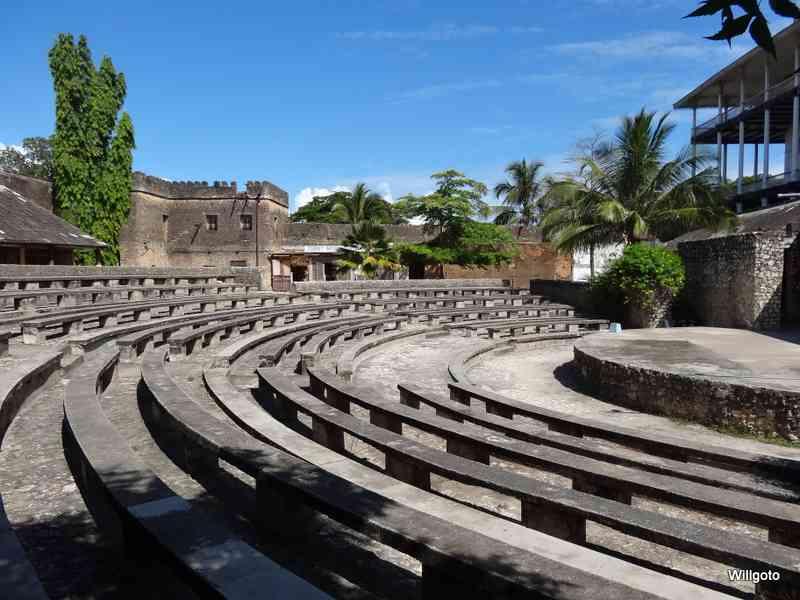
Open-air amphitheater in the Old Fort
Next to the Old Fort is located probably the most well-known landmark of Zanzibar – The House of Wonders. We didn’t go in but its history is worth knowing. It was formerly the residence of the Sultan and the first building in Zanzibar to have electricity and the first building in East Africa to have a lift – this is local people gave it the name “The House of Wonders”. Today, it’s a museum of Swahili and Zanzibar culture
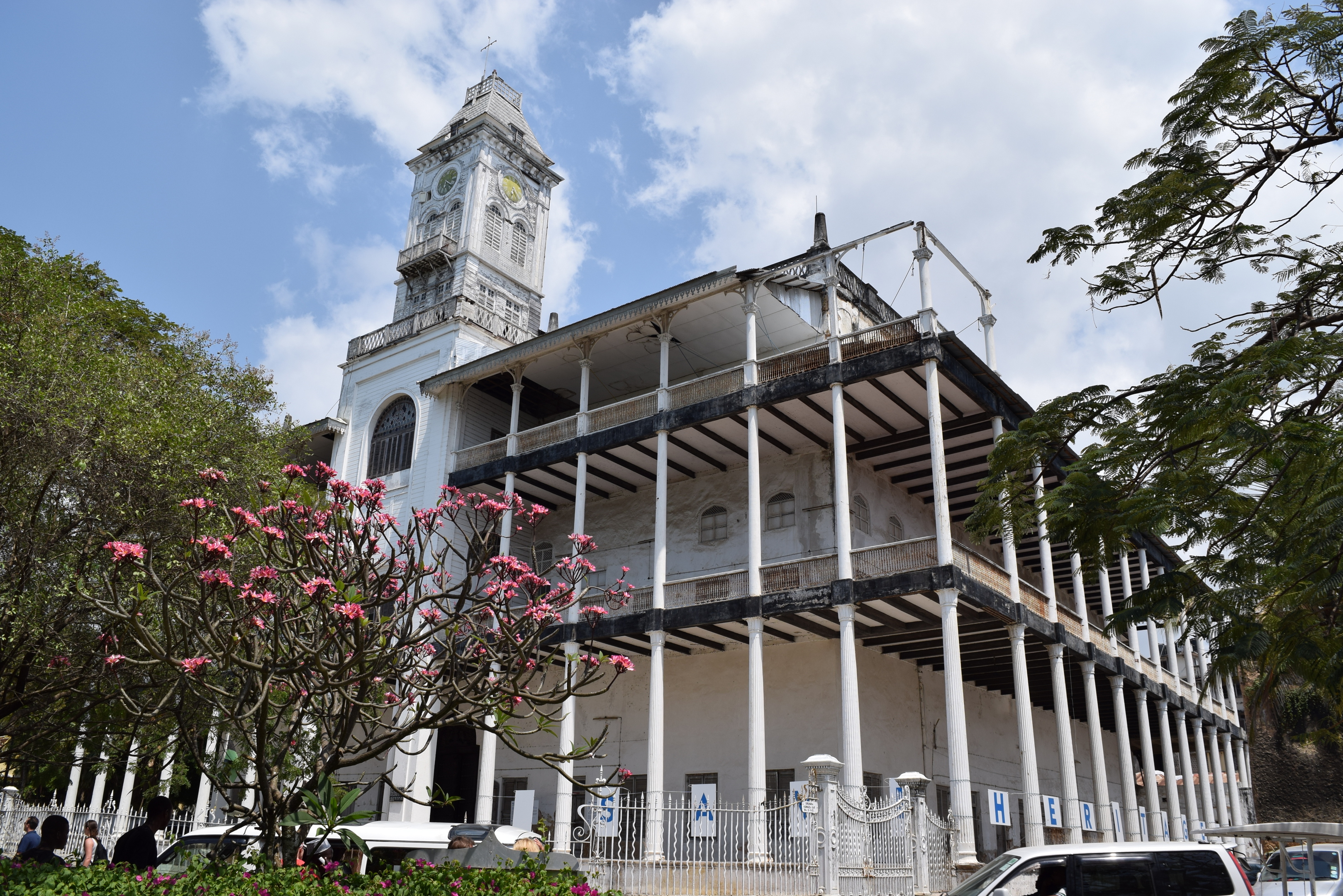
The House of Wonders
Although our tour in Stone Town ended up here (it’s not easy to keep 5 small children interested in historical sightseeing for more than a few hours), I knew one day I would like to come back and dive fully into its magic. The house of Freddy Mercury, the Slave Market, the Forodhani Gardens are on the list but I am sure there will be much more to discover besides these “must visit” places.
The stunning Indian Ocean and its inhabitants
To observe dolphins closely is an exciting experience. I was lucky to grow up in an area just 15 minutes walking distance from the prominent Dolphinarium in Varna. As a child I attended the great dolphin shows there many times, and now as a parent I have taken my children to the updated performance a few times already. This summer a new tourist attraction was introduced – swimming with the dolphins. If I haven’t visited Zanzibar, I would have certainly done it in Varna.
Being able to swim with dolphins in their natural habitat is once-in-a-life experience that I will never forget.
We had to get up as early as 6am not to miss the dolphins while they still swim around close to the shore. Sorting out my photos now, I realize I don’t have a single picture from this trip. But I should also admit that swimming with dolphins is not as easy as one would probably imagine.
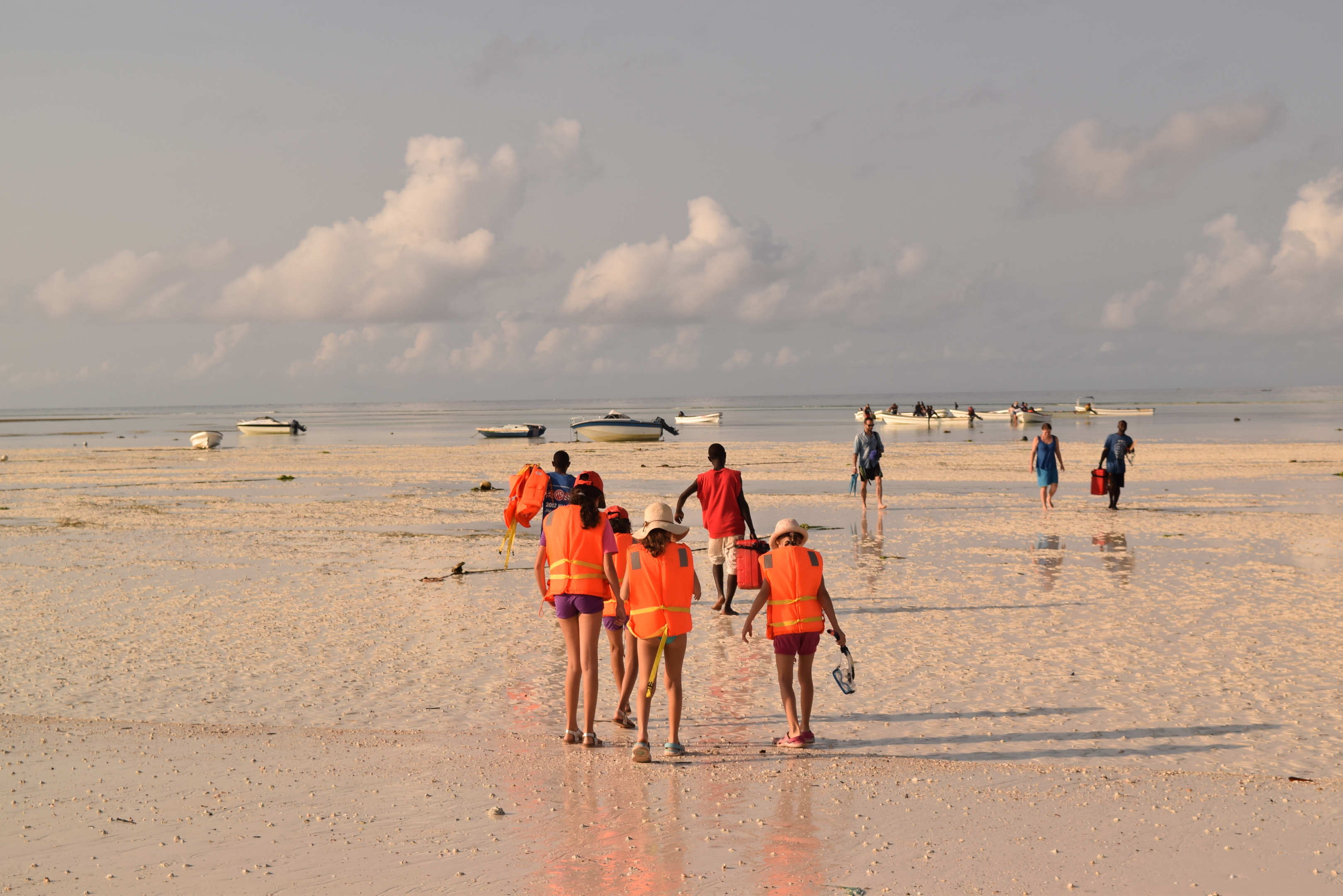
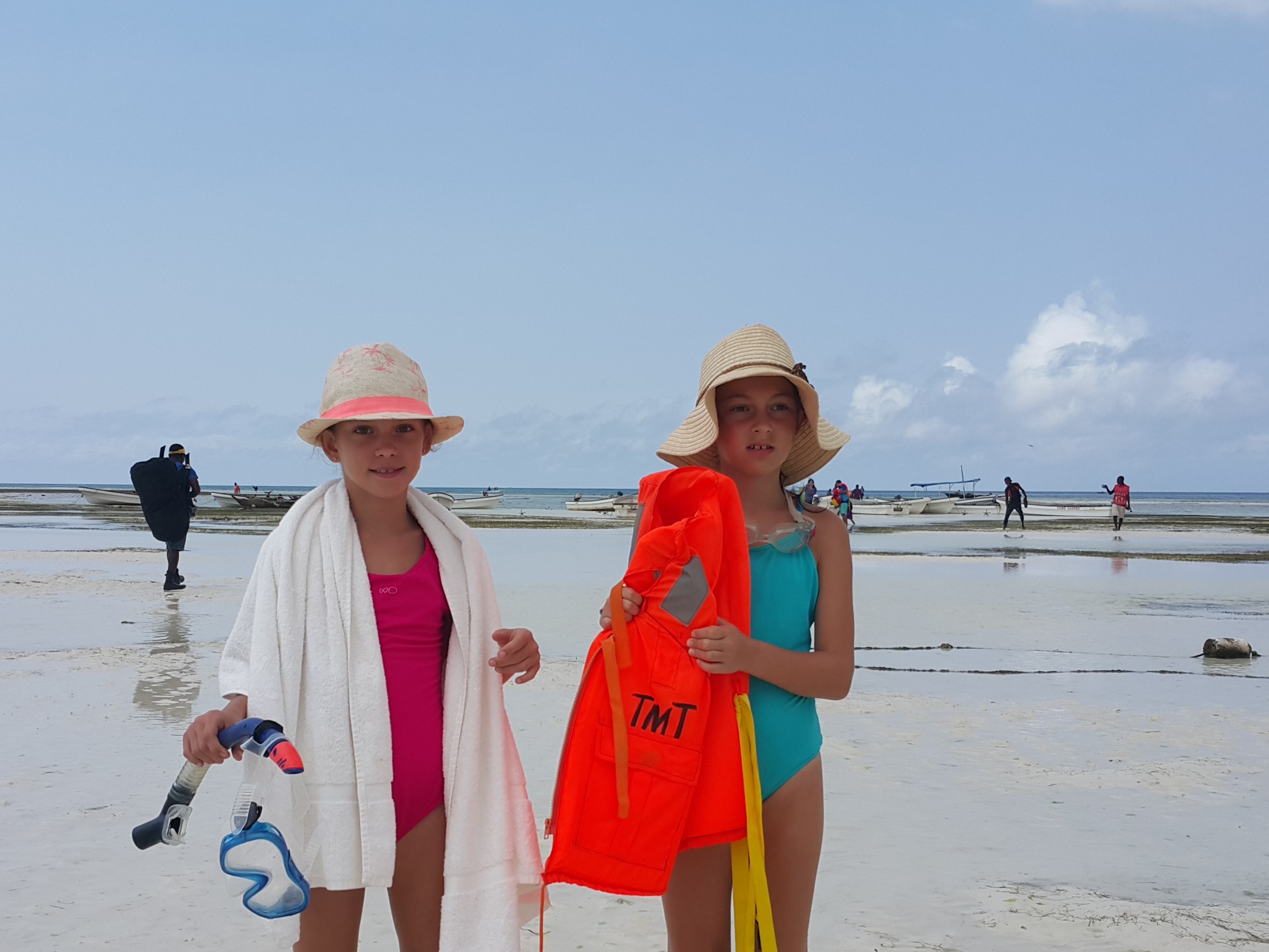
We got on a relatively small motor boat, and sailed 1-2 kilometers into the ocean. When any of us would notice a pod of dolphins, the captain would sharply turn the boat into their direction, would overtake them and stop 20-30 meters in front of them. This was the moment we would get ready to jump in the water. Ideally, I would dive just a moment before the dolphins get aligned with the boat, which would give me the best position to observe them underwater. This moment is short; not more than 10 seconds but at the view of these perfectly shaped sea mammals, I had the feeling the time has stopped and it was just me and the dolphins that exist on earth.
I was very proud of my girls who also gave it a try, and actually managed to see the dolphins underwater.
Afterwards, we got insatiable hunger for more experiences (maybe also part of the “crazy mzungo’s” culture). This time Teddy arranged a tour to the North of Zanzibar, to a natural aquarium, where we swam with and fed sea turtles.
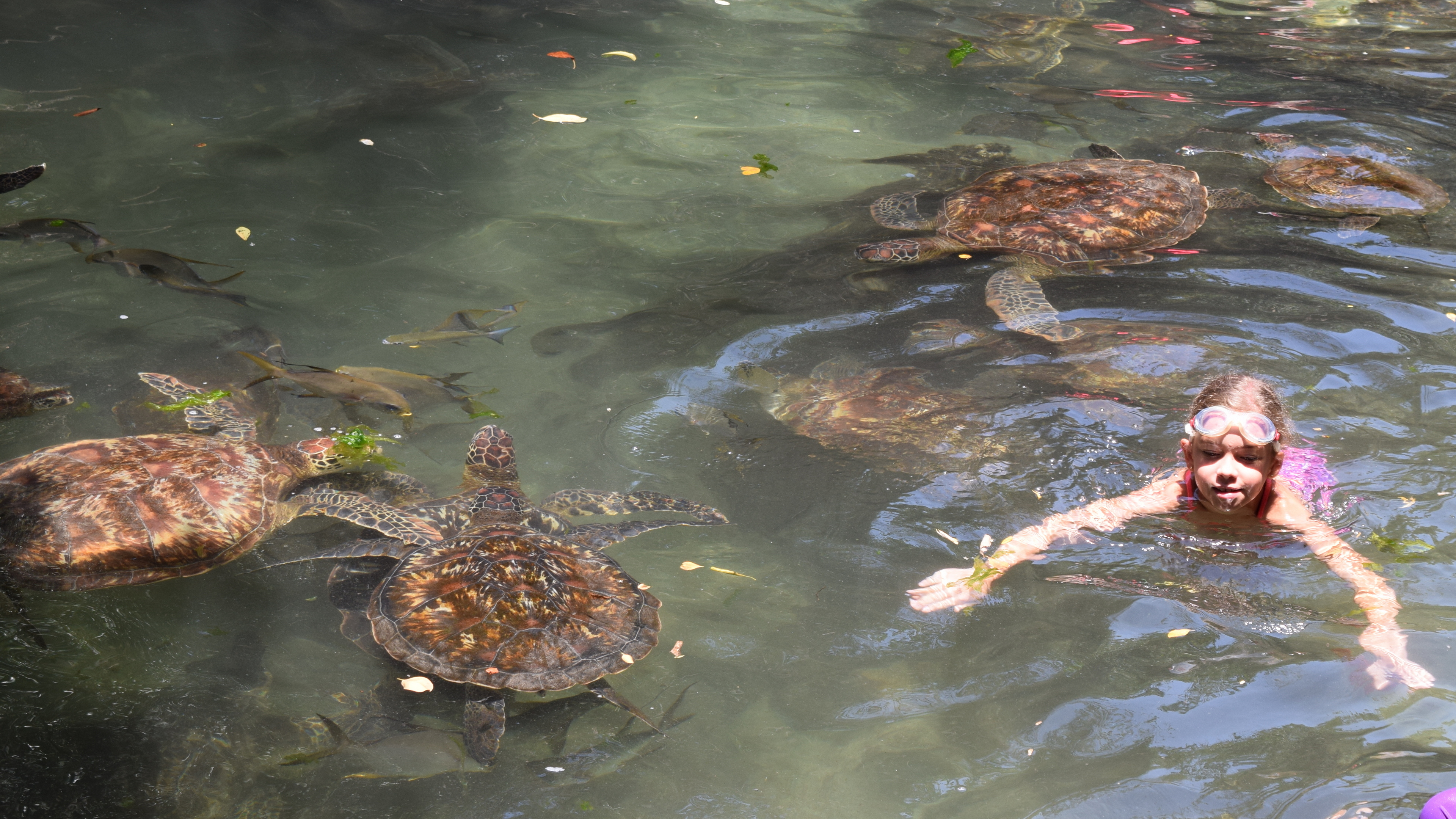
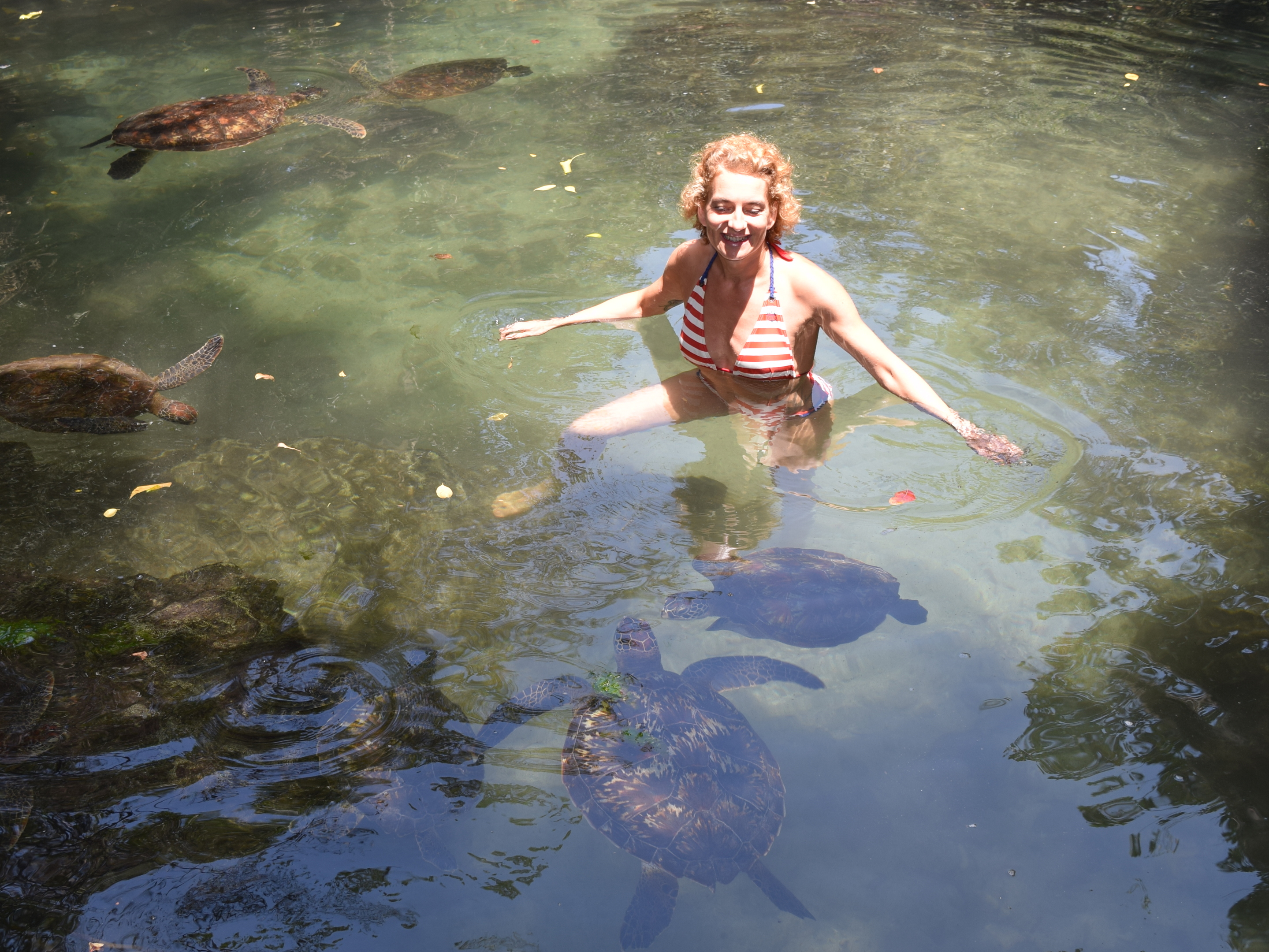
Later I learned that this little lagoon is designed to allow for injured sea turtles (which are protected in Zanzibar) to recover before going back to the ocean.
During our visit I counted at least 15 turtles, small and big. They didn’t seem frightened when we all stepped into the water; just the opposite, they swam calmly around us, waiting to be fed with seaweeds. Fantastic experience, to say the least.
Kendwa – apparently the best beach on Zanzibar
Our next stop was Kendwa (close to Nungwi) which has gained its image for having the best beach on Zanzibar. I was not that impressed. The beach and the water are indeed clean from seaweeds but the surrounding area was too crowded with shops, restaurants and resorts.
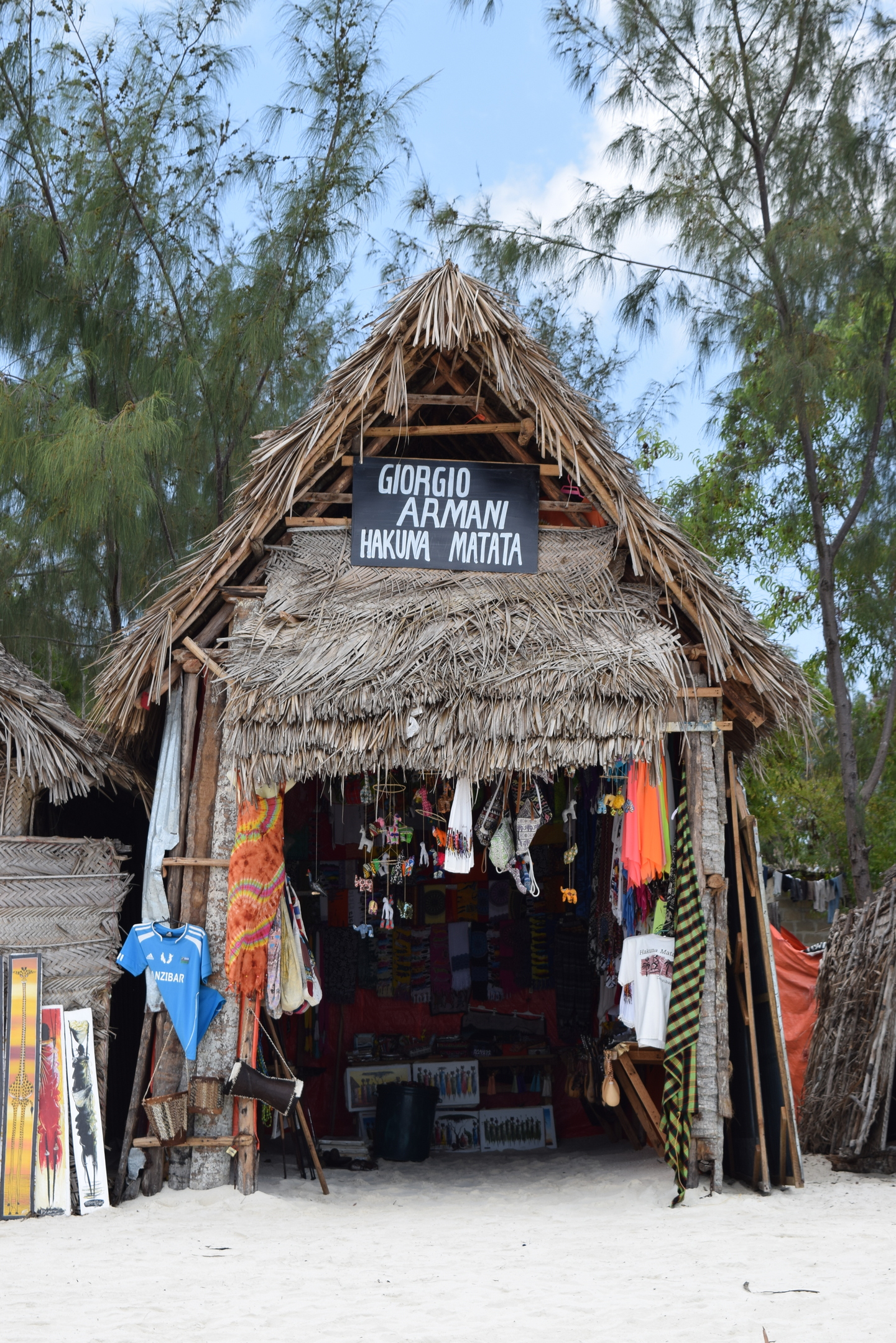
Global brands are also present here 🙂
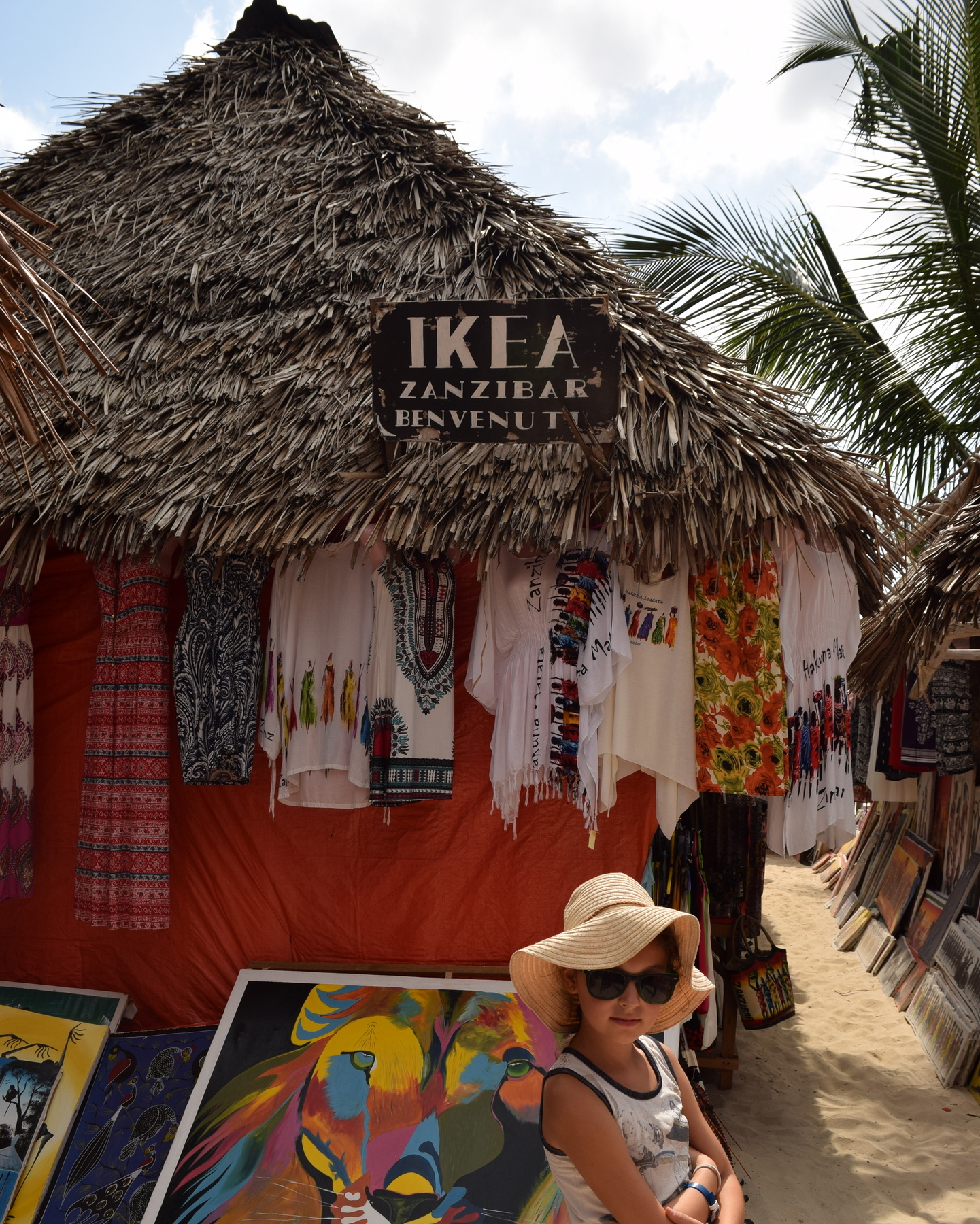
Even IKEA seems to have entered the local market 🙂
Nevertheless, we fully enjoyed our beach time here and took a short walk through the shops, before heading back to our quiet and undisturbed place in Bwejuu.
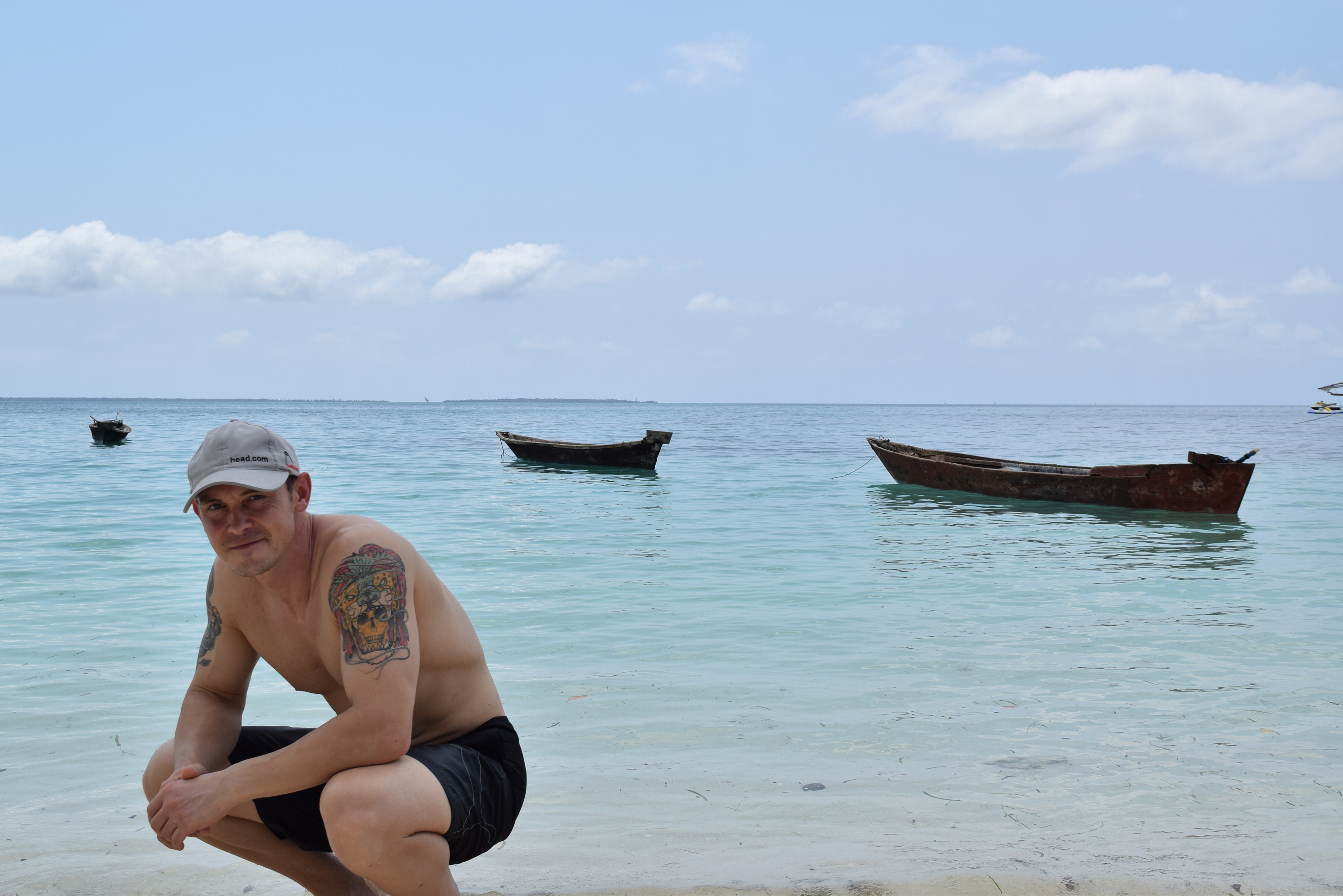
Handsome Peter!
The culmination of our vacation (at least for me) was the snorkeling and starfish experience on one of the last days on Zanzibar. Another unforgettable experience! Unfortunately, not many pictures from this trip neither since we were 99% of the time in the waters.
Besides the stunning coral reefs and the hundreds of colorful fishes, we also enjoyed our time on the boat. The trip included a “fruits-on-the boat picnic” (the best choice of food for a boat trip under the hot sun!), which was served as a birthday cake to Peter (yeah, what a place to celebrate your birthday!)
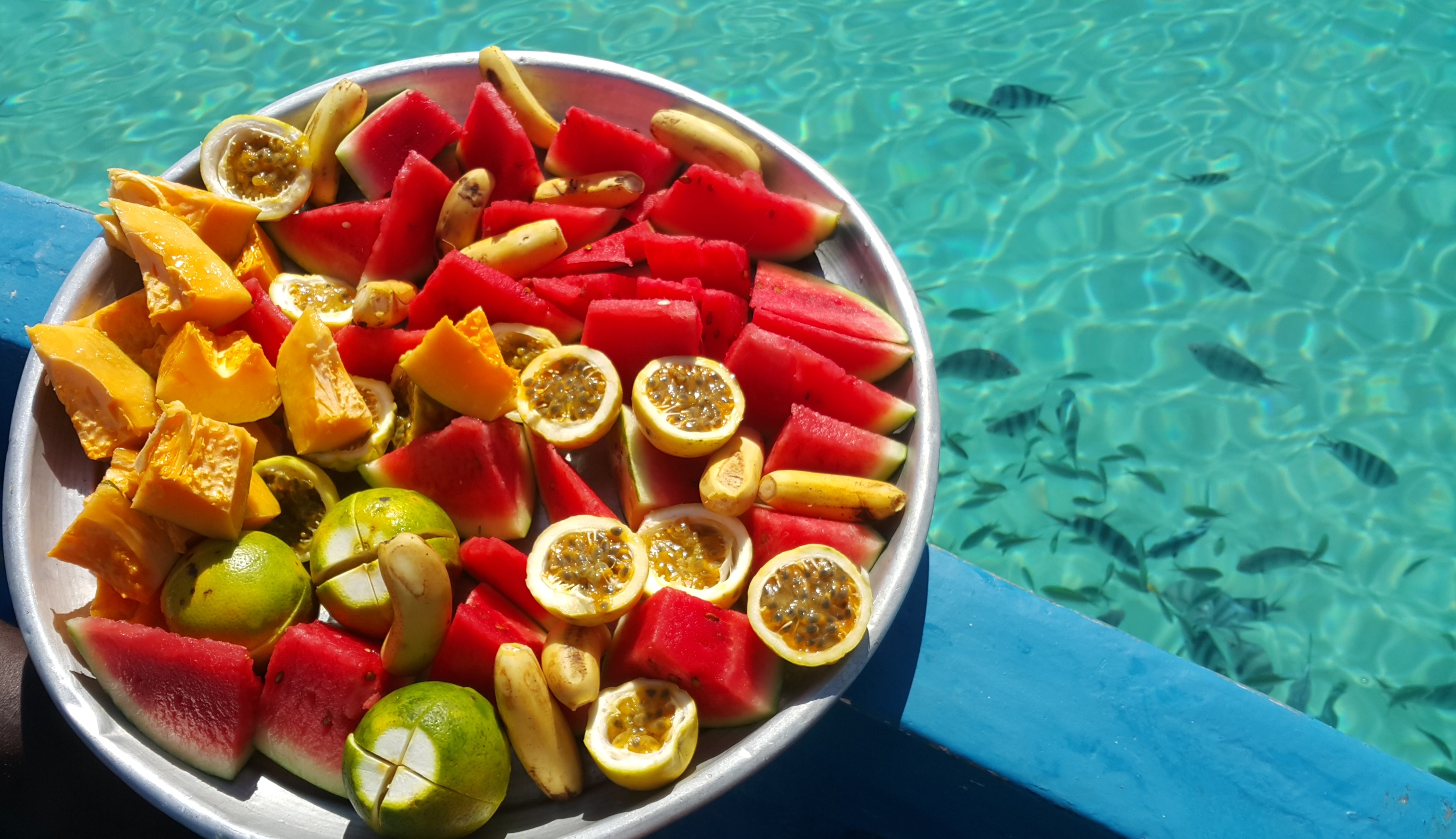
The Birthday Cake
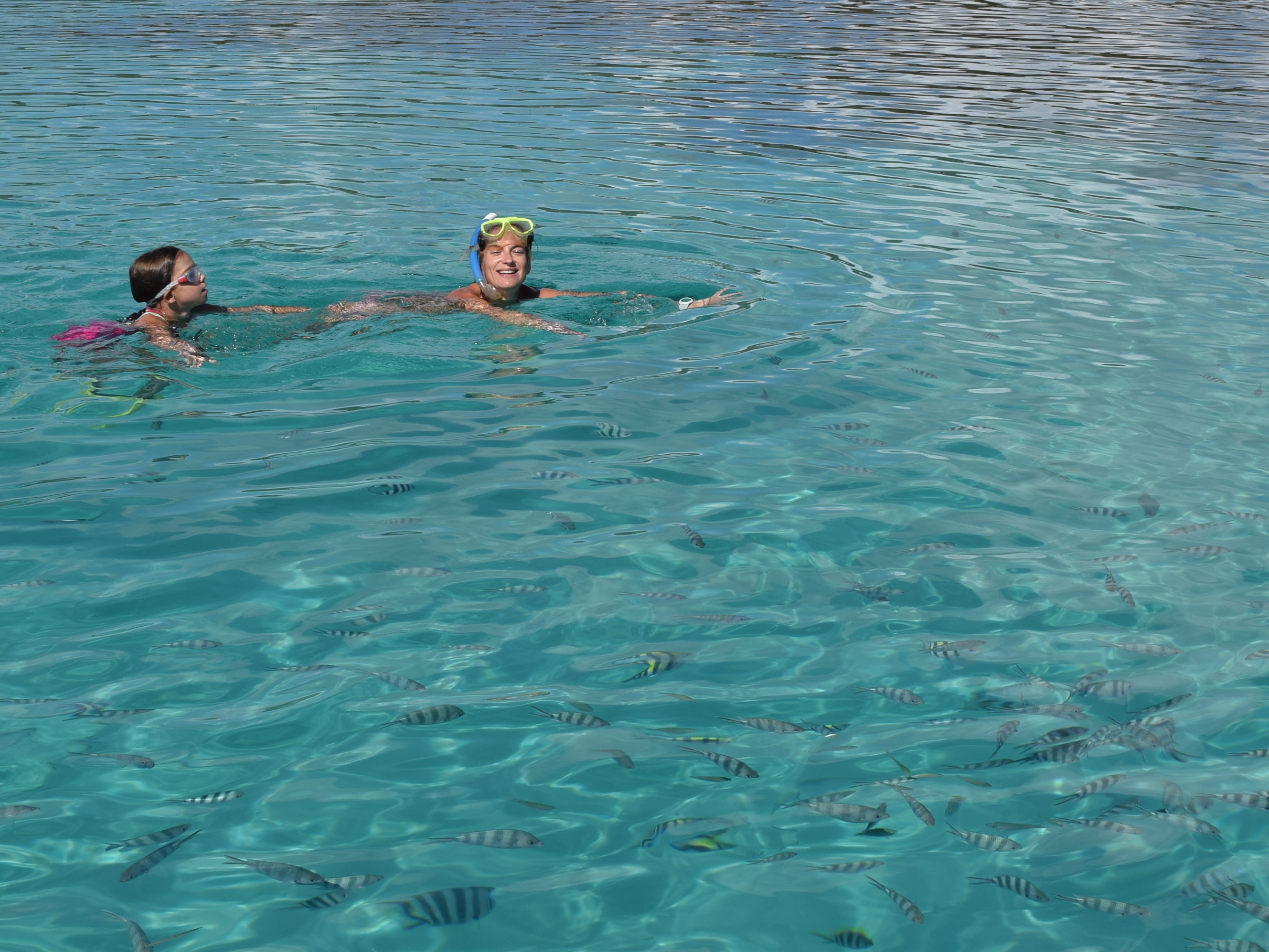
Do you notice the zebra fishes around us?
Another dream came true when we reached the place with the starfishes. I still remember the day when I saw a real (though not alive) starfish for the first time. My parents had received it from an uncle who had been sailing in the Red Sea. Since then, I have always wanted to see a real and alive starfish, preferably a red one. Now, some 30 years later, I couldn’t be more grateful for the opportunity to HOLD red starfishes in my hands!
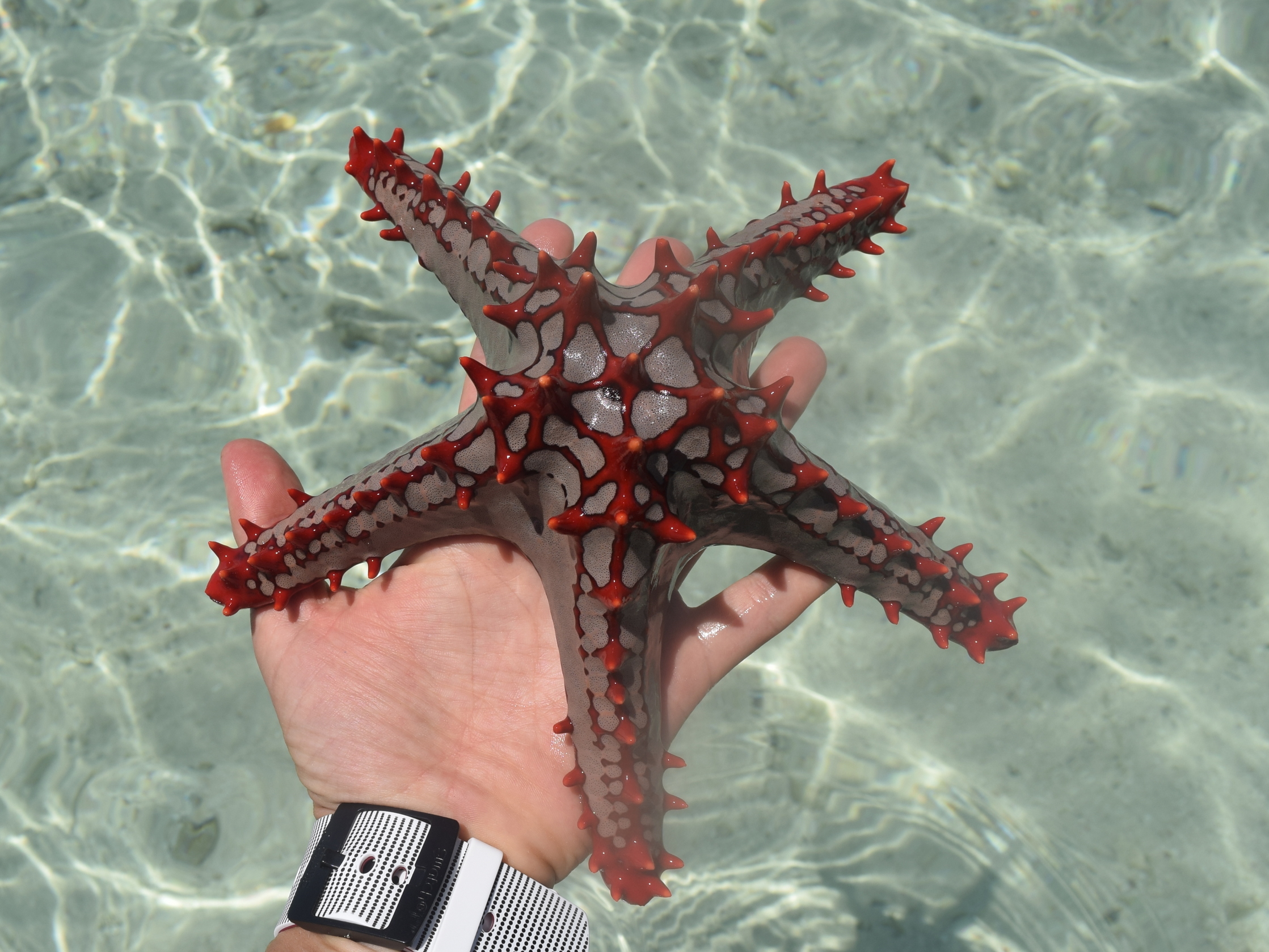
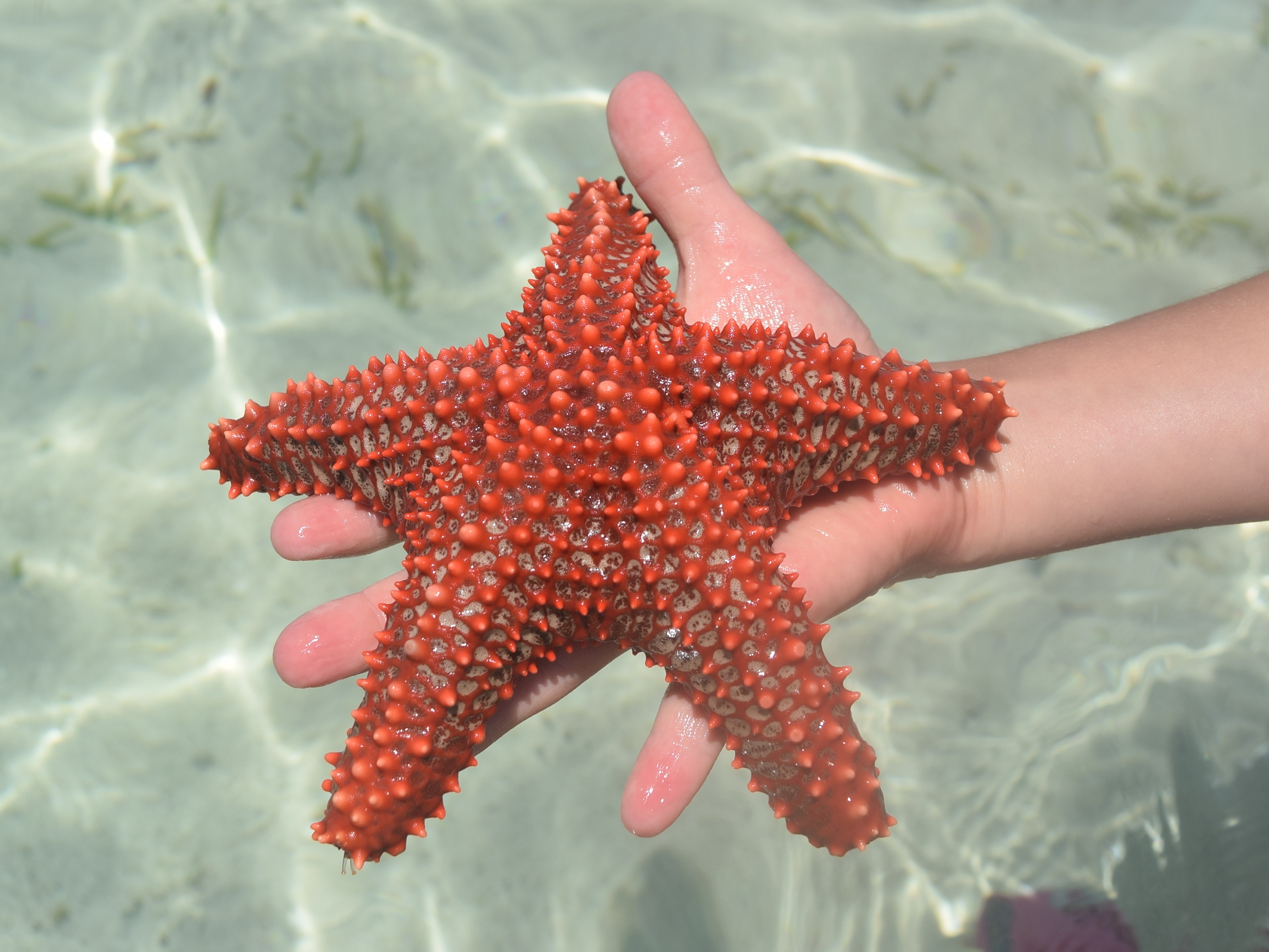
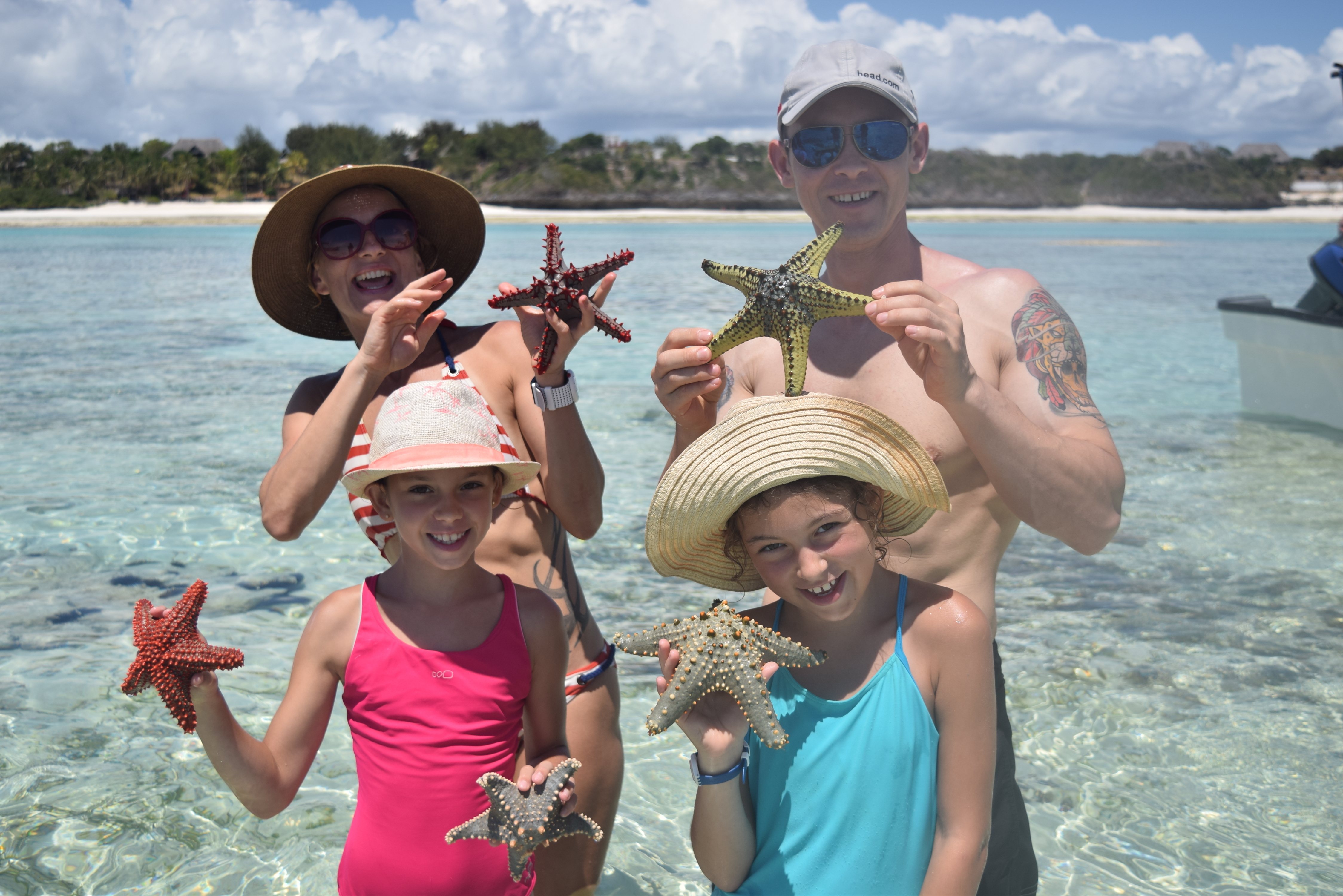
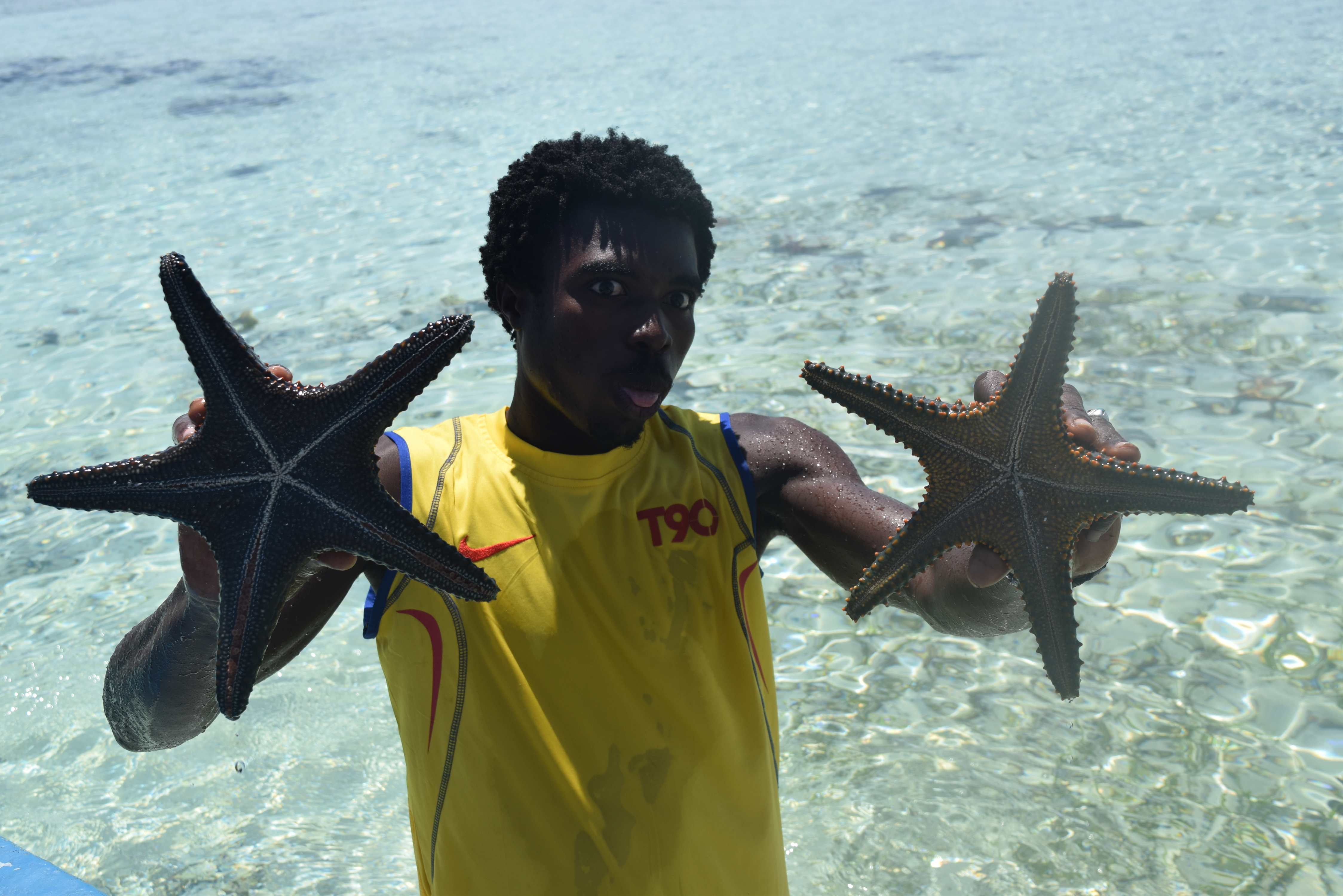
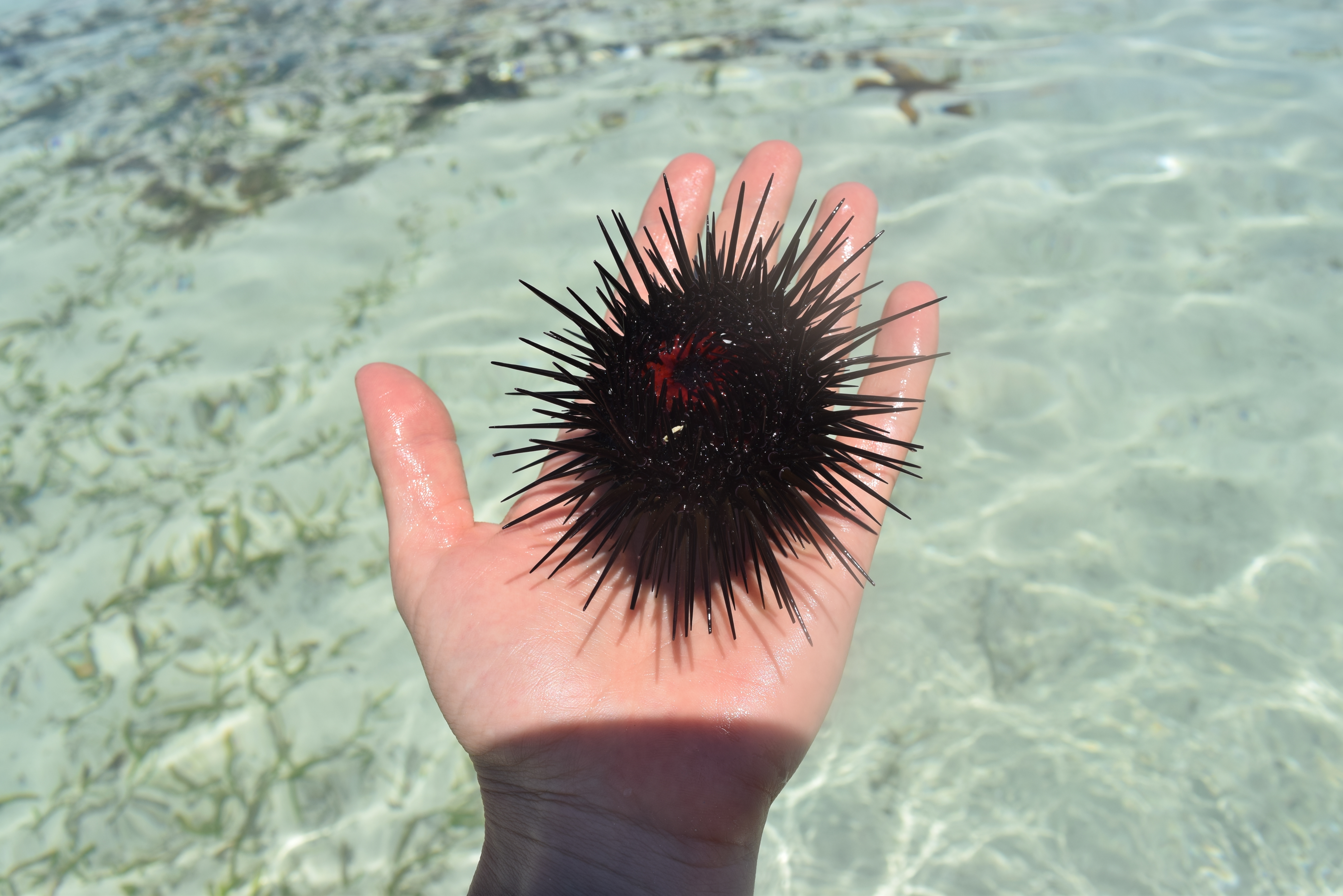
Since we were stepping in shallow waters, Teddy advised us to put on our flip-flops not to get pricked by sea hedges (which were in abundance on this spot). Well, typical me, I went on barefoot (I simply hate wearing flip-flops or any other shoes on the beach or even worse, in the water). Fortunately, these sea hedges were not dangerous as I did get pricked on several places on my feet (my mom would say: “What a surprise!”J
On the way back, we stopped by the Paradise. No, I am not joking. This place certainly meets the definition for “Paradise”. It was a sandbank – a layer of sand forming a shallow area deep in the ocean. This is where the perfect White and Turquoise meet. Where nothing else matters… Zanzibar IS a Paradise!
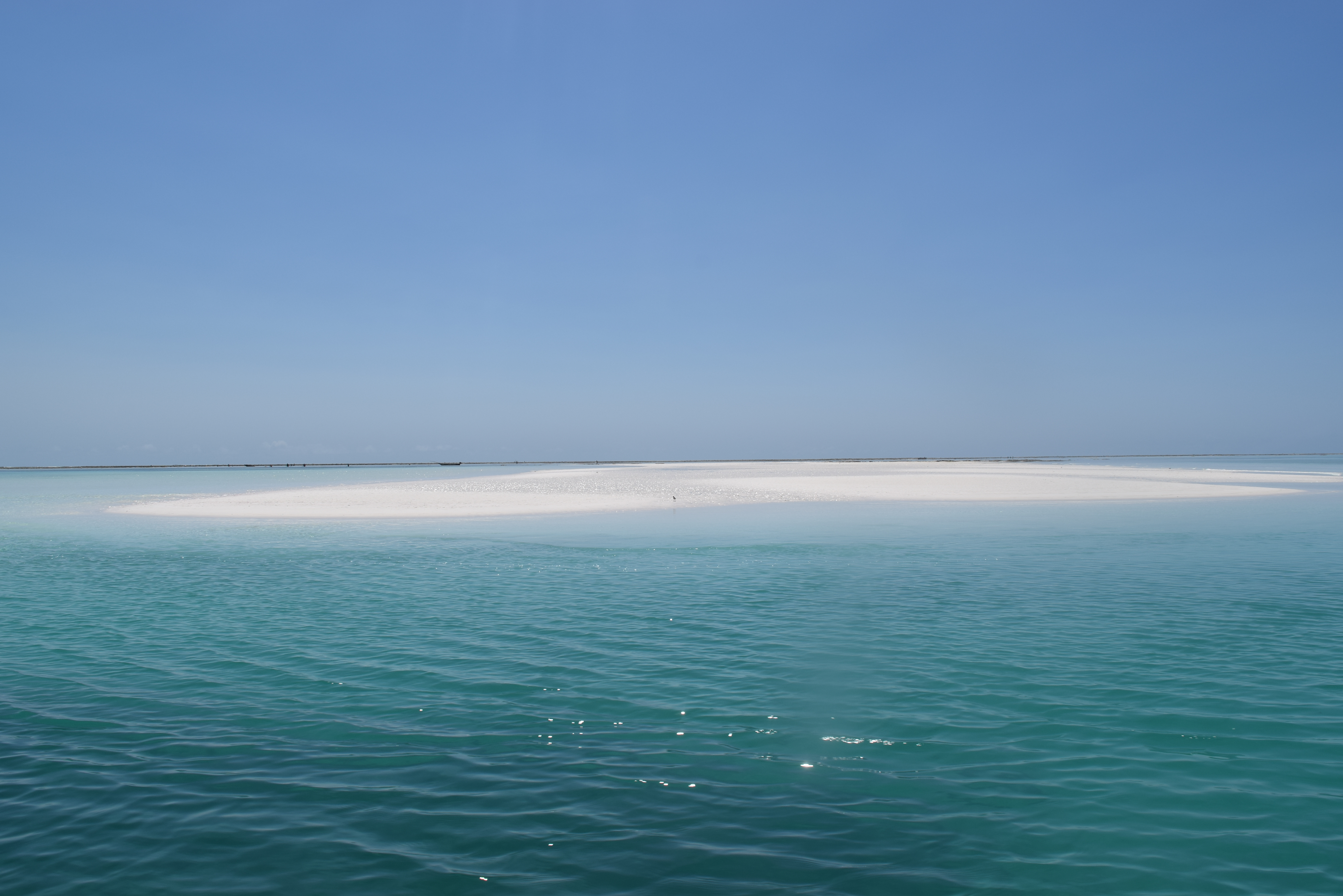
Approaching the sandbank
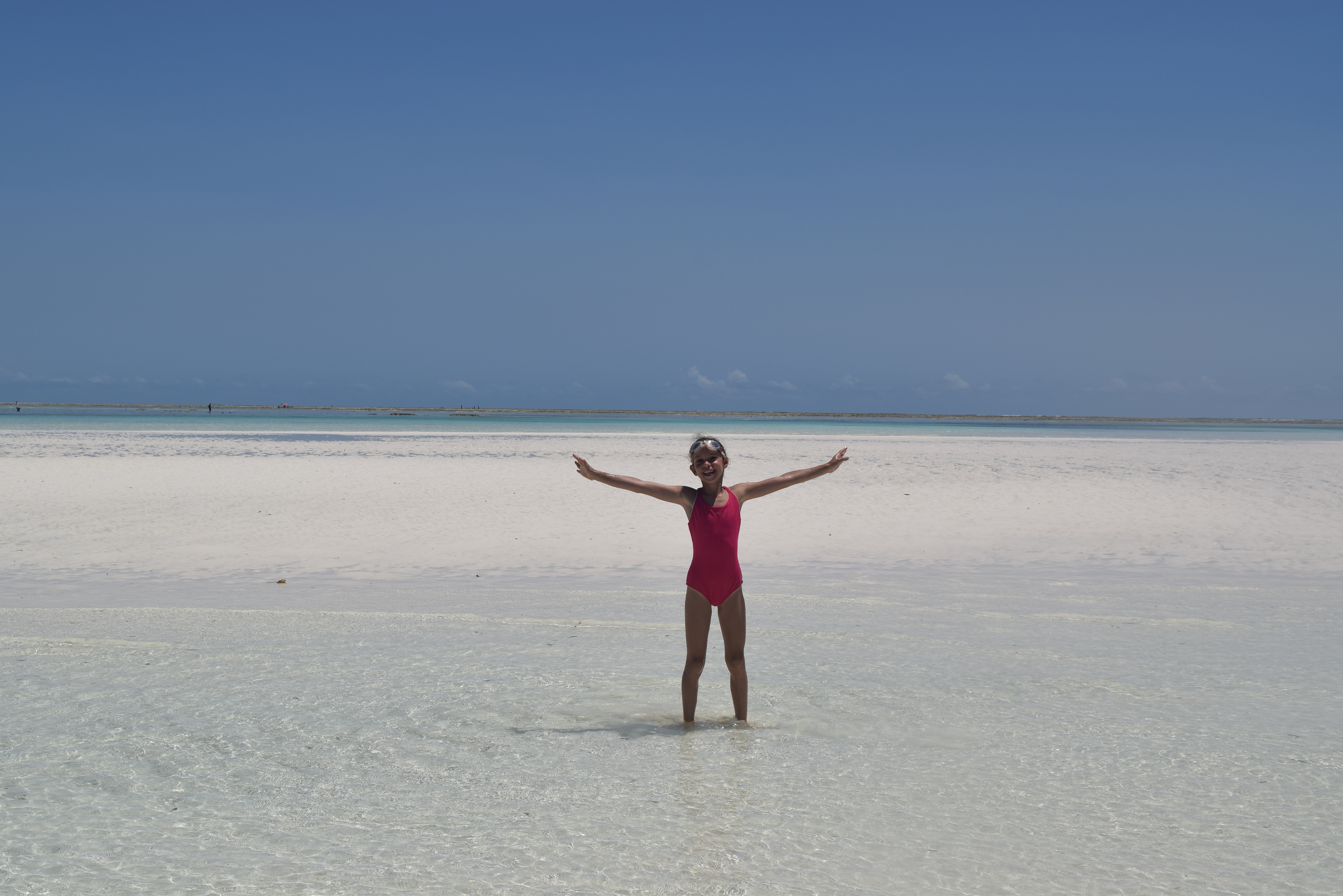
Pure happiness
As if to reinforce these thoughts, the remaining part of our boat trip unveiled a few more spectacular sceneries to us – a Polynesian-style canoe called “ngalawa”, local thatched cottages (bandas) elevated on wooden structures above the ocean and the fabulous Rock Restaurant – another “must visit” place on Zanzibar – prominent for its unique location and exclusive seafood.
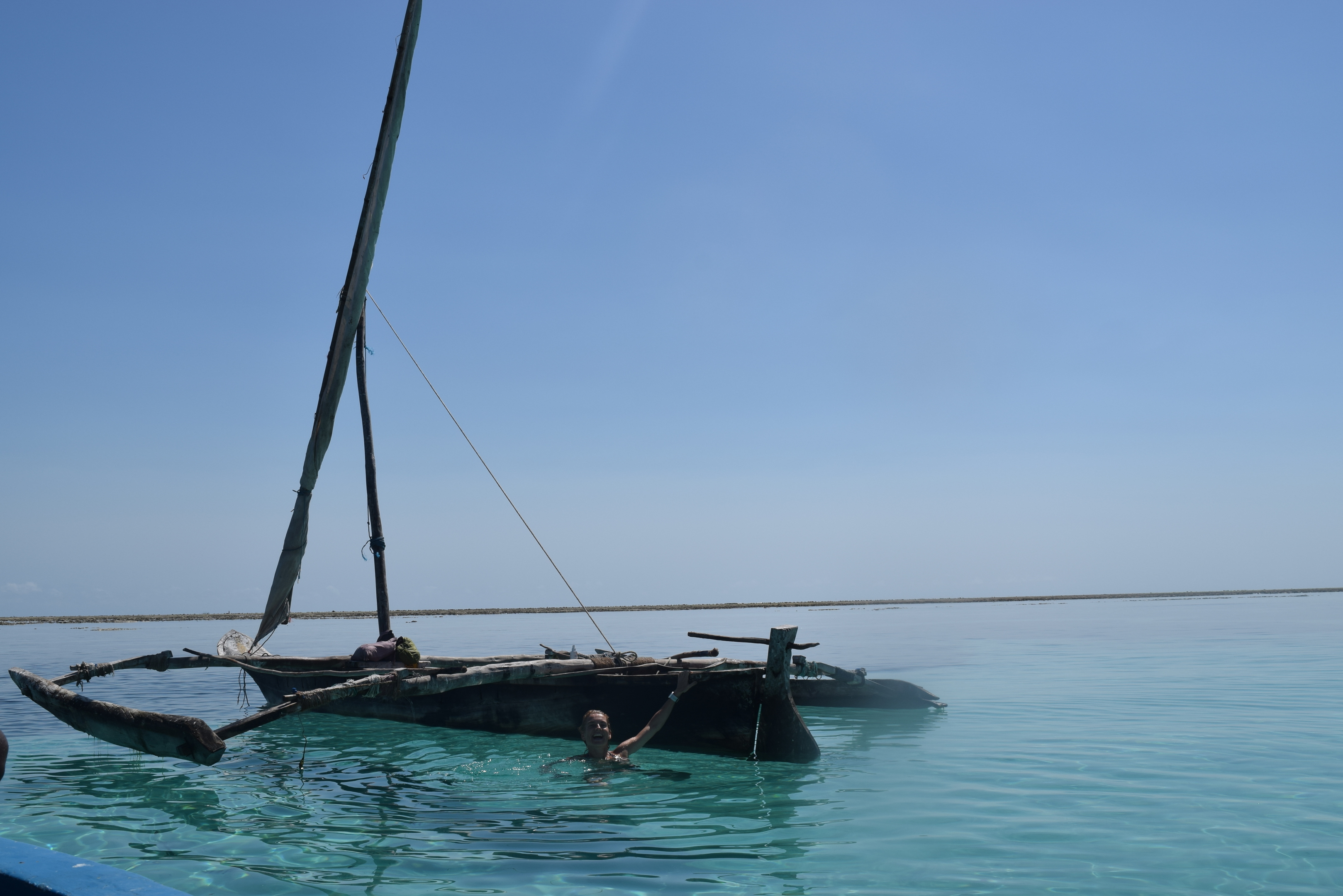
Local canoe (“Ngalawa”)
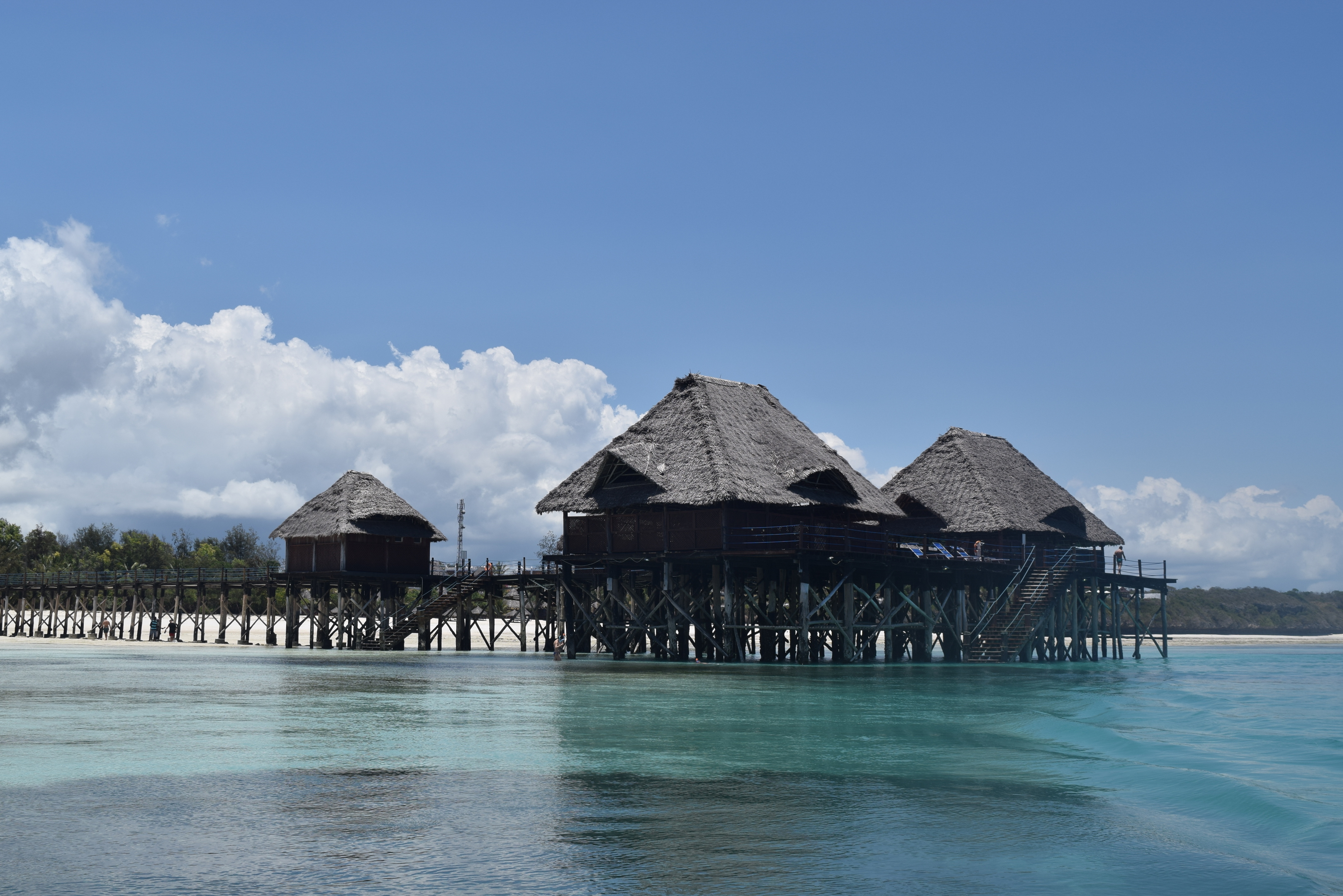
Local thatched cottages
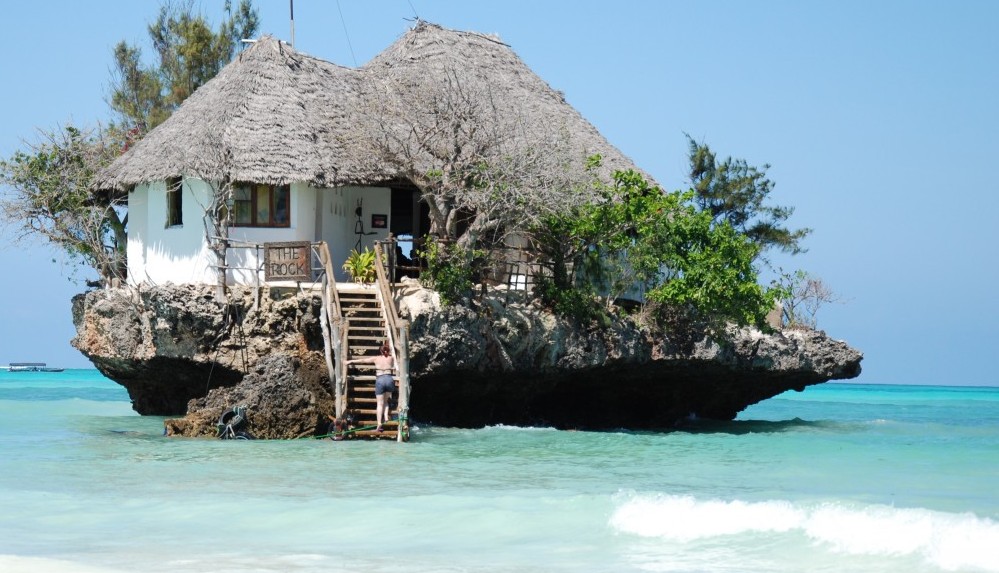
Source: The Rock Restaurant website (we went there at dark so I couldn’t take a picture myself)
The latter was also my choice for a dinner place to celebrate Peter’s birthday. Thanks to Teddy, we easily got one of the few tables that evening. I tried to keep it a secret until the last moment even though I suspect it was not kept very well. But Peter definitely didn’t suspect anything about the home-made local cake which Teddy also arranged as part of the surprise.
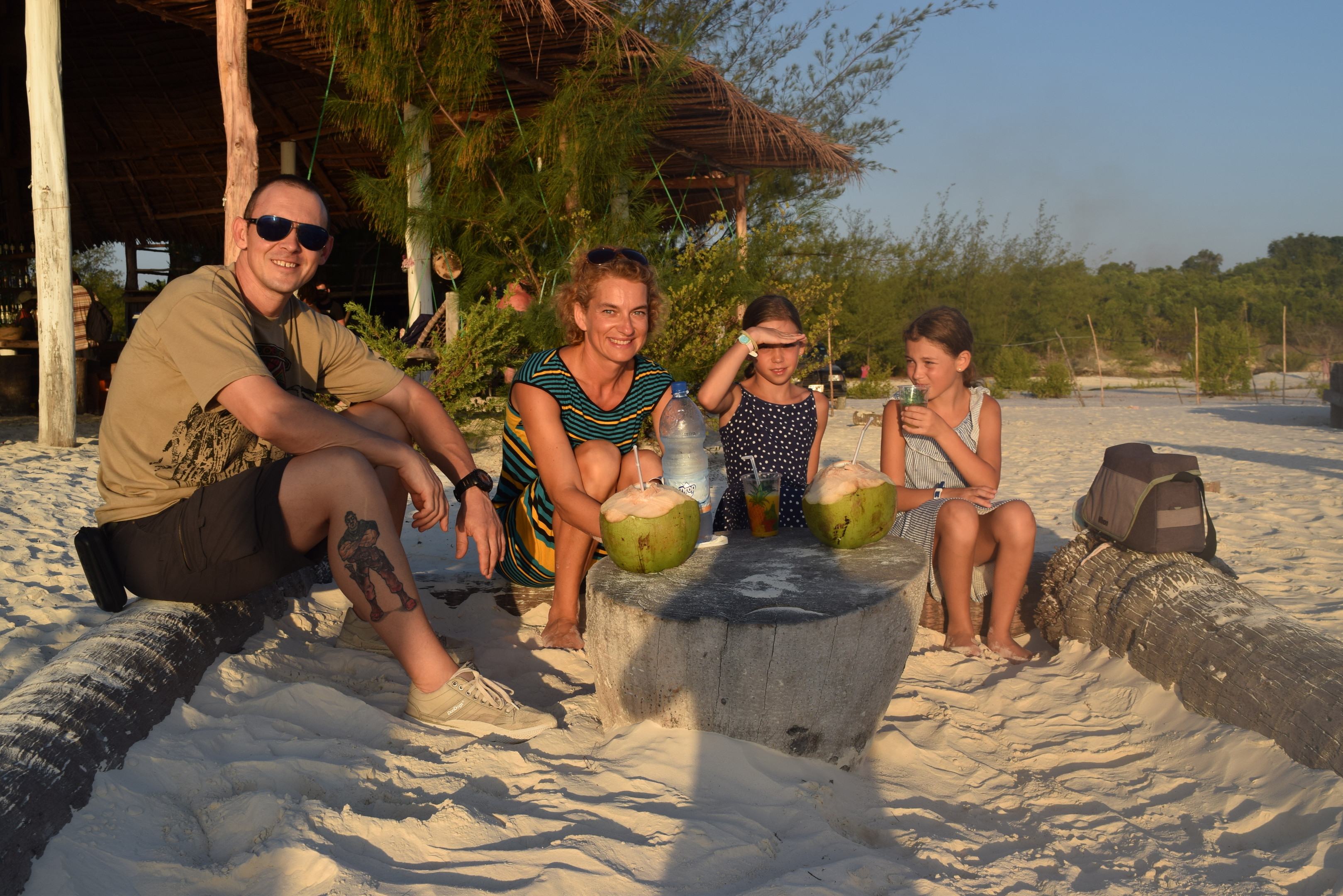
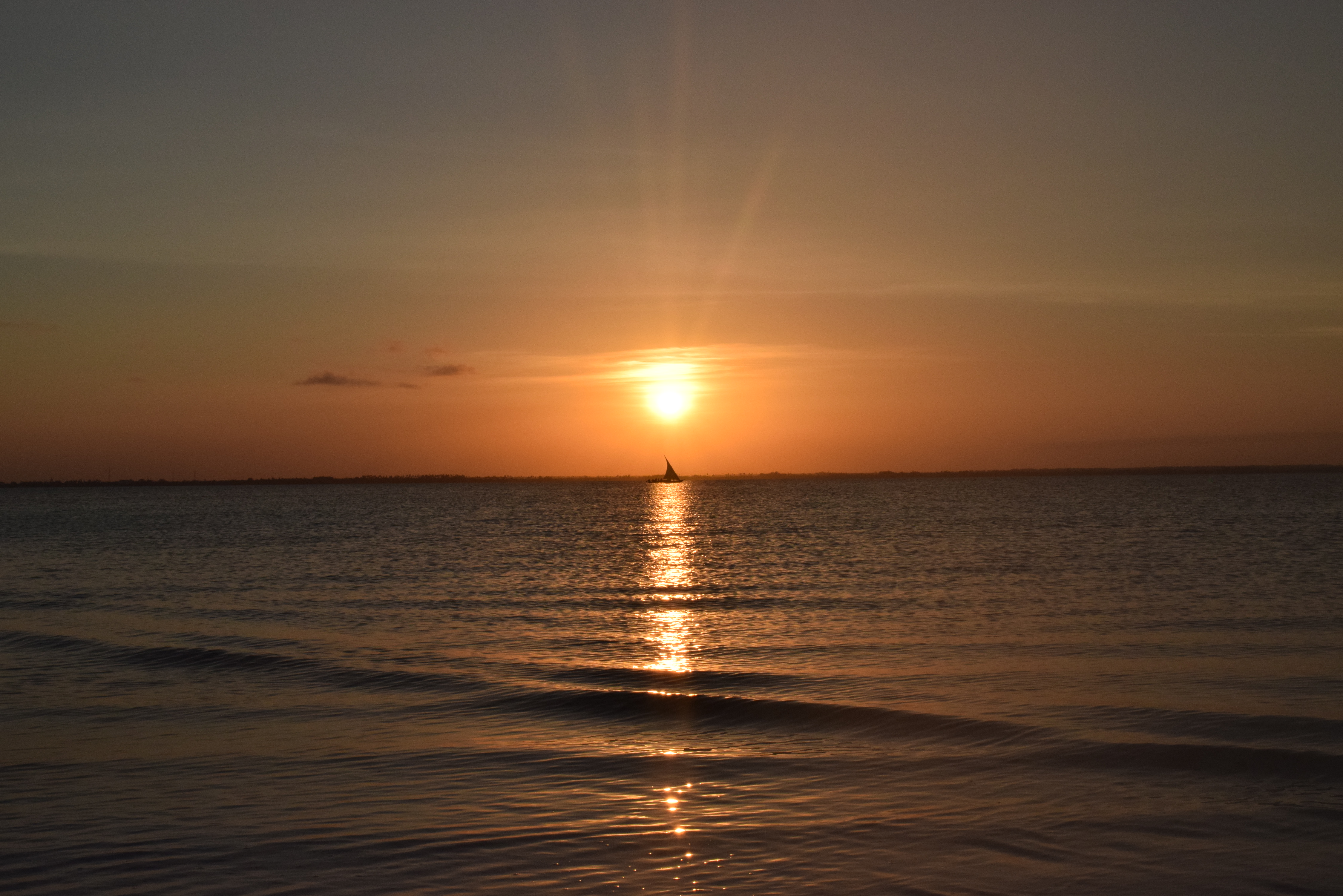
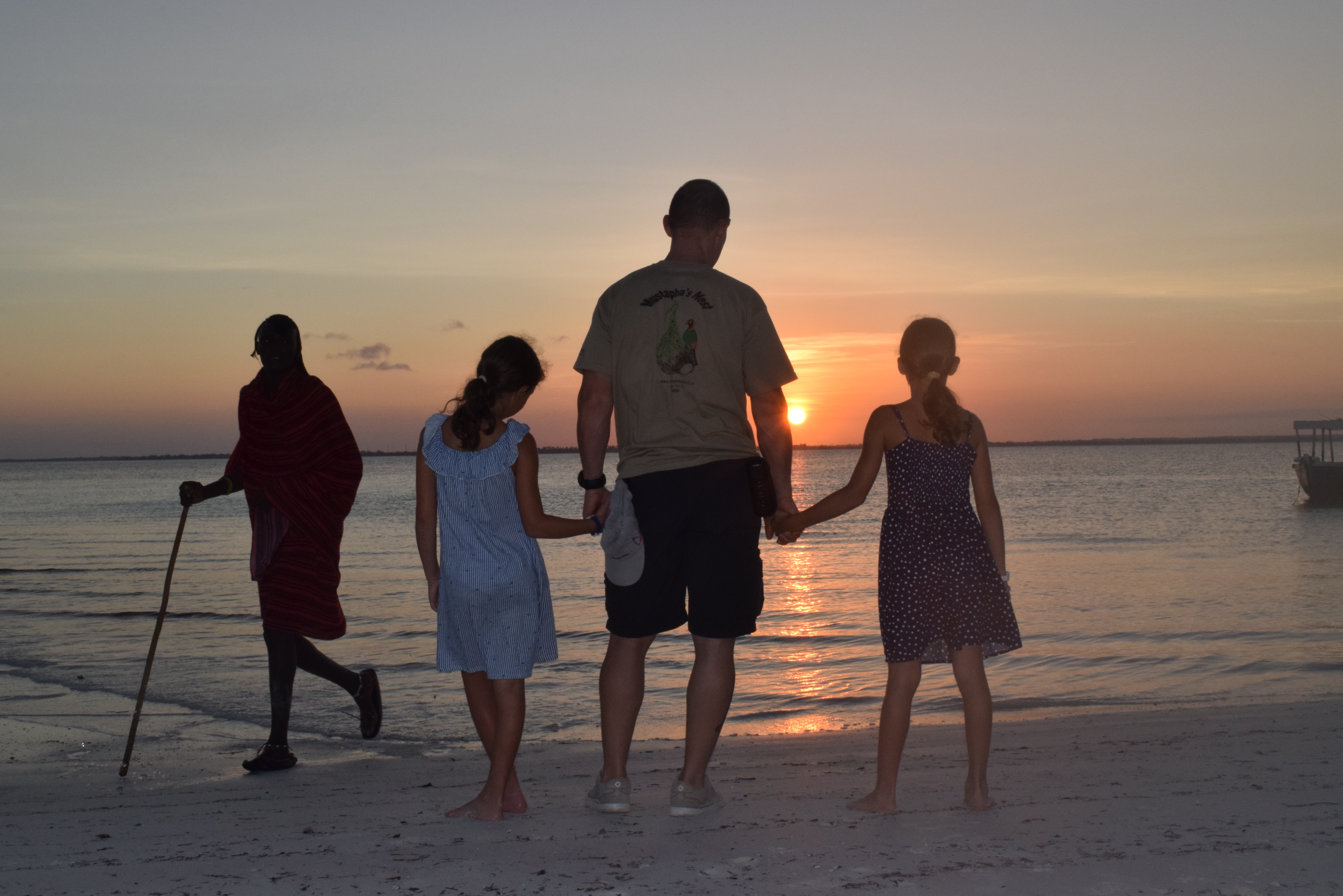
We started off to the restaurant an hour before the sunset, which gave us enough time to drop by one of the best sunset cocktail places on Zanzibar. Honestly, I don’t remember its name but it like 10 min drive from the restaurant. We arrived there just on time to pick our Coconut Malibu cocktails and take another series of awesome pictures.
I can’t close this post without touching upon a topic I mentioned at the beginning – Responsible Tourism.
First of all, I want to point out that tourism is Zanzibar’s number source of earning. This means that it can stimulate the economic development of local villages and preserve cultural traditions but if uncontrolled it can cause serious damage to the communities and the environment.
What I am going to write below is not a product of my own research. But I believe everyone should be aware of and keep it in mind when booking a holiday on Zanzibar (or elsewhere).
Some coastal villages on Zanzibar have been sold out to all-inclusive package holiday resorts (the first ones literally bought at ridiculously low prices). Hidden behind high walls, often secured by electric fences or razor wire, these resorts seldom contribute much to the local economy, some of them even importing the most basic food supplies. Others take significant share of already stretched water resources, and the major pie of the profits rarely get to the locals since most of the big hotels are owned by foreign companies. Well, as it is in many other countries, it is probably the entrepreneurs, corruption or bureaucracy that should be blamed in the first place, but individual tourists like us, are those who make the final choice where to stay.
Actually, many beach resorts like to call themselves “eco-friendly” but this is quite questionable. For example, the fact that they exist on formerly untouched beaches speaks for itself. Indeed, many of them seem to put an equation between “ecological” and the use of natural materials, when actually the opposite is true. Very often, tropical woods are exploited in a very unsustainable and usually illegal way.
As a matter of fact, outside Stone Town, bungalow resorts are the most common accommodation, consisting of a low thatched cottages, containing one or two guestrooms, with a main building housing a bar or a restaurant. Most such places are quiet, laid-back, and can be enjoyably personal in comparison to the big all-inclusive hotels. I respect everybody’s personal choice. My choice is definitely not the 5-star all-inclusive hotel.
Related to this topic is the question of nature conservation. Although I like grilled octopus a lot and it was on the menu of several restaurants, I was pleasantly surprised to learn that catching octopus is temporarily prohibited by the force of agreement between Zanzibar government and UNESCO. The reason behind is the seasonal propagation of octopus, and the potential danger of extinction if octopus is caught when not completely grown up.
The nearby place which we often visited to chill-out and swim during low tides, is an excellent example for responsible holiday establishment. The introduction on their website gives a good idea about the place and its owner.
“[The place] is NOT about hot water and television, it is NOT about hot tubs and tennis courts, it IS about the luxury of nature….”
Zanzibar is a dream that happened but didn’t fade away. It’s still in my heart, calling me back…
End of Part 2.
To read the first part of this post, click here.