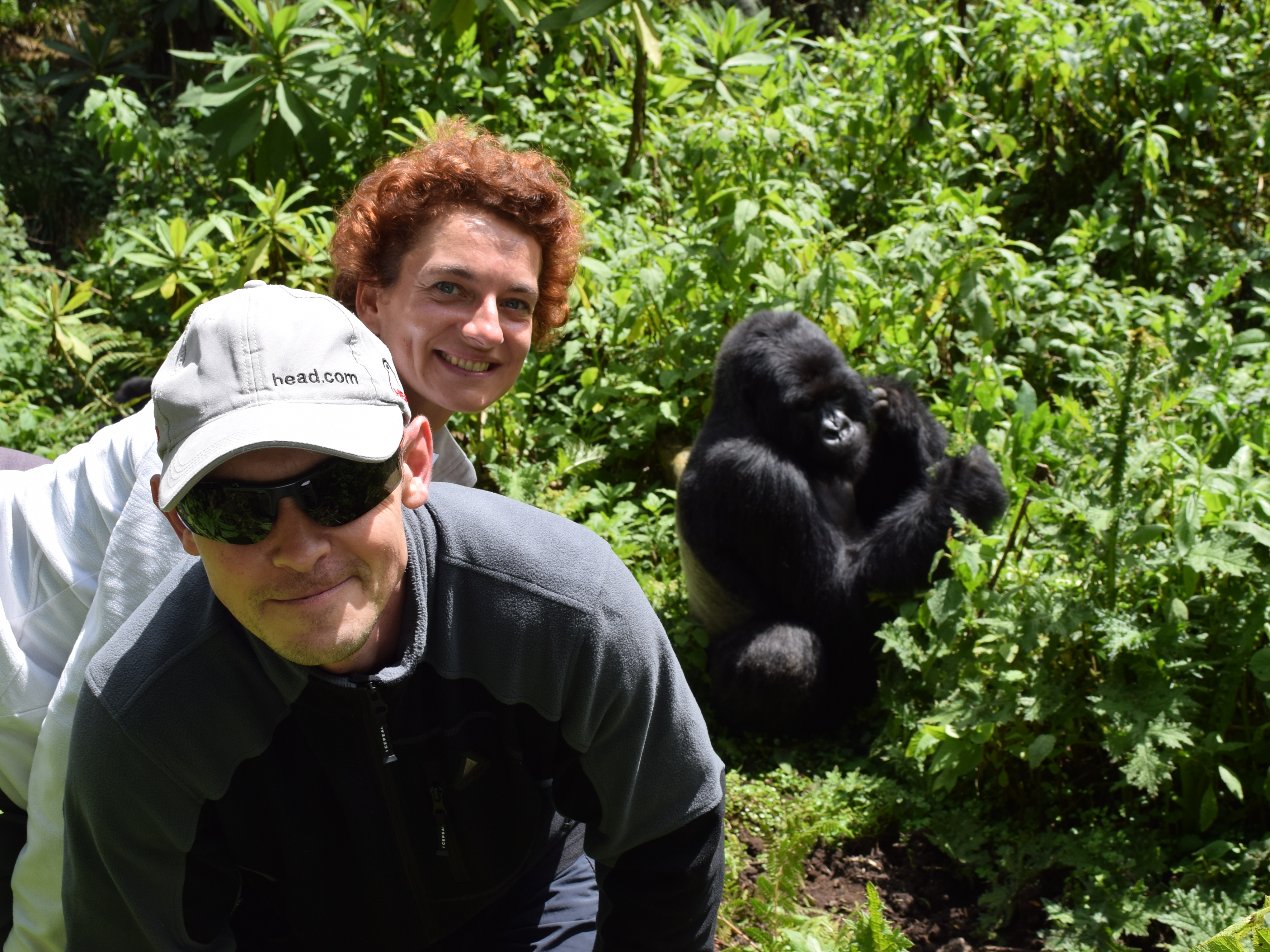
The encounter with a mountain gorilla is one of the most memorable and stunning experiences I have ever had. Being able to observe them in their natural habitat just from a couple of meters away is a blessing and I want to share it with you.
Rwanda is one of the several countries which happen to be home to the few remaining mountain gorillas in the world. I read that there are around 1000 mountain gorillas; all found in the areas of East Africa, including Democratic Republic of Congo, Uganda and Rwanda (No gorillas in the Zoo!). And Rwanda is a primary destination to track these giant animals, followed by Uganda and DRC (not so safe to go there though).
10 months after we moved to Kigali and after we have heard lots of stories from other enthusiastic visitors, we finally made it up to Musanze – a city in Northern Rwanda located in the foot of Virunga Volcano forests. We were super lucky to have done this trek just a few weeks before the price for the gorilla permit was increased astronomically, making it practically unfordable for even the most well-off visitors.
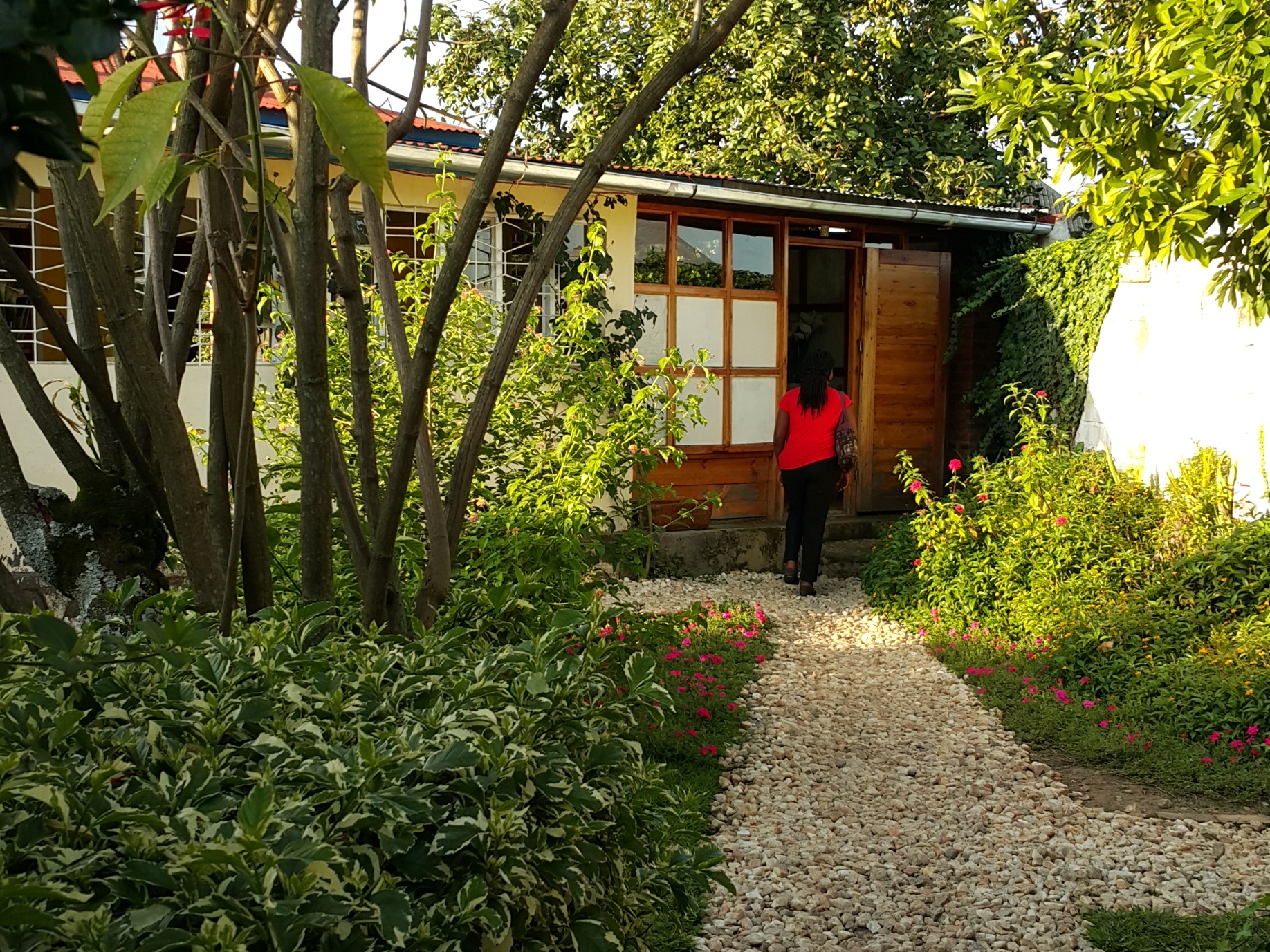
We arrived to our pre-booked guesthouse in Musanze on a Friday late afternoon; just on time to enjoy a sunset drink or two and organize the logistics of our stay over the weekend (unfortunately, kids are not allowed in Virunga National Park for safety reasons).
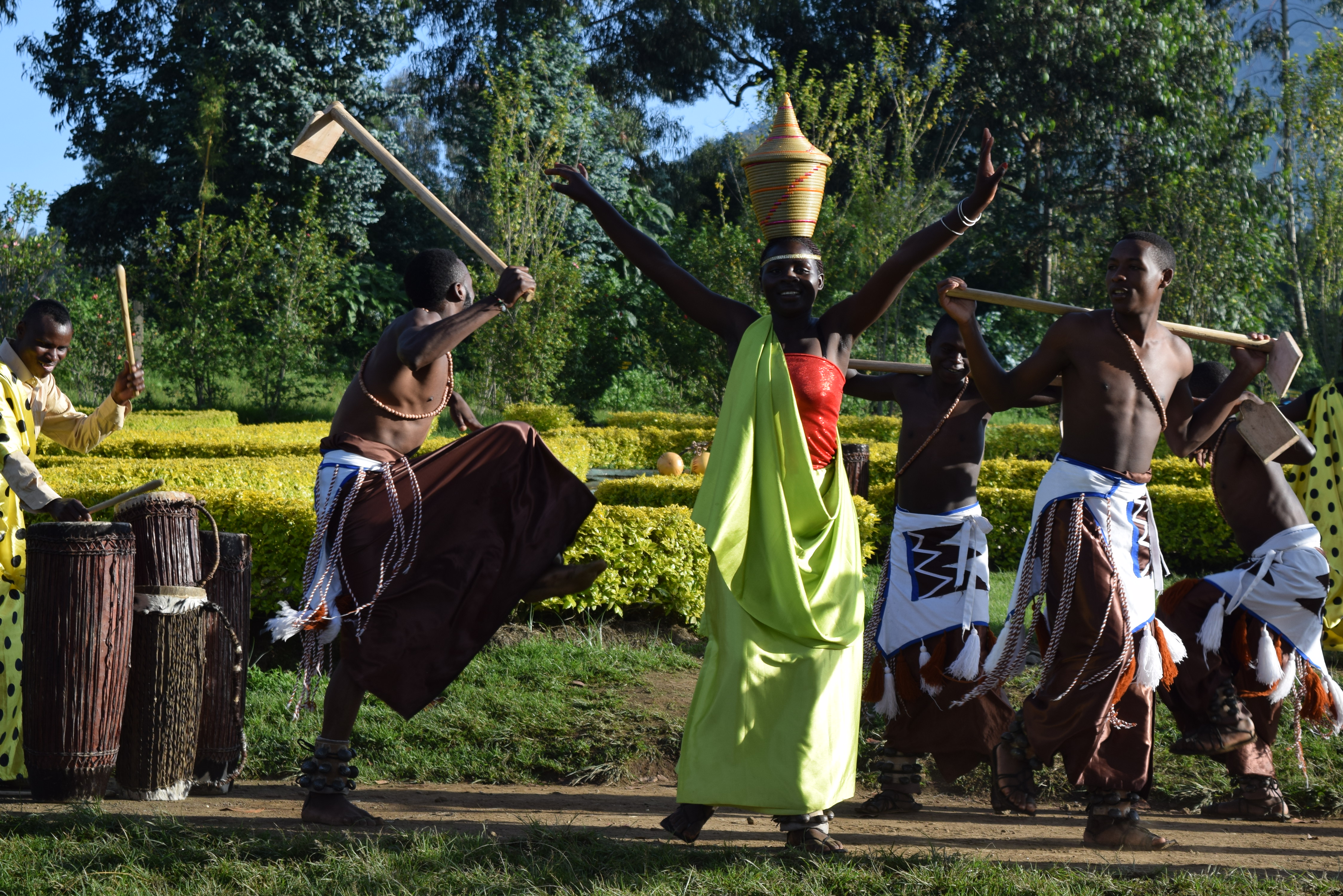
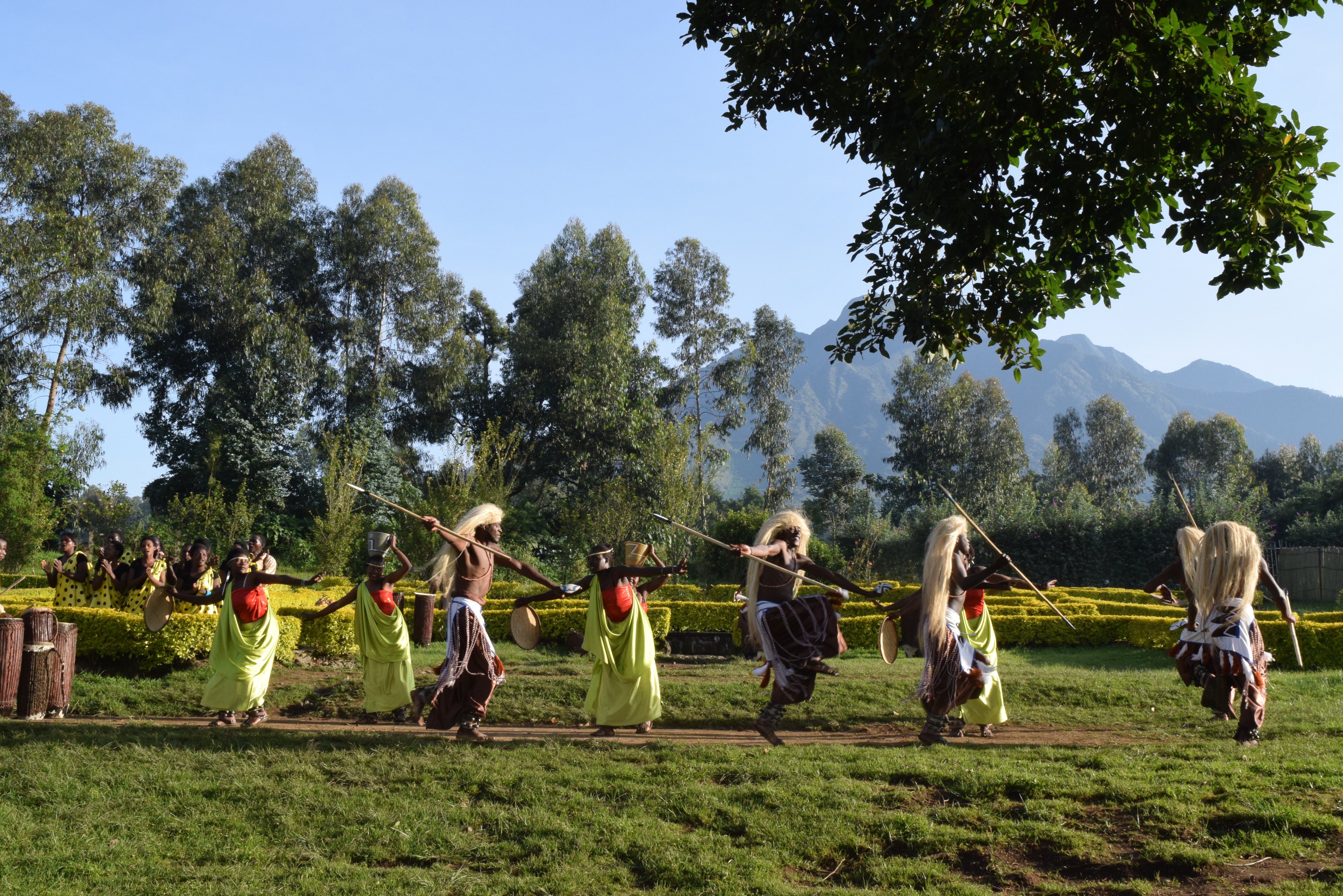
At 6.30 on the next morning we headed to the entrance of the park, from where all treks start (besides the gorilla trekking, the park offers a variety of other activities including Golden Monkeys trekking, hiking, climbing, canoeing, cultural tours in the communities living around the area and others). The weather was definitely with us – bright sunny skies, no wind, and cool temperatures. While waiting for the park authorities to check our documents and assign all visitors to different trekking groups, a cheerful group of traditional Rwandan dancers was warming up the tourist audience, their loud drumming and clamor being more effective than a cup of a strong double coffee.
Not before long, we were called to join our guide and the rest of the group. As a matter of fact, each group of visitors should not exceed 8 people and is assigned to visit a particular family of gorillas. We learned that there are around 20 gorilla families in Virunga National Park but not all of them are habituated to meet people. Even the habituated gorillas are not exposed to more than one group of visitors per day, for two main reasons: 1) to keep the gorillas in a good health as they are very susceptible to many infectious human diseases; 2) as a prevention to overexcite the gorillas or just minimize the risks of accidence (we, humans, could be also quite unpredictable in the company of gorillas:-)
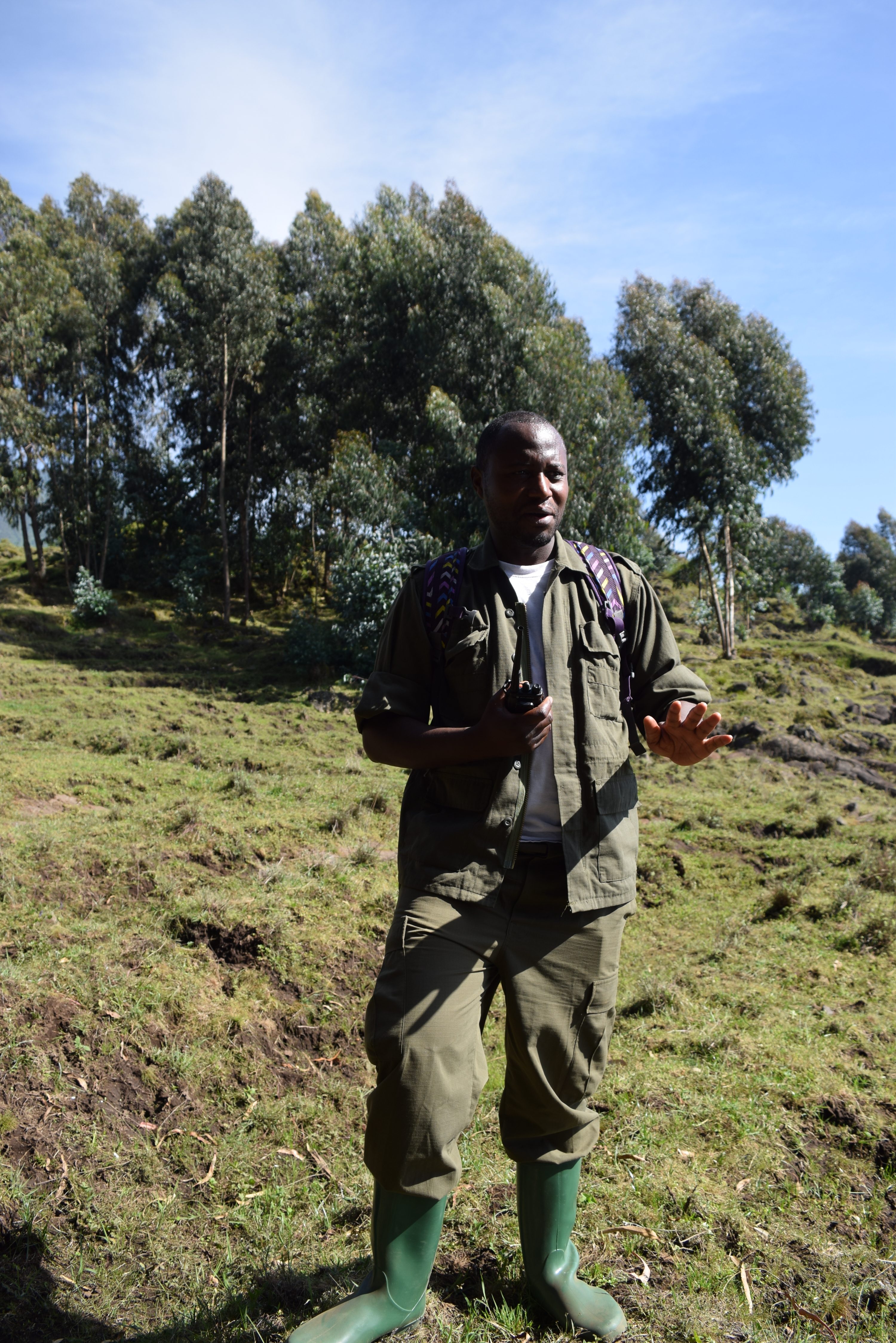
Our group was assigned to the gorilla family named Isabukuru (“Anniversary”, translated from Kinyarwanda). Before we head off to the forests, Augustin – our guide – gave us a very amusing but useful instruction, kind of “how to…” lesson for your first encounter with the gorilla (here you can put in any verb you want to, e.g. behave, move, watch, survive etc..). Part of this included the orders to not stay within less than 7 meters from the gorilla, not stare at her eyes for too long, not use the flash when taking pictures, and go lower in case the gorilla approaches you. Although we made all efforts to follow these rules, we got to break some of them, inadvertently. For instance, the 7 meters principle was rather loosely observed since the gorillas often just wandered right under our nose in search for a more juicy plant to feed on.
To make the instruction even more lively, Augustin jumped into a role play, imitating the movements and noises of a happy/friendly or scared/aggressive gorilla so that we get some knowledge about their body and “verbal” language, just in case we need to react in a certain way. Later, when we met the gorillas, I realized how much effort and courage stands behind the job of a Gorilla trekking guide (or any other job related to the habituation of gorillas).
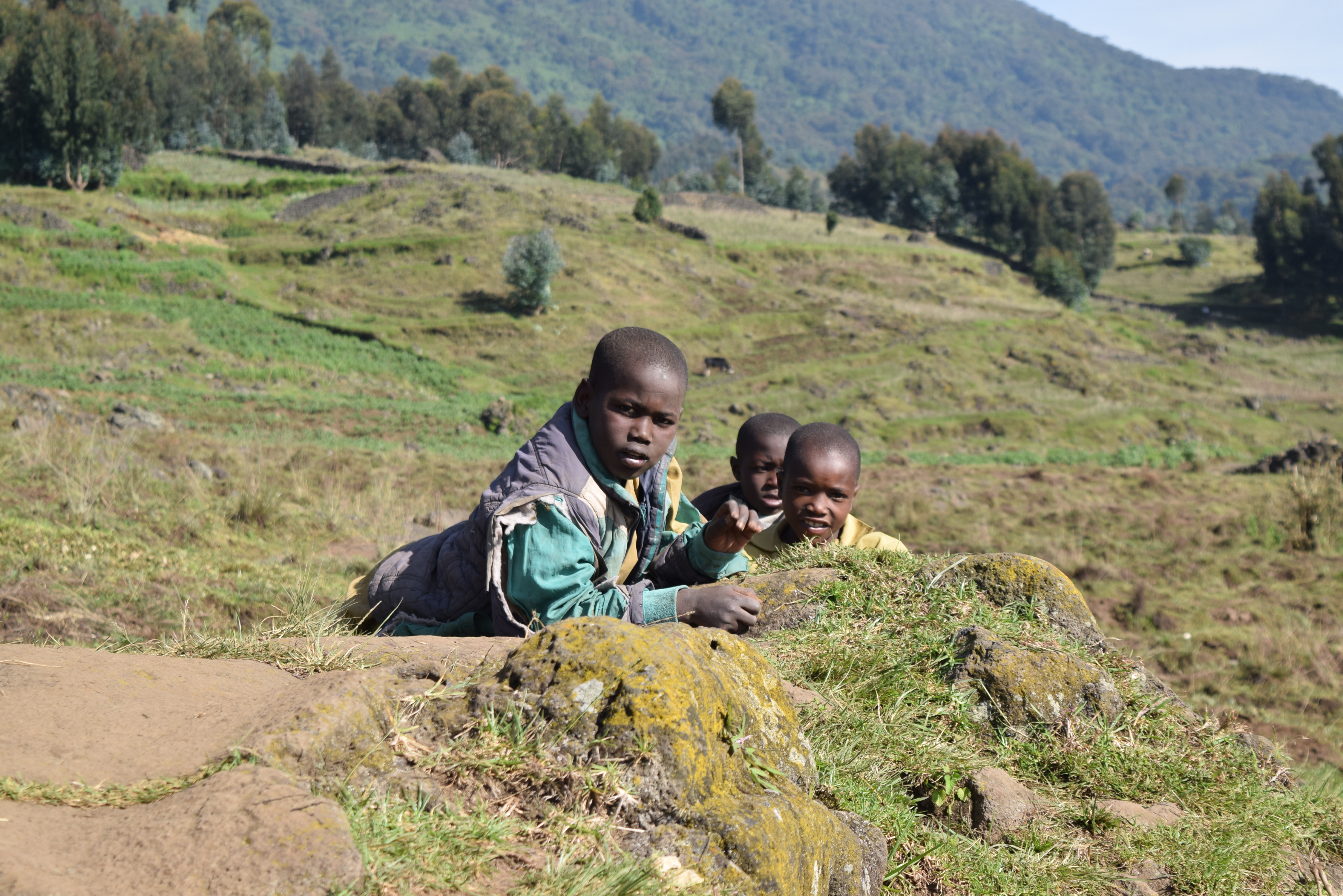
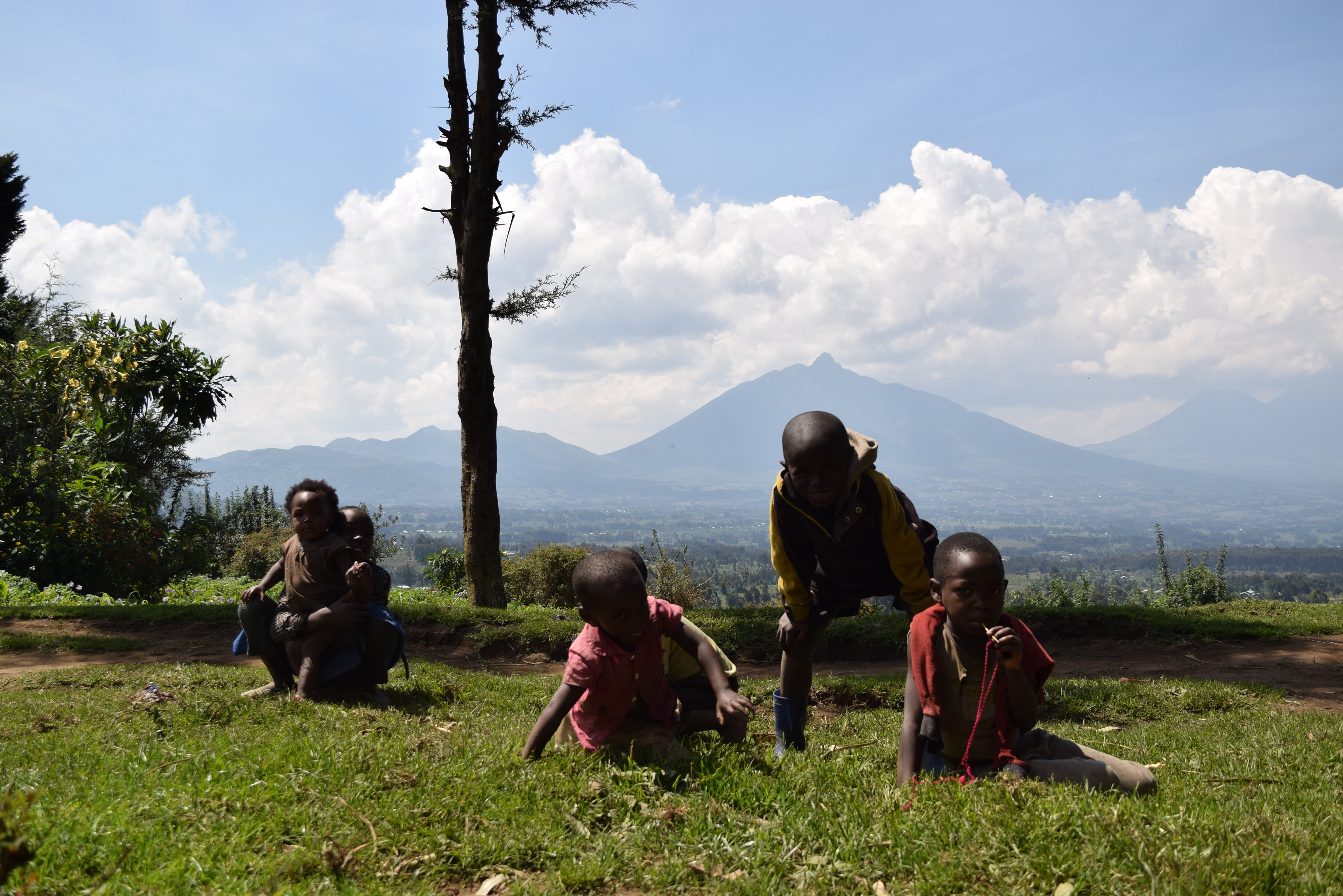
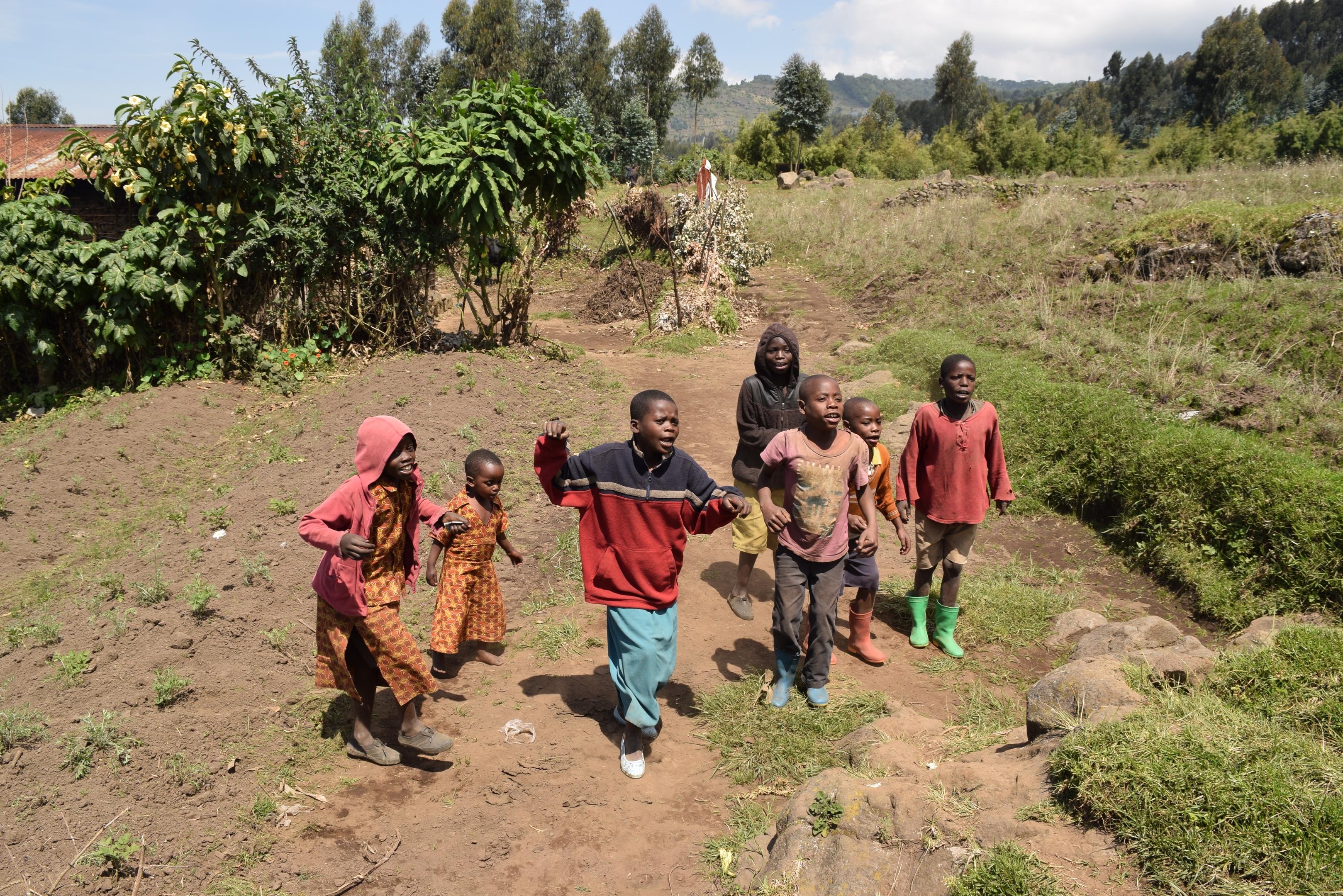
After a 10-minute drive from the park entrance, we pulled off the cars and hiked about a mile up a steep trail before we reached the forest. The scenery was magnificent – endless green hills, potato plantations and a clear view to the surrounding peaks of the Virunga Volcano chain that includes mount Karisimbi, Rwanda’s highest point at 4,507m. As usual in the country side of Rwanda, we also got some company on the way up who have probably already had a few meetings with the gorillas despite their tender age.
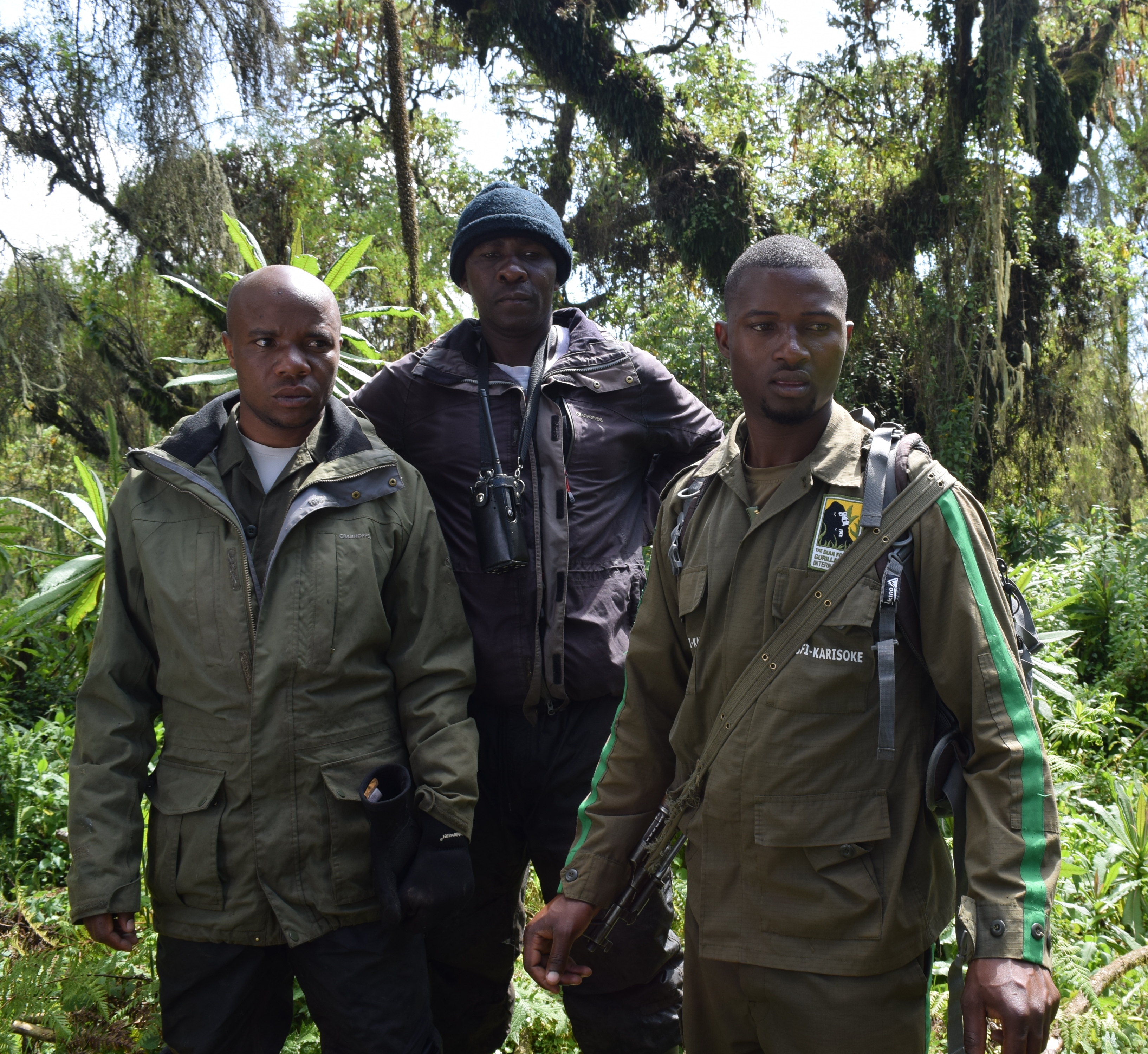
As soon as we entered the forest, we got a few more people joining the group – an armed guard to keep us safe from dangerous situations (they said buffalos and elephants could be also seen in the lower parts of the forests); two other guys to clear our way through the bushes and inform the guide about the exact location of the gorillas, and another guy to help us overcome some challenging obstacles on the trail.
Tracking gorillas in the forest takes some effort. The slopes of the mountains are steep; the soil is muddy and spongy. Every now and then, we got stuck in the mud, for the soil was covered with low grass that was quite misleading about what was beneath the green carpet.
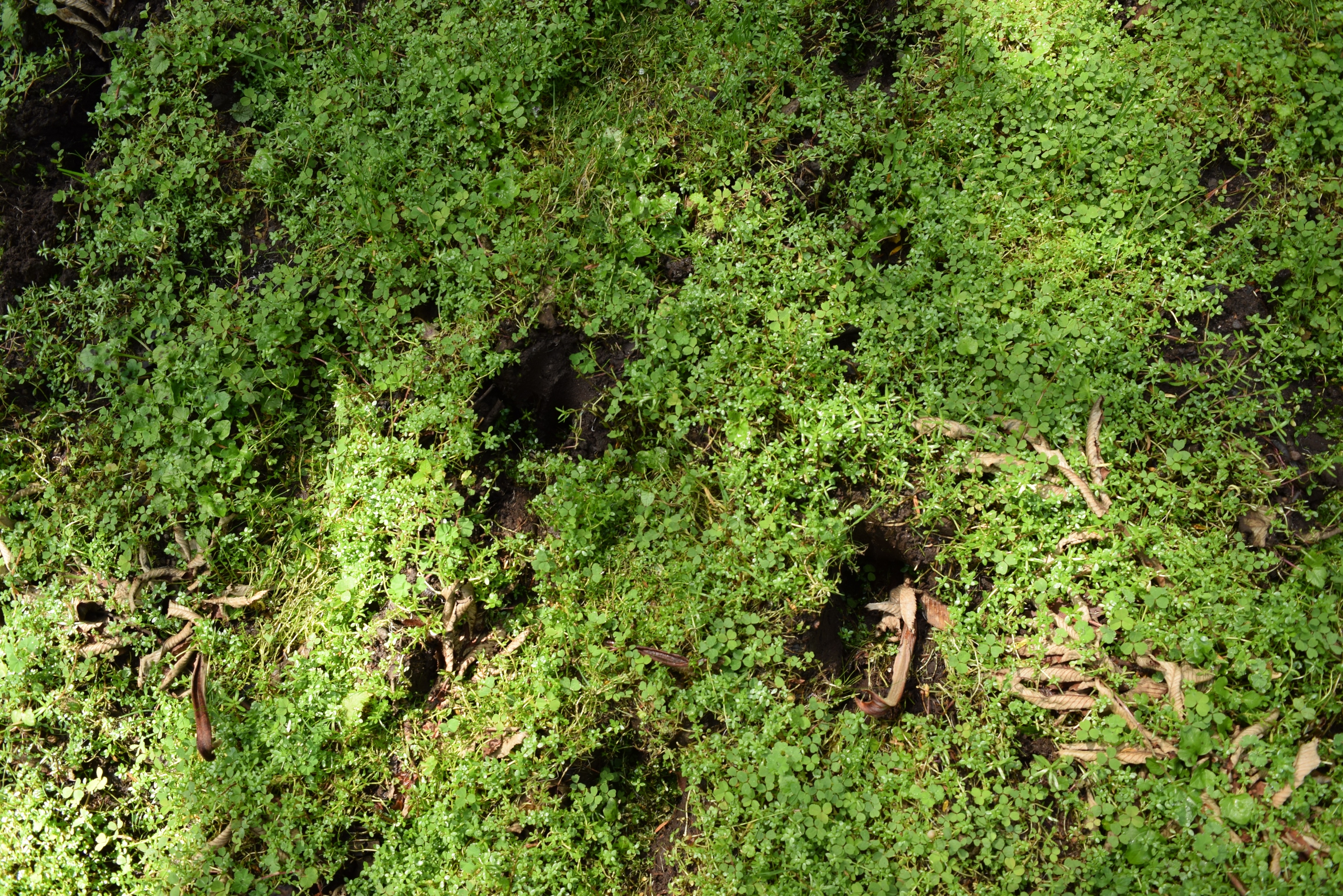
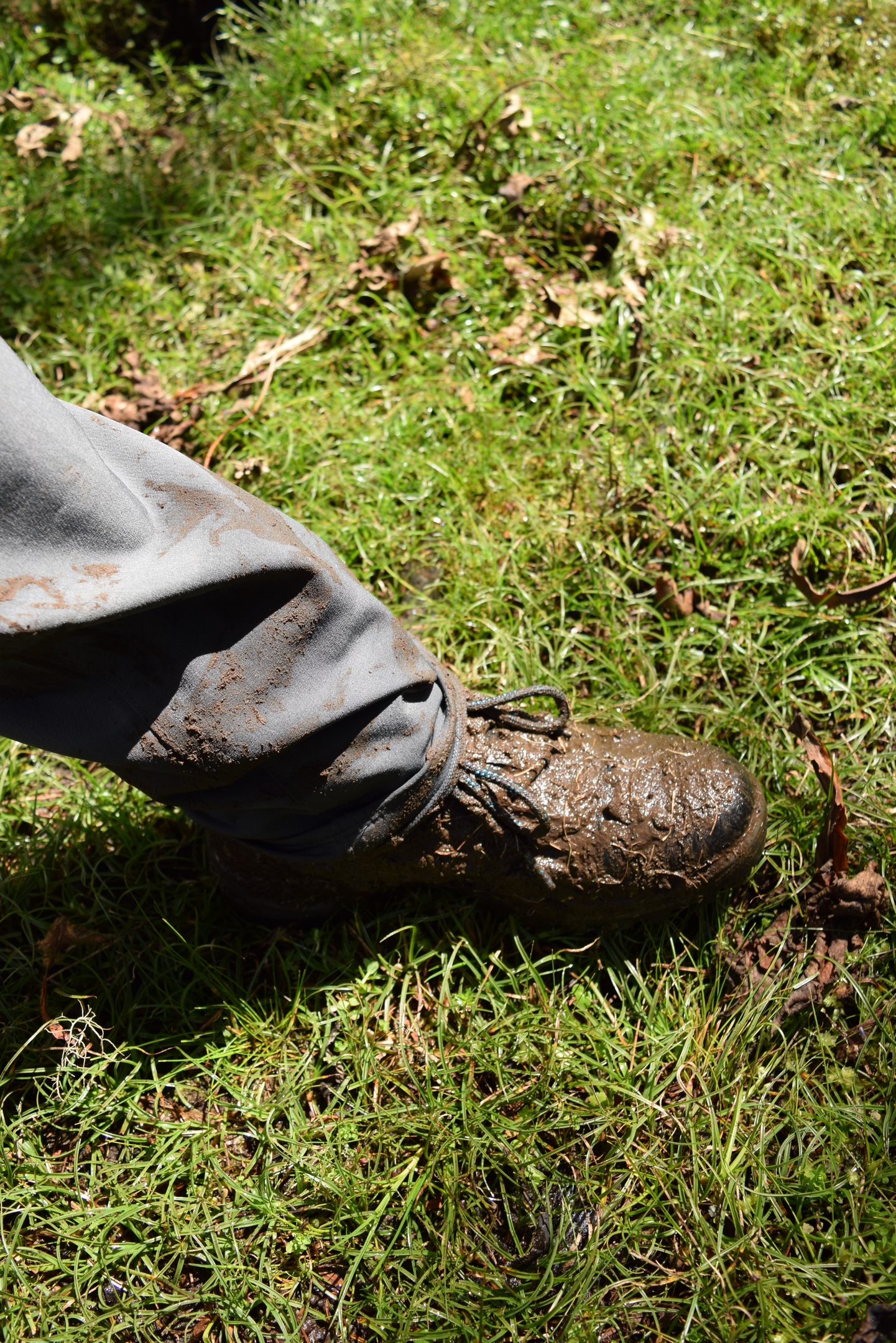
Higher up the mountain the bush got thick with stinging nettles, reaching high at the level of our shoulders, burning the skin of my legs and arms through my clothes. Some of us were smart enough to bring a pair of gloves to protect their hands from burning. I wasn’t one of them (obviously, I haven’t watched enough movies:-).
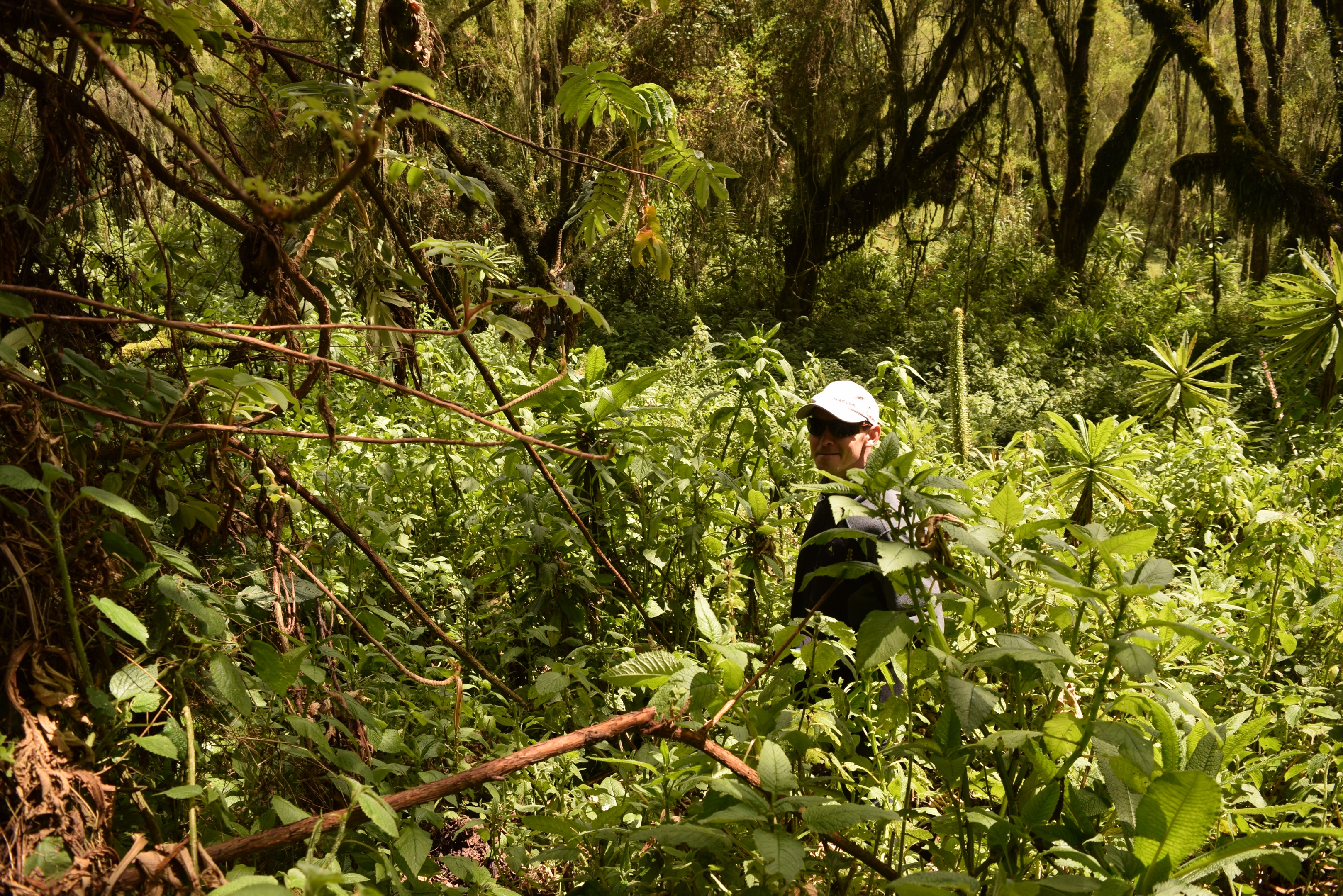
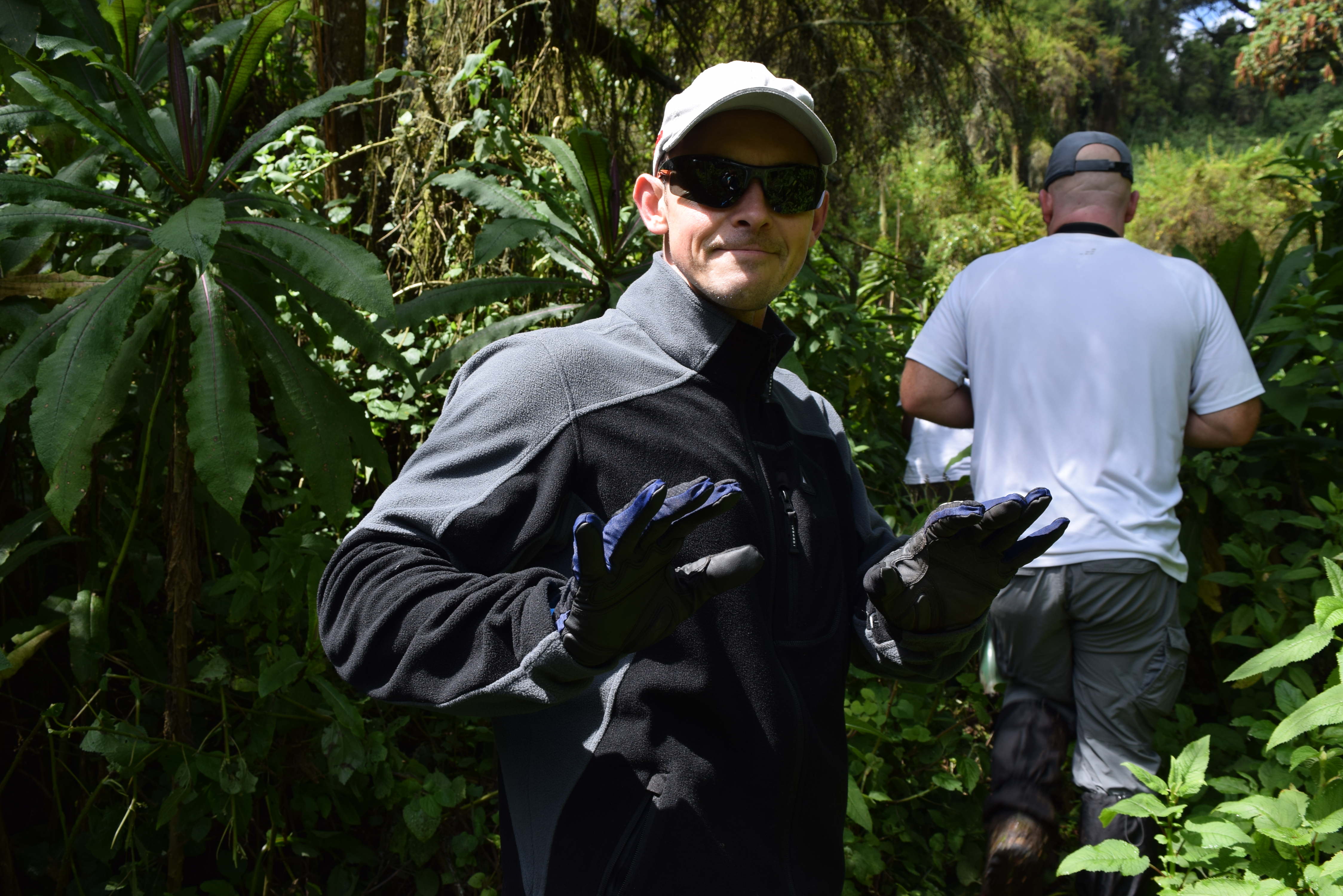
Soon the guide pointed to a few clear evidences that we are approaching the gorilla family – a footstep and some droppings. The excitement immediately went up. Here we go!
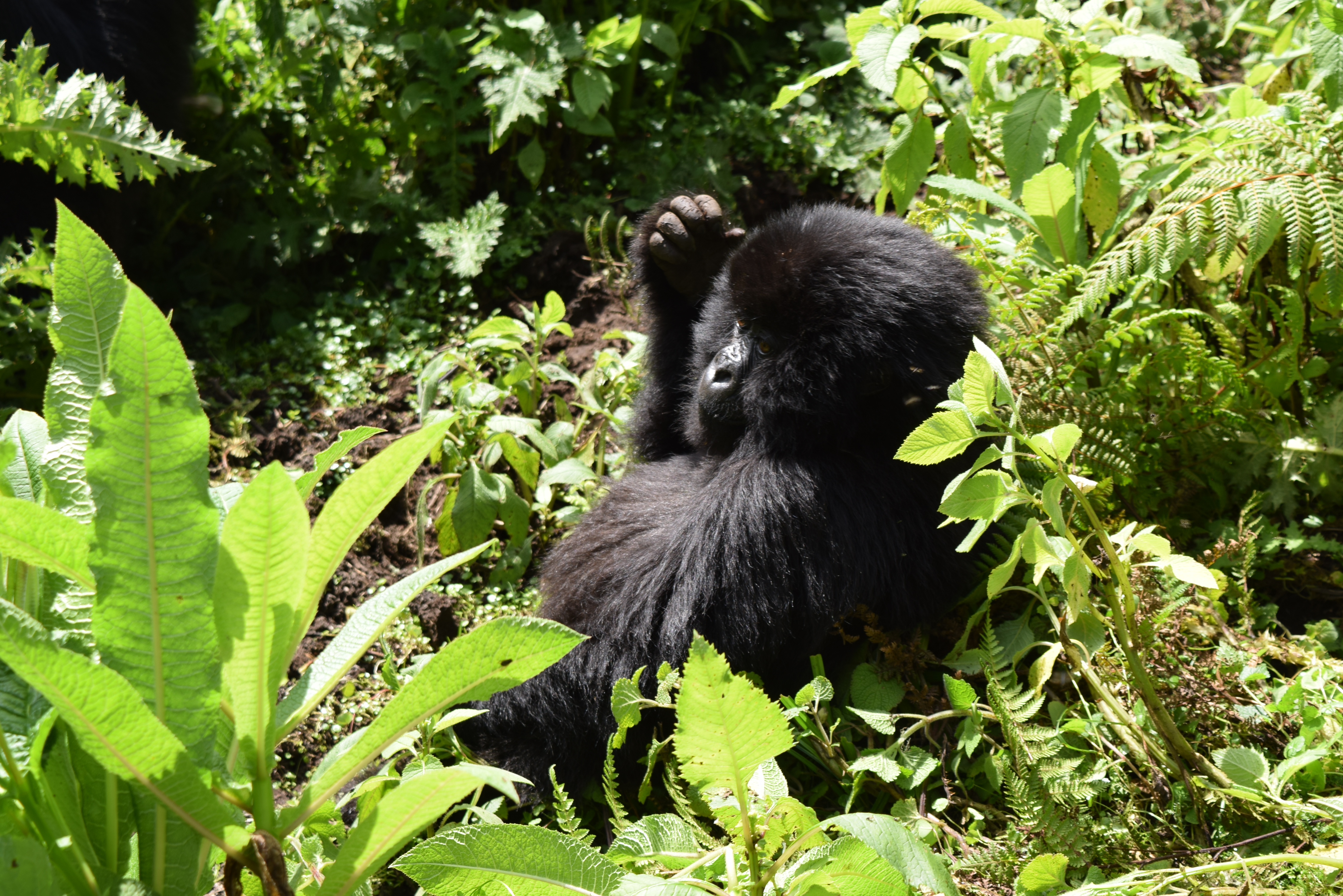
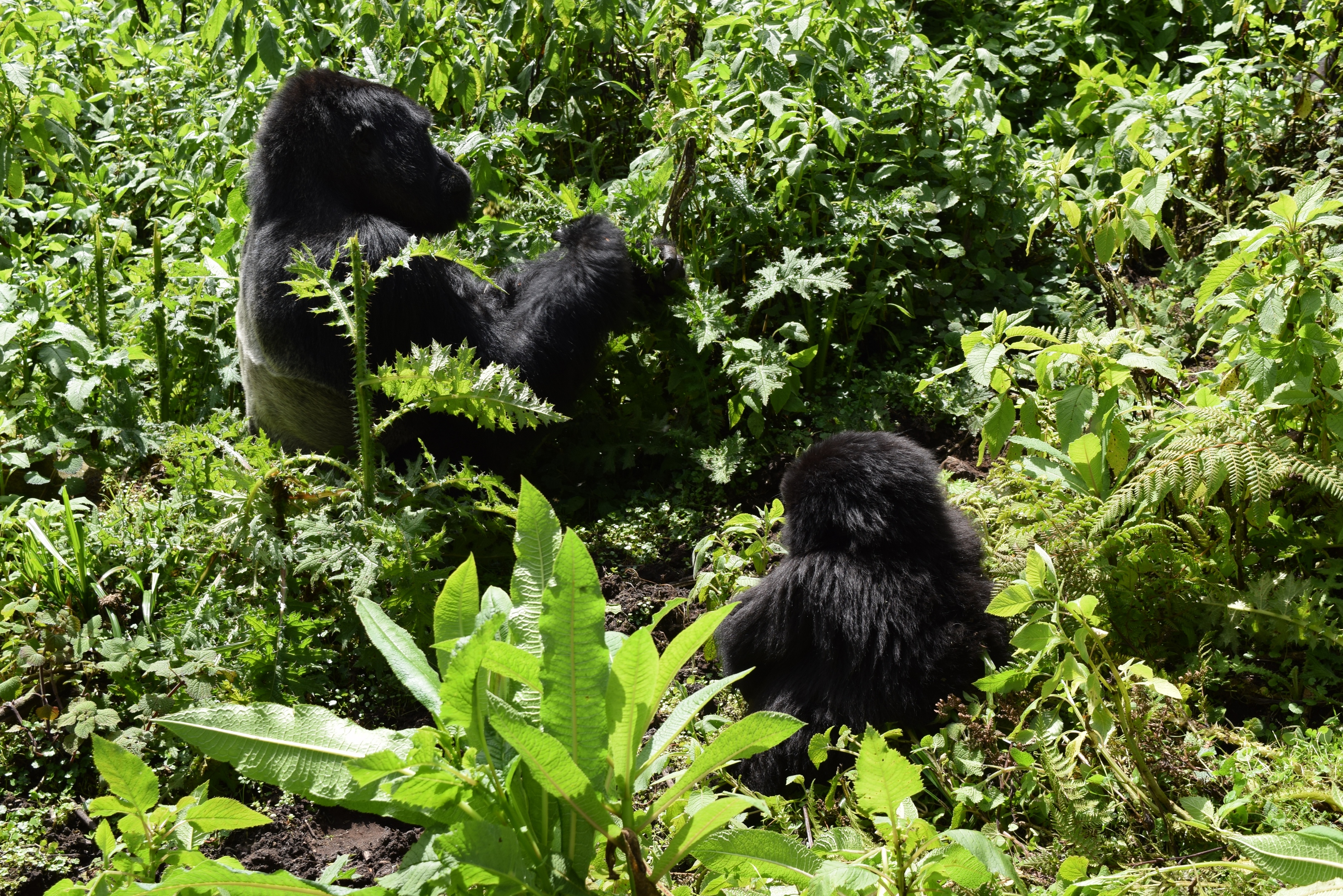
At first I didn’t notice them (hey, how could you possibly not notice a gorilla?!) but then the movement of something big, black and fluffy in the bush caught my attention. There were three of them, according to the guide, young brothers and sisters, resting and playing with each other. Although they certainly saw us, it looked like our presence didn’t really disturb them whatsoever.
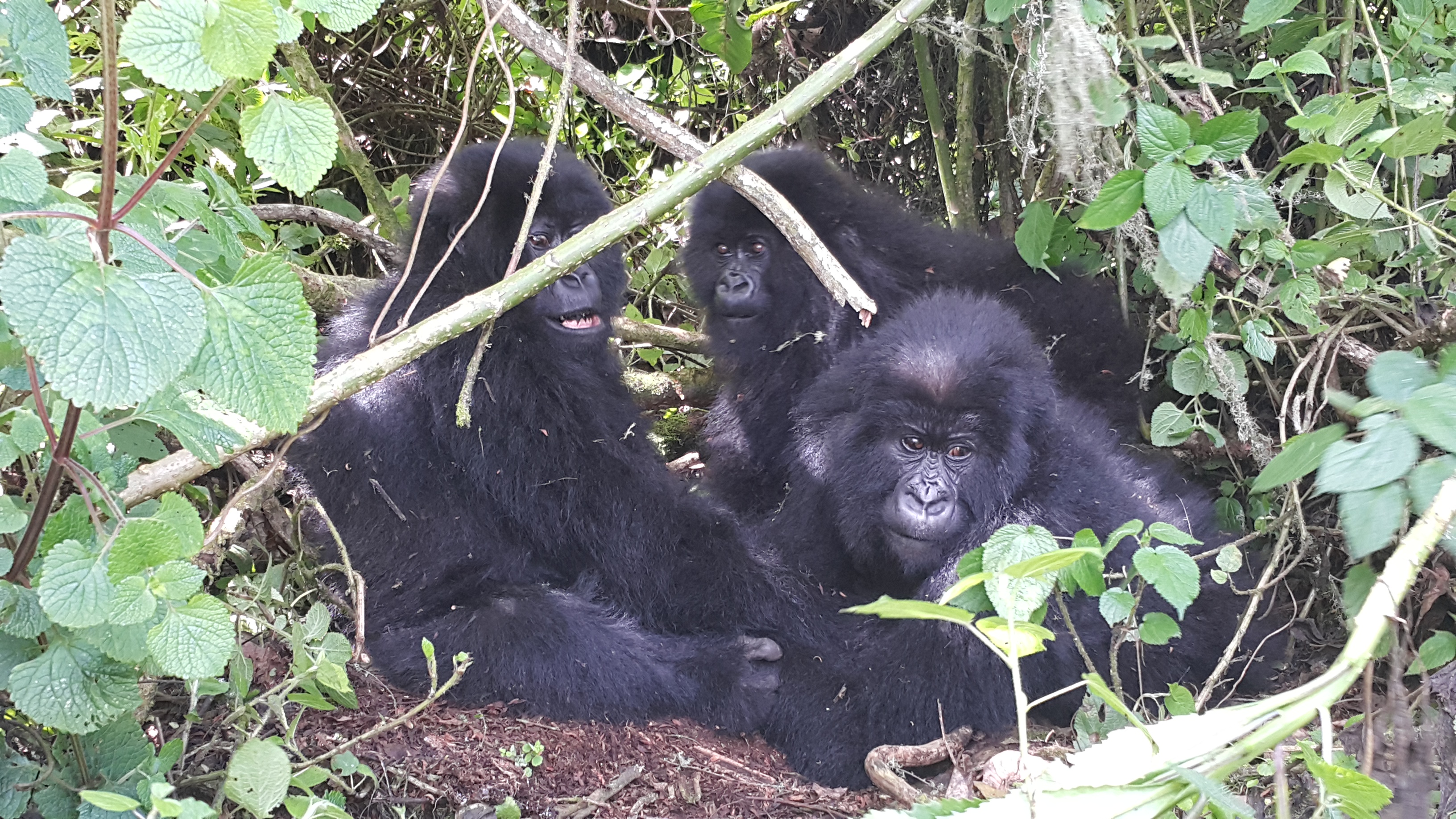
It was awesome to observe these gigantic creatures – so different from the human beings, and at the same time demonstrating surprisingly similar behavior. Did you know that gorillas share 97% of their biology with the human? Well, that probably explains why gorillas can demonstrate feelings like love, affection, care and joy like we do. As if to confirm that, one of the three gorillas, started eating her snots without any sign of shame 🙂 Believe it or not, two of them even had a short sexual intercourse in front of our eyes, coming out of it with a clear content expression on their faces.
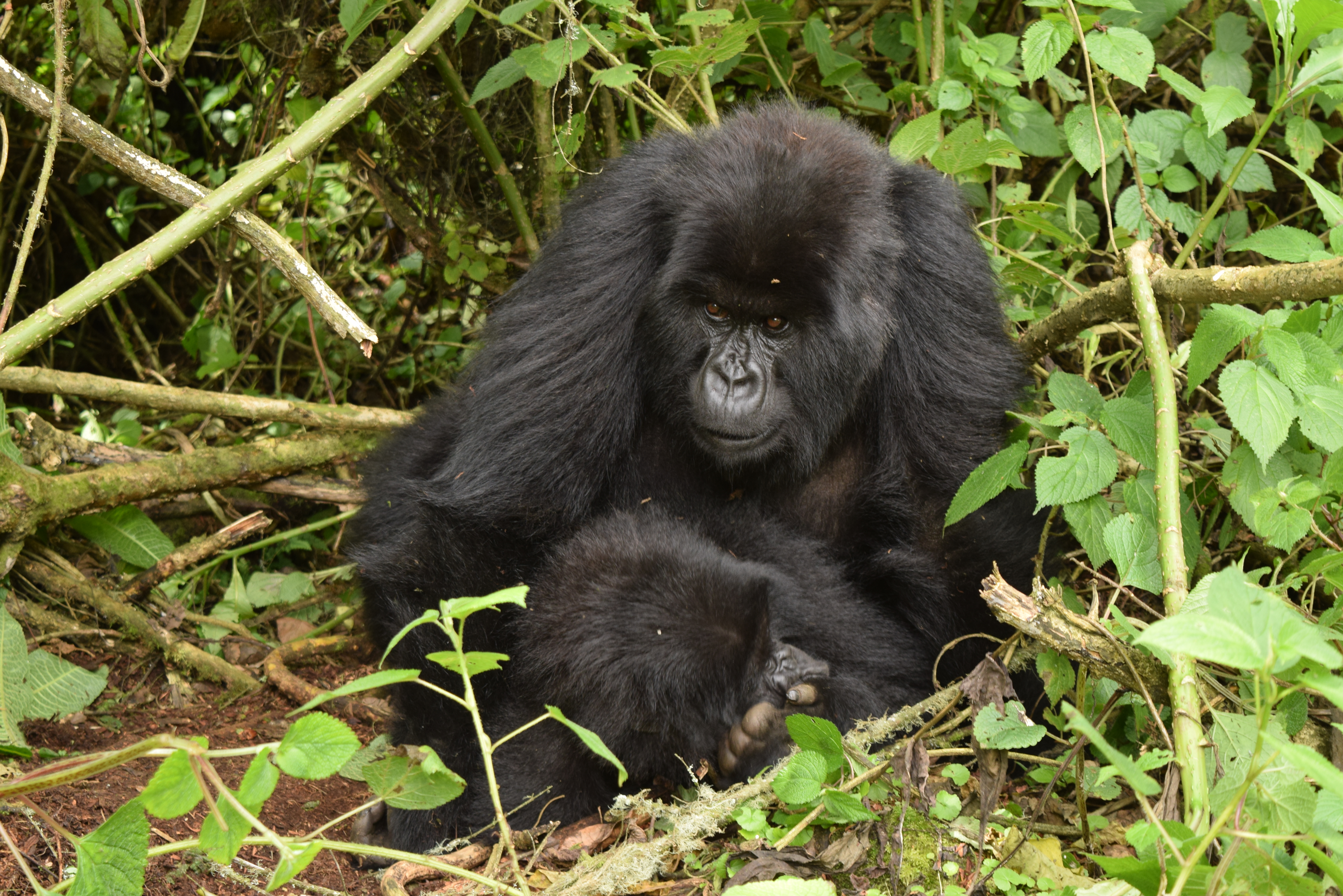
Some more facts: mountain gorillas are generally shy but when in danger, they can get quite aggressive. They start beating their chests and letting out angry roars. In the case of tourists, the source of danger could be a very innocent act. For example, making too much noise, sudden movements or getting too close to their babies. At the threat, the gorilla group leader will charge to protect themselves or their baby. In that case, the only smart thing one could do is stay calm, go lower and look down. For the gorilla, this is a clear sign of submission and she or he will quickly lose interest.
While we were enjoying this first encounter, the guys who supported the group went further up in the bush to find the rest of the gorilla family. Since there was no trampled path in this part of the forest, they used long machete knives to clear the way from the high plants and ensure easy access to the gorillas.
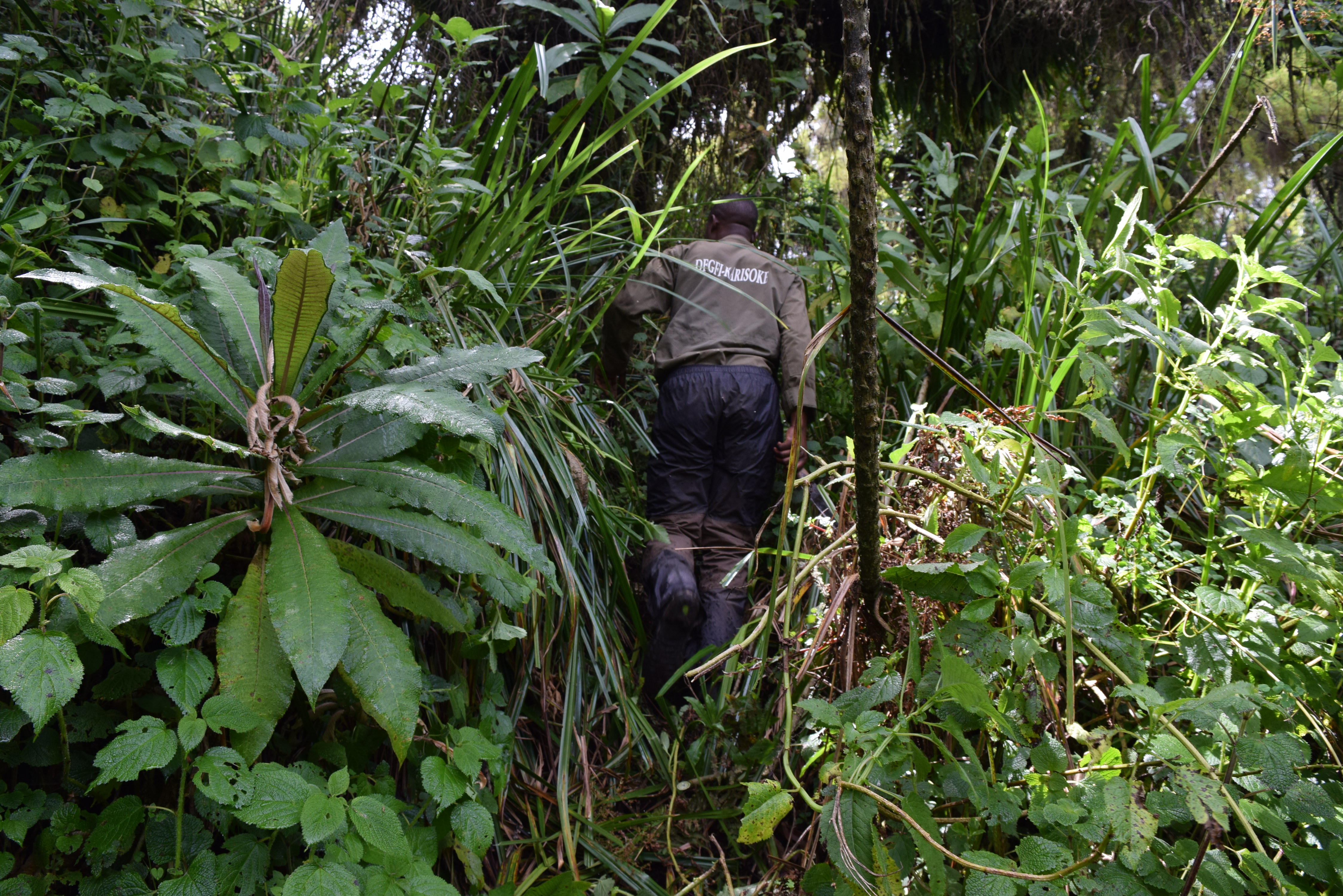
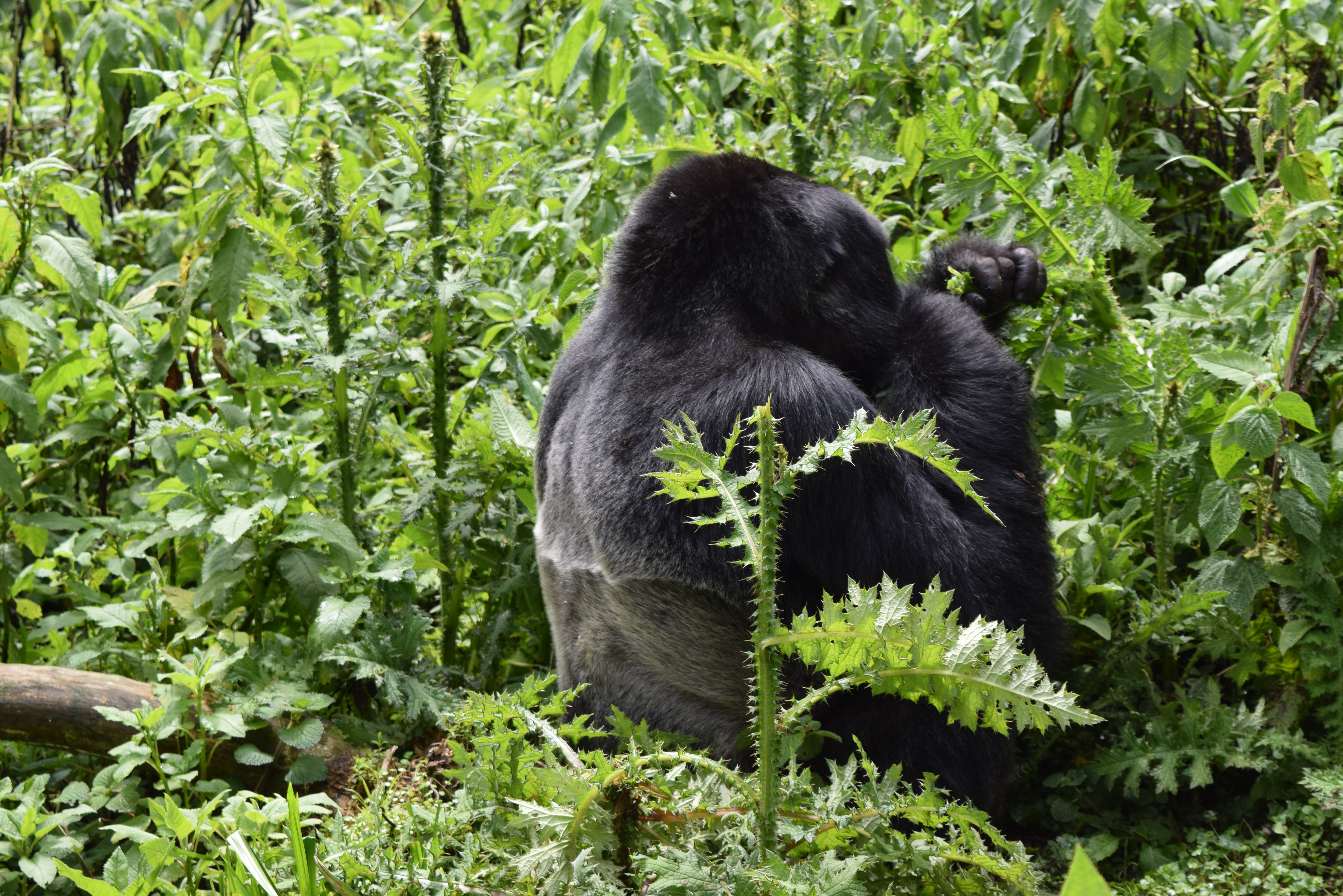
Less than 100 meters away from the first spot, we found the rest of Isabukuru family. This time we couldn’t get any closer. And the one we got closest to was the Silverback. This is how the group lead (a male) is called due to his distinctive silvery fur growing on his back and hips. The Silverback is responsible for protecting the group from dangers and for all activities within the troop such as feeding trips, resting time and travel.
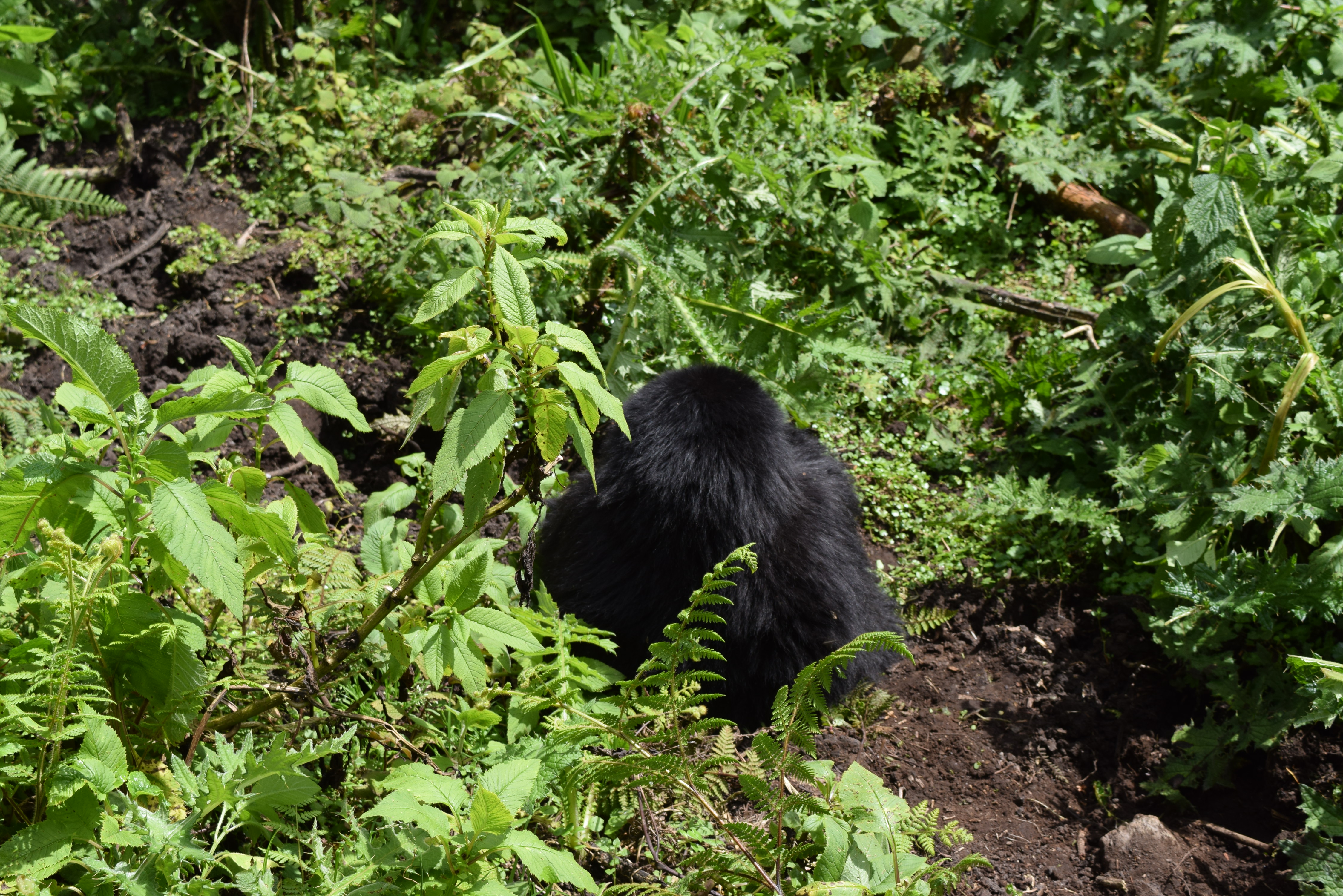
And this black fluffy ball here is one of the youngest family members, only 2 years old. It was such a fabulous fan to watch him feeding on the plant that I couldn’t help taking a video.
A typical gorilla’s day pretty much consists of eating, playing and napping, then walking, and then eating and resting again (what a life!). We caught the second part of the family during lunch while they were peacefully feeding on their favorite food like thistles and (to my surprise) stinging nettles. We learned that the thistles and other plants can provide sufficient moisture so that gorillas do not need water.
And as in any other stunning experience, we had to dedicate a few minutes for taking selfies with the Silverback. He didn’t mind. So, I went on taking a gorgeous video of him (I just couldn’t resist!) which was almost immediately interrupted by a sudden change of his behavior. He started walking directly towards my location which forced me to quickly cease the video recording but before I managed to go down, he just passed by less than a meter away to reach out to another thistle bush. What a relief!
After the guide was assured that we all took enough pictures of the gorillas, we left the gorillas continue their daily activities and headed back towards the cars. On the way down the hills, our young audience was still there and has even enlarged in number. Apparently, they have been waiting for us, singing a cheerful song in Kinyarwanda.
The whole trekking took around 4,5 hours and every minute of it was unforgettable and absolutely unique experience.
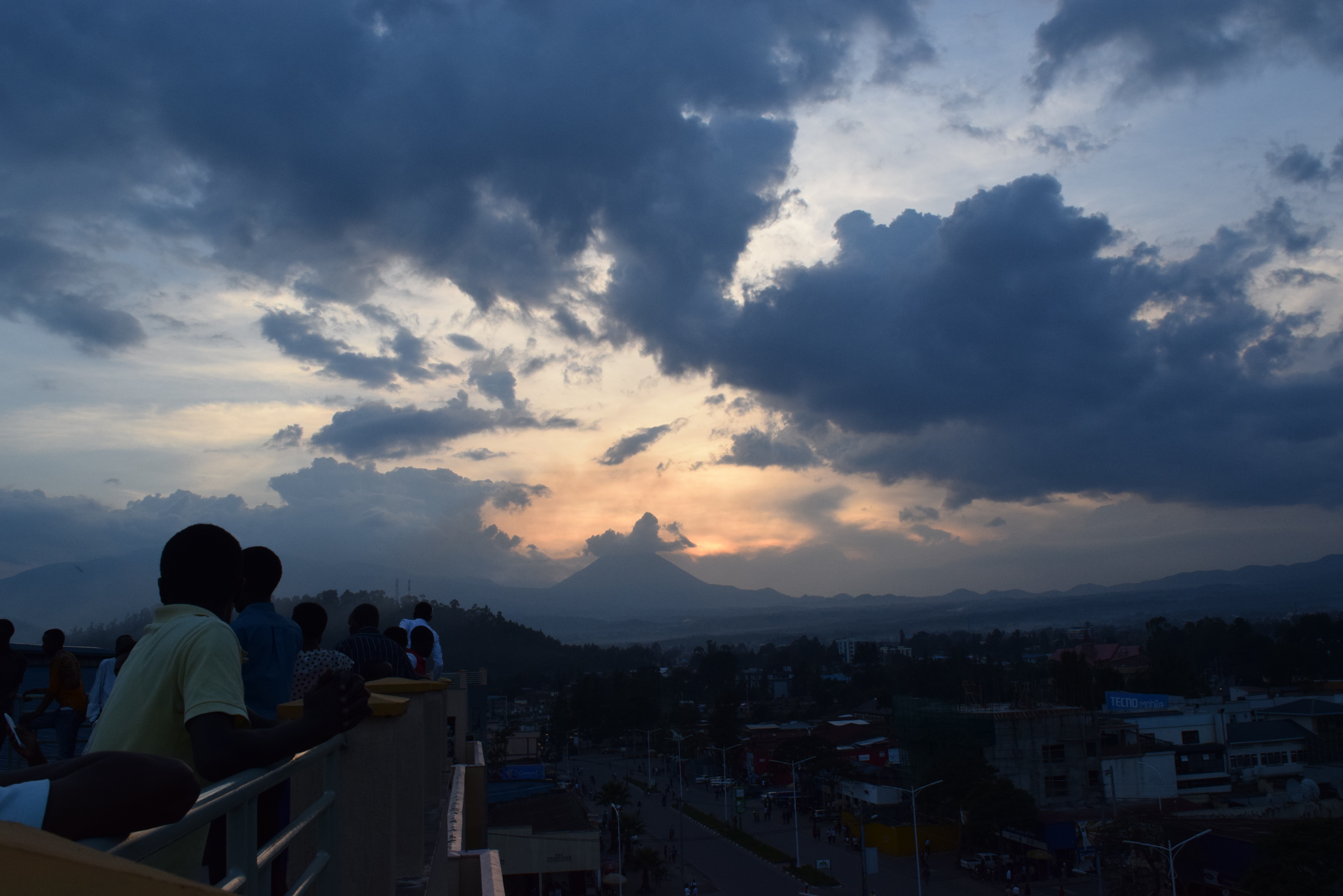
That evening we watched the sunset from the roof top of a local shopping center in Musanze (shopping center is a little bit exaggerated description but that’s another topic:-), with a 360-view over the city and the lines of the volcano chain on the horizon. There couldn’t be any stronger contrast to the serene rain forest we visited earlier that day.
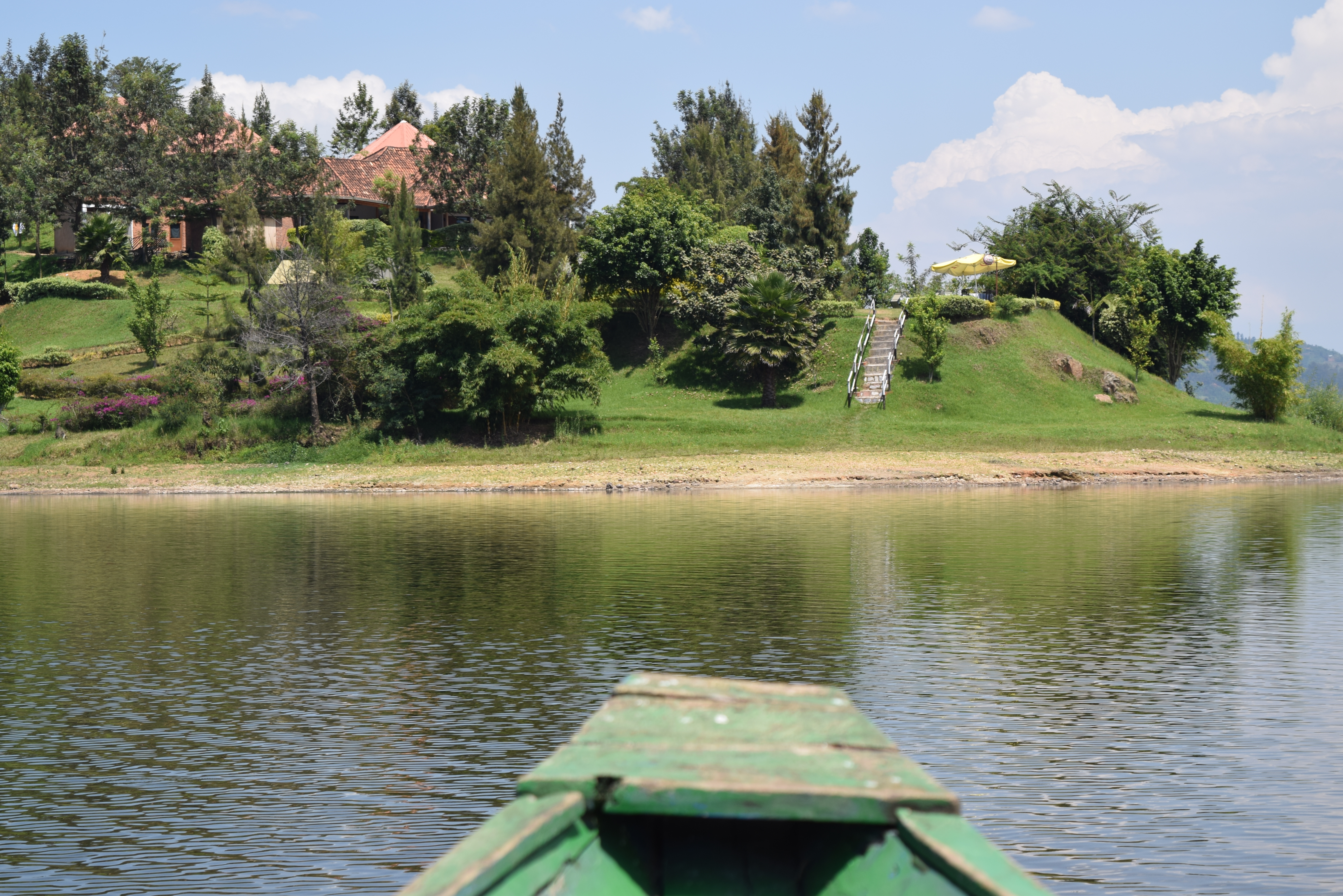
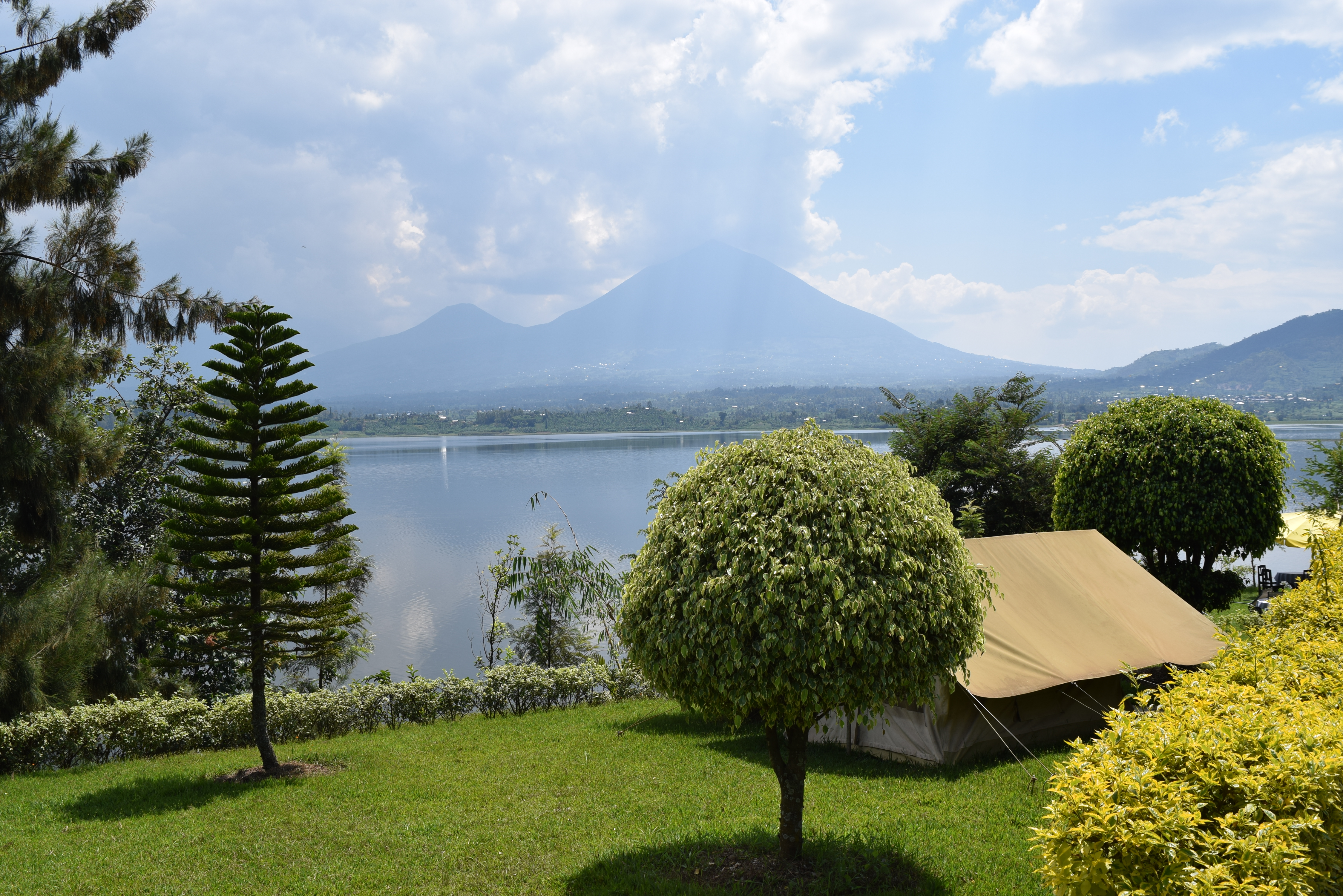
We used the rest of the weekend to explore the nearby camping sites, take a boat to a tiny island on Lake Ruhondo, and make plans for our next outdoor adventure! 🙂
The End!