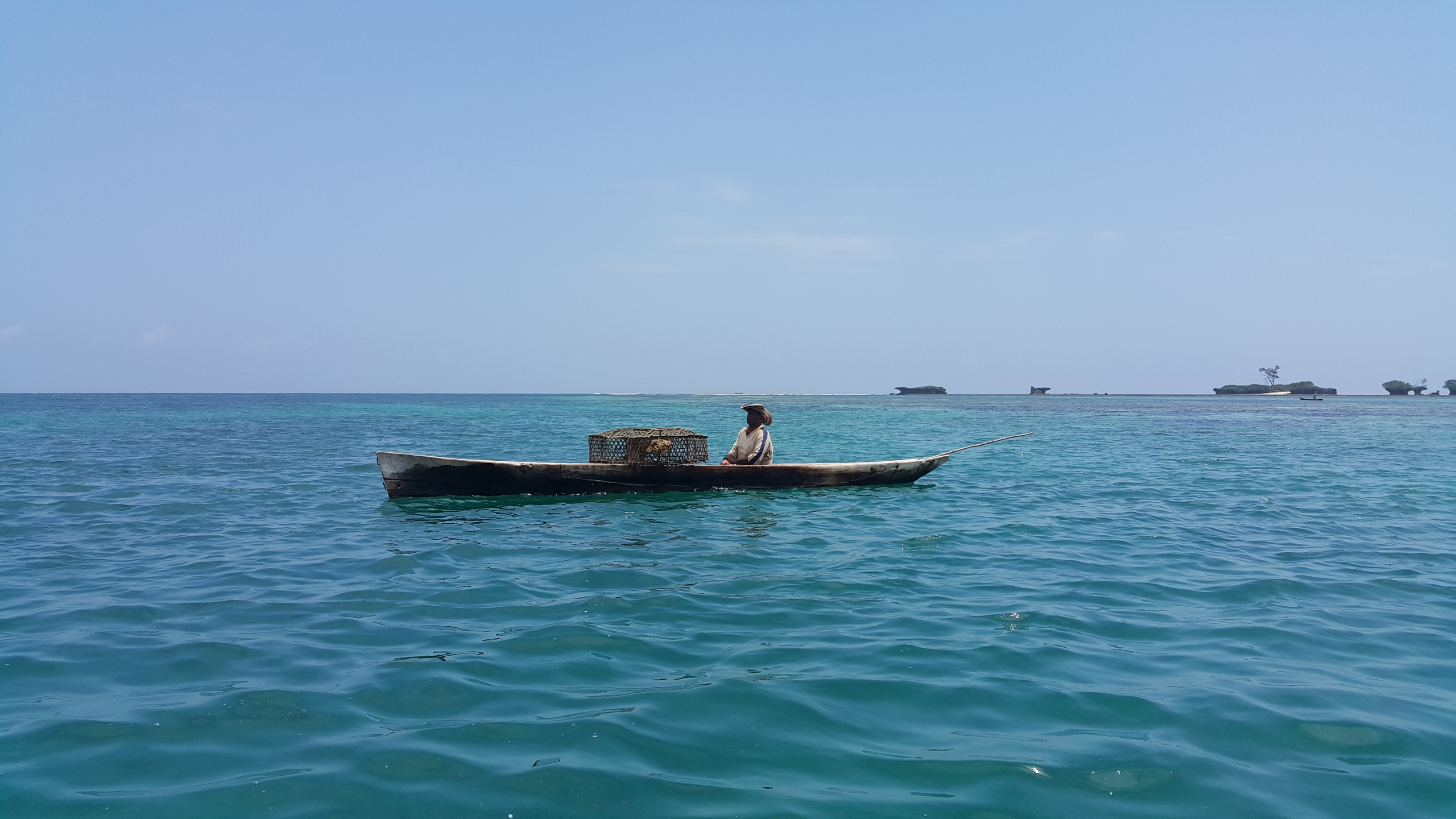
This is the first phrase I heard in Swahili after “Karibu sana!” (“Welcome!”) when we landed in Mombasa, and the one we heard most often during our New Year holiday in Kenya (you probably know it from “The Lion King”). Translated from Swahili, it literally means “no worries” and perfectly resonated with our mood and experiences here.
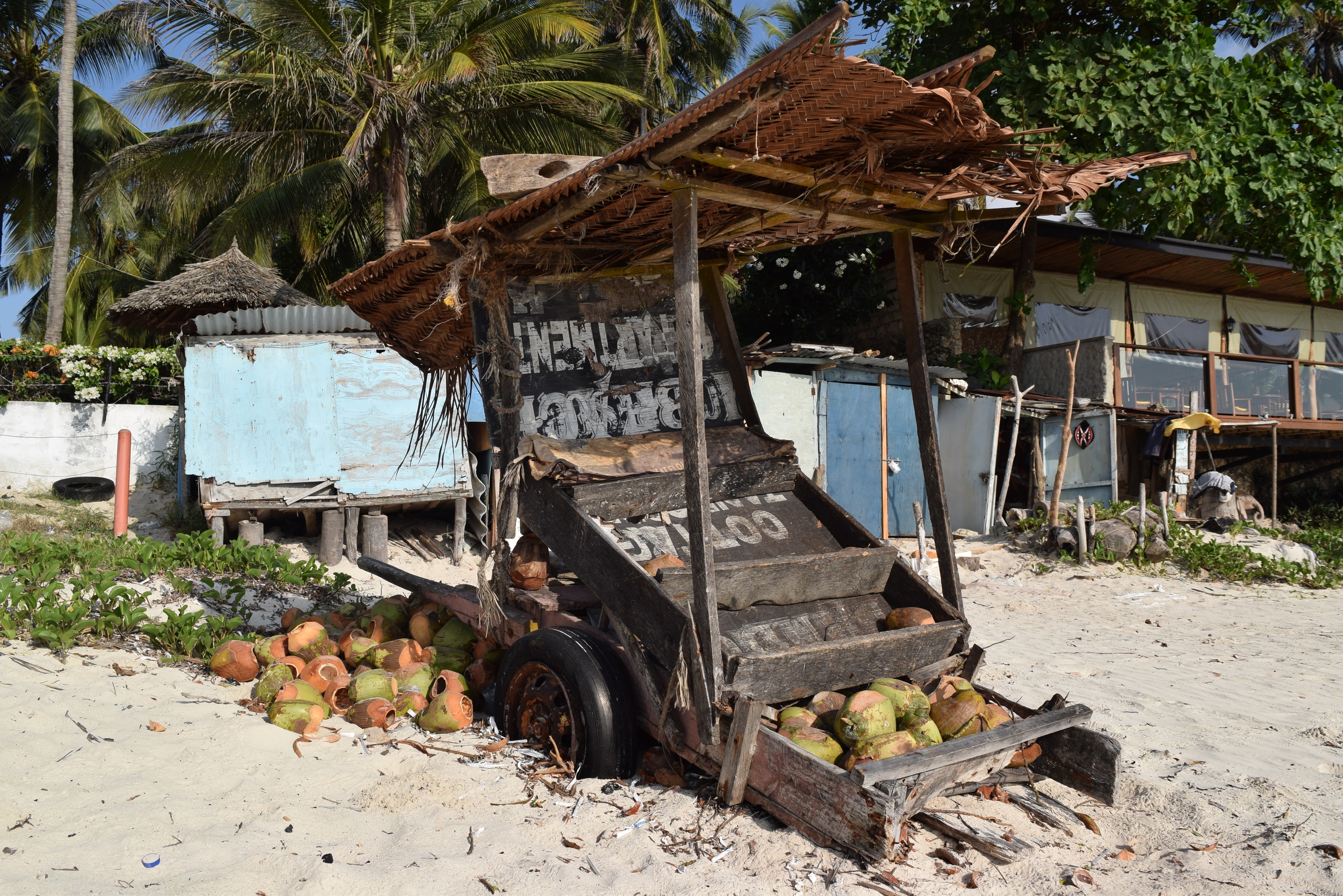 If you have ever been in this corner of the world including Tanzania and Zanzibar, then you must have heard the song “Jambo Bwana”. It’s a famous pop song from the 80s targeting the tourist audience. One of the versions comes under the title “Hakuna Matata”. Well, we got to hear that song every single day, anywhere and anytime. At dinner, on the beach, on a boat, while driving…
As nice and funny as it sounds, “Hakuna Matata” can really get on someone’s nerves, especially if there is a good reason to be worried or annoyed while a local is trying to calm you down at the same time. And believe me, there are lots of opportunities for getting worried or annoyed as soon as you tap into the local culture. So, it’s a choice you have to make from the beginning – embrace “Hakuna Matata” or let your nerves spoil your mood. Before long, we unconsciously internalized the “Hakuna Matata” attitude and even started whistling the song… 🙂
here is a link to the song I found on YouTube: https://www.youtube.com/watch?v=uRRyAEddO6E
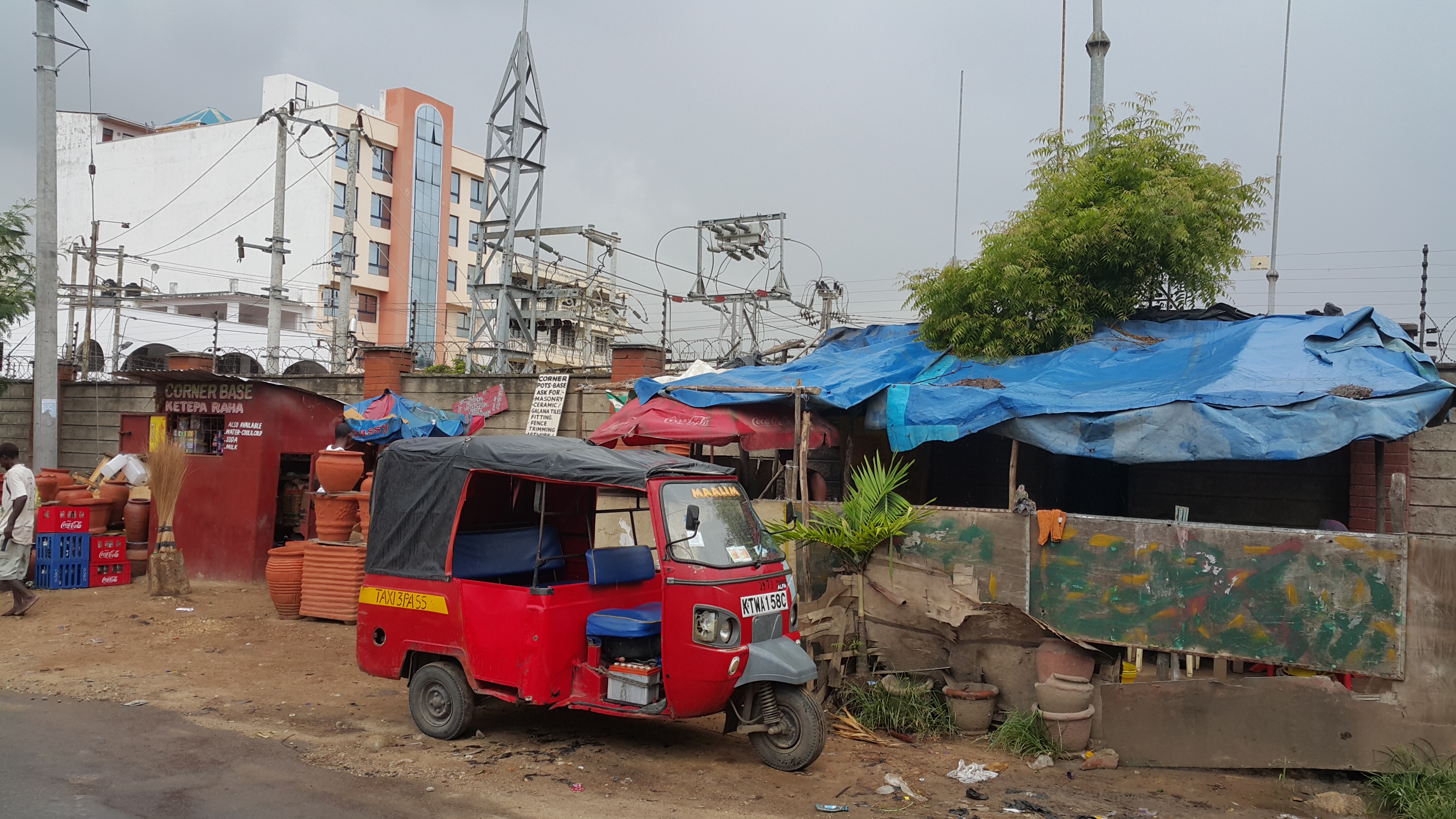
The flight from Kigali to Mombasa lasted for less than 2 hours but we landed in a very different climate and environment, in general. It was 9pm, 30°C outside which felt like 35 due to the high air humidity. On the way to the hotel we understood what our friends had in mind when they told us that Rwanda is the “Switzerland” of Africa. We didn’t see much in the darkness but it was enough. Garbage everywhere along the streets, tones of dust coming out from the uncompleted road constructions, abandoned almost destroyed houses, crazy traffic even in this late hour, poverty could not be more obvious… I couldn’t believe that only 30 min away of this complete chaos, there were beautiful beach resorts. And I can’t help but asking myself one simple question: how come this country can build such wonderful touristic places but can’t get its own local life “in Ordnung”? It’s the history and people’s mindset, as a local told me. Yet, to me this sounded more as an excuse… If they can adopt the new technology so quickly, then they should also be able to get better organized.
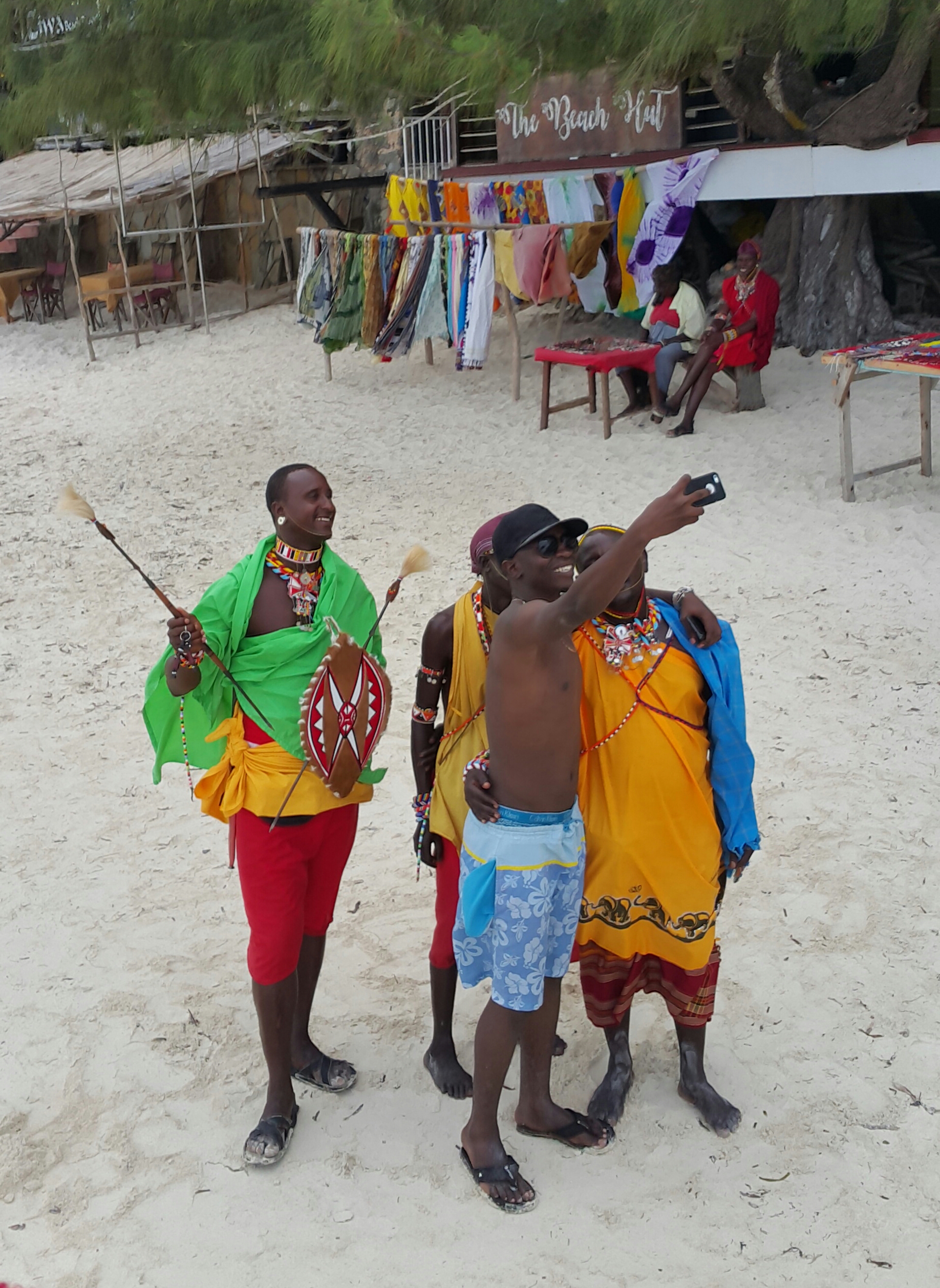
“Hakuna Matata”, the unbearable heats and the overcrowded dirty streets of old Mombasa are just few of the things I will associate with Kenya. I will share more later on but now let me tell you about the tides.
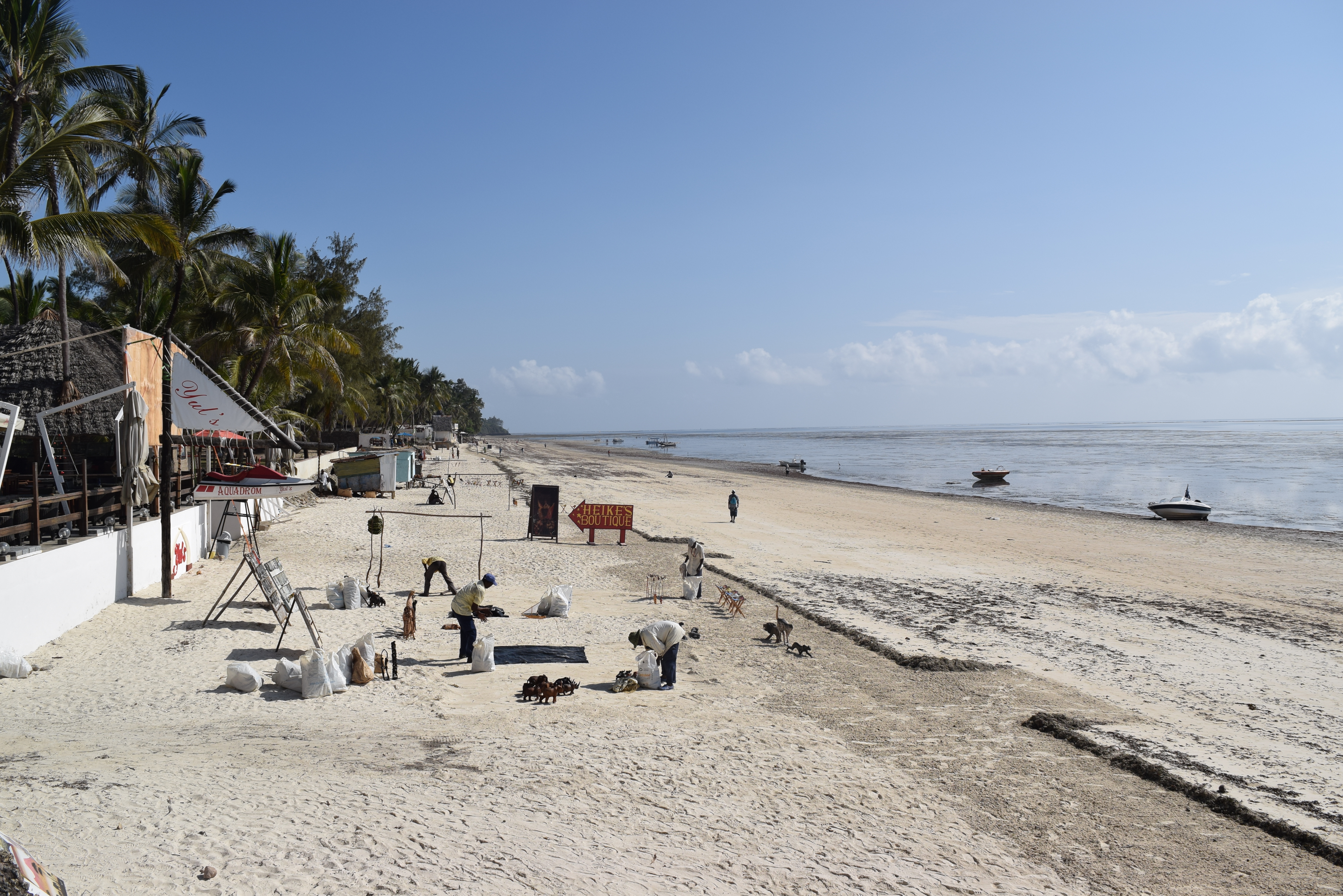
Even though I grew up at the seaside, I’ve never witnessed this natural phenomenon in my life. Mombasa offered me the opportunity to enjoy the view of the beautiful rise and fall of the Indian Ocean every day.
The first thing we did on the morning following our late evening arrival at the hotel was to go to the beach. To be honest, we were all disappointed by the view. Our expectations for endless white-sanded beaches and clear turquoise waters were not really met. Instead, we found white-sanded beach densely covered with seaweeds, and not so turquoise but very shallow waters full of seaweeds and god knows what other living creatures.
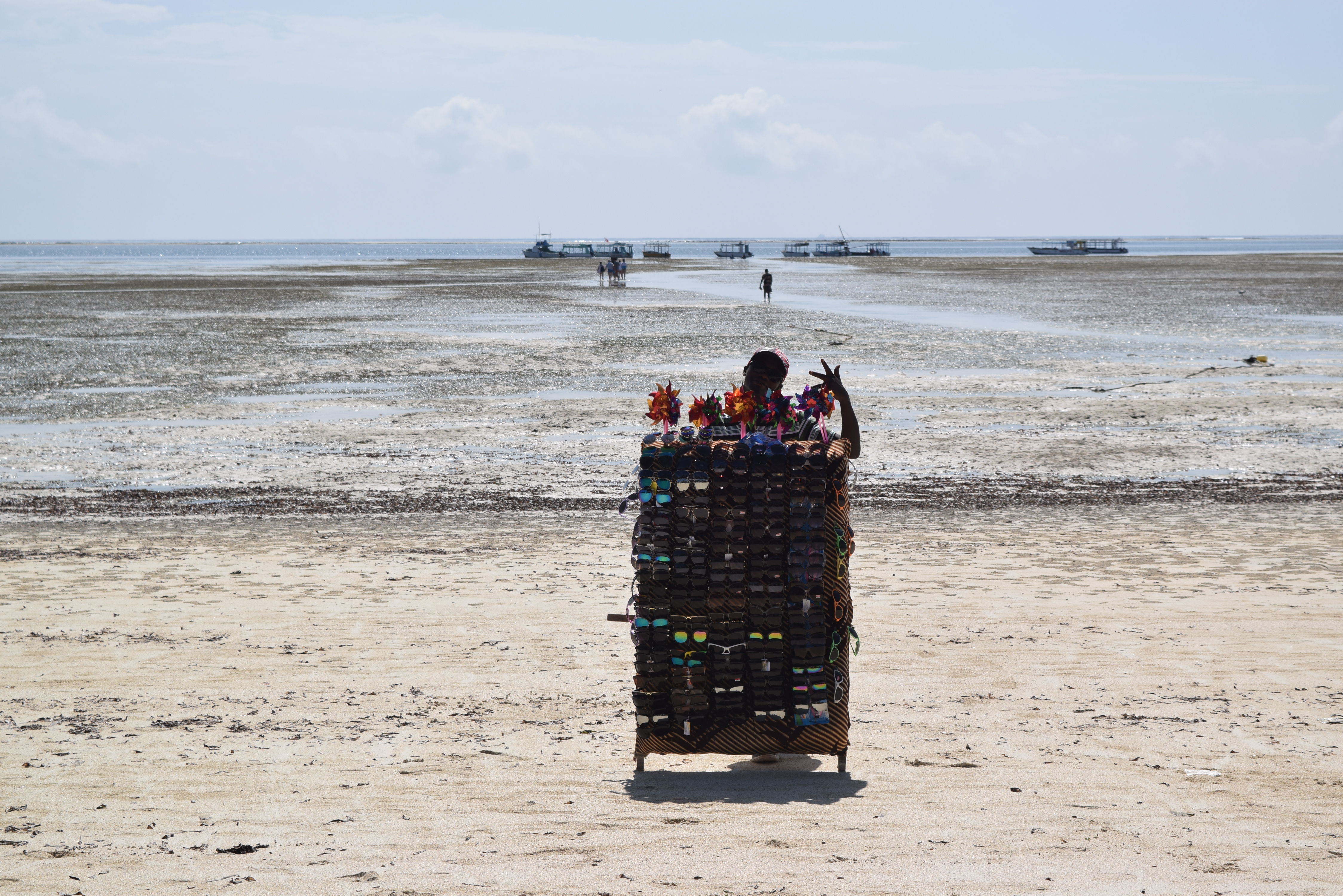
There were no people lying on the beach (for obvious reasons)…However, we noticed a thin line some 150 meters offshore, beyond which the waters became clearer. Exactly on that line there were many boats offering diving, snorkeling and other water activities. On several places we saw people walking in lines through the shallow water to the boats.
It was early morning but already extremely hot. Although we forgot to put some sun cream on us, I suggested we continue the walk. Before long, a group of friendly locals joined us. As if they sniffed from a distance that we were newly arrived, they offered to take us for a walk to the boats. Peter was clearly against but my curiosity prevailed.
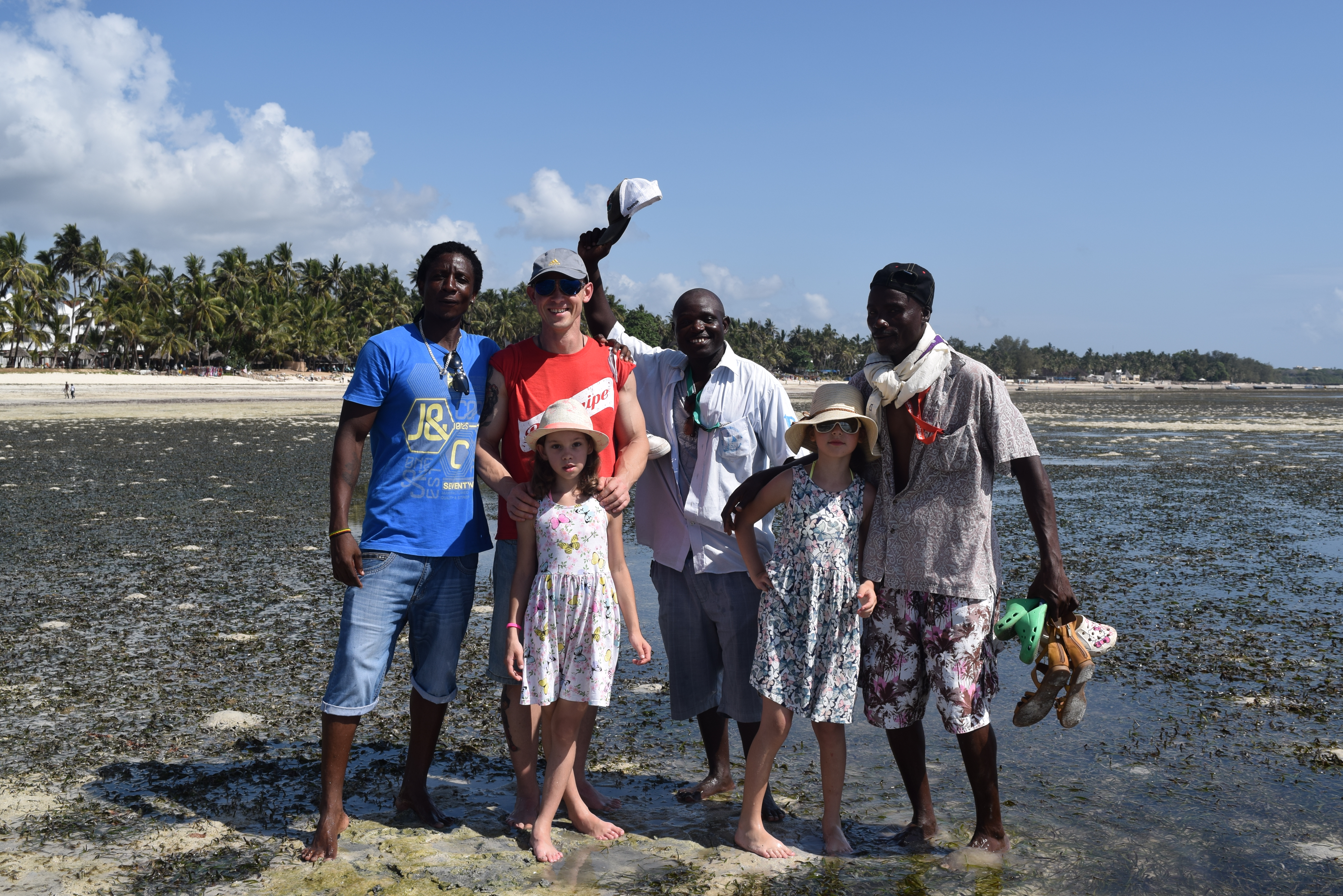
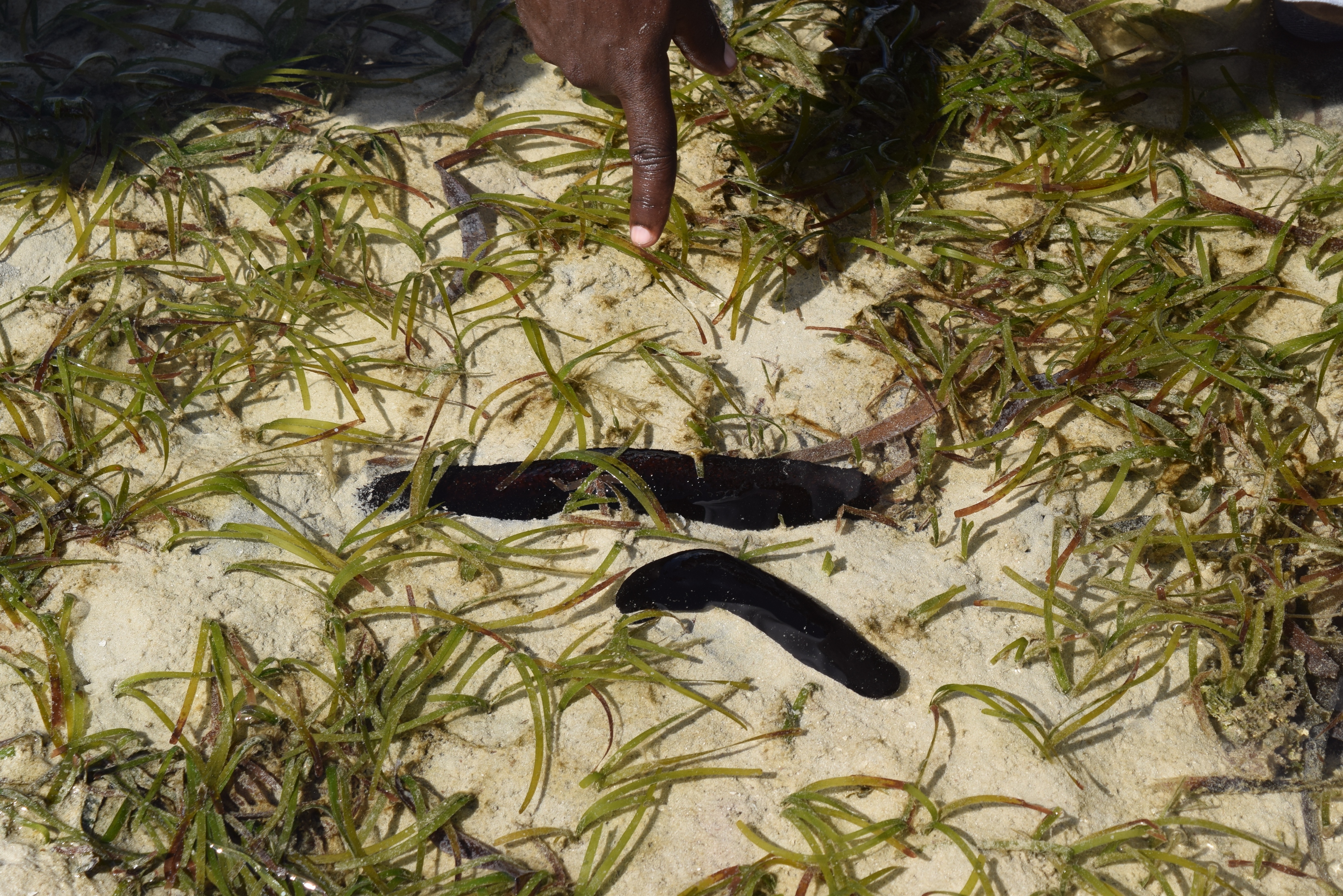
Even though we almost got sunburned, it was all worth it. We saw various ocean creatures including crabs and sea cucumber (see the pic below). The look of the later was quite disgusting but at least it was something you could recognize and avoid stepping on it.
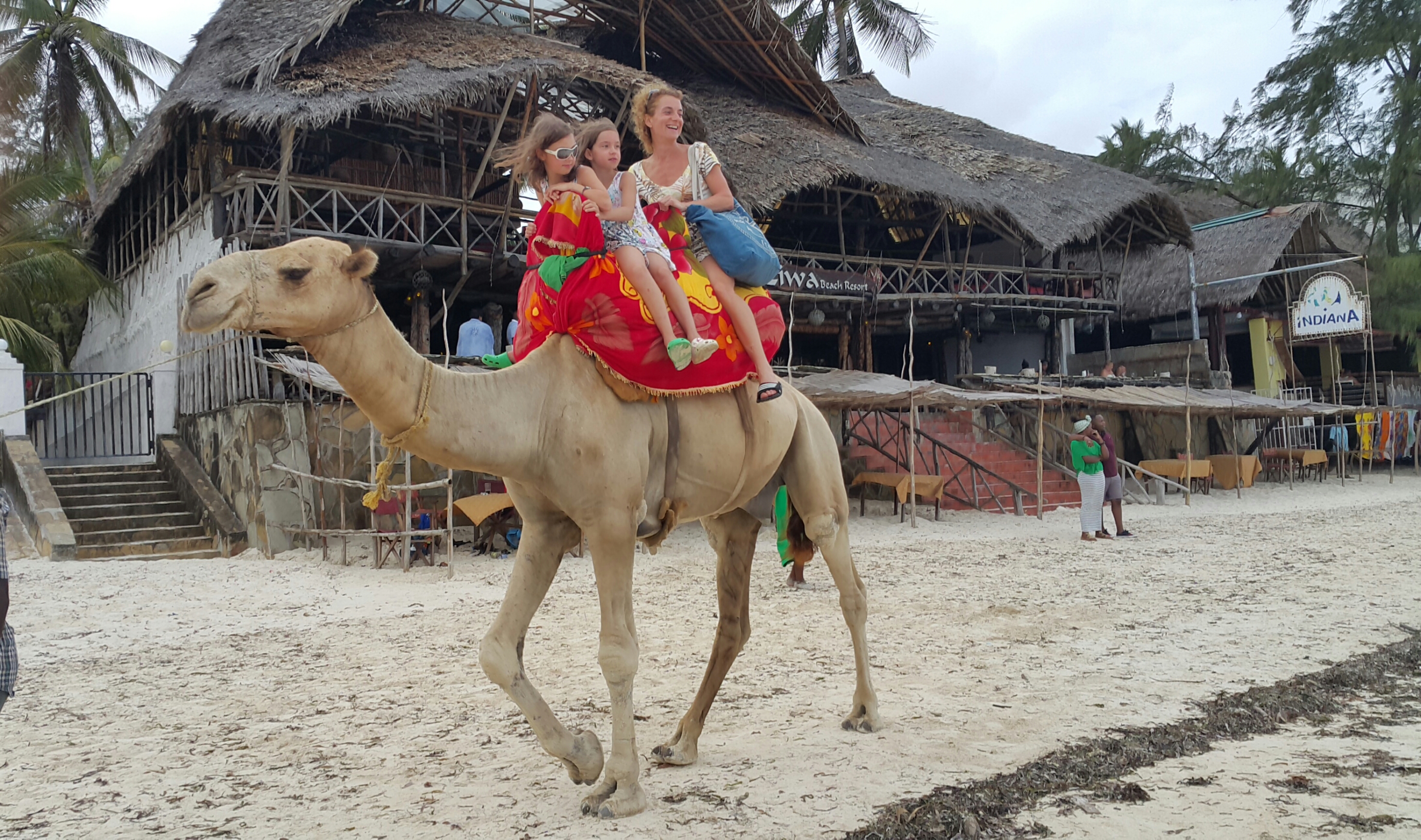
The low tide typically continues from around 9am to 1pm, then the high tide starts to develop and stays until early morning on the following day. But even during the high tide, the waters at the shoreline are still not clear. I did go for a swim on several mornings, but generally we preferred to enjoy the hotel swimming pool and the surrounding area, where we had lots of fun like riding a camel…
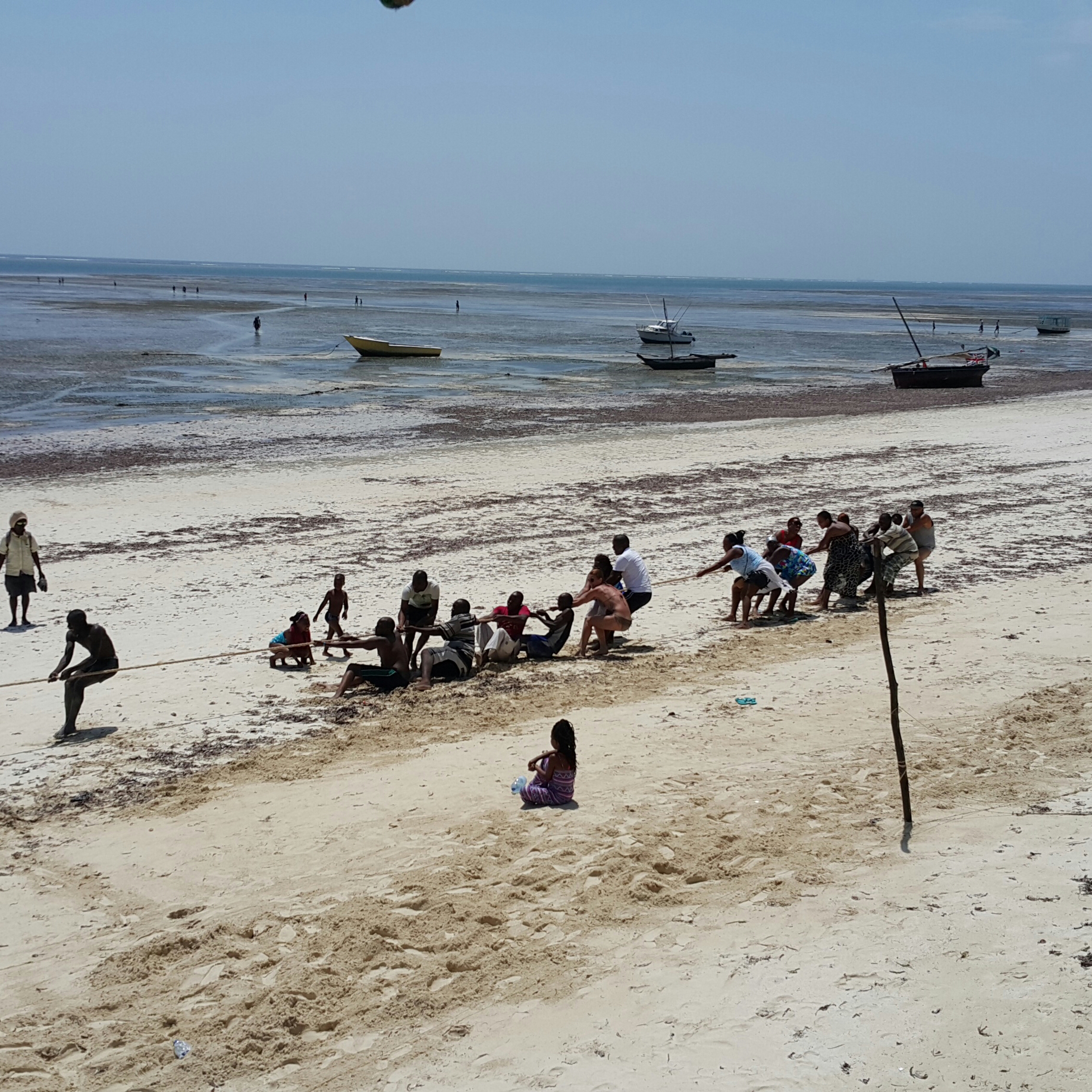
…or playing rope pulling at the beach with the locals and other tourists.
Our wish to swim in warm, clean turquoise waters of the Indian Ocean came true on the last day of 2016, during our one-day trip to Wasini Island. It was a long and exhausting trip, but every minute of it was worth it. On this day alone, I heard and used the phrase “Hakuna Matata” at least fifty times 🙂
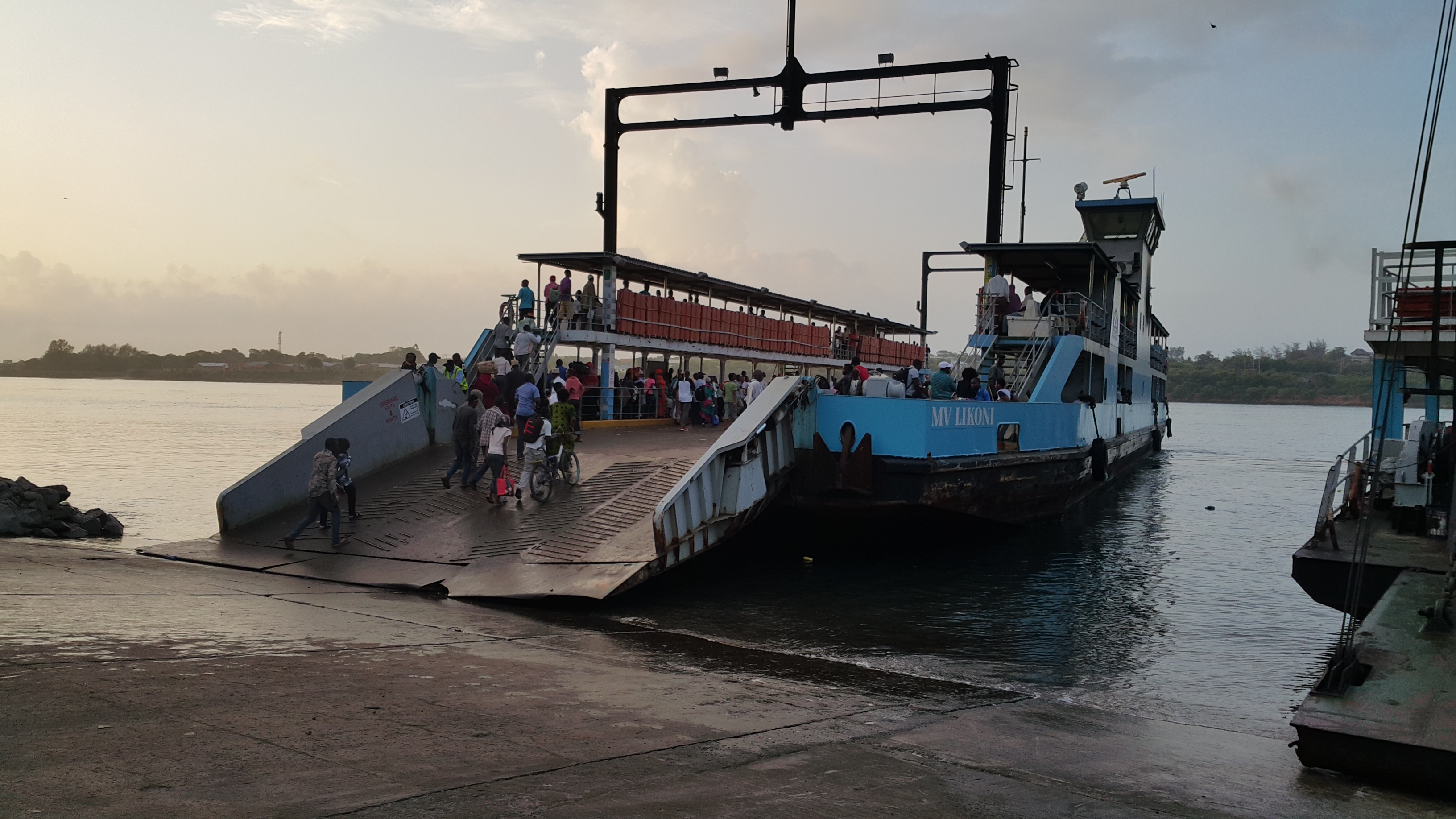
The day started at 5.30 am. Half-awake we hopped on a small bus in a very suspicious condition driven by a seemingly experienced but absolutely crazy Kenyan. The next 3 hours were spectacular. We drove through the city chaos avoiding at least 5 car crashes, crossed one of Mombasa channels by an overcrowded ferry, and spent the last 40 minutes trying to keep ourselves together on a bumpy dirt road, to finally reach Shimoni Port Village. I don’t know how this mini-bus survived such road conditions…
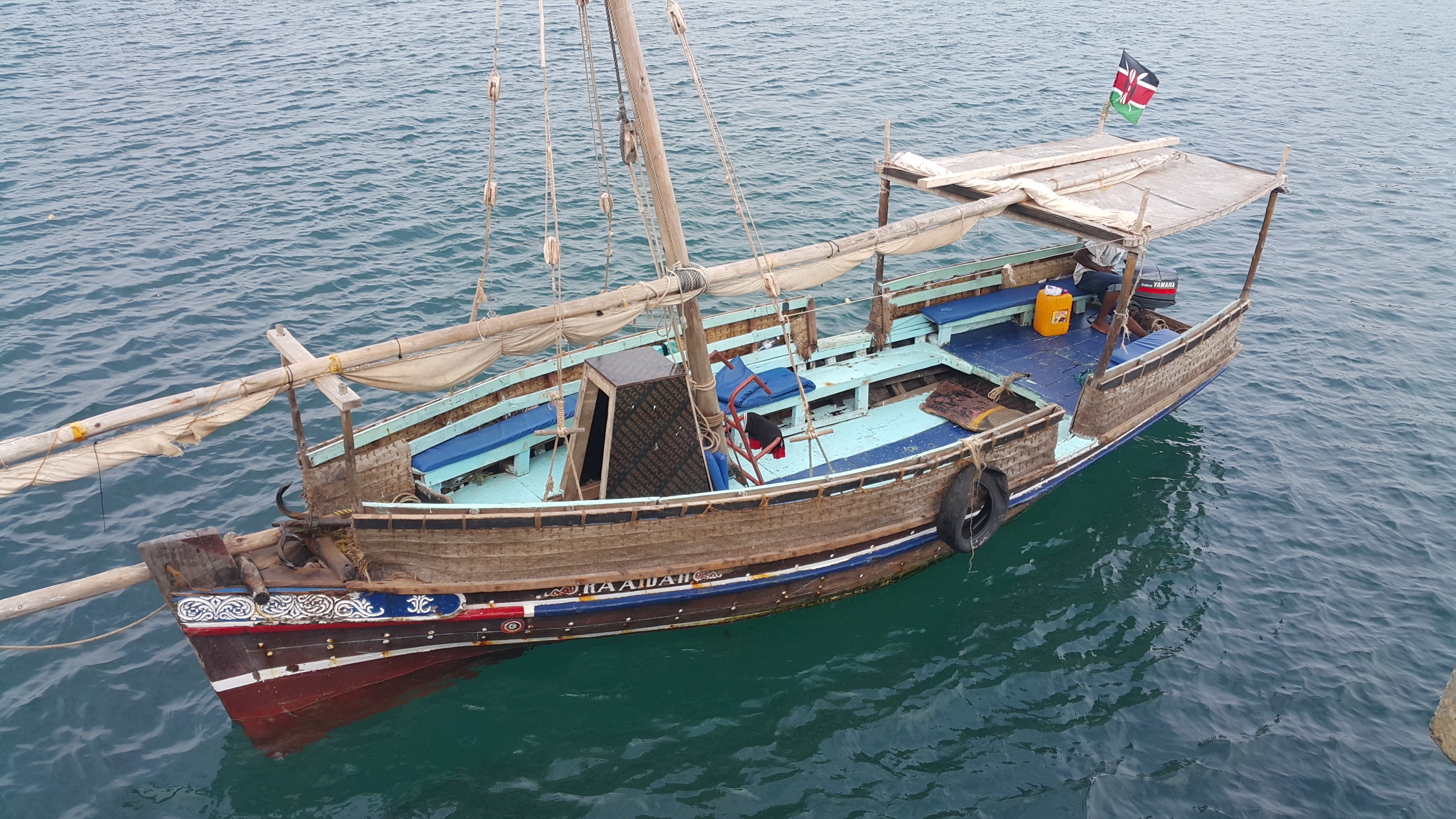
But the adventure didn’t stop here. From Shimoni we got on a boat together with 15 more tourists to Wasini Island. When I first saw the boat, I got a bit worried. I thought myself “this cannot be our boat. It’s too small to hold all people”. I was wrong and right. It was our boat, and yes, it was very small. “Hakuna Matata!”, was my next thought…
Later on, I learned another frequently used by the locals phrase – “pole-pole”, which means “slowly-slowly” (maybe that’s the equivalent of “mañana, mañana” in Spanish). There was even a nearby super-market called “Pole-Pole”. What a weird marketing idea! I am not sure how exactly it attracts non-African tourists 🙂
Sailing among tiny islands and bigger ones with lots of baobab trees, we were approaching the paradise, the virgin white-sands and pure turquoise waters of Wasini Island. As a matter of fact, the whole area near Shimoni and south of Wasini Island is called Kisite-Mpunguti Marine National Park.
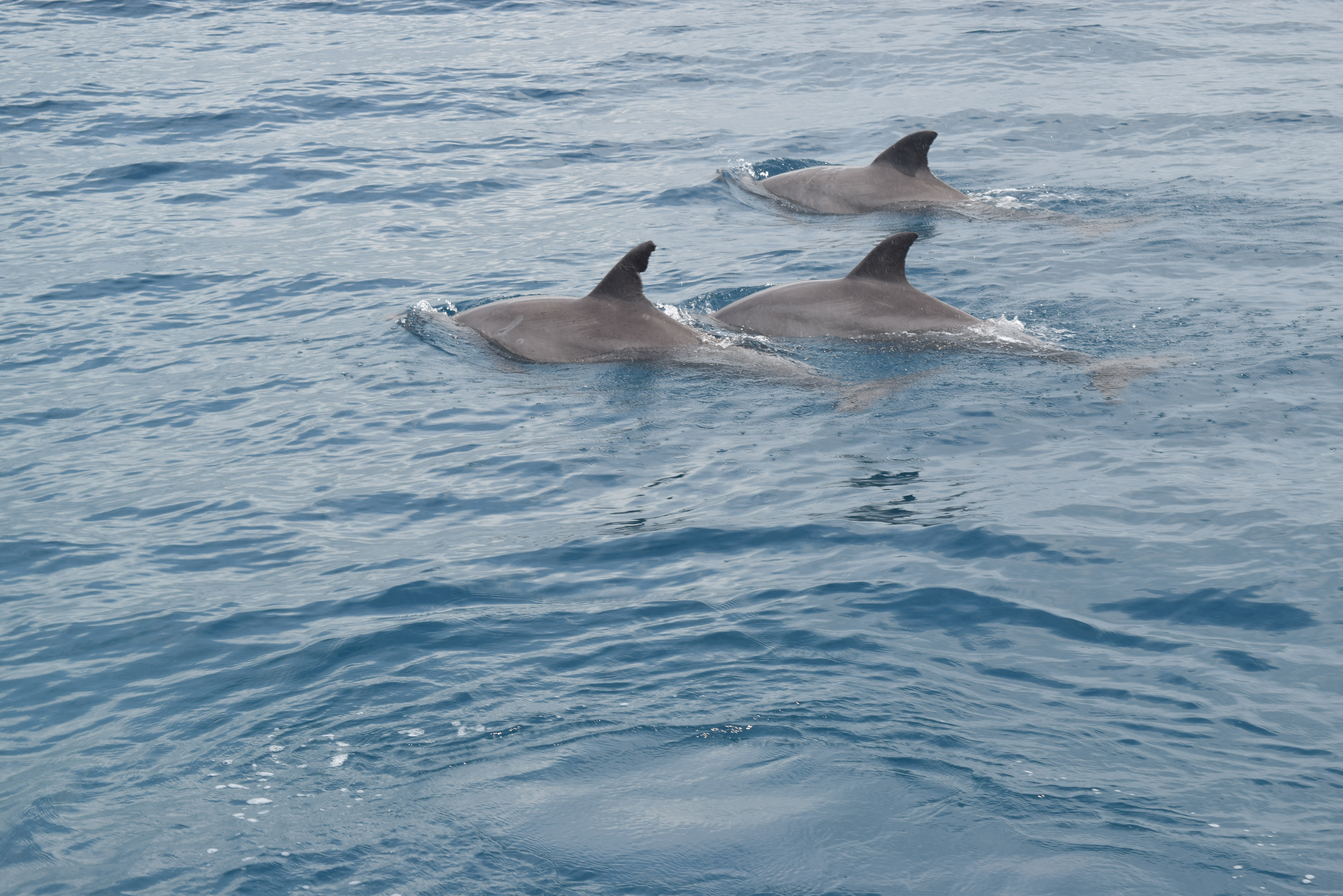
At some point we even got the company of a group of dolphins. As if they were guiding us to the destination. It couldn’t go better! Apart from some minor challenges on the way, like turning the boat back to get Mirella’s hat from the water, or working hard to keep the boat in balance at sudden changes of people’s positions, it was a lovely trip!
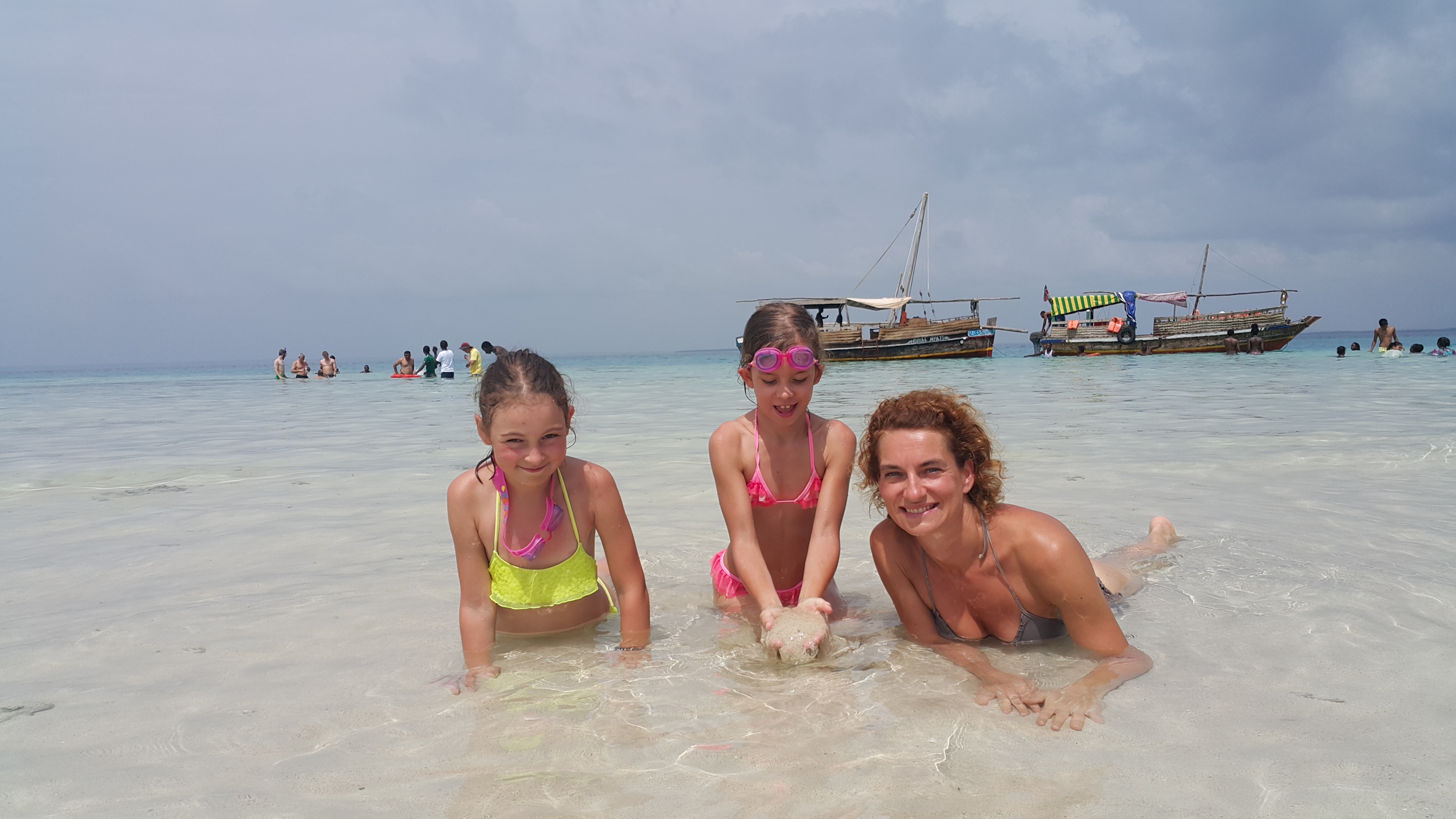
Snorkeling and diving was never my kind of thing. Give me surfing and wake-boarding but not something under the water. At Wasini many went exploring the colorful coral reefs and fishes. I preferred to roll in the white sands with my family. If we hadn’t got hungry, we could have spent the whole day like this.
Our next stop was on the other side of the island. It was a small village, where we had super delicious seafood for lunch.
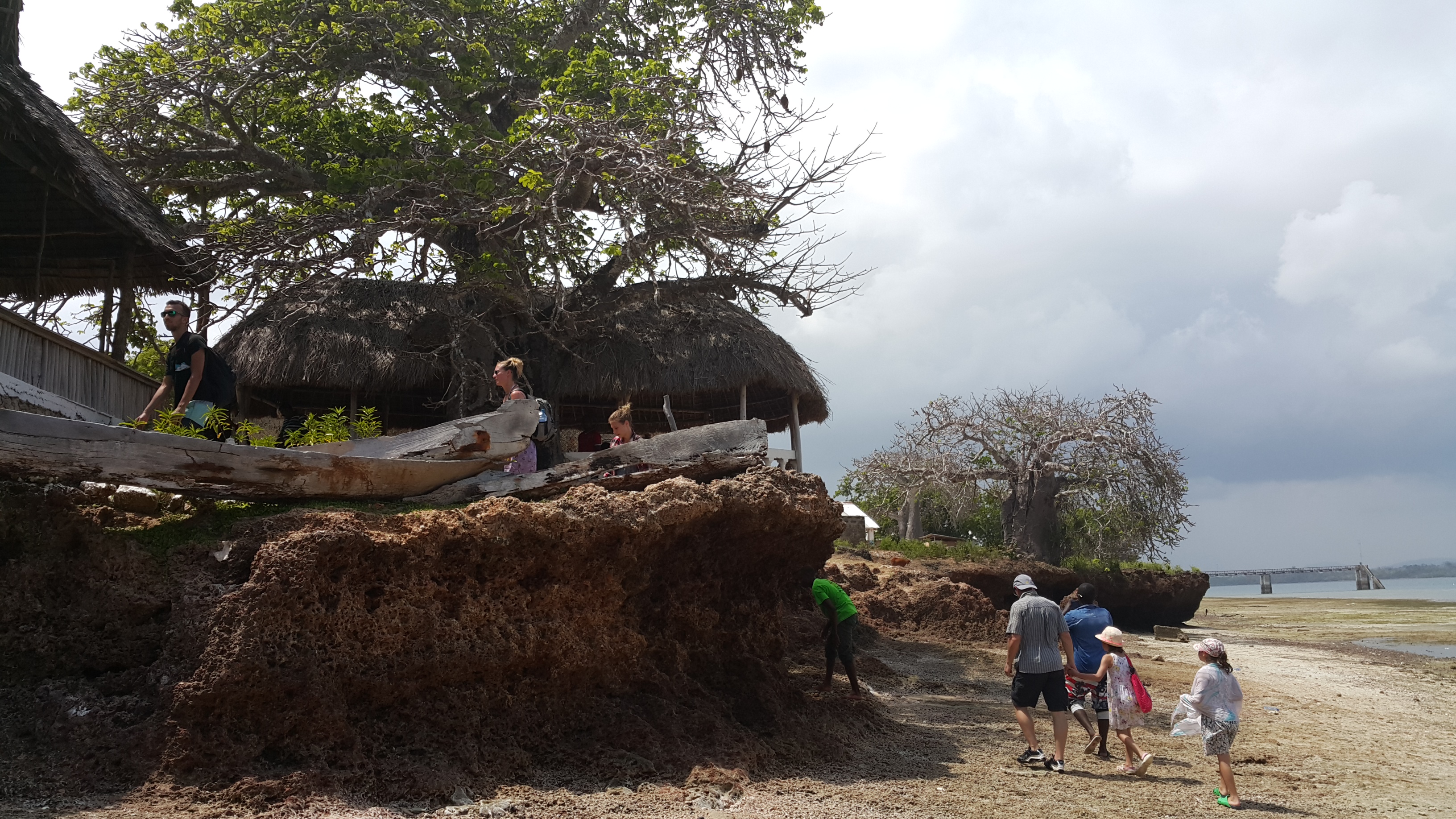
While having lunch, a warm memory from my childhood emerged…
I am sitting on a bench in my wet swimming costume, having lunch in the beach cabin of my parents’ friends close to my home city Varna. My sandy feet don’t reach the floor, so I am shaking my legs while eating freshly caught fish. It’s very delicious. The adults are telling jokes. Everyone is laughing. I am happy.
It’s interesting how memories are being called up by a simple smell or feeling.
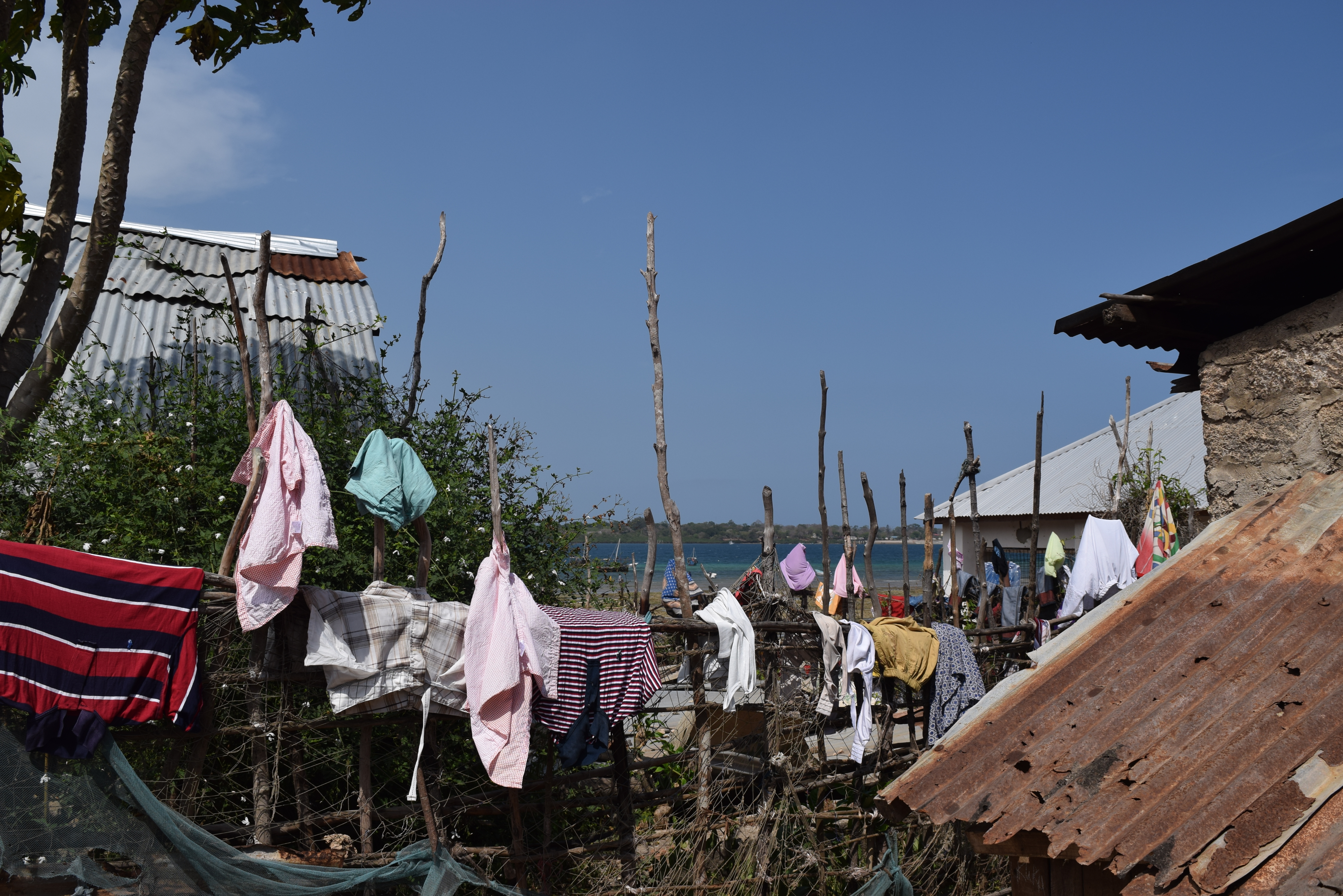
Our guide then offered us a walk through the village. It was just a 10-minute walk but it left very strong impressions (and I believe in many other tourists).
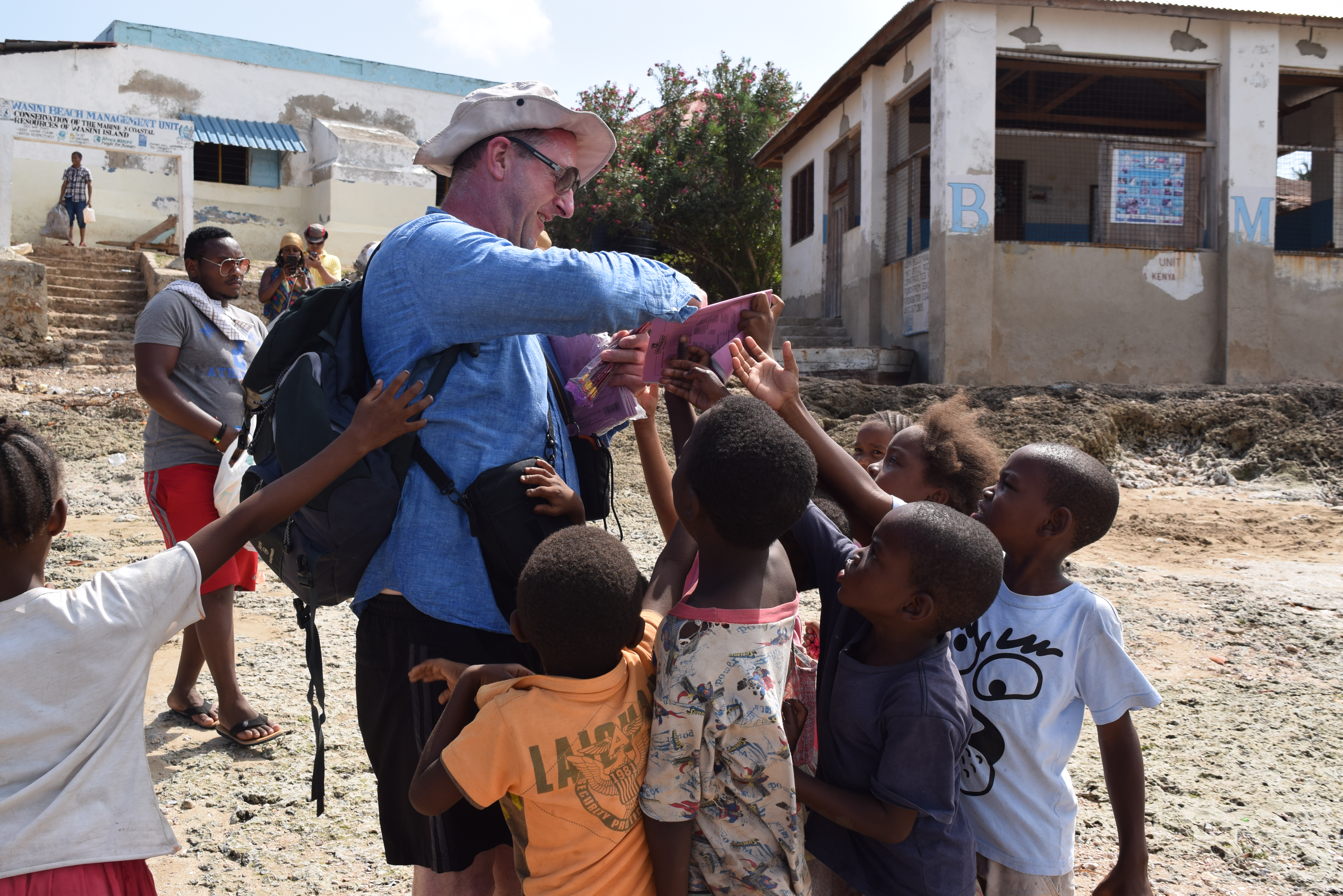
I hate feeling helpless but this is exactly how I felt there. All the way through the village we were followed by small children selling necklaces made of sea shells for a dollar. They were all so happy to see us, their big eyes full of hope…I will never forget the moment, when one of the tourists took out some notebooks and pens from his backpack. He had especially brought them here to give away. In seconds he got surrounded by the cheerful clamor of these children… They were so genuinely happy. It was such a sad picture…
The boat trip back to Shimoni Port was unforgettable. The 2-year boy who was shy on the way to the island finally gave up and came to play with me:-) All of us were exhausted but much more relaxed, and I can tell you, nobody was giving a sh** about the safety of the boat or the 3-hour drive back to the hotel ahead of us.
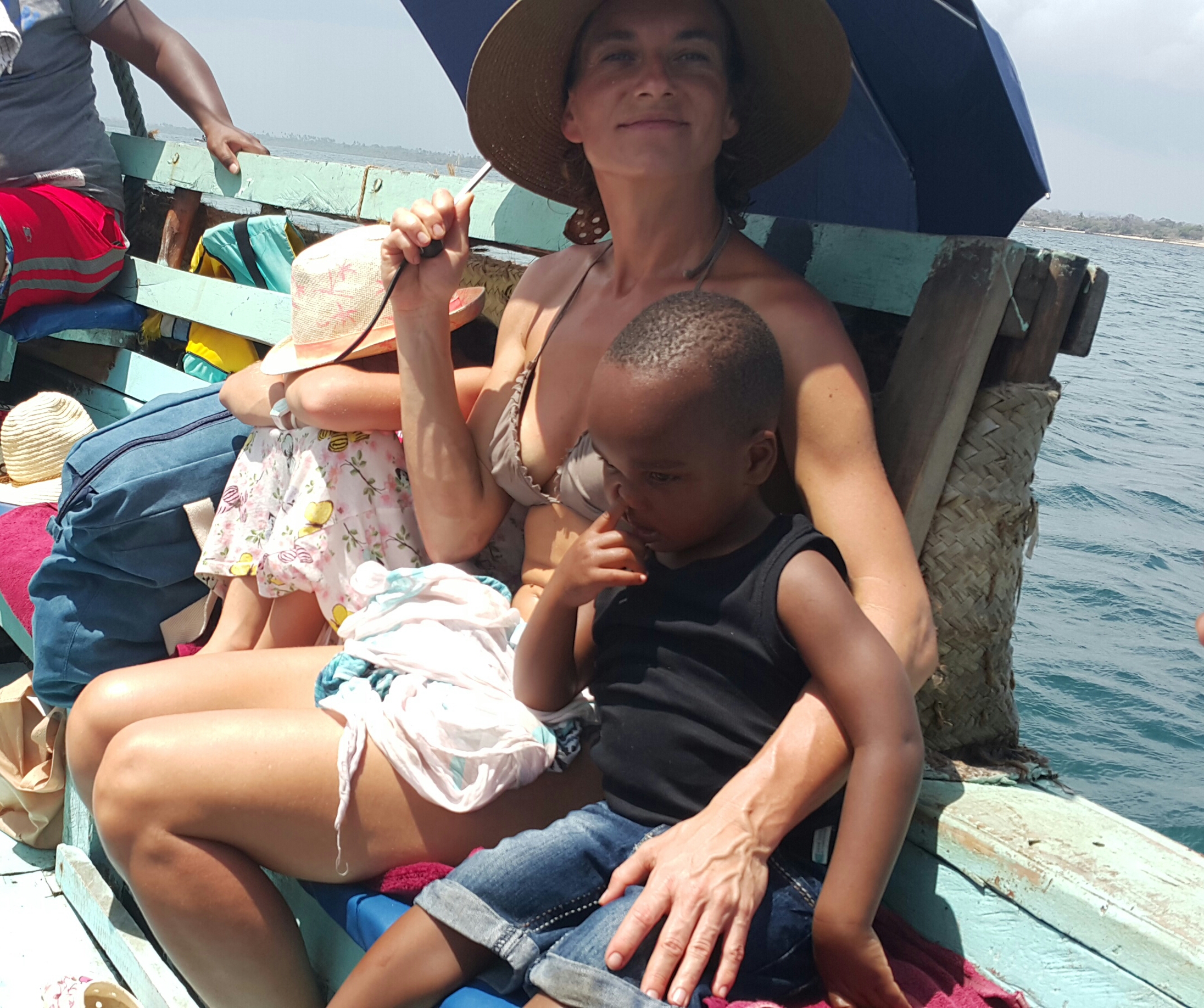
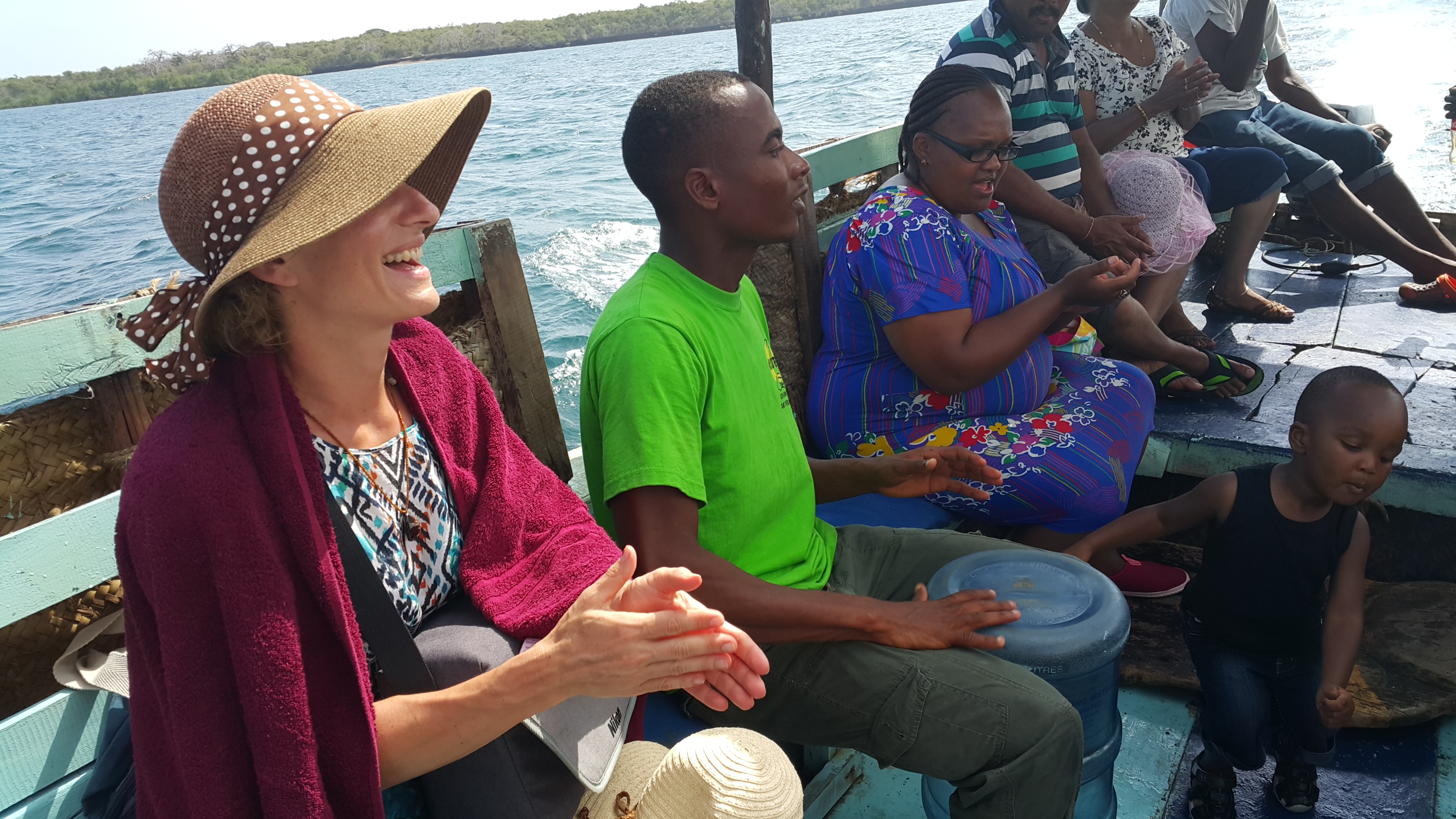
The culmination came when the boat captain started singing “Hakuna Matata” using a big empty bottle of water as a drum. Soon, everyone joined him singing, including my 2-year-old boat friend who showed his best dancing skills, obviously enjoying the loud clapping of his adult audience!
Not surprisingly, my girls fell fast asleep on the super bumpy dirt road while driving back from Shimani. At 18.30 we were back at hotel, right on time to get prepared for the upcoming New Year Eve.
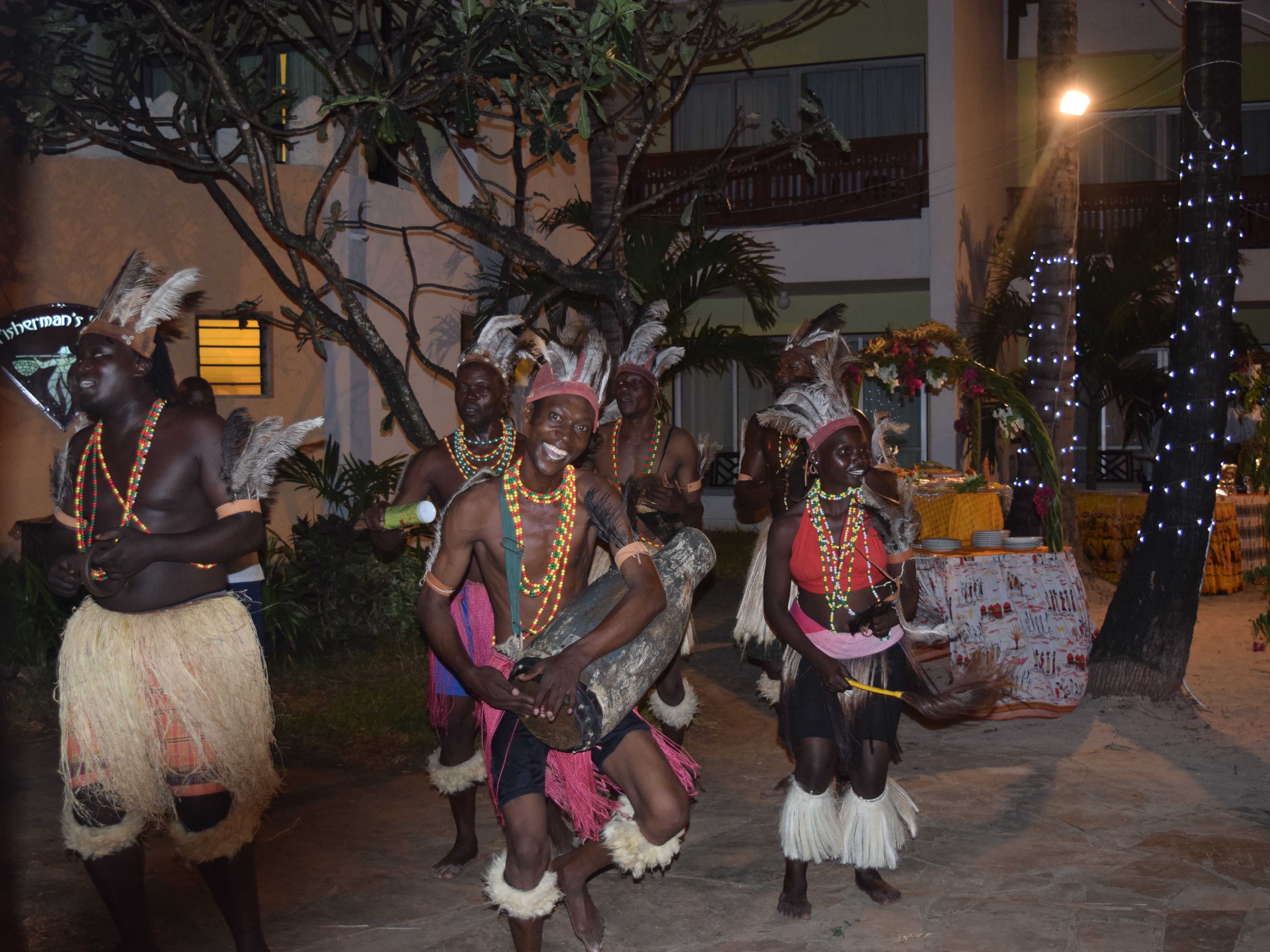
When it comes to local traditional performances and celebrations, I have an even brighter picture & sound in my mind – one that makes me get goose bumps every time I call up a memory of local dance or music performers. There is a special term coming from the Congo word – “ngoma”, which literally means all forms of traditional dancing, drumming or singing. I almost felt like hypnotized by the incredible movements of these strong and super-flexible dark-brown shiny bodies with a wide-open smile on their faces.
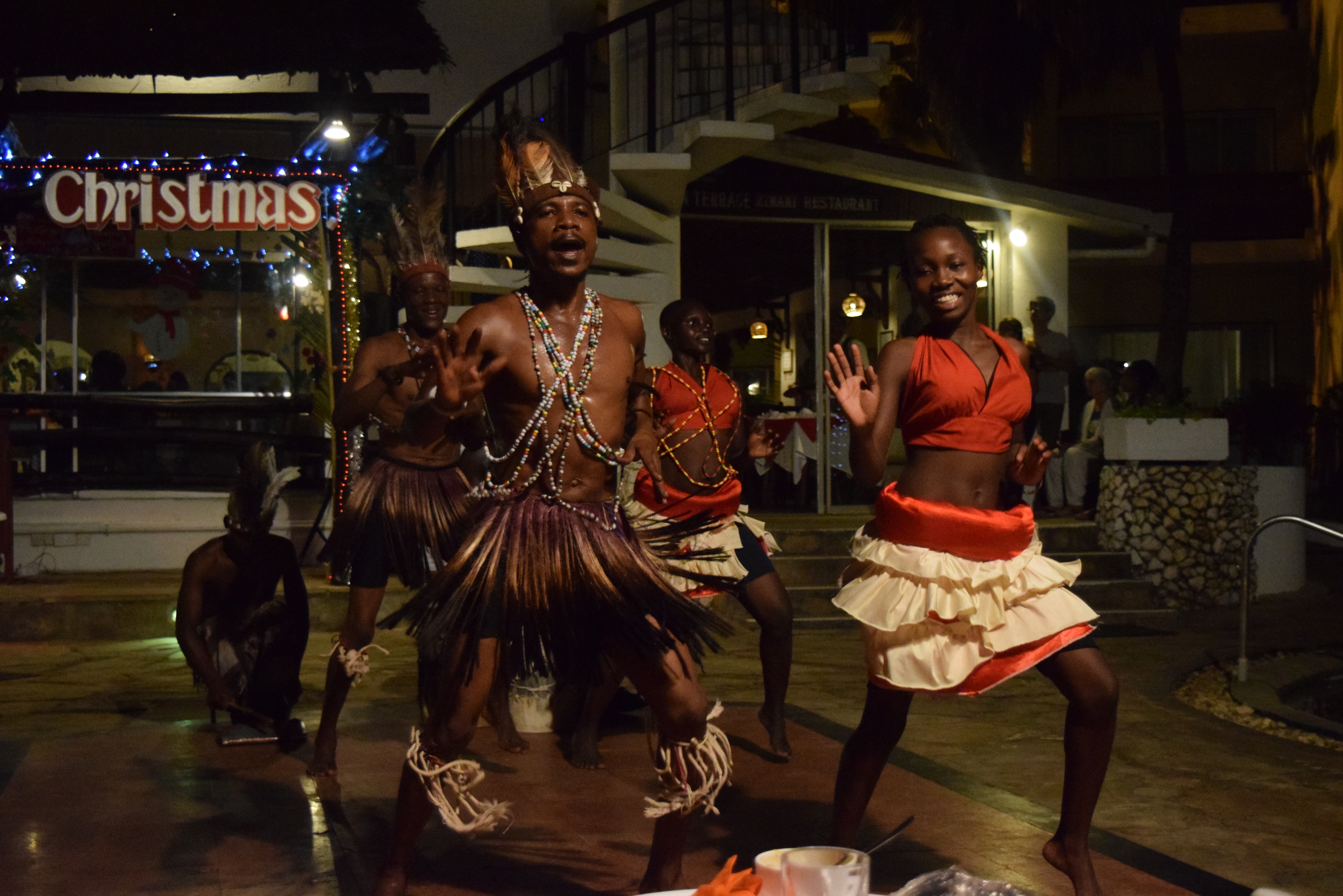
Every evening we got to see different Ngoma dance performances, including traditional Masai jumping dance. Every time it felt like a magic.
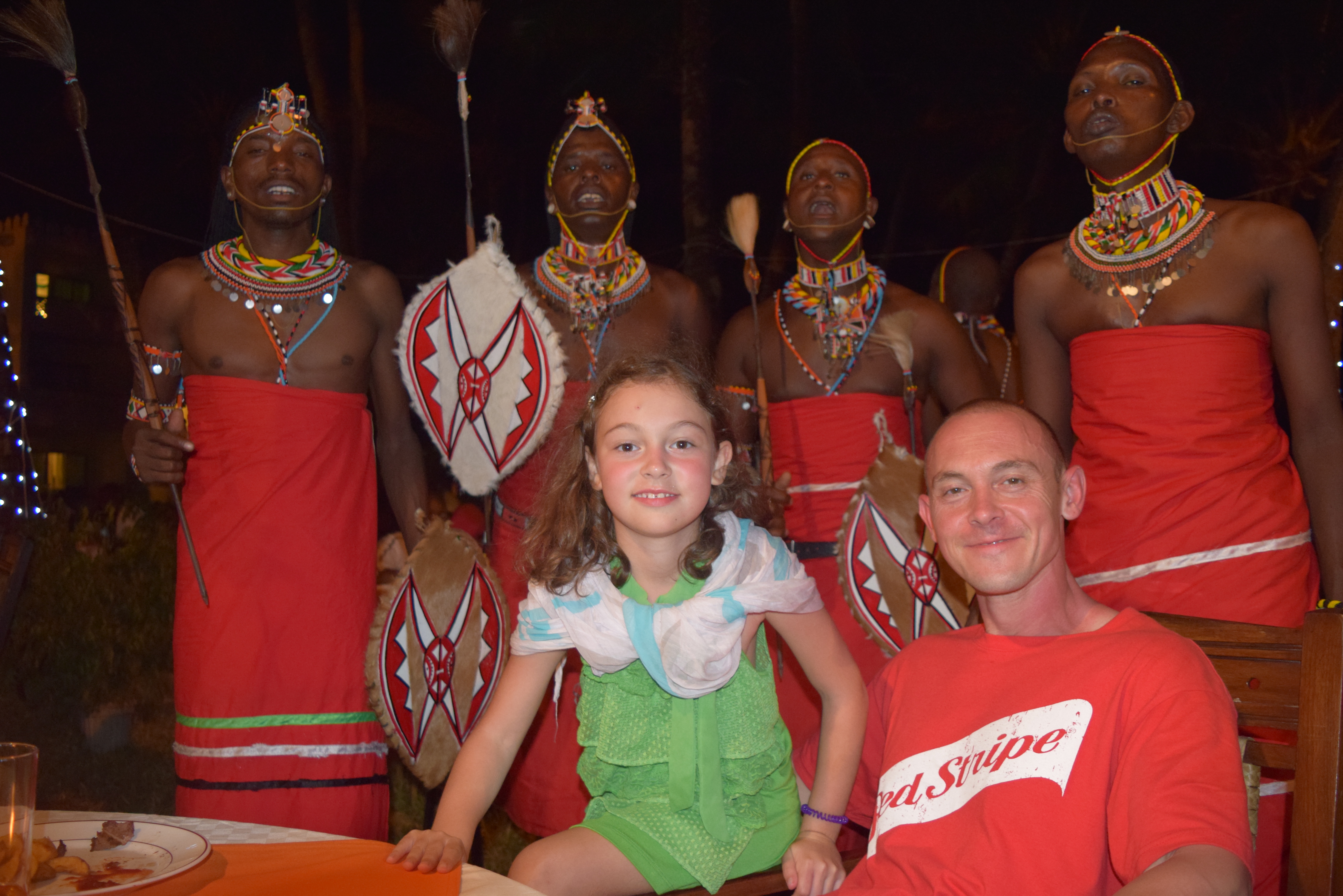
No words can describe that feeling. Just watch the video; I hope it conveys at least part of the emotional intensity I personally felt.
Even the hotel restaurant staff managed to convey strong cheerful emotions every time they sang “Hakuna Matata” during dinner while dance-walking between the tables and the main lights switched-off. They have probably done it thousands of times already; yet, it came across as genuine and enthusiastic as if it was their first time. I have only one logical explanation for that – it really comes from their hearts, it’s a mindset, it’s a way of life.
Wasini Island is one of the things on the long list of activities offered by holiday agents in Kenya. Wildlife safari tours apparently come on the top of the list, with Maasai Mara, Tsavo East and Amboseli National Parks, to mention a few. As much as we wanted to do all of that, we decided that they will be a good reason to come back to Kenya one day. Instead, we took a short trip to Mombasa city and visited the nearby Haller Park to feed the Giraffes ourselves and watch the spectacular process of feeding some of the oldest crocodiles in Africa.
Our plan for Mombasa included two stops – Fort Jesus and Hashmi Barbecue restaurant in the Old Town. Being a historically significant trading center, influenced by different countries and cultures throughout the years due to its strategic location, Mombasa has lots to offer to the tourist audience. We picked these two as a good trade-off between tapping into the local culture and history, and getting exhausted from the heated noisy city.
Fort Jesus itself didn’t really leave a strong impression to me. From architectural heritage point of view, it’s not even close to Alhambra in Granada, Spain.
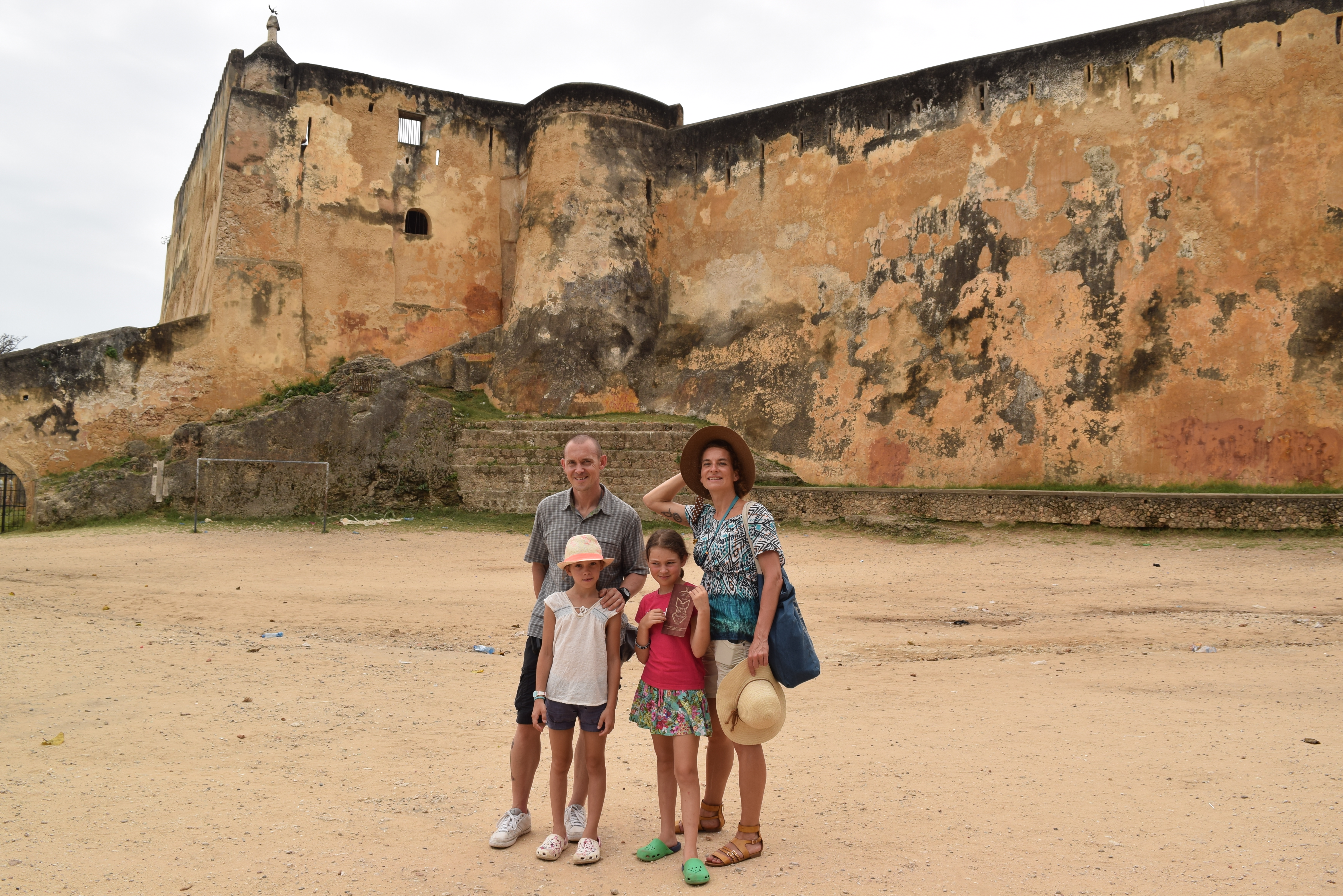
What is impressive though is its history. We all have heard of Vasco da Gamma, the great Portuguese explorer who first reached the Indian Ocean by sea, right? But I didn’t know that Mombasa was the place where he dropped his anchor in 1498. More interestingly, the Portuguese didn’t start to build Fort Jesus immediately due to the bad relations Vasco da Gamma had with the local people in Mombasa. This made him weigh anchor again and sail on to friendly Malindi (about 150 km north from Mombasa), where the Portuguese established their first East African base. It was almost 100 years later, in 1593, when the Portuguese pulled out of Malindi and began to build Fort Jesus which served as a military base.
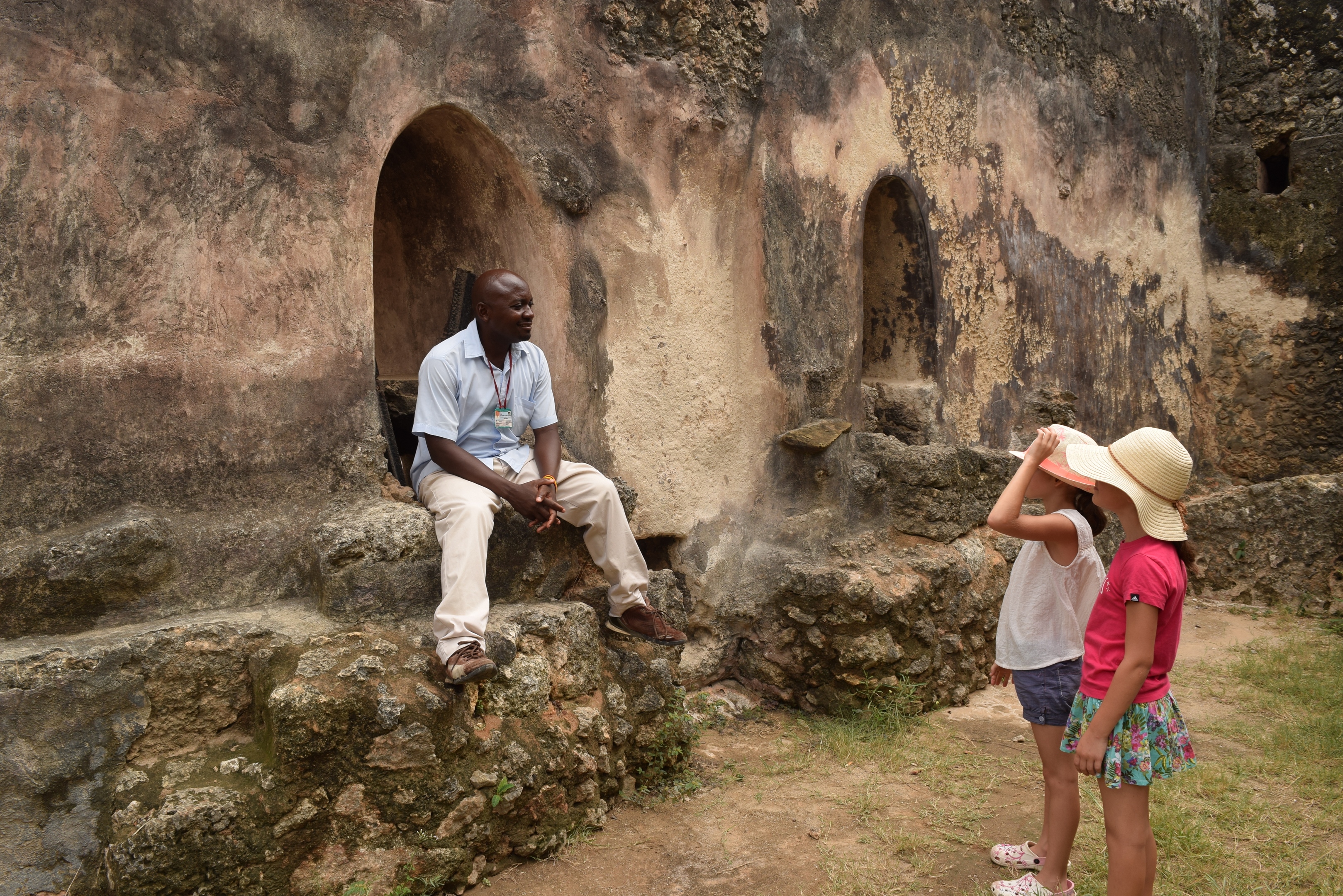
For the next 365 years, Fort Jesus goes through a number of dramatic turns, taken over by different powers – the Portuguese, the Sultan of Mombasa, the Omani Arabs, then again the Sultan of Oman and Zanzibar, by the British who used the Fort as a government prison. Finally, in 1958, Fort Jesus was declared a National Monument. In 2011, it was inscribed by UNESCO as a World Heritage Site. I started understanding the “why’s” behind all this chaos and “Hakuna Matata” mentality.
Hashmi Barbecue restaurant was recommended to us by a Kenyan family. Apparently it offered super delicious Indian barbecue including beef and goat brochettes. What our Kenyan friend didn’t mention though was the location and interior of the restaurant. In fact, “restaurant” is a bit exaggerated word to describe the place. The picture below explains it all.
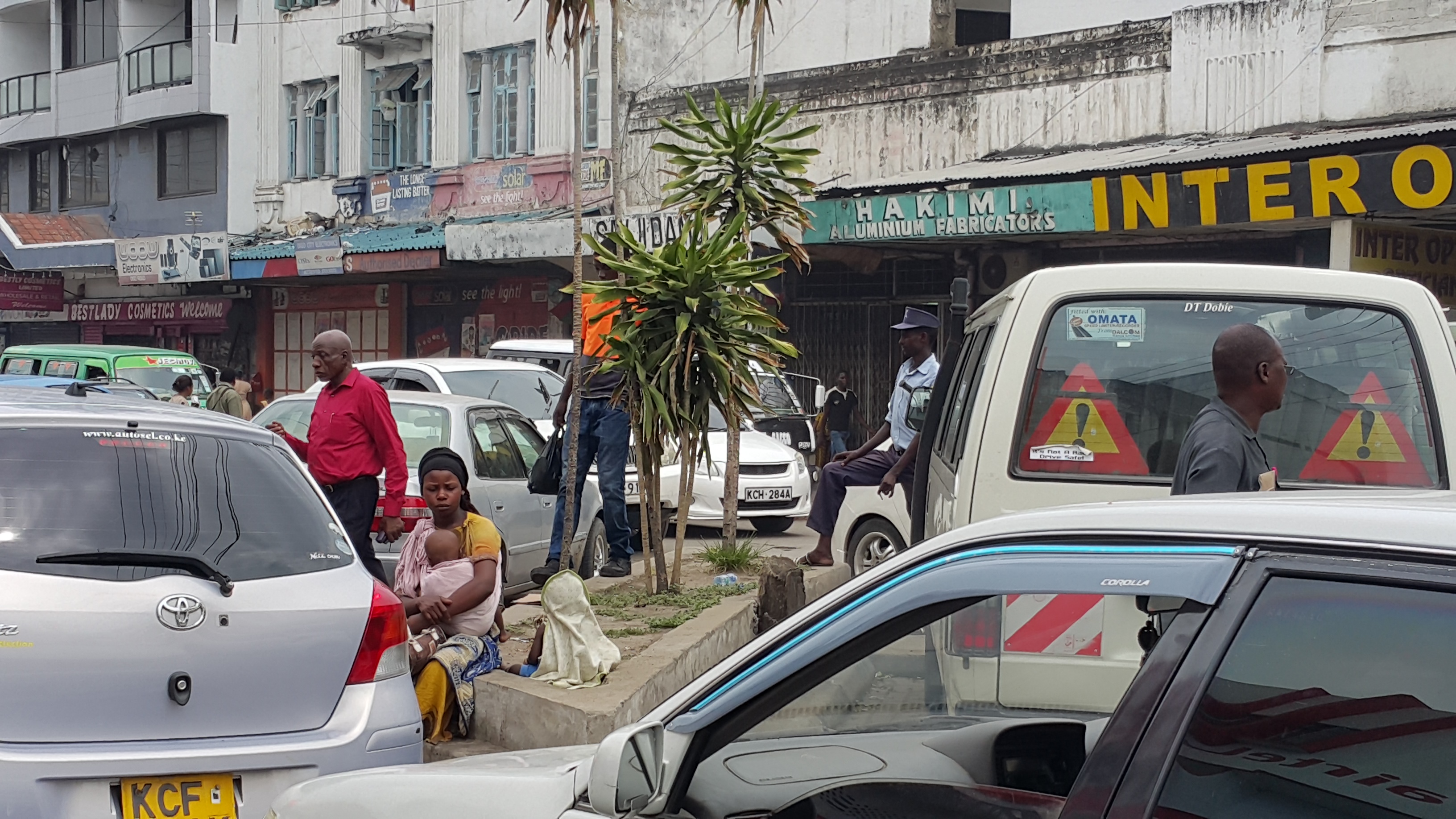
The restaurant is located on the open roof-top of one of these buildings and it looks like nothing more than a fast-food Indian chain. Here comes the “BUT” so please don’t get me wrong. I was actually very glad to have had this kind of super authentic local experience. In fact, the location and interior of the place didn’t really matter to me. The food did. And it was extremely delicious! We all liked it a lot, and I will definitely recommend Hashmi Barbecue to other people.
The proximity of Haller Park was a nice surprise to us. Just a 15-minute drive from Bamburi area, it provides unforgettable wildlife safari-like experience to its visitors.
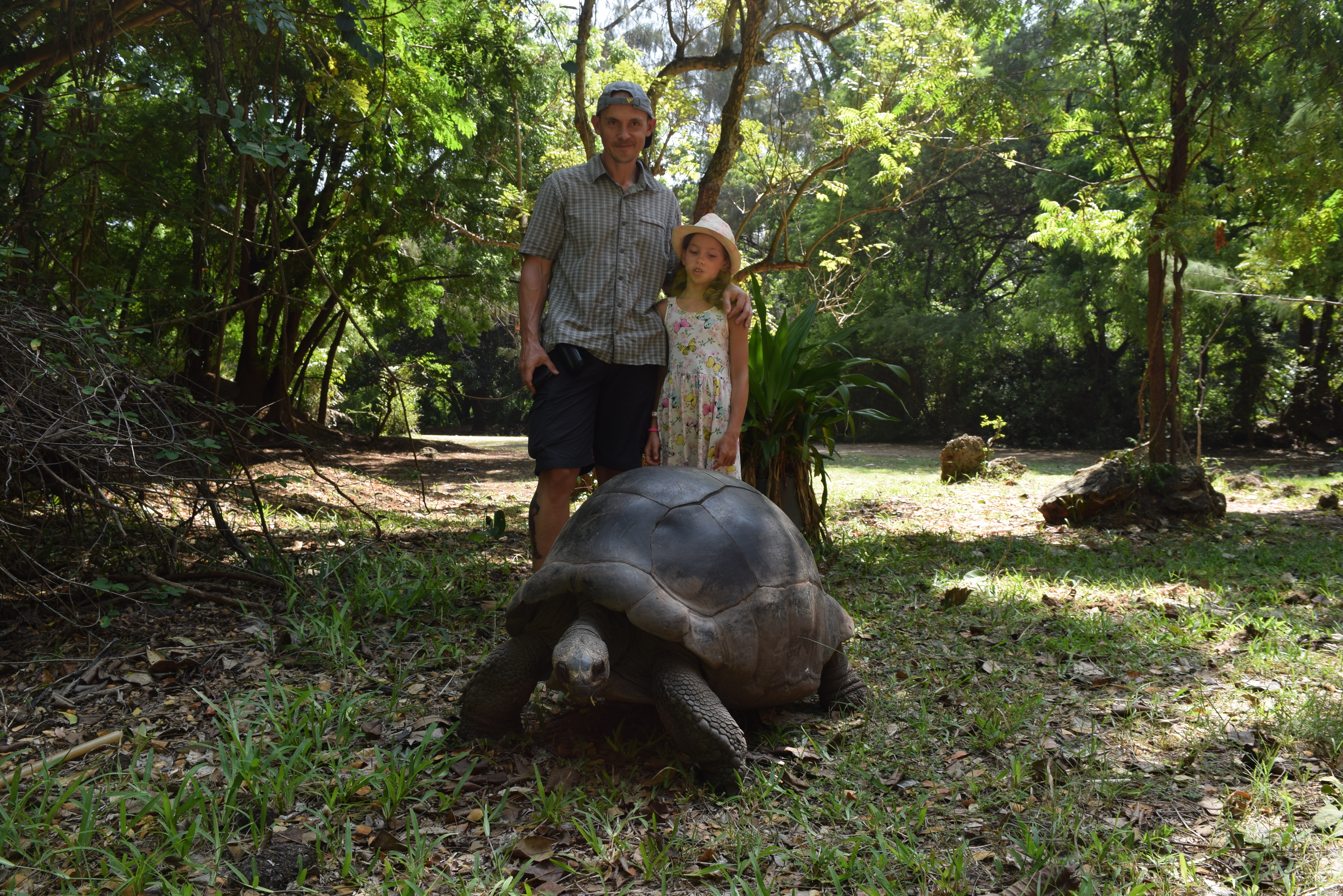
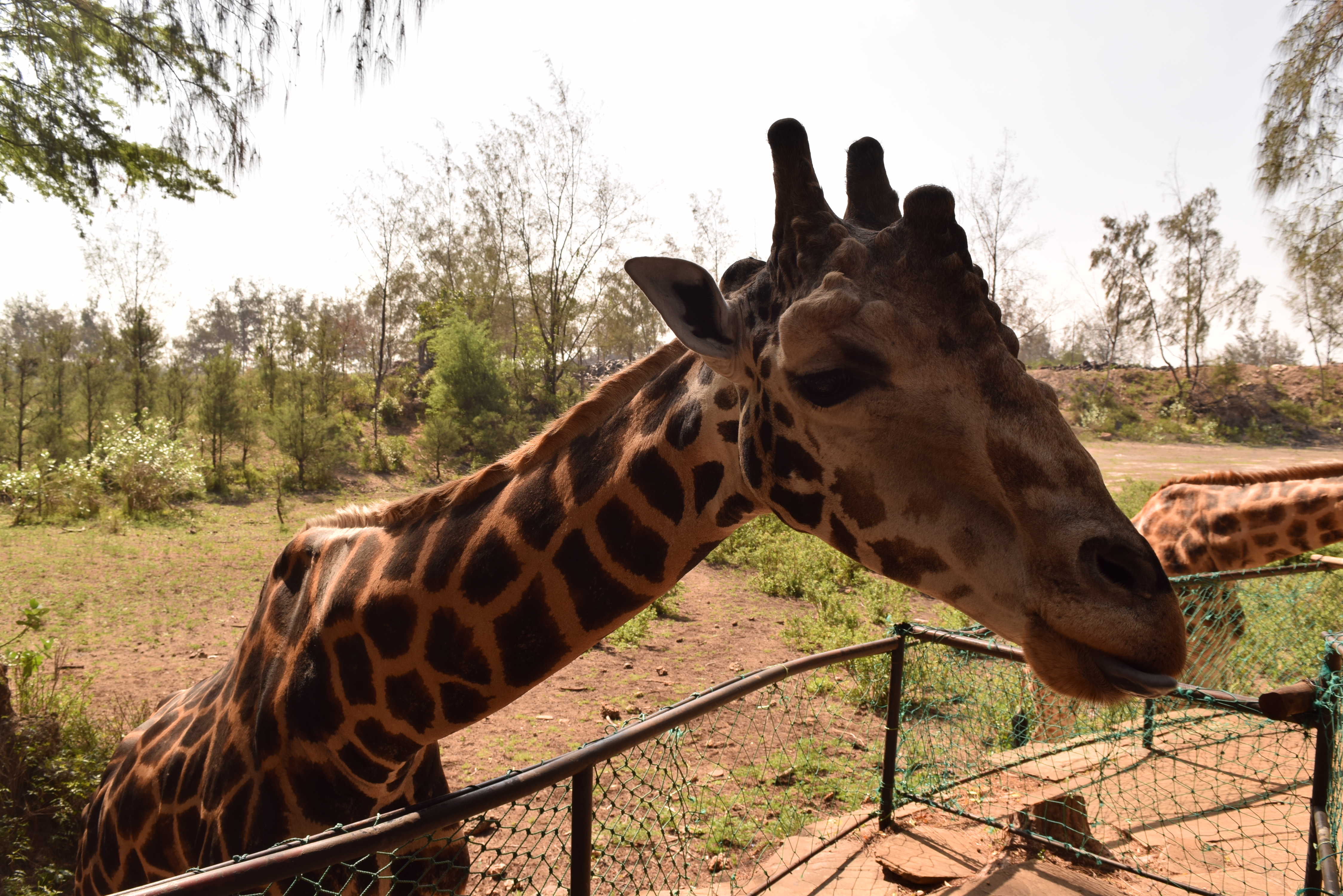
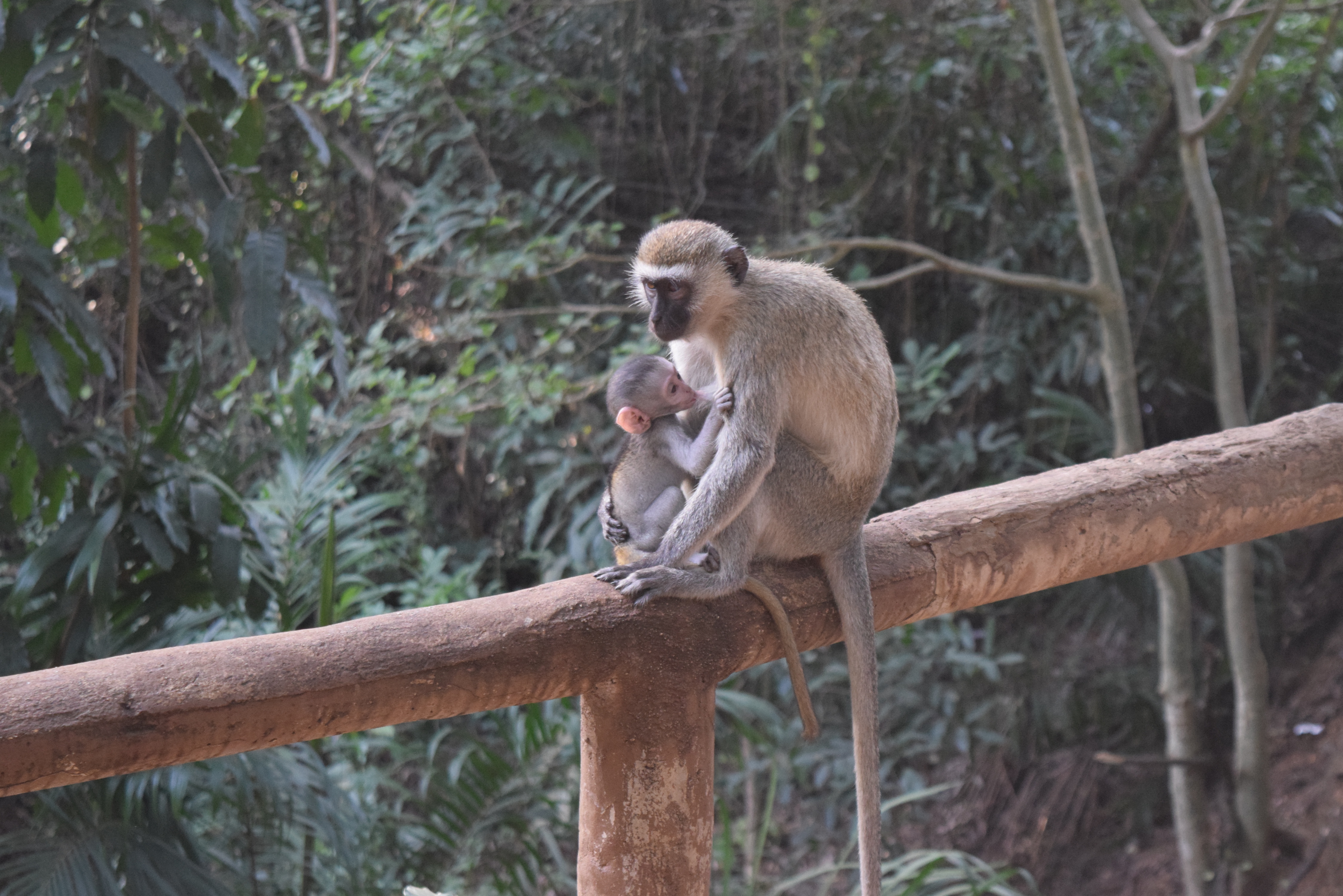
Haller Park is the transformation of a quarry wasteland (cement production site) into an ecological area which currently keeps a variety of plant and animal species such as baobabs, hippos, buffalos, antelopes, giraffes, enormous tortoises, friendly monkeys, huge old crocodiles and deadly snakes like the black mamba. Of course, they don’t walk around freely but the park territory is big enough to create that feeling of freedom for these wild animals.
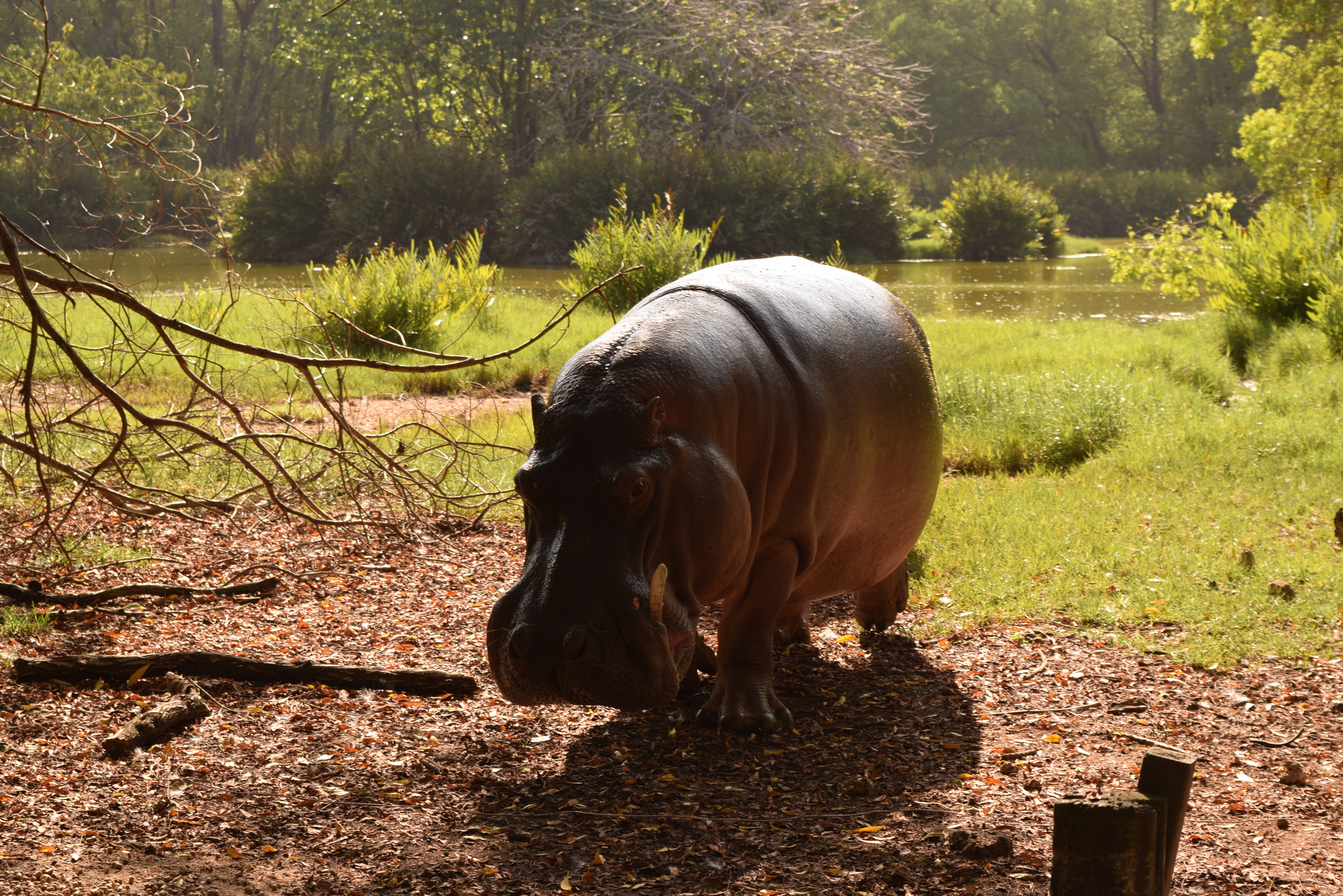
Within only 2,5 hours we got to feed the Giraffes who literally licked my hands while biting away the cereals, pet huge tortoises who seemed to never mind being touched by hundreds of people every day, watched the clumsy hippos coming out from the water for their regular daily feeding (we stood only 3 meters away from these killer animals!)…
… and observed the breast-feeding of a baby-monkey from less than a 2-meter distance!
The most spectacular experience though remained the feeding of the crocodiles. We got to their place 10 minutes before the scheduled start of the feeding, and the waters were already crowded with crocodiles waiting to be fed! We counted 24 crocodiles (some of them 3-4 meters long!!), even though the park currently holds 34 of them. Oh my God, what noise was coming out from the clapping of their empty jaws while trying to catch the hanging meat just above them.
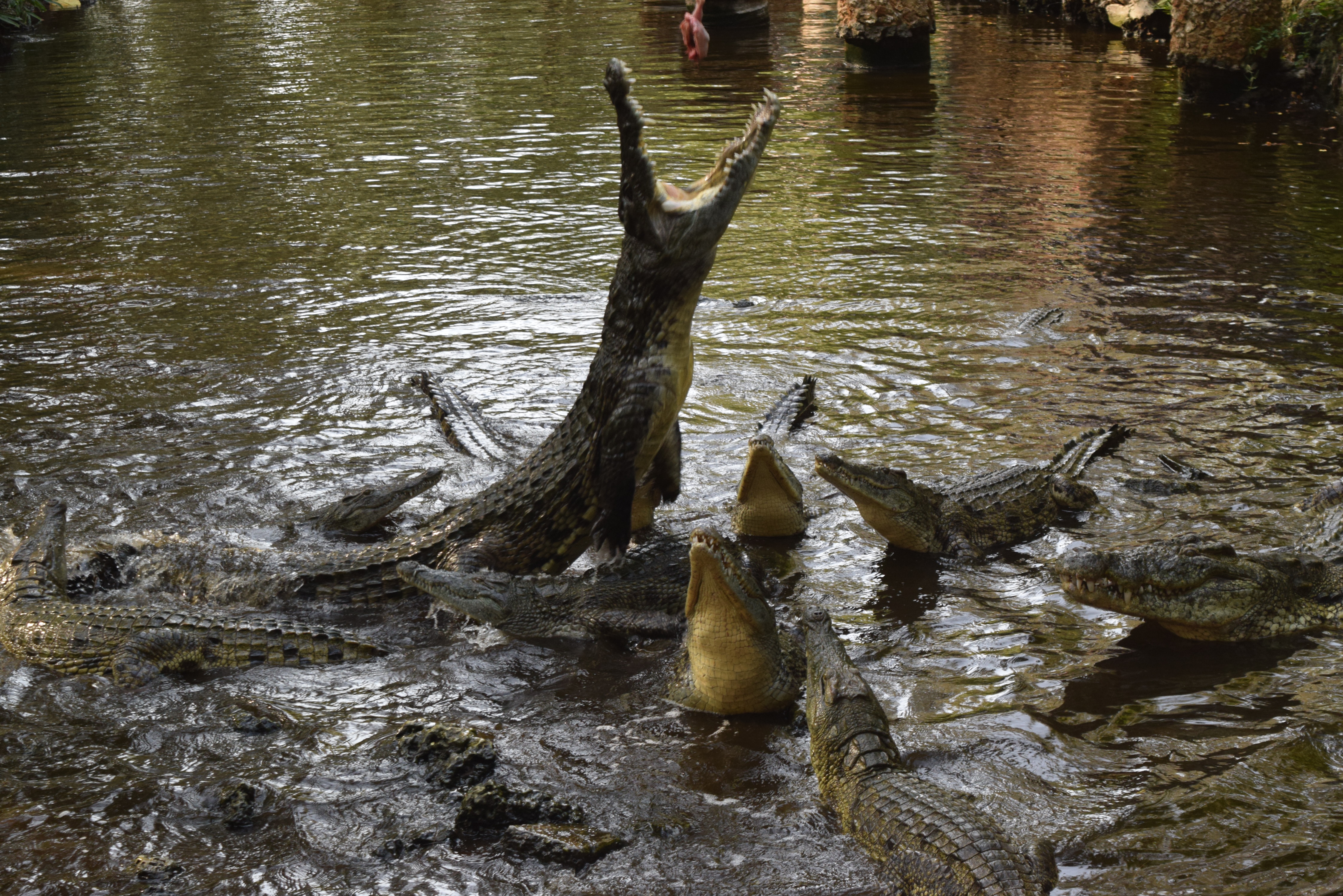
To my surprise, the crocodiles didn’t really fight for the food they had to share. Instead, they were patiently waiting until the meat gets closer to their mouths and then jumped out from the water to grab it. The below video shows all that process in a very nice detail!:-)
Our last day at Bamburi Hotel was a very relaxed one. For me and my younger daughter it started with a refreshing and re-energizing early morning beach walk.
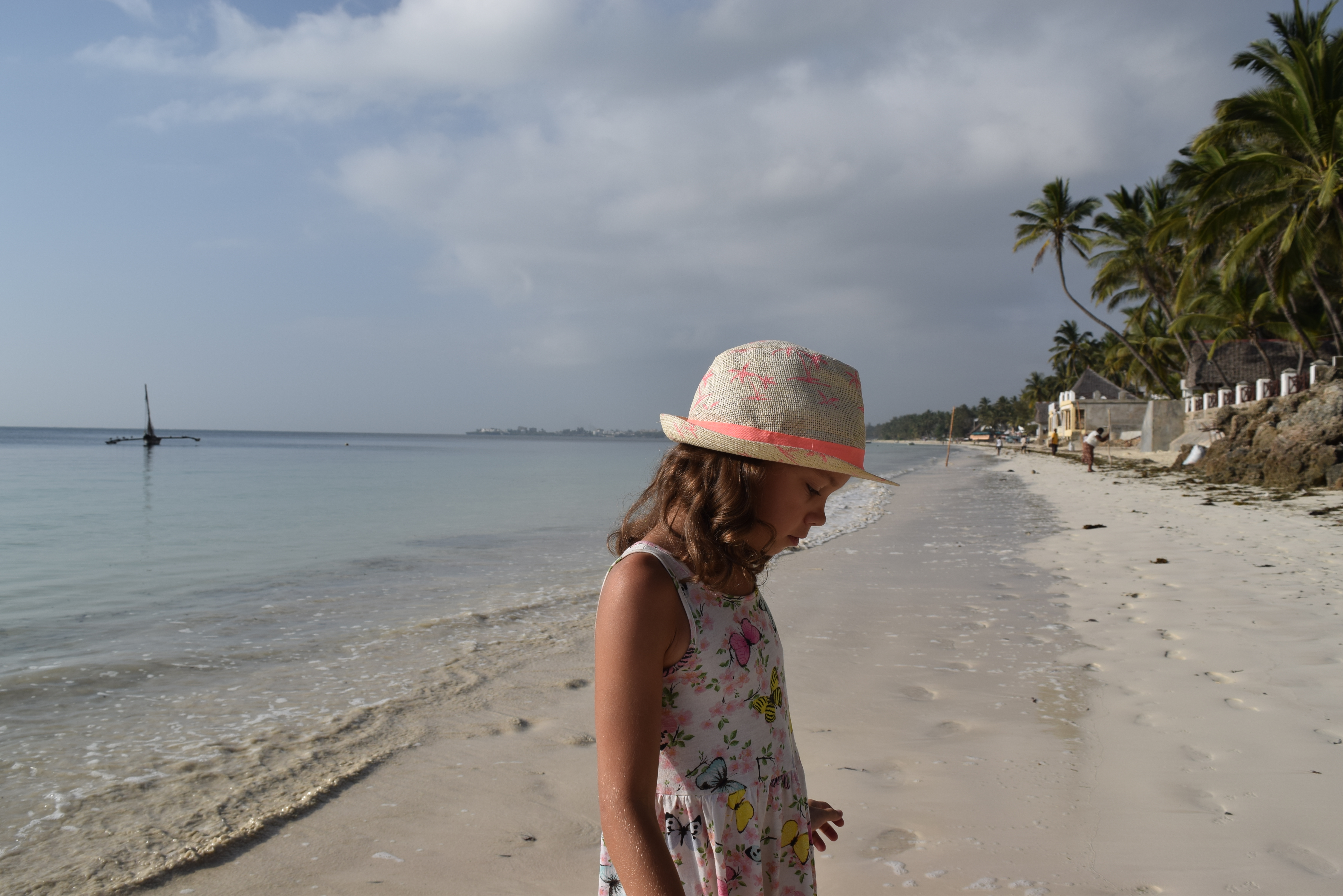
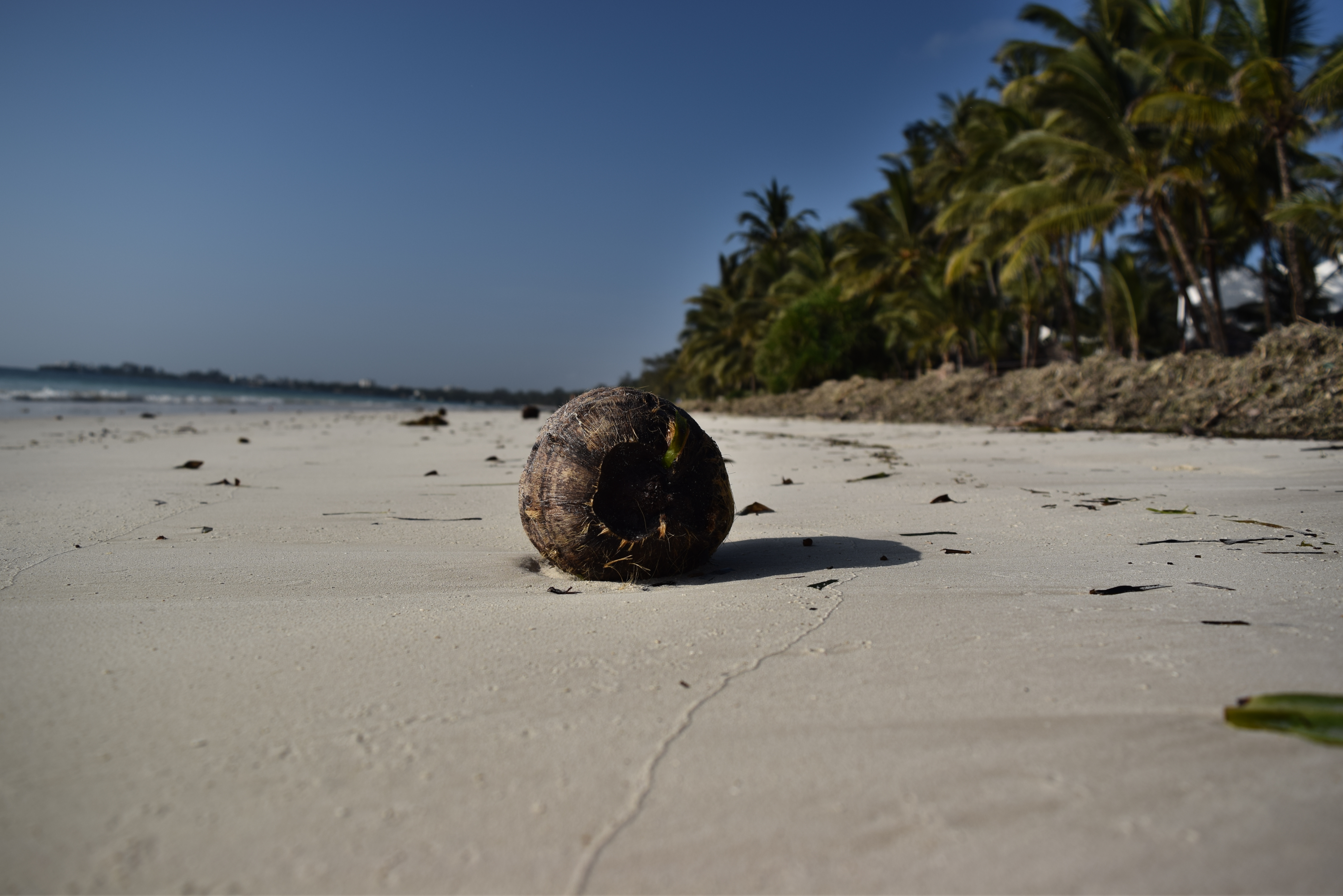
We explored the palm trees and coconuts, absorbed the magnificent ocean view and had a chat with a local acrobat who was doing his daily training at the beach.
The day went on with my older daughter and me sacrificing 2-3 hours each to get our fancy African Rasta hairstyles. The result was amazing!
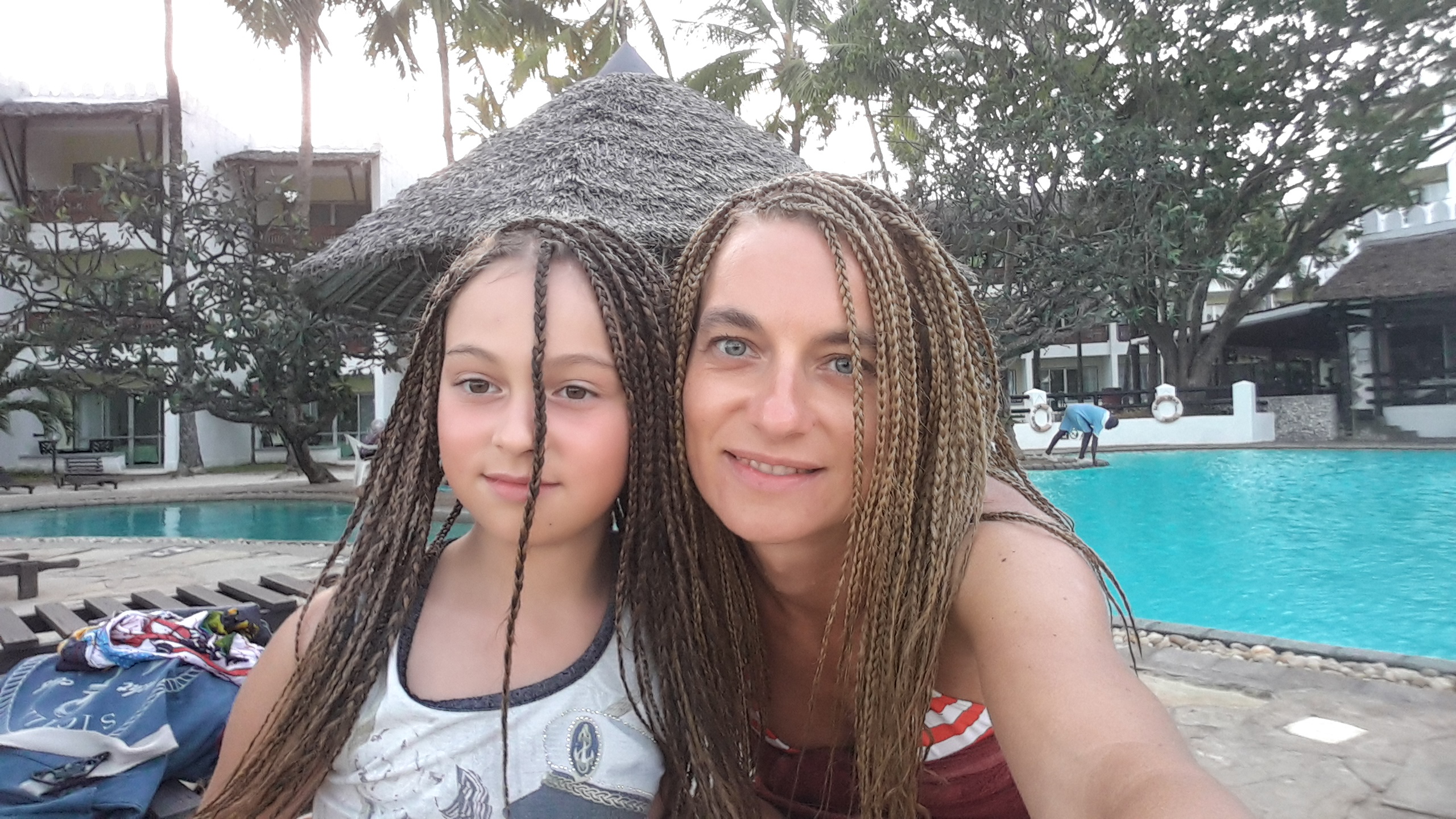
True, it takes a couple of days to get used to the heavier head you suddenly get to carry on your shoulders. The thing is, once you get used to it, you start not liking the idea of taking the braids off your hair 🙂 This explains why so many African women regularly visit the hair salon to get their Rasta’s!
Next morning we headed back to Mombasa International Airport. This time we got to see everything we couldn’t in the darkness after our arrival a week ago. The garbage and the poverty couldn’t be more obvious… We said Goodbye to Mombasa overwhelmed with emotions ranging from the most negative to the most positive continuum. “Hakuna Matata”, I told myself and went on…
The End.