“This is the finest place I have known in all of Africa… an illusive place where nothing is as it seems. I am mesmerized.”
These are not my words though they perfectly describe my feelings about Zanzibar. I can still taste the salty breath of the ocean, mixed with the scent of traditional Zanzibar herbs and spices. I can still feel the finest white sand I’ve ever seen covering my feet; vivid images of young local kids freely playing at the beach still emerge in my mind…I can go on…
These words belong to the great David Livingstone, a missionary-turned-explorer of Africa in the 19th century, who among all “discovered” Mosi oa Tunya – the “Smoke that thunders”, known as Victoria Falls. He also became famous with his graphic and impassioned stories about the horrors of the Zanzibari-controlled slave-trade.
The history of Zanzibar is one of the most turbulent and fascinating in East Africa, shaken by invasions, empires and intrigues for centuries. Zanzibari culture, architecture, language (Kiswahili) and kitchen have been shaped by the extensive mixture of influences from the Arab, Portuguese, British and Indian powers. I went there totally unprepared, and I was literally blown away by its stunning history and nature. An adventure I will never forget.
Getting there
As a starter, I cannot skip the exciting experience of flying from the coast of mainland Tanzania to the island. But before that, I need to make a clarification.
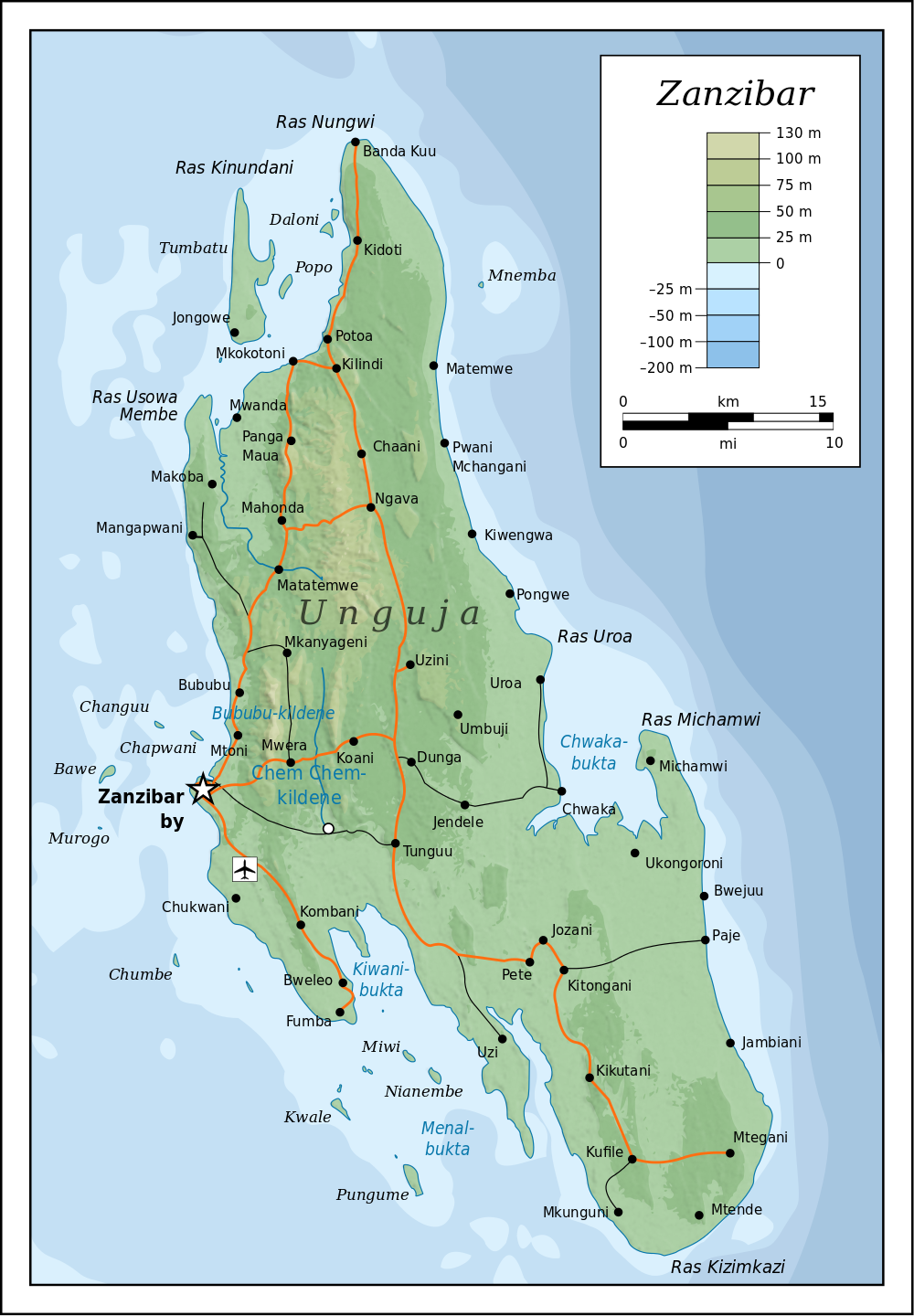
Zanzibar is actually an archipelago, comprising the islands of Unguja (also called Zanzibar) and Pemba (to the north) along with a number of smaller isles and atolls. We stayed on Unguja Island (Zanzibar) but I heard Pemba is also worth visiting, although it is significantly less known among tourists.
There are two ways to reach Zanzibar Island – by plane or by boat. The first option is a bit more expensive (for us as residents of the East African Community the difference was really insignificant) and takes only 30 min, so we went for it. However, the boat trip is not long neither (2 hrs) and probably also very nice, if you prefer travelling by boat.
There are several local airlines which fly from Dar Es Salaam to Zanzibar. Our choice was Coastal Aviation as they have 8 (!) flights per day in each direction, which provided us with additional flexibility in the planning process.
Due to the frequent daily flights to the Islands, the whole organization at the domestic terminal of Dar Es Salaam airport looked more like a taxi station, understand quite messy. Yet, the airport staff seemed to be used to this perfectly organized chaos 🙂 There were at least 3 groups of people at the gate including us, each of them scheduled for a different flight time. Funnily, although our flight was set for 2.30 pm, we were called to boarding before the 2.00 pm group. We are in Africa!
As the other local airlines operating the flights to the islands, Coastal’s fleet consists of small aircrafts adapted to the African safari environment, perfect for short flights.
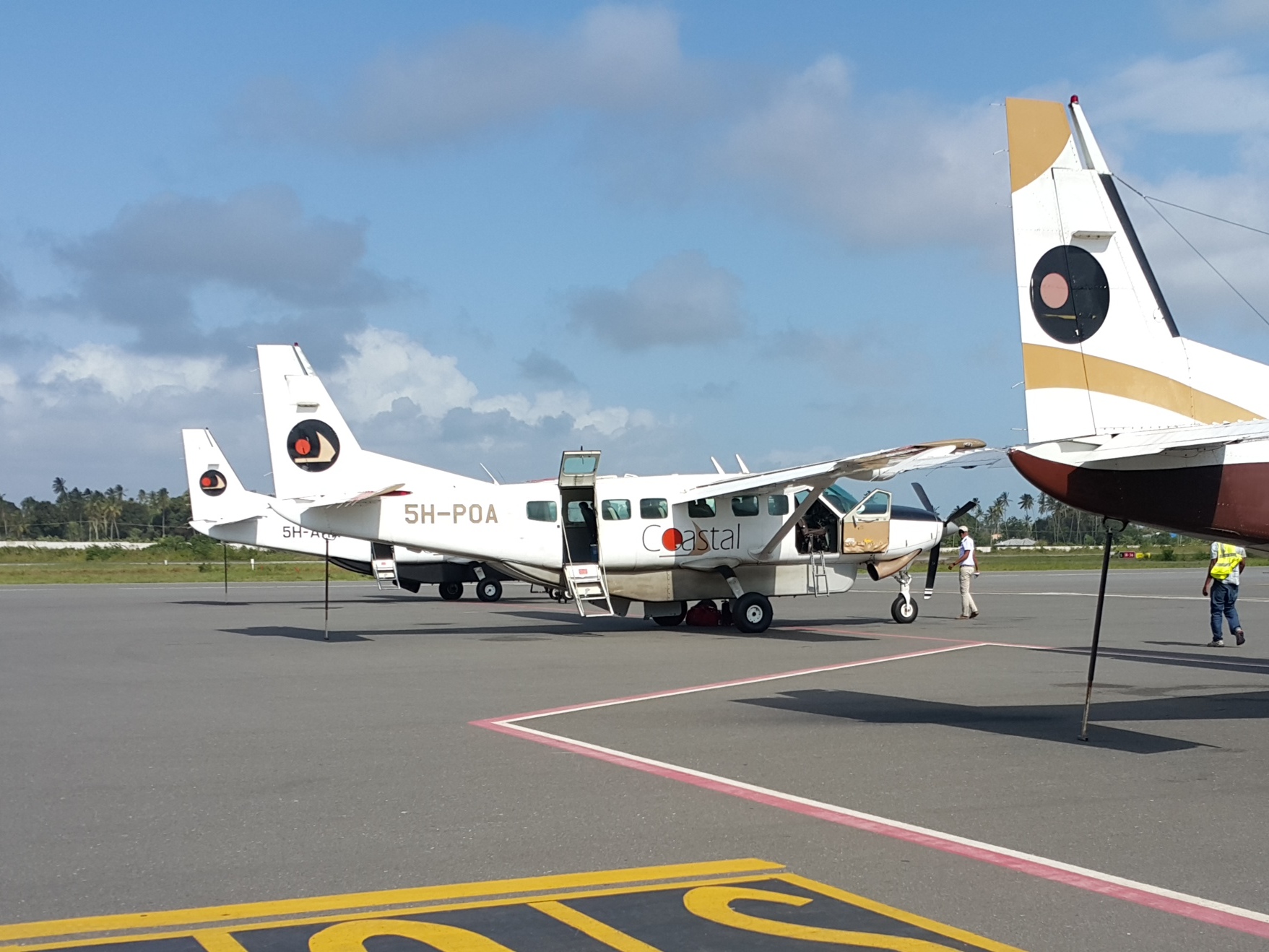
I knew we would fly on small airplane but what followed was a great surprise – a 12-passenger seat aircraft! On top of this, Peter was offered the co-pilot seat since we exceeded the limit by one passenger. Lucky Peter! I was really envious.
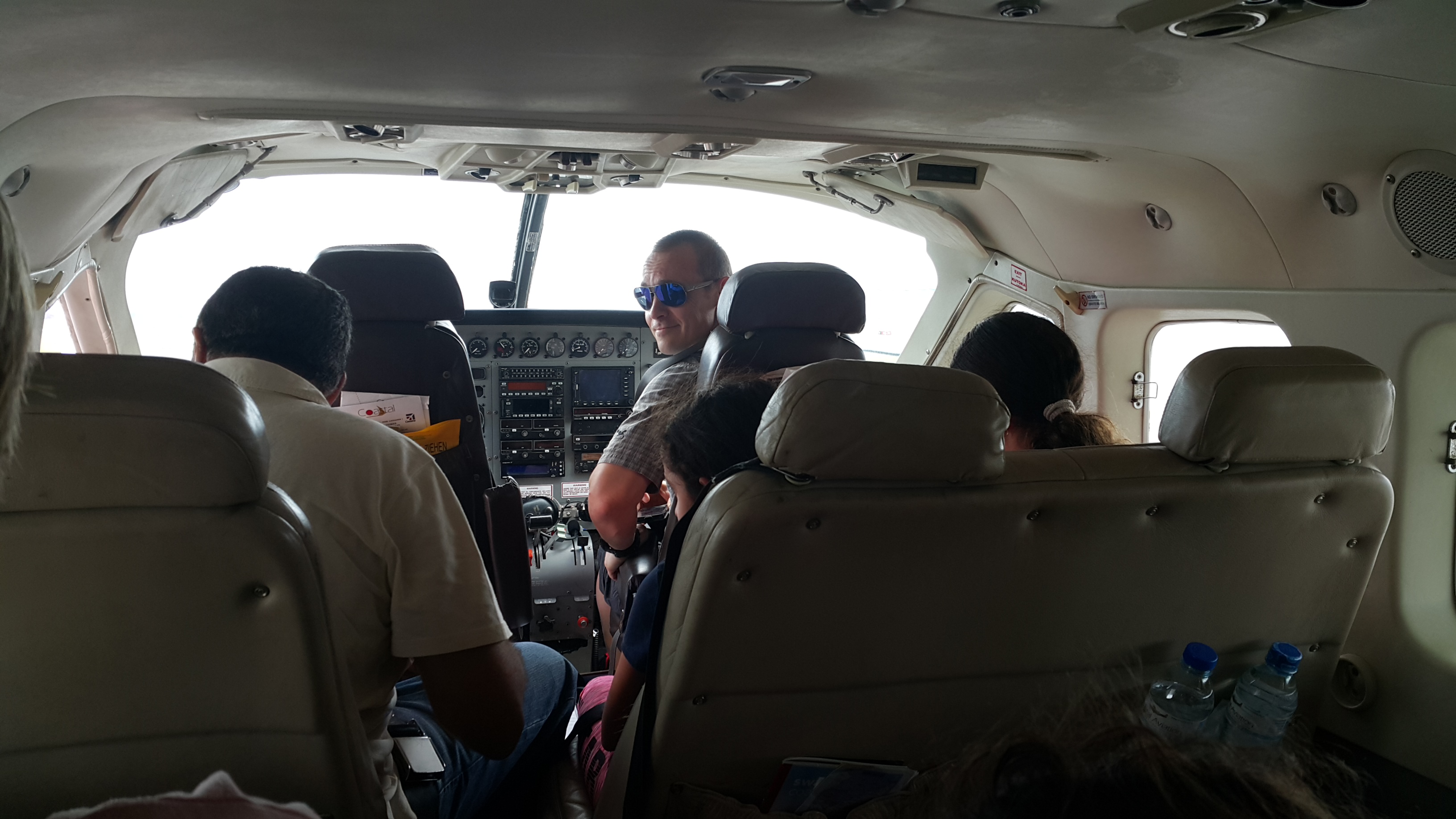
Flying in such a small aircraft is a unique experience. Shorter take-off and landing time, more wobbling and shaking, weird noises coming out from the propellers, lower altitudes. The latter allowed us to enjoy the marvelous view over the Tanzanian coast, the turquoise waters of the Indian Ocean, and the coral reefs surrounding the islands.
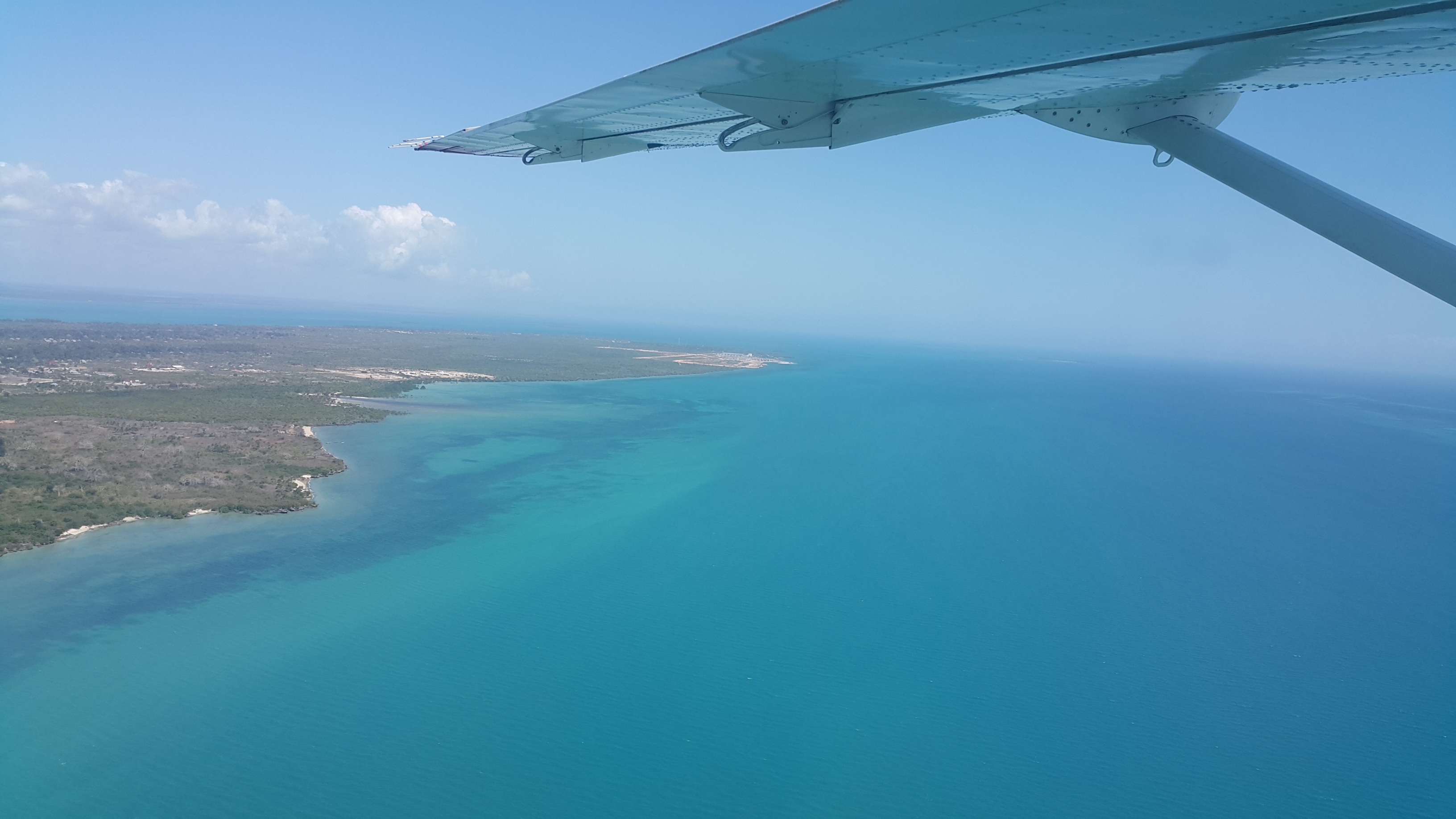
I was sitting not more than 2 meters behind the pilot – a young man, not more than 30 y.o. – who looked like driving his toy-car (maybe this is exactly the way he feels too 🙂
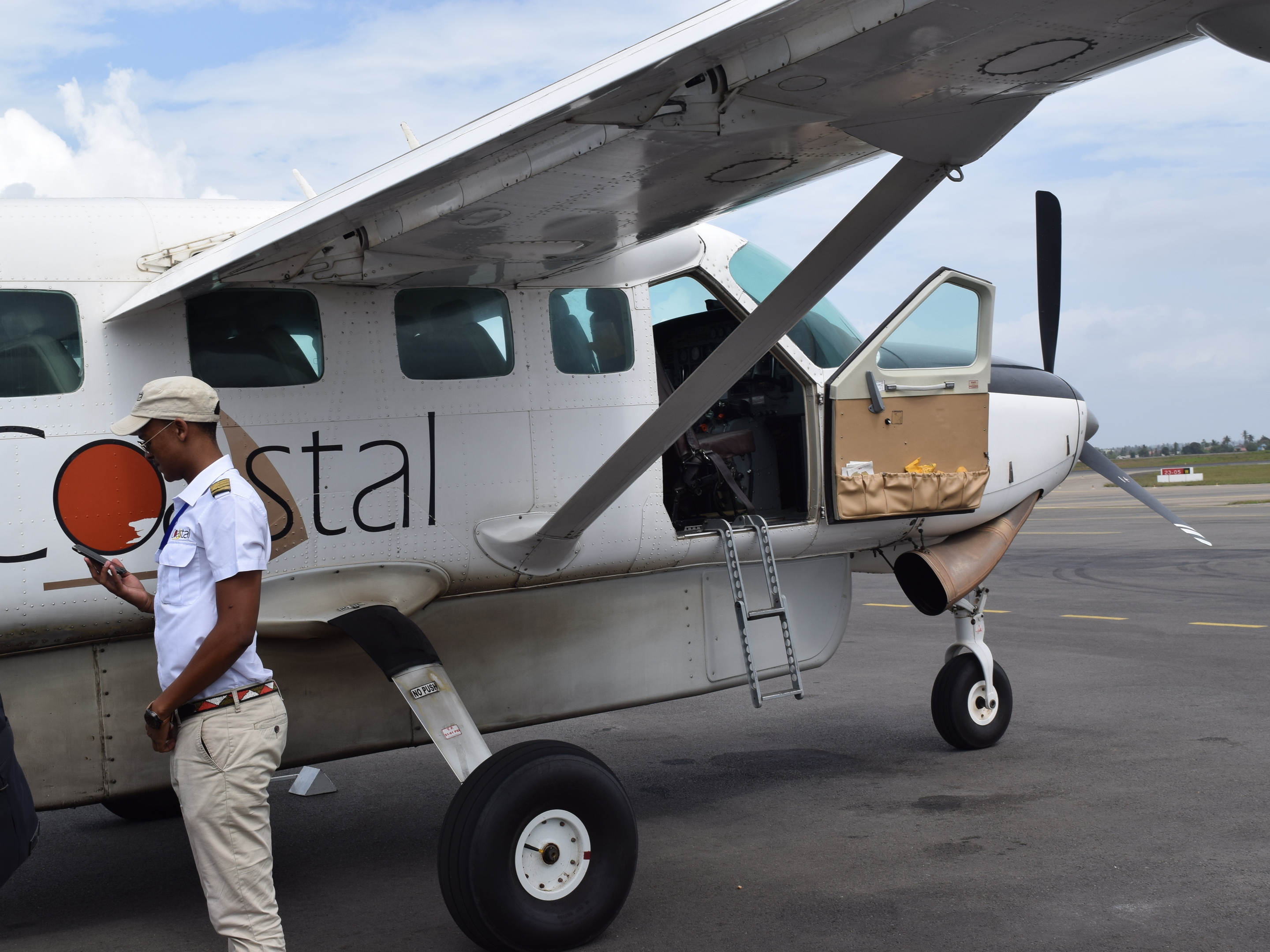
Our pilot
The most exciting part was the landing, more precisely, the way the pilot was trying to align the aircraft’s position with the runway in front of us. Until the very moment of touching the ground, we were everything but aligned with the runway.
Finally we stepped on Zanzibar land! As expected, it was hot and humid but nobody really cared about it. We were desperately longing to jump into the ocean already!
It took us another hour to get to our pre-booked villa on the South-East coast, driving through a number of small villages and picturesque sceneries such as a tunnel of huge mango trees along the road or improvised stalls well-laden with fruits and vegetables, some of which unknown to us.
Bwejuu – the place we stayed
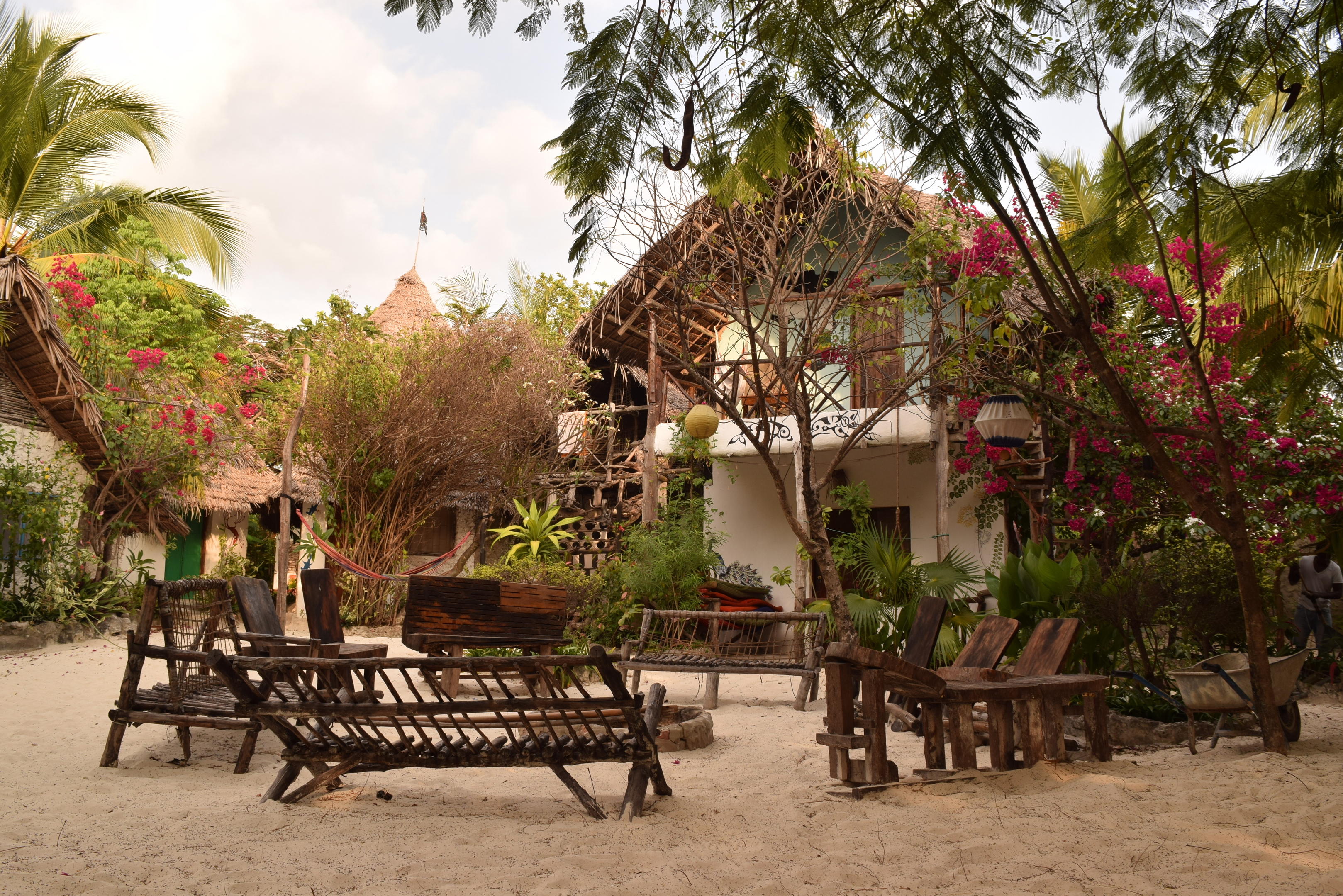
Our villa was located in Bwejuu on the South-East coast, 50 km from Stone Town, on a beautiful and pristine long and white sanded beach. During the high tide on some days, the water was literally a couple of meters away from the front veranda. The surrounding nature was breathtaking – endless palm trees and hundreds of different tropical flowers, coming in the brightest colors one could imagine.
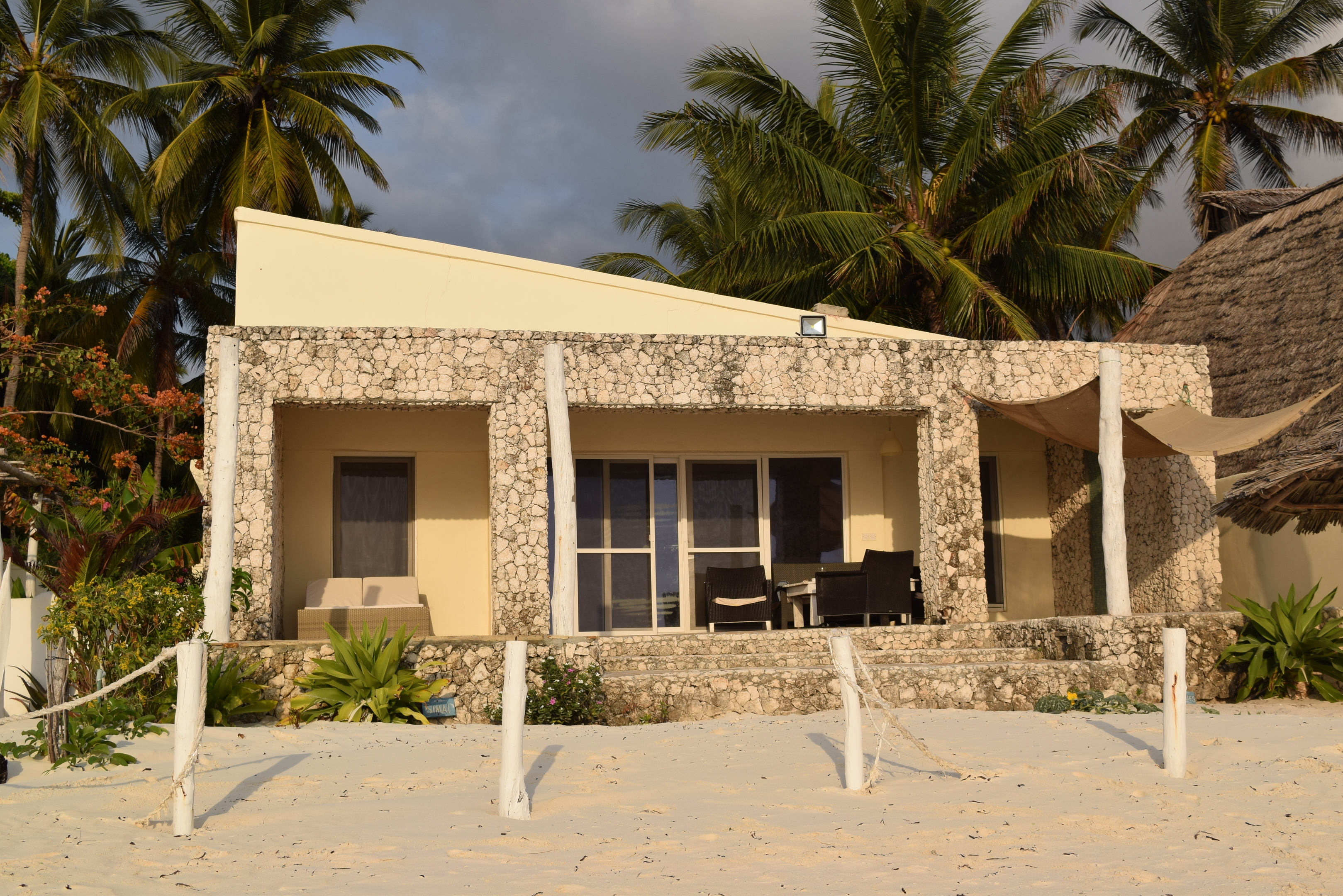
Our villa
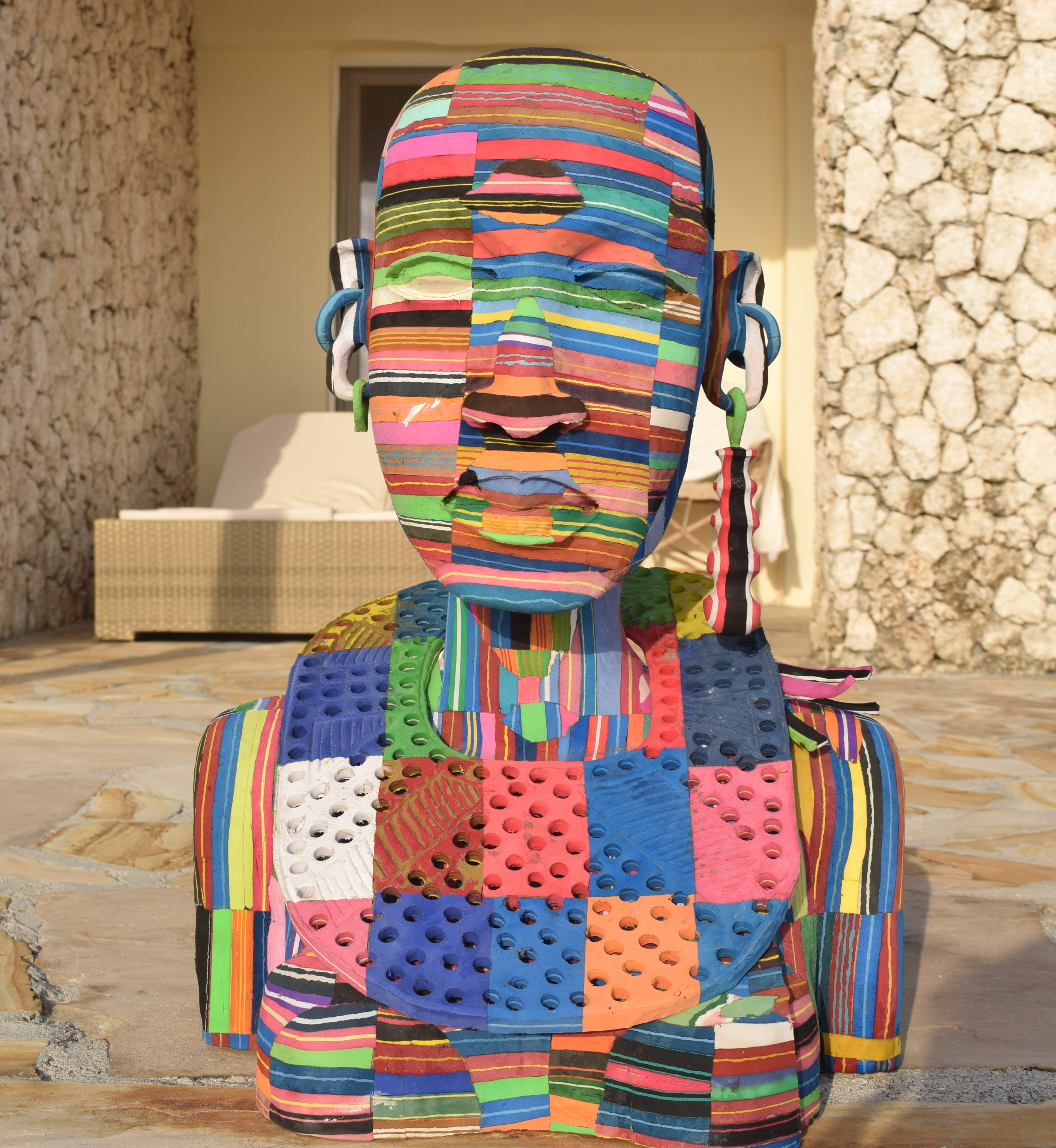
Local art-piece made of flip-flops recycled from the ocean
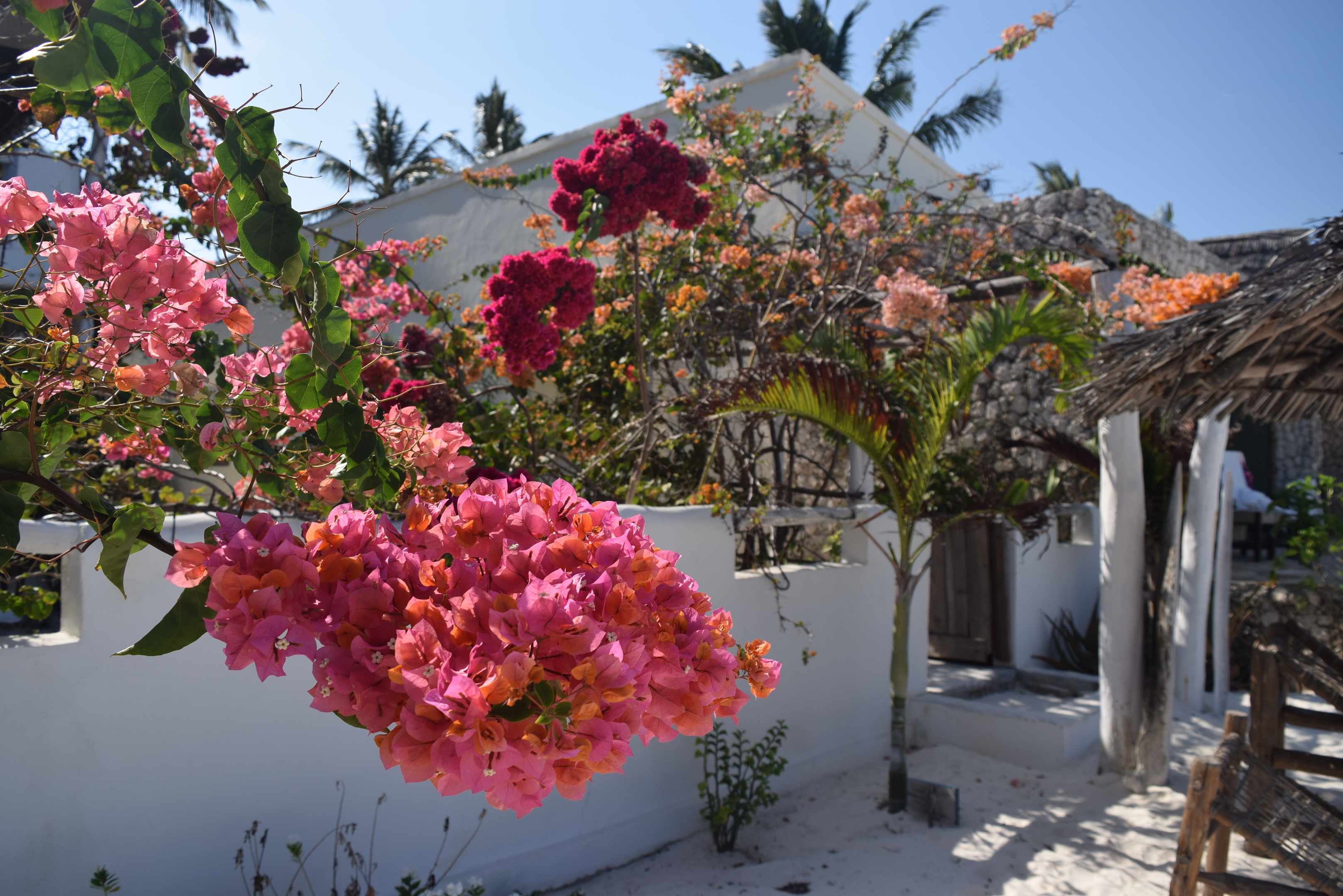
Neighboring villa (same owner)
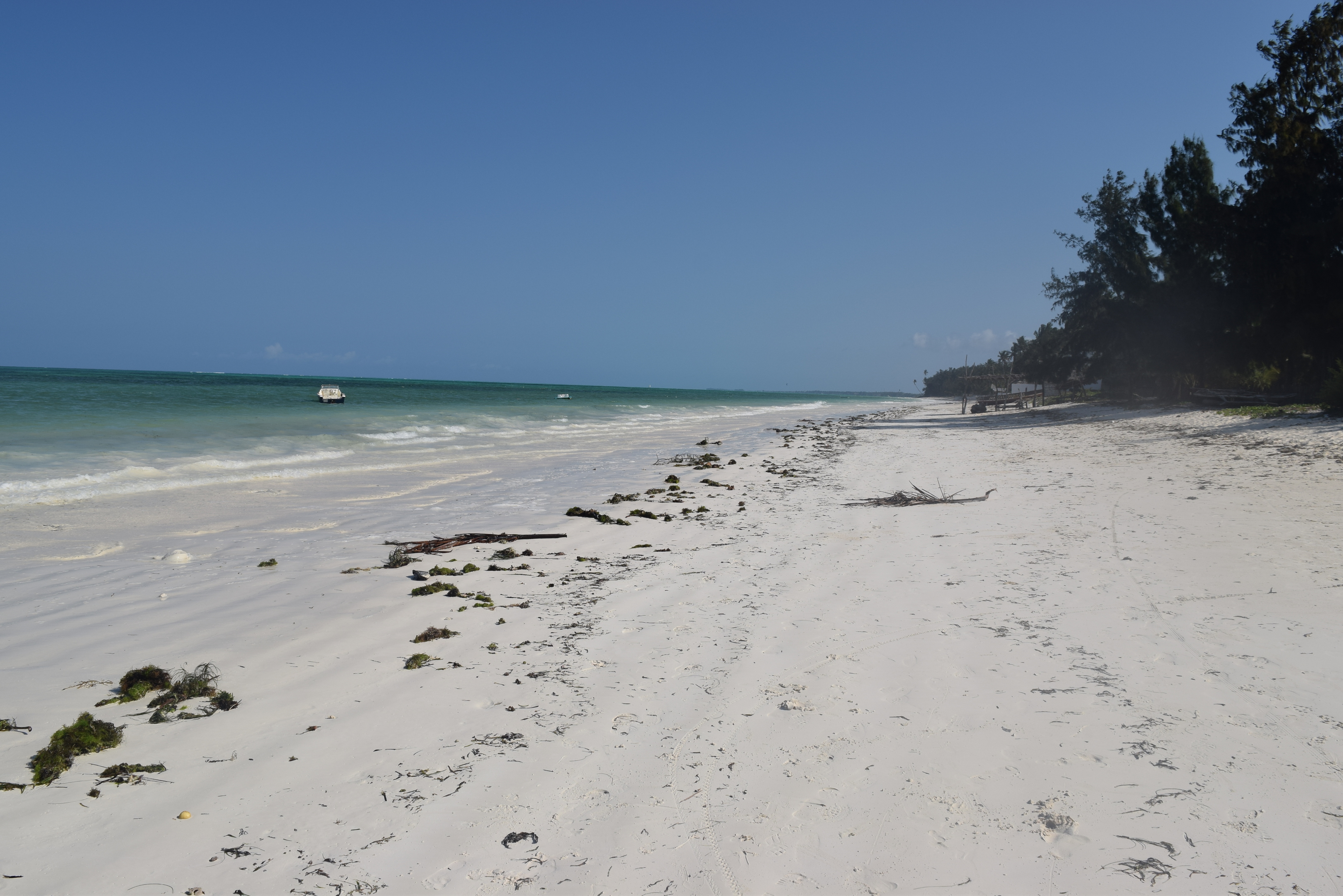
The beach in front of our villa
The villa itself was definitely not upmarket and missed some facilities and supplies considered by the more demanding tourists as “must-haves” (such as AC, electricity generator, or shampoo), but hey, do we really need all of these in order to enjoy a vacation on such an exotic and divine place? There is much more I would like to add to this topic later on. For now, I just want to mention that I haven’t heard about the term “responsible tourism” before this vacation.
The service staff at the villa, which consisted of a manager, a cook and two house maids, was very kind and friendly. The cook, particularly, always tried to fulfill our culinary desires (his carrot crème-soup and tuna-steaks were just so yummy!). We were also lucky to have a fantastic restaurant offering Italian and local dishes just 100m away on the beach, as well as a great place to chill out and swim at low tides just behind our villa.
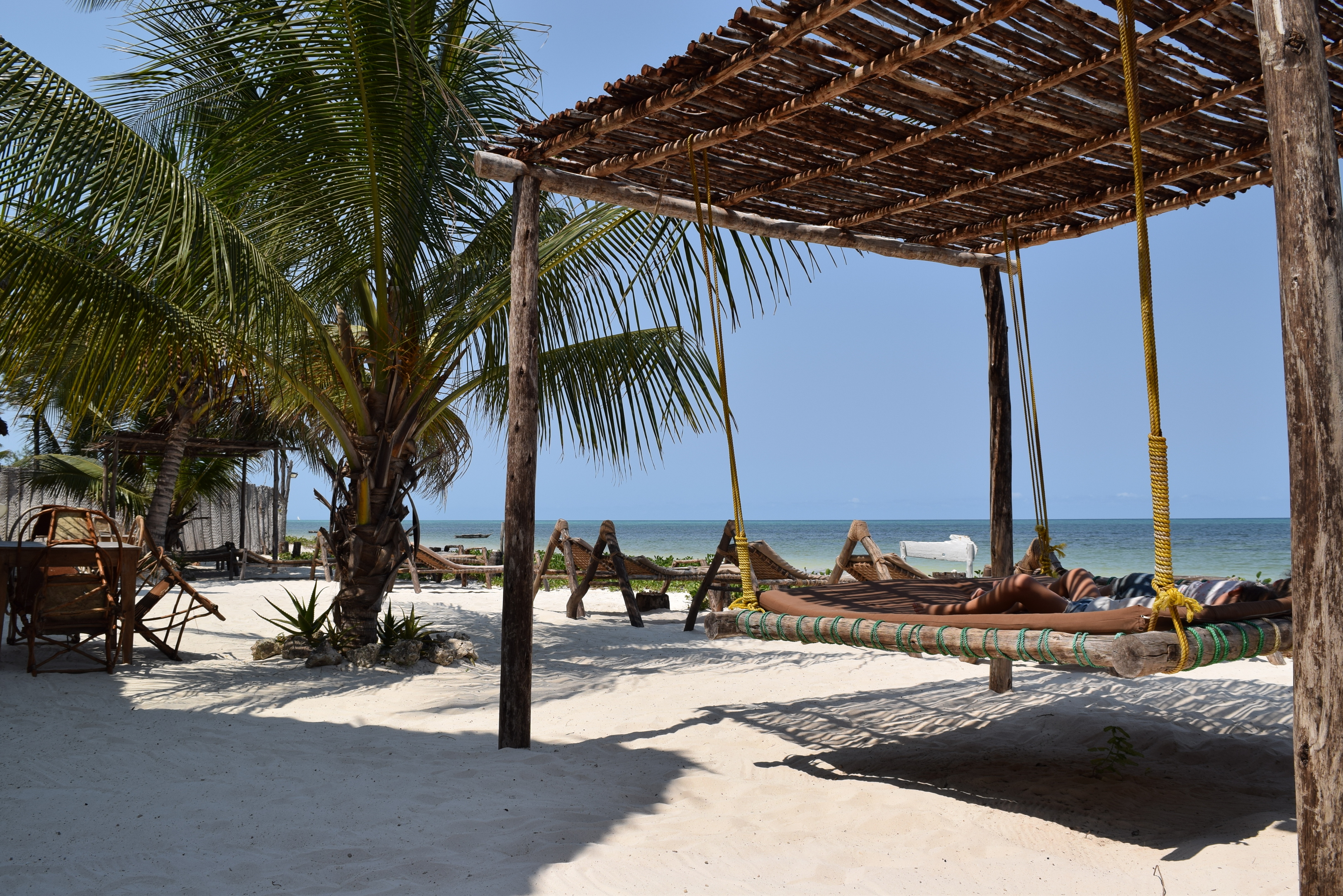
Chilling out at Sahari Restaurant next to us
Mustapha’s Place behind us
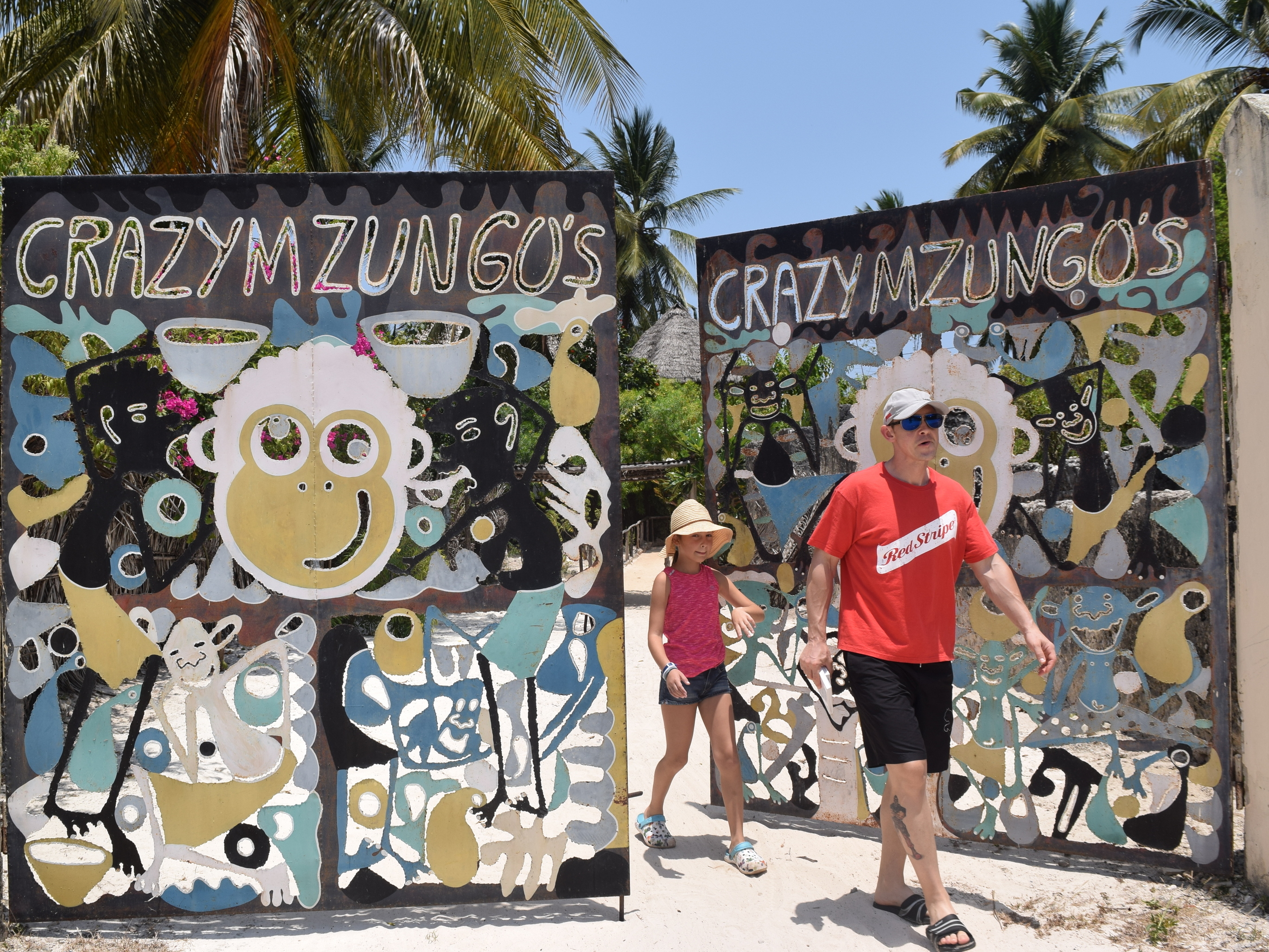
“Mzungo” is a word travelers often hear all over East Africa. This is the word locals use to call the white people, including in Rwanda. I was amused to read in a book though, that the real meaning of the word is to go around, to turn, to wander, to travel, or just to be tiresome. Isn’t it a perfect description of the typical white traveler who seems to have never visited enough new places? Me including 🙂 Nevertheless, we should be at least grateful that the Maasai word for Europeans is not widely used. Inspired by the trousers-wearing invaders, they called them “iloridaa enjekat” – those who hold their farts 🙂 🙂 🙂
I think the sign engraved in the gates of our villas says it all: “Crazy Mzungo’s”. As funny as it sounds, this is how locals perceive white people and their endless whims and caprices.
Leaving aside the accommodation-related factors, there is one very important thing we couldn’t compromise on, and fortunately, we didn’t need to. The turquoise sea is probably one of the main reasons why you would want to visit Zanzibar. But would you go on vacation to a blissful white sand beach only to find out that you can’t really swim there? I bet you wouldn’t. The reality is, this has happened to many travelers to Zanzibar. The reason is the TIDES.
The Tides
Since antiquity, Zanzibar has been washed by the tides from all around the Indian Ocean! Like many other ocean islands around the Earth. I knew that the tidal phenomenon is caused by the gravitational forces of the Moon and Sun and the rotation of the Earth, but I never realized that the timing of low and high tides can vary so much. For example, on the first day of arrival, we had a high tide from around 11am to 4-5pm, while towards the end of our stay (7 days) it was present between 2 and 7pm, with higher levels than ever before. This made it possible for us to enjoy swimming just in front of the villa every single day.
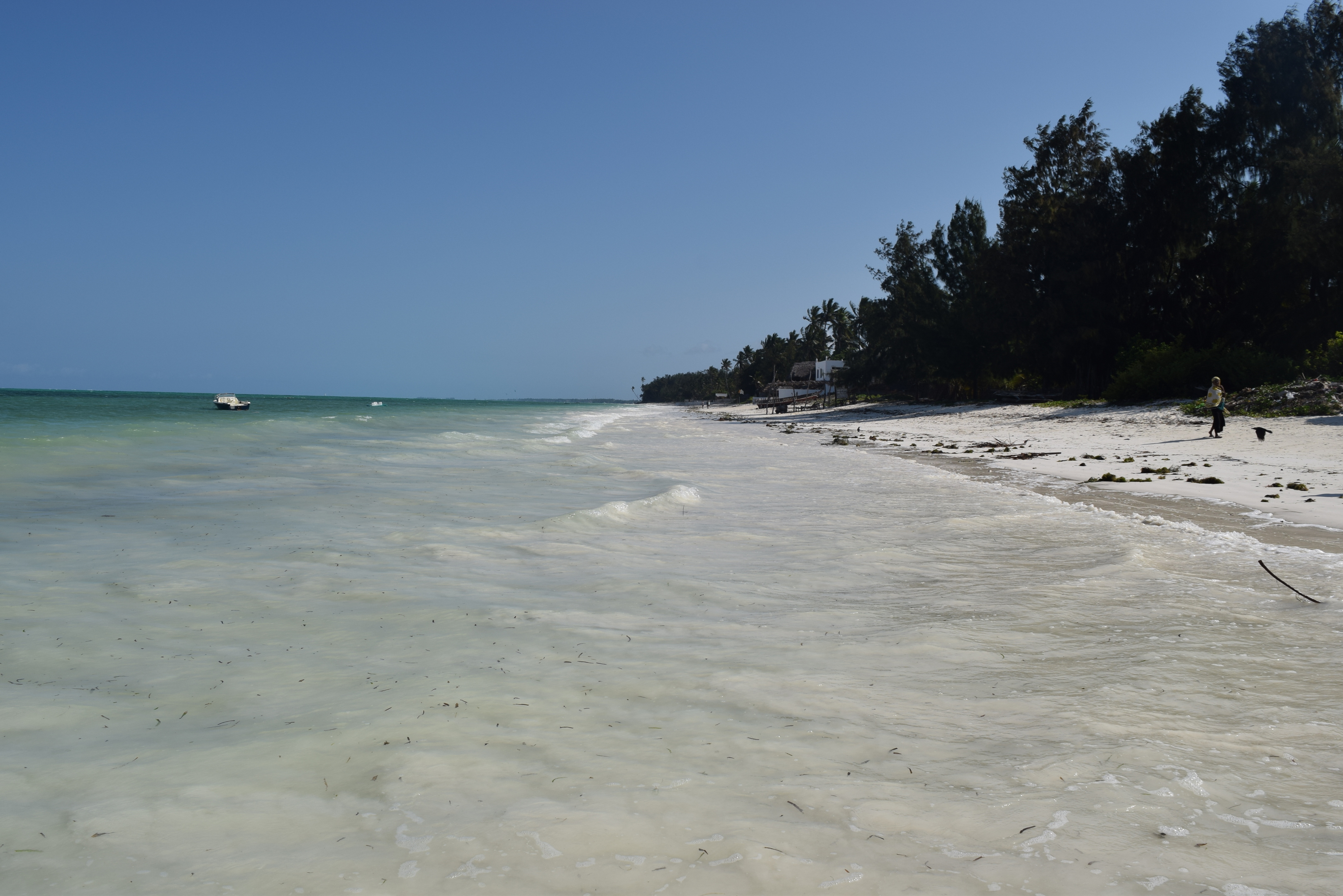
Our beach at High Tide
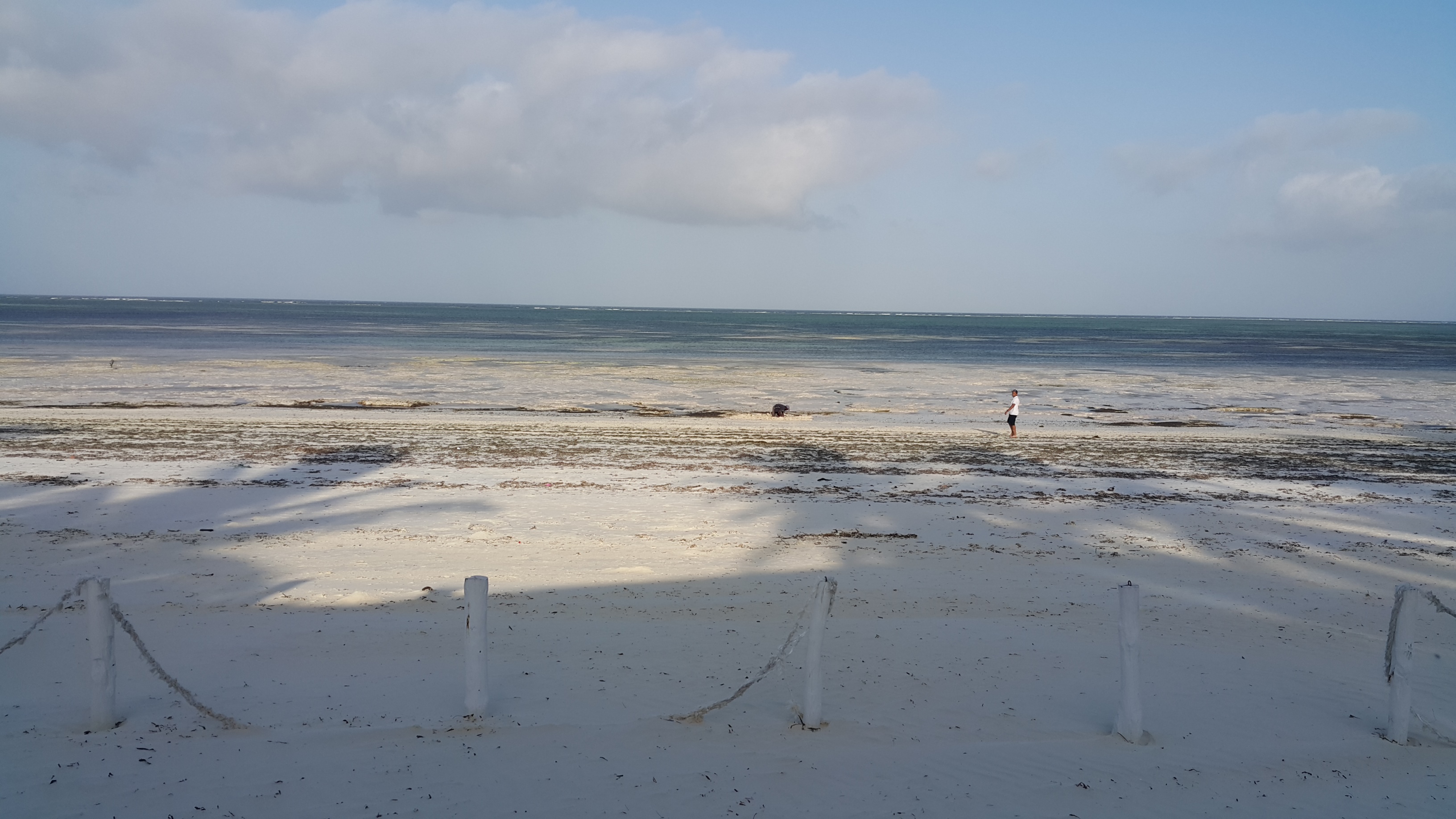
Our beach at Low Tide
Nevertheless, I noticed that the abundance of seaweeds on the beach during low tides doesn’t necessarily spoils your swimming when the high tide comes as the majority of them is washed away by the tide.
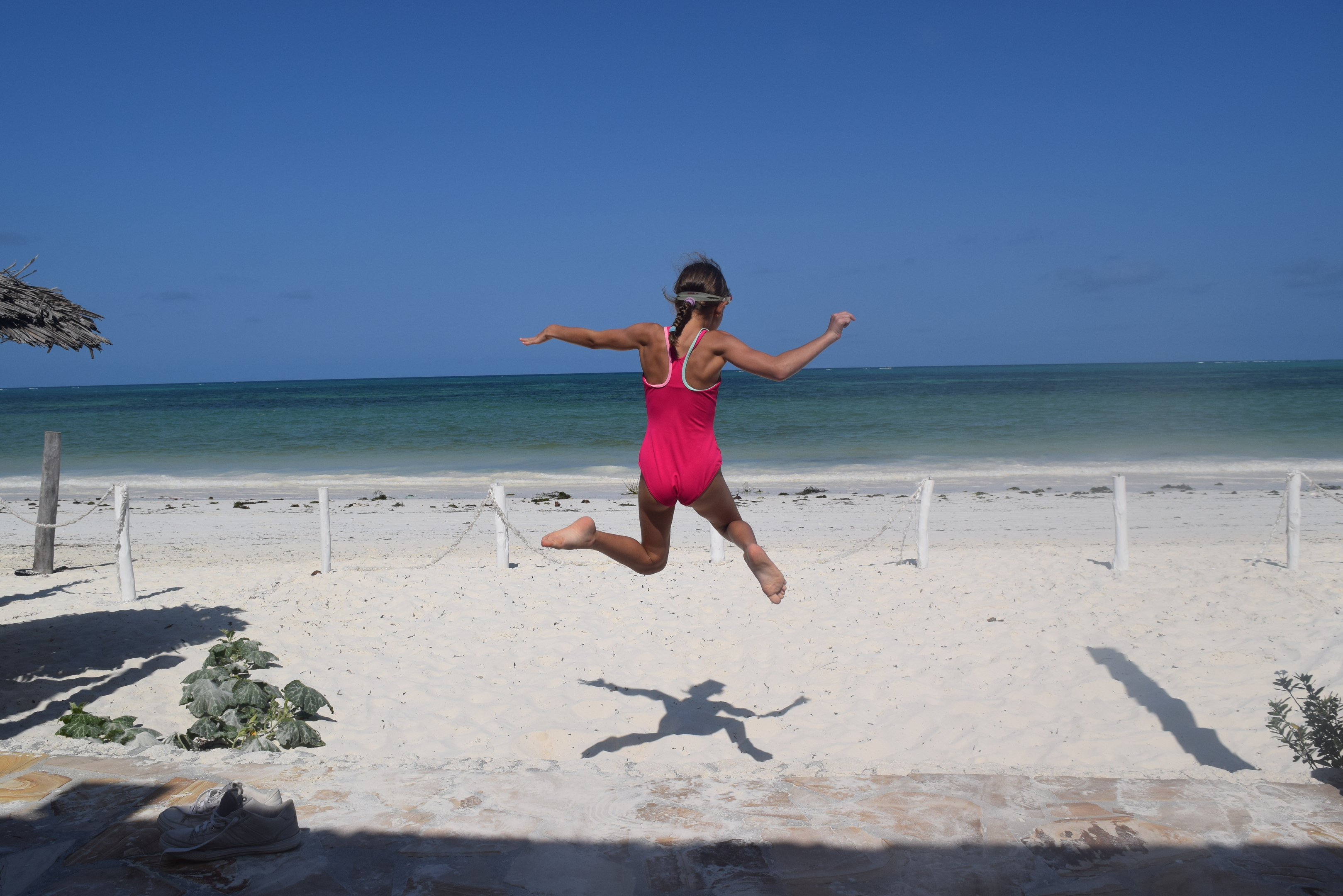
The High Tide is calling…
According to travel experts, Bwejuu, along with Kendwa (to the North), Matemwe (North-East), Pongwe (East) and Jambiani (South-East), are the places you can find the best beaches on Zanzibar. I heard that there are spots, where the window for swimming is so short due to the tides and seaweeds, that it’s practically not possible to swim there at all. On the contrary, Nungwi and Kendwa are among the few places on the island that are not influenced by the tides, thus swimming is possible throughout the whole day.
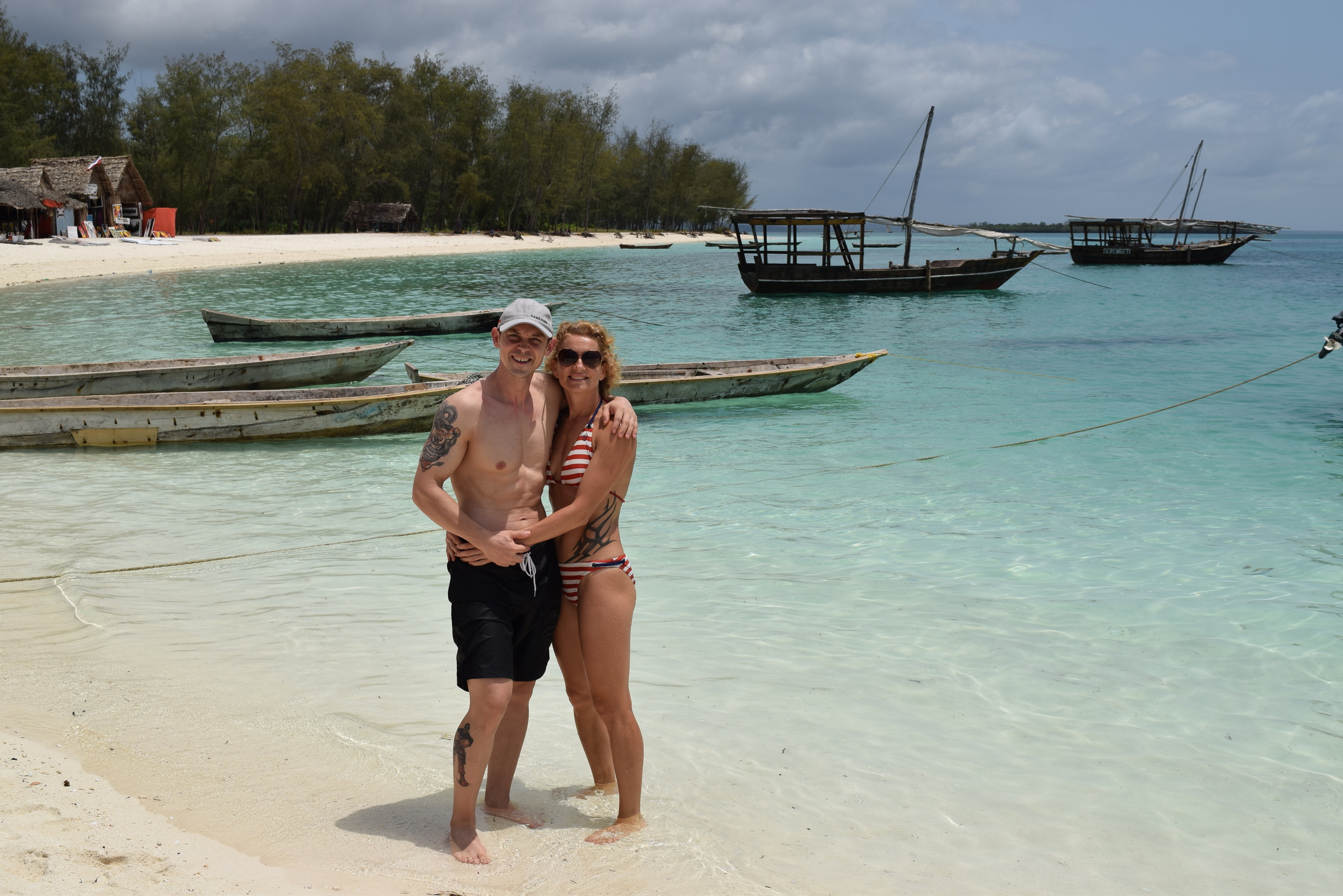
At Kendwa beach
The Locals
As a born by the sea but living for almost 20 years now far from it, I used every moment to enjoy these bountifully blissful beaches. My mornings would start early enough to take a walk on the long beach and fully indulge in the tranquility and colors of the sunrise.
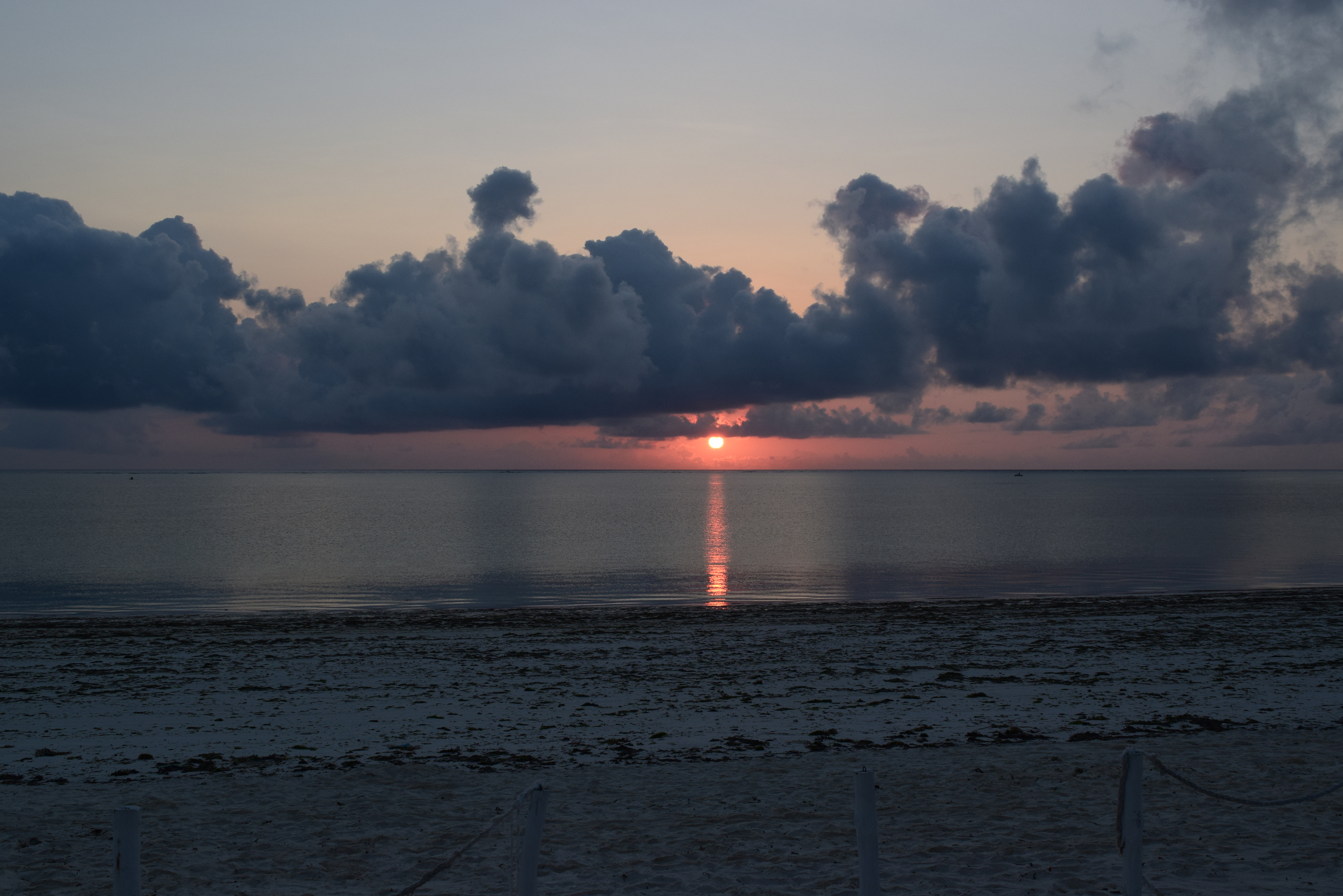
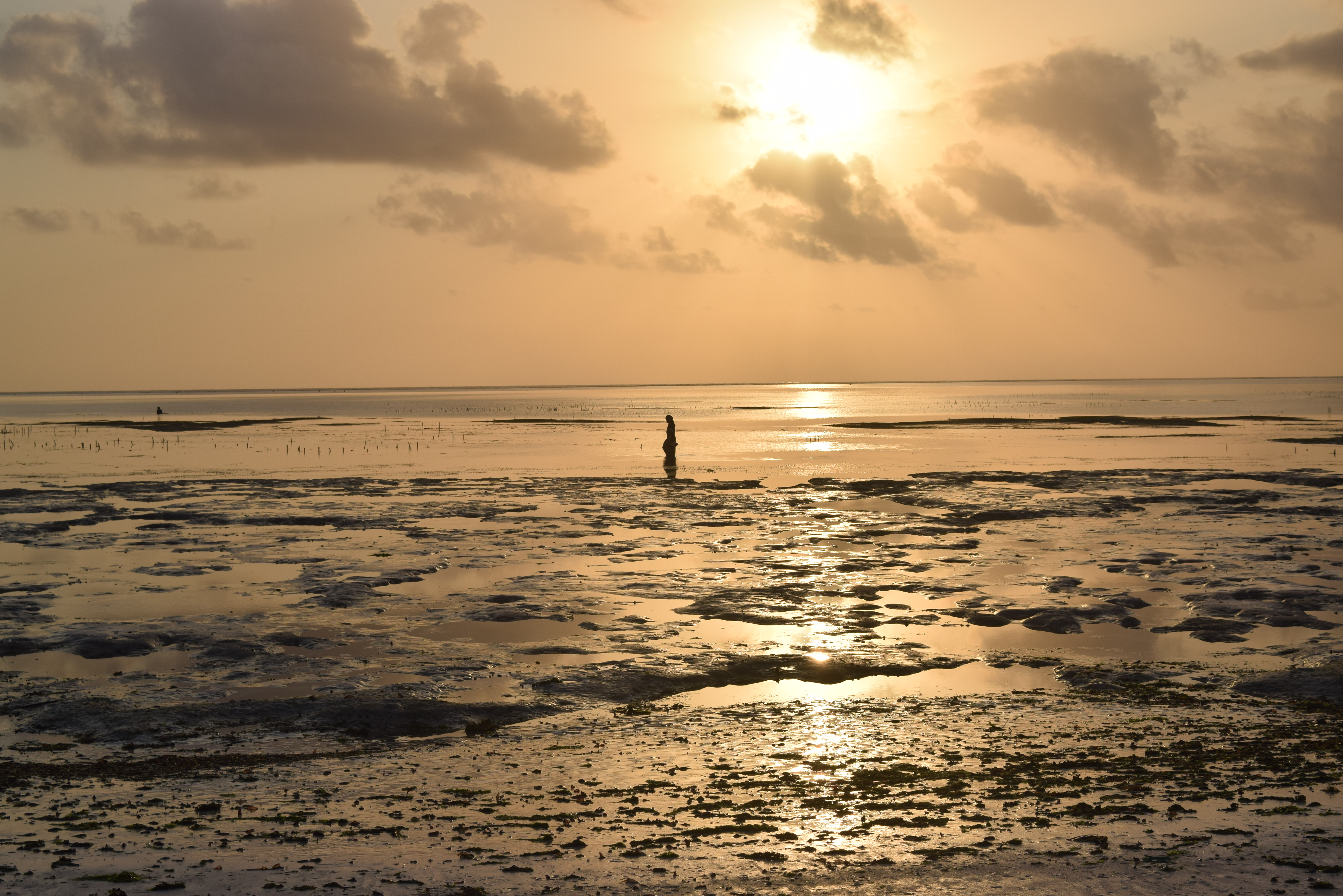
With a peaceful mind, and fully undisturbed by the beach boys (often Maasai) who usually appear from nowhere and start selling you passionately local trips, souvenirs and spa procedures. Not that I really mind their presence. On the opposite, the presence of Maasai beautifully dressed in their red Shuka (traditional clothing wrapped around the body) and proudly wearing their Rungu (their traditional weapon) always fills me with admiration for this mystical tribe.
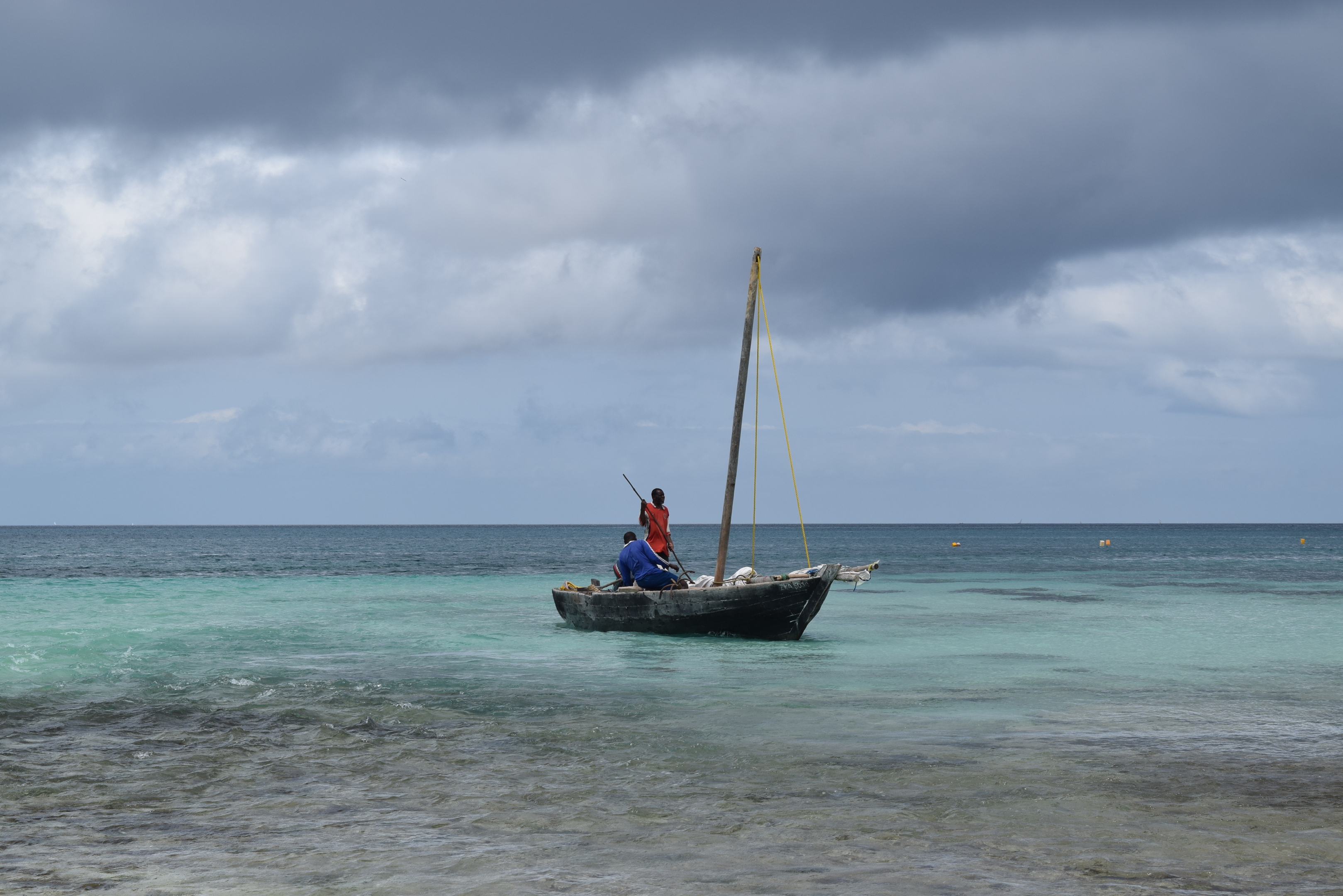
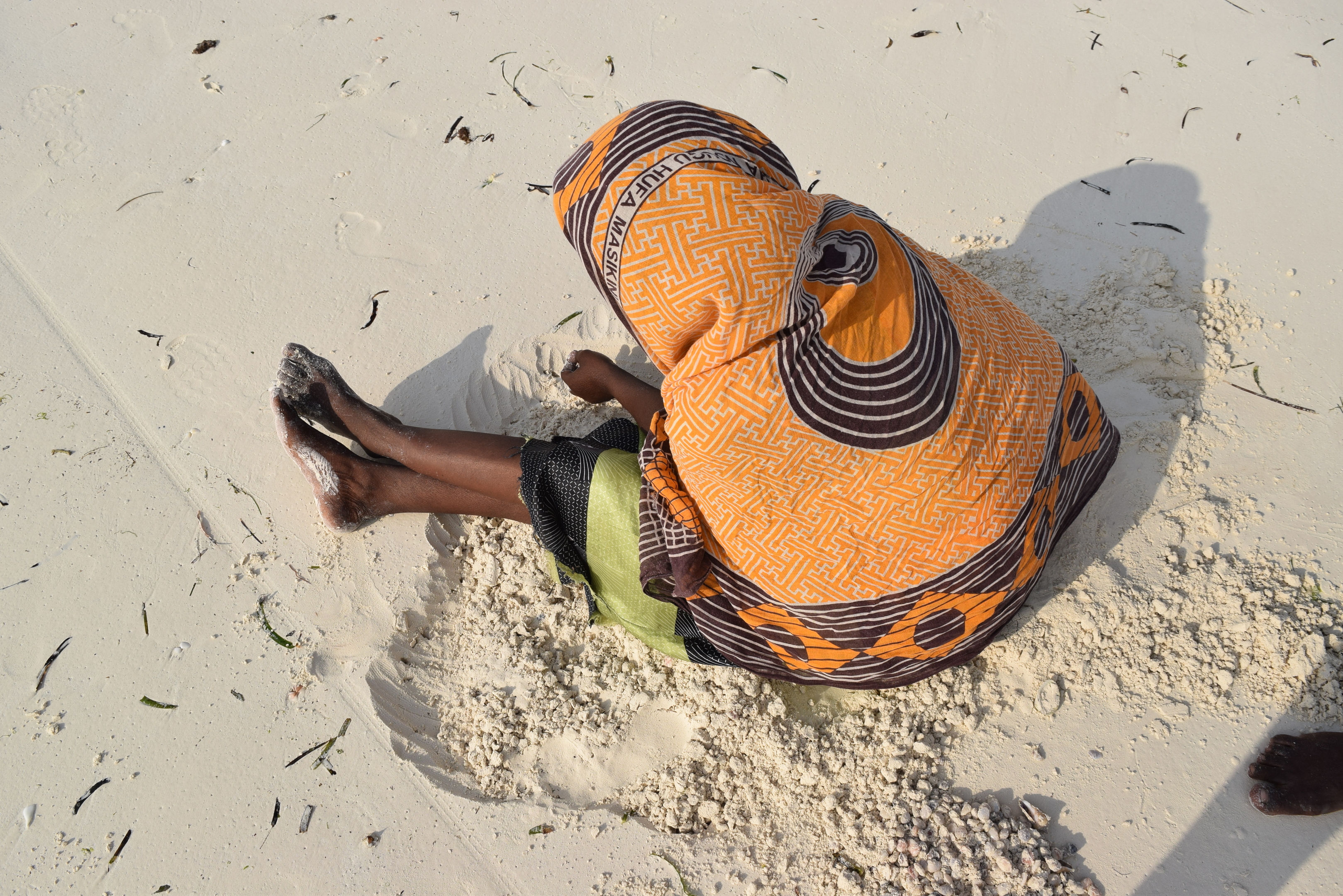
During these walks I would see fishermen in the shallow waters, women collecting small shells on the beach (which are usually cooked in curry and coconut sauce) or “crazy mzungo’s” doing their morning workout or run.
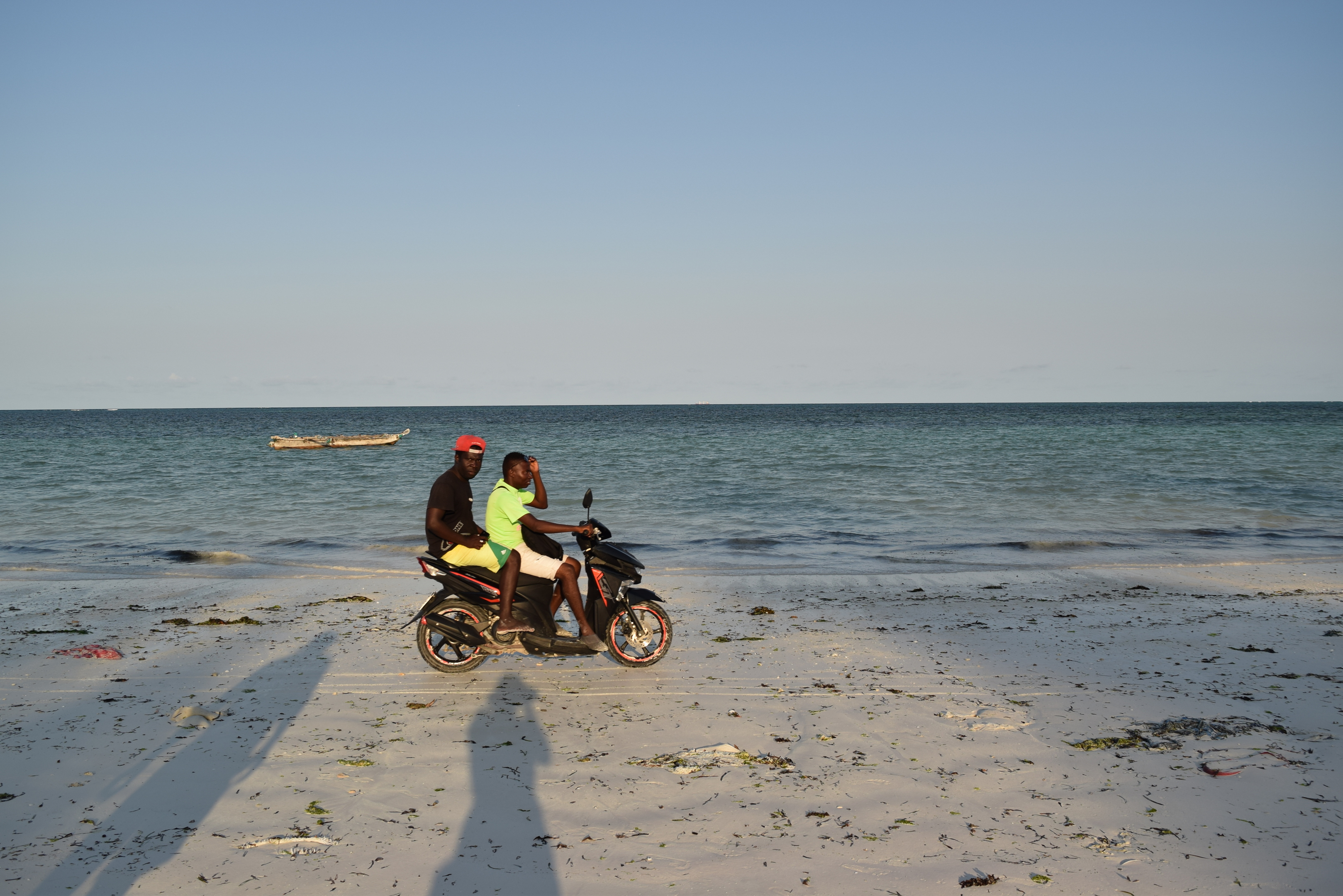
The sand is so compact and hard, that motorcycles and bicycles are a typical picture on the beach in the late afternoon.
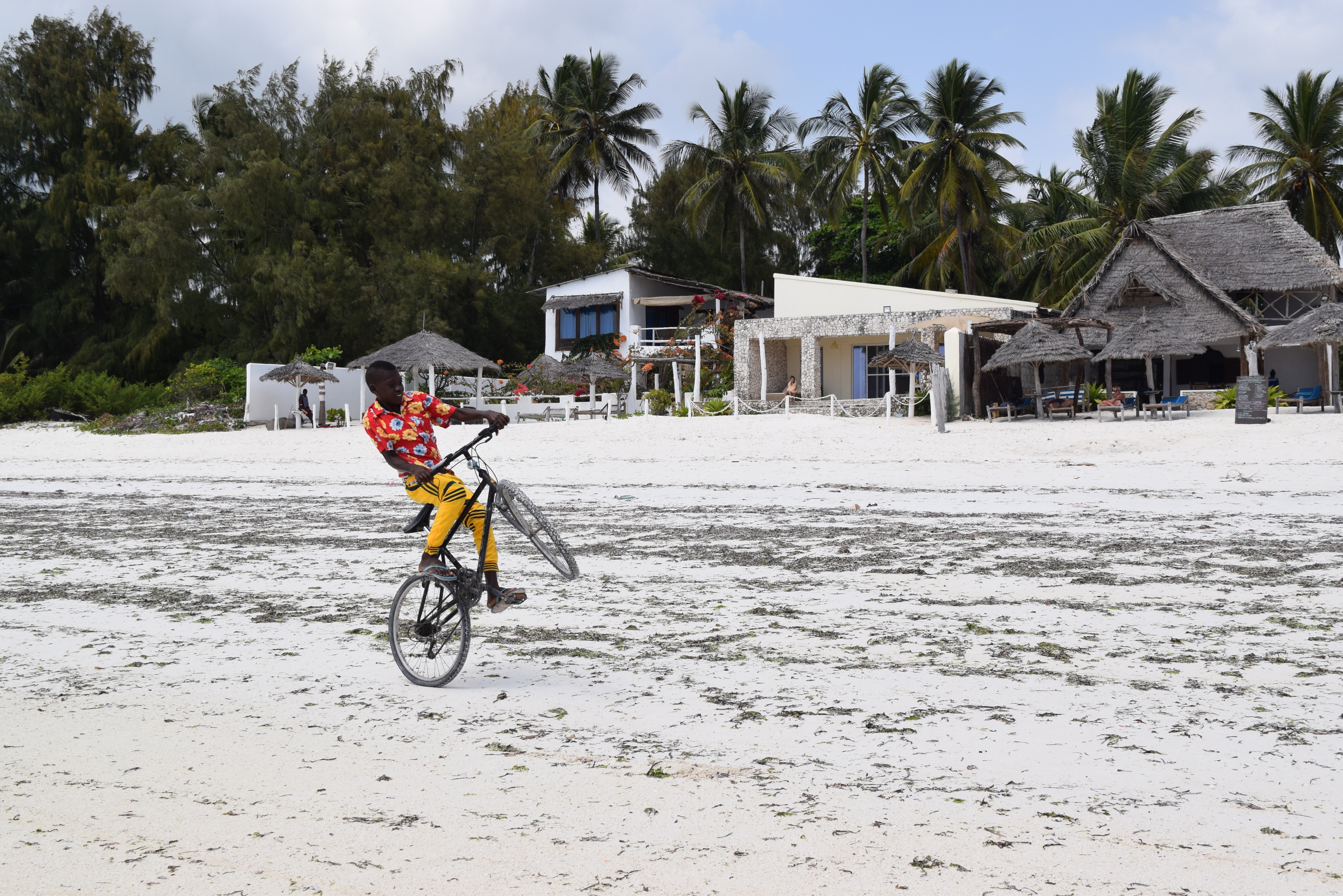
My favorite beach occupants though are the local kids. These kids know what freedom is! They might not live in comfort and resource abundance like we, Westerners, do but they are definitely happier than many kids from the developed world nowadays. They probably don’t realize it yet. Happiness is written on their faces, but also wisdom and maturity despite their fragile age, or maybe exactly because of their age.
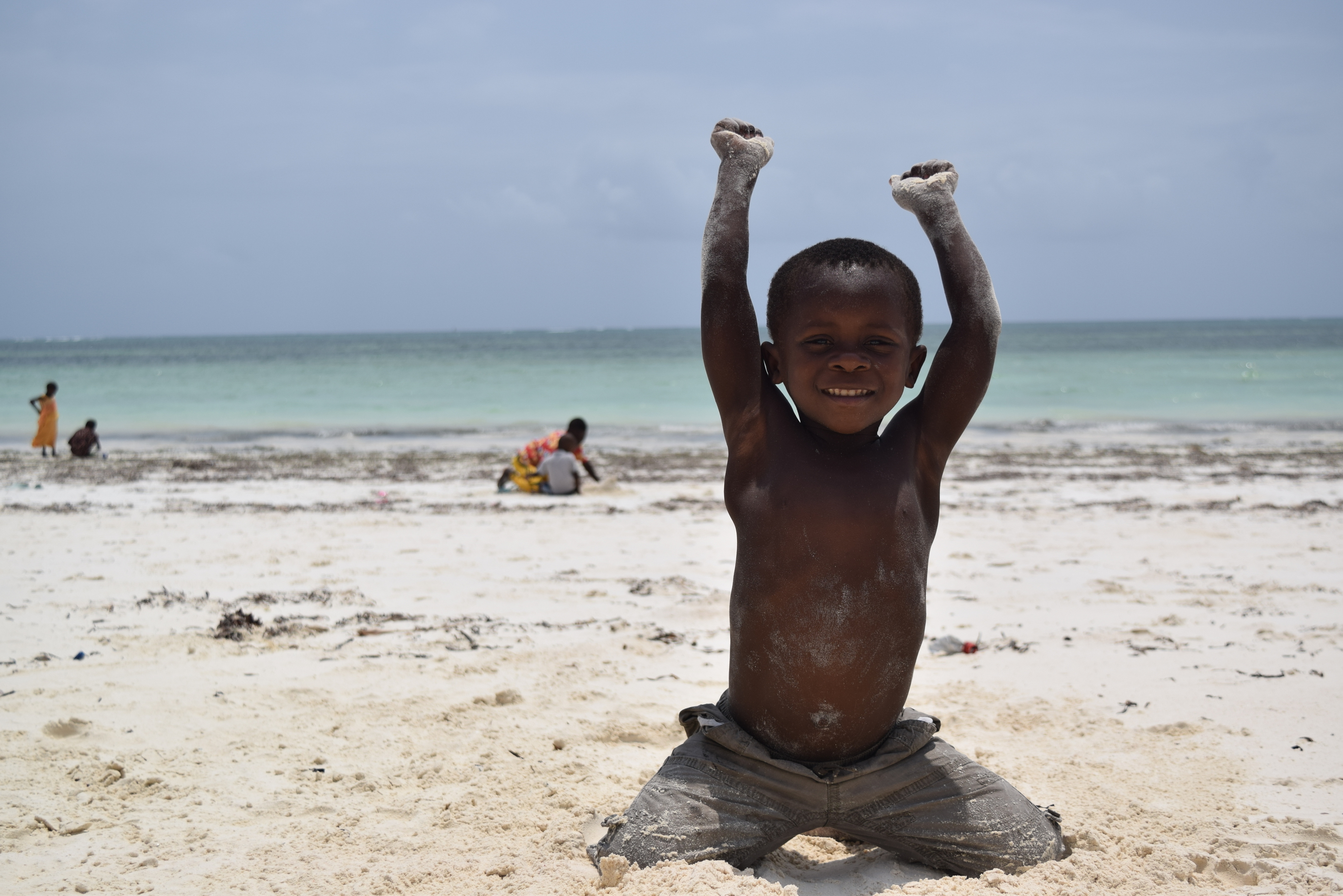
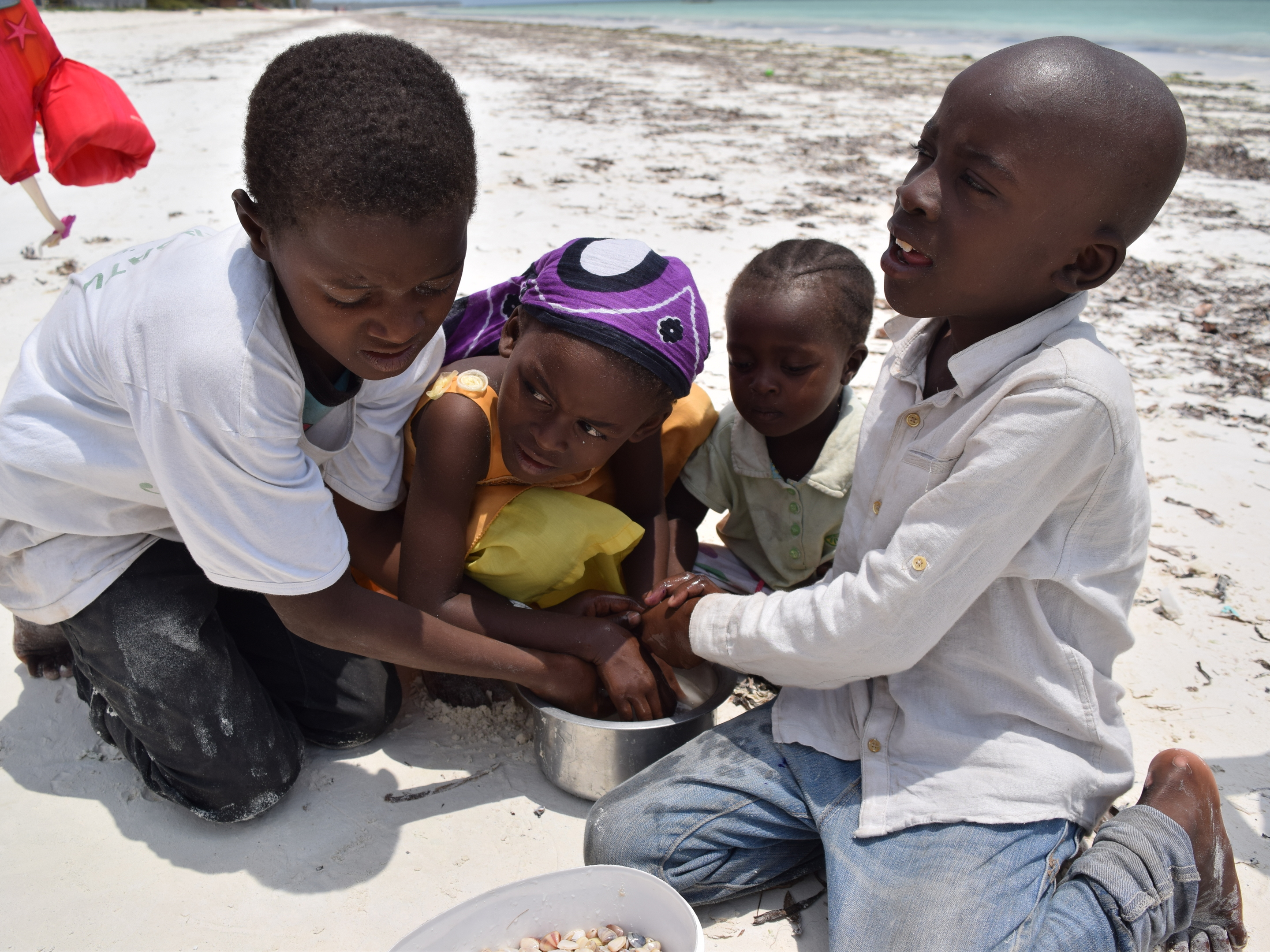
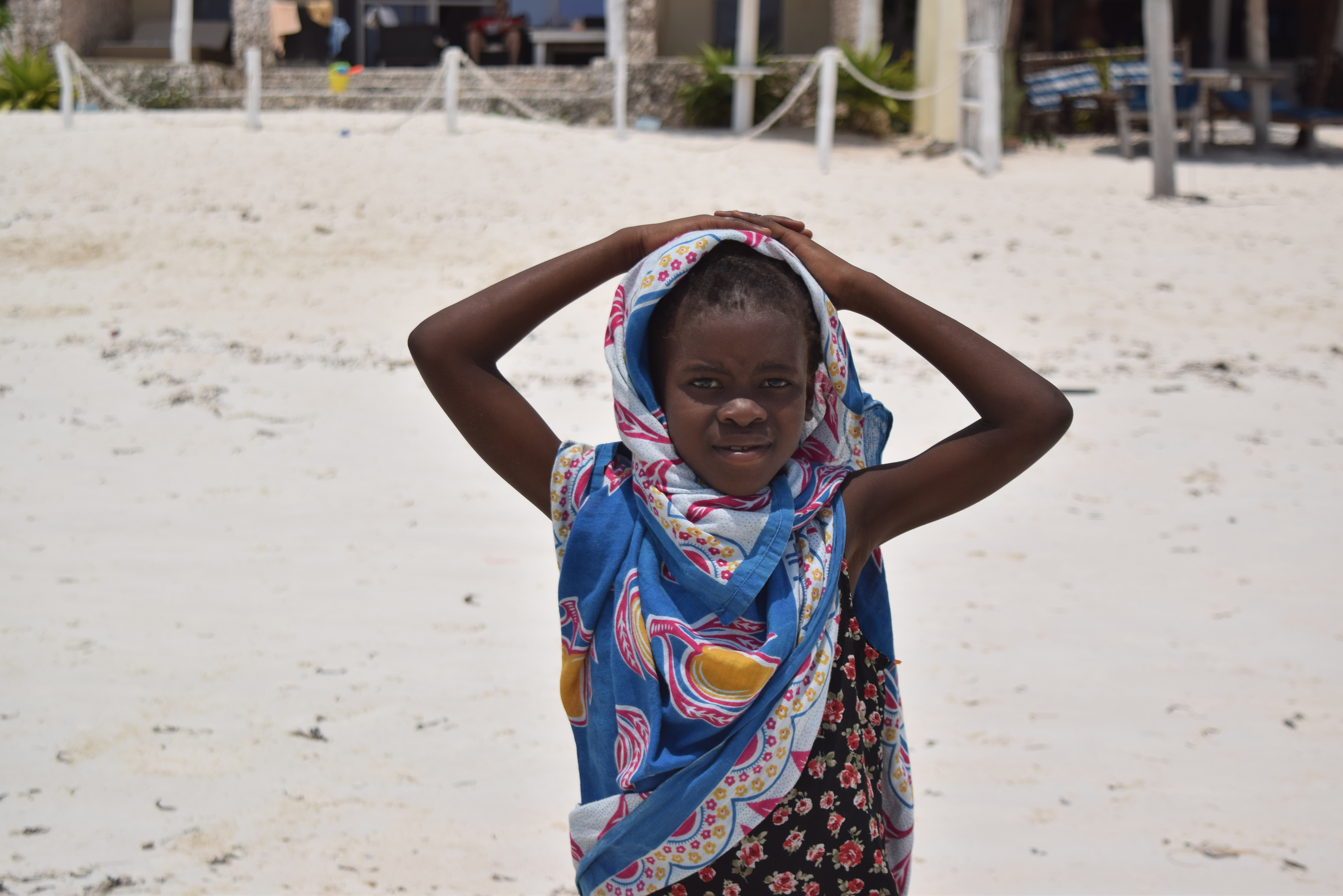
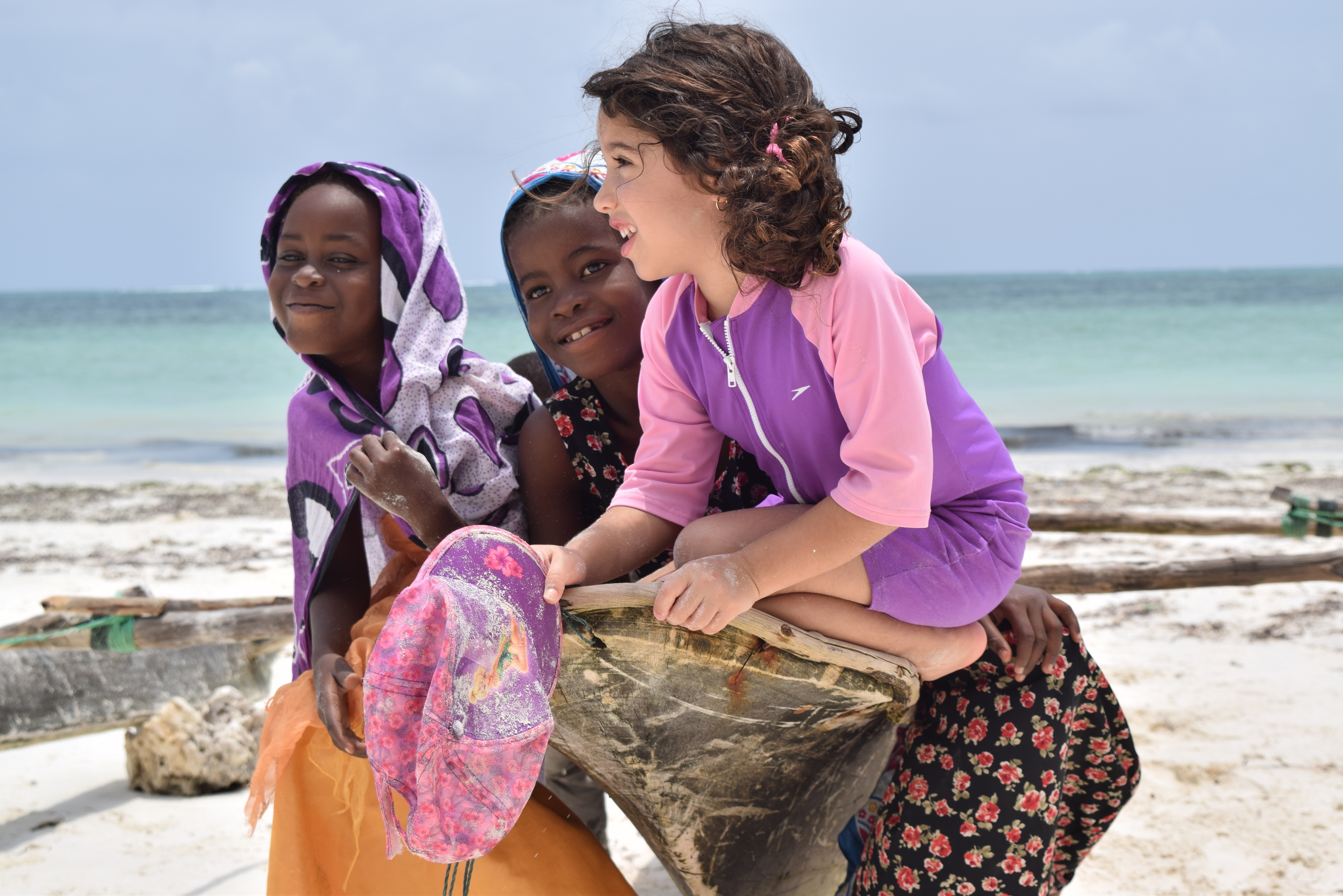
They would play freely on the beach, go for a swim whenever they want, create beautiful sand castles, or make front flips using a truck tire as a springboard. This kind of free outdoor play is exactly what our modern kids miss so much in their everyday life, overwhelmed by school activities and devices…
The sea has always had a strong gravitational power for me. I was so impatient to go for my morning or afternoon beach walks. This was the time to connect to the nature with all my senses. And because I didn’t want these moments to finish, I had to capture many of them with my camera.
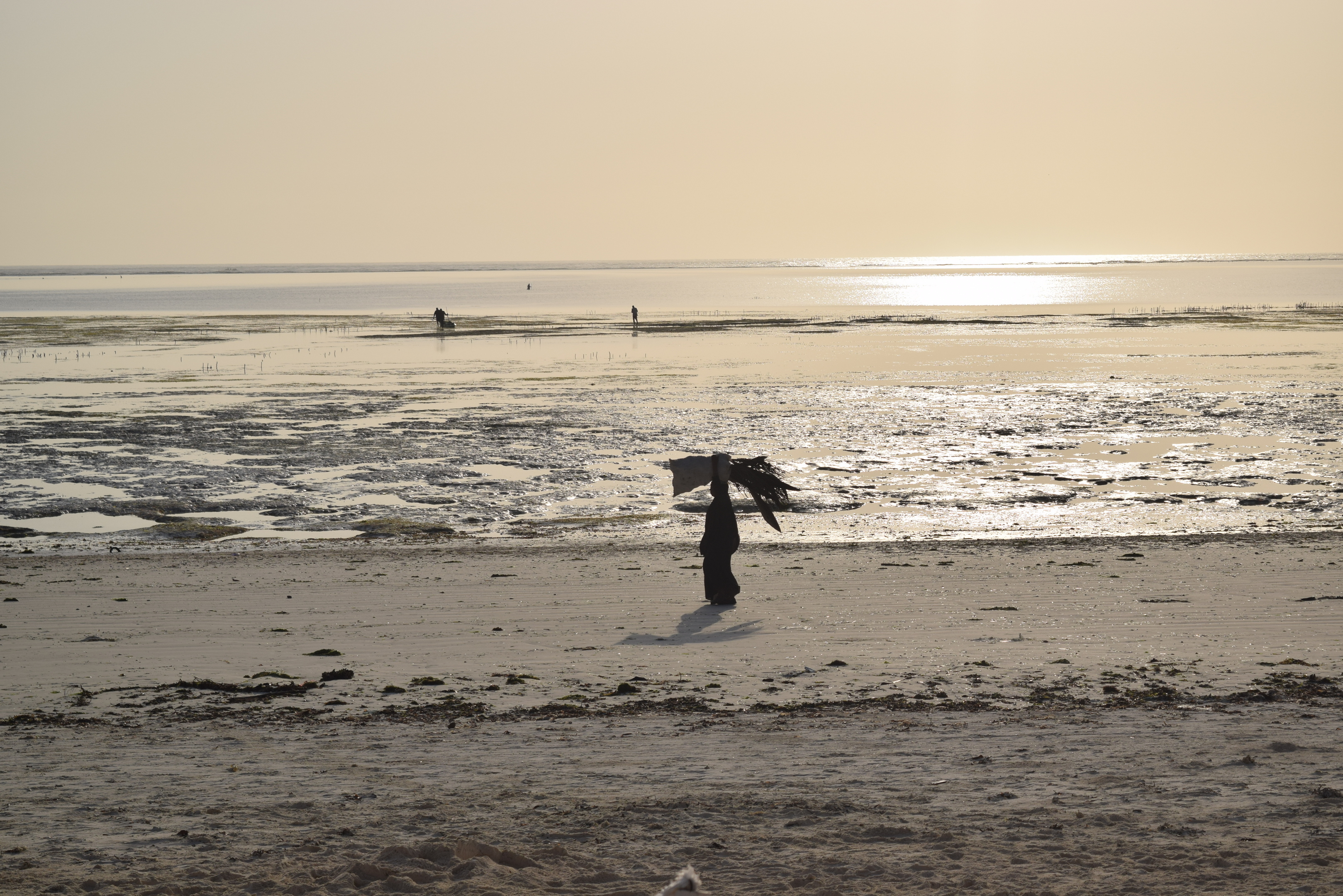
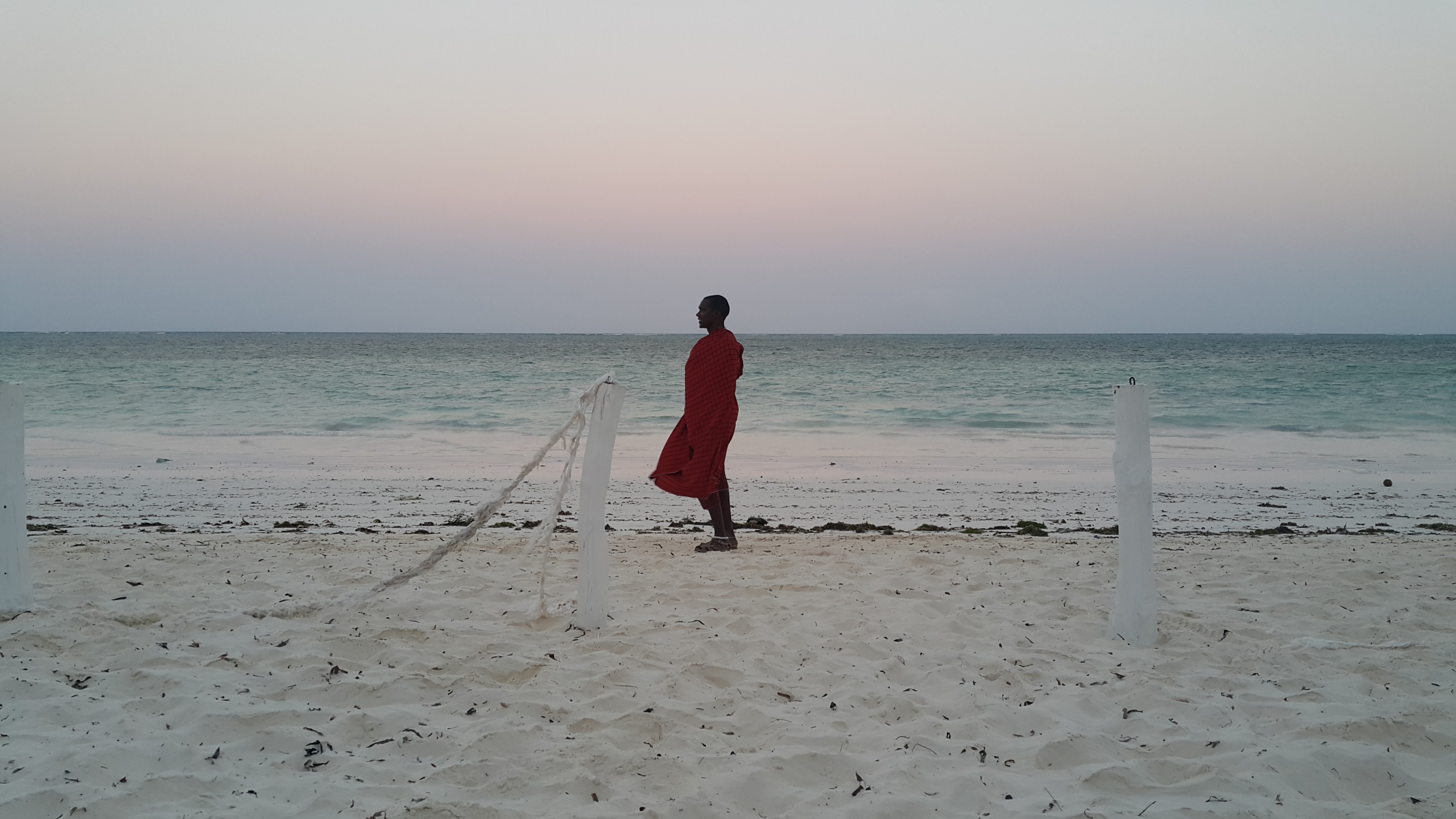
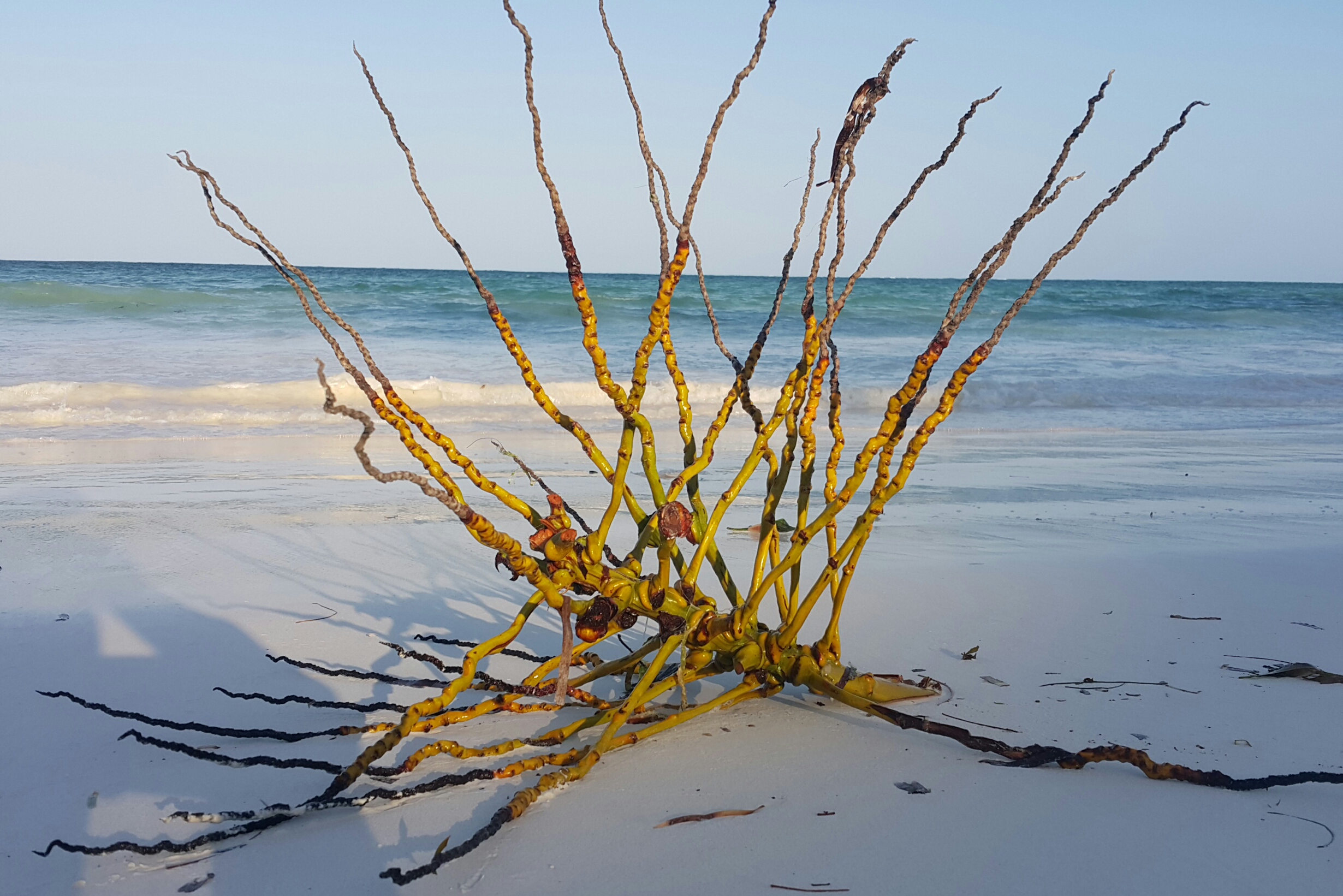
Almost every afternoon, a local woman would drop by the villa to offer her spa services. After some initial hesitation, I decided to try. She was waiting for me for hours to come back from the daily trip, and when I looked at her, knowing that my humble financial contribution would probably ensure her weekly food supplies, I had no regrets of taking her services. Neither had I any regrets after the fantastic coconut oil massage I got that afternoon!
Our activity program
As much as we enjoyed the lazy beach time around our place, the explorers in us called for action. Many tourists prefer to book their culture trips or activities directly at the agency or through their hotels; we decided to trust one of the beach boys. Like his “colleagues”, Teddy was also a mediator between the actual tour providers and the tourists. But this guy had something. He was different. Unobtrusive, honest and accurate. We didn’t think a lot. Within less than 30 minutes, we had a program for the next 4 days, which included a visit to Stone Town and the prominent spice farm, swimming with turtles, swimming with dolphins, snorkeling, starfishes, and dinner at the most romantic restaurant on Zanzibar.
Teddy proved a real professional. Always on time. Fully reliable. And on top of this – a very funny boy. He and his partner, called Bruce Lee because of his master performances in martial arts, are a real gold and I would be more than happy to provide their contacts, if you need a local reliable guide who knows how to fulfill the caprices and demands of the mzungo.
The Spice Farm
Long before Vasco da Gama’s opening of the sea route to India, Zanzibar had traded spices with Arabia, India and even China and the Far East. It was the Omani though who discovered that Zanzibar hot and humid climate was just perfect for the cultivation of spices.
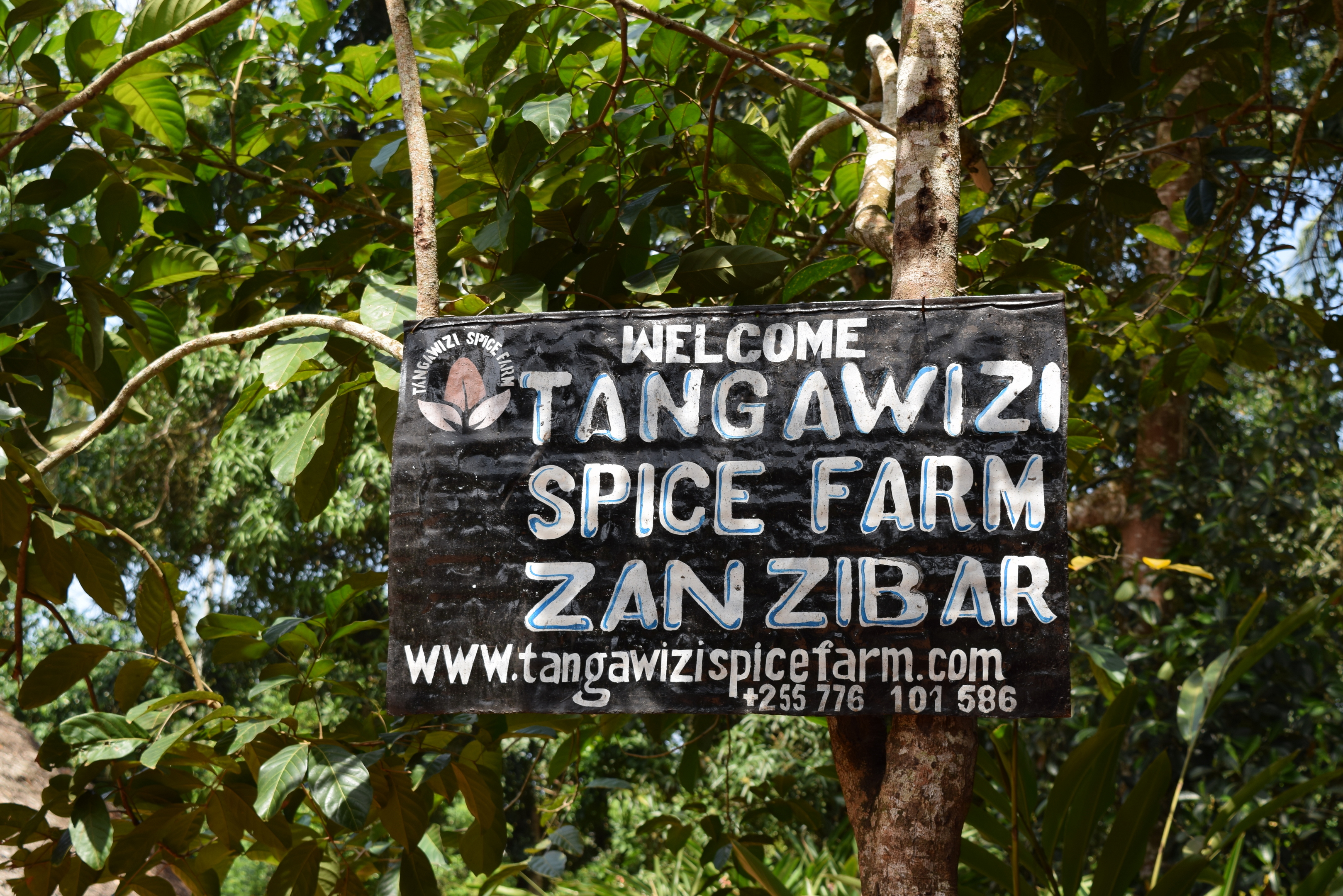
Therefore, a visit to a spice farm is a must. There might be several on the island. We went to Tangawizi (“ginger” translated from Swahili) spice farm close to Stone Town.
Cooking is definitely not among my passions, even though I like trying new recipes from time to time. But this spice tour opened my eyes and appetite to experiment more in the kitchen. There we got to see spices and herbs, which I’ve only seen in a ready for use form in the supermarket, but never as a plant.
To make the tour more exciting for us, our guide played a guess game – we would have to recognize the herb or spice of every plant and if we had no idea, he would drop a hint to help us.
Some of them were relatively easy to guess – the ginger, vanilla orchid, cacao, and lemongrass. However, we were standing absolutely clueless in front of other, not less well known spices, such as nutmeg (or “muskat” as we call it in Bulgaria), clove (“karamfil” in Bulgaria), cardamom (“kardamon”), turmeric (“kurkuma”), cinnamon, curry and cumin.
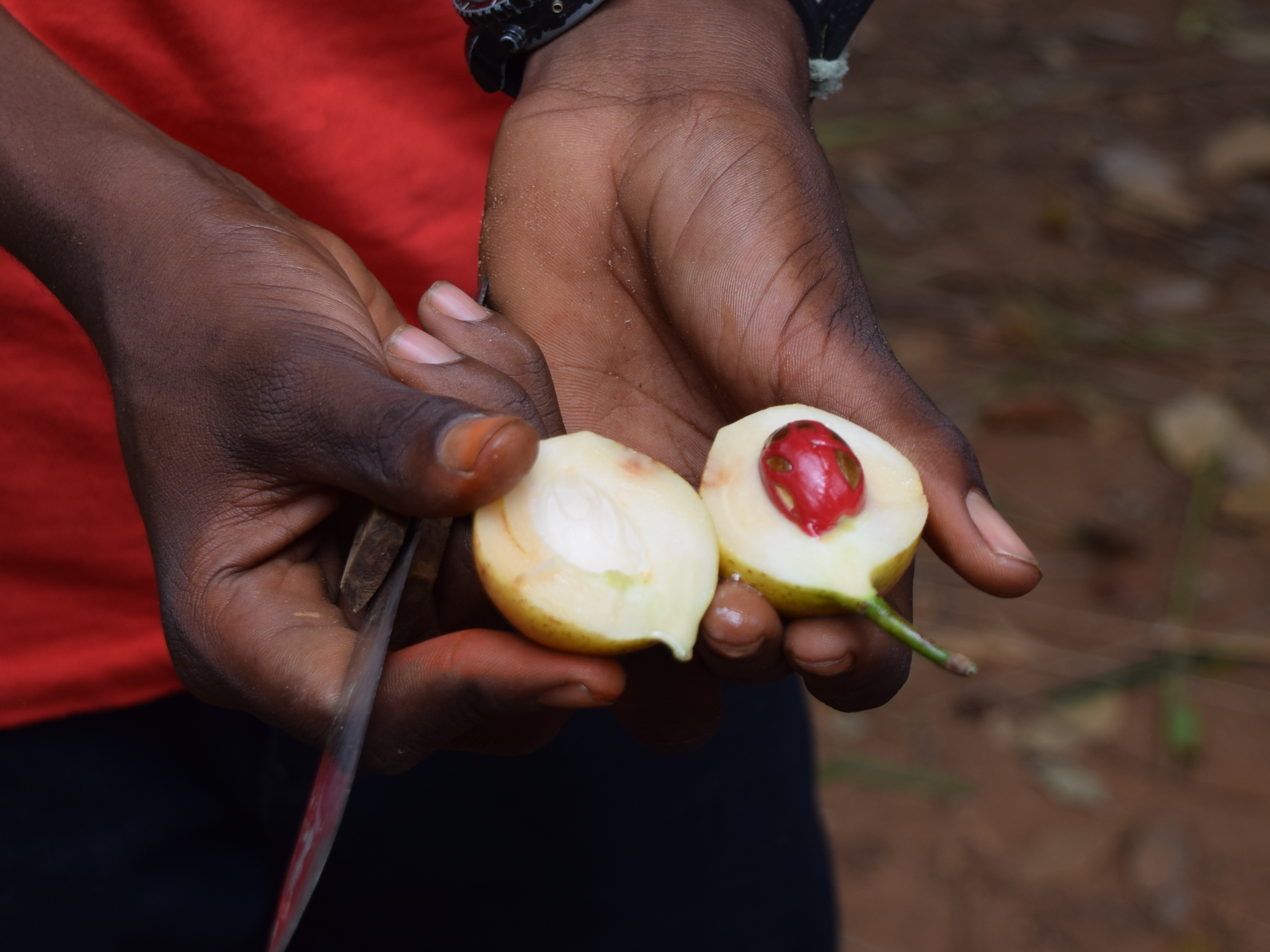
Nutmeg (muskat)
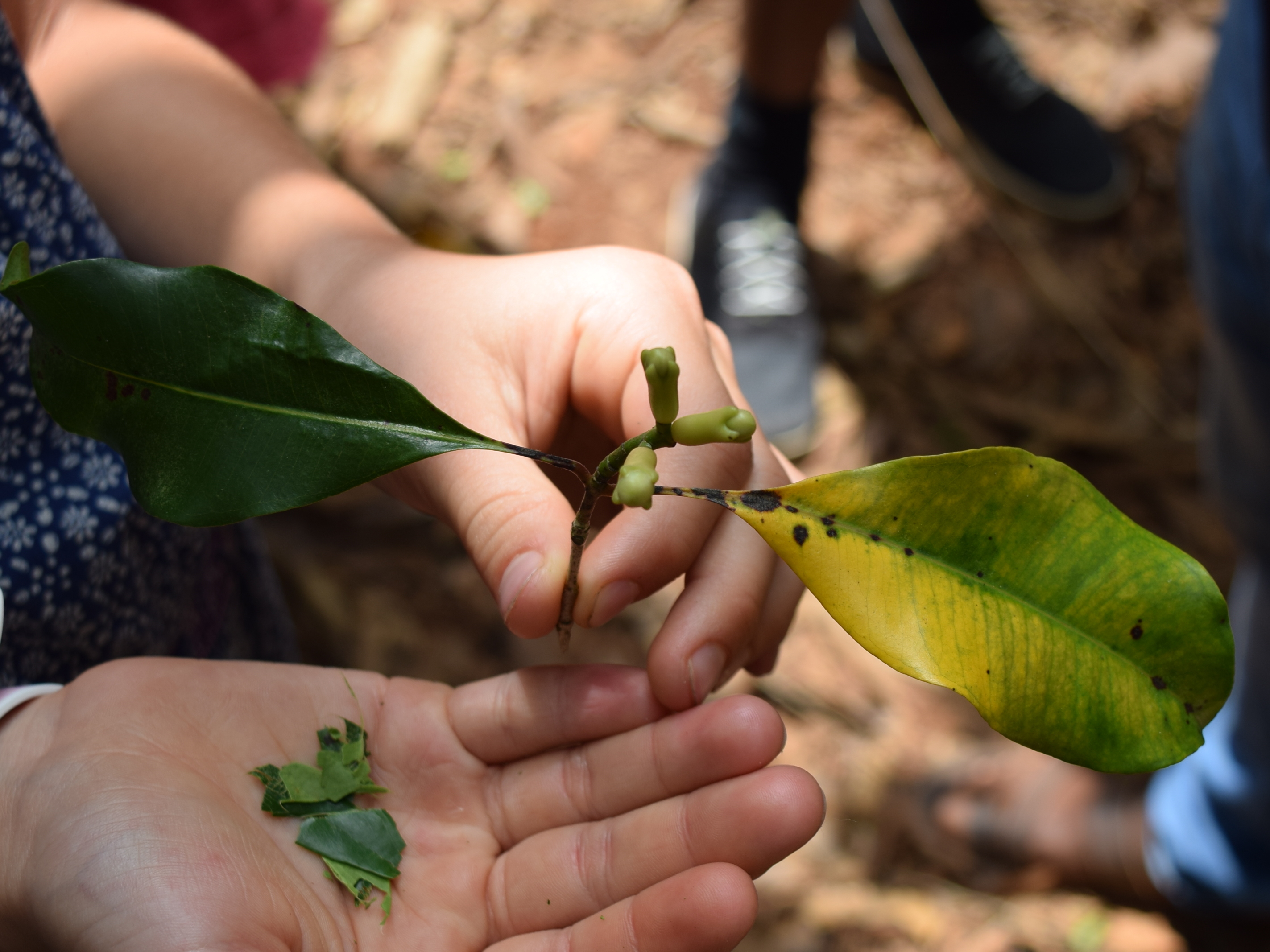
Cloves (karamfil)
There were also plants which were completely new to me – lipstick flower, used in cosmetics and langilangi (aka known as cananga tree or perfume tree), valued for the perfume extracted from its flowers. Its smell was very familiar to me but I couldn’t have guessed the perfume without the help from the guide; it came out that langilangi is one of the main ingredients in Channel No.5!
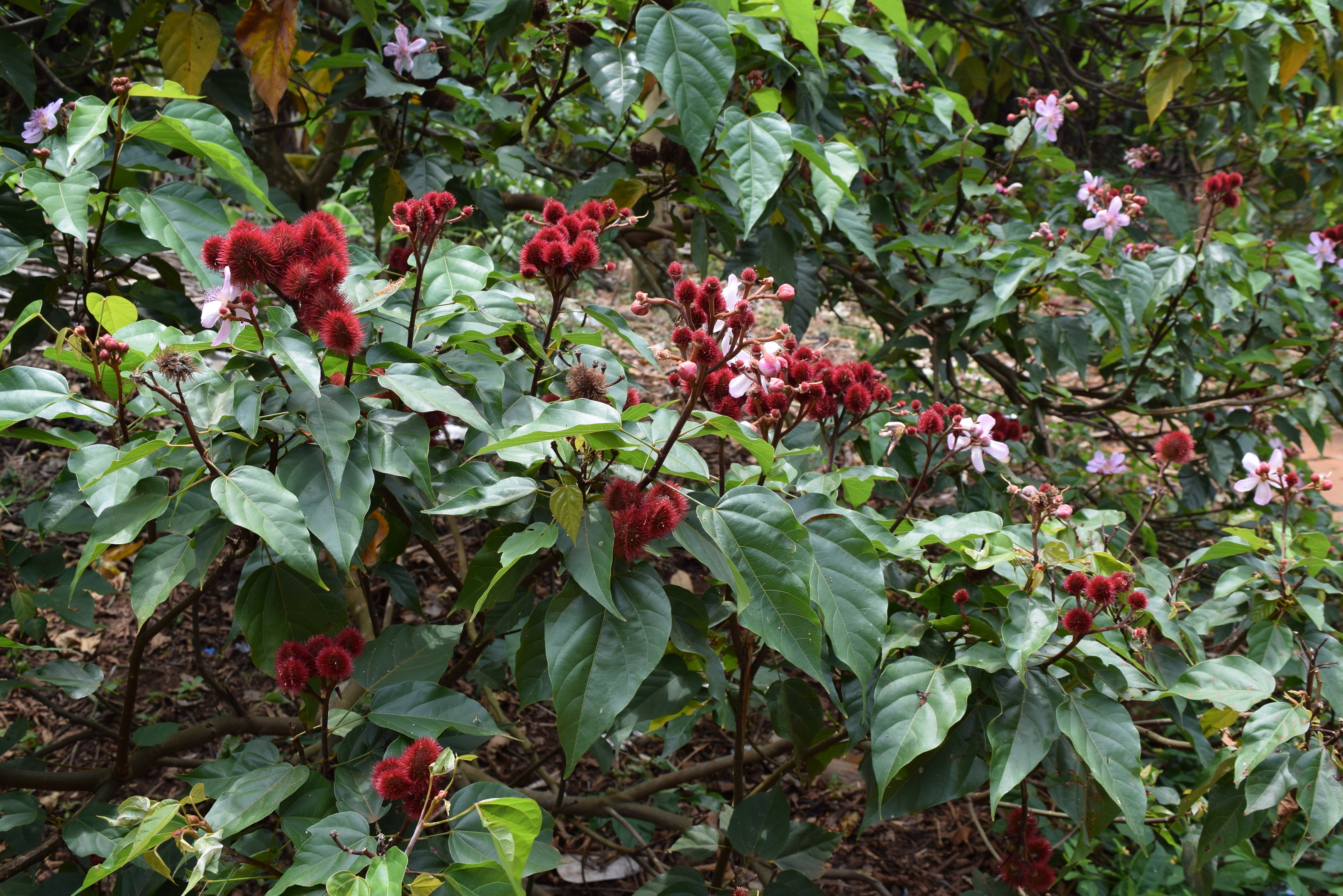
Lipstick Flower
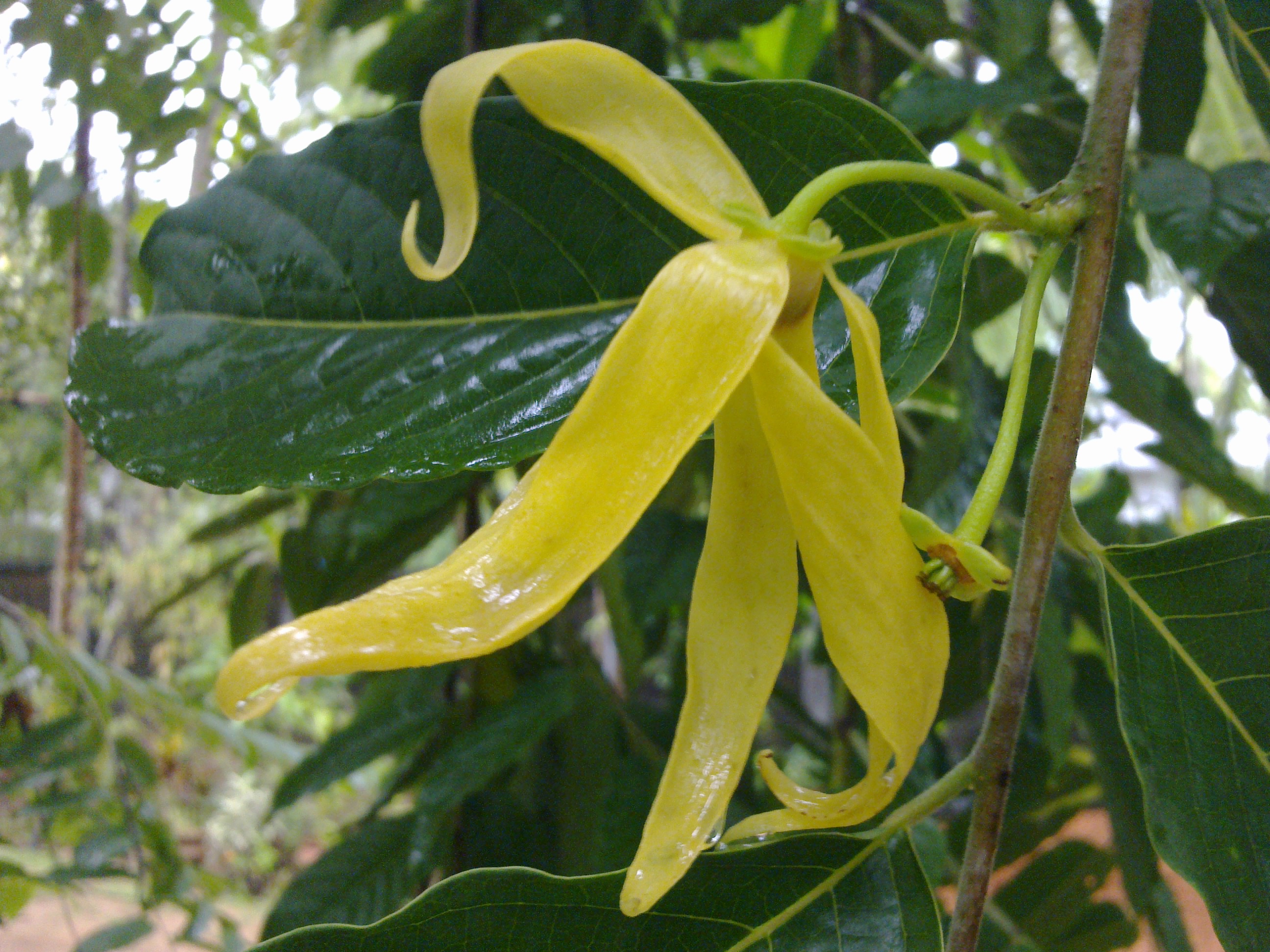
Langilangi Flower (used in Channel No.5)
We also learned some interesting facts. For example, the curry comes naturally only in green color (from the green leaves of the plant); red curry is achieved by adding lipstick flower powder, while yellow curry – by adding curcuma powder. Also not known to me was the fact the cardamom comes from the ginger family, thus has an aphrodisiac effect and is put in coffee and masala tea. As the guy at the spice stall told us: “you take it and then jiga-jiga bunga-bunga”, nodding his head knowingly 🙂
Besides herbs and spices, the farm also grows some fruits, all naturally fertilized. The only unknown fruit to me was jackfruit, a giant, fleshy, yellowish fruit, native to South Asia. It is considered the largest tree-borne fruit, sometimes reaching as much as 35 kg. Raw and ripe, the fruit tastes like a cross between a mango and a pineapple, I was told. However, we didn’t come to taste it, after we heard that it was banned from some hotels due it extraordinary bad smell when cut.
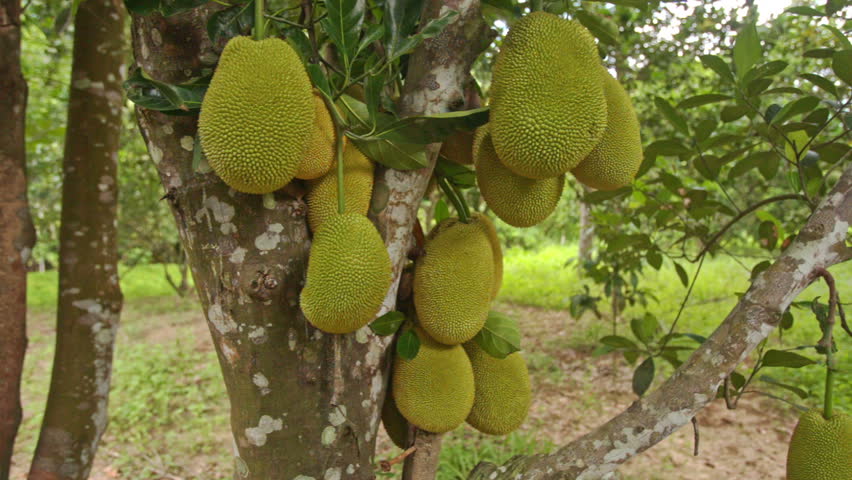
Jackfruit Tree
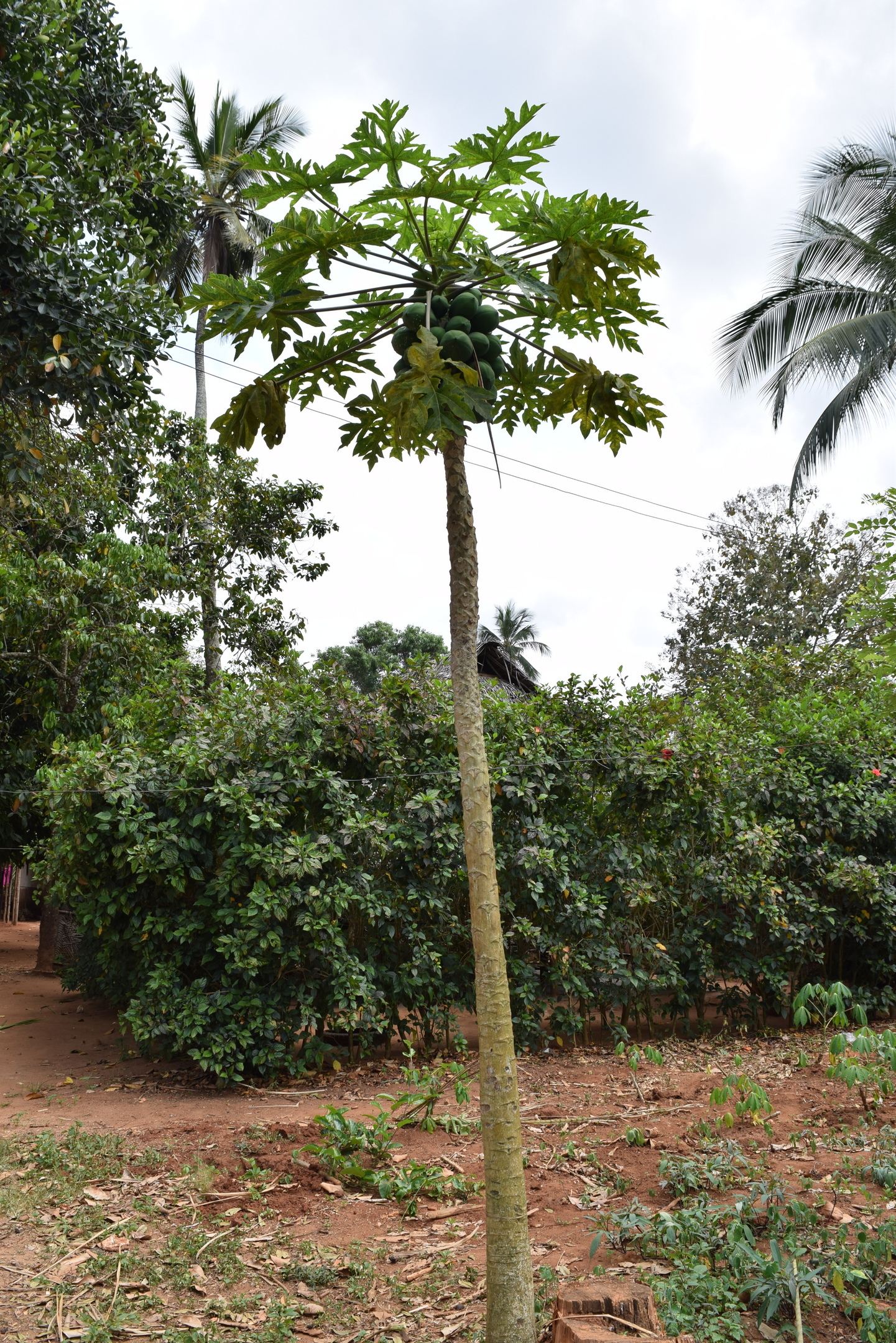
Quite interesting was to see the tree of another big fruit – papaya. It looks like a palm tree, and it is large, short-lived plant with a single trunk that can reach up to 9-10 meters.
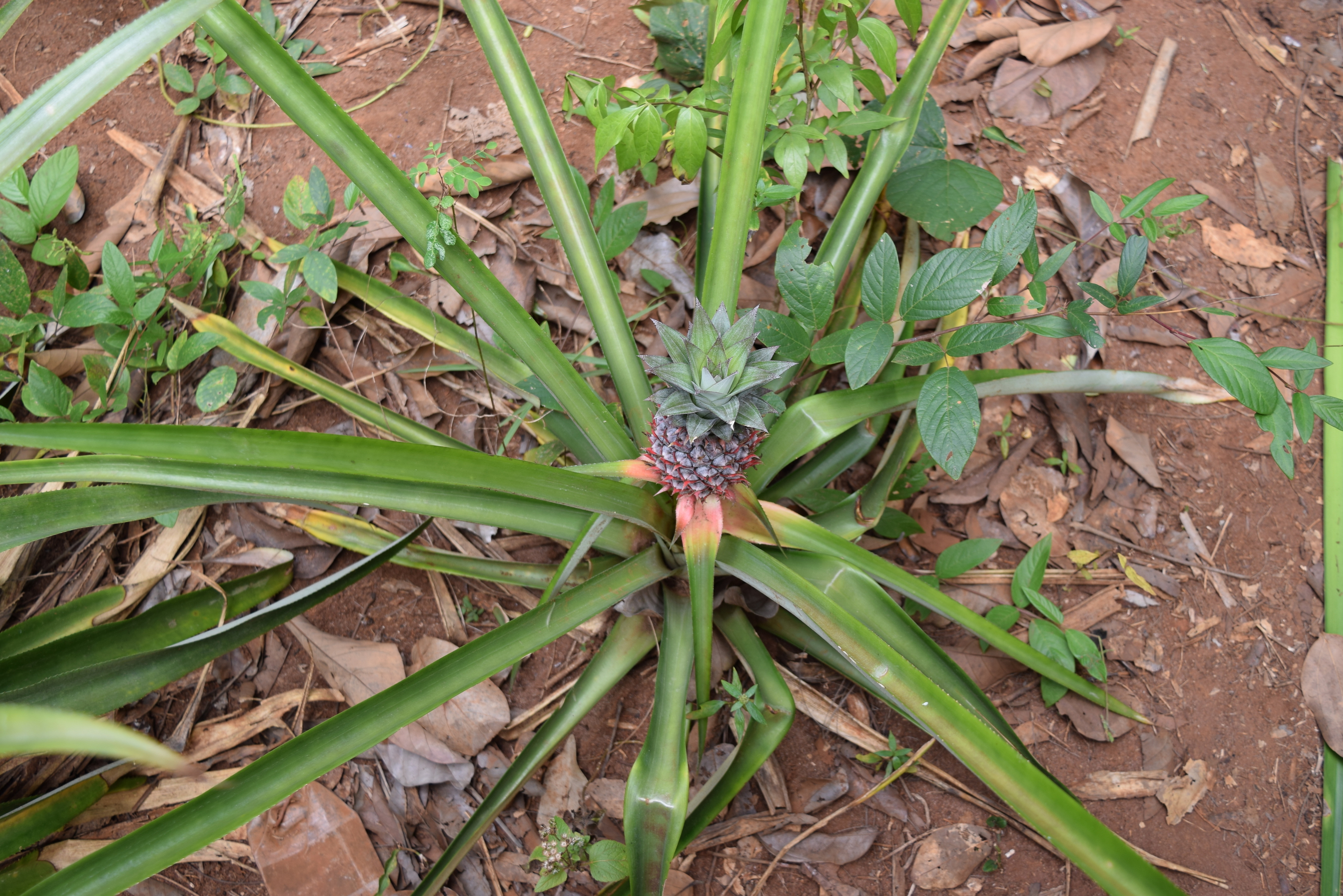
We also walked by a pineapple garden. I was surprised to learn that one plant gives birth to only one fruit and it takes 6 months (!) to get ripe – an astonishing fact provided the enormous piles of pineapples usually seen at the market.
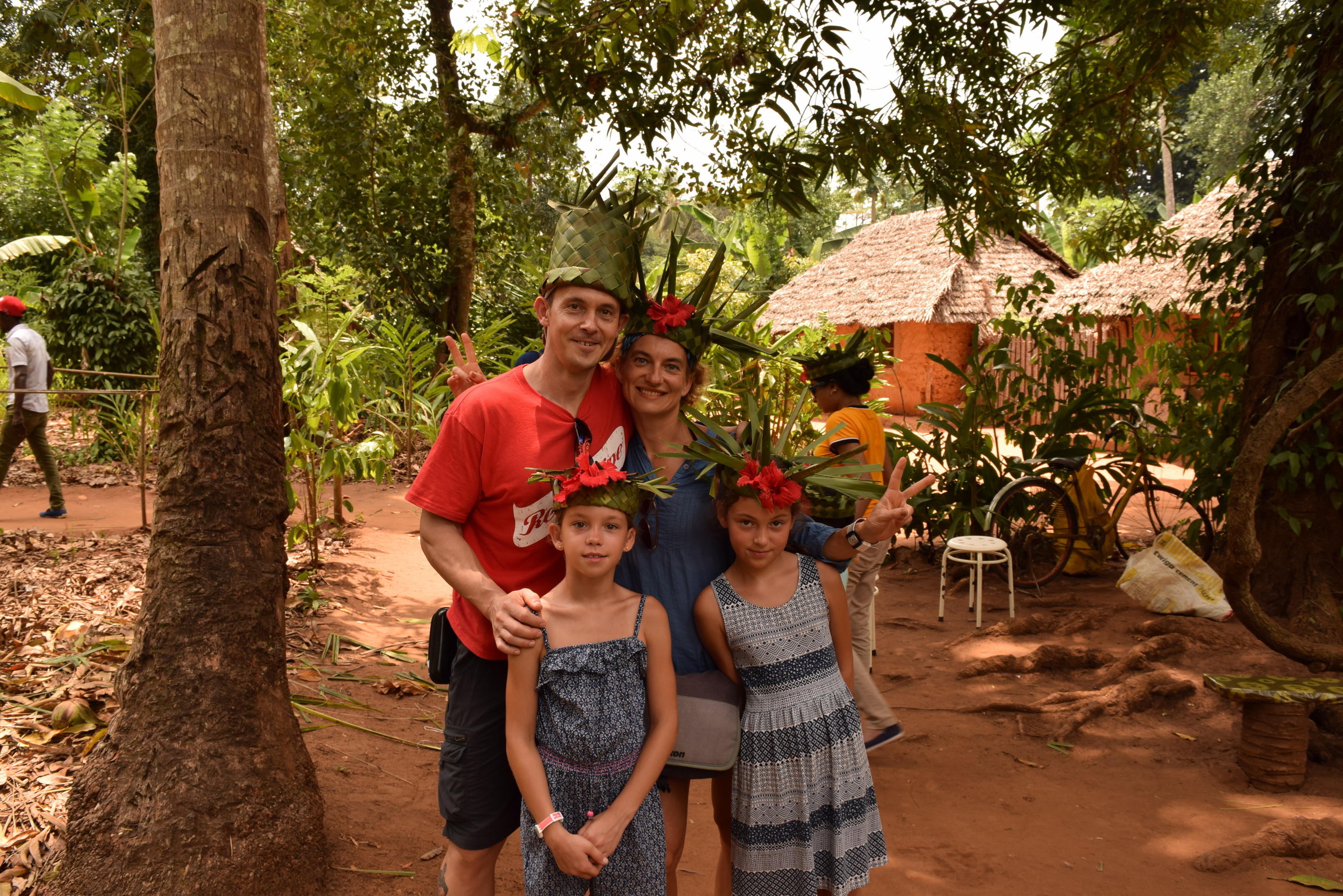
Besides the tour guide, we were accompanied by another local guy who was weaving something from banana leaves. It was not until the end when he handed a beautiful crown to each of us! The freshly cut coconuts we also got were just the cherry on the cake!
End of Part 1.
In Part 2, the story continues with our unforgettable trip to Stone Town, extraordinary encounters with dolphins, sea turtles and starfishes and much more… To continue reading, click here.